
Inactive· since Jun 24, 2026
- 36
- days it ran
- 0
- relaunches
Ad copy
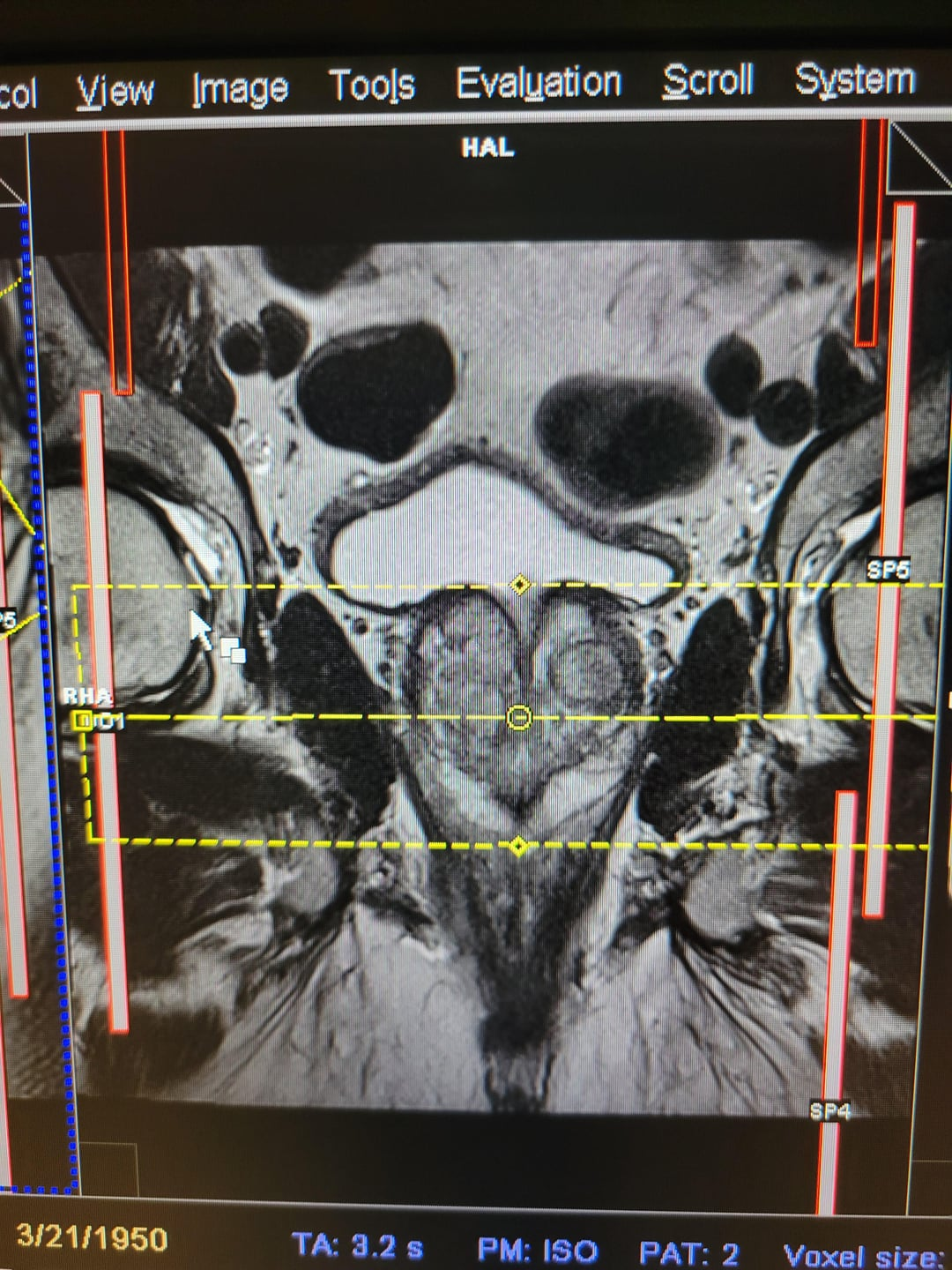
Thirty-seven prescription refill packages were stacked on the porch of a house on my mail route. The 73-year-old man inside hadn't checked his mailbox in eleven weeks. His wife had died in March. The mail-order pharmacy kept shipping his prescriptions on auto-refill every thirty days because nobody had called to stop them. The Tamsulosin. The multivitamin. The stool softener. All of it still coming. When he finally opened the screen door he looked past me at the packages and said "I know." Then he started to close it. I don't know what made me say what I said next. I just knew that if I let him close that door I was going to finish my route and he was going to disappear inside that house and nobody was going to stop it. My name is Linda. I'm 51 years old. I carry mail for the United States Postal Service Monday through Saturday and I've done it for fourteen years. This story starts on a Tuesday morning in September. I was running my usual loop when I pulled up to the house on Birchwood Lane I'd delivered to hundreds of times. Tan ranch. Chain-link fence. That morning there were six packages on the front step next to a stack of mail rubber-banded together from the previous week. I set the day's delivery on top and moved on. People fall behind. It happens. Three weeks later I came back and sat in my truck for a full minute before I got out. The packages had taken over. Stacked along the porch railing. Spilling off the front step onto the walkway. Twenty-nine packages. Brown pharmacy boxes with the green cross logo on the side. Subscription vitamin shipments. A garden hose catalog addressed to someone named Joyce. The welcome mat had a rust stain underneath the bottom box where rainwater had pooled and dried. The porch light was on at nine thirty in the morning. The screen door was latched from the inside — which meant someone was home. I knocked. Nobody answered. The following Tuesday I came back with four more. The pile had grown. I knocked again. The screen door cracked open three inches. The man who looked through the gap was early seventies. Thin. White stubble on his face. He had the look of someone who hadn't been expecting another human being to look directly at him. "I know about the packages," he said. "I know they're there." "Would it help if I carried some of them inside for you? I can stack them wherever you want." He looked at me for a long second. "Side door's unlocked," he said. "Through the garage." The garage told me everything the porch hadn't. Workbenches along both walls — a table saw, a drill press, clamps hanging on pegboard. Every tool in its place. A carpenter's garage. But dust covered everything. Sawdust on the floor from months ago. A half-finished birdhouse clamped to the bench with the wood dried out and warped. Near the door to the house, a woman's gardening gloves hung on a hook. Clean. Never going to be used again. I carried all thirty-seven packages inside in nine trips. I stacked them along the hallway wall. When I came back through the kitchen Earl was sitting at the table watching me. "My name's Linda," I said. "I've been delivering here for years." "I know. I've seen you through the window. I'm Earl." He looked at the hallway full of pharmacy boxes. "Earl," I said. "I could come by on a Saturday if you'd like some help sorting through all of this. No pressure." He looked at me the way you look at someone when you're trying to decide if they mean it. "I'll think on it," he said. The neighbor was pulling weeds in her front yard when I walked back to my truck. She waved me over. Her name was Doris. She'd lived next to Earl and Joyce for twenty-two years. "Joyce passed in March," Doris told me. "Pancreatic. Fast. Earl hasn't been right since. He had a prostate procedure four years ago — the kind where they go in and reduce the tissue. It helped for a while but things have gotten worse again since Joyce died. He's up all night. Every hour and a half, two hours. The bathroom light goes on and off all night long. I can see it from my bedroom window." She paused. "He won't ask for help. He comes from a generation of men who would rather rot in place than ask another person to hand them something." She looked at the house. "He didn't tell you no?" "He said he'd think on it." Doris typed my number into her phone. "I've been worried about that man since March," she said. "His kids are in Oregon. They call. They don't come. He needs someone close enough to see what's actually happening." Earl agreed to that first Saturday. He answered the side door in a flannel shirt buttoned wrong and immediately looked down at it. "Wasn't expecting company this early," he said. "Earl, I'm a mail carrier. I've seen worse before lunch." He smiled. First real one. He stepped aside and let me in. The house was lived-in the way a house is when two people spent forty years filling it together. Oak bookshelves in the den. Joyce's sewing machine in the corner with fabric still folded on the table beside it. A quilt draped over the recliner. Framed photos on every surface — Earl and Joyce at the Grand Canyon, at a fish fry, at their daughter's graduation. A woodworking magazine on the coffee table open to a page Earl had dog-eared months ago and never gone back to. But the kitchen told a different story. Dishes in the sink from days ago. Pill bottles lined up on the counter next to an unwashed coffee mug. A trash can that needed emptying. A bathroom I glimpsed off the hallway where the toilet seat was up and the floor hadn't been mopped in a long time. "Tell me about the shop," I said. "While we work." He looked toward the garage. "Joyce bought me that table saw for our twentieth anniversary," he said. "I told her it was too much. She said a man who builds things for other people deserves a real saw." He ran his hand along the kitchen doorframe. "I built this frame. And the one in the bedroom. And the bookshelves in the den. All of it." He paused. "I haven't been out there since she got sick. I keep meaning to finish that birdhouse but I can't stand long enough." By 2 PM we'd organized the pharmacy boxes. Thrown out the expired refills. Stacked the current ones on the counter. Recycled eighteen months of catalogs addressed to Joyce. We sat at the kitchen table. Earl looked at the clean surface. "Joyce drank her tea at this table every morning for forty-one years," he said. "I haven't sat here since she passed. I've been eating standing at the counter." He looked at the table. "It's different than I expected." "Better or worse?" "Both," he said. "Both at the same time." We sat there for a while without saying anything. I called Doris from my car on the way home. "He let me in," I said. Doris went quiet for a moment. "What does he need?" she said. "More than just me. His garage cleaned out properly. Someone to help him get the house back in order. People who knew Joyce to come by so the house has some life in it again." "He'll say no." "He said no to the Saturdays too." Earl called me that Sunday. "One condition. Joyce's sewing things go to someone who'll use them. She wouldn't want them sitting there collecting dust." "We'll make sure of it." I started making calls. My husband Ray offered to help move the heavy stuff. My coworker Terri and her husband said they'd come. A woman from our church who taught quilting said she'd take Joyce's fabric and make something from it. Two of Earl's old friends from the VFW who said they were ashamed they hadn't checked on him since the funeral. I called a cleaning service a friend had used. A woman named Rosa answered. "I'll come Saturday morning," she said. "No charge. Tell him it's from his neighbors." I sat at my kitchen table with the phone in my hand. I cried a little. Not because it was sad. Because it wasn't. Eleven people showed up on a cool Saturday morning in October. Earl came to the garage door and looked at the group in his driveway for a long time. "This is too much," he said. "I didn't ask for all this." "Earl. We're already here. And Joyce's sewing things are going to someone who'll use them. Can we come in?" He looked at the group one more time. Then he stepped back from the door. The first hour was careful and quiet. People asked before touching anything. Earl supervised from the hallway. Ray moved the heavier boxes while Rosa cleaned surfaces as they appeared. The quilting teacher went through Joyce's fabric slowly and with respect. I was carrying a box of pharmacy refills to the recycling pile when I stopped. The kitchen counter. A row of orange prescription bottles — eight of them — lined up neatly next to the coffee maker. All the same label. I picked one up. Tamsulosin. 0.4 mg. "Earl." He looked over. "These bottles. Tamsulosin?" He walked over slowly. Picked one up. Turned it in his hands. "Four years," he said. "Since the procedure." He looked at the label. "They went in and reduce the tissue in my prostate. TURP, they called it. It helped for about a year. Then the getting up at night started again. Two times. Three times. Now it's five, six times a night. Every hour and a half." He set the bottle back on the counter. "I've been on this pill for four years and I'm worse now than before the surgery." The kitchen was loud around us. Where we were standing was very quiet. "My doctor keeps writing the refill," he said. "Every three months. He looks at my chart and says the medication is doing its job. But I'm up six times a night. I can't sleep more than ninety minutes straight. My stream is so weak I stand there for two minutes waiting." He paused and looked at the floor. "I'm so tired I can't stand at my workbench for twenty minutes. I used to build furniture all day Saturday." He looked at me directly. "And my hair." He touched the top of his head. "Joyce used to run her hand through my hair. Full head of it until five, six years ago. Now I can see my scalp through what's left." He turned the bottle over in his hand one more time. "This pill was supposed to fix it. Four years. And every year it's worse. The bathroom. The energy. The hair." He paused. "I think this pill is managing a problem it was never designed to solve." I held that orange bottle and didn't say anything for a moment. "I'm going to look into this," I said. He looked at me the way he'd looked at me when I first offered to come on a Saturday — deciding whether to believe me. "Okay," he said. Near the end of the day Rosa found a framed photo behind the sewing machine. Earl and Joyce. Young. His arm around her shoulders. Full head of dark hair. "That was 1986," Earl said from across the room. Quiet. "State fair. She won a blue ribbon for her cherry preserves." He looked at the photo for a long time. "Put it on the mantel. Where I can see it." At the end of the day Earl walked to the living room window and opened it. October air came in. He stood there with his eyes closed. Then he turned around and looked at all of us. "I can see the carpet again," he said. I drove home with the windows down. I'd been carrying Earl's words since the moment he said them in the kitchen. I'm worse now than before the surgery. A man on a pill for four years that was supposed to manage his prostate. Getting up six times a night. Can't stand long enough to finish a birdhouse. Watching his hair thin out in the mirror every morning. His doctor writing the same refill every three months and calling it treatment. And then I thought about my husband Ray. Three years on Tamsulosin. Same prescription. Same refill cycle. Three years of watching him slow down in ways I'd been explaining away. Up three, four times a night now. Every night. The toilet flushing at 1 AM. Again at 2:30. Again at 4. The bed shifting when he gets up and shifting again when he comes back and I pretend I'm still asleep because I don't want him to feel bad about waking me. I went straight to my kitchen table with my laptop. I typed: "Why does Tamsulosin stop working for prostate." I read until midnight. Then the next night. For four nights straight. Here's what I found. Tamsulosin and Flomax and every alpha-blocker on the market work by relaxing the smooth muscle around the prostate and bladder neck. They loosen the squeeze. They make it easier for urine to pass through. The stream gets a little better. The doctor says "great." But the drug does nothing about WHY the prostate is swelling in the first place. I read that sentence three times. The prostate doesn't swell randomly. It swells because of a hormone called DHT — dihydrotestosterone. DHT is made when an enzyme called 5-alpha reductase converts your normal testosterone into DHT. That DHT binds to receptors in prostate tissue and tells the cells to grow. And grow. And keep growing. By age 50, most men's prostates have already started enlarging. By 60, the growth is pressing against the urethra and the base of the bladder. By 70, some men's prostates are two, three, four times their normal size. The urethra is a straw being squeezed by a fist. That's why you're up six times a night. That's why the stream is weak. That's why you stand there waiting and nothing comes and then ten minutes later you have to go again. Tamsulosin relaxes the fist. But it doesn't stop the fist from getting bigger. For four years Earl's Tamsulosin had been relaxing the muscle around a prostate that was still growing underneath. For three years Ray's had been doing the same thing. The symptom got a temporary pass. The root cause kept building. Then I found the part that explained everything else. DHT doesn't just swell the prostate. The same hormone — the same 5-alpha reductase conversion — attacks hair follicles. DHT binds to receptors at the base of the follicle and shrinks it. Miniaturizes it. Each growth cycle the hair comes in thinner, weaker, shorter — until the follicle stops producing visible hair altogether. Earl's thinning crown. Ray's hairline creeping back year after year. That's not aging. That's not genetics alone. That's the same DHT that's swelling their prostates slowly strangling their hair follicles at the same time. One enzyme. One hormone. Two symptoms every man over 50 has been told are "just part of getting older." They're not. They're the same root cause expressing itself in two places. And here's the part that breaks the whole system open: when the prostate swells past a certain point, it disrupts sleep architecture. Not just because you're getting up to urinate. The nerve compression from an enlarged prostate triggers a cascade that fragments REM sleep even between bathroom trips. Your body never reaches the deep recovery phase. You wake up exhausted. Your muscles don't recover. Your energy disappears by noon. Your brain can't focus. Your grip weakens. You fall asleep in your chair by 7 PM. Earl's exhaustion wasn't age. Ray falling asleep in the recliner before the news ended wasn't laziness. It was a prostate pressing on nerves that were stealing their sleep sixty minutes at a time, every single night, for years. Sixty percent of men on alpha-blockers like Tamsulosin report that the drug stops working within three to five years — because the prostate keeps growing underneath. The muscle relaxes. The growth doesn't stop. The doctor writes another refill and says "we're managing it." I sat at my kitchen table at midnight and understood what I was looking at. The second night I found the research on beta-sitosterol. Beta-sitosterol is a plant sterol — a fat-soluble compound found in certain seeds and nuts. What it does is something Tamsulosin can't do and was never designed to do. It inhibits 5-alpha reductase — the enzyme that converts testosterone to DHT — at the source. Not by relaxing the muscle around the prostate. By reducing the production of the hormone that's making the prostate grow in the first place. In a randomized, double-blind, placebo-controlled trial — the gold standard — men taking beta-sitosterol for six months showed significant improvement in urinary flow rate, reduction in residual urine volume, and improvement in International Prostate Symptom Scores. Not by masking. By addressing the mechanism. And here's where it gets critical. Beta-sitosterol is found in high concentration in pumpkin seed oil. But not all pumpkin seed oil. Most pumpkin seed oil on store shelves is roasted. The seeds are heated to high temperatures before pressing — which gives the oil a nutty flavor and a pale yellow color. But heat degrades beta-sitosterol. By the time that roasted oil is inside a capsule, the compound that would have blocked 5-alpha reductase is already damaged. What's left is a pale yellow softgel with a fraction of the active compound intact. I stared at that for a long time. Then I found a company called Everly. They cold-press their pumpkin seed oil. No roasting. No heat processing. Virgin extraction that preserves the beta-sitosterol in its intact, bioactive form. The softgels are deep red — almost amber. That dark color is the visual proof that the beta-sitosterol survived the extraction. The pale yellow capsules on the shelf at the drugstore? That color is what beta-sitosterol looks like after heat has destroyed it. Everly sources their pumpkin seeds from Styria, Austria — the region that has been producing the world's finest pumpkin seed oil for over four hundred years. Styrian pumpkin seeds are a specific hull-less variety bred for oil content and phytosterol density. They've been cultivated by Austrian farming families for generations. 3,000 milligrams per serving. Cold-pressed. Virgin. Combined with saw palmetto extract — another clinically studied natural 5-alpha reductase inhibitor that works alongside the beta-sitosterol. Hundreds of peer-reviewed studies. Recognized in European urology protocols. Used clinically across Germany, Austria, and Switzerland for prostate support for decades. I ordered two pouches that night. One for Ray. One for Earl. The pouches came on Thursday. Kraft-colored stand-up pouches. I opened one and counted. Sixty softgels. Two a day. A month's supply. I held one up to the kitchen window. Deep red. Almost the color of dark honey. Nothing like the pale yellow capsules Ray had tried from the drugstore two years ago and thrown away after a month because nothing changed. The next morning I set two softgels and a glass of water next to Ray's coffee. He looked at them. He looked at me. "What is it?" "Pumpkin seed oil. Cold-pressed. From Austria. I want you to take them for me." He picked one up and turned it in his fingers. "Just for me," I said. He took them. Day 3. I woke up at 4:15 AM and the bed was still. Ray was still in it. I lay there and listened to him breathe. Steady. Deep. He hadn't gotten up once. He woke up at 5:30 and looked at the clock. "I slept through," he said. Like he didn't believe it. "I know," I said. "I noticed." Week 2. Ray was up once a night. Once. Down from four. He stopped mentioning it. I stopped pretending I didn't hear the bathroom door. Because I didn't hear it anymore. Week 3. I came home from work on a Wednesday and Ray was in the garage. He had the mower pulled apart on the floor. He was on his knees with a socket wrench, both hands steady, working on the blade assembly. He hadn't touched that mower in two seasons. "Figured I'd get it ready before the leaves drop," he said. He didn't look up. He didn't need to. I stood in the doorway and watched my husband work with his hands for the first time in two years. Week 4. Ray came out of the bathroom and walked past me in the hallway. I didn't think about it until later that night. He hadn't been in there for ten minutes. He'd been in and out in under two. Like it was nothing. Like it used to be. Week 6. I was half asleep when I realized the alarm was going off. 6 AM. Ray was still beside me. He had slept — fully, deeply, without interruption — from 10:30 PM to 6 AM. Seven and a half hours. He hadn't done that in four years. He sat up on the edge of the bed and rubbed his face. "I feel like I actually slept," he said. I had to look away. Week 8. Ray was standing at the bathroom mirror and he called my name. I came in and he was leaning toward the glass, running his hand across the top of his head. "Linda. Look." I looked. Along his hairline. At the temples and across the crown. Fine dark hairs. New growth. Short, soft, barely there — but there. Coming in where nothing had been in three years. "Is that real?" he said. "That's real," I said. I drove to Earl's the second Saturday after Ray started. I brought a pouch. I brought an envelope with the research I'd printed at the library. He let me in and I sat at his kitchen table and put the Everly pouch and the envelope between us. "Earl. I want to tell you what I found." He read the pages for thirty minutes while I sat there. He didn't say anything while he read. When he finished he set the pages down and looked at the pouch. "Why didn't my doctor tell me any of this," he said. I didn't have an answer for that. He picked up the pouch. Turned it in his hands. Looked at the deep red softgels through the clear window. "Joyce was always after me about finding something natural," he said. "She'd bring home things from the health food store. Saw palmetto by itself. Zinc. Pygeum. I tried all of them. One at a time. Two months each. Nothing changed. She'd come home with the next one and I'd take it because she asked me to and I loved her." He paused. "She never found the right one." He looked at the pouch. "She would have wanted me to try this." He took his first dose at the kitchen table while I was still sitting there. He called me four days later. "Linda. I only got up twice last night." "That's down from six, Earl." "I know exactly what it's down from." He called me a week after that. "I slept until 4 AM without waking. I haven't done that since before the surgery." Three weeks in. "I was in the shop this morning. I stood at the workbench for forty-five minutes. Sanded the birdhouse frame Joyce never saw me finish." Week six. "Once. Last night I got up once. One time. I went back to bed and I slept until the sun came through the curtain." By week eight Earl had been to his doctor. He called me from the parking lot. "PSA was 3.1. Down from 6.8. My IPSS score — the symptom questionnaire — was 8. It was 24 six months ago. Urine flow rate went from 8 milliliters per second to 15." He paused. "I told him I stopped the Tamsulosin six weeks ago." "What did he say." "He didn't say anything for a long time. Then he looked at the numbers again and said 'Whatever you're doing is working. Don't stop.'" Ray went the same week. His numbers: PSA: 2.4. Down from 4.9. IPSS: 6. Down from 19. Flow rate: 18 ml/sec. Up from 10. His doctor pulled up the chart comparison and sat there looking at it. "These are significantly improved," he said. "What changed?" Ray told him. The doctor wrote it down. It's April now. Earl finished the birdhouse. He hung it on the post by Joyce's garden — the garden she planted every spring that went to weeds last year. Last weekend he was on his knees in the dirt pulling crabgrass and turning the soil. "I'm putting in tomatoes this year," he told me. "Joyce always did the tomatoes. I figure it's time I learned." He sleeps through most nights now. He told me he dreamed about Joyce last week — first time since she passed. He said he woke up and it wasn't sad. It was just her. In the kitchen. Making tea. Ray walks with me every evening after dinner. Half a mile down to the stop sign and back. We talk on the way out and we're quiet on the way back. He has his hand on the small of my back when we cross the street. Last week he opened a jar of pickled jalapeños at dinner without asking me to loosen it first. He didn't say anything about it. He just opened it and set it on the table. I looked at his hands and I remembered four months ago. Both hands shaking on his coffee mug at 6 AM. Too tired to grip. I think about it sometimes. What I would have done if I'd let Earl close that screen door. If I'd believed him when he said he knew about the packages. If I'd finished my route and never went back. If I hadn't looked at that row of orange bottles on the kitchen counter and asked. If Ray had stayed on Tamsulosin for three more years. Five more. Ten. I think about the way Ray's doctor said "we're managing it" for three years while my husband got up four times a night and couldn't stay awake past the opening credits. I think about Earl standing in his kitchen with a prostate four times its normal size after four years on a drug that was supposed to manage it. I think about Joyce bringing home bottles from the health food store — one after another — because she knew something was wrong even if she couldn't name it. And then I think about you. Maybe you have a husband who gets up three, four, five times a night. Who flushes the toilet at 1 AM and again at 3 and again at 5 and comes back to bed and lies there staring at the ceiling because he knows he'll have to get up again in ninety minutes. Whose doctor keeps writing the same prescription every three months and calling it treatment while the real problem keeps growing underneath. Maybe you ARE that husband. And you've been telling yourself it's just age. Just the prostate. Just how it is now. Maybe you're running your hand across the top of your head in the bathroom mirror and seeing more scalp every month and telling yourself it's genetics. Maybe you're falling asleep in your chair before 8 PM and telling yourself you're just tired from work. Maybe you're standing at the toilet for two minutes waiting for a stream that barely comes and telling yourself it's fine. The doctor is watching the chart. You're watching the man. You're closer to the truth. The Tamsulosin relaxes the muscle. It doesn't stop the growth. The DHT keeps converting. The prostate keeps swelling. The hair keeps thinning. The sleep keeps fragmenting. And the refill keeps coming every three months. Everly. Two softgels. One glass of water. The cold-pressed beta-sitosterol inhibits the 5-alpha reductase enzyme the drug ignores. The saw palmetto reinforces it from a second pathway. The virgin extraction keeps the active compounds alive long enough to do their job. No muscle relaxers wearing off at 2 AM. No prescription side effects. No man standing in the bathroom at midnight wondering when this became his life. A small company. Styrian Austrian pumpkin seeds. Cold-pressed virgin oil. 3,000 milligrams per serving. Deep red softgels. Intact. You can find it at the link below. https://try.shopeverly.shop/esl P.S. — Earl called me two weeks ago. He'd been to the cemetery to put flowers on Joyce's grave. He told me he stood there for a long time. He said "I slept through the night seven nights in a row, Joyce. Seven. I think you'd be glad I finally found the right one." P.P.S. — The first dose is something. Two softgels. One glass of water. You're going to feel something shift in the first 48 hours. A heaviness in the lower abdomen that loosens. A bathroom trip that feels complete for the first time in months. A night where you wake up and look at the clock and it's 4 AM and you realize you didn't get up at 1 or 2 or 3. That first week isn't doing the deep work yet — the deep work on DHT levels takes weeks. But it's the first signal that something different is finally happening inside your body. Intact beta-sitosterol reaching the 5-alpha reductase enzyme for the first time. P.P.P.S. — The 30-day guarantee. You try it for 30 days. If you don't feel a difference in your sleep, your stream, the number of times you get up at night — you send it back and they refund every dollar. Not just the unopened pouches. The used ones too. P.P.P.P.S. — Styrian Austria produces a limited harvest each fall. These are not commodity pumpkin seeds — they're a specific hull-less variety that has to be cold-pressed within weeks of harvest to preserve the beta-sitosterol content. When the season's supply is pressed and pouched, that's it until next fall. Everly does go out of stock. P.P.P.P.P.S. — Ray keeps an Everly pouch on the kitchen counter and one on the nightstand. He says he likes seeing it there in the morning when he wakes up — after a full night's sleep. I keep mine in my mail bag. I take it on the route. I think about Earl every time I open the pouch. https://try.shopeverly.shop/esl
🎃 Natural Support for Your Daily Routine
“I’ve been feeling stronger and more balanced since taking Everly Pumpkin Seed Oil. My bladder feels so much calmer, I’m sleeping through the night again, and my hair feels thicker than it has in years. I love how natural it feels — just pure support for my body.”
LEARN MORELike this ad? Make it yours.
Crush rebuilds this exact creative around your product — your brand, your colors, your offer — in about a minute.