
Active· since Apr 24, 2026
- 148
- days running
- 0
- relaunches
Ad copy
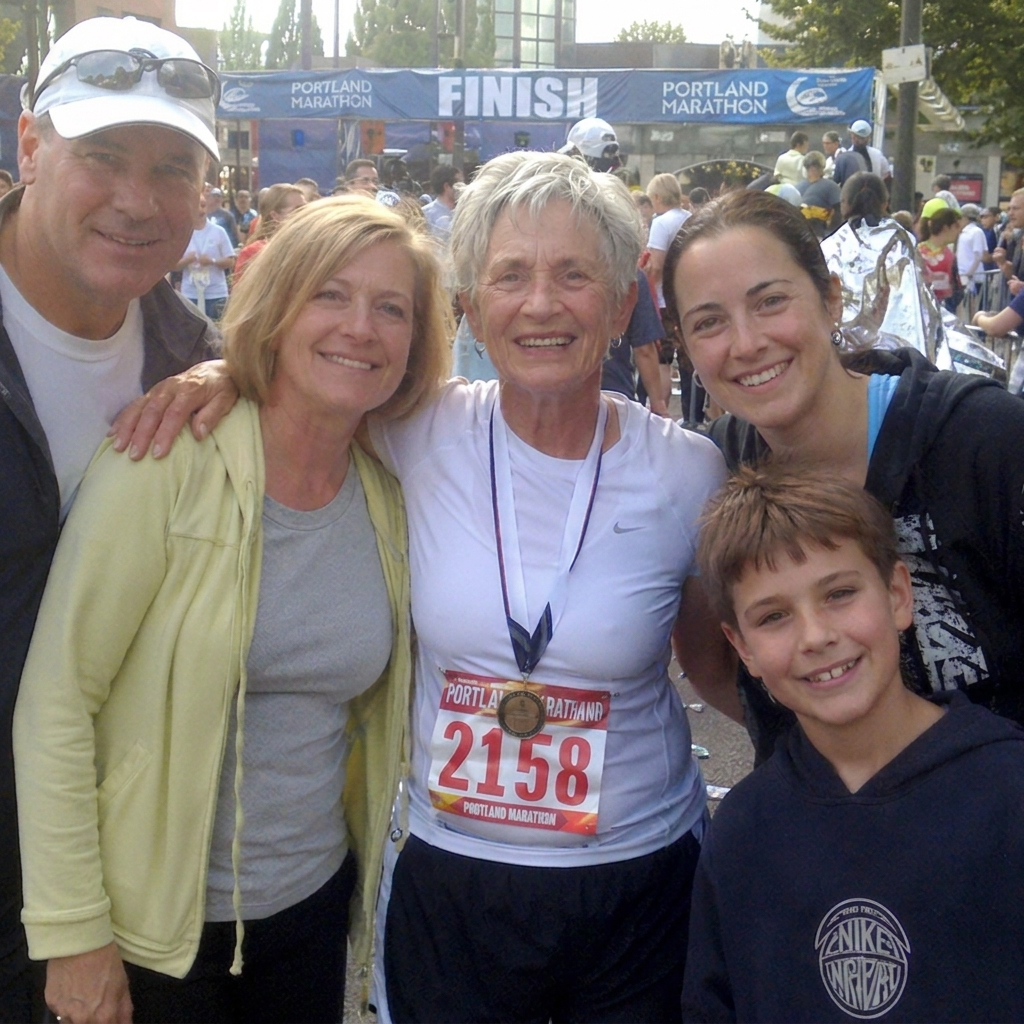
My grandmother ran a marathon at 74 and crossed the finish line with her knees feeling fine. At 52 I have to grip the bathroom counter with both hands just to lower myself onto the toilet. And it took me five months of failed supplements, a desperate phone call, and one conversation with my grandmother to finally understand why. Her name is Ruth. She's 92 now. Spry doesn't cover it. Last month she called to tell me she'd been on a three-hour garden tour with her women's group. All on foot. Cobblestone paths. Uneven terrain. She complained about nothing except the heat. I listened and said nothing about my own morning. My right knee had been swollen since Thursday. I'd been up twice in the night from the grinding ache that wouldn't let me find a comfortable position. I'm 52. My grandmother ran a marathon at 74. Something is very wrong with that picture. My doctor gave it a name eight months ago. "Early-stage osteoarthritis. Both knees, but worse on the right. The cartilage is thinning. We'll monitor it every six months. If it continues to progress the way I'm seeing, we'll talk about more aggressive intervention in your early 60s." More aggressive intervention. I knew what that meant. I've watched friends go through knee replacement. The months of brutal physical therapy. The grinding sensation that never fully goes away—just a different kind of grinding now. Metal on plastic instead of bone on bone. "Is there anything I can do now?" I asked. "To slow it down?" "Maintain a healthy weight. Low-impact exercise. Anti-inflammatories for flare-ups." I went home and cried. That night I called my grandmother. Not about the diagnosis specifically. I just wanted to hear her voice. But somewhere in the conversation I told her what the doctor had said. She was quiet for a moment. "Your joints are giving you trouble already?" "Already," I said. "I'm 52." Another pause. "Can I ask you something?" I said. "You've never had joint problems. Not once. You ran a marathon at 74. You're 92 and still walking everywhere. What are you doing?" She was quiet again. Like she was deciding how much to get into. "You know I grew up on a farm," she said finally. "Yes." "We grew tart cherries. Processed the concentrate, sold it. I spent my whole childhood around that crop and around the people who worked the land." I hadn't known the detail about tart cherries. She'd always just said "the farm." "I watched what happened to people as they got older," she continued. "Some held up well. Some didn't. Their joints went. Their knees swelled. They slowed down and never came back. I paid attention to who held up and who didn't. And I noticed something." "What?" "The ones who took the concentrated extract—the real stuff—their joints were different. Even into old age. I couldn't say why at the time. I just saw it, over and over." "So you've been taking it?" "Every day since my early fifties. And my joints have never given me serious trouble. You've seen that." I had seen that. I said goodnight and sat at the kitchen table for a long time after we hung up. Then I opened my laptop. Study after study came back. Boston University: tart cherry consumption associated with significant reductions in inflammatory markers and joint pain in osteoarthritis patients. Oregon Health & Science University: anthocyanins from tart cherry reduce cartilage degradation and protect joint tissue from oxidative stress. University of Michigan: regular tart cherry intake correlates with lower rates of osteoarthritis progression over long-term consumption studies. The compound is called anthocyanins. Powerful anti-inflammatory molecules found in the dark pigment of tart cherries. They interrupt the inflammatory pathways that destroy cartilage. They protect joint tissue that, once gone, never grows back. My grandmother hadn't known the science. She'd just watched it work for decades on the people around her. My chest was tight when I put my phone down. I ordered tart cherry supplements before I went to sleep. I started with the highest-rated one on Amazon. Over 12,000 reviews. Four-point-six stars. Six weeks. Every day. Never missed a dose. Knees still grinding. Still swollen after anything more than light walking. Still waking me up at night. I found a different one. A clinical brand. Came in a box with graphs on it. Paid twice as much. Eight weeks. Nothing. I bought a third. This one was in a dark glass bottle, which I took as a good sign for some reason. Seven weeks. Still nothing. The grinding was the same. The morning stiffness was the same—that locked, seized feeling in both knees every morning, sometimes lasting forty minutes before they loosened up enough to feel functional. I stood in my kitchen one afternoon. Three empty supplement bottles on the counter. Twenty-one weeks of consistent effort. Zero improvement. I called my grandmother again. "I've been taking tart cherry supplements for five months," I said. "Three different brands. Nothing has worked. You said you've been taking it for thirty years and your joints are fine. What am I missing?" A pause. "What brands are you taking?" I read her the names. "Those aren't the ones I use," she said. "What do you use?" "GoodGrove. Has been for a few years now. Before that I tried others—including brands like the ones you just named. They didn't do much for me either. It took me a long time to understand why." "Why?" She explained it the way she explained most things—plainly, without drama. The anthocyanins—the compounds that actually protect joints—are extremely fragile. Heat destroys them. And virtually every supplement manufacturer uses high-heat spray drying to process their tart cherry powder. It's fast. It's cheap. It's how almost everyone does it. But it destroys 85 to 90 percent of the anthocyanins before the capsule is ever filled. What's left isn't doing much of anything for your joints. You're paying for a label that says tart cherry extract. What's inside is close to worthless red powder. "GoodGrove uses cold extraction," she said. "They pull the active compounds out of the cherry without heat. Everything stays intact. And they verify it—third-party tested, Certificate of Analysis published online. You can look up exactly what's in every batch before you buy it." "That's the difference?" "That's the whole difference. The ones you tried don't actually have what you need. GoodGrove does. I noticed it within the first week. My joints felt different. That hadn't happened with the others." I ordered it that night. When it arrived, I set it on the counter next to the three empty bottles that hadn't worked. I took the first dose and told myself not to expect anything. I'd been disappointed too many times. Four days passed. On the fifth morning, I woke up and did what I always did—swung my legs to the side of the bed and waited for the stiffness to set in. That locked, seized feeling. The grinding when I first tried to stand. It wasn't gone. But it was... quieter. Instead of forty minutes of stiffness, it was maybe ten. The grinding when I walked to the bathroom was noticeably reduced. The sharpness was dulled. I stood in the hallway and bent my right knee slowly. Then the left. Something was different. Week one: Morning stiffness down from forty minutes to under ten. Grinding sensation reduced—not gone, but noticeably softer. Week two: Walked six blocks without stopping. First time in almost a year I'd done that without paying for it the next morning. Week three: Woke up three mornings in a row with almost no stiffness. My husband noticed I wasn't making the sound I always made getting up from the couch—that involuntary grunt that had become background noise in our house. Week four: Pain level dropped from a 6 to a 2. I walked forty minutes on flat terrain. No swelling afterward. I called my grandmother. "It's working," I said. "It's actually working." I heard her exhale. Like she'd been waiting for that call. "Of course it is," she said quietly. At week six, I went back to my doctor. She had me walk the hallway. Squat. Bend. She tested range of motion on both knees. Then she pulled up my imaging from eight months ago and ordered new X-rays. Stood at the lightbox comparing them. "The inflammation is down significantly," she said. "Cartilage degradation is not progressing. In fact, the joint space looks more preserved than I'd expect to see at this interval." She turned and looked at me. "What changed?" I told her. GoodGrove tart cherry. Cold-extracted. Third-party verified. Clinical dose. She typed notes for a long time. "Keep doing what you're doing," she said. "We'll monitor every six months. But if this continues, we may not be having the conversation about intervention I thought we'd be having." I walked to my car and sat in the driver's seat for a few minutes. Then I called my grandmother. "Doctor said the deterioration has stopped. She said I might not need surgery." Long silence. "Good," she said. Her voice was thick. "That's very good." That was eight weeks ago. My morning stiffness is gone. Not reduced—gone. The grinding sensation is down 80 percent. Pain level most days: zero. On a bad day, a one. Last week I walked three miles on a hilly trail. Came home and did my normal evening. No swelling. No compensation. No noise when I stood up. I am not following the path I was on eight months ago. My grandmother ran a marathon at 74 because she understood something about tart cherry that it took me five months of failed supplements to finally learn. It's not about tart cherry. It's about what's actually in the capsule. If you've tried tart cherry supplements and they didn't work—here's why GoodGrove did what the others couldn't. Cold-Extracted to Preserve What Works Every cheap supplement uses high-heat spray drying. It's fast and inexpensive. It also destroys 85 to 90 percent of the anthocyanins before the capsule is sealed. You're left with tart cherry powder that has almost no active compound. The label says tart cherry. The capsule can't protect your joints. GoodGrove uses cold extraction. The anthocyanins stay intact. They reach your joints. They work. Standardized to Clinical Doses The studies showing joint protection used specific anthocyanin concentrations. Most supplements don't test for anthocyanin content at all. They can't tell you how much active compound is in the bottle. GoodGrove delivers the dose that corresponds to the research—the amount that actually does something in the body. Third-Party Verified GoodGrove publishes their Certificate of Analysis. Exact anthocyanin content. Heavy metal screening. Microbial testing. Every batch. You don't have to guess what you're getting. You can see it. What to Expect Within 5 to 7 days: Reduced morning stiffness. Less grinding when you move. Over 4 to 6 weeks: Significant pain reduction. Improved mobility. Joint protection you can feel—and measure. You won't wonder if it's working. You'll know. Try GoodGrove for up to 90 days. Track your pain and mobility. If you don't see improvement—if you don't notice the morning stiffness quieting down, the grinding softening, the ability to move more freely—contact customer service for a full refund. No questions asked. You risk nothing. You're at a crossroads right now. One path: Keep watching the deterioration continue. Wait for the conversation about intervention. Spend your 60s in surgical recovery, in physical therapy, in joints that no longer feel like yours. Another path: Do what my grandmother has done for thirty-plus years—give your joints the concentrated, verified, intact anthocyanins that actually protect cartilage. Track the difference. Feel it within days. I chose the second path. My doctor's prediction changed. My mornings changed. My ability to walk, move, and live without pain changed. My grandmother ran a marathon at 74 because she understood something simple: the right compound, in the right form, taken consistently, works. GoodGrove is that form. If you're where I was eight months ago—knees grinding, mornings locked up, watching the trajectory and dreading where it leads—try GoodGrove. Track your pain and mobility. Give it an honest 90-day trial. Your future self will thank you. https://trygoodgrove.com/cherry — Sarah Hennessey P.S. — I noticed reduced morning stiffness within 5 days. Measurable pain reduction by week 2. Significant improvement by week 4. Your timeline may be different. But you won't know unless you try. P.P.S. — Every day without the right compound is another day of inflammation accumulating in your joint tissue. Cartilage doesn't grow back. The window to protect what you have is open right now. My grandmother understood that before the science could explain it. Don't wait until it's too late to matter. Order now. https://trygoodgrove.com/cherry
Like this ad? Make it yours.
Crush rebuilds this exact creative around your product — your brand, your colors, your offer — in about a minute.