
Active· since May 14, 2026
- 125
- days running
- 0
- relaunches
Ad copy
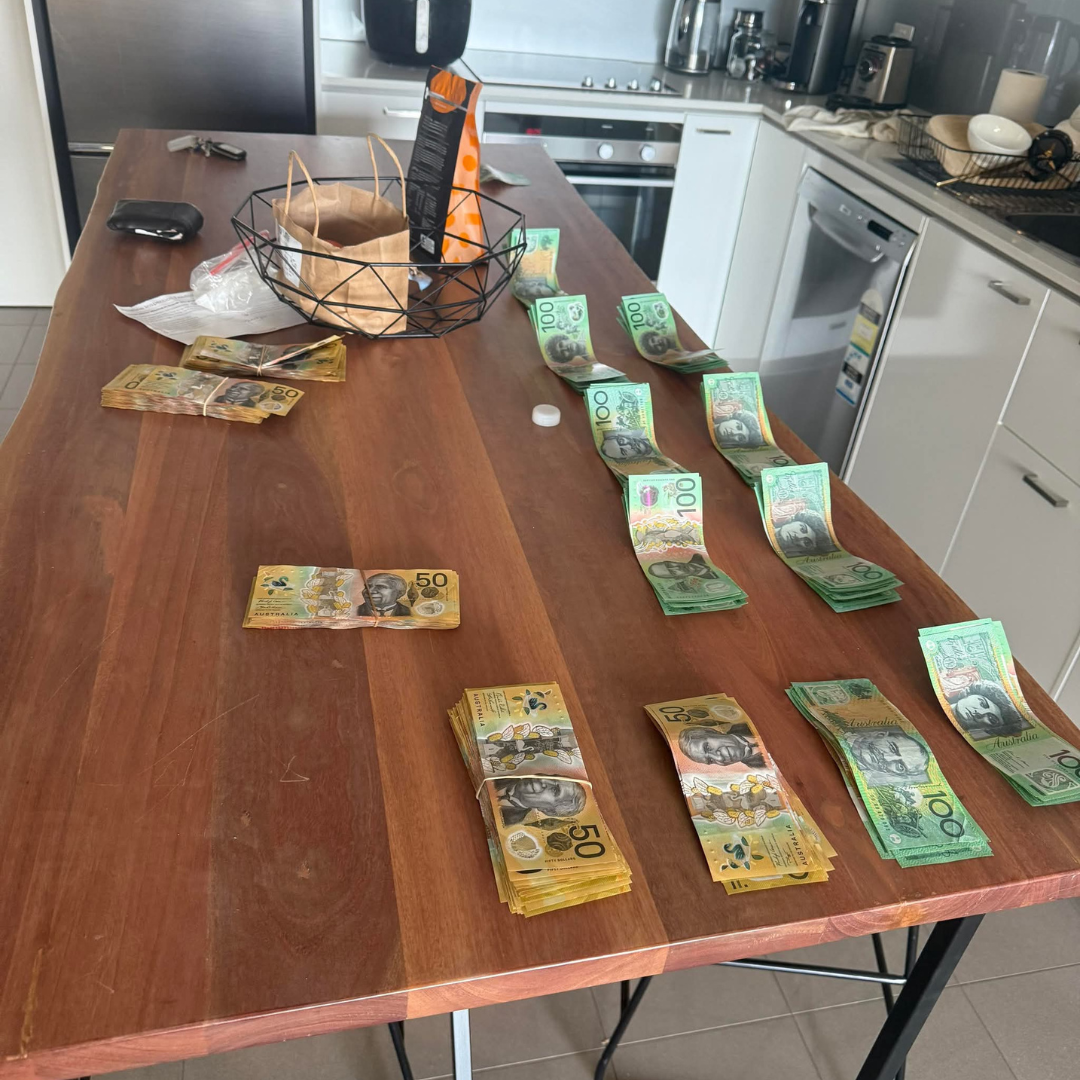
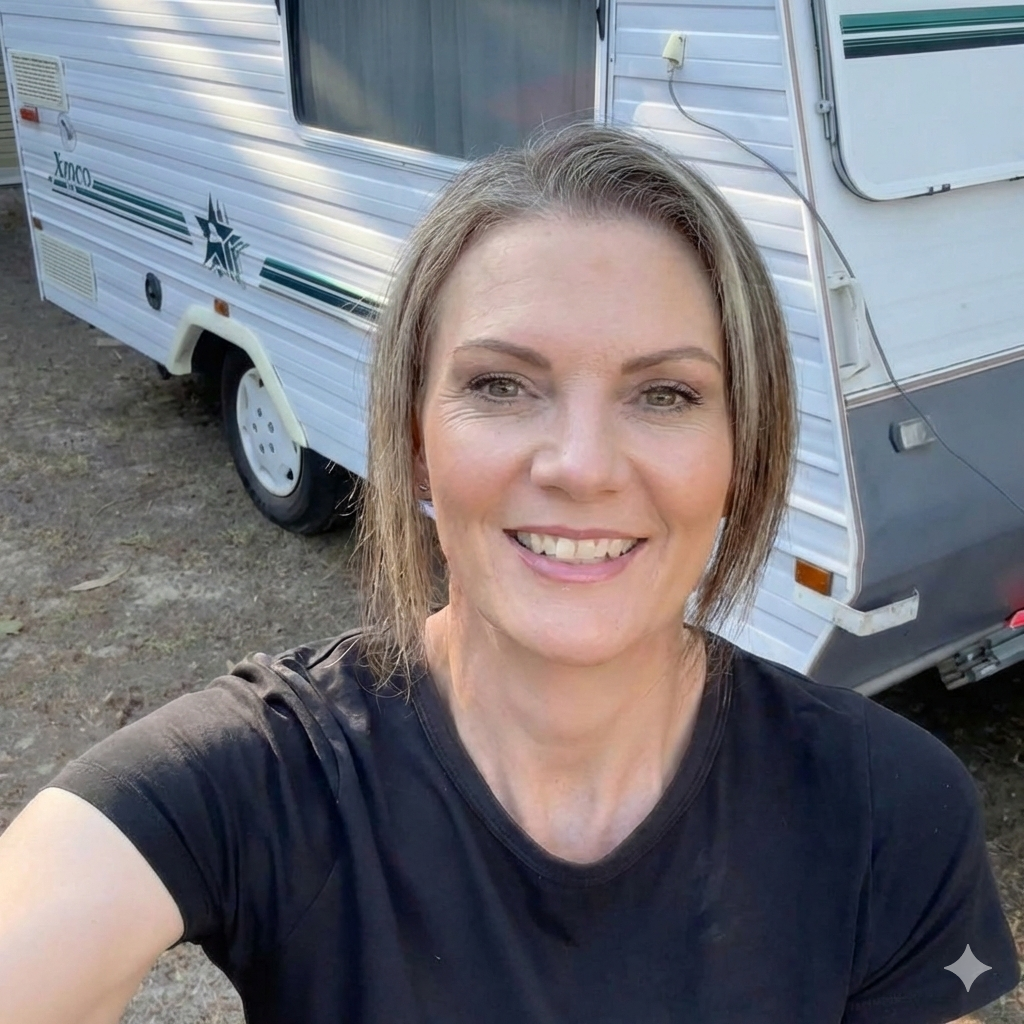
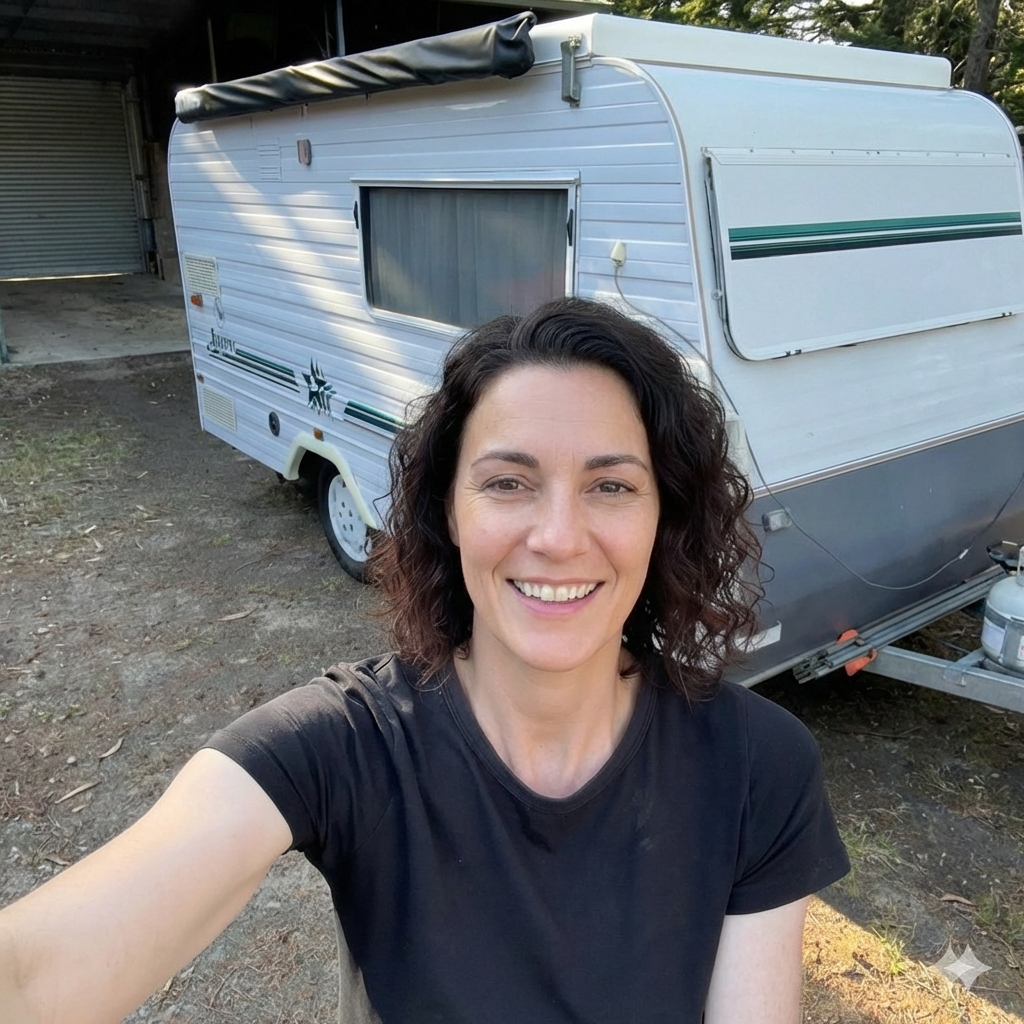
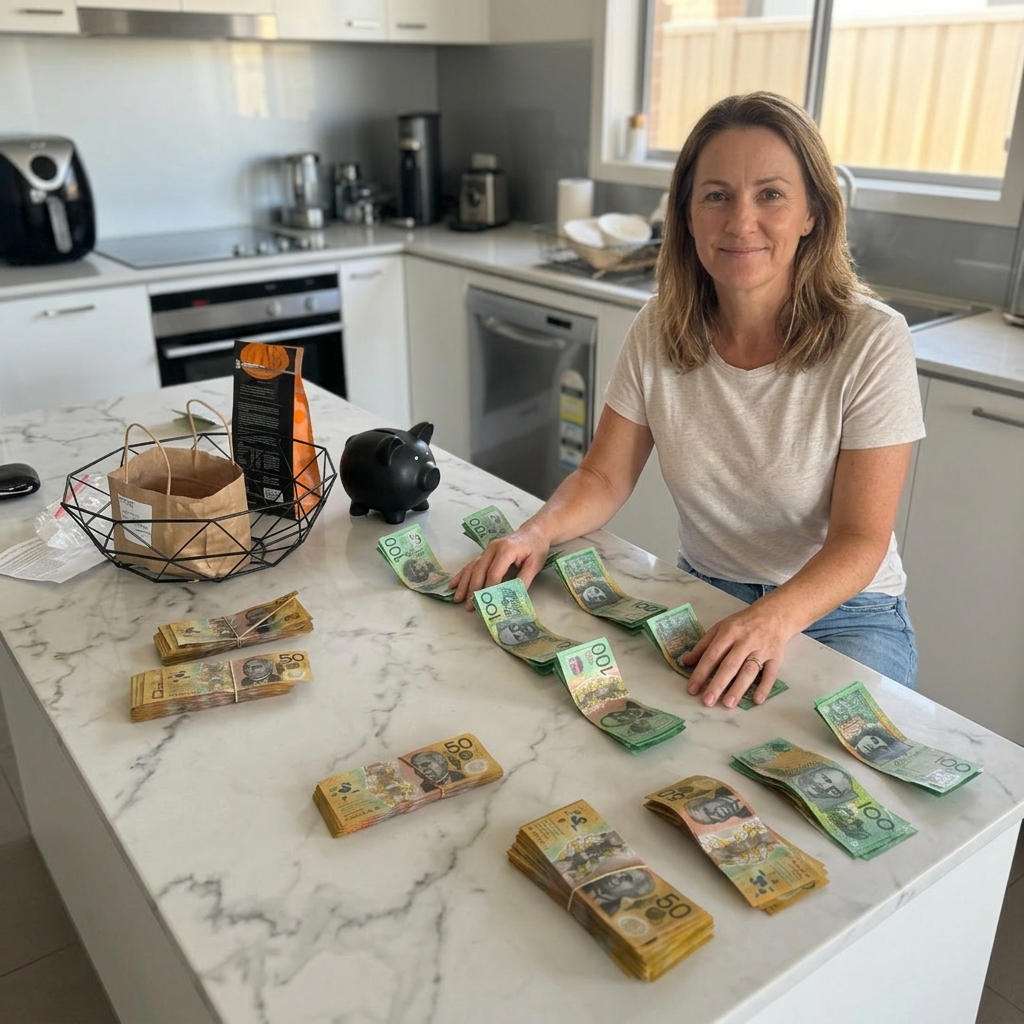
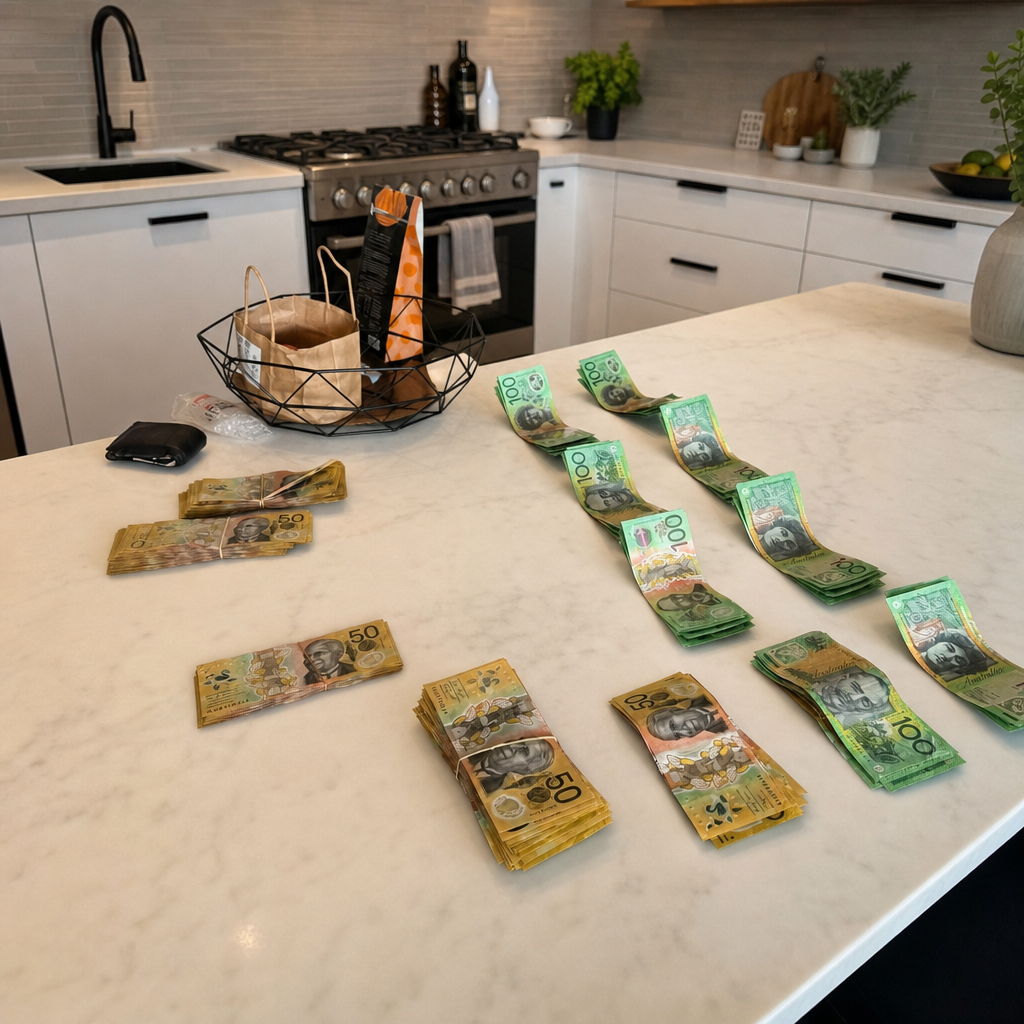
I bought an $11,000 caravan with a piggy bank. My husband thought I'd completely lost the plot. Turns out, crossing off little X's on a wooden box was more addictive than scrolling Facebook. Let me tell you about the most ridiculous thing I've ever done that actually worked. I'm sitting at the kitchen table with my husband Dave, looking at caravans online for the millionth time. We'd been doing this for six years. Every few months, we'd browse Gumtree and Facebook Marketplace. Talk about which model we'd get. Plan the road trip around Australia we'd take when the kids moved out. Then we'd check our savings account and reality would hit. $2,800. After six years of "trying to save," we had $2,800. Dave closed his laptop. "We're never actually going to do this, are we?" I wanted to argue. But he was right. We earned decent money. Both had stable jobs. No major debts. We should've been able to save. But every month, the money just... disappeared. Groceries cost more than we planned. The car needed something fixed. One of the kids needed money for school camp. Dave's work boots wore out. We'd tried everything. Automatic transfers to savings. Budgeting apps. That envelope system where you divide cash into categories. Nothing stuck. The automatic transfers? We'd just transfer the money back out when something came up. Which was every bloody month. The apps? I'd check them obsessively for a week, then forget they existed. The envelope system? Too complicated. Too many categories. I'd mess it up by week two. In April, I saw this Facebook ad. A wooden piggy bank. Japanese Kakeibo method. Had these little squares you cross off as you save. My first thought: "That's the stupidest thing I've ever seen." My second thought: "What have I got to lose?" I didn't tell Dave I'd ordered it. Because how do you explain to your husband that you've just bought a children's piggy bank to save for an $11,000 caravan? When it arrived, I hid it in the laundry for two days. Then one morning, I just put it on the kitchen counter. Dave walked in. Stared at it. "What's that?" "It's a piggy bank." Long pause. "Babe. We're 48 years old." "I know how old we are, Dave." "You bought a piggy bank." "It's Japanese. There's a whole method behind it. You cross off these little X's as you save and" "We don't even use cash anymore. Everything's on card." And that's the objection, isn't it? That's what stopped me from buying it for two weeks while the ad kept appearing in my feed. We don't use cash. Who does anymore? But here's what I figured out: That's exactly why we couldn't save. When money's just numbers on a screen, it doesn't feel real. Tapping your card doesn't hurt. Transferring money between accounts doesn't hurt. You never feel the money leaving. And you never feel it accumulating either. So I decided to try something that felt completely stupid. I started using cash again. Not for everything. That would be mental. But every Sunday, I'd withdraw $200 from the ATM. That was my spending money for the week. Coffees, lunches, random Target runs, whatever. And here's the rule I made: Whatever was left at the end of the week went in the piggy bank. Week one, I had $30 left. Put it in the box. Found the little square marked "$30" and crossed it off with a pen. That's when something weird happened. Crossing off that X felt... good? Like stupidly good. That little hit of satisfaction when you mark something complete. Week two, I had $45 left. Crossed off that X. Even better. Week three, I started making weird decisions. I was in line at Myer, about to buy a $35 candle I didn't need. And I thought: "Or I could cross off the $35 square." I put the candle back. Drove home. Put $35 in the box. Crossed off the X. More satisfying than the candle would've been. Dave noticed the box after a month. "You're actually using that thing?" "Yeah." "How much is in there?" "Couple hundred, I reckon." He picked it up. "It's heavier than I thought." Two months in, I started looking for excuses to put money in the box. Skipped my weekly hairdresser coffee - $4.50 in the box. Made lunch instead of buying it, $12 in the box. Didn't buy that throw cushion from Kmart, $15 in the box. Each time, I'd cross off the corresponding X. And each time, that little hit of satisfaction. Dave thought I'd gone weird. "You're choosing not to buy stuff so you can... cross off a square?" "It sounds insane when you say it like that." "It is insane, babe." But three months in, he stopped teasing me. Because the box was getting properly full. And I was getting properly obsessed. I'd moved past just "leftover money from the weekly $200." Now I was actively hunting for X's to cross off. Cancelled our Stan subscription we never watched, $12 a month. Crossed off $12 every month. Stopped buying the expensive bread from Woolies, $6 a week saved. $24 a month in the box. Skipped my monthly gel nails, $65 in the box. Big X crossed off. My sister came over for coffee. Saw the piggy bank on the counter, now obviously full of cash. "What's that?" "Caravan fund." She laughed. "You're saving for a caravan with a piggy bank?" "Yeah." "How much is in there?" "Haven't counted yet. But it's full. I'm getting a second one." "You're getting a second piggy bank." "The first one holds $10,000 when it's completely full. We need $11,000 for the caravan we want." She stopped laughing. "Wait. You've saved ten grand?" "Nearly. Another month or two." "With a piggy bank." "With a piggy bank." That's when it clicked for her and for Dave, who'd overheard this conversation. This stupid wooden box was actually working. Five months in, the first box was completely full. Every single X crossed off. I ordered the second box. Started filling that one. Six months in, Dave started asking me about it. "How much do you reckon is in there now?" "First box is ten grand. Second box has maybe $800." "You're serious about this." "I'm serious about this." Seven months in, we counted it. Dave insisted we wait until we had enough for the full caravan price. We emptied both boxes onto the kitchen table. Cash everywhere. Notes sorted into piles. $10,840. We were $160 short. I looked at Dave. "We need to list that old camping gear we never use." We sold it on Facebook Marketplace for $200. Eight months after I bought that "stupid piggy bank," we bought the caravan. $11,000 cash. The bloke selling it looked confused when I showed up with a envelope full of notes. "Don't see cash much anymore," he said. "Yeah, we saved it the old-fashioned way." We drove it home that afternoon. Dave just kept looking at it in the driveway. "We actually did it." "We actually did it." That night, my daughter asked, "How did you save up so fast? You've been talking about a caravan forever." "Piggy bank," I said. She laughed. "Mum. Be serious." "I am serious." I showed her the empty boxes with all the X's crossed off. "You saved eleven thousand dollars by crossing off X's?" "Basically, yeah." "That's so weird." She was right. It was weird. But here's what I figured out over those eight months: The magic wasn't the box itself. The magic was making money physical again. When I withdrew that $200 every week, I felt it leave my account. When I put $30 in the box, I felt the achievement. When I crossed off the X, my brain got that little dopamine hit that made me want to do it again. It became a game. How many X's can I cross off this week? What can I skip buying so I can cross off the big $50 X? If I pack lunch for the whole week, that's $60 worth of X's. The box made saving visible. Every day, I walked past it on the counter. Every day, I saw how full it was getting. Every day, I made small choices: Do I want this thing, or do I want to cross off another X? With banking apps, the money was invisible. I'd transfer $50 to savings, feel good for thirty seconds, then forget about it. A week later, I'd transfer it back out for something else. The money never felt real. But physical cash in a physical box that got heavier every week? That felt real. And crossing off those X's? That was weirdly addictive. More addictive than buying stuff I didn't need. More satisfying than scrolling through online shopping sites. I'm not going to lie and say using cash was easy. It wasn't. Some places don't take cash anymore. That was annoying. I had to plan ahead more. Remember to actually withdraw money on Sundays. I couldn't just tap my card without thinking. But that was the point. The inconvenience was the feature, not the bug. Because the inconvenience made me think about money. And thinking about money made me better with money. Now, nine months later, we've taken the caravan on three trips. Drove up to Byron Bay for a week. The kids loved it. Took it down the coast for a long weekend. Just Dave and me. We're planning a month-long trip around Australia when Dave retires. And you know what's back on the kitchen counter? Two new piggy banks. One for the bathroom renovation. One for the new car fund. Because if we can save $11,000 for a caravan by crossing off X's on a wooden box, we can save for anything. My sister bought one last month. "If it worked for you, maybe it'll work for me," she said. Two weeks later, she texted me: "Why is crossing off these X's so satisfying??" I know, right? My neighbour asked about it when she came over for coffee. "That's how you saved for your caravan? I thought you were joking." "Nope. Completely serious." "And you just... crossed off X's?" "Yeah. It's weird how well it works." She bought one too. Yesterday she texted: "I've crossed off $180 worth already and it's been 8 days. This is actually addictive." That's the thing nobody tells you about saving money. It's not about willpower. It's not about being "good with money" or "disciplined." It's about making the invisible visible. It's about creating a system that works with your brain, not against it. It's about getting that little hit of satisfaction when you cross off an X, the same hit you get from ticking off a to-do list or completing a level in a game. Our brains love that stuff. And when you make saving money feel like winning a game? You suddenly get very good at it. Look, I know how this sounds.' "She saved $11,000 with a piggy bank" sounds like something from 1985, not 2025. And yeah, using cash is more complicated than tapping your card. You have to plan ahead. You have to remember to withdraw money. You have to actually think about your spending instead of mindlessly tapping. But that's exactly why it works. The complication is the point. Because the ease of tap-and-go is why we couldn't save in the first place. When spending money requires zero thought and zero effort, you spend without realizing. When saving money requires zero thought and zero effort (just automatic transfers), you don't feel the achievement. But when you physically put cash in a box and cross off an X? Your brain notices. Your brain celebrates. Your brain wants to do it again. And that's how you save $11,000 in eight months without feeling like you're depriving yourself. Because you're not focused on what you're giving up. You're focused on what you're gaining. Every crossed-off X is progress. Every crossed-off X is proof you're actually doing it this time. Every crossed-off X gets you closer to the thing you've wanted for six years. We've had the caravan for three months now. Every time we use it, Dave says the same thing: "Can't believe we actually did it." Me neither, honestly. Six years of failing to save. Six years of looking at caravans we couldn't afford. Six years of feeling broken with money. Eight months with a wooden box and a sheet of X's to cross off? Changed everything. The caravan sitting in our driveway isn't just a caravan. It's proof that we're not broken. It's proof that we can save money, we just needed a system that worked with how our brains actually function. It's proof that sometimes the old-fashioned way works better than the "smart" modern way. And it's proof that crossing off X's on a wooden box is somehow more powerful than every budgeting app ever invented. Still sounds stupid when I say it out loud. But it's our stupid wooden box that bought us an $11,000 caravan. So I'm not complaining. P.S. - Dave asked me to tell people about this. "Someone else is looking at caravans they can't afford right now," he said. "Tell them about the X's." So here I am. The X's are weirdly addictive. The box actually works. And yes, using cash is a bit more complicated than tapping your card, but that's the whole point. The piggy bank I used: https://www.kousely.com/products/piggy-bank
Like this ad? Make it yours.
Crush rebuilds this exact creative around your product — your brand, your colors, your offer — in about a minute.