
Active· since Jun 4, 2026
- 104
- days running
- 0
- relaunches
Ad copy
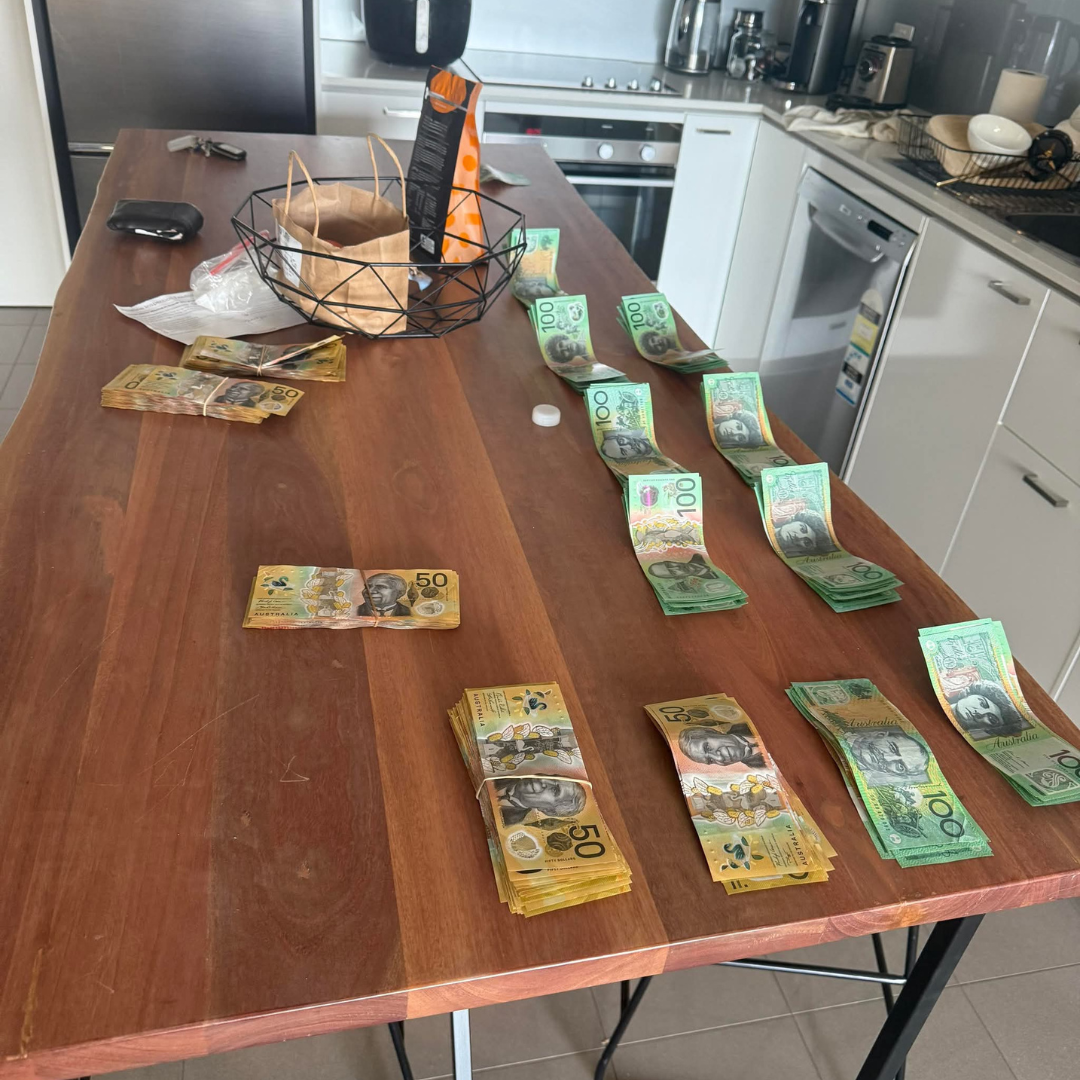
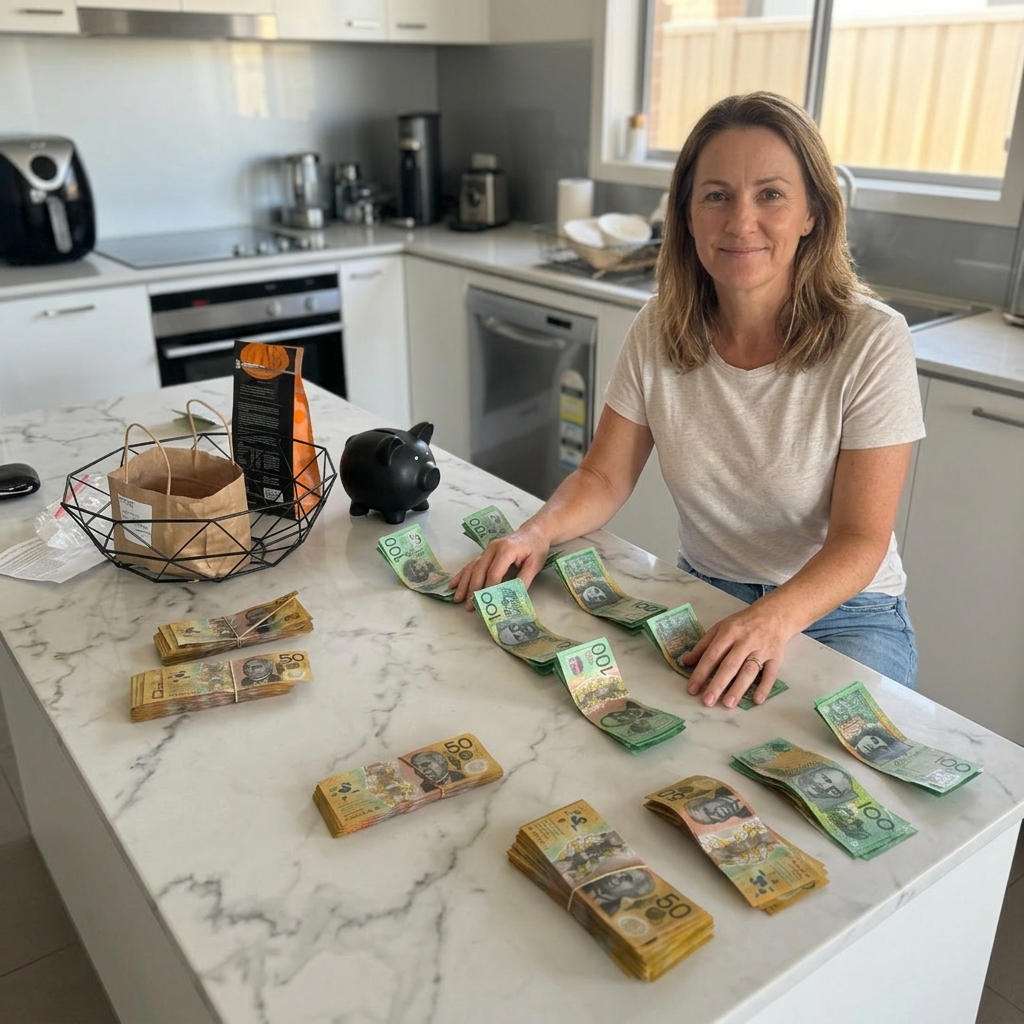
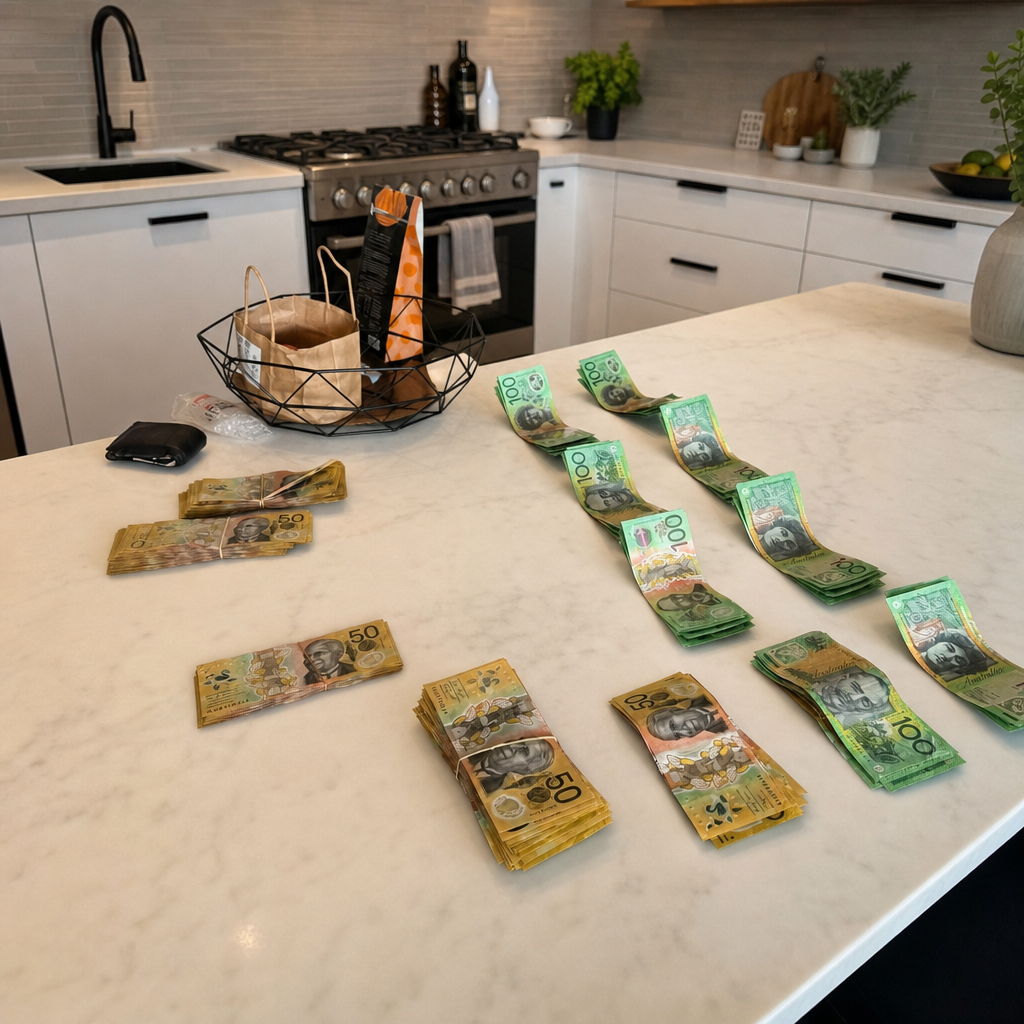
How $580/month was disappearing from my account - and the $20 fix that showed me exactly where it was going. I thought I knew where my money was going. Turns out I had no idea. My husband and I are not reckless with money. We don't take overseas holidays every year. We don't buy new cars. We don't eat out four nights a week. We work full time. We pay our bills on time. We live within our means. But every single month, without fail, we'd get to the last week before payday and the account would be tighter than it should be. Not broke. Just... tighter than made sense. I'd check the balance and think: where did it go? We weren't spending big. We weren't being stupid. The money was just... disappearing. And I couldn't explain it. In February, my sister sent me a link to something called the Kousely Expense Tracker. It's a digital spreadsheet. You download it, open it in Excel or Google Sheets, and you log every single thing you spend for a month. Every coffee. Every grocery shop. Every subscription. Every random $8.50 purchase at Kmart you don't even remember making. All of it goes in the sheet. I looked at it and thought: I don't need this. I know what I spend. My sister said: "Just try it for a month. Track everything. See what happens." I rolled my eyes. But I bought it anyway. Twenty dollars. Fine. I'll prove I already know where my money goes. Week one, I logged everything. Monday: coffee $5.50, lunch $14, groceries $63, petrol $55. Tuesday: coffee $5.50, kids' school canteen $12, Chemist Warehouse $28. Wednesday: coffee $5.50, Coles top-up shop $41, kids' sport fees $35. I was meticulous. Every single transaction went in the sheet. By the end of the week I looked at the totals and thought: okay, that's more than I expected. But not alarming. Week two, same thing. Logged everything. Week three, I started noticing patterns I hadn't seen before. Coffee was costing me $38.50 a week. Nearly $160 a month. On coffee. The "top-up shops" at Coles, the ones I thought were $30-40 here and there, were adding up to over $280 a month on top of my main grocery shop. I wasn't shocked yet. Just... aware. And then I got to the subscriptions. I have a category in my budget for subscriptions. I know what we pay for. Netflix: $16.99 a month.� Spotify family: $19.99 a month.� Disney+: $13.99 a month. That's about $51 a month. I've always known that number. Except when I went through my bank statements to log everything properly, I found eight other charges I'd completely forgotten about. Eight. Some of them I recognised immediately and felt like an idiot: Apple iCloud storage: $4.49 a month (been on there for three years, never cancelled) Amazon Prime: $9.99 a month (forgot we even had it, haven't used it in over a year) Audible: $16.45 a month (trial I signed up for in 2023, never cancelled, haven't listened to a single book) Annoying, yes. But not devastating. And then I found the two that made me feel physically sick. Charge 1: $38.99 a month. I didn't recognise the company name. I Googled it. Turns out it's some "premium account upgrade" for an app one of the kids downloaded on their iPad two years ago. I have no memory of approving it. They probably clicked "yes" to a free trial and it auto-converted to a paid subscription. $38.99 a month. For two years. $935.76. Gone. Just... gone. For an app we don't use. An app I didn't even know was installed. Charge 2: $34.67 a month. Again, company name I didn't recognise. Googled it. Some kind of "VIP membership" for a website I visited once in 2023 looking for recipe ideas. I have zero recollection of signing up for anything. But there it was. Monthly charge. Going out automatically. $34.67 a month. For two years. $832.08. I sat at the kitchen table staring at my laptop screen for about ten minutes. I felt sick. Genuinely sick. Not because we couldn't afford it, we clearly had been affording it, I just didn't know. But because I'd been haemorrhaging money for two years and had no idea. How many times had I said "we can't afford that holiday" while $73 a month was silently draining out of my account for things I didn't even use? How many times had I put something back on the shelf at Kmart because "we need to be careful with money" while nearly $1,800 was disappearing into subscriptions I'd forgotten existed? I cancelled both of them immediately. Called the bank. Explained the situation. They couldn't refund anything (automatic payments, I'd technically "authorised" them at some point, even though I have no memory of it). The money was gone. But at least it stopped. Then I looked at groceries. I do one big shop a week. Usually Thursdays. I budget $250 for it. And I hit that number pretty consistently. $240 one week, $265 the next. It averages out. So in my head, I spend about $250 a week on groceries. That's $1,000 a month. I know that number. I've always known that number. Except that's not what I actually spend. Because the "big shop" is only part of it. There's the Monday arvo run to Woolies because we're out of milk and bread and I grab a few other things while I'm there, $40. There's the Wednesday Coles stop on the way home from work because I forgot something for dinner, $35. There's the Friday "quick shop" for the weekend, $50. There's the Sunday trip because the kids want snacks for school lunches and we're out of fruit, $38. All of these felt small. Incidental. Not worth tracking. But when I added them up at the end of the month, the total was $2,130. Not $1,000. $2,130. I was spending over $530 a week on groceries without realising it. I stared at that number for a solid five minutes. My husband walked past and asked what I was looking at. I turned the laptop toward him. "We're spending $530 a week on food." He looked at the screen. Looked at me. "That can't be right." "It's right. I've logged every transaction for four weeks. It's right." He sat down. We went through the sheet together. Line by line. And every single entry was accurate. There was no mistake. No double-counting. We were just spending way more than we thought we were. Here's what I didn't understand before I started tracking: Your brain doesn't add up small purchases the way it adds up big ones. When you spend $250 at Woolies, you feel it. You see the total on the screen, you tap your card, you register it. But when you spend $38 here, $45 there, $32 somewhere else, your brain doesn't stack them. It treats them as separate, unrelated events. So you genuinely believe you're spending $250 a week on groceries when you're actually spending $530. You genuinely believe you're paying $51 a month for subscriptions when you're actually paying $124. And because you never see the real total, you never fix it. After that first month of tracking, I made some changes. Subscriptions: Cancelled the two scam charges immediately (saved $73.66/month). Cancelled Apple iCloud, Amazon Prime, and Audible (saved another $30.93/month). Total saved: $104.59/month. Groceries: Stopped the "top-up shops." If I forgot something, too bad, we make do until Thursday. Switched to shopping Wednesday nights when they mark everything down (same food, 20-30% cheaper). Started meal planning Sunday nights so I actually know what I need for the week. First month after tracking: grocery spend dropped to $1,420. That's $710 less than the month before. I didn't eat worse. I didn't starve my kids. I just stopped the leaks. By month two, I'd found an extra $580 a month that was just... disappearing before. $580. Every single month. For a $20 spreadsheet. I told my husband we're putting every cent of that $580 into the Bali fund. We've been talking about going to Bali for five years. We've never been able to afford it. Turns out we've been able to afford it the whole time. We were just spending the money on groceries we didn't need and subscriptions we didn't use. It's been four months now. We've saved $2,320 just from the leaks I found in month one. The Bali fund has gone from $1,100 (where it sat for two years) to $3,420. We're booking flights in June. My sister asked me last week how we're suddenly affording it. I said: "I bought a $20 spreadsheet and found $600 a month I didn't know I was losing." She laughed. I said: "I'm serious. Twenty dollars. Best money I've ever spent." Here's what I wish someone had told me three years ago: You don't have a spending problem. You have a tracking problem. You're not reckless. You're not irresponsible. You're just operating blind. You think you know where your money's going because you check your bank balance and you're not broke. But "not broke" and "knowing where it's going" are two completely different things. The Expense Tracker doesn't tell you how to spend your money. It doesn't lecture you about lattes or smashed avocado. It just shows you, in cold, hard numbers, where it's actually going. And once you see it, you can fix it. I found $600 a month. Some of it was subscriptions I'd forgotten about (or never knowingly signed up for in the first place). Some of it was grocery spending that had spiralled without me noticing. Some of it was just... leaks. Ten dollars here, fifteen there, thirty somewhere else. None of it felt significant in the moment. But over a month, it added up to more than our car payment. Over a year, it's over $7,000. That's not a rounding error. That's a holiday. That's a kitchen renovation. That's a chunk of the house deposit we've been "saving" for since 2023. The tracker costs twenty dollars. I made that back in the first week just from cancelling the iCloud subscription I forgot I had. Everything after that was pure profit. If you've ever looked at your bank balance at the end of the month and thought "where did it go?", this is your answer. It didn't go to anything big. It didn't go to anything memorable. It just leaked out through a hundred small holes you didn't know were there. Twenty bucks to find them. $600 a month to plug them. Best trade I've ever made. P.S. — I now tell every friend who complains about money to buy this tracker and log everything for one month. Just one. The look on their faces when they see the grocery total... that's why I wrote this. Everyone deserves to know where their money's actually going. I got it from here: https://www.kousely.com/products/kousely-digital-expenses-tracker
Like this ad? Make it yours.
Crush rebuilds this exact creative around your product — your brand, your colors, your offer — in about a minute.