
Inactive· since May 21, 2026
- 27
- days it ran
- 4
- relaunches
- 31,982
- EU reach
Ad copy
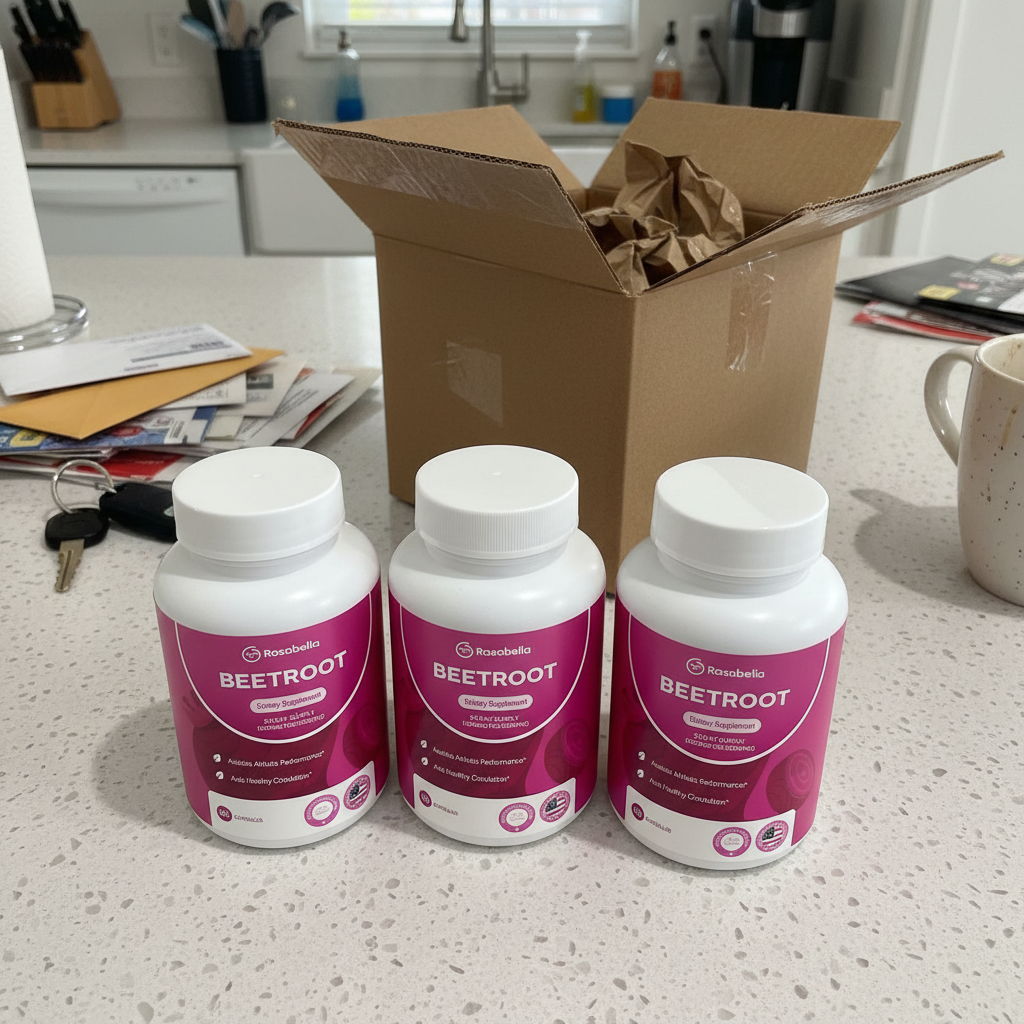
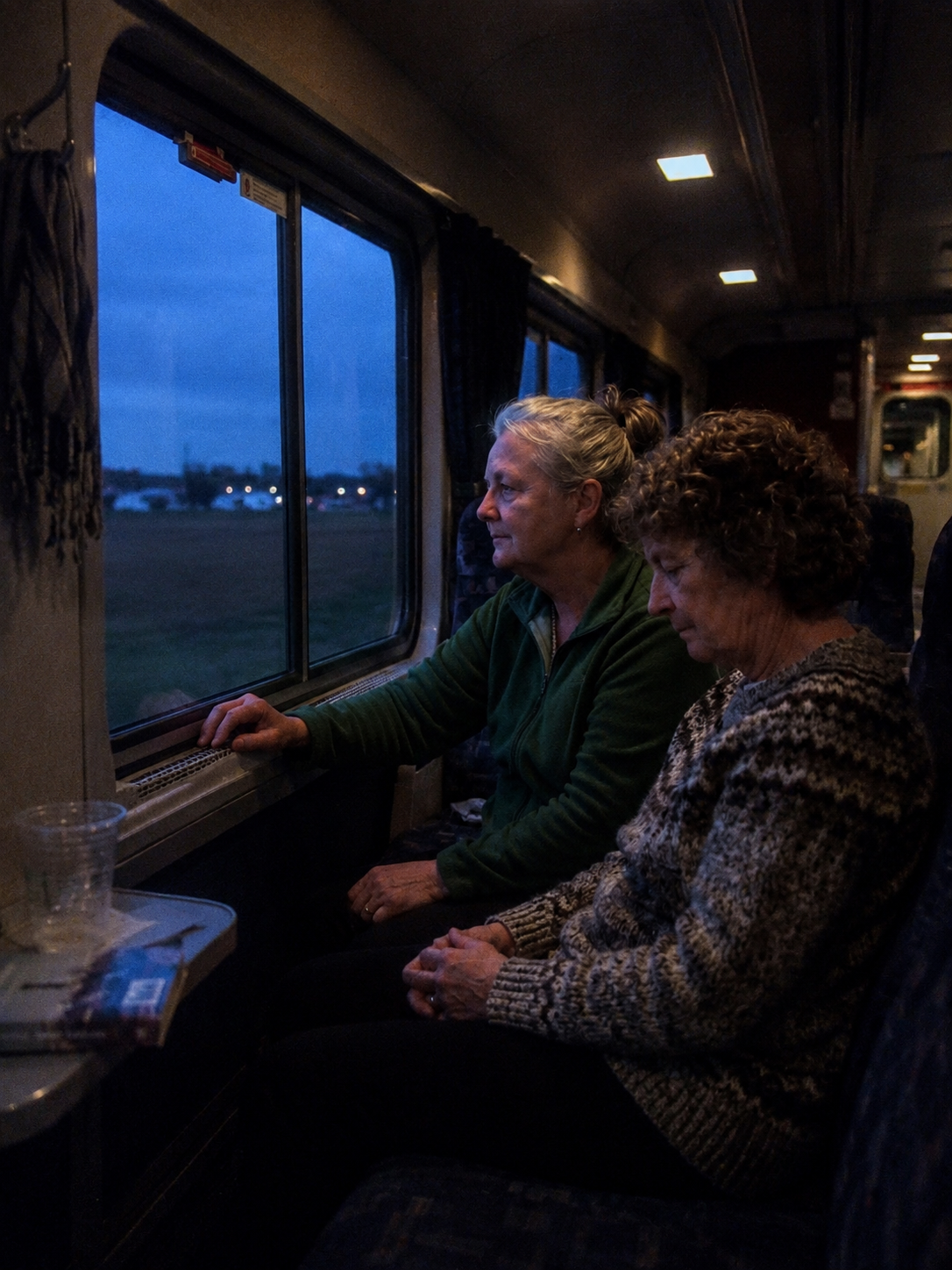
I Sat Next to a Stranger on a 14-Hour Train From Chicago to Denver. By Hour Six She Said Something I Couldn't Stop Thinking About for Six Months. I'm 61 years old. I don't fly anymore. I haven't flown since 2019 — not because of anything dramatic, just because I figured out that I hate it and I have the time now to take the long way. Last October I took the California Zephyr from Chicago to Denver to see my son. 14 hours. Overnight. Coach seat. The kind of trip where you watch the prairie roll by for hours and you're not in a hurry to be anywhere. The woman who sat down next to me at Union Station was about my age. Mid-60s. Silver hair cut short. Wearing one of those long linen cardigans that women our age wear when we've stopped caring what's in style and started caring what's comfortable. She had a paperback in her bag and a thermos of tea and a small leather notebook. We did the small-talk dance for about 15 minutes after the train pulled out. Then she opened her book and I opened mine and that should have been it. It wasn't. By hour three, the train was rolling through Iowa. She put her book down and looked out the window for a long time. Then she turned to me and said, "I'm sorry, this is going to sound strange, but can I ask you something?" I said sure. She said, "Do you feel like yourself?" I blinked at her. That is not a question two strangers normally ask each other on a train. "What do you mean?" "I mean exactly what I'm asking. Do you feel like the person you were ten years ago, or do you feel like a watered-down version of her?" I looked at her for a moment. I didn't know what to say. Because the honest answer was no. The honest answer had been no for about four years. And nobody — not my husband, not my doctor, not my sister, not my closest friend — had ever asked me the question that plainly. She watched me not-answer. She didn't push. She just said, "Sorry. That was abrupt. I've been writing about this and it's been on my mind." She picked her book back up. I sat there for about ten minutes thinking about the question. Then I put my book down and said, "No. I don't feel like myself. I haven't for a while." She turned and looked at me. She didn't smile. She just nodded slowly, the way you nod when somebody tells you something you already knew. "Tell me about it," she said. Her name was Margaret. She was a retired high school science teacher. She had taught biology for 34 years at a public school. She had retired five years ago. She was on the train to visit her grandchildren in Salt Lake City. The Denver leg was a stopover where she'd switch trains and keep going west. She was one of the most curious people I'd ever talked to. But the reason she was asking me that question on a train wasn't academic. She told me, over the next several hours, that she had gone through what she called "the fade" in her late 50s. She didn't call it depression. She didn't call it menopause. She didn't call it aging. She called it the fade. She described it the way I would have described it, if I'd had the vocabulary. She said it was a slow dimming. Not of mood. Of animation. She said she used to wake up at 5:30 a.m. excited to start her day. Then somewhere in her late 50s, she started waking up at 5:30 a.m. and lying in bed for twenty minutes trying to find a reason to get out of it. Not depressed. Not sad. Just — lower wattage. She said her bloodwork was perfect through all of it. She said her doctor told her she was the healthiest 58-year-old woman in the practice. She said the doctor was right about the numbers and that was all the doctor's job was to be right about. I asked her what she meant when she said she'd been writing about it. She told me she'd been working, since she retired, on a long essay — possibly a newsletter, possibly a small book — about what she called the gap. The gap between what shows up on bloodwork and what a woman actually feels in her own body. She said it was something a lot of women in our age range talked about with each other quietly but no one wrote about plainly. She said something I wrote down in my own notebook that night. She said: "There's a kind of energy in the body that doesn't show up on a standard panel. It can fade in women in our age range whether or not anything else is wrong. And we've been told for fifty years that if our numbers are fine, we should be fine. That's not always how bodies work." She said it the way you say something when you've thought about it for a long time. I asked her, eventually, what she did about her own fade. She closed her book. She thought for a moment. She said, "I'd been a science teacher my whole life. I'm a curious person. I read about a lot of things. None of what I'm about to say is medical advice — I want to be very clear about that. I'm not a doctor. I never was. I'm a retired teacher who reads." "What I started reading about was the beet." "Not the powder you buy at the grocery store. Not the juice. Not the gummies. The compound family in beets that does most of the work is called the betalains — the deep red pigments — and they're sensitive to heat. A lot of beetroot supplements are processed at temperatures that damage those compounds. The bottle says beetroot but the contents have lost a lot of what makes beetroot beetroot." "There's a small company called Rosabella that cold-presses theirs at low temperatures. The processing preserves the betalains intact. The betalains are what support the body's natural antioxidant balance and cellular energy." "That's the whole pitch. There's no magic to it. The body needs certain compounds to do its work, and the compounds work better when they reach the body in their intact form." "That's all I'll claim. I'm not a marketer. I won't claim more than I know." She tapped her notebook. "What I can tell you is what I noticed in my own body over a stretch of about half a year. Not all at once. Not dramatically. Slowly." I asked her to walk me through it. She did. She said in the first few weeks she didn't notice anything. She said somewhere in the second month she started waking up before her alarm again — not exhausted, the way she'd been waking up for years, but actually rested. She said by sometime in the spring, she'd started caring about her morning coffee again. Tasting it. Sitting with it. She said by the end of the spring, she'd signed up for a watercolor class she'd been thinking about for three years. She said by the early summer, she'd booked the train trip we were currently on. She said she didn't know how much of all of that was the supplement and how much was her body coming back to itself for reasons no one could fully explain. She said the honest answer was that she'd added the supplement to a lot of other small things — better sleep hygiene, walking more, sitting less, getting back into the books she'd loved when she was younger — and the cumulative effect of all of it was that she was sitting on a train going to Salt Lake City instead of sitting in her chair at home wondering why she didn't want to. "Bodies are mysterious," she said. "They've been mysterious to me my whole life and I taught biology for 34 years. I won't tell you the supplement did it. I'll tell you I added it and the fade lifted gradually over many months. You can do with that what you want." We talked for another four hours. Then we slept the rest of the way through Nebraska. When we pulled into Denver in the morning, she stood up to gather her things. She tore a page out of her notebook before she left. She wrote two things on it. The name of the supplement. And one sentence. "There's a gap between what bloodwork measures and what a woman feels. You are not crazy for noticing it." She handed it to me. She got off the train. I never saw her again. When I got to my son's house, I put the piece of paper on the dresser in the guest room. I looked at it every morning for three days while I was visiting. When I got home to Chicago, I put it on my own dresser. I looked at it for another two weeks. Then I called my doctor's office. I told the nurse who picked up exactly what I was thinking about. A beetroot supplement. Cold-pressed. For general antioxidant and cellular energy support. I asked whether — given my age, given my blood pressure pill, given my last bloodwork — there was any reason I shouldn't add it. She put me on hold for about four minutes. She came back and said the doctor had no concerns. She said the doctor often recommended general antioxidant support for women in my age range. She said to keep taking my current medication exactly as prescribed and to come in for my regular physical in March. I want to stop here and say something clearly, because I think it's the most important part of this entire story. That phone call was the most important step. Not the train ride. Not Margaret. Not the supplement. The phone call. If you take one thing from what I'm saying, take that. You call your doctor's office before you add anything to what you're already taking. That phone call costs you four minutes. It is the single most important thing any woman over 50 can do before adding something new. I ordered the bottle the same afternoon. It came in four days. I put it next to the coffee maker. Two capsules every morning with breakfast. What follows is what I noticed and roughly when I noticed it. I'm telling it this way because I think the staged pacing is the part most women aren't told — that this kind of shift doesn't happen all at once and doesn't happen on a schedule, and being patient with your own body is the whole game. In the first few weeks, I didn't notice anything I could point to. I started to wonder if Margaret had been an unusually nice woman selling me a hopeful story on a train. Sometime in the second month, I woke up before my alarm on a Tuesday morning. Not exhausted. Just — awake. I lay there in the dark for a minute trying to figure out what was different. I couldn't. A few mornings later, the same thing happened. That was when I started paying attention. Around the same stretch, I started noticing my coffee in the mornings. The same coffee I'd been making for 20 years. I sat with it. I tasted it. I didn't carry the mug into the office and forget it on the desk anymore. Later that winter, I called my sister on a Tuesday afternoon, just to call her. I hadn't called her, just to call her, in over a year. We talked for 45 minutes. Sometime after that, I started taking walks after dinner instead of after lunch. Not because anything was different in the evening — because I had it in me. A few weeks into that, my husband Robert asked me if I'd done something to my hair. I hadn't. I had probably just stopped looking at the floor when I walked through the kitchen. By early spring, I'd signed up for a community choir at the library. I hadn't sung in a group in 14 years. Around that time, I cleaned out the closet in the guest room — a thing I'd been meaning to do since 2021. In the late spring, Robert and I booked a trip to see his sister in Maine. We hadn't taken a real trip, just the two of us, since 2018. By summer, I was sitting down at my own kitchen table on Sunday mornings with a fresh notebook and writing. I'm not going to tell you what I'm writing. It's not for anyone yet. But I'm writing, which is the thing I had stopped doing about six years ago without realizing I'd stopped. That's the log. Those are the things I can name. I am still on my blood pressure pill. I have not changed anything my doctor told me to take. My bloodwork in March was, in her words, "in good shape, keep doing what you're doing." The doctor didn't say why I seemed different. The doctor doesn't really know. The doctor knows my numbers. I know my life. A few weeks ago, I went looking online for Margaret. I had her first name, the fact that she'd taught high school biology, the rough region she'd taught in, and the fact that she was working on something — an essay, a newsletter, maybe a small book — about the gap between numbers and feeling. I never found her. She has, as far as I can tell, not yet shared it publicly. I hope she does someday. The world could use that essay. P.S. If you've been carrying around a quiet version of the same fade Margaret described — the bloodwork's fine and the woman is tired — talk to your doctor first. Not about supplements. About you. Tell her what you've been feeling. Don't let yourself or her wave it off as aging or stress or menopause. Some of it might be. Some of it might not. You won't know until somebody who can actually look at your bloodwork hears what you're describing. P.P.S. If you decide to try Rosabella, call your doctor's office before you start. Like I did. One phone call. Four minutes. Most nurses will get you an answer the same day. Then take two capsules with water in the morning. Don't change anything else you're doing. Just add this one thing. Give it 60 days before you decide anything. Some women notice something within the first two or three weeks. Others take longer. I'm telling you what I noticed and roughly when I noticed it because I think the gradual pacing is the part most people aren't told. But bodies are different. Be patient with yours. P.P.P.S. Rosabella has a 90-day money-back guarantee. If you're not satisfied for any reason, every penny back. No questions asked. That's a sensible policy for a supplement. It gives you long enough to actually see whether it helps before you decide. P.P.P.P.S. Rosabella is a small operation. They harvest and bottle on their own schedule, so I keep an extra bottle in the cupboard. They currently offer a multi-bottle option that I went with myself. Worth a look. P.P.P.P.P.S. I'm taking the California Zephyr again next October. Same train. Same route. Same time of year. I don't expect to see Margaret on it. I doubt she takes the same train twice. But I'm bringing my notebook. And if a woman my age sits down next to me and we get past the small-talk, I might ask her a question I never would have asked before I met Margaret. It's a question I think more women our age should ask each other. Do you feel like yourself? https://track.tryrosabella.com/cdc16426-3e48-40a7-9fad-21098084f6cf DISCLAIMER Individual experiences vary. These statements have not been evaluated by the FDA. This product is not intended to diagnose, treat, cure, or prevent any disease.
Support stamina and heart health every day
LEARN MORELike this ad? Make it yours.
Crush rebuilds this exact creative around your product — your brand, your colors, your offer — in about a minute.