
Inactive· since Apr 26, 2026
- 79
- days it ran
- 0
- relaunches
Ad copy
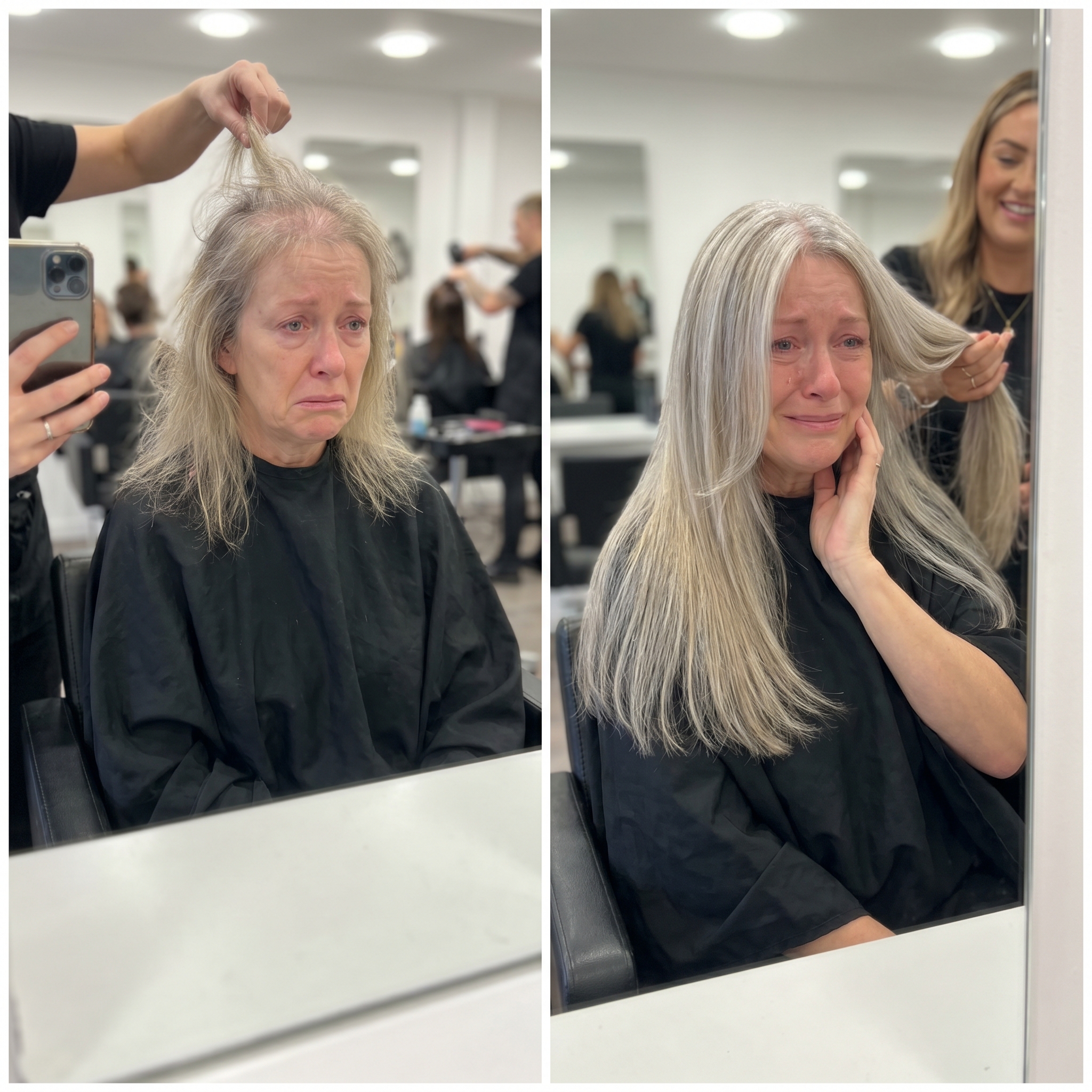
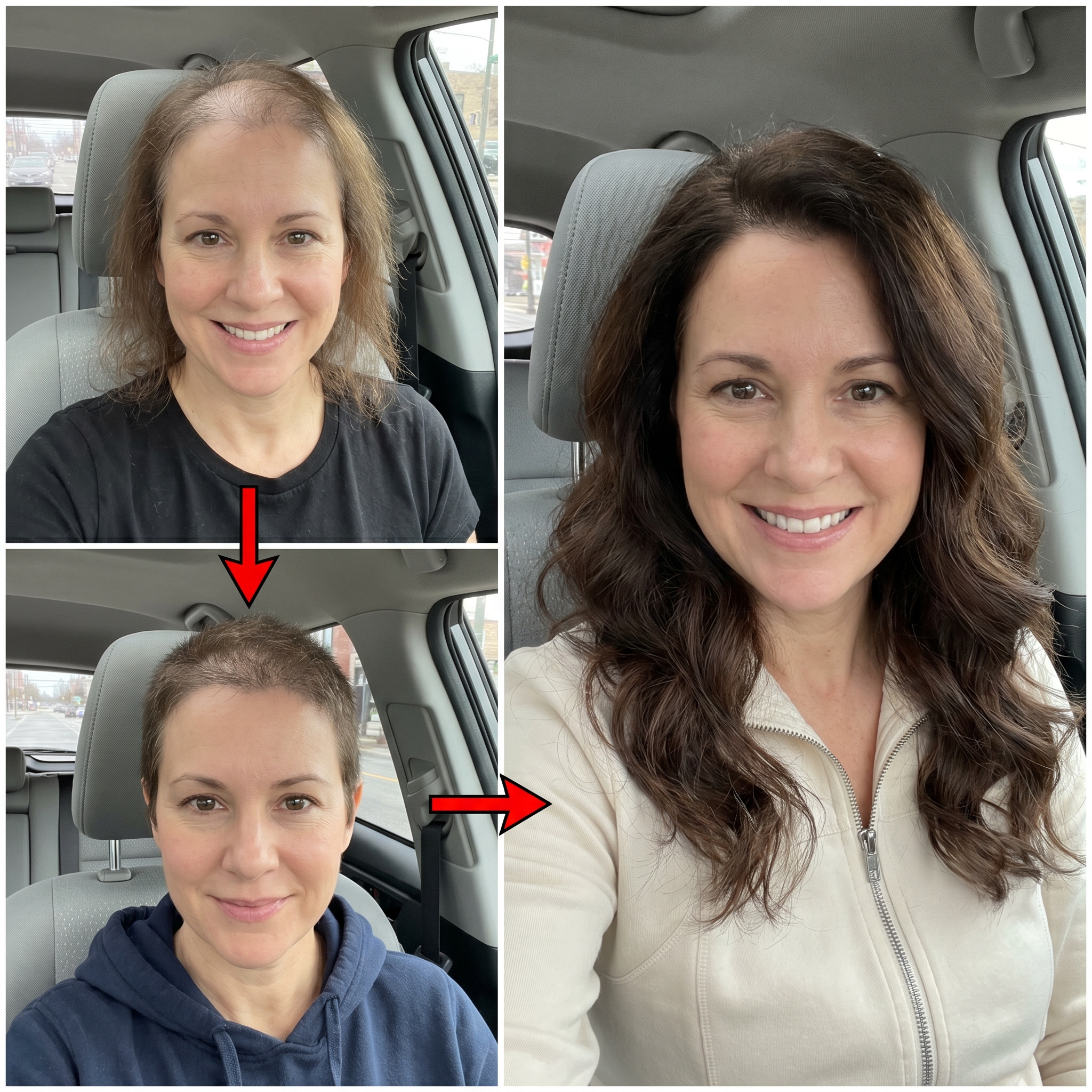
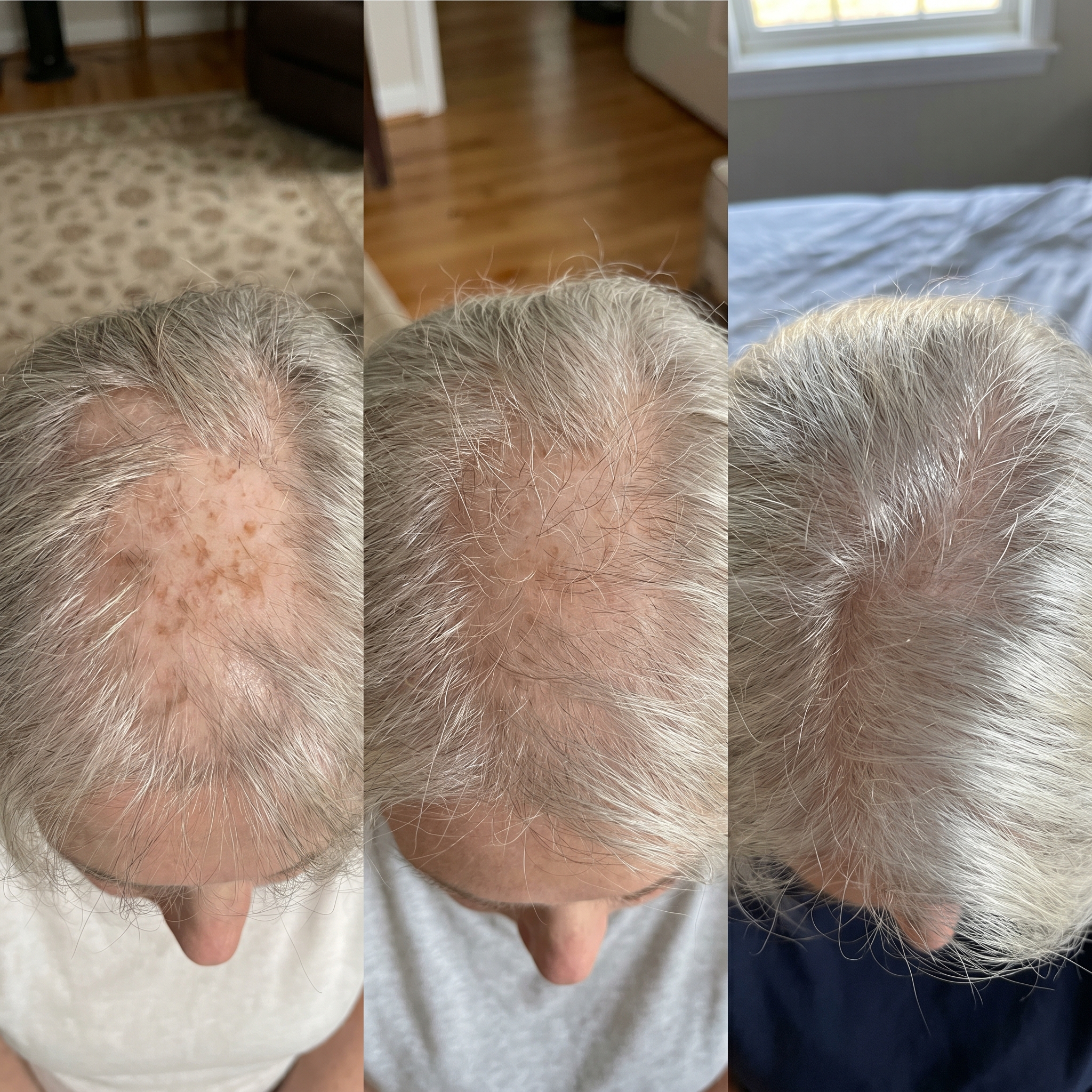
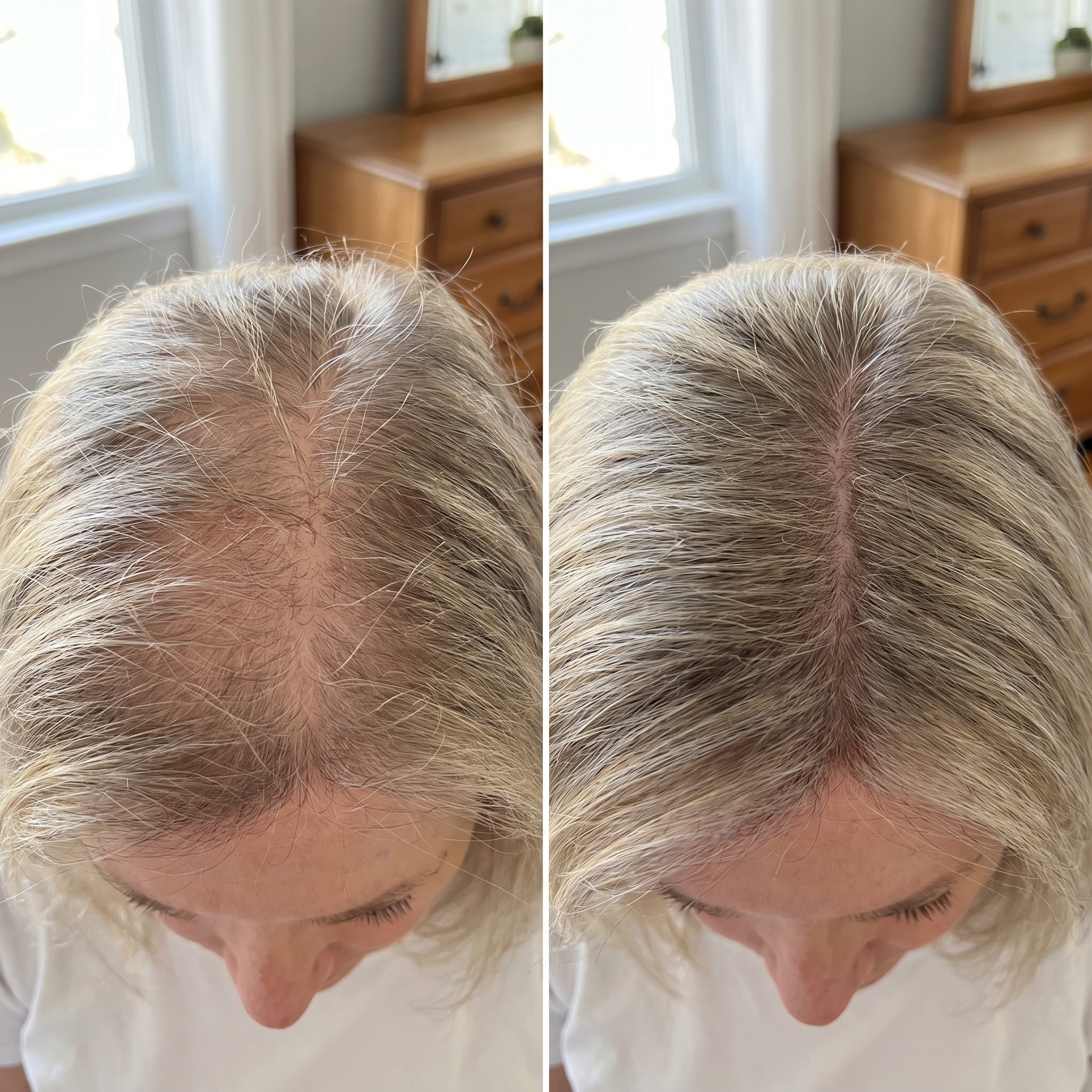
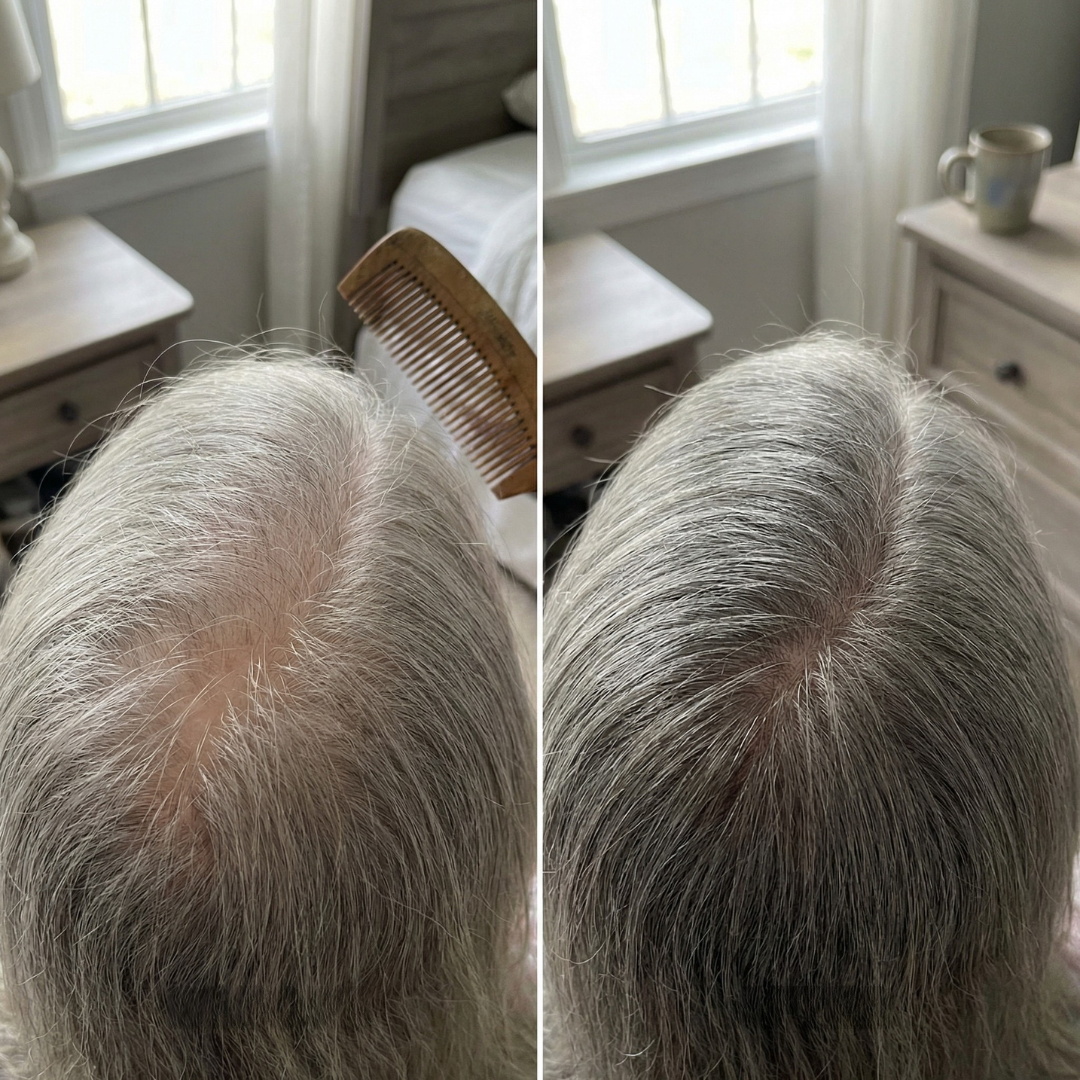
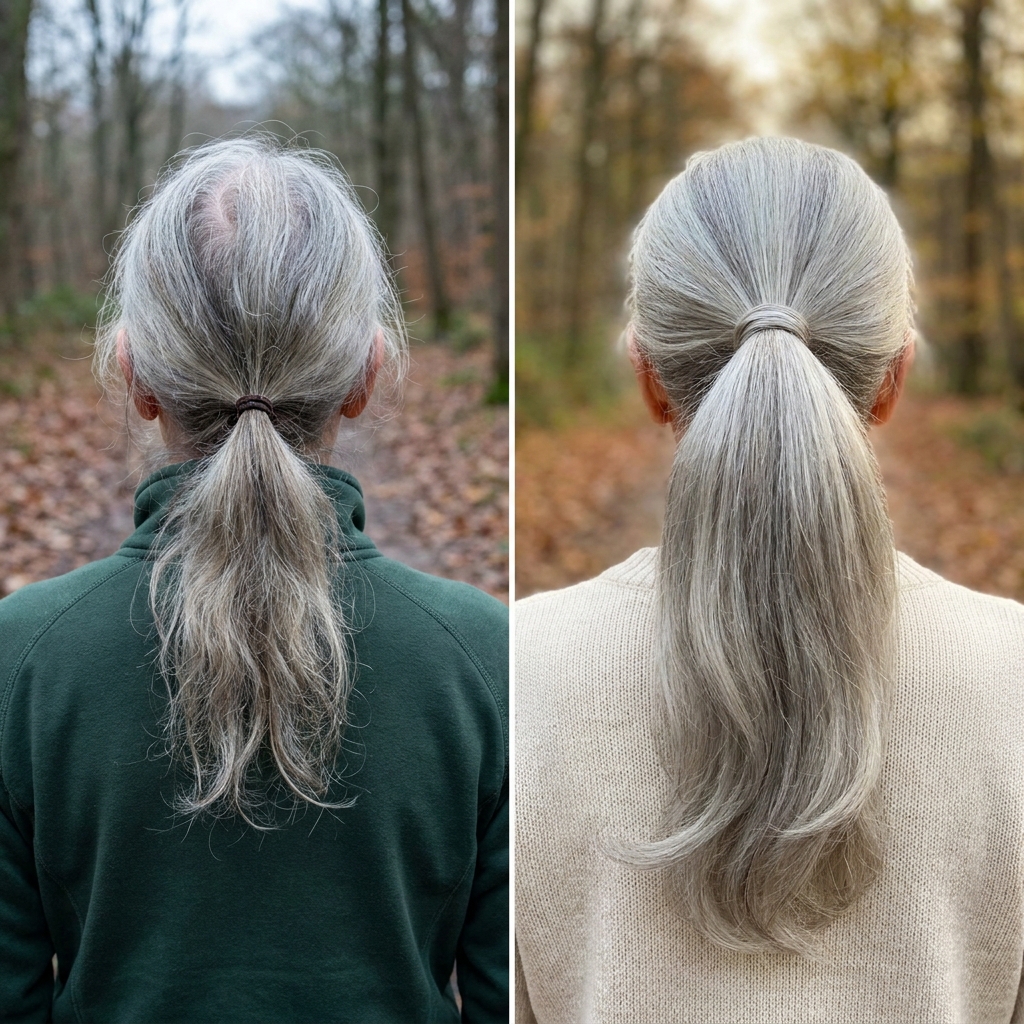
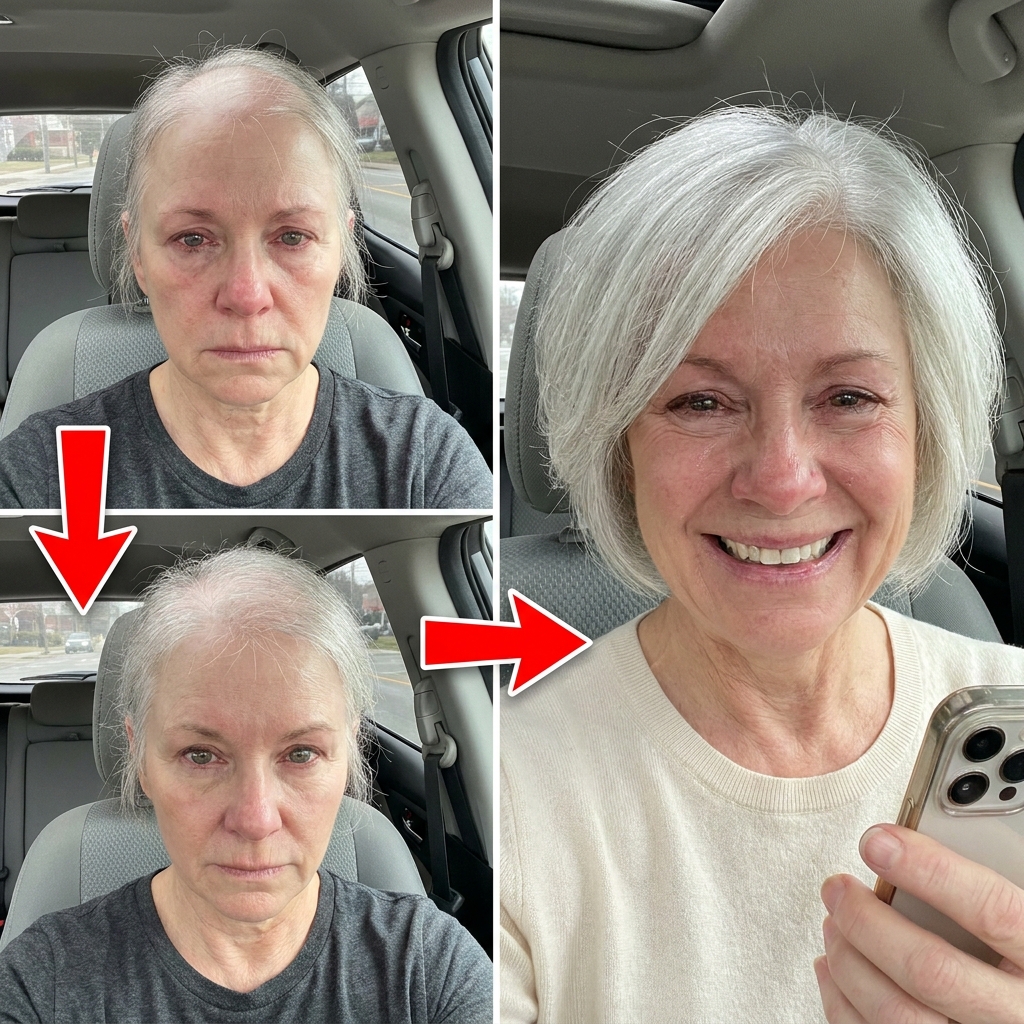
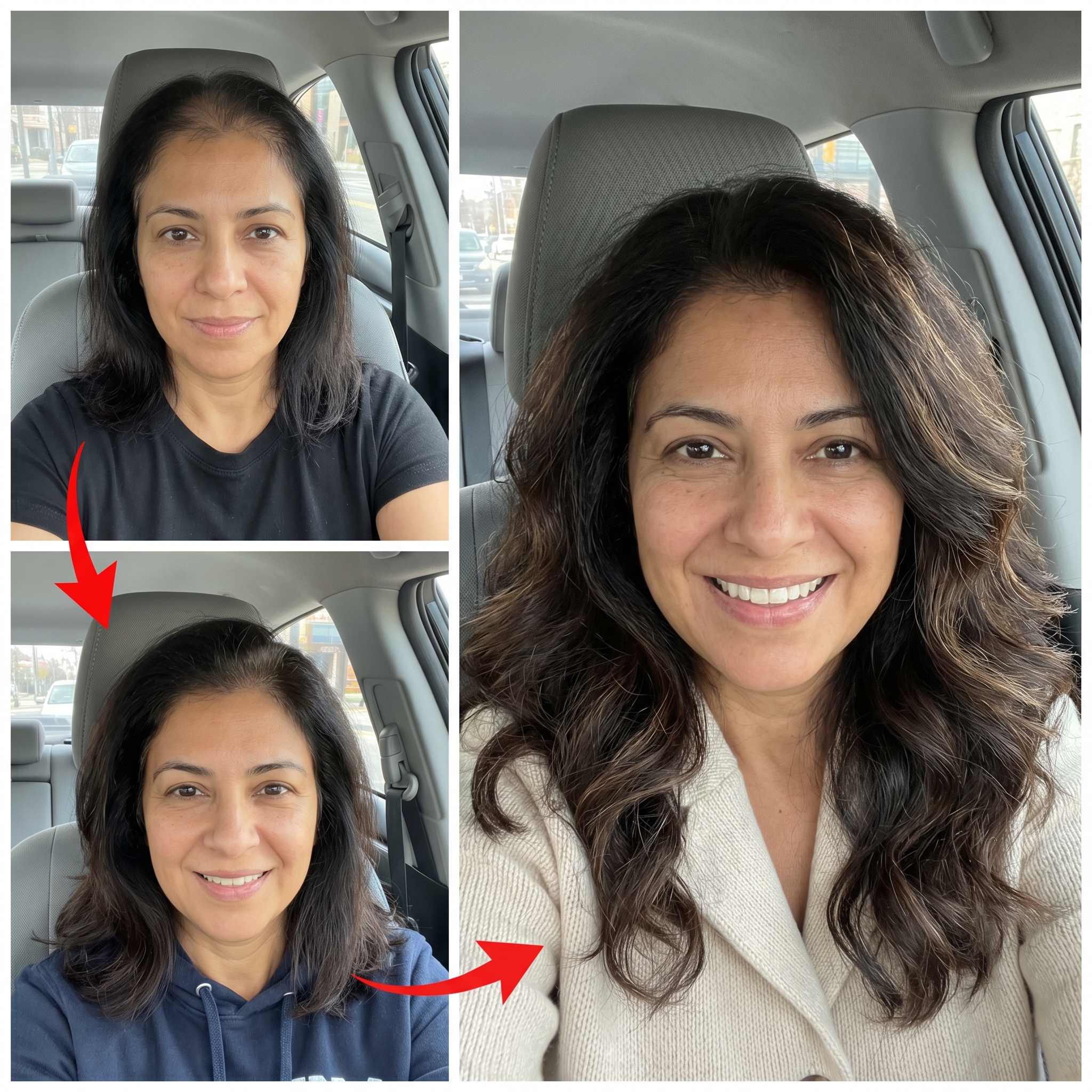
You don't have male pattern baldness. You have a folder on your phone called "hair" with 43 selfies in it — all taken in the same car, in the same parking space, in the same flat daylight — and you've been using them to track whether you're losing your mind or actually losing your hair. If you're a woman over 45 and you have become the kind of woman who takes a selfie in her car before every appointment just to check her part line, please read this before you buy another supplement. I started doing it in February two years ago. I'd parked at the Tesco Extra before a GP appointment, flipped my phone camera to front-facing, and taken a photo of myself under the overhead daylight. I wasn't smiling. I wasn't posing. I was just documenting. When I got home that evening I made a folder called "hair" and dropped it in. By the following February that folder had 43 photos in it. You could scroll through it like a flipbook and watch my hair get smaller. The part getting wider. The front sections getting flatter against my scalp. The way the hair at my temples stopped covering and started revealing. My face in every photo was the same face, my skin was the same skin, my expression was the same tired half-smile — but the hair around it got quieter and quieter each month until in the January photo I took before my 51st birthday I barely recognised myself. I am 52. I'm an immigrant. I came to this country in my twenties. My mother had thick dark hair down to her waist until she was 70. My grandmother had thick dark hair down to her waist until she was 82. I have aunties in their 60s who still wear their hair in plaits that look like rope. There is nobody in my family who has gone through what I was going through, and that made it lonelier than I can explain. If you have a folder like mine, or you've been quietly measuring your ponytail with your fingers every few weeks, or you've started asking your husband "does my hair look different" in a way that means please tell me it doesn't, I need to tell you what it took me fourteen months and nearly £1,300 to find out. You do not have a hair problem. You have a hormone problem that is showing up in your hair. And almost every product on the market for women our age is built to treat the wrong thing. I bought a lot of them. Nutrafol for four months at £79 a bottle. Viviscal twice. A £210 scalp serum from a clinic in central London my cousin swore by. Minoxidil foam that made my shedding much worse for seven weeks so I stopped. Biotin at 10,000mcg until tiny spots appeared along my jaw — which I later discovered is a known side effect of high-dose biotin, but nobody had told me. Rosemary oil. Castor oil that stained every pillowcase I owned. Collagen. Bhringraj oil from an Ayurvedic shop in Wembley. A laser cap my husband called "the alien hat" that I used three times. A £160 "scalp balancing" treatment at a trichology clinic that suggested I come back every three weeks at £70 a visit. None of it stopped the car park folder from getting worse. At 12:48AM one Saturday I fell down a rabbit hole on YouTube and landed on a trichologist lecture that changed everything. One sentence, directly to camera, made me put my tea down. She said: "The most common mistake women over 45 make is treating their hair instead of treating what's happening to the hormonal environment around the hair. Female pattern hair loss in this age group is an androgen-sensitivity problem. You cannot fix an androgen-sensitivity problem with biotin." I rewound it three times and wrote it down on the back of an Amazon delivery note. Here is what nobody had explained to me in fourteen months of GP visits, supplements, and clinic appointments. Women produce DHT — the same hormone behind male pattern baldness in men. For your entire adult life, estrogen has been sitting on your hair follicles like a shield, keeping DHT from docking with them and keeping you in the thick terminal-hair growth cycle you've had since your twenties. Perimenopause drops your estrogen. The shield drops with it. DHT — which has not increased at all — suddenly has direct access to follicles that have never had to deal with it before. It doesn't kill them. It miniaturises them. Each growth cycle they produce a thinner, shorter, wispier hair until eventually some of them stop cycling altogether. That's why the thinning shows up at the part, the temples, and the crown first — those follicles are the most androgen-sensitive on your head. That's why it doesn't look like shedding, because it isn't shedding — it's shrinking. That's why my car park folder looked the way it did: every month, every follicle at my part was producing a slightly smaller version of the hair it had made the month before. Biotin cannot touch that. Biotin strengthens hair that's already there. It cannot rebuild a hormonal shield around the follicles themselves. I had been buying tools aimed at the wrong layer of the problem for over a year. What I actually needed was something that pulled two levers at once: slowing the DHT conversion, and supporting the estrogen side. That sent me to Mellenza. Saw palmetto — a natural 5-alpha-reductase interrupter, which is the enzyme that converts testosterone to DHT (same pathway as the prescription options, no prescription needed). Black cohosh, red clover, and soy isoflavones for the estrogen-support side. Ashwagandha because my cortisol was, to quote my sister, "a whole situation." Plus the full hair-nutrient stack — biotin, zinc, selenium, bamboo silica — layered underneath as a base, not the main event. Weeks 1-3: nothing. I almost cancelled. I've been burned too many times. I didn't cancel because I'd paid for three months. Week 5: the pile on the bathroom counter after brushing was visibly smaller. I counted strands. 17. In September I'd counted 52. Week 8: my hairdresser in Harrow lifted my hair up and said in Punjabi, "Something has changed here, you have new growth at the front." She has known me for eight years. She does not lie. Month 3: I took a car park selfie in the same Tesco Extra car park, same space if it was free, same phone held at the same distance. When I put it next to the January photo I sat in the driver's seat for a long time before I could drive home. The part was closed. The front had shape again. My temples were not a clearance sale. Month 5: proper baby hairs along my hairline. Short dark wisps standing straight up that would not lie flat for any amount of serum. I took a photo of them for the "hair" folder and it was the first photo in that folder I took while smiling. Month 6: I took the car park selfie one more time, wearing a cream cardigan, and I smiled like the woman I remembered being before February. That's the one that's at the end of the folder now. One note because the comments always ask: if you're already on HRT and your hair is still thinning, HRT is not failing you. HRT restores some estrogen systemically — that's why your hot flashes go and your sleep improves — but it doesn't directly interrupt the DHT conversion at the follicle level. For most women the hair needs the DHT side addressed separately, on top of HRT. Both levers. Not one. You don't have male pattern baldness. You don't have hair that has abandoned you. You have follicles that have been quietly miniaturising for a couple of years because the hormonal shield they counted on for decades has dropped — and that shield can be supported again. Mellenza is what rebuilt mine. The link is in the comments. I just didn't want you to take another twelve months of car park selfies before somebody finally explained what you were looking at.
The Car Park Selfie I Took Before Every Appointment for Two Years
Women's Health · Updated April 2026 Menopause · Hair Routine 7 Mistakes That Make Menopausal Hair Loss Worse, And the 30 Second Ritual 10,000 Women Used to See Regrowth in 8 Weeks Dr. Sarah Mitchell — Women's Health Writer. If you're standing in front of the mirror doing the 3-elastic ponytail t...
LEARN MORELike this ad? Make it yours.
Crush rebuilds this exact creative around your product — your brand, your colors, your offer — in about a minute.