
Inactive· since Apr 30, 2026
- 75
- days it ran
- 5
- relaunches
Ad copy
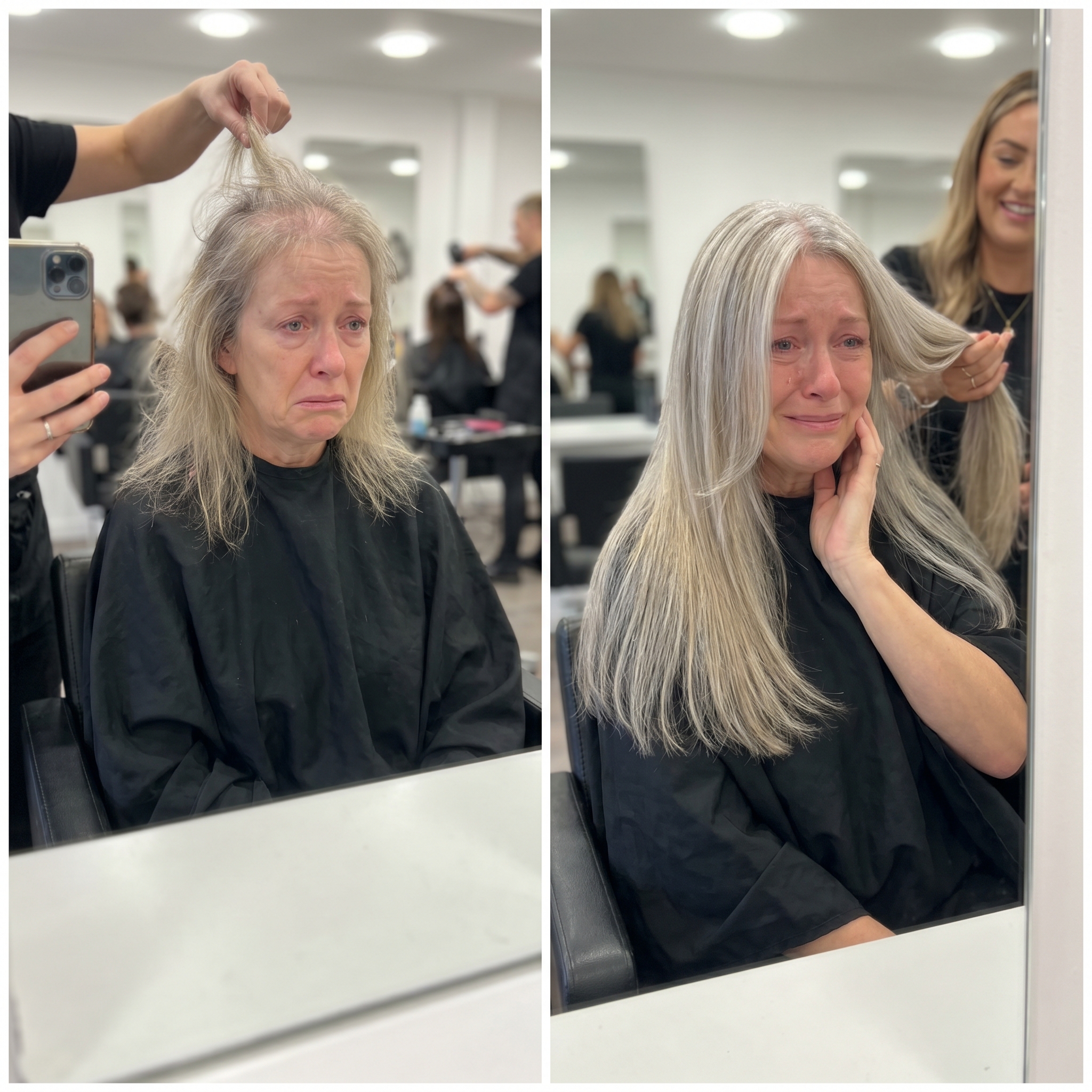
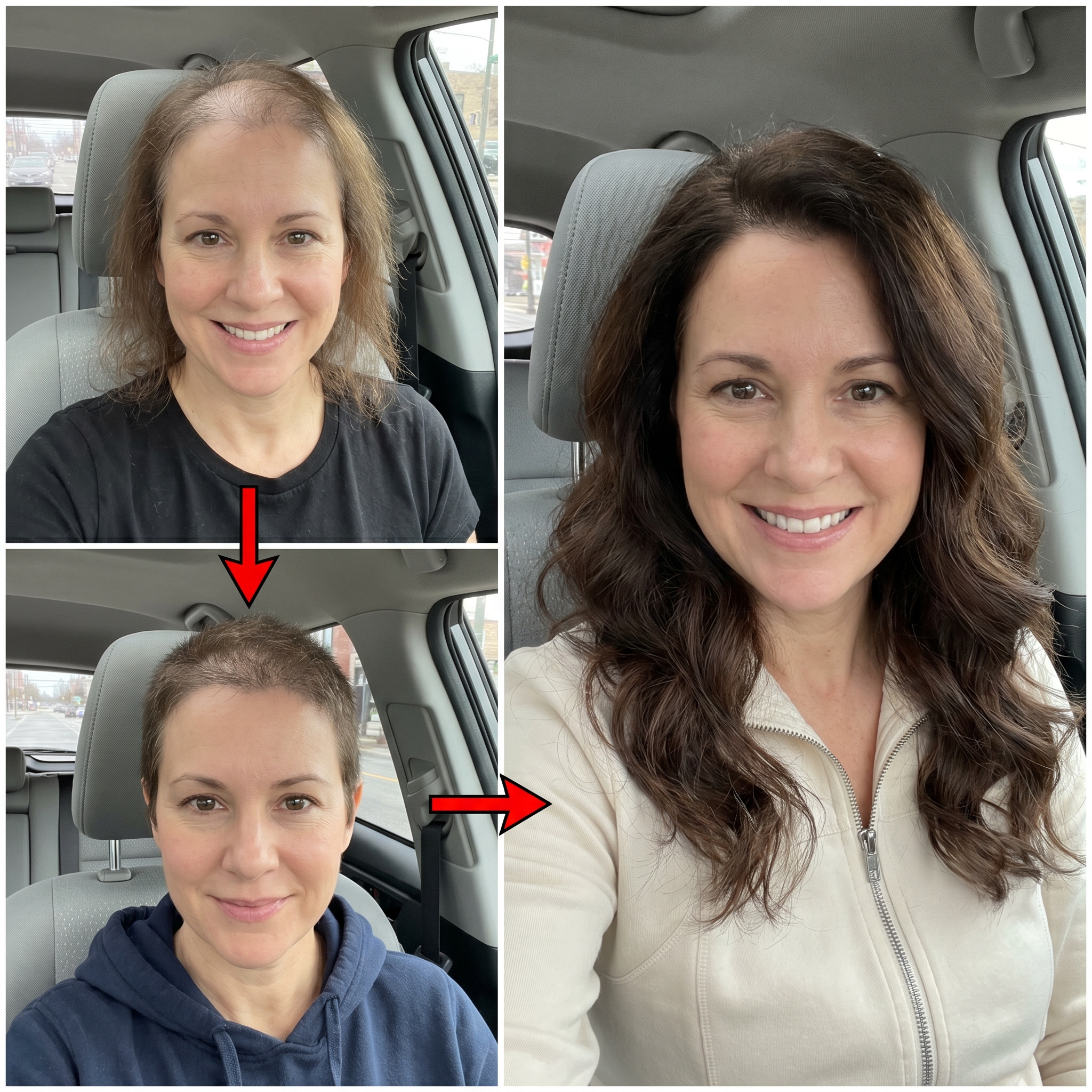
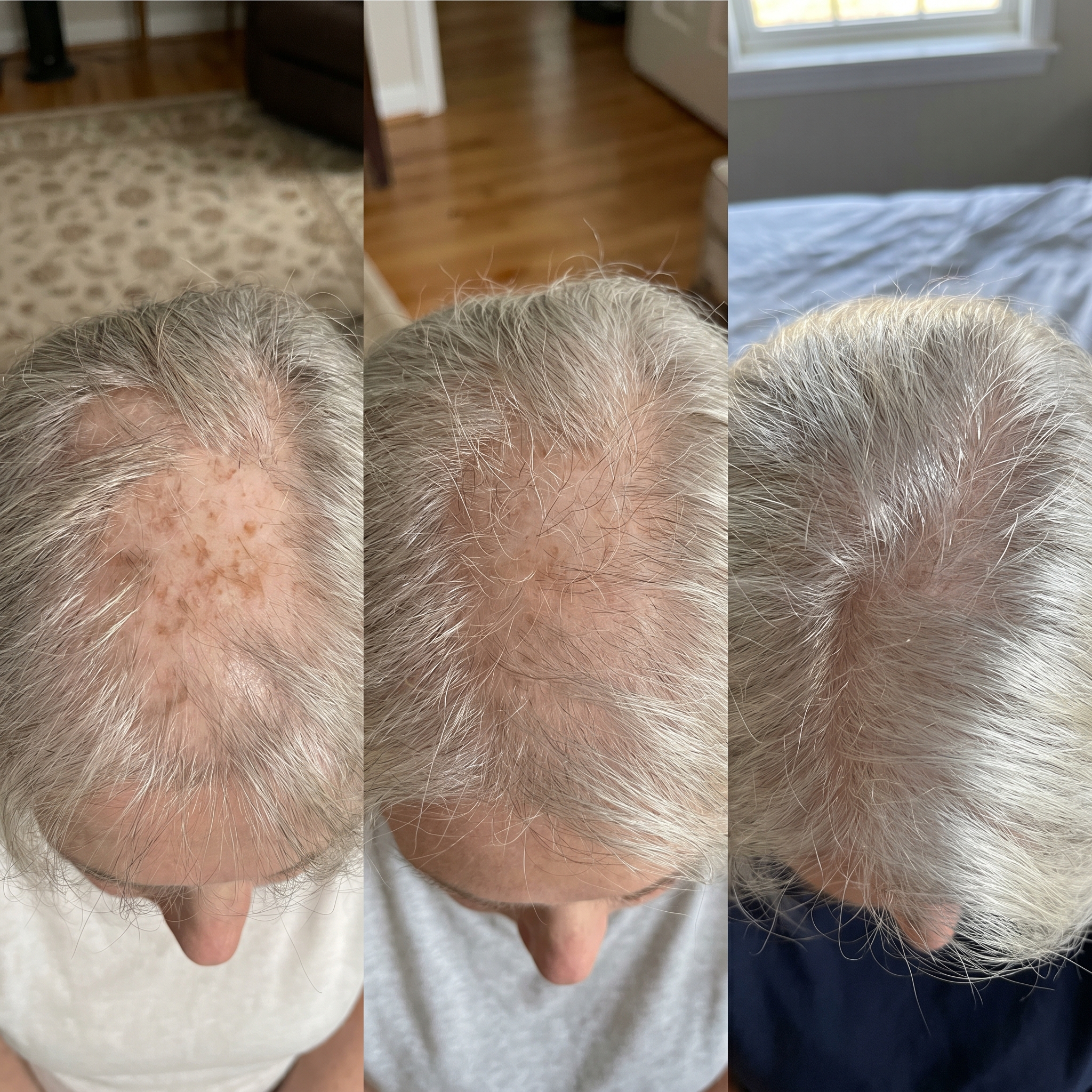
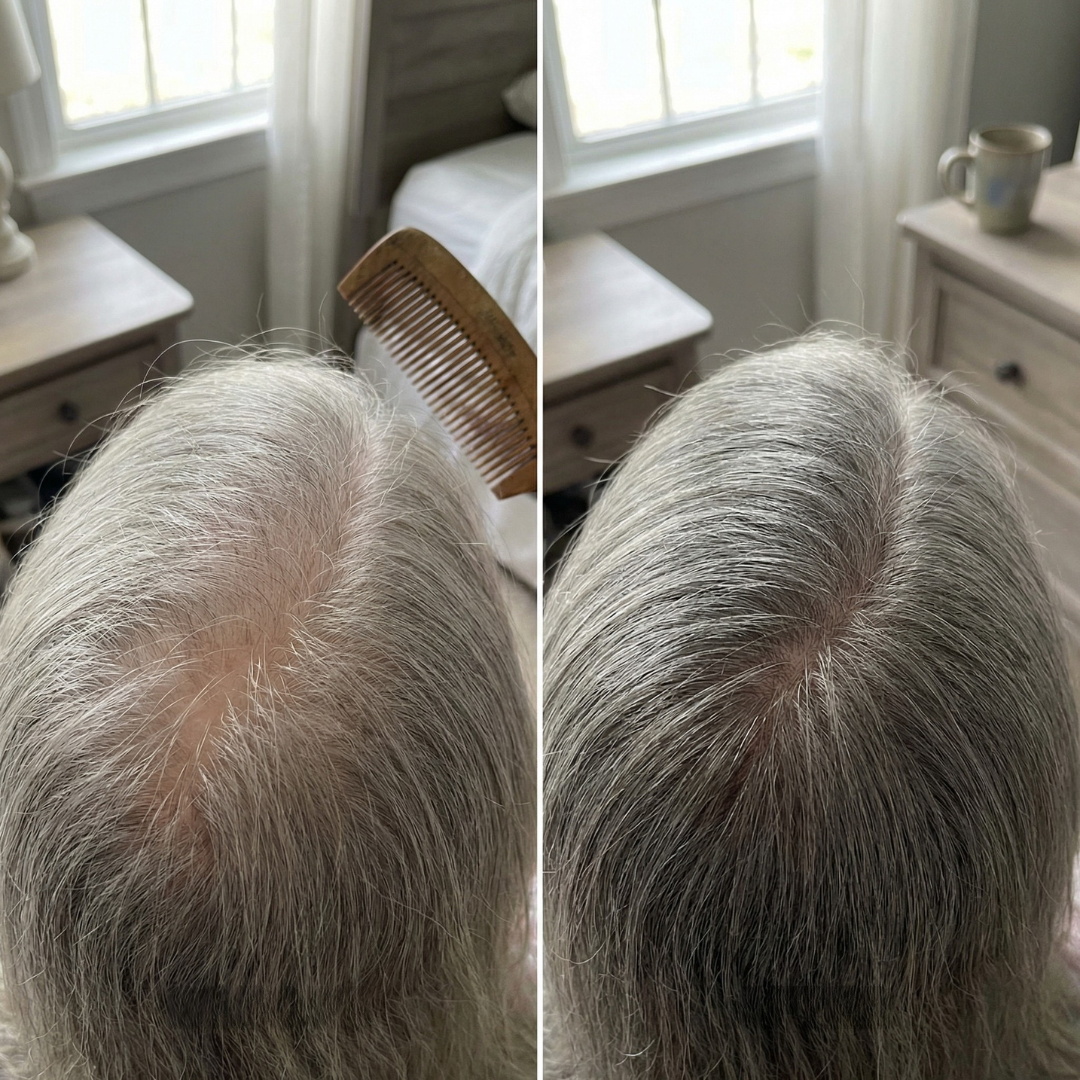
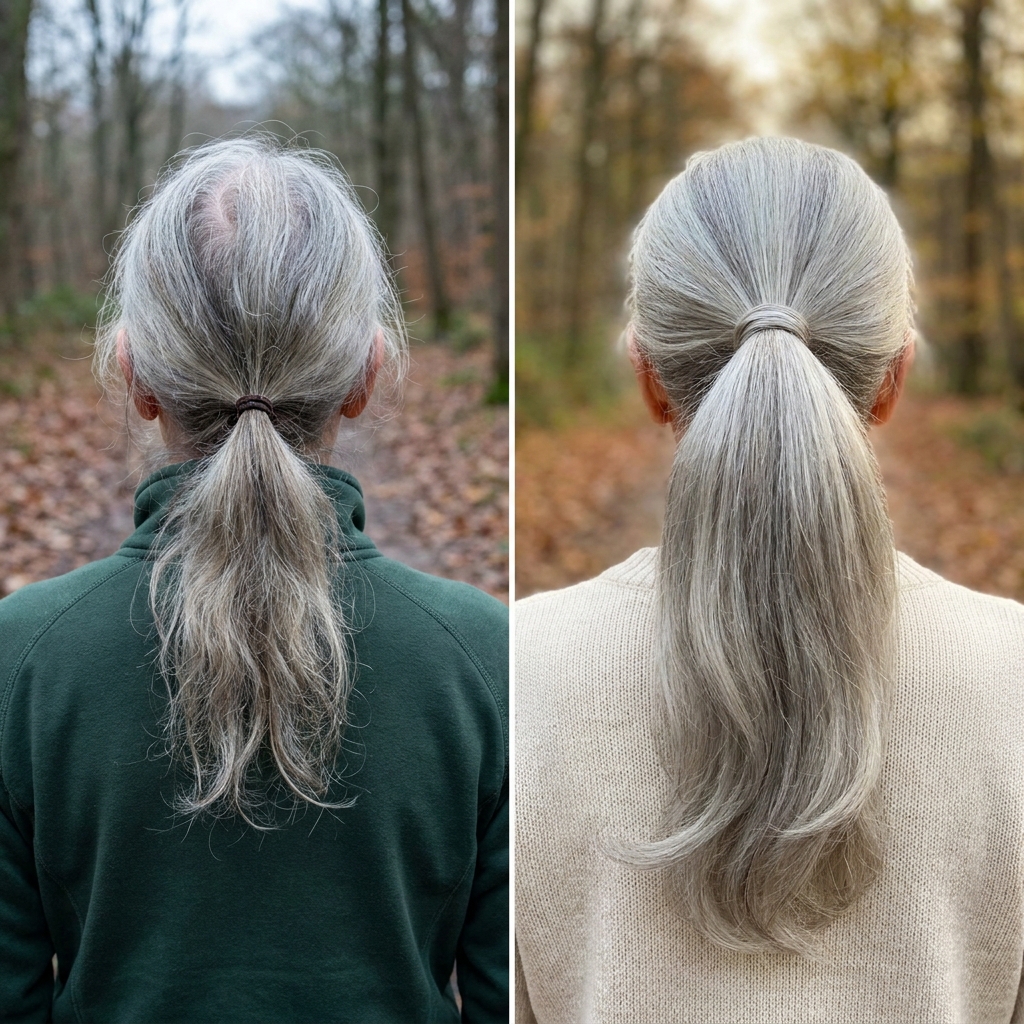
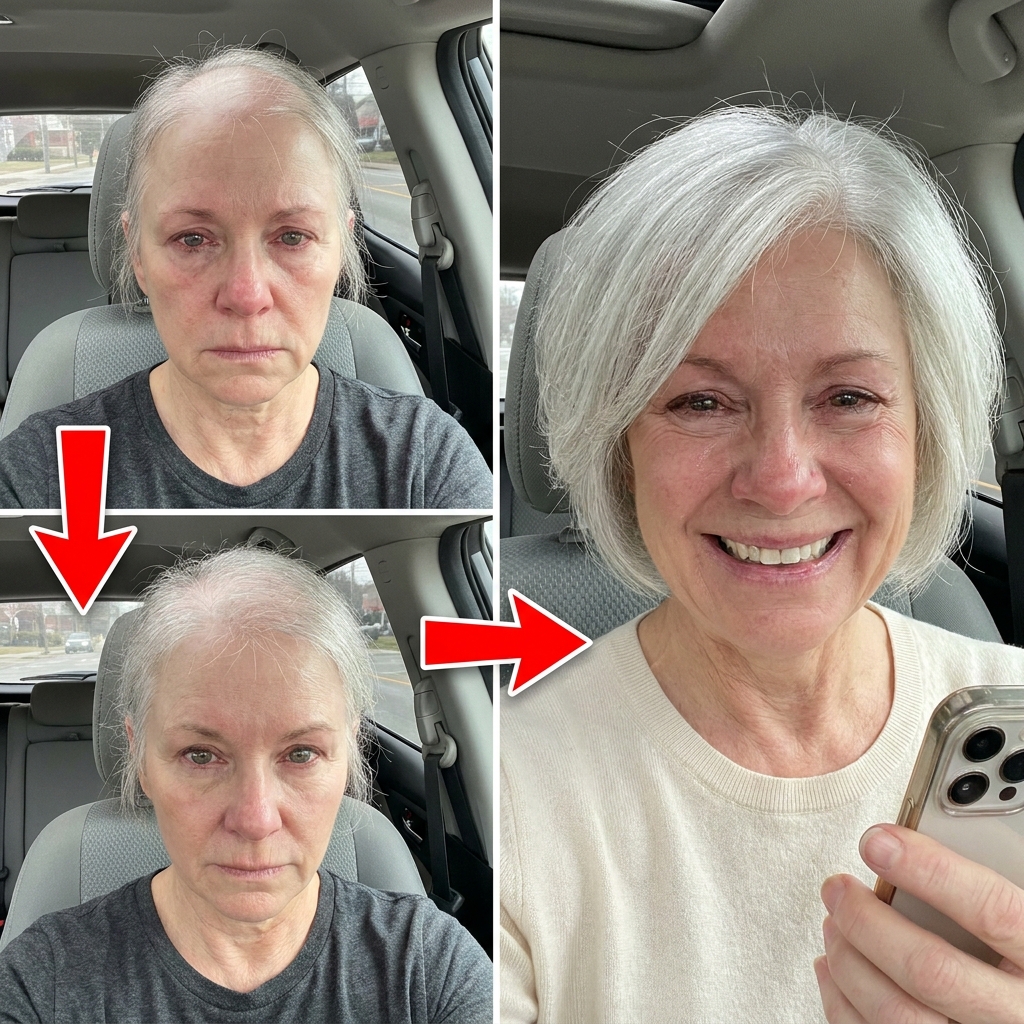
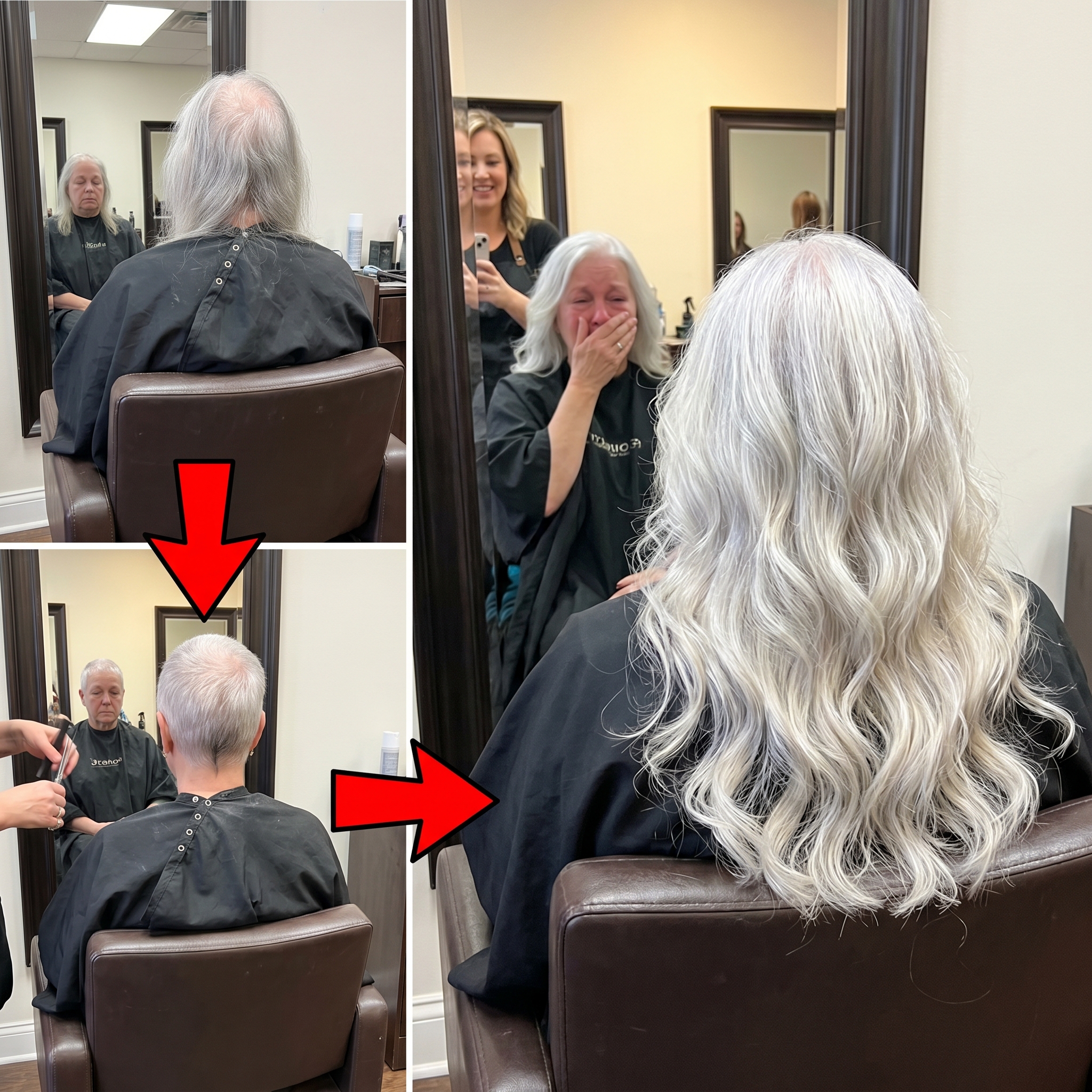
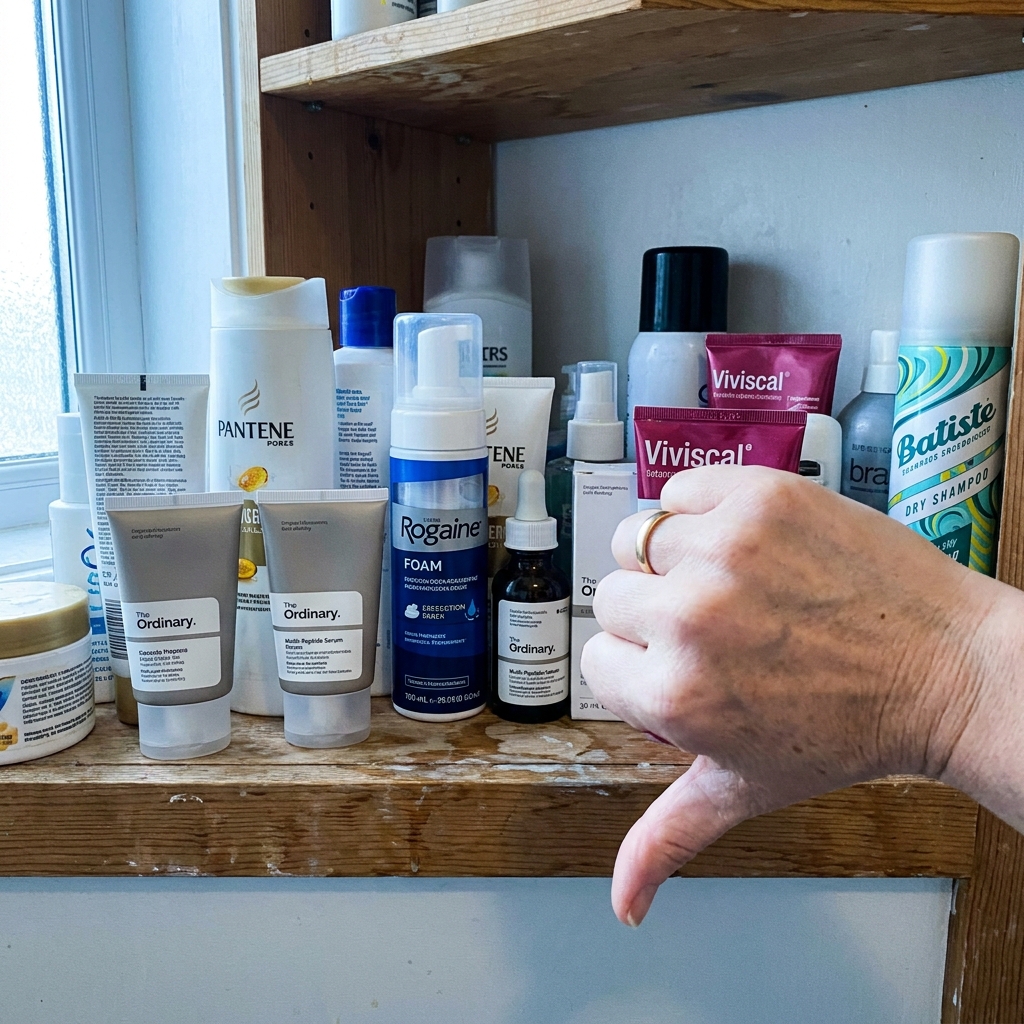
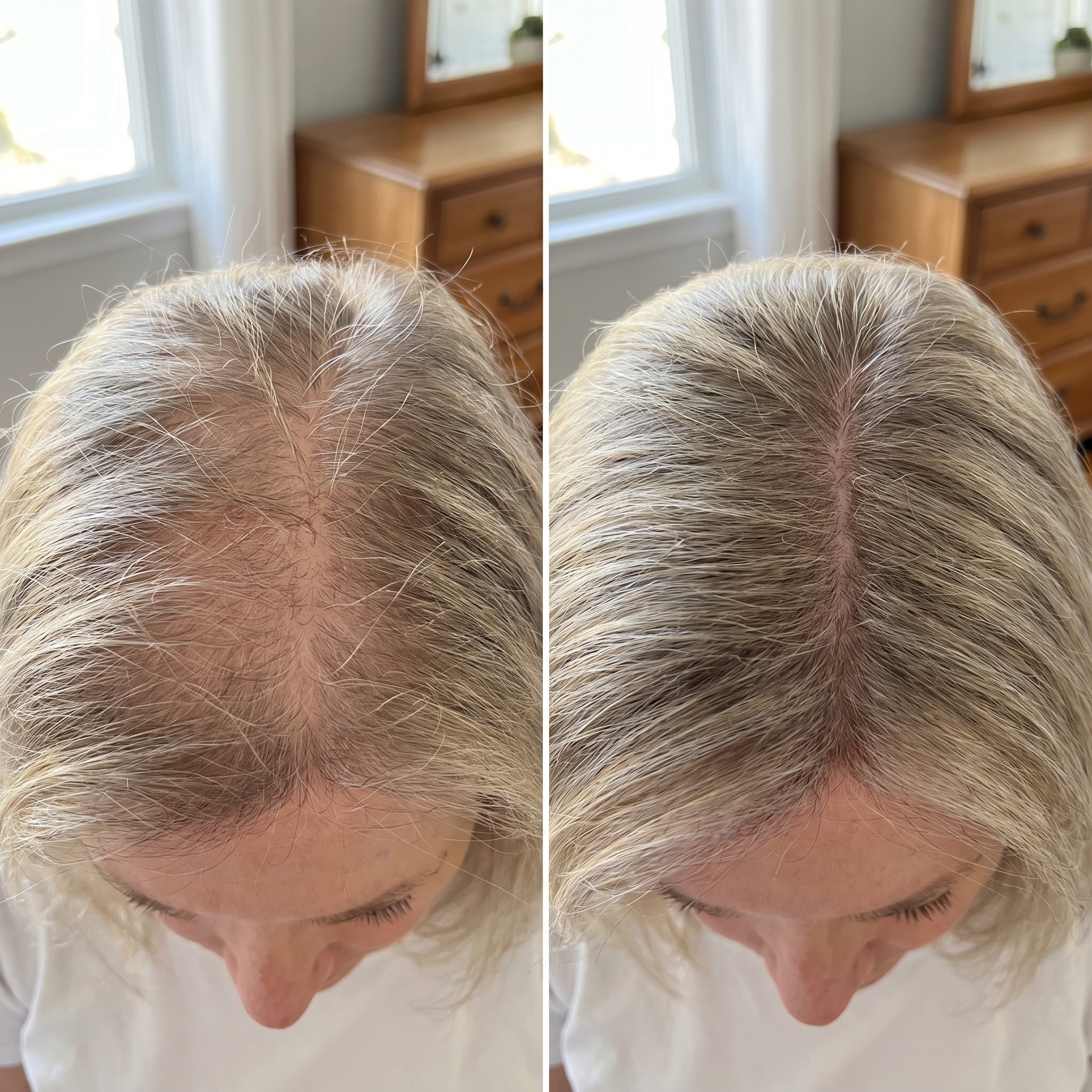
I am 56, an English teacher in a secondary school in south Manchester, and I want to start by saying that HRT was the best decision I made in my fifties. I have written that down and underlined it because I do not want anyone to take what follows as a criticism of HRT. It is not. What it is, is the story of the one thing HRT did not fix, the eighteen months I spent assuming HRT would eventually fix it, and the dermatology research from 2011 that finally explained why it could not, on its own. I started losing hair at 53. The crown first. Then the part widened, in the slow way that does not feel like anything is happening on any individual day but makes the photographs of you taken three months apart unrecognisable to each other. I had three years of brain fog before that, and joint pain, and a kind of low irritable mood that I had begun to suspect was not who I actually was. Year 11 had been the first year in twenty in which I had finished the autumn term genuinely afraid of what my own classroom was going to be like in January. I had sat at the staffroom table in October, unable to recall the surname of a student I had taught for two years, and felt something I had no language for at the time. HRT was prescribed at 54 and within four months it had given me back, in order: my sleep, the version of my own face that I recognised in the mirror, my patience with my Year 11 form, and my willingness to sit on the floor with my younger niece without thinking about my knees. The mood lifted. The night sweats stopped. The brain fog cleared enough that I could finish a chapter of a novel for the first time in two years. I read three Hilary Mantels in a row that spring, the way you read when reading is, again, available to you. It did not bring the hair back. The crown kept thinning through the first year on HRT. I waited. I had been told, and I had read on the patient leaflets, that hair changes were one of the slower things to settle. So I waited. At month 14 the part was wider than it had been when I started HRT. At month 16 my hairdresser, who had cut my hair through both pregnancies and most of the school years, said for the second time in six months that we should think about a shorter cut. At month 18 I was researching toppers in the half-hour after the children had left school and before I had to be in the staff meeting. Over the same period I added every adjacent thing I could think of. Biotin. I took it for nine months before I read that it interfered with thyroid lab readings, at which point my GP asked me to stop because it had complicated the bloods she wanted to draw to monitor the HRT. Nutrafol Women's Balance. £79 a month. I gave it the recommended six months because the literature said six months, and the trichologist on the consultation call who sold it to me said six months, and I did not, by then, have the energy to start a new product on a shorter timetable. The crown kept thinning. Wellbel as a cheaper alternative, on a Reddit recommendation. £45 a month. Three more months. The same. A scalp treatment course at a hair clinic in Didsbury — £340 across four appointments. The trichologist was kind. She told me the truth, which was that for some women, in some kinds of menopausal thinning, what they offered helped, and for others it did not, and there was no way to know which kind I was without trying. The treatment itself made my scalp feel cleaner. The crown kept thinning. A laser cap I had bought during a Black Friday sale on the back of a podcast advertisement. Used three nights a week for nine months. I cannot say it did nothing. I can say it did not do enough. Collagen powder in my morning porridge. Pumpkin seed oil capsules, briefly, for two months. Spearmint tea, on a Reddit recommendation. Rosemary oil applied to the scalp twice a week. The total, when I added it up at month 18, was £620 across the year. The crown was thinner than when I had started. What I had also done was start to behave differently. I had stopped wearing my hair up. I had cancelled a cousin's hen weekend in Edinburgh because I did not want to be in photographs in a hotel function room. I had taken to standing in the shadow of the noticeboard at parents' evenings rather than under the strip lights of the corridor. I had begun, very quietly, the conversation in my own head about whether I was simply going to have to adapt to this. I had asked my younger sister, in passing, what she thought of her friend's topper, the one she had mentioned at Christmas. Then I came across the 2011 research. The mechanism it described — and that has been extended in dermatology research every year since — is not what is being explained to women in consultation rooms. In menopausal androgenetic alopecia, the follicle does not die. It is chemically silenced by DHT acting locally at the scalp. DHT shortens the anagen — growth — phase of the hair cycle. The follicle spends progressively less time producing hair and progressively more time in a dormant state. The hair becomes finer and shorter until the follicle looks, externally, like it has stopped. But the stem cells are still there. The blood supply is still intact. The follicle is in dormancy, not gone. This is the part that explained my year on HRT. HRT raises systemic estrogen. It is, for many women, transformative across an enormous range of menopausal symptoms, including some that affect hair indirectly. But menopausal hair loss — at the level of the follicle being attacked by DHT in a specific, local way — is not, on its own, a problem that is reliably solved at the level of systemic hormones. The DHT activity is local. To interrupt it, the intervention often has to be local too. That is what topical caffeine does. Applied to the scalp, it blocks 5-alpha-reductase at the follicle and extends anagen directly. The 2011 research is part of why that mechanism is credible. Mellenza was the first product I found whose formulation reflected this. A topical scalp serum. Caffeine. Polygonum multiflorum extract. Arginine. Biotin. Ginger. Sprayed nightly on the crown, the part, and the temples. Not a shampoo. Not a volumiser. Not a supplement. A topical wake-up call for follicles that had been in dormancy too long. I started it on a Tuesday in late October. I committed to twelve weeks before letting myself form a judgement. Week 4. Less hair on the bathroom floor. I had been counting after my evening wash and the count, which had been roughly the same for over a year, dropped. Week 6. The texture changed first at the back of the head, which was where I had been most reluctant to look. Week 9. I took a comparison photo. The part was narrower. There was short, fine regrowth visible along the edge of the part — the kind of new growth I had not seen since my forties. Month 4. I wore my hair up to the staff Christmas drinks for the first time in two years and the head of the English department, who notices nothing and says less, said, "You look well." It was the first thing he had said to me unprompted since the autumn term started. Month 5. The wider part was no longer the first thing I saw in the mirror in the morning. Month 6. I taught a Year 13 lesson on the love poems of John Donne and stood under the strip light at the front of the room for an hour without thinking about it once. That, I realised afterwards, was the actual measure. Not the photograph. Not the count. The hour I had stopped spending on the question of my own hair. I am still on HRT. I will not come off it. What I have learnt is that HRT and Mellenza answer two different questions. HRT answers most of the menopause. Mellenza answers the local mechanism that was silencing my follicles. The link is below.
HRT transformed everything except my hair.
Women's Health · Updated April 2026 Menopause · Hair Routine 7 Mistakes That Make Menopausal Hair Loss Worse, And the 30 Second Ritual 10,000 Women Used to See Regrowth in 8 Weeks Dr. Sarah Mitchell — Women's Health Writer. If you're standing in front of the mirror doing the 3-elastic ponytail t...
LEARN MORELike this ad? Make it yours.
Crush rebuilds this exact creative around your product — your brand, your colors, your offer — in about a minute.