
Inactive· since May 5, 2026
- 70
- days it ran
- 9
- relaunches
Ad copy
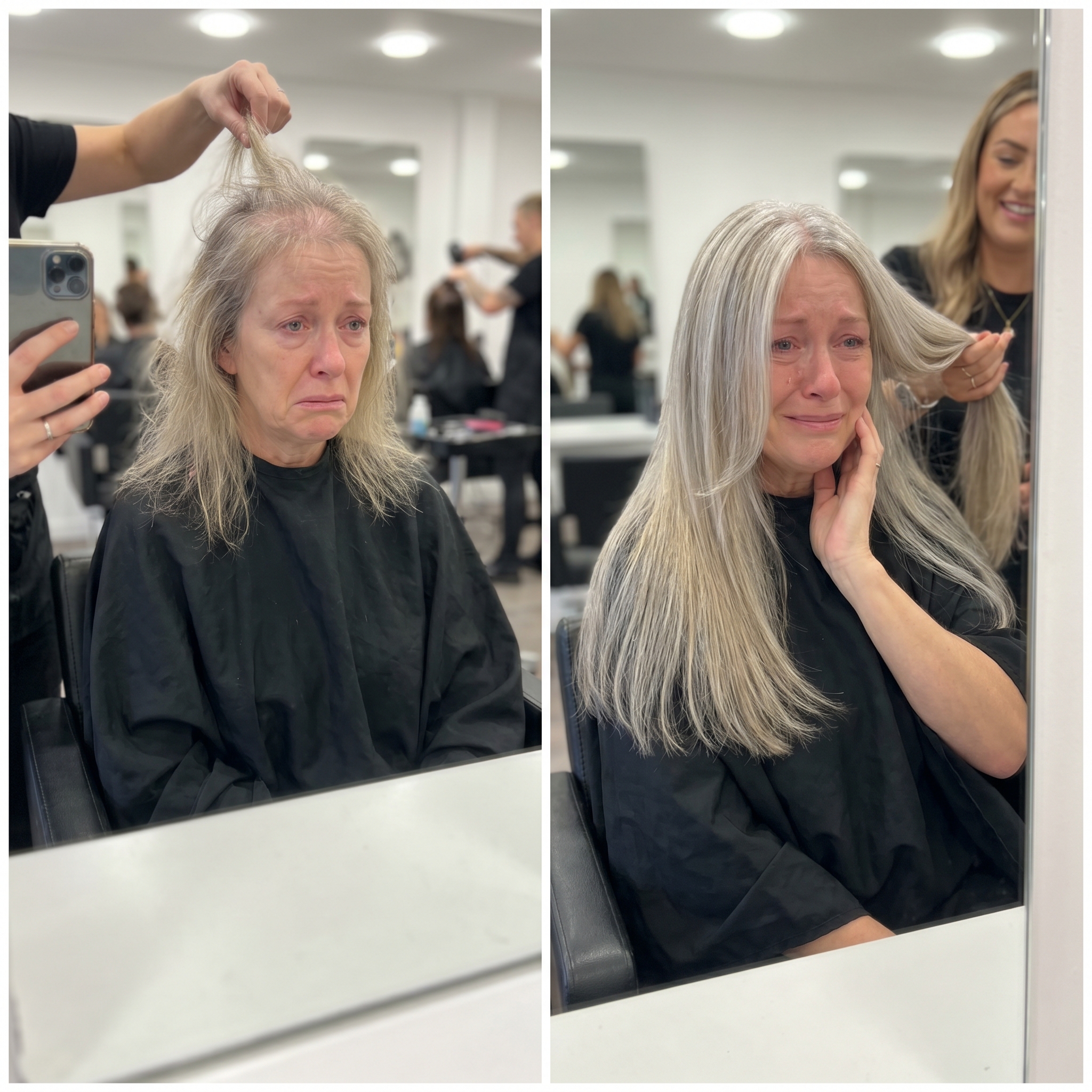
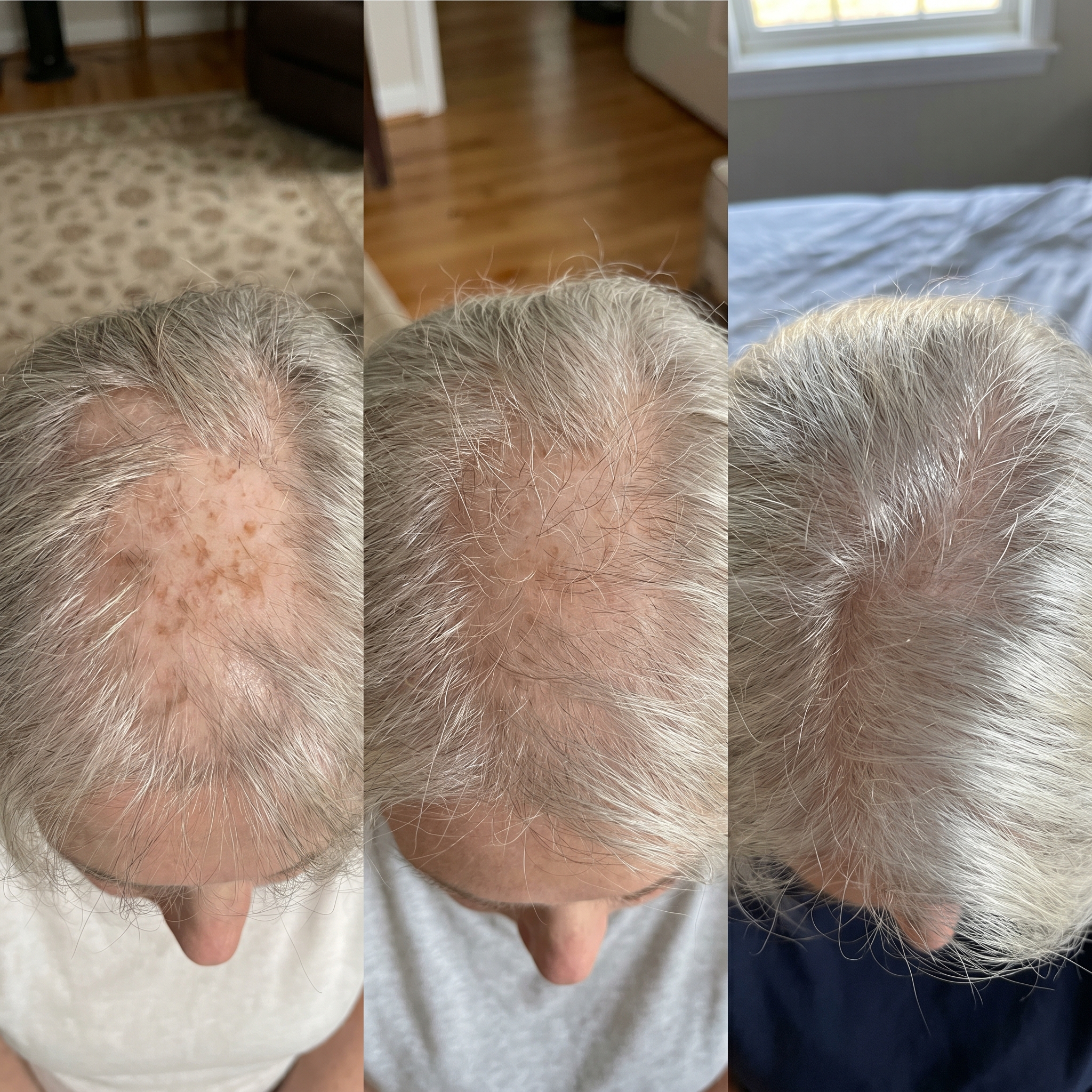
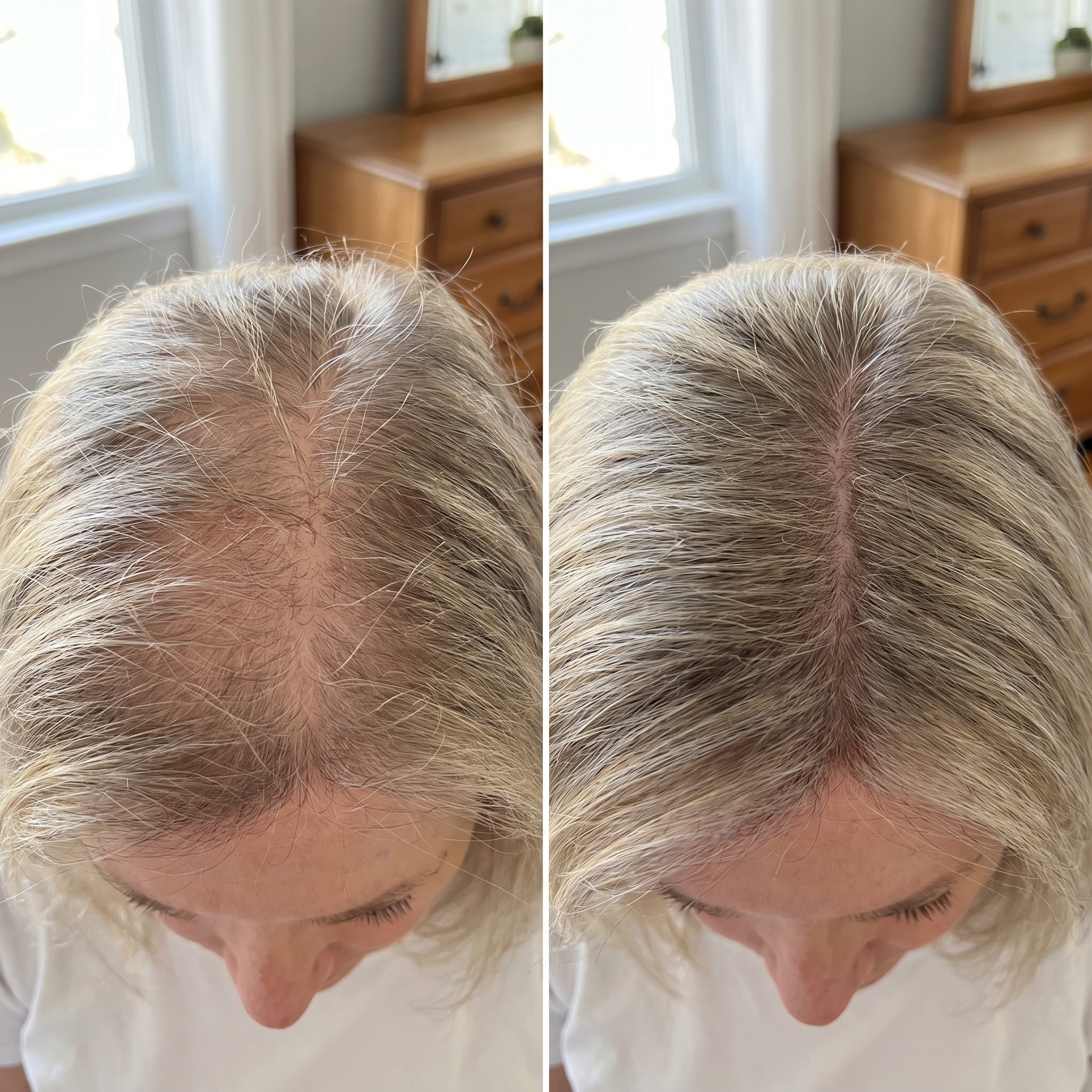
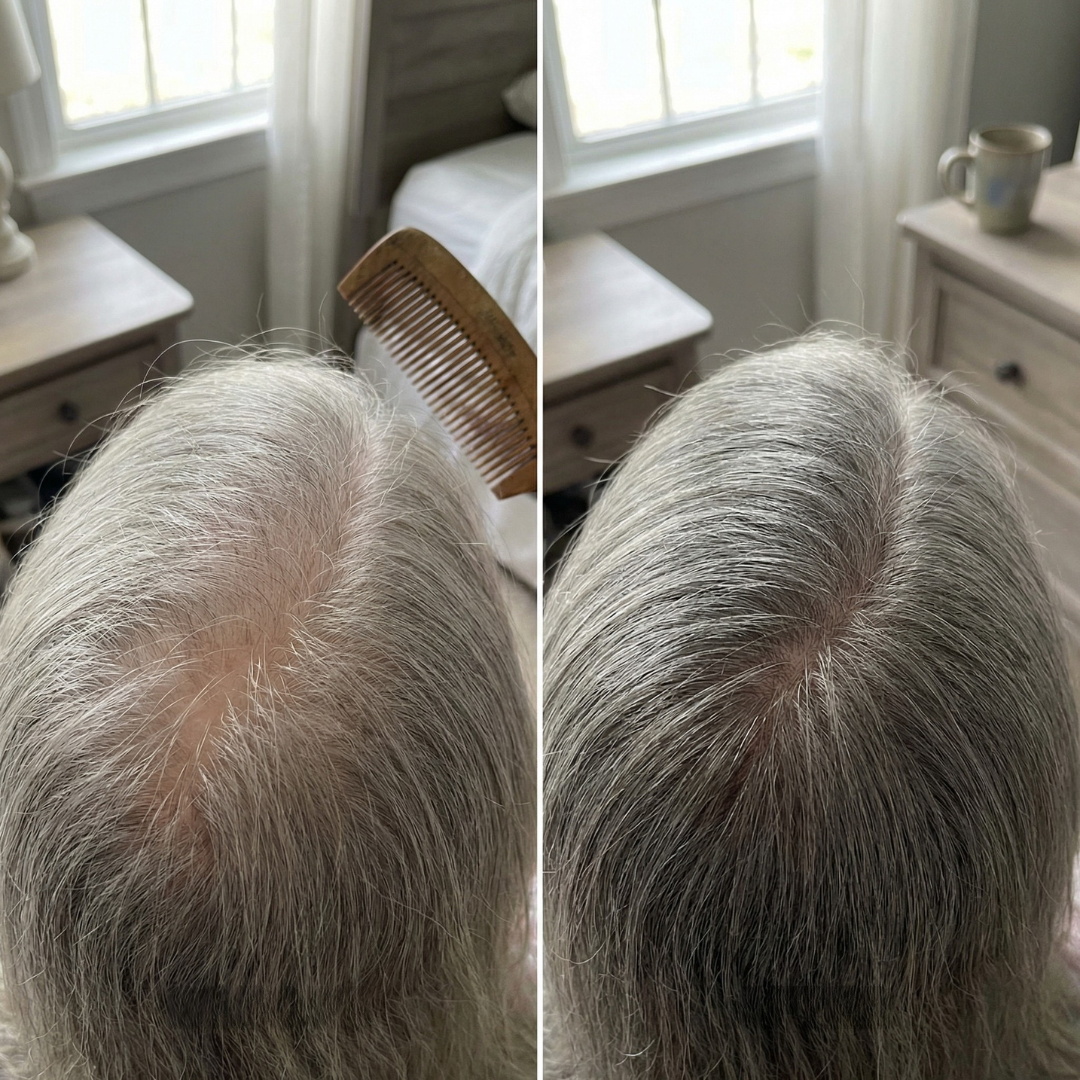
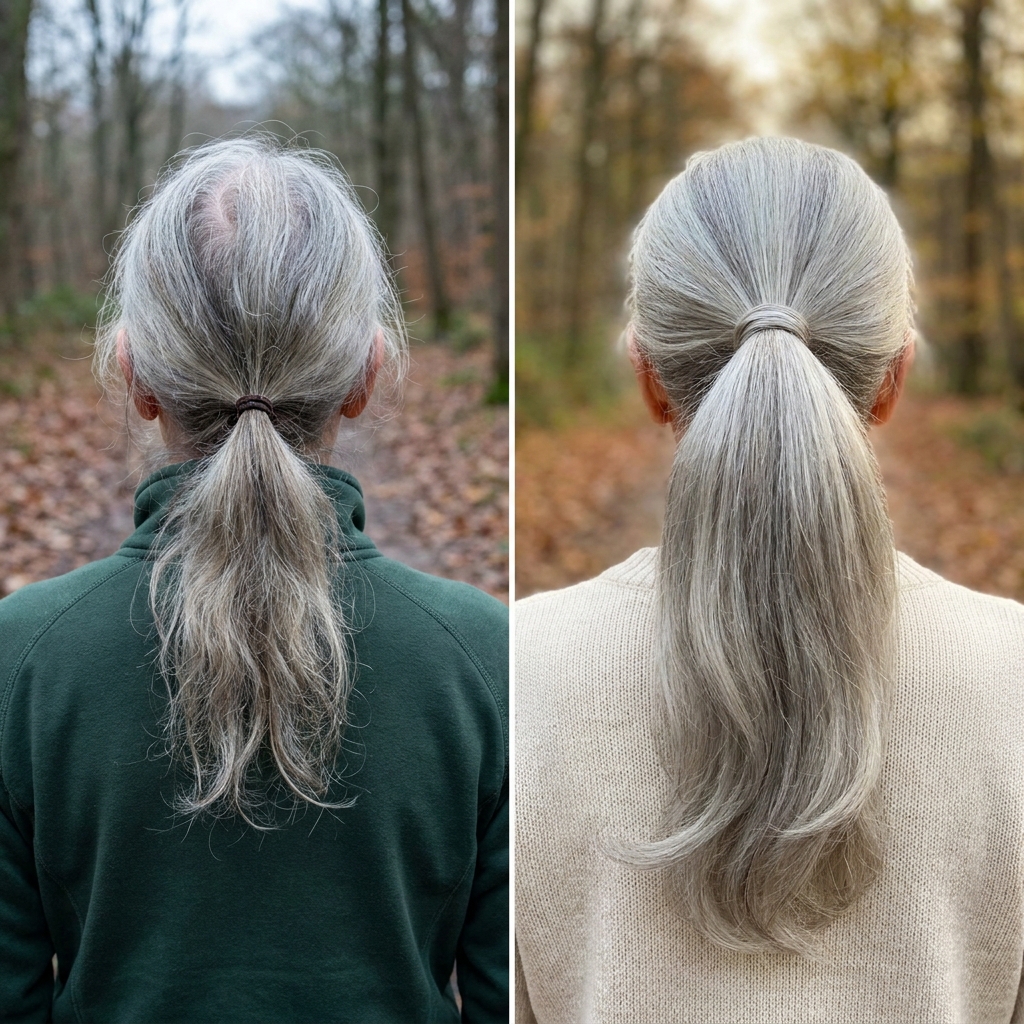
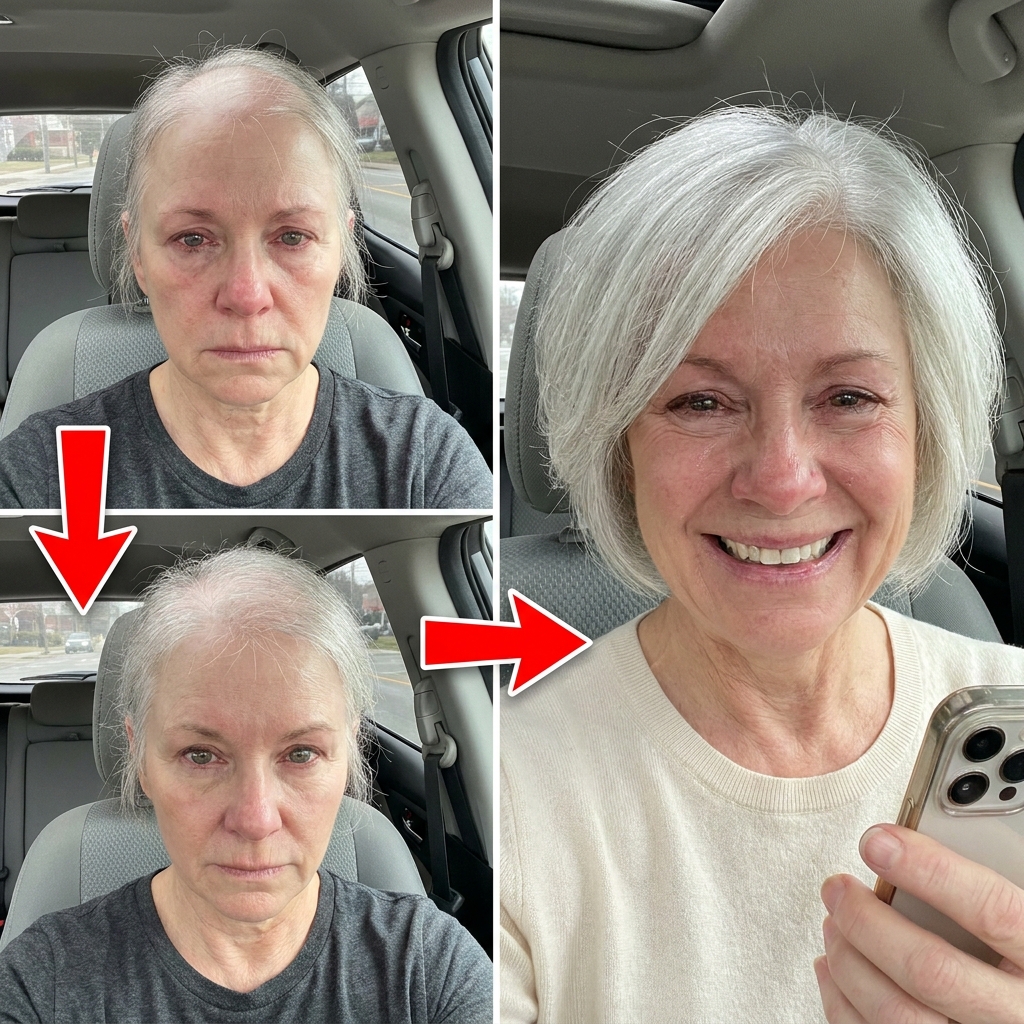
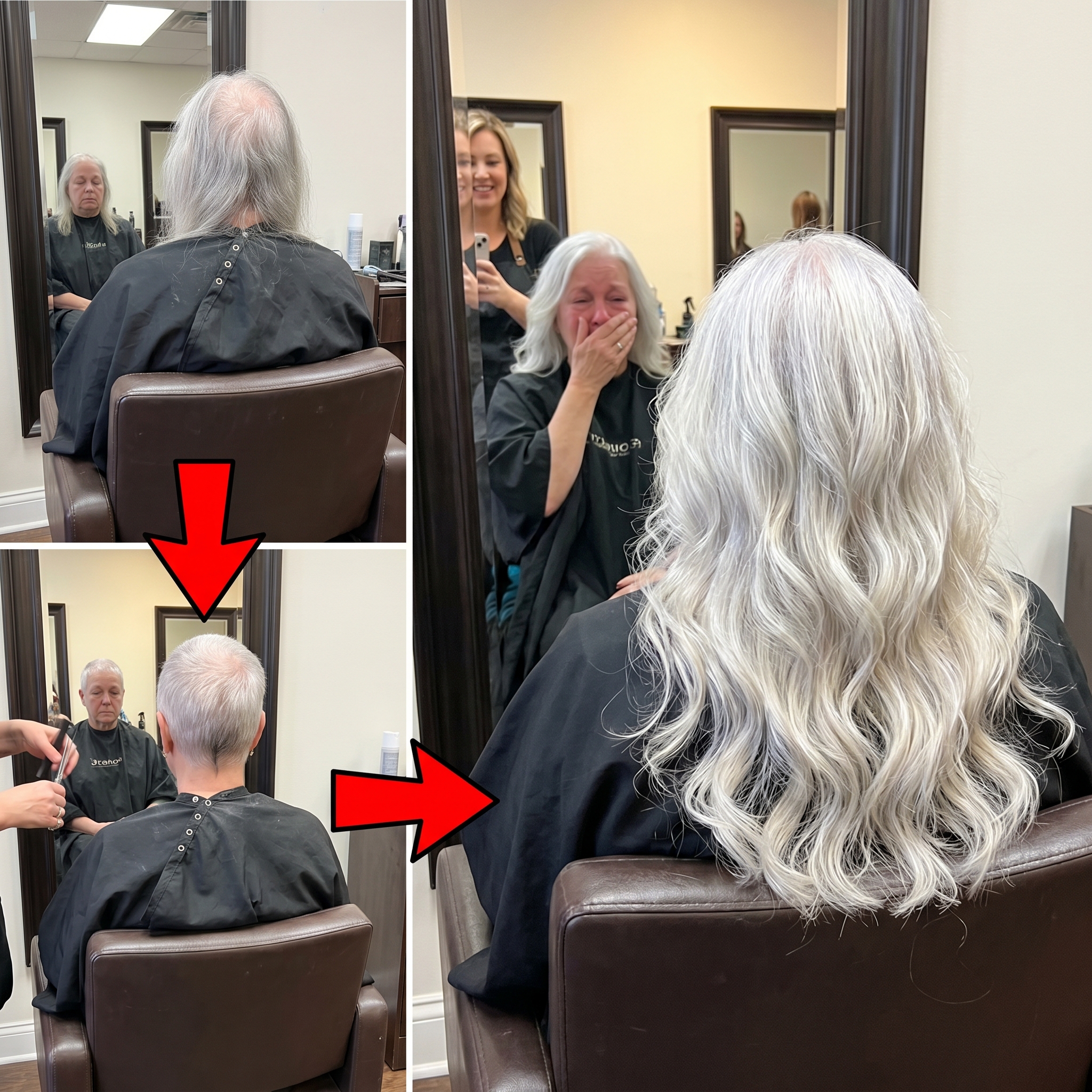
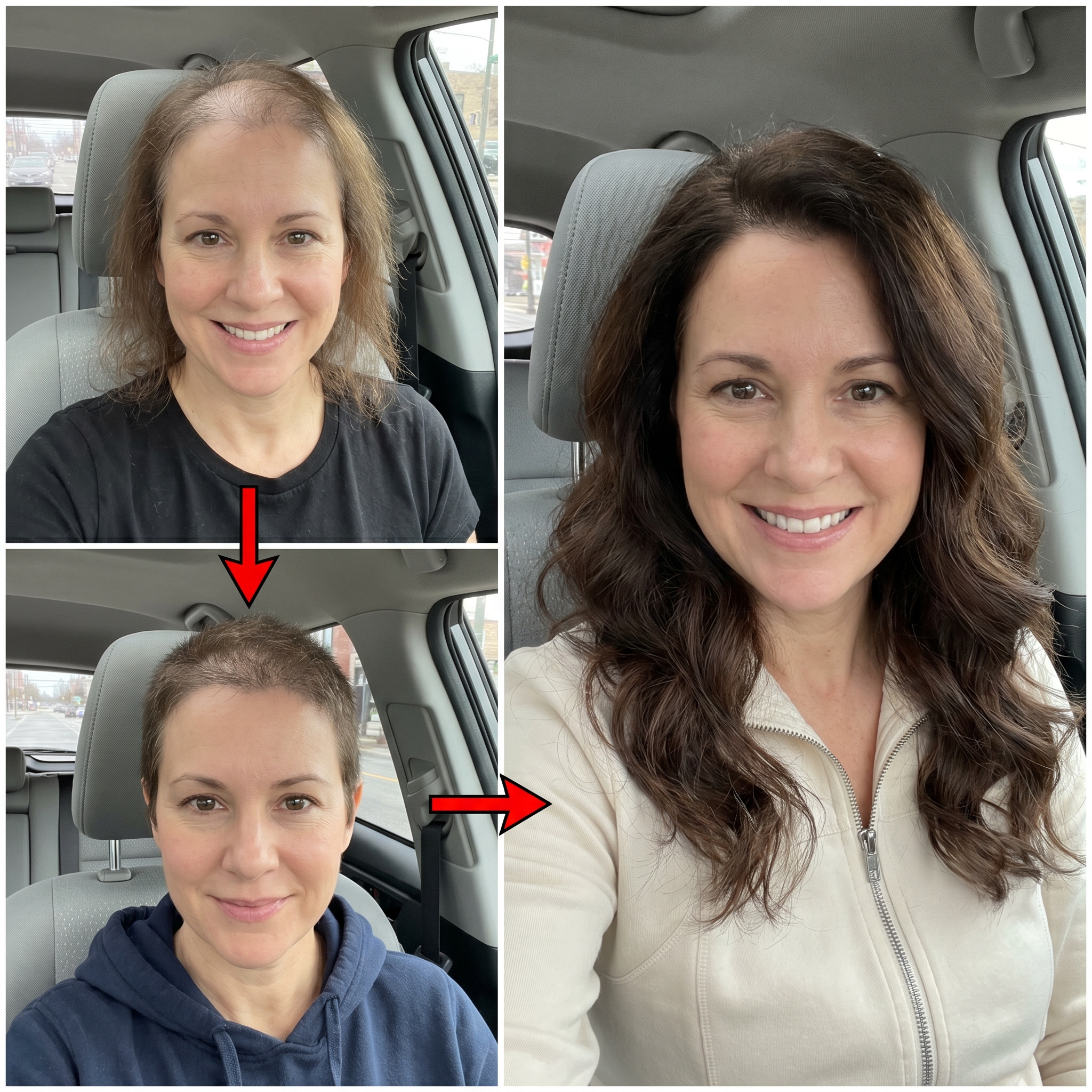
Every product on the women's hair-care aisle is designed for hair that is already healthy. That is why nothing you have bought from that shelf has narrowed your parting by a single millimetre, no matter how much of it you tried. If you have spent the last decade buying from that aisle, you are not failing the products. The products were never built for what is actually happening to your hair. I would know. I am 53, a category buyer for a high-street retailer in Coventry, and the women's hair-care aisle is, in the most literal sense, my job. I have spent eleven years writing purchase orders for the bottles that line those shelves. I have sat in supplier meetings where the words "volumising," "thickening," "fortifying" and "biotin-rich" were used about formulations developed for the average healthy hair on the average healthy head. None of those formulations were developed for the woman whose follicles are being chemically silenced by local DHT at the scalp. None of them were developed for me. I started thinning at 49. The crown first. By 51 my parting had widened in a way I could not pretend was the lighting in the spare-room mirror. I bought against the problem the way I knew how — from my own aisle, from my own purchase orders. Pantene Pro-V Biotin shampoo and conditioner, every wash for nine months. The bottles cost £6.99 each on rotation. The crown kept thinning. John Frieda Volume Lift, six months. £8.50 a bottle, twice a month. The crown kept thinning. Aveda Invati Advanced — the system, all three steps. £64 for the trio. I gave it the recommended four-month commitment. The crown kept thinning. Olaplex No.0 followed by No.3, twice a week, eight months. £52 for the pair. They strengthened the lengths of hair I already had, which is what they had been built for. They did not produce a single new strand at the part. Nioxin System 4, the full three-step. £58 a kit, four kits across the year. The crown kept thinning. KMS Add Volume leave-in. I had brought a bottle home from sample stock during a supplier-evaluation cycle, on the principle that anything I would not use myself I should not be ordering for the shelves. Two months. The crown kept thinning. I had also added, at various points: a Vichy Dercos shampoo my sister had recommended, a Holland & Barrett biotin tablet I had taken for nine months, a collagen powder in my morning porridge, and a £45 scalp tonic from a local trichology clinic that had been prescribed as the gentle option after I had said I did not want minoxidil. The total, when I added it up at the end of last year, was £612 across thirteen months. The parting was visibly wider than it had been when I started. What none of those products had done — what they were not built to do — was act on the layer of skin one inch beneath the hair I had been trying to thicken. Hair, the part you can see, is already produced. It is dead protein extruded by the follicle. Anything you put on the strand affects how the strand looks for the next twelve hours. The strand itself is past the point of biological intervention. To affect whether new hair grows, and whether the hair that does grow is thicker or thinner than the last cycle, you have to act on the follicle. The follicle is in the dermis. It is not in any of the bottles on the women's hair-care aisle, because the women's hair-care aisle is not where you treat the dermis. Skincare is where you treat the dermis. Hair products treat hair. Scalp products treat scalp. They are different categories, and the aisle does not separate them, because the aisle is built to sell you bottles for the hair you can see. That is not the aisle's fault. That is the aisle's job. It is, however, why eleven years of doing my job did not solve my own problem. I did not work this out by myself. I worked it out because a colleague forwarded me an internal supplier deck about the dermatology of female hair thinning that I had previously skimmed and ignored. The deck described what is, in its most basic form, the mechanism most women with menopausal thinning have never had explained to them. Hair grows in cycles. The active growth phase, the anagen, lasts somewhere between two and six years in a healthy follicle. DHT — a hormone whose activity rises locally at the scalp as estrogen drops in perimenopause and after — shortens that anagen phase. The follicle spends progressively less time producing hair and progressively more time dormant. The hair it does produce becomes finer and shorter. The follicle does not die. It is silenced. The stem cells are still present. The blood supply is still intact. If the local DHT is interrupted, the follicle resumes its cycle. That interruption has to happen at the scalp. Not in the strand. Not in the bloodstream. At the scalp. Topical caffeine has been studied since the early 2010s for exactly this reason — applied to the skin around the follicle, it blocks 5-alpha-reductase locally and extends anagen directly. That is the entire category-mismatch I had spent eleven years living inside. Mellenza was the first product I came across whose formulation reflected this. A topical scalp serum. Caffeine to block 5-alpha-reductase at the follicle. Polygonum multiflorum root extract, drawn from Korean dermatology research on follicle proliferation. Arginine for microcirculation around the follicle. Biotin to support the integrity of new growth. Ginger extract for anagen support. Sprayed on the crown, the part, the temples. At night, before bed. Not a shampoo. Not a volumiser. Not a supplement. A topical wake-up call for follicles that had been in dormancy for years. I committed to twelve weeks before forming a judgement. I am a category buyer. I do not give a product less than its stated cycle. Week 4. Less hair on the bathroom floor after the evening shampoo. I had been counting strands, vaguely, for two years. The count dropped. Week 6. The texture of the lengths I already had began to feel different. Less like brittle straw, more like the weight I remembered from my forties. Week 9. I took a comparison photograph in the same spare-room light, at the same angle. The parting was narrower. Along the edge of it, I could see short, fine regrowth — the kind of new growth I had told myself, by the eighteen-month mark, I was not going to see on myself again. I sat on the edge of the bed and read the photograph for about ten minutes. Quietly. I had been wrong, and it was a relief to be wrong. Month 4. My hairdresser, who had not commented on my thinning for over a year and had quietly suggested a shorter style at my Christmas appointment, said unprompted that the crown was visibly thicker. She turned the chair and pointed. I had been her client for nine years. She had not pointed at my crown to show me good news in any of them. Month 5. I walked past the women's hair-care aisle on my way through the Coventry Boots branch, on a Saturday, with my niece. I did not slow down. I did not catch sight of the volumising shampoos and feel the small tightening in my chest that had been my standard response to that aisle for years. I walked through, picked up what I had come for, and left. The aisle was not the problem. The aisle had never been the problem. I had been buying from the wrong aisle. If your parting has not narrowed in eleven years of trying, you are not failing your products. You are looking for an answer in the wrong category. The link is below. Mellenza ships from the UK with a 90-day money-back guarantee, a complimentary scalp massager, and an ebook on the menopausal hair cycle.
Every product on the women's hair-care aisle is designed for hair that is already healthy.
Women's Health · Updated April 2026 Menopause · Hair Routine 7 Mistakes That Make Menopausal Hair Loss Worse, And the 30 Second Ritual 10,000 Women Used to See Regrowth in 8 Weeks Dr. Sarah Mitchell — Women's Health Writer. If you're standing in front of the mirror doing the 3-elastic ponytail t...
LEARN MORELike this ad? Make it yours.
Crush rebuilds this exact creative around your product — your brand, your colors, your offer — in about a minute.