
Inactive· since May 20, 2026
- 27
- days it ran
- 2
- relaunches
- 86,007
- EU reach
Ad copy
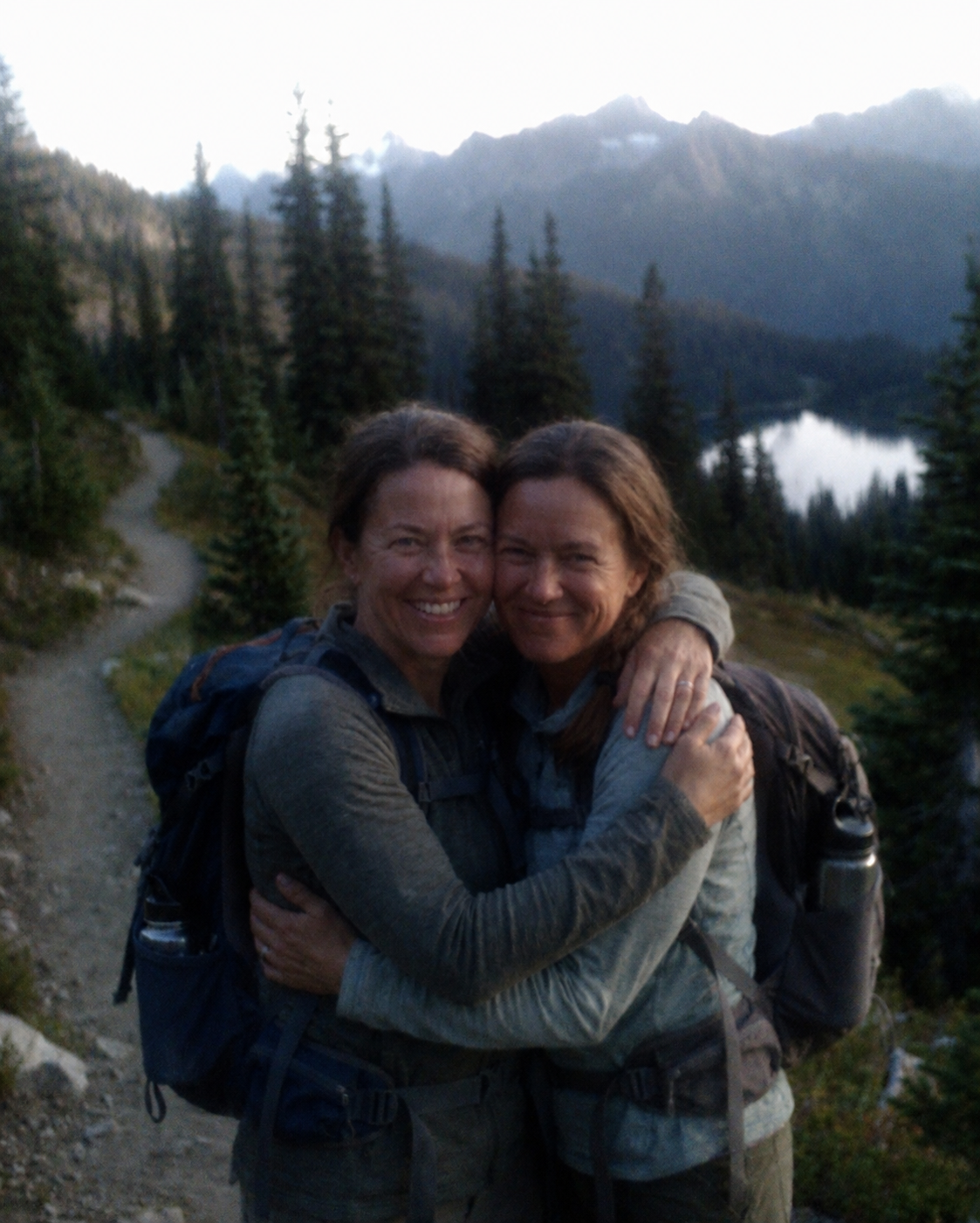
I Went on a Wildflower Hike Alone Because My Husband Was Too Tired to Come. A Woman on the Trail Said Six Words I Haven't Forgotten. We'd signed up for the walk three months earlier. It was Frank's idea. A guided wildflower hike at a state park about forty minutes from our house. Two hours through the woods with a naturalist who knew every plant by its Latin name and its common name and which Native American tribe had used it for what. Frank had circled the date on our kitchen calendar. He'd told me about it at dinner. He'd told me about it again two weeks later when the registration confirmation came in the mail. He'd said: "This is the kind of thing we should be doing more of." I'd agreed. We were both 65. We'd been talking for a year about how we needed to start doing things again. Frank had been a birdwatcher his whole adult life. When we were first married, he used to wake me up at 4:30 in the morning on Saturdays to drive out to the lake before dawn to listen for warblers. I'd grumble. I'd drink my coffee in the car. I'd sit in the cold marsh with him for two hours while he wrote things in a notebook. I never loved it the way he did. But I loved him, and he loved it, and that was enough. He stopped going somewhere in his early sixties. Not all at once. He started saying he was too tired the night before. Then he started saying he'd go next weekend. Then he stopped putting it on the calendar at all. His binoculars sat on the bookshelf in our living room and gathered dust. His field guides were stacked next to them, the bookmarks still in the pages from his last trip. The vintage car he'd been restoring in our garage — a 1972 Buick he'd bought from a man in Indiana — hadn't moved in fourteen months. The dust on the hood was thick enough I could write my name in it if I wanted to. I didn't write my name in it. I tried not to look at it most days. The wildflower walk was the first thing he'd put on the calendar in over a year. When he'd signed us up, I'd let myself hope. I'd thought maybe this was the start of something. Maybe he was coming back. The Saturday of the walk, I woke up at 6:30. I made coffee. I packed two water bottles and two granola bars and a small bag with a sandwich for the road home. I came back into the bedroom to wake Frank up. He was awake. He was lying on his back, looking at the ceiling. He said: "Honey, I don't think I can do it today." I sat down on the edge of the bed. I said: "Frank, you picked this one." He said: "I know. I'm sorry. I just can't." He didn't look at me when he said it. He looked at the ceiling. He looked at it the way a man looks at a ceiling when he can't look at his wife. I sat there for a long minute. I had three things I wanted to say. I didn't say any of them. I said: "Okay. I'll go." He said: "You don't have to." I said: "I'm going." I stood up. I kissed him on the forehead. I left. I cried in the car for the first ten minutes of the drive. Not big crying. The quiet kind, where you keep driving and you keep your hands on the wheel and you let it happen because there's nobody to see it. By the time I got to the trailhead I'd cleaned myself up. I parked. I sat in the car for two minutes before I went in. I almost turned around and drove home. I didn't know why I was there alone. I didn't know why I was going on a wildflower walk that I hadn't picked, on a Saturday morning when my husband was lying on his back in our bedroom looking at the ceiling. But I'd told him I was going. And I'd already gotten dressed for it. So I got out of the car. The group at the trailhead was maybe twelve people. Mostly couples in their fifties and sixties. A young couple with hiking poles who looked serious about it. A grandfather and grandson, the grandson maybe nine. And me. And a woman about my age standing by herself on the other side of the gravel parking area. She was wearing a green windbreaker and good walking shoes. She had a small backpack. She was looking at her phone the way you look at your phone when you're alone in a place where everyone else is in a pair and you'd rather be looking at anything than at the couples. I recognized the posture. I was doing the same thing. The naturalist gathered us. He introduced himself. He gave the safety talk and the don't-touch-the-poison-ivy talk and the please-stay-on-the-trail talk. He started walking. We followed. The woman in the green windbreaker fell in next to me about ten minutes into the trail. Not on purpose. The path narrowed and the couples paired up and the two of us ended up walking side by side because there wasn't really another option. We didn't talk at first. We just walked. The naturalist stopped every few hundred feet to point at something. A trillium. A bloodroot. A jack-in-the-pulpit that he said was actually a female because the spadix was the right shape. We listened. We nodded. We moved on. About twenty minutes in, the woman next to me said: "My husband was supposed to come today." She said it quietly. She wasn't looking at me. She was looking at the trail ahead. I said: "Mine too." She turned and looked at me then. She had kind eyes and the kind of crow's-feet that come from a lifetime of smiling at things. She said: "Oh." And that was all she said for a minute. We kept walking. After a while she said: "What does yours like? Out here, I mean. What was he hoping to see?" I said: "Warblers. He's a birdwatcher. Was a birdwatcher. He used to be." She nodded. She didn't ask what had changed. She didn't need to ask. She said: "Mine's a math professor. He's retired now. He used to lead these walks at our community college. Plant identification. He could tell you the family of any flowering thing within sixty seconds. Now he doesn't go on walks anymore." I said: "I'm sorry." She said: "Me too." We walked for a while in silence. The trail curved up a small rise and dipped into a hollow where there were violets growing in great drifts on both sides of the path. The naturalist stopped. He talked about violets. Yellow violets, white violets, the common purple, the rare bird's-foot violet with leaves cut like a chicken's foot. The grandson found a bird's-foot violet by accident and the naturalist made a big deal of it. The grandson glowed. I watched the grandson glow. I thought about Frank at our kitchen table fifteen years ago teaching our own grandson to identify the birds at the feeder. I thought about how my own grandson is twelve now and barely sees Frank because Frank is too tired most weekends to drive the hour out to our son's house. I thought about how Frank doesn't even know what his grandson is into anymore. The woman in the green windbreaker said, quietly, next to me: "Are you alright?" I said: "I don't know." She said: "I wasn't either, for a long time." We walked for another half hour without talking about it. She told me her name was Helen. I told her mine. She told me she lived about an hour from where I lived, on the opposite side of the state park. She told me her husband's name was Walter. She told me they'd been married for forty-three years. She'd been a high school librarian for thirty-one years. She'd retired in 2019 thinking she and Walter would do all the things they'd been waiting to do. It didn't happen. She said it like that. "It didn't happen." She didn't elaborate. She didn't need to. After a while she said: "Can I tell you something? You don't have to do anything with it. I just want to tell you because I'm seeing my own face from a few years ago on you and I wish someone had told me what I'm about to tell you." I said: "Tell me." She said: "There's a quiet kind of disappearing that happens to men sometimes when they get into their sixties. It's not a heart attack. It's not a fall. It's not anything you can put on a chart. The bloodwork looks fine. The blood pressure is fine. The doctor says everything's fine." "They just start dimming. They sit in the chair earlier in the evening. They stop picking up the hobbies. They sleep more and rest less. They go on fewer walks. They stop reading the books they used to read. They stop calling the people they used to call. They become a quieter version of the man you married." "And the worst part is that the world has a name for it that lets everyone stop asking questions. The world calls it aging." She stopped on the trail. She turned to me. She said: "Sometimes it is aging. Sometimes it really is. But sometimes it's just that nobody — not the doctor, not the wife, not the man himself — has looked underneath the word aging in a long time." She put her hand on my arm. She said the six words that I haven't forgotten in nine months. She said: "Your husband isn't gone. He's tired." I want to tell you that I had something articulate to say back. I didn't. I just stood on the trail and looked at her and tried not to cry in front of a stranger. She squeezed my arm. She said: "Come on. The group's getting ahead." We started walking again. After a few minutes she said: "I'll tell you what I did. Not because you should do it. Because you asked, and I'd want someone to tell me. I read for a long time about what happens to the body's energy systems as it ages. I'm not going to pretend I understood all of it. I'm a librarian, not a scientist. But I learned that there's a category of things that go on inside the body that don't always show up on the standard bloodwork. The way the cells handle stress. The way the smallest blood vessels keep doing what they're supposed to do. The way the body manages its own fuel." "I talked to Walter's doctor about it. He's a good doctor. He didn't dismiss me. He told me that a few things he considered reasonable as additions to what Walter was already doing. He gave me a short list. He told me to look at it, pick what made sense, and let his office know what I added." "One of the things I added was a beetroot supplement." "I'd had beetroot in salads my whole life and I'd never thought of it as anything more than a vegetable. But beetroot has been studied for decades for circulatory wellness and antioxidant balance. Walter's doctor said the research on it was solid. He had no concerns about it being added to Walter's routine." She paused. She picked her way over a root in the path. She kept going. "What I learned is that not all beetroot supplements are the same. Most of them are processed with high heat. The active compounds inside the beet — the ones the research is actually about — are heat sensitive. They don't survive the fast, cheap processing. A lot of what makes the root worth taking gets cooked away." "I spent a whole afternoon reading labels and processing methods. I found one that did it the slow way. Cold-pressed at low temperatures. It costs more. The bottles are smaller. But what's in the capsule is closer to what's actually in the beet. You can see it in the color of the powder. It's a deep, dark crimson — almost purple. That's the compounds the cold-pressing preserves." She said the brand name. I'd never heard of it. I asked her to spell it for me. She did. I wrote it on a corner of my trail map with the pen the naturalist had handed out at the start. She smiled at me when I did that. She said: "I'm not selling you anything. I'm an old librarian and I work part-time at a thrift store for my church. I just had a conversation a few years ago at a quilting class with a woman I'd never met before who told me what she'd done for her husband. I went home and tried it. So I'm passing the favor on." We walked the rest of the trail with Helen telling me about Walter the way you tell someone about a person you love. He'd started taking the supplement six months after the conversation she'd had at the quilting class. She'd been honest about all of it. She didn't tell him it was a miracle. She didn't tell him it would change his life. She told him she'd talked to his doctor and that his doctor was alright with him trying it. She told him she just wanted him to try one thing for ninety days alongside everything else he was already doing. He'd agreed. The first month, she said, she hadn't noticed anything. She'd almost stopped. She said: "I want to be honest about that part. The first few weeks I thought I'd just bought myself an expensive vegetable in a bottle." The second month, Walter started taking longer walks. She didn't ask him to. He just started doing it. The third month, he opened one of his old field guides one Saturday morning. He didn't say anything about it. He just sat at the kitchen table with his coffee and his guide and looked at the pictures. The fourth month, he started writing in his notebook again. He'd kept the same kind of notebook for forty years. He'd stopped writing in it three years before any of this started. He started again. She said: "I'm not telling you Walter is twenty-five years old again. He's not. He's 68 and he's tired sometimes and he still falls asleep in his chair after dinner some nights. But he's in the world again. He's doing things again. He's calling the friends he used to call. He's coming on these walks again — most of the time. He didn't come today because he had to drive his sister to a dental appointment. But he wanted to come. That's the part that matters." She looked at me. She said: "I'm not telling you any of this is the beetroot. I changed a couple of other things too. We started eating dinner earlier. We started taking walks together in the evening. I stopped saying we should and started saying let's just and I dragged him along most of the time. There were a lot of small things. The beetroot was one of them. I don't know with certainty what did what." "What I know is that I added one thing to a man who was disappearing into his chair, and a lot of small things started shifting in the same direction." "That's the most honest version I can give you." We came out of the woods at the trailhead at 11:30. The grandson was clutching a worksheet the naturalist had given him with all the plants he'd identified marked off. The young couple with the hiking poles were sweating. The other couples were comparing photos on their phones. Helen and I stood by the trailhead sign. I said: "Thank you." She said: "Don't thank me. Just go home and look at him. The way you'd look at him if you were a stranger meeting him for the first time. See what a stranger would see." I said: "I will." She hugged me. I hugged her back. She walked to her car. I walked to mine. I never saw her again. I drove home with my trail map on the passenger seat and the brand name written in the corner. Frank was on the couch in the living room when I came in. The TV was on. He was asleep with his mouth slightly open. It was 12:15. I stood in the doorway and I looked at him the way Helen had told me to. I saw a man who was smaller than the man I'd married. Tireder. Quieter. Further away. His binoculars on the bookshelf with dust on them. His field guides next to them. His grandson's birthday card from March still on the side table because he hadn't gotten around to mailing one back. I sat down in the chair across from the couch. I watched him sleep for a long time. When he woke up he saw me sitting there. He said: "How was the walk?" I said: "It was good. I met somebody." He said: "Yeah?" I said: "Yeah." He said: "What did you talk about?" I said: "I want to tell you about it. But first I want to tell you something else. I think there's something I want us to try. Together. I want to call your doctor first." He looked at me. He sat up on the couch. He said: "Okay." That was all he said. That was enough. I called Frank's doctor on Monday. I told the nurse I'd been reading about beetroot supplements and wondering if it would be alright to add one to what Frank was already doing. She put me on hold. She came back about three minutes later. She said the doctor had no concerns about Frank adding it to his routine, that beetroot was a reasonable thing to consider for circulatory wellness, and that he just wanted us to keep him in the loop. I asked her if I could email him the supplement facts panel of the one I was thinking about, just so he could see it. She said please do. I did. He emailed back the next day. He said it looked fine. I ordered Rosabella that night. I want to be careful about what I tell you next. I'm not going to tell you Frank felt it in seventeen minutes. I don't think it works like that. I'm not going to tell you anything dramatic happened in the first week. It didn't. What I can tell you is what we noticed over about three months. The first month, Frank kept taking it because he'd told me he'd give it ninety days and Frank does what he says he'll do. Somewhere in week five, he started reading again in the evenings. Not for long. Maybe twenty minutes before bed. But the field guide that had been on the side table for fourteen months started moving. I'd find it on the kitchen counter one morning. The bookshelf the next. The bedroom another. It was traveling around the house with him. Week eight, he opened the garage on a Saturday morning. He didn't work on the Buick. He just stood next to it for an hour. He wiped the dust off the hood with a rag. He sat in the driver's seat and turned the key just to listen to the engine. He came inside afterward and didn't say anything about it. I didn't say anything about it either. Somewhere around week ten, he asked me if I'd come with him to the lake at dawn on Saturday. He hadn't asked me that in four years. We went. He sat in the marsh and wrote in his notebook. I drank coffee in the car. It was cold and it was beautiful and he came out of the marsh at 7:30 with two new species written down in handwriting that was a little shakier than it used to be but was his. His handwriting. The kind of handwriting Frank does. His doctor saw him at his regular six-month checkup about ten weeks in. He took his blood pressure. He drew labs. He went through the standard checklist. He said Frank's numbers were in better shape than they'd been in a couple of years. He didn't make a big deal of it. He told Frank whatever he was doing, to keep doing it. Frank told him about the beetroot. The doctor said: "Yeah, your wife emailed me about that. Good. Keep at it." That was the whole conversation about it. That was all it needed to be. I want to be careful about what I'm claiming here. I am one woman. Frank is one man. I'm not a doctor and I'm not pretending to be one in any of what I've just told you. Beetroot wasn't the only thing we changed. We started eating dinner earlier. We started taking walks together in the evening. I stopped accepting tiredness as a complete answer. I asked him more questions. There were a lot of small things. The supplement was one of them. I don't know with certainty what did what. What I know is that I went on a wildflower walk alone in May because my husband was too tired to come, and I came home with a name written on the corner of a trail map, and ten months later my husband sat in our marsh at dawn writing in a notebook for the first time in four years. That's the version I have. That's all I have. If you're a woman whose husband has been dimming for a while and you've been calling it aging because that's what everyone calls it — talk to his doctor. Always start there. Whatever you add to what he's already doing should be a decision his doctor is in the loop on. If his doctor is open to it, beetroot is a reasonable thing to look at. It's been studied for decades. It's not exotic. It's just been processed badly by most of the brands selling it. Rosabella is the one Helen told me about on a wildflower trail last May. It's the one I bought. It's the one Frank still takes every morning with a glass of water. I'm not the right person to tell you what to do with your husband's body. But I am a woman who waited too long to take any of this seriously. And I had to be told by a stranger on a hiking trail what I should have been telling myself for two years before that. If you're reading this, maybe you've just been told. P.S. Two capsules with a glass of water in the morning. That's the whole protocol. Don't change anything else he's doing. Not the medications. Not the diet. Not the routine. Just add this and pay attention to what shifts. P.P.S. Talk to his doctor or pharmacist before he starts. This is the first step, not a footnote. If he takes any prescription medication — especially for blood pressure, cholesterol, or his heart — the conversation with his doctor matters more than anything I have to say here. P.P.P.S. Rosabella has a 90-day money-back guarantee. If you're not satisfied for any reason, every penny back. No questions asked. That's a sensible policy for a supplement. It gives you the time you actually need to see whether it helps. P.P.P.P.S. Rosabella is a small operation. They harvest and bottle on their own schedule. I keep an extra bottle in the house now because I don't want to be the woman who runs out and has to wait. They have a multi-bottle option I went with myself. Worth a look. P.P.P.P.P.S. I've gone back to that state park three times this year. I've walked the same trail twice. I haven't seen Helen. I don't know if I ever will. If she's reading this somewhere — thank you. You said six words to a stranger on a wildflower trail in May and you gave me back the man I married. I hope someone gives you the same gift someday, whether you need it or not. https://track.tryrosabella.com/cdc16426-3e48-40a7-9fad-21098084f6cf DISCLAIMER Individual experiences vary. These statements have not been evaluated by the FDA. This product is not intended to diagnose, treat, cure, or prevent any disease.
Support stamina and heart health every day
LEARN MORELike this ad? Make it yours.
Crush rebuilds this exact creative around your product — your brand, your colors, your offer — in about a minute.