
Inactive· since Apr 1, 2026
- 101
- days it ran
- 0
- relaunches
Ad copy
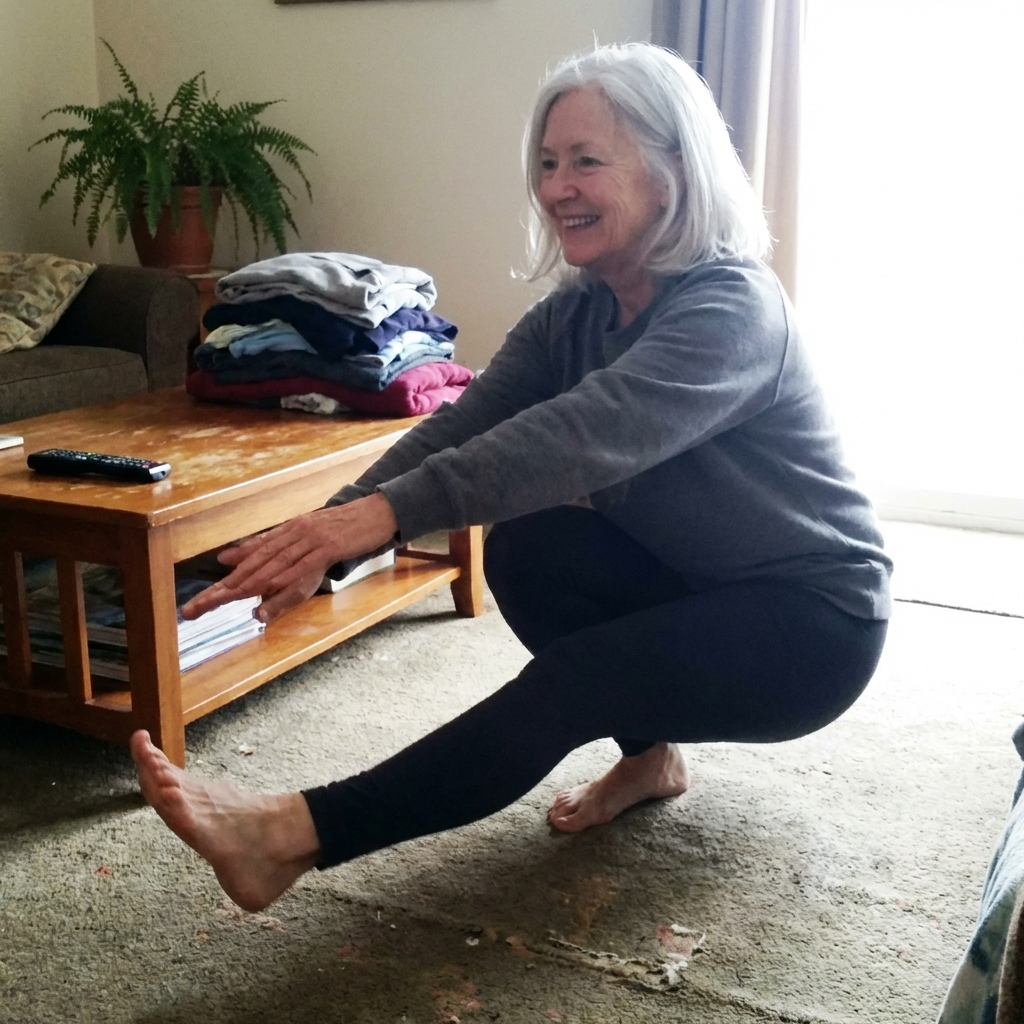
My Mom is 75 and Has the Knees of a 25 Year Old. She Walks, Gardens, and Climbs Stairs Pain-Free. I’m 53 and My Doctor Just Told Me I’ll Need Double Knee Replacement. Last summer she spent three hours on her knees in the garden replanting her flower beds. Came inside, made herself lunch, and walked the dog. No ice pack. No complaints. Just Tuesday. She danced at my niece's wedding last fall. Not the polite sway people do when their knees hurt. The kind where you lose track of time and someone has to drag you off the floor. She climbs stairs without holding the railing. Walks through grocery stores without stopping to rest. Carries her own bags in from the car without thinking about it. I've watched her do all of it for years and never thought much about it. Until my doctor told me I'd need double knee replacement surgery within five years. I'm 53. That appointment was supposed to be routine. I'd had knee pain for a few years. Stiffness, aching. The kind of thing you chalk up to getting older. I finally went in to get it checked out. My doctor reviewed my X-rays and looked up at me. "The cartilage degradation is significant. We're going to want to talk about your options. Long-term, you're looking at replacement." I drove home in a fog. I kept thinking about my mom. At 75, she's doing things I can't do at 53. That's not an exaggeration. That's just the honest math of what my mornings look like now. Getting out of bed takes a moment. I have to let the stiffness loosen before I trust myself on the stairs. By mid-afternoon, after sitting for any length of time, the first few steps feel like my joints are made of gravel. I stopped kneeling in my garden two years ago. Not a conscious decision — I just noticed one day that I'd stopped. I gave up the weekend hikes I used to take. First the long ones, then the moderate ones, then all of them. I started sitting out parts of family events that required standing for too long. I thought about my mom on her knees in her flower beds for three hours and felt something that was half envy, half grief. How does a 75-year-old woman have better knees than I do at 53? I assumed it was just luck. Some people get it, some people don't. That's what I told myself. I didn't accept the surgery verdict without a fight. The first thing I tried was what everyone tries. Ibuprofen, naproxen — standard OTC anti-inflammatories my doctor said were fine for flares. They worked for a few hours at a time. But you can't live on that indefinitely, and I wasn't interested in trading knee pain for a stomach problem. Next came cortisone injections. The first one worked — genuinely worked, for about six weeks. Something close to normal. Then it faded. Second injection, shorter window. Third, less relief than the second. The specialist was straightforward about it: cortisone manages symptoms. It doesn't change anything underneath. I spent four months in physical therapy. My muscles got stronger, my stability improved, and the pain did not go away. My therapist was honest: "PT builds support around the joint. It can't rebuild the joint." I was running out of roads. I was starting to think the surgery conversation was just a matter of when, not if. At 53 I was supposed to be at the part of life where I finally had time to do the things I'd been putting off. Instead I was managing a body that had started quitting on me before I was ready. That's where I was the Sunday I drove over to visit my mom. I'd woken up stiff, the drive had made it worse, and somewhere in the middle of her kitchen I asked if she had any Advil. "Cabinet above the microwave," she said. I opened it looking for the orange bottle. And I saw something else first. A supplement bottle. Brown glass, simple label. Tart Cherry Extract. I didn't recognize the brand. There were two more behind it. I took the Advil and held up the cherry bottle. "What's this?" She looked up from the counter. "Oh — I've been taking that for years." "For what?" She paused like it was obvious. "My knees." I put the bottle down. "Mom. You don't have knee problems." "I know," she said. "That's the point." She explained it the way you explain something you've known for so long it feels like common sense. She started in her early sixties, when her knees first started giving her trouble. Stiffness. Aching after long walks. A grinding feeling she recognized — she'd watched her own mother's joints break down the same way. A friend mentioned tart cherry extract. She tried it, and within a few weeks the stiffness that had been building cleared up. She'd been taking it ever since. "Why didn't you ever say anything?" I asked. "You never mentioned your knees. I thought you were fine." Then she told me the part I wasn't expecting. It hadn't always been easy to find. She'd gone through stretches where her usual brand was out of stock, or she'd pick up something cheaper and it wouldn't work the same way. "When I can't find the good kind, I notice within a few weeks," she said. "The aching comes back. Not terrible — but it comes back." So she'd spent time figuring out why. Why some tart cherry supplements worked and some didn't. The answer was cold extraction. The active compounds in tart cherry — the anthocyanins — are fragile. Standard processing uses high heat because it's fast and cheap. By the time those capsules reach the shelf, most of what made the cherry effective in the first place has been destroyed. She'd found a company that cold-extracts. One that publishes third-party lab results — not label claims, but independently tested anthocyanin levels, verified by an outside lab. Heavy metals, microbial testing, everything documented and visible. "That's the one I trust," she said. She put the bottle back on the counter. GoodGrove. I went home and read everything I could find. She wasn't wrong about the mechanism. The anthocyanins in tart cherry block the specific inflammatory pathways that cause joint pain and wear down tissue. In studies, women with inflammatory osteoarthritis saw their inflammation markers drop — in just a few weeks. More than half of patients in one study reported meaningful improvement in pain and function after eight weeks. But there was a catch: the studies used high-anthocyanin extract — cold-processed, with tested and verified compound levels. Not a label that says "tart cherry extract" with no testing behind it. My mom had worked this out by noticing when cheaper versions stopped working. Fourteen years of paying attention to what her body was telling her. I ordered GoodGrove that night. Didn't expect much. I'd been disappointed too many times. The first two weeks were quiet. Mornings that started a little easier. The stiffness still there, but shorter. The grinding on the stairs seemed less pronounced. Week three I walked through a grocery store, got back to the car, and realized I hadn't thought about my knees once the entire time. I couldn't remember the last time that had happened. Week five I got back down on my knees in the garden. Just to see. I planted six things. By week eight the afternoon aching that used to start around two o'clock had mostly stopped. I went for a real walk — not a slow loop around the block, but an actual walk — and came home feeling like myself. I went back to my doctor at three months. She looked at my chart. Looked at me. "You seem different," she said. I told her what I'd been taking. She was skeptical, but she was listening. She said she wanted to see me again in a few months before we revisited the replacement conversation. I've thought a lot about all those years I spent assuming my mom was just lucky. She wasn't lucky. She found something that worked, understood why it worked, and was careful about where she got it. She just never mentioned it because I never gave her a reason to. I'm not making any promises about what you'll experience. I'm telling you that I went from being told to start planning for double knee replacement to planting things in my garden and taking long walks again. If you're managing knee pain and haven't tried this — or you've tried a cheap version that didn't do anything — this is the one my mom trusted for over a decade. Cold-extracted. Third-party verified anthocyanin levels. Not what the label claims. What the independent lab confirmed. https://trygoodgrove.com/tart-cherry GoodGrove offers a 90-day guarantee. If you don't feel a difference, you get your money back. No questions asked. You risk nothing. And if you're anything like me, you have a lot to get back. - Audrey Harvey https://trygoodgrove.com/tart-cherry
Like this ad? Make it yours.
Crush rebuilds this exact creative around your product — your brand, your colors, your offer — in about a minute.