
Inactive· since Jul 23, 2026
- 43
- days it ran
- 0
- relaunches
Ad copy
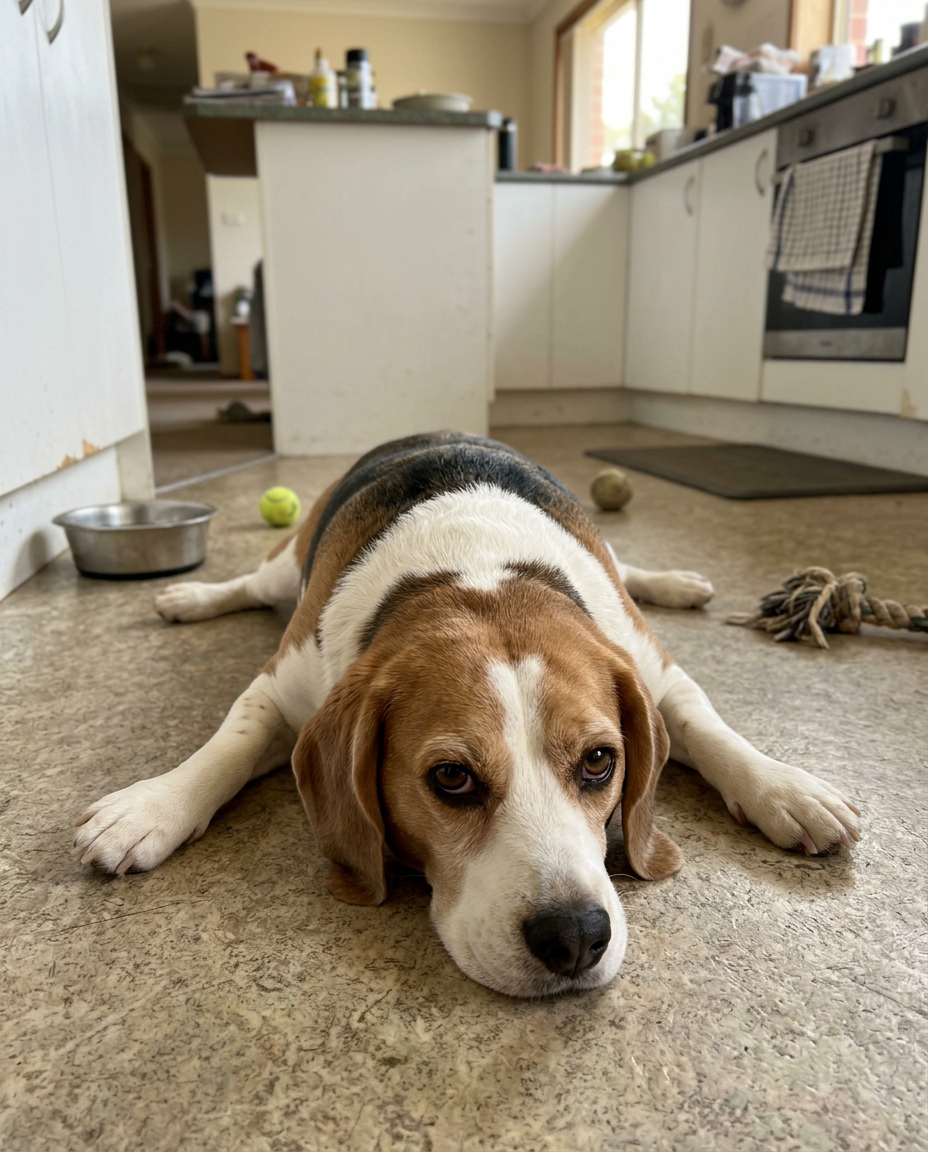
"It's only four pounds." That's what I told the vet. She turned her computer screen around and showed me what four pounds actually does to my dog's knees. I have never felt so stupid and so relieved in the same thirty seconds. Let me explain, because if you've got a slightly chubby dog and you keep telling yourself "it's only a few pounds, it's not a big deal" - I was you, and I was wrong in a way that actually matters. My dog is Poppy. She's a beagle, she's six, and beagles, if you know the breed, are basically a stomach with legs and a nose attached. She will eat until she physically cannot move and then look at you like you've starved her. I knew she'd gotten a bit round. Her vest harness had gone up a notch. She'd developed what my husband lovingly called her "seal shape" when she lay on the kitchen floor. We laughed about it. It was cute. She's a beagle, they're supposed to be a little chunky, right? That's the story I told myself. "It's only a few pounds. She's a beagle. It's fine." Then two things happened close together. First, she stopped doing the thing beagles do where they lose their minds at the word "walk." She still wanted to go. But there was a hesitation. A little "ugh, okay" before she got up. And halfway round our normal loop she started sitting down. Just sitting, on the pavement, looking at me. My beagle, the dog who used to drag me down the street nose-first, wanted to stop and go home. Second, I noticed she'd started going up the stairs with a weird little bunny-hop, both back legs together, instead of a normal climb. I filmed it, actually, because I thought it was funny. Then I watched it back and it didn't feel funny anymore. So I took her in. And I said the exact sentence that I now think about all the time. The vet asked how her weight had been and I said, breezy, a bit defensive: "She's maybe four pounds over, but she's a beagle, it's only a few pounds." And she didn't argue with me. She did something better. She turned her monitor around. She said, "I want to show you something, because 'only four pounds' is the most misunderstood sentence I hear in this room. On a person, four pounds is a couple of tubs of butter, no big deal. But your dog doesn't carry weight like a person. Watch what happens to the joint." She pulled up this simple diagram of a dog's knee and hip, walking. And she said, "When a dog moves - trots, takes stairs, jumps off the couch - the force going through those weight-bearing joints isn't one-to-one with body weight. It's multiplied. Every step, the joint absorbs several times the load. So when you add four pounds of body weight, you're not adding four pounds of stress to that knee. Through the multiplier, with every single step she takes, you're adding a great deal more. All day. Every walk. Every stair. Every jump." I said, "So the four pounds isn't four pounds." She said, "To her knees? Not even close. Body weight is the single biggest thing you can actually change that drives joint wear in dogs. It's not cosmetic. On a small, low-slung dog like a beagle it's one of the most important numbers in her whole life. That little bunny-hop up the stairs? That's her avoiding loading one side. That's not a quirk. That's her telling you it hurts." And here's the part that I did not expect and that I need you to hear if you're where I was. She said, "I'm not telling you this to make you feel terrible. Honestly, the fact that four pounds does this much is good news. Because it means the reverse is also true. Get a few pounds off her and you take a huge amount of force off those joints - more than the number on the scale would ever suggest. Small change, big payoff. You have more power here than you think." I nearly cried right there. Because for weeks I'd been carrying this low, sick guilt - I let my dog get fat, I hurt my dog - and she flipped it into: this is fixable, and it's more fixable than you realize, and the lever is smaller than you feared. But then she said the thing that made me actually change what I did, not just how I felt. "Here's the catch," she said. "Weight comes off a dog slowly. We're going to do it properly, which means months, not weeks - crash-dieting a dog is its own problem. So think about the timeline. If it takes four, five, six months to get those pounds off, that's four, five, six months where every step she takes is still going through that multiplier and still grinding that joint. The weight loss fixes the cause. But it doesn't help her today. So the smart move is to do both - bring the weight down for the long-term fix, and support the joints daily in the meantime so she's actually comfortable during the months it takes." Do both. That was the whole unlock for me. Not "diet, then hope." Diet for the real fix, plus daily joint support for the right-now. I went home and read everything I could find, because I'm that person. And it all lined up. The load through a dog's joints being a multiple of body weight. Body weight being the biggest modifiable factor in joint wear. Tons of owners of stumpy, heavy-set breeds - beagles, dachshunds, corgis, labs - all saying the same thing: the pounds were quietly wrecking the joints and nobody had spelled out the multiplier to them either. And over and over, for the "support the joints while the weight comes off" part, people kept naming PetGently's joint care chews. So I dug into them properly because at this point I was not interested in wasting money on another gimmick. (The bunny-hop video was still sitting in my phone. I was motivated.) Why I ended up trusting these ones specifically: The formula actually matches the problem. It's got the joint-structure ingredients - glucosamine, chondroitin, MSM, green-lipped mussel - to support the cartilage that's taking all that multiplied load. And it's got turmeric and omega-3s on the anti-inflammatory side, which matters because a joint under that much repeated stress gets inflamed and sore, and that's a big part of why she was hesitating on walks. It's natural and made in Ireland. No grains, no soy, no GMOs, none of the artificial rubbish. Given I'd be giving this to a food-obsessed beagle every day for months, I wanted something clean, and honestly, something she'd actually eat. (She inhales them. Shocking, I know.) The 90-day money-back guarantee is what tipped me over. Three months to try it and send it back if nothing happens. That's a company betting on its own product. I'll take that bet. And - same as I said above and I'll keep saying it - the chews did not replace the diet. That was the deal I made with myself and with the vet. The weight coming off is the actual fix for the multiplier. The chews were there so Poppy wasn't just white-knuckling through months of sore knees while we got there. Support now, fix underneath. Both. How it actually went, honestly: First couple of weeks - she loved the chews, thought they were treats, zero drama getting them into her. But I didn't see a big change yet, and I want you to know that so you don't quit early. This is not a magic-pill situation. Around three weeks in, the walks changed first. The sitting-down-on-the-pavement thing started happening less. Then not at all. She started pulling on the lead again, nose down, doing the actual beagle thing. I stood in the street the first time she yanked me toward a hedge and I was genuinely happy about being dragged by my dog. By month two, the bunny-hop up the stairs was mostly gone. She was doing normal alternating steps most of the time. I took a new video and put it next to the old one and the difference honestly got me. And the weight was coming down at the same time - slow, a bit each week, the way it's meant to. So by the time we were a few months in, it was both things stacking: less weight going through the joint AND the joint better supported. That's the combination the vet described, and I could see it in a dog who wanted to walk again. So here's what I'd say to you, if you've got a dog you keep describing as "just a bit chunky" or "only a few pounds over." Please don't do what I did and file it under cosmetic. On a dog, "only four pounds" is not four pounds to their joints - through the multiplier it's a great deal more, going through those knees and hips with every single step, all day, every day. That's why the slightly heavy dog is so often the stiff, slowing-down, sitting-on-the-pavement dog. The genuinely good news, the thing my vet gave me that I'm giving you: because the multiplier works against you, it also works FOR you. A small amount of weight off takes a big amount of force off. You have more leverage than you think. So start the weight loss, do it slowly and properly, ideally with your vet. But it takes months. And your dog's joints are grinding through that multiplier the whole time. That in-between is exactly where the daily chews earned their place for us - keeping Poppy comfortable and moving while the weight actually came down. Here's the ones we used 👇 https://www.petgently.com/pages/joint-care-offer-adv Natural, made in Ireland, built with both the joint-support and anti-inflammatory ingredients that target exactly what all that multiplied load does to a joint - and a 90-day money-back guarantee, so you can try them on your own dog and decide for yourself. Nothing happens, you send them back. Poppy dragged me up a hill this morning like she was six months old. "Only four pounds." I'll never say that about a dog again. If yours is a few pounds over and slowing down - it's not cosmetic, and it's more fixable than you fear. Start today. 🐾
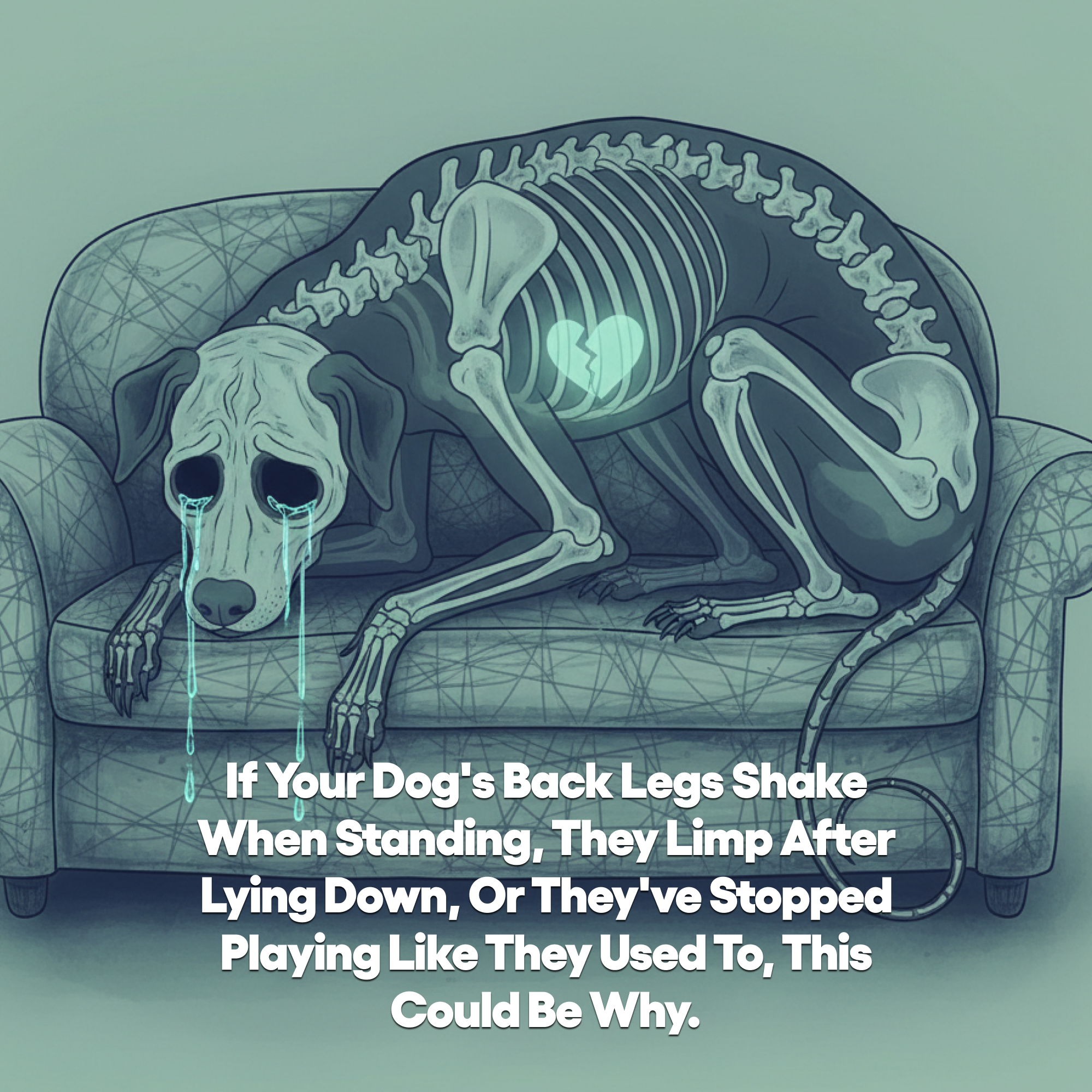
Read This If Your Dog Is Stiff & Sore 👆
Pure, transparent supplementation for dogs. Help them with joint issues, itchy skin and coat & general wellbeing.
LEARN MORELike this ad? Make it yours.
Crush rebuilds this exact creative around your product — your brand, your colors, your offer — in about a minute.