The Blood Sugar Journal
The Blood Sugar Journal Facebook ad: “Feel Like Yourself Again”
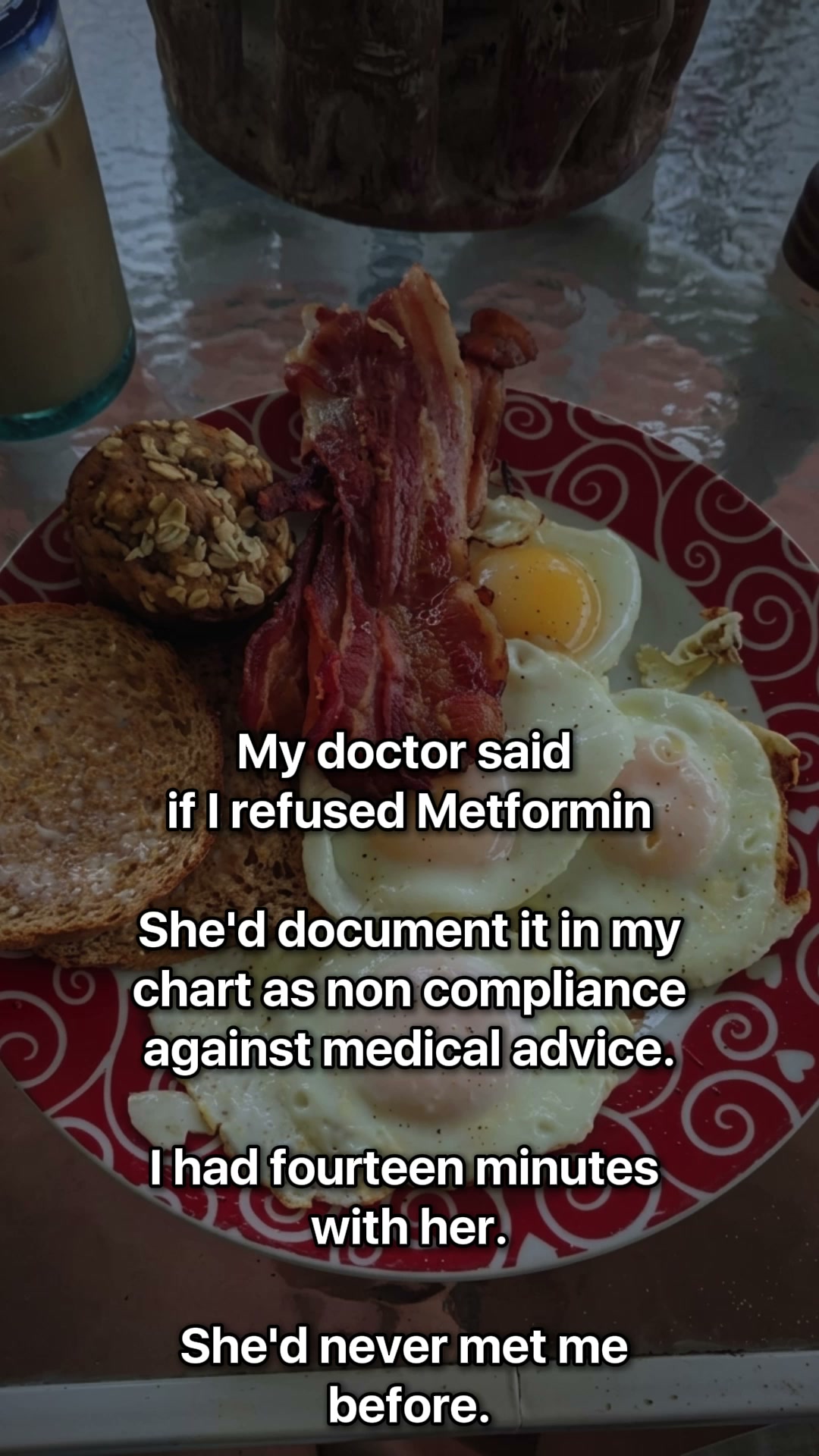
Ran for 80 days, from July 8 to September 26, 2026, the last day Crush saw it.
Run by The Blood Sugar Journal on Facebook. Crush is not the advertiser and does not verify its claims. See this ad in Meta's Ad Library(opens in a new tab)
Want an ad like this for your product?
Crush makes new ad images for your product from this ad: your logo, your product photo, your offer.
Trials from $19.95 USD, then $79.95 USD a month. Cancel anytime.
About this ad
- Meta Ad Library ID
- 1347123990836647
- Platforms
- Facebook, Instagram, Audience Network, Messenger and Threads
- Relaunches
- 0
Ad text
My doctor said if I refused Metformin, she'd document it in my chart as non compliance against medical advice. I had fourteen minutes with her. She'd never met me before. Dr. Whitfield's retirement letter came on a Tuesday. Standard form letter. "After 38 years of practice, I'm stepping away effective March 1st. Your care will be transferred to Dr. Lauren Caldwell." I sat at the kitchen table staring at it. Thirty two years. I'd been seeing Dr. Whitfield for thirty two years. He knew my history, knew my father's reaction to Metformin, knew my fear of medication, and he'd always worked with me, always said the same thing, "let's keep monitoring it, Mark, we'll try the lifestyle approach first, you're doing the right things." Now he was gone. My first appointment with Dr. Caldwell was March 14th. Routine physical. Transfer of records. Meet the new doctor. I sat in the exam room, same room I'd been in for decades, same posters about heart disease and diabetes, different doctor. Dr. Caldwell walked in. Young. Maybe 36. Laptop in hand. "Mr. Bellamy." Firm handshake. All business. "I've been going through your file." She sat down, pulled up my records, scrolled, and her expression changed. "Your blood sugar history." She turned the screen toward me. "2022, A1C 6.1. 2023, A1C 6.5. 2024, A1C 6.9. 2025, A1C 7.2. Today, A1C 7.4. Fasting glucose 174." She looked at me. "Five years of progressively worsening glycemic control. A1C above 6.5 for the last three years. No medication prescribed." "Dr. Whitfield and I had a plan, lifestyle changes, diet, exercise, he was monitoring..." "For five years?" Her voice was sharp. "Mr. Bellamy, your A1C has been in the diabetic range for three years without treatment. I don't know what your previous doctor was thinking, but this should have been addressed aggressively years ago." My stomach dropped. "Dr. Whitfield knew my history, my father had terrible reactions to..." "Your father's history doesn't change your A1C numbers, fasting glucose 174, you could be looking at neuropathy, kidney damage, cardiovascular events." She was already typing. "We're starting Metformin. 1000 milligrams twice daily." "I'd rather..." "This isn't a discussion. Your blood sugar is dangerous. If you refuse treatment, I'm required to document it in your chart as non compliance against medical advice." The printer hummed. She handed me the prescription. "Follow up in twelve weeks. We'll do another A1C and assess your response." She stood. Left the room. The whole appointment took fourteen minutes. I sat there holding the prescription, hands shaking, the words "against medical advice" and "non compliance" rolling through my head like a verdict. In the parking lot, I called my wife Diane. "How was the new doctor?" "She says Dr. Whitfield should have put me on Metformin years ago, and she wants me on it immediately." Silence. "What?" "She said five years without medication was irresponsible." "But Dr. Whitfield always said you were..." "I know what he said. She doesn't care. I either take the medication or it goes in my record that I refused." That night I couldn't sleep, just lying in bed staring at the ceiling, Diane's breathing steady next to me. Dr. Whitfield had respected my concerns, we'd worked together for over three decades, dietary changes, exercise, cutting refined carbs, daily walks, regular bloodwork every six months. My A1C had climbed, yes, but gradually, no sudden spikes, no symptoms, no emergencies. Was he wrong to be patient? Was I walking around with damage building underneath and didn't even know it? At 3 AM I went downstairs, sat at the kitchen table with my laptop, and started searching. is A1C 7.4 dangerous high blood sugar risks without Metformin heart attack risk Type 2 diabetes men 50s Every article said the same thing. Increased risk. Vascular damage. Neuropathy. Kidney disease. Cardiovascular events. Maybe Dr. Caldwell is right, I thought, maybe I've been reckless. But then I searched, Metformin side effects long term. GI distress. Chronic fatigue. B12 depletion. Brain fog. Peripheral neuropathy. Increased fall risk in older adults. And my father's face flashed in my mind. He'd been on Metformin for fifteen years, started right after his diagnosis, the same medication sitting on my counter right now, and the GI issues came within six weeks, not occasional discomfort, constant cramping and urgency that ruled his life, made him afraid to leave the house, made him plan every outing around bathroom proximity. They added Glipizide and the GI eased slightly, but then the fog rolled in. He started forgetting things, small things at first, where he'd put his keys, what he'd gone to the store for, then bigger things, names of people he'd known for years, the punch line of a story he'd told a hundred times. And the fatigue, that was the worst. This was a man who coached my wrestling team, built our front porch with his own hands, fixed the car in the driveway on weekends. By 65, he was napping twice a day, couldn't follow a conversation without losing the thread, lost interest in everything he used to love, just existing, going through the motions of a life that didn't feel like his anymore. The tingling in his feet started at 67. By 69 he was using a cane because his balance was off. The doctor said it was B12 depletion from the Metformin, prescribed B12 shots, but the damage to his nerves was already done. My mother said it was like watching him disappear. He died at 71. Cardiac event. While taking the medications that were supposed to protect him. Fifteen years of side effects. Fifteen years of feeling like a shadow of himself. And it didn't save him. I closed the laptop, rubbed my face, and just sat there in the kitchen with the prescription on the counter mocking me from across the room. I didn't fill it. One week passed. Then two. Dr. Caldwell's office called. "Mr. Bellamy, our records show you haven't filled your prescription, Dr. Caldwell wants to confirm you're taking your medication as directed." "I need more time to think about it." "Sir, Dr. Caldwell noted this as urgent, she strongly recommends..." "I said I need more time." I hung up. Diane found me in the garage that evening. "Mark. Talk to me." "I'm looking for options." "Options? The doctor said your blood sugar is dangerous." "She said Dr. Whitfield was wrong for not putting me on Metformin, but Dr. Whitfield knew me for thirty two years, he knew my father's history, he saw what those medications did to him, he was being careful with me." "But what if she's right? What if you..." Her voice broke. "I can't lose you." "You won't. I just need to find another way." "What other way?" I didn't have an answer. That weekend I searched everything. Berberine. Cinnamon. Chromium. Apple cider vinegar. Alpha lipoic acid. Every natural blood sugar supplement with actual research behind it. I tried the top rated berberine on Amazon, six weeks, every morning without fail. A1C check came back at 7.3. Basically unchanged. Switched to high dose chromium, pharmaceutical grade, eight weeks, nothing. Tried a full blood sugar stack from a specialty supplement store, berberine, cinnamon, chromium, alpha lipoic acid, the most expensive thing they had. A1C 7.2. Two tenths. Maybe three. Noise. I was running out of time and running out of ideas. Three weeks before my appointment I was back at my laptop at 2 AM going in circles, reading the same supplement forums, the same Reddit threads, the same dead ends. Then I changed the search. I stopped searching for supplements and started searching for the mechanism, why does blood sugar actually keep climbing in the first place, what's really happening inside the body when Type 2 progresses. And I found something that changed the way I understood everything I'd been doing wrong. It was in a metabolic physiology paper, the kind of thing that shows up when you stop searching "how to lower blood sugar" and start searching "what actually causes blood sugar to spike." Basic science. Not hidden. Not controversial. Just not something anyone had ever explained to me in a doctor's office. The A1C number isn't the problem. The flood is the problem. I read that line three times. Your body has a pathway that controls how fast the food you eat turns into sugar in your blood. It's supposed to. When that pathway works, food comes in, the pathway breaks it down slowly, and sugar trickles into your blood gradually. Your insulin sees it coming and handles it calmly. Your numbers stay steady. But that pathway is fragile. Stress wears it down. Processed food wears it down. Years of carrying extra weight wear it down. A little at a time, year after year, the pathway stops being able to do its job. And then one day it can't control the speed anymore. Food doesn't trickle into your blood. It floods in. The carbs in your meal that used to take 90 minutes to enter your blood now hit in 15. The flood arrives faster than your insulin can handle. You spike. Your pancreas panics and dumps a wave of insulin to catch up. That wave is too much. So an hour later you crash. That alone would have been enough to keep me reading. But then I got to the part nobody had ever explained to me. Every meal puts more stress on a system that's already failing, the insulin overshoots, your cells get a little less responsive to it, your pancreas wears down a little, and the next meal, the breakdown happens just as fast, but now your body is even less equipped to handle it. A cycle that feeds itself. I sat back in my chair. Your A1C climbs not because of any one meal, but because every meal sends a flood your body can't handle, and the system wears down a little more each time. That was why my A1C kept climbing. That was why the berberine hadn't moved it. That was why the chromium hadn't moved it. That was why the lipid stack hadn't moved it. Every single one of those supplements was aimed at the morning number, or at sensitizing insulin to handle the flood after it happened. None of them addressed the pathway that was letting the flood happen in the first place. I was bailing water out of a boat while ignoring the hole in the hull. That image hit me like a physical thing, because it was exactly what I'd been doing, real work, genuine effort, hundreds of dollars of supplements and months of disciplined dosing, all of it aimed at lowering a number while the actual mechanism driving the number ran unchecked. And the Metformin? The Metformin would tell my liver to stop releasing stored sugar overnight, the morning number would drop on the chart, Dr. Caldwell would be happy, but every time I ate a meal, the flood would still happen, the pancreas would still wear down, the damage would still build. The drug would lower the morning number. It wouldn't stop the flood. That's why people on Metformin still progress to insulin. That's why my father did. His morning numbers were good. His A1C looked controlled. And he died anyway, because every meal was still flooding his blood and his arteries were taking the hit three times a day. We were watching the wrong number. So I started searching for something else, something that actually addressed the pathway, not the morning number, and I went down a hole I didn't come out of for two nights. What I was looking for was something that could restore the pathway that controlled the speed of how food becomes sugar, so the flood would stop happening in the first place. Most blood sugar supplements don't address it, they work on insulin sensitivity, or on glucose absorption in the gut, or on liver output, none of which restore the actual pathway that's supposed to control the speed of the breakdown. I found studies on individual extracts. Berberine. Bitter melon. Fenugreek. All showed modest effects in isolation, all had some research behind them, but the gains were small. Then I found it. A meta analysis pooling 34 clinical trials, more than 1,500 people with elevated blood sugar, testing standardized pomegranate extract against the markers that actually matter, fasting glucose, insulin levels, insulin resistance. The pomegranate moved them. Fasting glucose came down. Insulin sensitivity improved. The full metabolic picture shifted in the right direction. Without the GI distress of Metformin. Without the merry go round of supplements. I read it three times, then I pulled every paper that cited it. Research going back decades on pomegranate's effect on glucose metabolism. Studies on the active compound, called punicalagins, showing it targets alpha amylase and alpha glucosidase, the same enzymes some prescription antidiabetic drugs target. Papers showing pomegranate activates AMPK, the same master switch Metformin triggers, but through a different mechanism that doesn't deplete B12. But what stopped me wasn't the meta analysis. It was the mechanism paper. There's a fruit that's been used in Central Asia for over 5,000 years. The healers who used it back then didn't have a name for blood sugar. They didn't know what insulin was. They didn't have a way to measure what was happening inside the body. But they knew what they saw. People who ate this fruit daily had steadier energy. Calmer digestion. They didn't crash after meals. They didn't fall into the slow decline everyone else seemed to. They called it the fruit of life. Today we call it pomegranate. Pomegranate contains compounds called punicalagins, one of the most powerful compounds your body uses to slow the breakdown of food into sugar back down to its natural pace. They restore the pathway that controls the speed of the breakdown in the first place. Not in your liver like Metformin. Not in your gut like apple cider vinegar. Not by sensitizing insulin downstream like berberine. The actual pathway. When the punicalagins are back in your system, the pathway has what it needs to do its job. Food enters your blood gently again. The flood stops. The spike eases. The crash eases. The pancreas stops wearing down three times a day. The cycle breaks. Your numbers come down. Not because something forced your liver to stop, but because your body finally has the raw material it's been missing. The hole in the hull, sealed from the inside. This wasn't fringe science, this was peer reviewed research sitting in metabolic and nutritional journals that nobody in a standard clinical setting was looking at. I almost stopped there and ordered the first pomegranate supplement I could find. Bought a bottle off Amazon that weekend. Cheap powder capsules. Twelve dollars. Diane saw the bottle on the counter. "Pomegranate? Since when do you take that?" "Since now. Maybe." I took it for a week, didn't feel different, didn't expect to, you can't feel blood sugar moving without a meter, but I went back to the research and noticed something I'd skimmed past the first time. The studies that showed results weren't using grocery store powder or juice. They specified standardized extract, verified concentration of punicalagins, low temperature processing, organic sourcing. One paper noted that heat processing, the standard commercial method for cheap pomegranate products, degraded the punicalagin content dramatically. The compounds that mattered were heat sensitive. The industrial process that makes pomegranate cheap also makes it therapeutically useless. The juice was even worse, mostly sugar, with the active compounds destroyed during pasteurization. The Amazon bottle was ground up fruit scraps. Whatever had been in that fruit was gone before it hit the capsule. That explained the failed week. It didn't explain the price I'd have to pay for the real thing. At 4 AM I searched, standardized pomegranate extract organic punicalagins. One brand kept coming up in the research oriented forums, people who'd clearly done the same deep dive I was doing, not wellness blogs, people citing studies, posting glucose readings, tracking month by month. Alevia. Standardized pomegranate extract. Organic. Third party tested for purity and potency. Made in the USA. Small batch production with low temperature processing that preserves the full punicalagin matrix at therapeutic concentration. No fillers. No heat damage. 90 day money back guarantee. I ordered it immediately. The package arrived three days later. Two capsules with water every morning. That's the whole protocol. I took the first dose after breakfast, didn't expect much, I'd been wrong three times already. I couldn't check my A1C that day, that takes weeks of averaged blood sugar to register, but I noticed something by the end of the first week. The 2 PM crash, the one I'd accepted as normal, didn't come, I made it to dinner without feeling like I was running on fumes, slept through the night without waking at 3 AM to use the bathroom. Could be placebo. Could be noise. I wasn't counting it yet. Week two, I woke up on a Saturday and the brain fog wasn't there, stood up from the couch without that slow getting started feeling, my thinking felt sharper, the food noise had quieted down. Diane said something first. "You seem less heavy, like something lifted." She was right. I didn't have a word for it until she said it. Week four, I drove to a walk in lab, ordered my own A1C and fasting glucose panel, sat in the waiting room like I was waiting for a verdict. The results came back the next morning. A1C 6.8. Fasting glucose 132. Down from 7.4 and 174. I stared at the numbers, read the report twice, checked the date, checked my name. Six tenths of a point on A1C in four weeks. Without medication. Week seven, I went back, same lab, same panel. A1C 6.3. Fasting glucose 118. Below 6.5. Below the diabetic threshold that had put the prescription in my hand in the first place. I sat in my car in the parking lot and just breathed for a while. Two days before my appointment with Dr. Caldwell, I had my pre visit labs drawn, standard bloodwork, the results would be in my chart before she walked in. At the appointment, I sat in the same exam room, same posters about heart disease and diabetes, different feeling. Dr. Caldwell walked in. Opened my chart. Stopped. "A1C 5.9. Fasting glucose 104." "Yes." She looked at 7.4. Then 5.9. "You started the Metformin?" "No." She looked up. "No?" "Pomegranate extract. I know how that sounds. But there's a real mechanism. Your body has a pathway that controls how fast food becomes sugar in your blood, and when it breaks down, food floods your blood every meal, and that's what damages everything underneath. Pomegranate contains compounds called punicalagins that restore that pathway. There's a meta analysis of 34 clinical trials on standardized pomegranate extract, more than 1,500 people, measurable improvements in fasting glucose, insulin levels, and insulin resistance. I'm not saying I understand all of it, but I tried it. And the numbers are in front of you." Long pause. "Where did you read this?" "The meta analysis was published in a peer reviewed metabolic journal, there are individual trials going back years, and research on punicalagins targeting alpha amylase and alpha glucosidase, the same enzymes some prescription antidiabetic drugs target. I can email you everything tonight. I saved all of it." She looked at my chart again. Then at me. "What specifically are you taking?" "Alevia's Pomegranate. Standardized extract. Organic. Third party tested. Low temperature processed." She typed it in, read for a long time, looked at the sourcing and testing documentation. "Continue what you're doing. Back in twelve weeks. If it holds below 6.5, quarterly monitoring. No medication." I walked out of that office and sat in my car for ten minutes. Called Diane. "A1C 5.9." She went quiet. Then, "no medication?" "No medication. Quarterly monitoring if it holds." She didn't say anything for a moment, and when she did her voice was tight. "I knew you'd find something." That was four months ago. Last week I got my quarterly panel, A1C 5.7, fasting glucose 98. Both below the thresholds that matter. Stable. No medication. No compliance flag in my chart. Just results. If you're reading this, you're in the same position I was, cornered, pressured, feeling like a Metformin prescription is the only option your doctor will accept. Here's what I learned after months of failed supplements and two nights of actual research. The reason most blood sugar supplements don't work is that they're aimed at the wrong system, they're trying to nudge insulin sensitivity or reduce gut absorption, but they don't restore the pathway that's letting food flood your blood every meal in the first place. Your A1C keeps climbing because every meal sends a flood your body can't handle, and the system wears down a little more each time. Until you address the pathway, the cycle doesn't stop, the number doesn't come down, and the damage keeps building underneath whether your morning number looks good or not. The Metformin lowers the morning number, but it doesn't address the flood either, which is why people on Metformin still progress to Glipizide, then to GLP-1 injections, then to insulin, and why my father did, and why his "controlled" A1C didn't save him. Alevia's Pomegranate was the only standardized extract I found that met the quality requirements from the actual studies, organic, low temperature processed, full punicalagin matrix preserved, third party tested for purity and potency, made in the USA in small batches. I don't know if it's the only one that exists. I know it's the one that worked for me. My A1C dropped from 7.4 to 5.7. My doctor monitors me quarterly. No medication. No lectures. No compliance documentation. Just numbers she can't argue with. If you feel cornered, give it 90 days, get your own A1C and fasting glucose panel at a walk in lab at week four, then again at week eight, track it yourself, then walk into your next appointment with the data. 90 day money back guarantee. If you don't see improvement in your numbers, if you don't feel a difference, if you're not satisfied for any reason, contact customer service for a full refund. No questions asked. You risk nothing. Alevia is a small company, they make everything in small batches to preserve potency, which is why it works when most others don't, and which is also why they sell out regularly and you have to wait for the next batch. Numbers are the only thing that changes a doctor's mind. 👉 https://alevia.com/pom/11 Mark Bellamy P.S. I noticed energy and brain fog changes by week two, A1C dropped 0.6 points by week four, below the diabetic threshold by week seven. She backed off the Metformin push on the spot. Your timeline may vary, but 90 days is the window, and you risk nothing. P.P.S. The research exists. The mechanism is real. You just have to be willing to look for it. I did the looking. Now you have the answer. 👉 https://alevia.com/pom/11
Where the ad sends people
alevia.com
Feel Like Yourself Again
"This actually worked, thank you so much." - Emily T.
Shop now: alevia.com(opens in a new tab)