
Inactive· since Jun 18, 2026
- 23
- days it ran
- 1
- relaunches
Ad copy
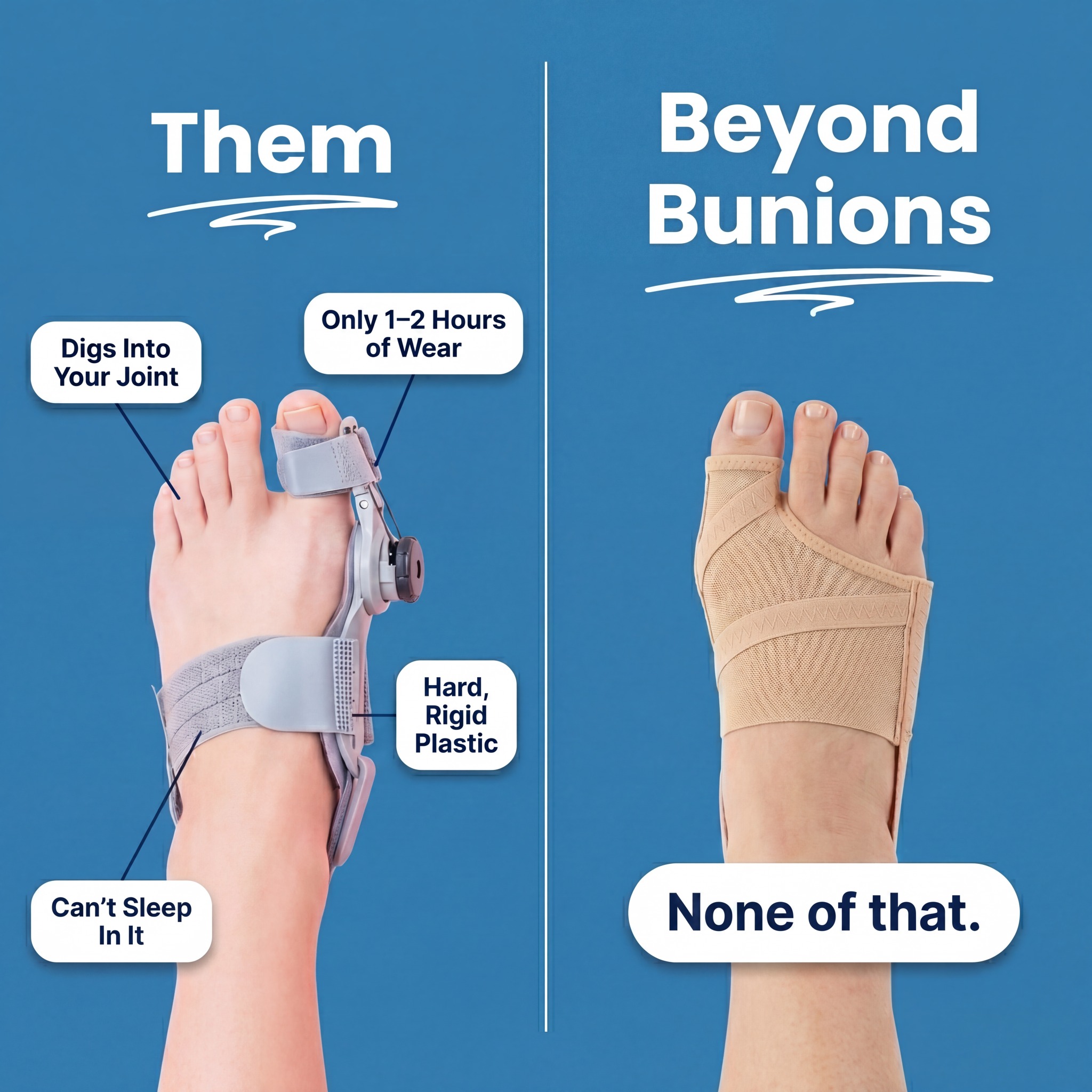
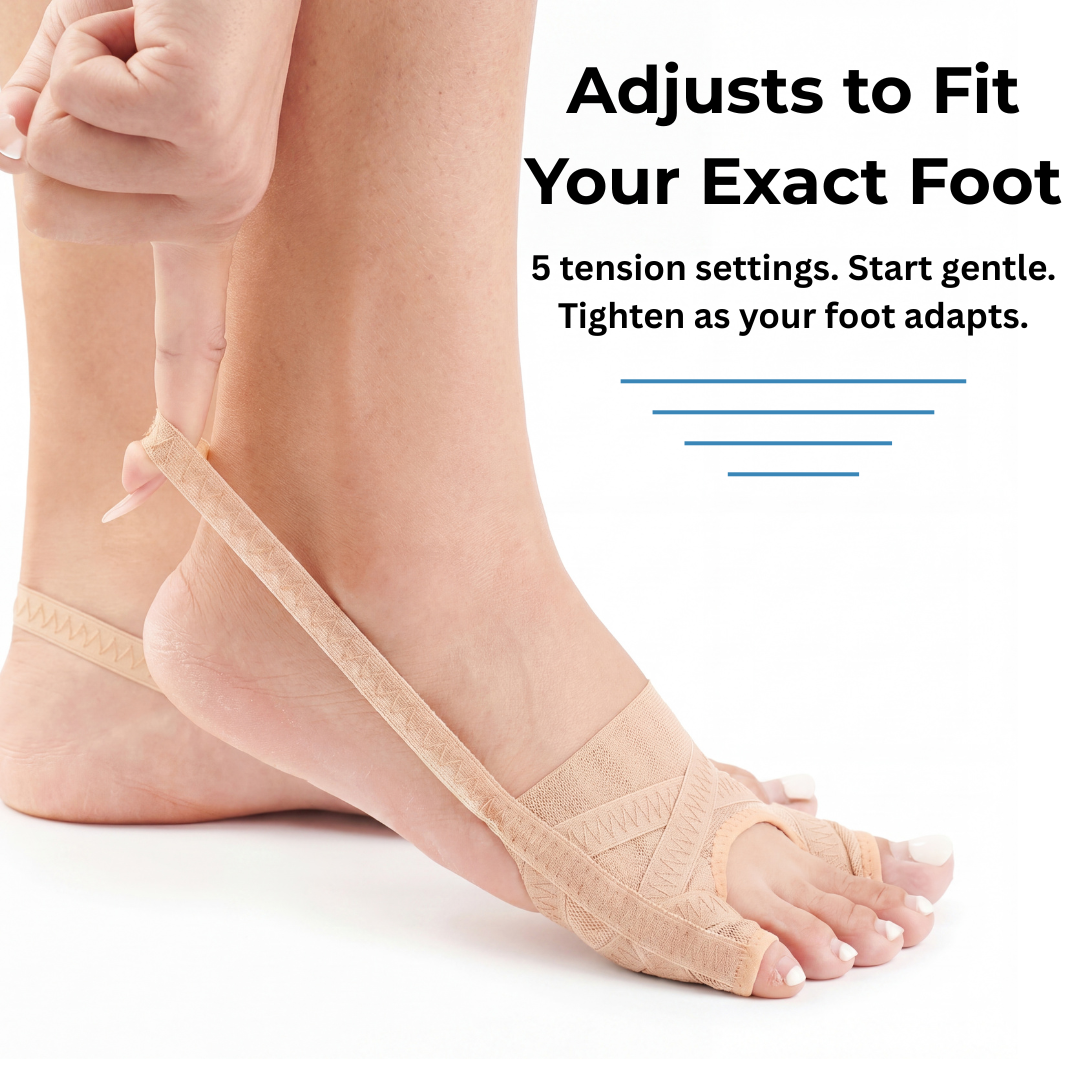
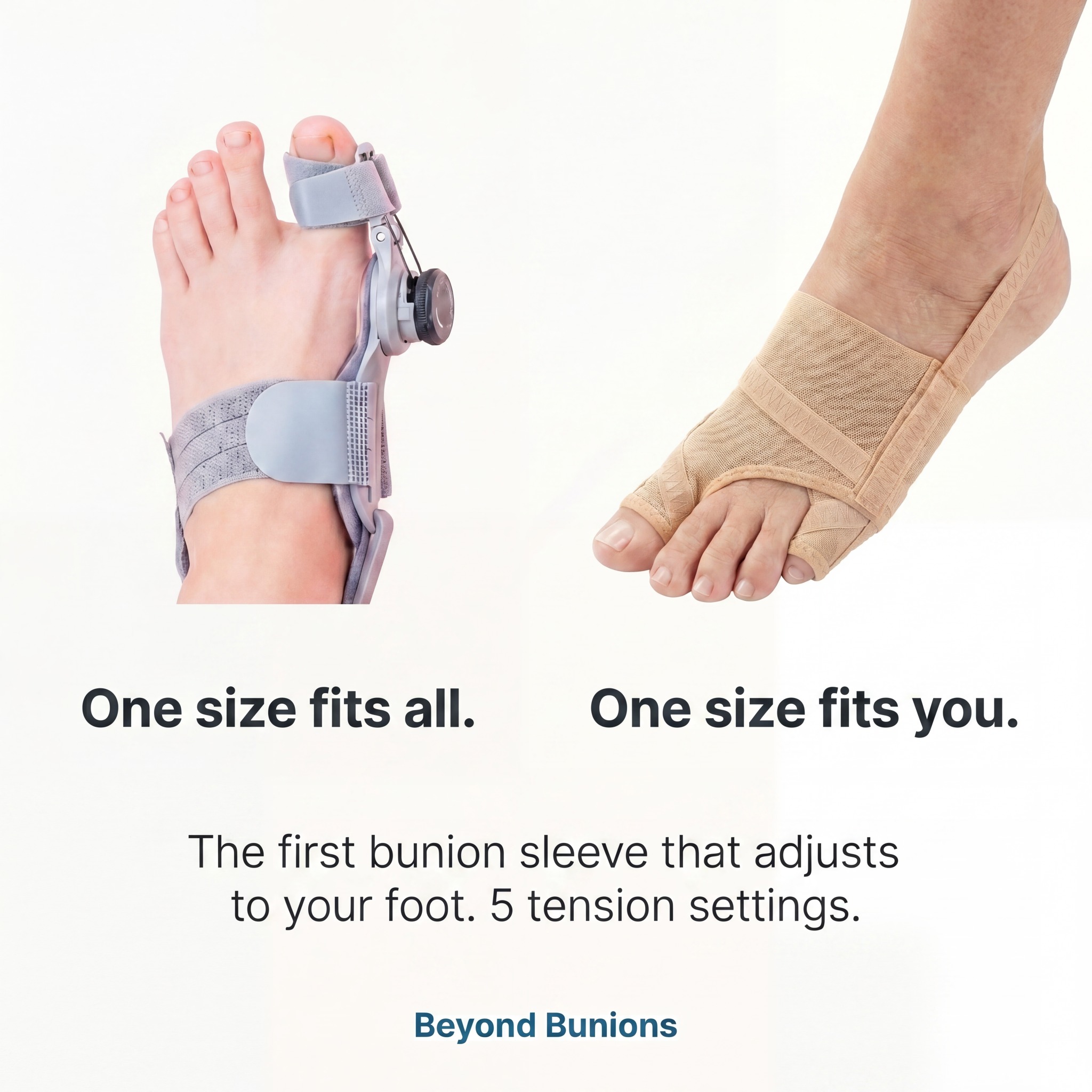
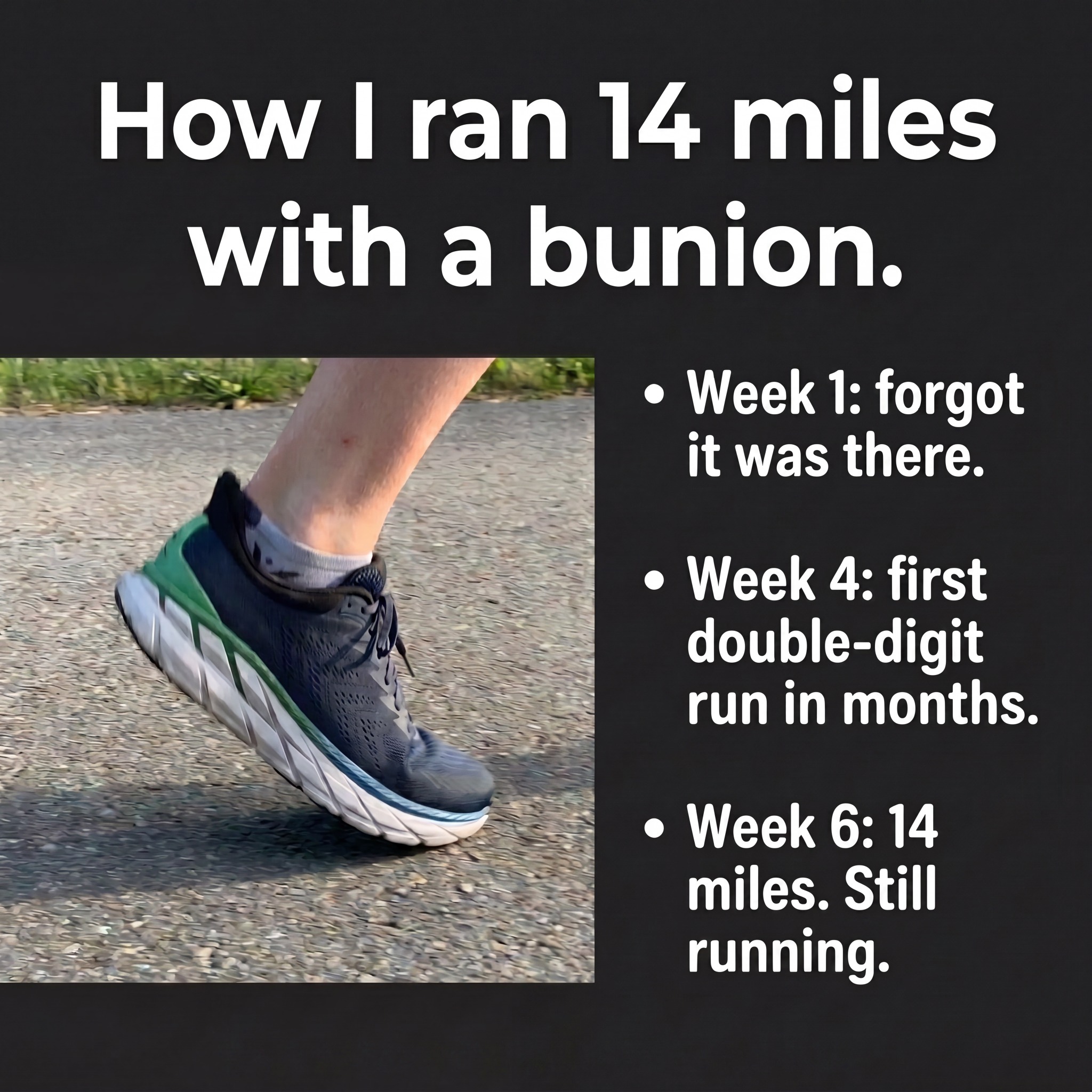
The bunion corrector that goes inside your running shoe. How I ran 14 miles last Saturday with a bunion my doctor wanted to operate on. I've been running since I was nineteen. Not racing-fast, but every morning, rain or shine, the same loop along the river before work. It's the one hour of the day that's mine. My husband jokes that I'd run through a hurricane. He's not wrong. So when my big toe started leaning two winters ago, I did what runners do. I ignored it. The bump got a little bigger. I told myself it was just from the cold. Then I started feeling it on the downhills — a pressure on the inside of the joint that showed up around mile four and stayed. I bought a wider shoe. It helped for a few weeks. Then it didn't. By last fall I had a whole system. Tape the toe before long runs. Lace the left shoe looser than the right. Ibuprofen the night before anything over ten miles. A pair of those gel toe spacers I'd wear around the house. I'd told myself this was managing it. Then one morning in January I got back from an easy six, sat down on the bench by my front door, and couldn't get the shoe off. Not because of pain. My hands were shaking, and not from the cold. I'd been adding up the workarounds and ignoring which way it was all heading. I made an appointment that afternoon. The doctor took an X-ray, turned the screen toward me, and pointed at the joint. "That's a moderate bunion. It's going to keep getting worse. Eventually you're looking at surgery." I asked how long surgery would put me out. "Six to eight weeks off it. You'd be back to running around the four-month mark, if recovery goes well." Four months. I opened my training app at a red light on the way home, which I know you're not supposed to do. Twelve weeks to a half marathon I'd already paid for. A training block I was in the middle of. A streak I'd kept alive for most of a decade. Four months off wasn't recovery. It was building back from zero. I didn't book the surgery. I also didn't do nothing, because I'd watched a running friend "do nothing" and end up worse. I went looking for a second opinion. The second podiatrist looked at the same X-ray and asked me something the first one never did: "Has anyone explained to you why the bone is drifting?" I said no. The first doctor had pointed at the bone like the bone was the whole story. She pulled up a diagram. "The bone doesn't wander off on its own. There's a small muscle that runs along the inside of your foot — it's supposed to hold the big toe in line. In most bunions, that muscle has stopped doing its job. The toe drifts because nothing's holding it straight anymore. And here's the part most people never hear — that muscle doesn't show up on an X-ray. So when your first doctor looked at the image, he saw the bone out of place. He didn't see the thing that moved it. He wasn't wrong about the bone. He just stopped at the part the machine could show him." I asked the obvious question. If surgery fixes the bone, doesn't that fix it? "Surgery moves the bone back," she said. "It doesn't retrain the muscle. Straightening the bone without fixing the muscle is like standing a leaning fence post back up without packing the soil around it — nothing's holding it, so it tips again. That's part of why bunions come back even after a clean surgery — in as many as one in three people. You move the bone, but the thing that pulled it out of line in the first place is still sitting there, still not doing its job." Then she told me about the option I'd never heard of. Not a hard plastic brace — I'd seen those, no runner is wearing one of those on a long run. This was soft mesh. Adjustable. Thin enough to wear inside my actual running shoe, working the muscle while I ran instead of after. She had me try one on right there in the office. I'd braced for that toe-spacer feeling — the fat wedge of silicone jammed between your toes that you notice with every step, the thing I'd never in a hundred years run in. This wasn't that. The sleeve sat along the length of my foot, not crammed between the toes. The tension pulled the same direction the muscle was supposed to — easing the big toe back toward where it used to sit, instead of shoving it sideways. She had me stand, then walk a few steps. I kept waiting to feel it. I didn't. The toe was moving back into line on its own and I couldn't feel a thing doing it. "That's the point," she said. "If you can feel it fighting you, you won't wear it. This works with the foot, so you forget it's there." I still almost didn't believe something that quiet would stay put. Every spacer I'd tried slid out of place before mile one. But the first time I laced up over it at home, I forgot it was there by the end of the warmup. It didn't bunch. It didn't slide into the toe box. It felt like a slightly snugger shoe. Here's what the next stretch looked like, because I kept notes the way I keep my mileage: Week 1 — Wore it on every run. No blisters, no hot spots. Forgot about it most days. Week 2 — The bench thing, where I'd sit by the door unable to deal with the shoe, stopped. I'd get home and walk inside. Week 3 — The pressure on the downhills was still there but quieter. More background than alarm. Week 4 — First double-digit run since the diagnosis. Eleven miles. The left shoe came off the same as the right. First time in months. Week 6 — Fourteen miles last Saturday. The longest I'd gone since before any of this started. I want to be careful about what I'm claiming, because the second podiatrist was careful too. Wearing this didn't cure anything. What she said was that options that don't involve surgery can delay it — sometimes by years — and that the months before an operation are the only window where that muscle still responds. I'm in that window. I'm using it. What I know for sure is this: I haven't booked anything. The bump is still there. But I ran fourteen miles on Saturday, the half marathon is still circled in my app, and I haven't missed a morning on the river in six weeks. The first doctor showed me a bone and a date. Nobody had shown me the muscle — or that I could work on it without giving up the one hour of the day that's mine. If your toe is drifting and someone's already said the word surgery, I'm not telling you to skip that conversation. I'm telling you there's a part of it most people don't get to hear. I'll leave the link below to the thing that goes inside the shoe. — still running
Still running. Still working on the bunion.
Discover the fabric bunion sleeve that fights Progressive Toe Deviation 24/7. Over 4,000 verified reviews. 90-day money-back guarantee.
LEARN MORELike this ad? Make it yours.
Crush rebuilds this exact creative around your product — your brand, your colors, your offer — in about a minute.