
Inactive· since Jun 30, 2026
- 36
- days it ran
- 1
- relaunches
Ad copy
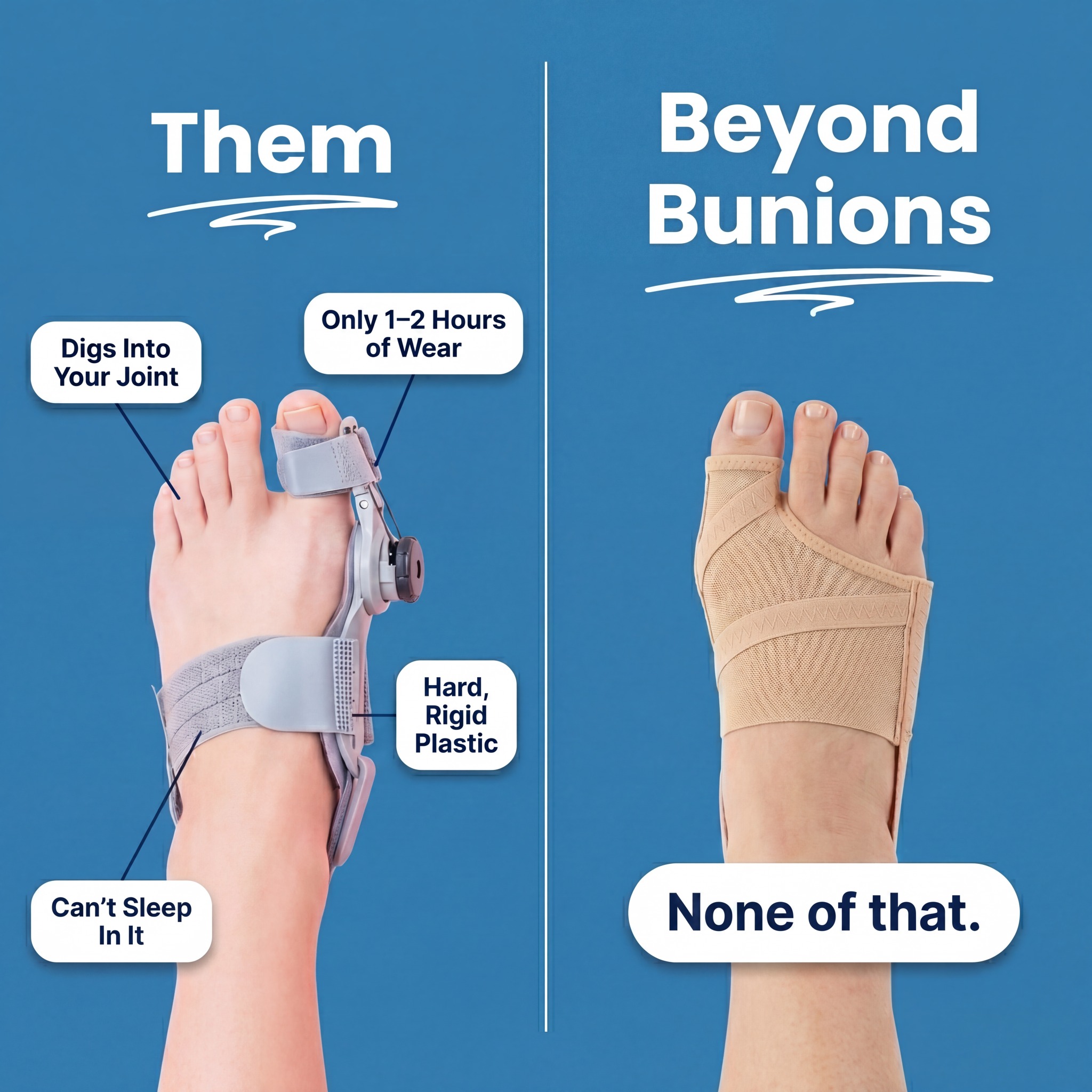
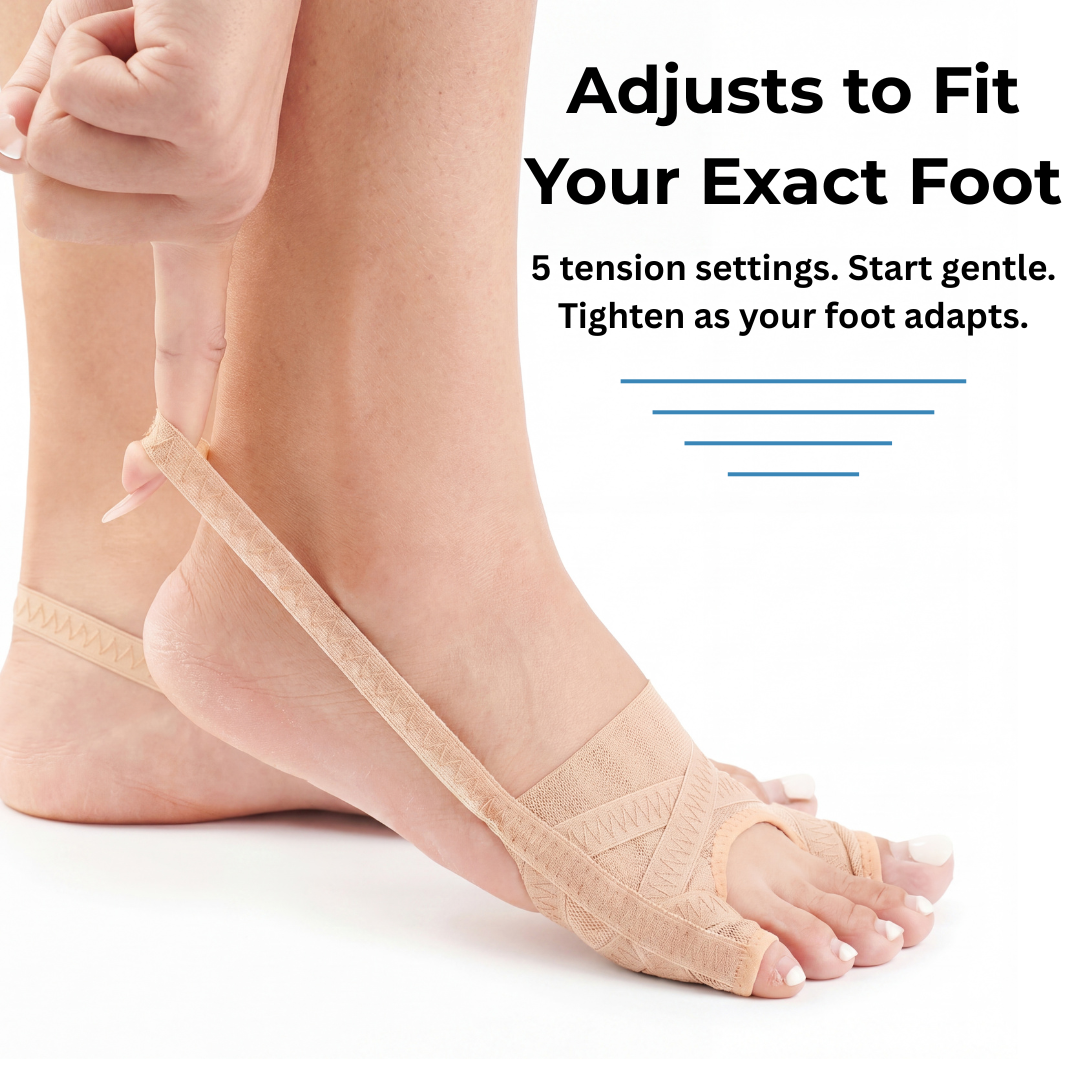
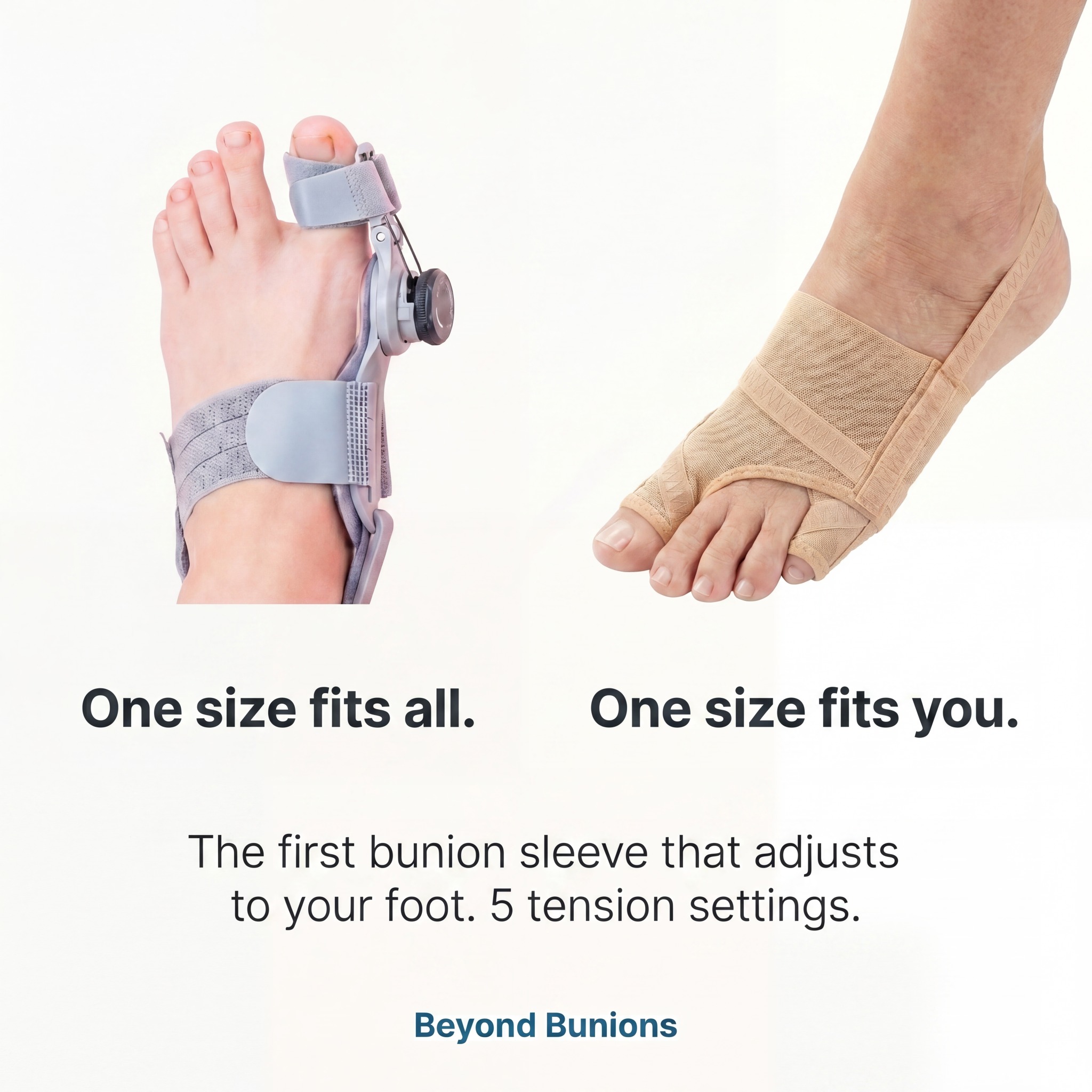
I've sat across the desk from thousands of women holding bunion products that didn't work. Some of them spent fifteen dollars. Some of them spent four hundred. All of them came in believing the product was going to be the one that finally helped. All of them left in some version of disappointment. I'm a foot doctor. Thirty years in practice. I had bunions myself for most of those years. And about ten years ago, I started keeping a list of every bunion product my patients brought in to ask me about. Some of them were drugstore plastic correctors. Some of them were rigid splints they'd worn at night until their foot went numb. Some of them were toe spacers that had fallen out of their shoes by mid-morning. Some of them were braces with hinges and dials and adjustable knobs that looked impressive in the package and brutal on the foot. When I started to look at the list as a whole, a pattern emerged that I'd never seen before. Every single bunion product on the market was failing for one of two reasons. Either it couldn't be worn long enough to actually do anything. Or it didn't fit the foot the woman wearing it actually had. Some products failed for both reasons at once. But every product — every single one — was losing on at least one of these two fronts. Let me explain what I mean. The first failure is the hours. A bunion is a twenty-four-hour problem. Your toe is being pulled out of alignment every minute of every day, awake or asleep, by an imbalance in the small muscles around the joint. The only way to interrupt that process is to apply gentle counter-pressure for most of the hours in the day. The same way braces work on teeth. A brace you only wore on your teeth for an hour a day wouldn't move a tooth. A bunion corrector you can only stand to wear for an hour a day before it digs into the inflamed joint can't move your toe either. Plastic correctors fall into this category. Rigid night splints. Hard plastic braces. The hinged-knob devices that look like medical equipment. They all use the right mechanism — gentle pressure to realign the toe. But they're built so aggressively that no woman can wear them long enough for the mechanism to actually work. One hour out of twenty-four is not enough hours. Sixteen out of twenty-four is. That's the first failure. Then there's the second failure. Even if you find a bunion product comfortable enough to wear sixteen hours a day — and there are very few of these — it has to actually fit your foot. Here's what most women don't know. The average bunion product on the market is built to one set of measurements. The factory built it for the "average" foot. The average foot is a math invention. Real feet are wider, or narrower, or higher in the arch, or swell across the day, or have a second bunion on the pinky-toe side that the product doesn't address. So even when a woman buys a product that's the right type of solution, it usually fits her foot the way a shoe two sizes off would fit. Either it's cutting into her circulation by mid-morning. Or it's sliding around in her shoe and not making contact where it needs to. Either way, back in the drawer. That's the second failure. I sat with this for years. A bunion product that's too aggressive to wear long enough fails on the hours. A bunion product that doesn't fit the foot in front of you fails on the fit. Most products fail on at least one. Many fail on both. What was missing was something that solved both at once. Last fall, my engineering team and I finally built it. The result is the product in the photo above this article on the right side. It's a soft mesh sleeve. Soft enough to be worn sixteen to twenty hours a day, every day, without thinking about it. That solves the hours problem. And built into the side of the sleeve is a Velcro strap with five tension settings. Setting 1 is the gentlest. Setting 5 is the strongest. You set how tight or loose it feels on your foot. Tighter when you want more correction. Looser when you want more comfort. If your foot is narrow, you set it where it stays snug through a full day of walking. If your foot is wide, you set it where it gives you room to breathe through a twelve-hour shift. If your foot swells from morning to evening, you can loosen the strap a setting at lunch and tighten it back the next day. That solves the fit problem. One product. Both failures, addressed. Two other things I want to mention about the new sleeve. The first is the material. Most bunion products are built from materials that trap heat against the skin — plastic, foam, dense fabric. The new sleeve is built from a breathable medical-grade mesh. Which means it stays cool through long shifts, hot kitchens, summer afternoons. The second is the strap goes around the whole foot, not just the big toe side. Roughly one in three women in my office has a second bunion on the pinky-toe side — what's called a tailor's bunion. If you have one too, this is the first sleeve I'm aware of that supports both at once. Let me tell you about one patient, just so you can hear how this actually plays out. I have a patient I'll call Eleanor. Sixty-three years old, kindergarten teacher for thirty-one years, retired last spring. She came into my office with a shopping bag with three failed bunion products in it. A drugstore plastic corrector that hurt within forty minutes of putting it on. A rigid night splint that left her foot so stiff in the morning she couldn't walk to the bathroom without limping. A toe spacer that fell out of her sandal at her grandson's third birthday party in front of her whole family. She'd spent close to two hundred dollars across the three of them and gotten nothing for it. When she sat down in my office, she said something I've heard hundreds of women say. "I think I just have to live with this until I'm ready for surgery." I asked her to try one more thing. I fit her with the new sleeve at Setting 1 the first three nights. She moved up to Setting 2 in week two. She's been at Setting 3 for two months now. Last visit, she told me she walked through the entire farmers market with her daughter on a Saturday morning in October without sitting down once. First time in five years. I want to be honest with you about what this product can and can't do. It is not surgery. It will not make your bunion disappear overnight. Pain relief comes in days. Visible alignment comes in weeks. Lasting structural improvement comes in months — sometimes a year or more — and only if you wear it the hours it needs to be worn. But here's what I can tell you after watching thousands of bunion products fail thousands of women across thirty years of practice. A product that fails on hours doesn't work. A product that fails on fit doesn't work. A product that fixes both — for the first time — finally does. 👇 Read about the bunion sleeve that solves both problems at once
The first bunion sleeve that solves both problems at once
Discover the fabric bunion sleeve that fights Progressive Toe Deviation 24/7. Over 4,000 verified reviews. 90-day money-back guarantee.
LEARN MORELike this ad? Make it yours.
Crush rebuilds this exact creative around your product — your brand, your colors, your offer — in about a minute.