
Inactive· since Jun 30, 2026
- 36
- days it ran
- 0
- relaunches
Ad copy
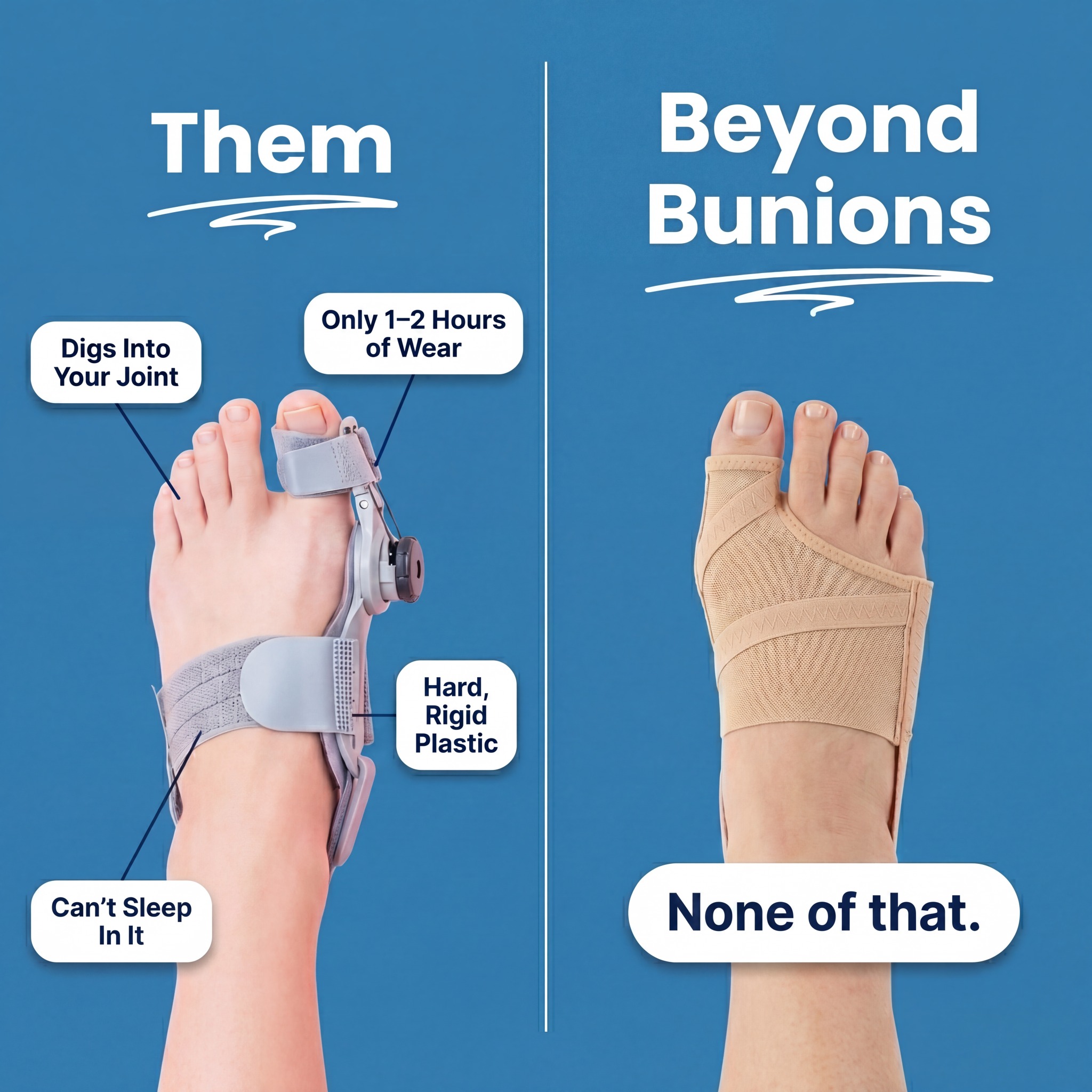
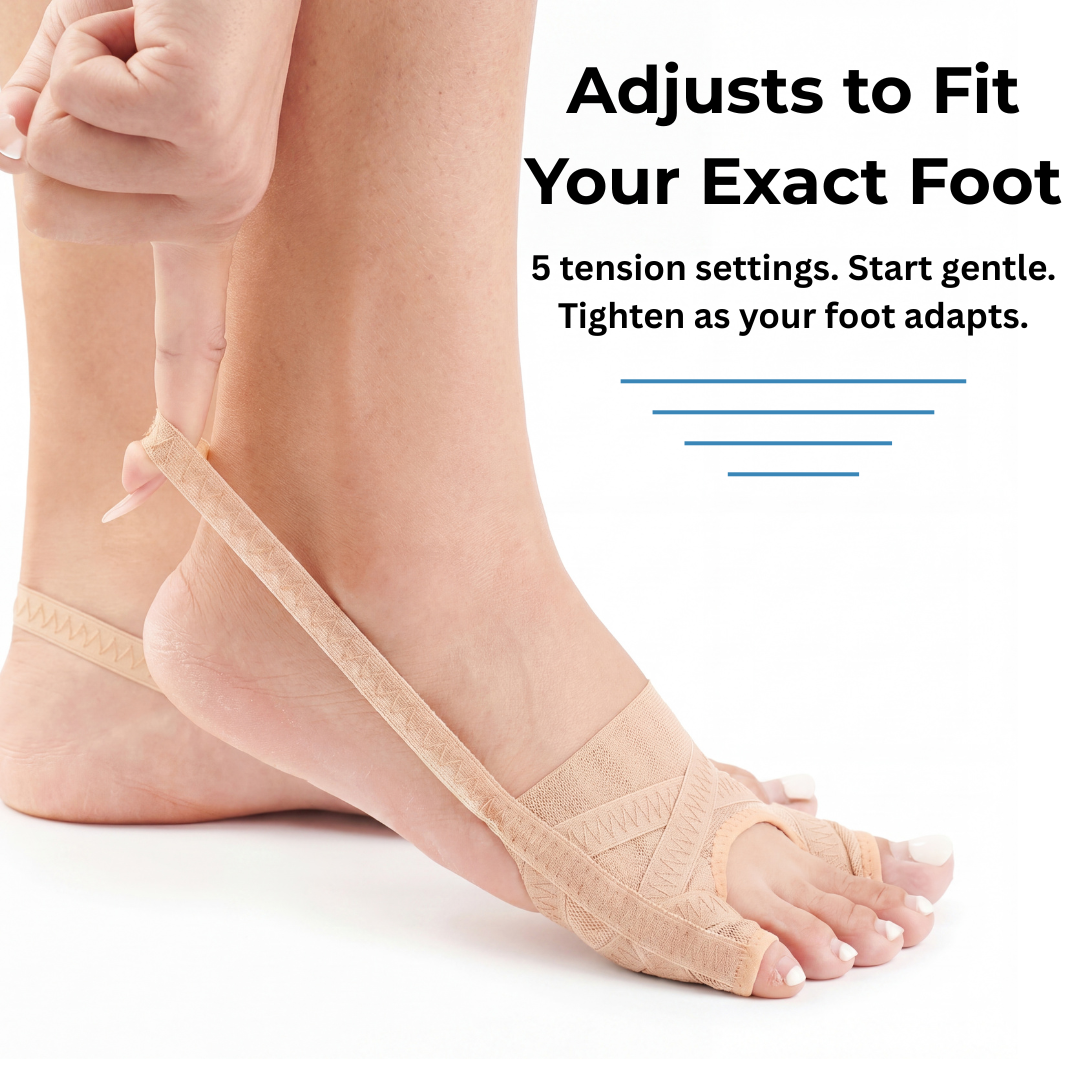
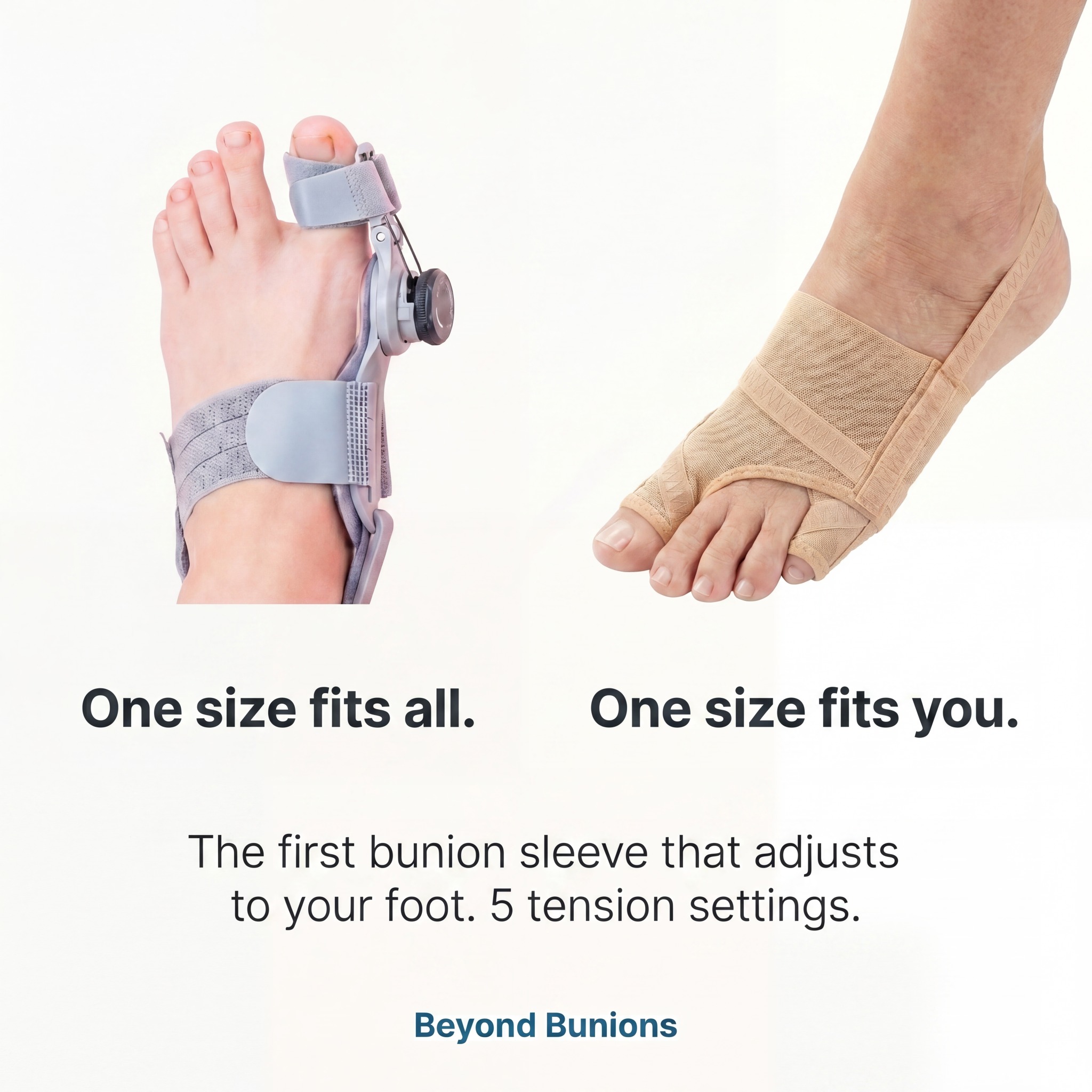
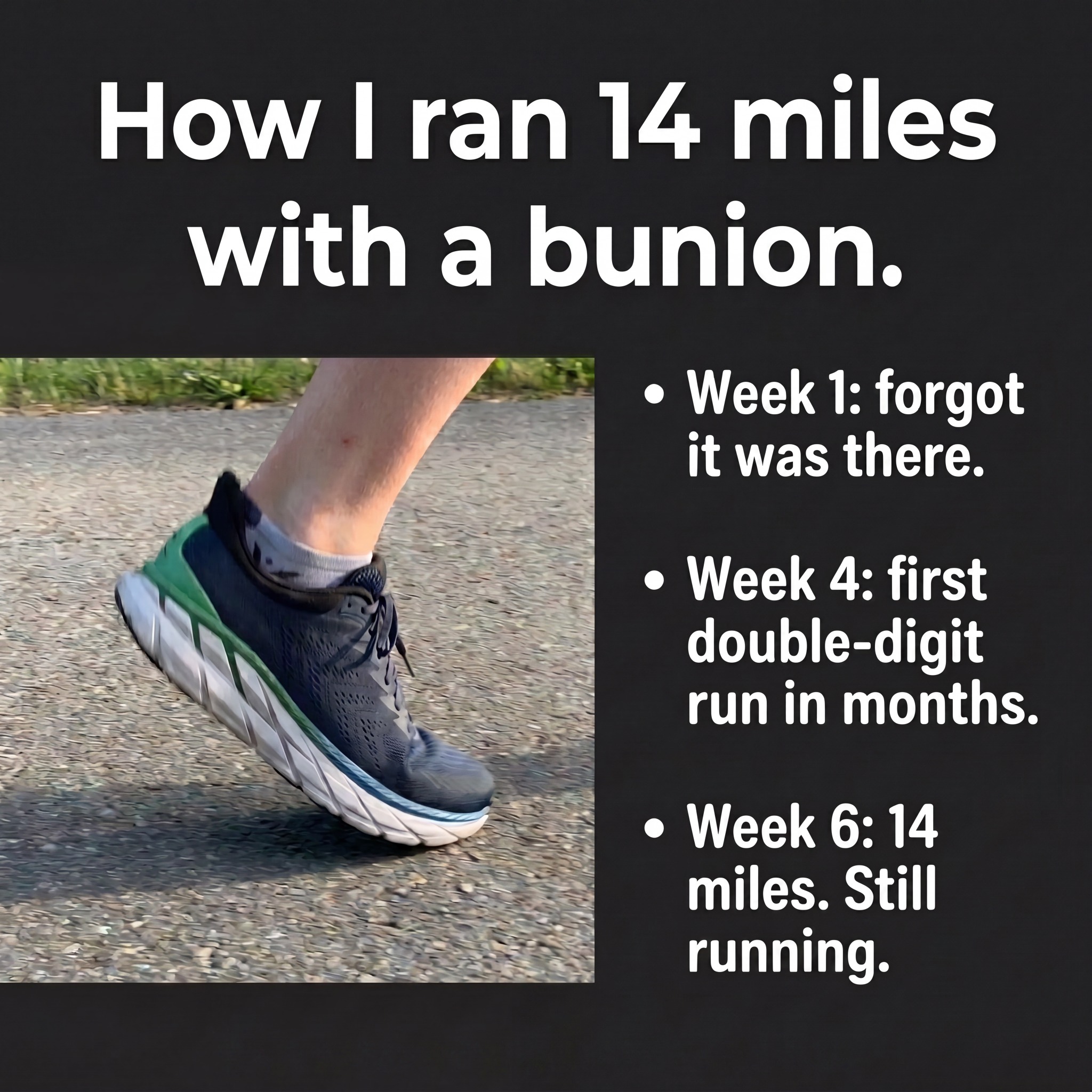
You put a hand on the counter to push yourself upright after loading the dishwasher You sit into the car first, then lift your legs in after, because turning and dropping in the normal way isn't worth it The first few steps to the bathroom in the morning, you take bent slightly forward, because standing all the way up takes a minute You've been chalking it up to age, or wear and tear, or just the miles catching up A 2025 study on people with bunions suggests it might be your foot Here's what they found A 75% higher rate of spinal degeneration in people with bunions than in people without Spinal degeneration sounds like a word on a chart What it means is the bones and cushions in your spine wearing down faster than they should — the structure that holds you upright slowly breaking down That's what those small moments are The counter The car The morning And the only thing those people had in common was a bunion The same research found disc problems were more than twice as likely The discs are the cushions between the bones of your spine When they wear down, the bones lose their spacer and start pressing where they shouldn't That's the pain that catches you bending to tie your shoes The one that flares when you've been on your feet too long and turns the drive home into a hunt for a way to sit that doesn't hurt Worn bone, worn discs, faster than they should — traced back to one bump on the side of the foot So how does a problem that far down end up in your spine? Your body moves as a chain Every step starts at the foot and sends a signal up — through the ankle, the knee, the hip, into the lower back When the foot loads right, that signal is clean and the load spreads the way it's built to When the big toe drifts out of line, every joint above it starts getting a different signal And your lower back is sitting at the very top of that chain — the last stop for everything that climbs The study authors had a name for it The ripple effect A shift at the base doesn't stay at the base And that's just walking Now put it under running Every stride, the foot loading crooked, the bad signal climbing all the way to the spine A long run becomes a training block A training block becomes years That's how a bump on your foot quietly wears down your back And it's why the back keeps coming back no matter what you do for it The core program you've done religiously The stretches the physio gave you They help for a few weeks, then it tightens back up Because the work was aimed at the back And the back was never where it started Here's where it started On the inside of your foot there's a small muscle — the abductor hallucis — whose only job is to hold your big toe in line Every step is supposed to load it, fire it, reset it When it fires, the foot loads right and the signal that climbs to your back is clean When it goes quiet — slowly, over years, without a moment you'd point to — the big toe drifts The joint at its base pushes out the other way That's the bunion The weight rolls to the outside of the foot And the signal climbing to your back has been wrong on every step since Every appointment you've aimed at the back has been treating the place that received the signal Not the foot that sent it You can check whether that muscle's gone quiet in about ten seconds Sit down, shoe and sock off, foot flat on the floor Try to pull your big toe out to the side — away from the other toes — without lifting it and without curling it under Slides out easily? The muscle's still working Barely moves? It's gone quiet Whole foot rolling to fake it? That's your answer If it's been quiet a while, every step you've run has sent a crooked signal climbing toward your spine And here's the part most runners don't let themselves think about The bunion sending that signal doesn't sit still It drifts further every year you run on it The wear on your spine is one price of that drift But there's a second one waiting at the end of it Left alone long enough, the bunion reaches the point where the only thing left to straighten it is surgery The exact surgery you've been hoping you'd never need And it's foot surgery — the kind that takes a runner off the road for months, not weeks Months off your feet while the bone heals Watching the base you spent years building wash out — the long runs, the pace, the easy miles that used to be automatic — while you sit and wait And at this age, it doesn't come back at the rate it left The first run back starts from a number you haven't seen since you were a beginner That's the road the back is quietly pointing you down The same drift wearing your spine is the one carrying you toward that table There's a way to change the signal before it gets there Not a brace, not a night splint, not something you wear instead of a shoe A soft sleeve that fits over the front of the foot and sits inside whatever shoe you're already in — including your running shoe You lace up the same way you always do Nothing changes about the fit or the feel Adjustable tension draws the big toe back toward its line and keeps the abductor hallucis loaded while you move During the day During the miles During the exact hours the signal has been climbing wrong to your back This doesn't treat the back It changes what the foot sends up to it — because the muscle that sets the foot's load pattern is being worked instead of going quiet Week one, nothing feels different — the sleeve stays put, the toe stays where it puts it, the signal climbing up is already different, you just can't feel it yet Week two, you finish a long run and you're stiff that afternoon like always — but by evening it's loosened in a way it usually doesn't Week three, you bend down to load the dishwasher and push yourself back up without reaching for the counter — and you don't notice you did it until later Week four, the second day of a back-to-back, and the back that always locks up doesn't Week six, someone asks if you changed something in your training The bunion hasn't reversed The toe doesn't go back in six weeks But the signal it's been sending up to your spine — the one it's been absorbing on every step for years — is different now And the back you'd been building your runs around has gone quiet There's an article below that breaks down the full chain — the study, the muscle, and what the sleeve does that treating the back never reached The link is below The back you protect now is the one you're still running on in ten years
What the research says about bunions and runners' backs
Discover the fabric bunion sleeve that fights Progressive Toe Deviation 24/7. Over 4,000 verified reviews. 90-day money-back guarantee.
LEARN MORELike this ad? Make it yours.
Crush rebuilds this exact creative around your product — your brand, your colors, your offer — in about a minute.