
Inactive· since Aug 9, 2026
- 13
- days it ran
- 0
- relaunches
Ad copy
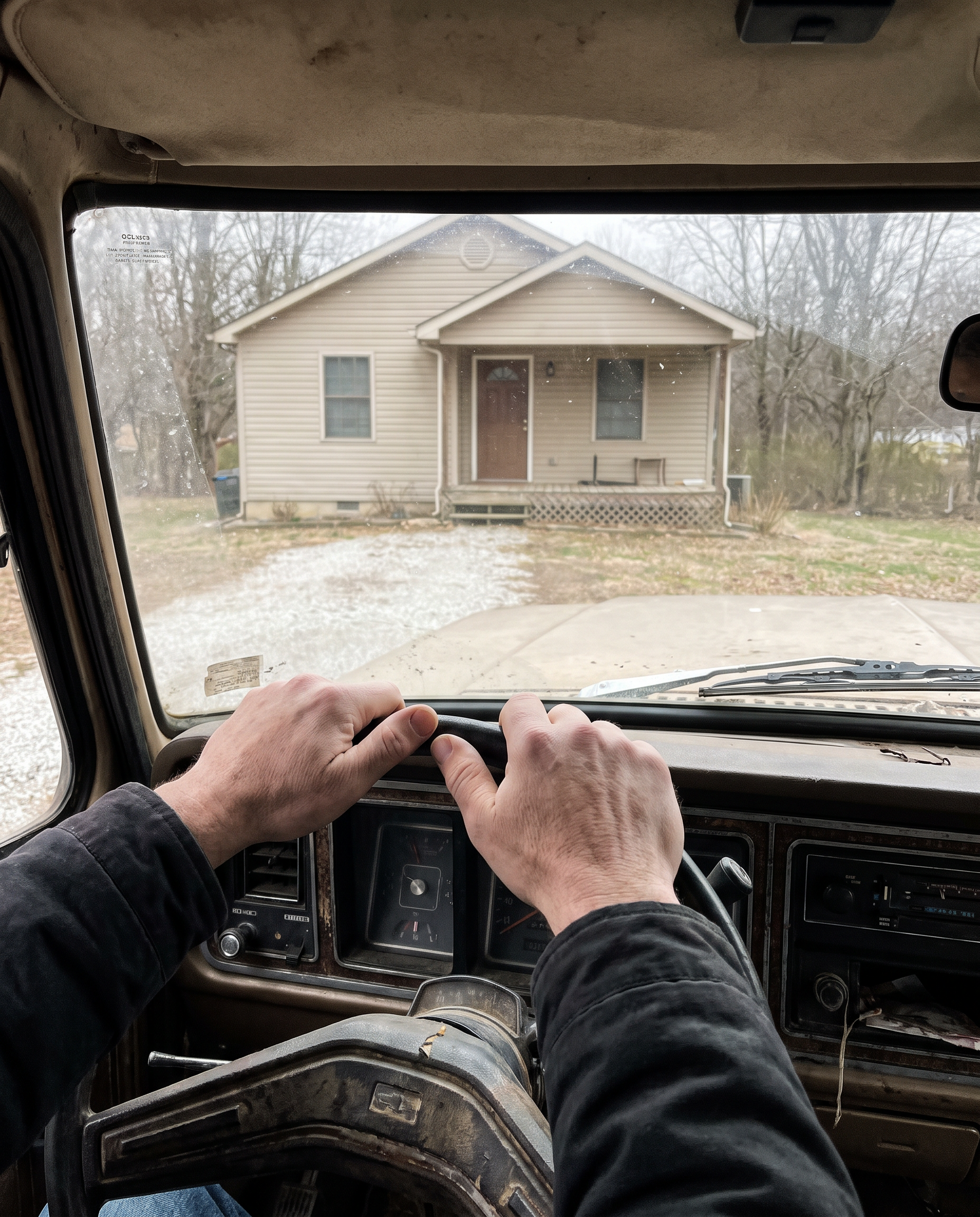
"My father and I had gone almost three years without speaking when his voice filled the cab of my truck. “Hey buddy… just checking on you. Love you.” My hand was already moving toward the screen when I stopped it. The voicemail was old. I must have touched something while connecting my phone to the truck, because it had started playing before I even knew what I had opened. But his voice sounded close enough to answer. I sat behind the wheel after the message ended and listened to the empty cab. Almost three years. That is long enough for silence to stop feeling temporary. At first, you expect somebody to break it. Then holidays pass. Birthdays pass. You hear news about each other through other people. You compose messages you never send because every possible first sentence feels too small for what happened. Eventually, not speaking becomes easier than explaining why you still are not speaking. I had told myself I was used to it. Then eleven words in my father’s voice proved I was not. “Hey buddy… just checking on you. Love you.” I played it again. There was no argument in the message. No demand that I call him back. No attempt to settle who had been right. He had called because I was his child and he wanted to hear my voice. I picked up the phone and called him. He answered before I had decided what I was going to say. “Hello?” “Hey.” There was a pause. I could hear him breathing. Then he said it again. “Hey, buddy.” That nearly ended me. We started with safe questions. How have you been? How is work? Are you still driving that truck? Ordinary questions gave us somewhere to put our feet while we stood at the edge of everything we had not said. Then one answer opened another. We talked about the last argument. The calls neither of us returned. The way a few angry weeks had hardened into months because each of us believed the other should make the first move. Neither version made three lost years feel reasonable. There were places where we remembered things differently. There were apologies that came out badly and had to be tried again. Sometimes one of us stopped talking because the next sentence carried more weight than we could lift cleanly. But neither of us hung up. The call lasted two hours. By the end, my phone was warm against my ear. My shoulders had dropped. His voice had stopped sounding like something preserved from another life. Before we hung up, he asked, “Can I call you tomorrow?” “Yes.” One word changed the shape of my days. He called the next evening. I answered. A few days later, I called him first. Soon we were talking about things too small to survive three years of silence: a leaking faucet, a tool he could not find, a noise coming from my truck, what he had cooked for dinner. The first time I drove to see him, I stayed in the truck for ten minutes after I parked. He came outside before I could decide whether to knock. For a second, we just looked at each other. He seemed older than the man I had been carrying in my head. More gray in his beard. A little slower crossing the driveway. I probably looked older to him too. Then he opened his arms. I stepped into them. We did not turn into different people that afternoon. We did not settle every old argument at the kitchen table. We drank coffee. He showed me a cabinet hinge he had been meaning to replace. I looked at the old tools lined up above his workbench and remembered being small enough that he had to lift me so I could reach them. When I left, he stood beside the truck with one hand on the open door. “Next weekend?” he asked. “Yeah. Next weekend.” That mattered more than anything we had managed to explain. The visits became less careful after that. Coffee became lunch. Lunch became afternoons in the garage. Sometimes we worked on something. Sometimes we sat there talking until the light changed and neither of us noticed. Ordinary was what I wanted. I wanted calls that did not require courage. I wanted to know what was happening in his life while it was still happening. I wanted visits that ended with plans for the next one. Most of all, I wanted to become someone who stayed. Then the emotional rush wore off, and I had to face how little stamina I had left for the life I had just reopened. It had been happening for a while. I would get through work, climb into the truck, and sit with both hands on the wheel because starting the drive home felt like one more job. A Saturday morning of errands could empty the rest of the day. I would make plans while sitting down and feel exhausted by the time I had to keep them. Before that voicemail, I called it being busy. Getting older. Working too much. Afterward, it felt like losing time twice. My father might call while I was running on empty, and I would watch his name light up the phone on the passenger seat. I always wanted to answer. Sometimes I let it ring because I did not have enough left to sound like myself. Other times I picked up and worked to keep the tiredness out of my voice. He had spent almost three years unable to reach me. I hated the idea of reopening that line only to become half-present on it. The moment I could not ignore happened on a Saturday at his house. He wanted help clearing the back corner of the garage so we could bring an old workbench forward. It was the kind of job we used to do together without discussing it: lift, turn, slide, done. We moved one cabinet and two boxes. By the time I bent for the workbench, my arms felt emptied out. I straightened up too quickly and had to put one hand against the truck parked beside us. My father looked at me. “You all right?” “Fine.” “You don’t look fine.” “I said I’m fine.” The sharpness in my voice surprised both of us. He stepped back. For half a second, the garage felt like the last three years. One wrong sentence waiting to become a wall. Then he nodded toward the chair beside his workbench. “Sit down, buddy.” I sat. He brought me water and did not make a speech. That was worse. I watched him finish moving the lighter boxes by himself while I stayed in the chair pretending I only needed a minute. I had finally become his son again, and there I was watching from the side of the room because my body had run out before the afternoon did. On the drive home, I made a decision. I would force my way past it. I started training harder. If I was tired, I trained tired. If my legs felt heavy, I added distance. I told myself energy would come back once my body understood I was serious. Instead, I stayed sore. The harder I pushed, the less I had left for everything else. I missed one visit because my legs hurt so badly I did not want to make the drive. The next night, my father called and I watched the phone ring because I was already in bed. That was the trap. If I rested every time I felt depleted, I became unavailable. If I tried to outrun the exhaustion, I became sore, irritable, and even less available. Either way, the thing I had regained was getting whatever remained of me. One evening, after another long call with my father, I stayed in the truck with the engine off. My phone was face-up on the passenger seat. My own child, grown now, opened the passenger door and looked at me. “You staying out here?” “Just catching my breath.” They looked at the phone, then at me. I could tell they understood more than I had said. The next morning, there was a bottle in the cup holder. No note. No speech. Just beet root capsules sitting where my coffee usually went. I carried the bottle inside and left it on the counter. Two days later, my child saw it in the same place. “You haven’t tried those.” “I’ve eaten beets before.” “That isn’t why I left them.” “Then why?” They pulled out their phone and showed me a review. The person writing it said the capsules increased their stamina and energy. They felt better, stronger, and more active. That was uncomfortably close to the exact thing I was missing. One review was not enough to sell me. My child knew that. “Read the product page,” they said. “Decide for yourself.” So I started reading. Beetroot naturally contains dietary nitrates. The body can convert those nitrates into nitric oxide, which helps blood vessels relax and supports healthy blood flow. Healthy blood flow supports working muscles. That is why people use beetroot for stamina, energy, and an active lifestyle. That explanation made more sense to me than trying to bully an exhausted body into giving me more. But I still did not want to buy a vague blend with a picture of a beet on the front and no useful information on the back. I wanted to know exactly what I would be taking. The bottle my child left was Rosabella. The label listed 1,300 mg of organic beet root per serving. It came in capsules, which mattered because I knew exactly how long a daily juicing routine would survive in my house. No artificial colors. No artificial flavors. No preservatives. A direct dose. A simple routine. A product built to support the stamina, energy, and active life I was trying to get back. It passed every practical question I had. So I tried it. I put the bottle beside my keys and took the capsules with a glass of water before leaving in the morning. The first thing I noticed was not a jolt. It was a steadier kind of energy: the sense that the tank was not already half empty when the day began. I kept taking them. Within the next stretch of days, I noticed I was no longer sitting in the truck as long after work. I would pull in, shut off the engine, and get out. That sounds like nothing until you have spent months negotiating with yourself over every additional movement. Then it showed up in the middle of the day. I could finish what needed doing without feeling as if the rest of my evening had already been spent. I started moving more because moving no longer felt like a punishment. The more active I became, the stronger I felt. The difference reached the calls with my father too. I stopped treating them like events that required perfect conditions. If he called while I was unloading the truck, I answered and kept unloading. If he wanted to tell me a twenty-minute story about a five-minute repair, I listened without silently measuring how soon I could lie down. The real test came when I went back to his garage. The workbench was still in the back corner. He had stopped mentioning it. I pointed at it. “You ready to move that thing?” He studied me for a second. “You sure?” “Yeah.” We cleared the boxes. Lifted one end each. Turned it through the narrow space beside the truck and set it against the wall where he wanted it. Then we kept going. We organized the drawers, rehung his tools, and fixed the cabinet hinge he had shown me on my first visit back. An hour passed. Then another. At some point, he handed me a wrench without asking whether I needed to sit down. That was the proof I cared about. Not because moving a workbench is an achievement. Because my father had stopped watching me like the afternoon might be too much. When we finished, we sat in the garage with the truck between us and the open door. “You feel better,” he said. It was not a question. “I do.” “Stronger?” “Yeah. More active too.” He nodded once. Then he asked what I had changed. I told him about the bottle my child had left in the cup holder. The 1,300 mg of organic beet root. The dietary nitrates. The support for healthy blood flow, stamina, and energy. He listened, then smiled. “Your kid takes care of you.” “Apparently.” “Funny how that works.” Three generations, each one trying to figure out how to stay available for the next. The voicemail repaired nothing by itself. It gave me an opening. My father and I still had to make the call, tell the truth badly, call again, visit again, and keep choosing not to disappear when a conversation became uncomfortable. Rosabella did not create that reconnection either. It supported the part that came afterward: the stamina and energy to participate in the ordinary life we were rebuilding. That distinction matters. The human opening came first. Then I had to become physically capable of following through on it. A few weeks later, my father called while I was driving. His name appeared on the truck screen. My phone was face-up on the passenger seat, in the same place it had been the night that old voicemail found me. I answered through the speakers. “Hey.” “Hey, buddy. You busy Saturday?” “What are we doing?” “I thought we could take the truck out and look at that old parts place off the highway.” The trip would mean an early start, a long drive, too much walking, and several hours of my father examining objects he had no intention of buying. Months earlier, I would have calculated how much of the following day it would cost me. This time I just said, “What time?” He was quiet for half a beat. “Eight?” “I’ll be there.” Saturday morning, I pulled into his driveway before he was ready. He climbed into the passenger seat carrying coffee and a folded list. “You’re early,” he said. “You complained when I didn’t call for three years. Now you’re complaining I’m early?” He laughed and shut the door. We stayed out most of the day. We walked every aisle of that parts place. Loaded two boxes into the truck. Stopped for lunch. Took the long road back because he wanted to show me where he used to work before I was born. I never once had to pretend I was reading a sign so I could stop moving. I never sat in the cab trying to gather enough energy for the next part. When we got back, we carried the boxes into his garage together. Before I left, he stood beside the open driver’s door the way he had after our first visit. “Call me when you get home, buddy.” “I will.” And I did. Nearly three years taught me how quickly silence can become a habit. The time since that voicemail has taught me that presence can become one too. You call. You answer. You visit. You make plans while there is still another Saturday to fill. And when someone you love opens a door you thought had closed for good, you make sure you have enough of yourself left to walk through it. My child understood that before I did. They saw me sitting in the truck after a call I had wanted for years, too depleted to step out and continue my evening. They left Rosabella in the cup holder without a speech attached. Two capsules. One glass of water. 1,300 mg of organic beet root to support healthy blood flow, stamina, energy, and an active lifestyle, with no artificial colors, flavors, or preservatives. I still keep the old voicemail. Every so often, it surfaces while I am sitting behind the wheel. I let it play all the way through. “Hey buddy… just checking on you. Love you.” Then I look across the cab. The bottle is in the cup holder. My phone is face-up on the passenger seat. And when my father calls, I answer. https://track.tryrosabella.com/cdc16426-3e48-40a7-9fad-21098084f6cf
Support stamina and heart health every day
LEARN MORELike this ad? Make it yours.
Crush rebuilds this exact creative around your product — your brand, your colors, your offer — in about a minute.