
Active· since Jun 19, 2026
- 84
- days running
- 0
- relaunches
Ad copy
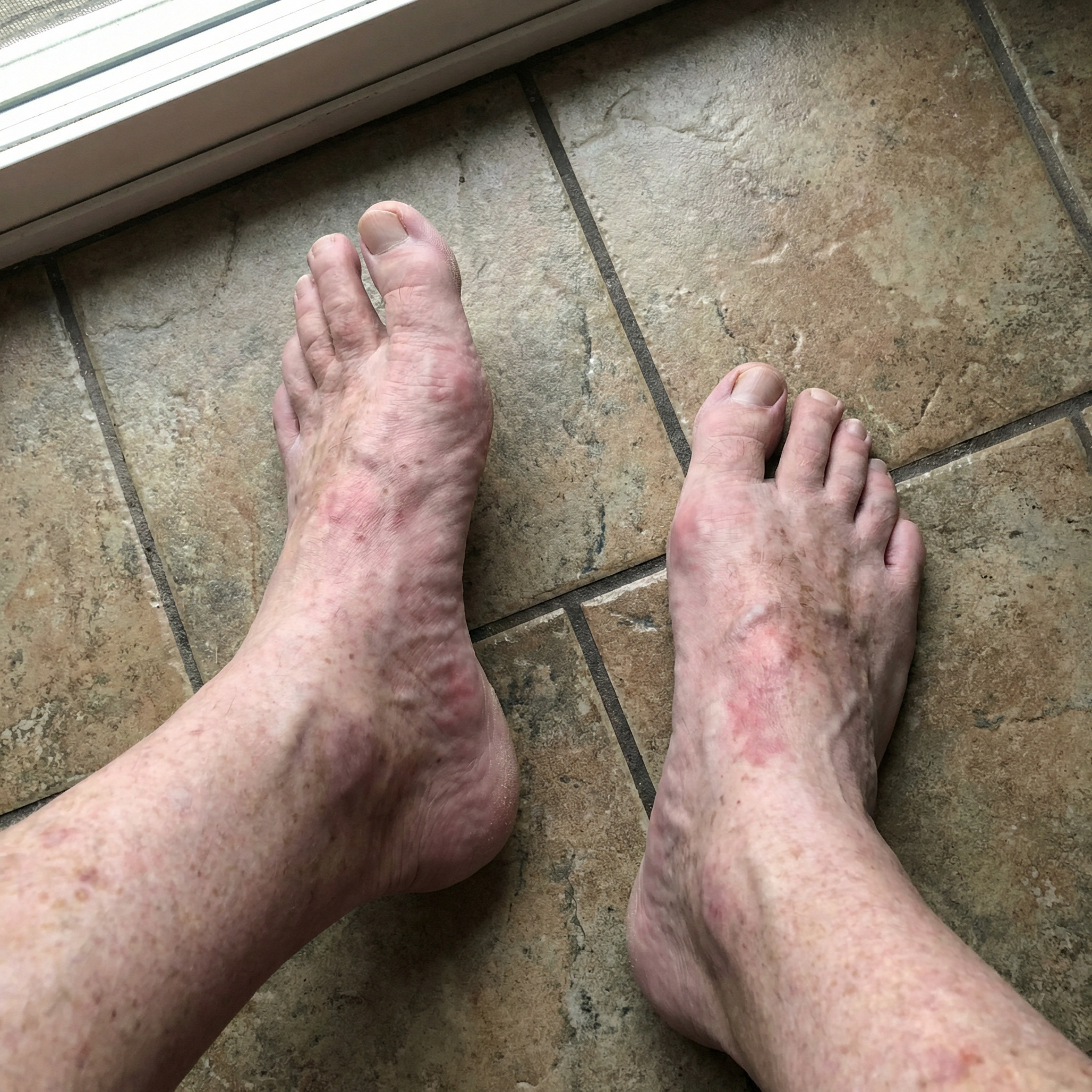
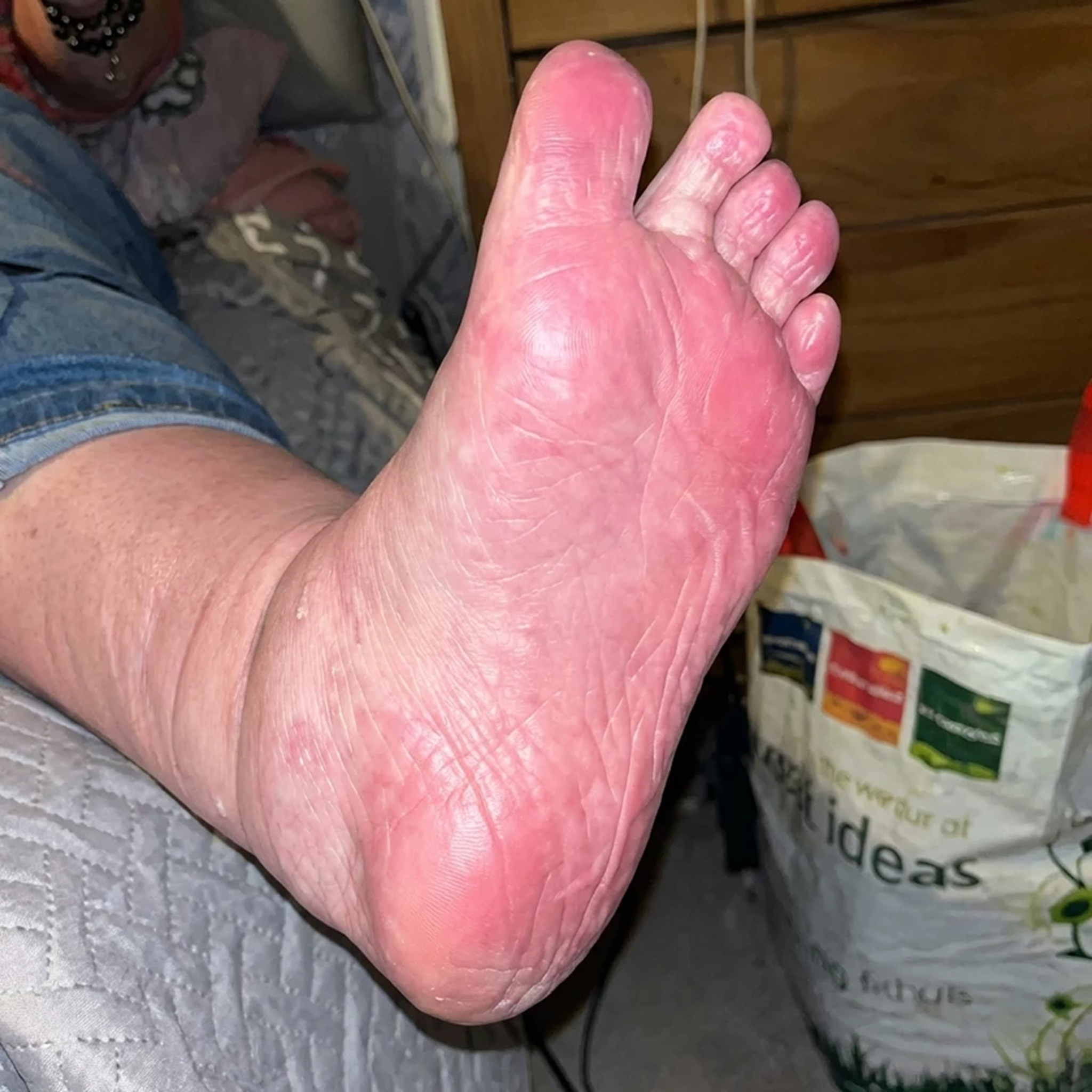
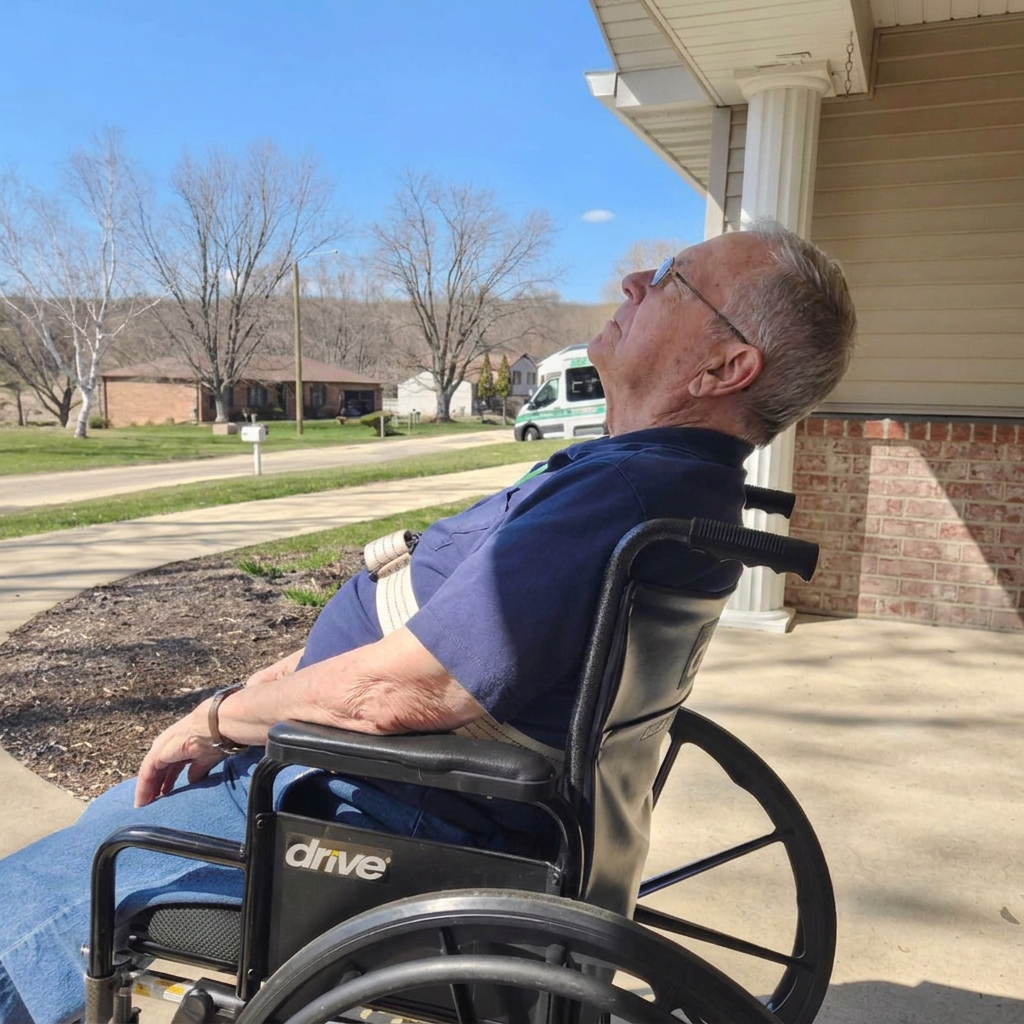
My father lost both his legs to diabetic neuropathy and died alone in a nursing home at 68. I watched every stage of it. The tingling he brushed off at 59. The burning that started pulling him awake at 62. The appointment where he came home and told my mother they'd found nerve damage bad enough to worry about. The infection that cost him his right foot. Then the left leg two years after that. Two years in a facility where strangers turned him over while he slept. He died at 68. Diabetic for nine years. He did everything his doctor told him to do. I was 57 when my own A1C came back at 8.4. I thought about my father from the second I saw that number. My doctor explained what Metformin does, how we'd track the numbers, what a good result looked like. She was thorough and kind. And the whole time she was talking, I was thinking about a man who followed every single instruction for nine years and ended up in a nursing home with no legs. I didn't say that out loud. I just nodded and filled the prescription. Eight months later, the A1C was down to 7.1. My doctor shook my hand. "Excellent work." For about two weeks, I let myself believe I'd somehow escaped what happened to my father. Then around month seven, I felt something in my feet at night. A faint buzz. Barely there. Like a phone vibrating somewhere under the mattress. My stomach dropped. Because that was exactly how my father described it when it started. A faint buzz. At night. When he was 59. I mentioned it at my next appointment. My doctor said it was an early response to the months of elevated blood sugar, and that it would settle as my A1C kept coming down. I wanted to believe her. But I had watched those same words not be true for nine straight years. The buzzing didn't settle. It spread. Buzzing became a slow, steady burn. The burn started pulling me awake around 2 AM. I went back in and told her my numbers are coming down but my feet are getting worse, not better. She sent me to a neurologist. He ran his tests. Came back in and told me what I didn't want to hear. Peripheral neuropathy. Early to moderate. Both feet. I asked him the only question that mattered: how is this getting worse when my blood sugar is improving? He looked at me, and I could tell it wasn't one he had a clean answer for. "Controlling your blood sugar slows the damage," he said. "But it doesn't heal what the nerves already went through. Some of that injury is done." He wasn't wrong. He just wasn't giving me anything I could actually do something with. I drove home and sat in my driveway for a long time thinking about my father. That night I started reading. Not the handouts from my doctor's office. I went through PubMed and medical research databases until well past midnight, going through actual clinical studies on what high blood sugar does to nerve tissue and why the symptoms keep getting worse even when the glucose numbers come down. The first thing I found was something no doctor had ever once mentioned to me. Every nerve in your body is wrapped in a protective coating called myelin. It works almost exactly like the rubber insulation on a wire. When that coating is thick and healthy, the nerve fires the way it should. When it starts to break down, the wire misfires — that's the burning, the tingling, the random electric shocks. When enough of it is stripped away, the wire goes quiet. That's the numbness. And myelin is built and maintained almost entirely by one thing: Vitamin B12. Studies in journals like Neurology and the European Journal of Neurology had been showing this for years. Low B12 doesn't just appear alongside nerve damage. It directly causes the breakdown of that protective coating. Patients with B12 deficiency showed the same nerve breakdown pattern as diabetic neuropathy patients — even without any blood sugar problem at all. That was the first piece. Then I found the second one. Right there in the official prescribing information for Metformin — the drug I had been taking every single day for over a year — it says that long-term use may result in decreased absorption of Vitamin B12. It isn't hidden. It's been known for decades. A study published in Diabetes Care found that 30 percent of long-term Metformin users had significantly depleted B12 levels. Another review in the Archives of Internal Medicine found the depletion got worse the longer someone stayed on the drug. So here is what had been happening to me, without a single person saying a word about it. High blood sugar was cutting off the tiny blood vessels that feed nerve tissue, starving them from the outside. Metformin was draining the B12 my nerves needed to hold their protective coating together, stripping them from the inside. Both at the same time. For over a year. While every appointment focused on one number and treated everything else as expected. I called my neurologist the next morning. I asked him directly: did he know Metformin depletes B12, and did he know B12 is what maintains the protective coating around nerves? He said yes, B12 depletion was a known side effect. I asked why I was never tested. Why nobody told me to supplement from day one. He said it was something they should monitor. Should. Not were. Should. I got tested the next week. My B12 came back at 171. Normal starts at 300. Severely deficient. For who knows how long. And nobody had checked once in fourteen months of being on that medication. I went straight to the pharmacy and bought the strongest B12 supplement they had. Took it every single morning for six weeks and went back for blood work. Still 171. Exact same number. I sat in my car in that parking lot and couldn't move. I genuinely thought that was it. That this was going to be my life. That I was going to end up exactly like my father, and my family was going to watch the whole thing happen the same way his did. That night I was lying in bed just scrolling Facebook. Not even looking for anything. Just scrolling when you don't know what else to do. And I came across this video explaining that the reason supplementing B12 usually never works for people is because after 50, your stomach acid drops so much that B12 in any pill or tablet form gets completely broken down before it ever reaches your blood. You swallow it, it dissolves in your stomach, and that's it. It never actually gets where it needs to go. I had been taking those tablets every single morning and my body hadn't absorbed any of them. The same video explained there's a way around this. Something called sublingual delivery — a liquid you hold under your tongue that goes straight into your bloodstream without going through your stomach at all. And the form matters too, because most supplements use a cheaper version your body has to convert first, and after 50 that conversion gets real unreliable. That said, I wasn't just going to take a Facebook video's word for it, so I looked it up myself. And it checked out. This isn't me making stuff up — there are actual published studies on this from the Journal of Neurological Sciences where they followed diabetic neuropathy patients giving them sublingual B12 every day for six months. Nerve conduction improved. Pain scores dropped 68 percent. And in patients who still had partial feeling left, sensation started coming back. That last part hit me harder than anything. But I didn't stop there. I also found that B12 alone isn't even the full picture. When you pair it with the rest of the B vitamins, you get significantly better results. B1 for nerve energy, B6 to quiet the misfiring that causes the burning, B9 to actually help rebuild the protective coating rather than just slow the loss. All of it in forms the body can actually absorb. So that's what I went looking for. I tried two products first. The first had B12 only, no full complex. Minor improvement that stalled out after a few weeks. The second had the right ingredients but used the cheap form of B12. Basically nothing. Then I found a thread in a diabetes forum where people dealing specifically with diabetic neuropathy kept mentioning the same brand across multiple conversations over several months. Nuvel. Sublingual liquid. The right form of B12. Full B-complex. Third-party tested. Everything I had been looking for, in one place. I ordered it. Week 2: I slept through the night twice. The 3 AM burning that had been pulling me out of sleep for months just didn't come. I lay there both times not sure if I was imagining it. Week 4: The constant low-level buzz during the day went quieter. Still there, but like someone had turned it down a few notches. Week 6: I walked into my bathroom and felt the new rug my wife had put down weeks earlier. Felt the actual fibers under my feet. I stood there for a full minute just noticing it. I'm not going to pretend that didn't hit me harder than it probably should have. Week 10: I walked the full block for the first time in months. Came home and sat on the porch and thought about my father. About how he never got any of this information. Week 12: Nerve conduction test. Previous: 33 meters per second. Normal is 45 to 50. New results: 41 meters per second. The technician had to double check the screen. My neurologist wrote in my chart: "Patient reports significant reduction in neuropathic symptoms. Nerve conduction velocity shows measurable improvement." That was ten months ago. I sleep through the night now. I walk without cutting it short. The burning is maybe 15 percent of what it was at its worst. My father did everything his doctors told him to do for nine years. Every prescription, every appointment, every instruction. And the whole time, his Metformin was quietly draining the one thing his nerves needed to hold themselves together. Nobody told him. Not once in nine years. If you're on Metformin and your feet have started buzzing or burning, please get your B12 tested today if you can. I would bet money it's low. And I would bet nobody has checked. If symptoms have already started, the window to do something is open right now — but my neurologist told me something I keep coming back to: nerves can rebuild, but only from fiber that's still alive. Once the nerve is completely dead, nothing brings it back. I caught mine while enough was still there. My father didn't. Don't wait for the next appointment. And don't wait until the burning goes quiet on its own — because when the burning stops, that isn't getting better. That's the nerve going silent. Click the link below to check if Nuvel is still in stock 👉 https://trynuvel.com/pages/nerve-repair P.S. — There’s a 90-day money-back guarantee. If your symptoms aren't measurably better after 12 weeks, every dollar back with no questions asked. They're running a discount right now, which is how I stocked up on three bottles at once. It's a small company and word travels fast in the diabetes forums — I've seen it sell out before. Don't sit on this one.
What 11 years of Metformin quietly did to my father's nerves
A story about what’s really happening to your nerves—and why it may not be what you’ve been told.
LEARN MORELike this ad? Make it yours.
Crush rebuilds this exact creative around your product — your brand, your colors, your offer — in about a minute.