Leslie Hosmer
 Facebook ad: “Support eye health and blood flow every day”
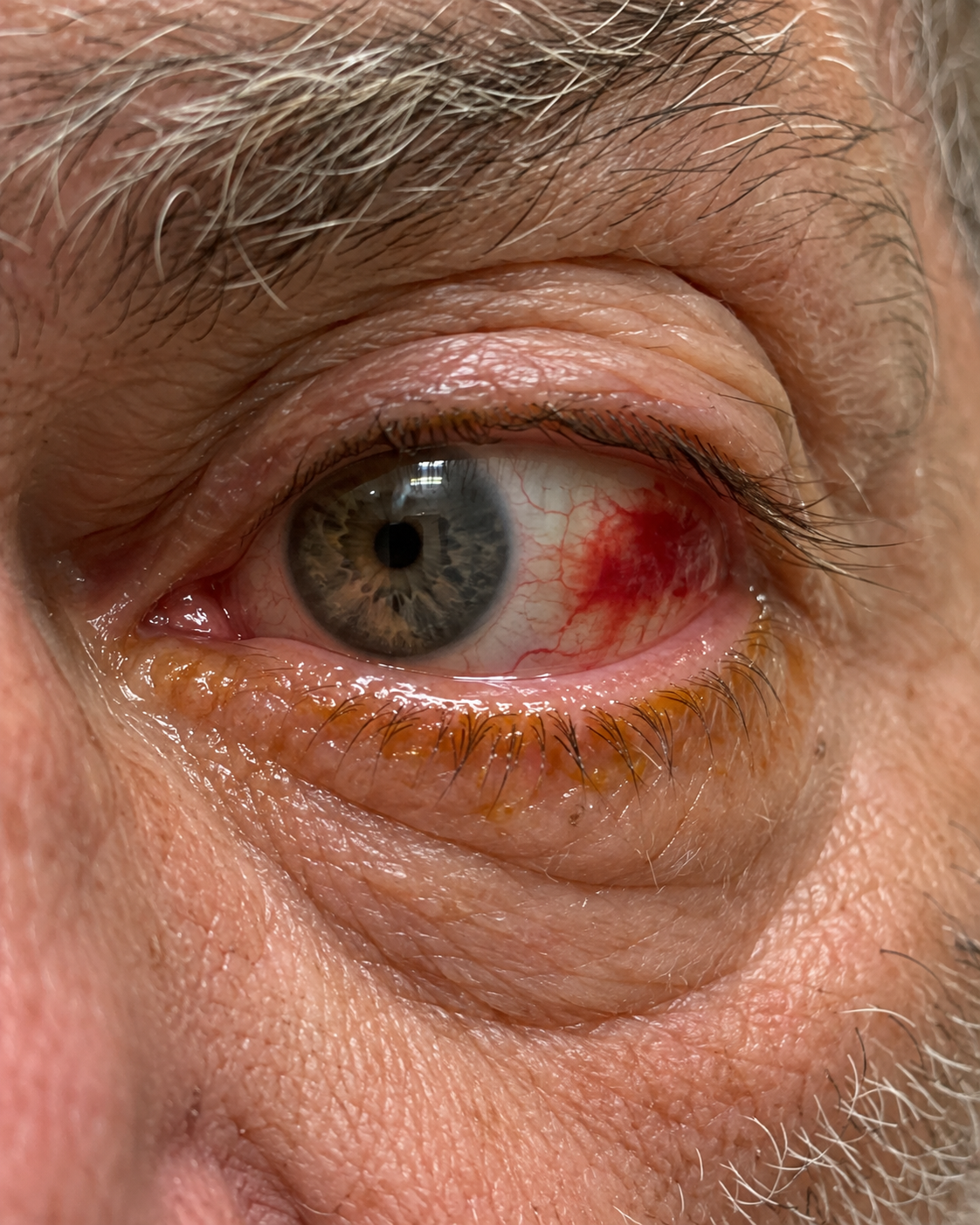
Ran for 7 days, from October 24 to October 31, 2026, the last day Crush saw it.
Run by Leslie Hosmer on Facebook. Crush is not the advertiser and does not verify its claims. See this ad in Meta's Ad Library(opens in a new tab)
Make your own version of this ad
Crush makes it, launches it in your own Meta ad account, scales the winners and pauses the losers.
About this ad
- Meta Ad Library ID
- 1367818898599001
- Platforms
- Facebook, Instagram, Audience Network, WhatsApp and Threads
- Relaunches
- 0
Ad text
My husband got his first eye injection in March of 2022. He never missed a single Eylea appointment in three and a half years. He took his PreserVision every morning and every night without fail. He gave away his cigars. Gave up his Friday double cheeseburger at the Kewpee. Ate spinach, kale and baked salmon until he couldn't look at them. Wore his wraparound sunglasses every time he stepped outside. Stopped driving after dark. He did everything the retina doctor told him. He died of a stroke on October 25th at 5:23 AM. He was 64 years old. First needle on March 3rd. Quit the cigars the same day. Ate nothing that wasn't on the list. Took 46 needles in his left eye without once asking to skip one. His insurance was billed $83,076 for his injections. The hospital bill was $71,860. The funeral was $11,940. His lighted magnifier is still sitting on the arm of his recliner. Still plugged in. I can't unplug it. If I unplug it, he's really gone. His appointment card is still on the refrigerator. Thursday, November 6th, 9:15 AM. Both eyes. He died 12 days before the shots that were supposed to save his sight. 46 needles that didn't. If I take it down, he's really gone. I need to tell you what happened to Don. Because I'm seeing the same posts on Facebook that I was making just months before he died. "My husband just started eye injections for macular degeneration, is there anything natural that helps?" "My mom's on Eylea every 4 weeks and her vision is still slipping, what else can we do?" And it makes me physically ill. If you're over 50 and you've been told you have macular degeneration, or someone you love has, please read this entire thing. I know it's long. I know you're scrolling. I know you have things to do. A year ago I would have given anything — everything — for someone to tell me what I'm about to tell you. Don went in for new glasses on March 1st, 2022. He felt fine. Better than fine. He'd just turned 61. He still sat in his deer stand every November. He was still rebuilding the engine in his '69 Chevelle on Saturdays. He thought he was indestructible, and honestly, so did I. The only thing he'd noticed was that the edge of the garage door had a little wave in it when he looked with his left eye. The optometrist took one look and sent him to a retina specialist that same week. The retina doctor put him in front of a machine that photographs the back of the eye. She looked at the picture for a long time. "Don, you have wet macular degeneration in your left eye. There's fluid leaking under the center of your vision. Your left eye reads 20/60. Your right eye has the yellow spots we call drusen. That's what comes before it." Don was quiet. I was sitting in the corner chair pretending I wasn't scared to death. "Do you smoke?" "A cigar most evenings. Two on Fridays." "That's enough to do this. Smoking is the biggest thing you can change. The cigars are done. Completely. No exceptions. Spinach, kale, salmon. PreserVision twice a day. No driving after dark. And we start Eylea today. One injection in the eye every four weeks." They washed his eye with Betadine, the brown antiseptic. They held his eyelids open with a little wire clip. And they put the needle in. I drove him home with a patch over his eye. He sat at the kitchen table for forty minutes without saying anything. Then he stood up, walked out to the garage, and came back with the cedar humidor his father left him. I watched him carry it next door. Arturo Fuentes. The Christmas box from his brother. The two good Cubans a buddy brought back from a trip and he'd been saving for something special. Every cigar he owned, set on Les's porch swing in under ten minutes. "That's it," he said. "I'm done." And he was. He went back four weeks later for the second needle. I bought a wall calendar and circled every injection day in red. Two weeks in, Les told him over the fence that his own eye doctor had him on extra lutein. Don ordered a bottle that night. It went on the windowsill next to the PreserVision. For three and a half years he didn't touch a cigar. He didn't miss a single injection. No cigars. No Kewpee on Fridays. Not at our nephew's wedding. Not at the Ohio State–Michigan game when Butch held one out to him on the tailgate. Not on his own 64th birthday, when his brother lit up a Fuente on our back porch and Don went inside. I threw out 41 years of recipes. I learned to cook salmon, lentils, kale and roasted beets six different ways. I'd watch him push the kale around his plate and pretend it was fine. I ate it too. If he had to give up everything he loved, I wasn't going to sit across from him with a pork chop. I drove him to all 46 injections. I sat in that waiting room 46 times. He quit the Wednesday euchre game at the Legion because he couldn't read the cards. I quit my Thursday cards so I'd be home when the numbing wore off. He lost his buddy Butch, who told him "you're no fun anymore" and stopped calling. He skipped deer camp for the first time in 30 years because he couldn't see through the scope. And one night in the spring of 2024, he came in from the garage and set the keys to his truck on the counter in front of me. "You drive now." He'd been driving since he was 15. He never sat behind the wheel again. He lost a piece of himself he'd been carrying for 48 years. And he did it anyway. Because the doctor said to. The Betadine gave him a headache that sat behind his eye all evening. Some months his eye came home red as a stop light. Floaters drifted across his newspaper that hadn't been there before. Then the pressure in that eye started running high, and now there were glaucoma drops on top of the needle. Every injection day was a day gone. He'd sit in the dark with a cold washcloth over his eye until the burning stopped. Then the middle of his world started going gray. He'd reach for his coffee cup and miss it by two inches. Twice he walked right past me in the aisle at Kroger like I was a stranger. I said his name both times and pretended it was funny. The retina doctor said it was probably the cataract coming. Normal at his age. "The scan looks stable." In the spring of 2025, they stretched him to every eight weeks. Don came home like he'd graduated. Seven weeks later his eye was leaking again, worse than before. Back to every four. His follow-up came on October 9th. The scan was dry. No fluid. "Stable," the doctor said. Then they put him in front of the eye chart. Left eye: 20/100. I read the paper they handed us three times because I thought I was misreading it. Three and a half years of needles, and he'd gone from 20/60 to 20/100. Then the doctor turned the screen toward us. "The right eye has turned wet. We'll start it at your next visit. Both eyes, every four weeks." Don came home that night and sat at the kitchen table. The same table he'd sat at the first day. He didn't say anything for a long time. Then he said: "I quit the cigars. I took every needle. And I can't see your face across this table." I told him to give it time. I told him the doctor said it was stable. I told him to trust the process. He nodded. He kept eating the kale. He kept taking the PreserVision. He kept his appointment card on the fridge. Five days later — five days — he woke me at 2 AM making a sound I'd never heard a person make. When I turned on the light, the right side of his face had slid down, and the words coming out of his mouth weren't words. I drove him to St. Rita's doing 80 in a 35. I kept my hand on his chest the whole way so I'd know he was still breathing. By the time they took him back at 2:41 AM, his right hand had curled up against his chest and wouldn't open. I sat in the waiting room for an hour and forty minutes. I called our daughter Jenny in Findlay at 3:06 AM and couldn't get the words out. I just kept saying "something's wrong, something's wrong." The vinyl chair stuck to the back of my legs. The neurologist on call was a young guy. He couldn't have been 35. He looked at Don's scan and his face did this thing. I told him about the eye shots. He nodded like it made sense. "Mrs. Stutz, your husband has had a stroke. A vessel in his brain has closed off, and part of his brain isn't getting blood. The small vessels in his head are stiff and narrowed, the same as the vessels they've been photographing in the back of his eyes. We're taking him up to the neuro ICU now." "But he's been doing everything," I said. The neurologist just looked at me. "I know, Mrs. Stutz. I'm sorry." Don spent 11 days in the neuro ICU. I learned things about the brain I never wanted to know. I learned that when a stroke hits like Don's did, the part of the brain that loses its blood starts to swell. It presses on the rest from the inside. It means your husband stops being your husband. He looks at you like he's trying to remember who you are. He says things that don't connect. On day 6, Don asked me three times in twenty minutes if he was late for first shift at the engine plant. He retired from the Lima Engine Plant in 2019. By day 4, they had to put soft white mitts on his hands. He kept reaching for the feeding tube in his sleep. Pulling at it, fighting it, unconscious but determined to get it out. The nurses tied the mitts to the bed rails with cloth straps. I sat next to him for hours watching his fingers work inside them, trying to grip something that wasn't there. Those hands had rebuilt the engine in a '69 Chevelle. Now they were tied to a hospital bed. One night the nurse on his floor was reading through his chart. The 46 injections. The glaucoma drops. She said something I've never forgotten. She said the eye shots stop the leak, but they don't open anything back up. She said the back of the eye and the brain run off the same kind of tiny vessels. When the ones behind the eye are closing, the ones in the head usually are too. She said by the time a vessel closes off like Don's did, it has been narrowing for years. They kept him on a drip to bring the swelling down. It bought him 11 days. Day 8, the swelling got worse. The surgeon came in, looked at the scan, and stopped talking about surgery. Day 10, he couldn't swallow anymore, and his lungs started filling with fluid. The nurse called it pneumonia. I called our daughter. By day 10 I hadn't slept in my own bed in nine nights. I was eating peanut butter crackers from the vending machine and drinking coffee from the family room urn that tasted like it had been sitting since the day before. I stopped looking at myself in the bathroom mirror. I'd lost 11 pounds in ten days. My sister drove down from Wapakoneta and tried to make me go home for an hour. I wouldn't go. If I left and something happened, I'd never forgive myself. Day 11 — October 25th — I was in the family room down the hall. They'd asked me to step out while they turned him. The chair I'd been sleeping in was still warm. There was a cardigan I'd left over the arm of it. I remember thinking I should fold it. At 5:14 AM I heard the long beep. I didn't move. I sat there listening to it not stop. Nine minutes. I counted them on the wall clock. I knew before anyone came. I knew the second the beep didn't end. At 5:23 AM, a doctor I'd never seen walked into the family room. "I'm so sorry. We did everything we could." I drove home at 7 AM. His lighted magnifier was still on the arm of the recliner, still on. His wraparound sunglasses were by the back door. His bottles were lined up on the windowsill above the sink: the PreserVision, the lutein, the glaucoma drops. His appointment card was still on the refrigerator. November 6th. Both eyes. Where it hangs today. I sat in his recliner. I didn't move for six hours. The house was so quiet I could hear the refrigerator hum. 41 years. And now the only sound in my house was the refrigerator. The funeral was November 1st. My brother Dewey flew up from Fort Myers. Jenny drove down from Findlay. The grandkids wore clothes that were too big for them. My 5-year-old granddaughter asked me: "Grammy, when is Pop-Pop coming home?" I told her Pop-Pop was in heaven now. She said: "Can we call him there?" I had to walk out of the room. Out in the parking lot, a woman I hadn't seen in twenty years put her arms around me. Monica. My roommate at Ohio State. A retina specialist in Columbus now. We'd drifted down to Christmas cards. She drove an hour and a half to stand in that parking lot. After the funeral, I tried to go back to normal. I couldn't. Because every time I opened my phone, I saw people my age, men Don's age, posting things like "my husband just got his 20th eye injection, scan says stable, anyone tried anything natural?" or "eye doctor found drusen, said come back in six months, no big deal." And I knew — I KNEW — some of them were doing exactly what Don did. Taking the shots. Quitting the cigars. Eating the kale. Taking the PreserVision. And losing their sight anyway. Or worse. I couldn't just sit there and watch it happen. So I started researching. Not because I wanted to. Because I had to. If Don gave up everything for nothing, and I can't save even one person from what happened to him, then I can't live with that. I read for weeks. Medical papers I barely understood. Retina forums. Studies out of Germany and Japan. And one thing kept coming up, over and over, that no doctor ever told us: Everybody watches one thing. The scan. Is it wet or is it dry? Is there fluid or isn't there? The doctor watches it, you watch it, the whole treatment is built around keeping that picture dry. Keep it dry and they call it stable. But the fluid was never the thing taking his sight. The macula is the tiny spot in the center of the back of your eye. It's what lets you read, drive and see the faces of the people you love. It burns more oxygen than almost any tissue in your body. It's fed from behind by a thin sheet of tiny blood vessels called the choroid. And those vessels only open when their lining makes something called nitric oxide. Nitric oxide is the signal that tells the vessel wall to relax and let the blood through. After 40, your body makes about 10% less nitric oxide every year. By 55, you're running on about half of what you had at 30. So the vessels behind the eye stop relaxing. They stiffen. They narrow. Less blood gets through every year. You ever see a garden hose with a kink in it? The water still runs, but the tomatoes at the end of the row wilt first. The macula is the end of the row. And when the macula starves, it can't get rid of its own trash. Those yellow drusen spots the doctor pointed out on Don's scan? That's waste. The blood that should have carried it away wasn't getting through. Then the starving macula does the only thing it can. It sends out a distress call for more blood. It grows brand new vessels to get it. But the new ones are weak. They leak. That leak is the fluid on the scan. That's what wet macular degeneration is. I read it three times. I sat at the kitchen table with the laptop open at 2 AM and read it three times. And here's the part that made me sit up straight: Eylea works by shutting off that distress call. It blocks the signal, so the weak new vessels stop growing and stop leaking. The scan dries up. It did exactly what it was built to do. What it does NOT do — what nothing the retina doctor gave him could do — is open a single vessel back up. The macula was still starving. It just couldn't call for help anymore. Don's scan said dry on October 9th. Stable. His eye read 20/100. The leak was gone. The starving never stopped. Read that again. His sight wasn't taken by the fluid. It was taken by a blood supply that had been closing down for years, right where nobody was looking. Eylea never touched it. It couldn't. And then I read the part that broke me. That lining that makes nitric oxide isn't just behind your eyes. It lines every blood vessel in your body. So when it runs low, the vessels don't only narrow behind your eyes. They narrow in your heart. They narrow in your brain. The macula just goes first. It's the hungriest tissue in the body, so it's the first place to feel the blood running short. Don's eyes weren't the problem. They were the first place the problem showed up. The same narrowing that was starving his macula was starving his brain. And the night one of those narrowed vessels in his head finally closed off, the blood stopped. That's a stroke. Same problem. Same starving. Just a different place. And the back of the eye is the one place in the body a doctor can look straight at your blood vessels without cutting you open. Every four weeks for three and a half years, a camera was pointed at those vessels. Every four weeks, they saw a leak, dried it up, and called it stable. Nobody asked why his eye was starving in the first place. The gray in the middle of his world. The coffee cup he missed by two inches. Walking right past me at Kroger. That wasn't a cataract. That was his macula going hungry while the scan stayed clean. They called it normal for his age. It's not normal. It's the needle doing exactly what it was built to do. Eylea is built to dry a leak. It was never built to open a vessel. Not in his eye. Not in his head. The burning was the Betadine. The floaters were the medicine drifting in the gel of his eye. The pressure that put glaucoma drops on top of the needle came from pushing medicine into a closed eyeball every four weeks. And here's why none of it saved him: the shots kept the scan dry. They did nothing about the blood supply that was failing everywhere in his body. He gave up everything he loved to dry up a leak that was never the threat. While the vessels behind his eyes, and inside his head, kept closing. I sat with that for three days. I didn't know what to do with what I'd just read. So I did the only thing I could think of. I bought a bottle of PreserVision for myself. Because my own eye doctor had found drusen in my left eye two years earlier. Because my mother had it too. Because I'm 62. Because I was scared. I took it for three weeks. Then I called Monica. She didn't laugh. She just got quiet. "Norma, PreserVision is food for the macula. But it rides in the same blood. If the vessels behind the eye are closing, it never gets where it's going. It can't open a single one of them." Then she said something I'll never forget: "If Don had been on something that opened those vessels back up, without a needle, the picture might have been very different." I stopped breathing for a second. "Why didn't his doctor tell us that?" She was quiet for a long time. "Because we don't prescribe supplements. We're trained to manage the leak. Dry the scan, check the box, see you in four weeks. I see 60 patients a day. And here's the part nobody tells the wife. Macular patients have more strokes. It's in the studies. The eyes were the warning. And no one in my profession is going to be the one to tell you." That night I went back to the papers. Your body makes nitric oxide out of something called nitrate. And the vegetable with more nitrate in it than almost any other is the beet. I went to the drugstore on Elida Road the next day. I stood in that aisle for forty minutes. PreserVision. Ocuvite. Lutein. Saffron. Bilberry. Fish oil. "Vision support" 30-day programs. And on the bottom shelf, two different bottles of generic beetroot capsules. $16.99, 500mg, the cheap stuff. I bought the cheap beetroot. Took it for two weeks. The bent lines on my own Amsler grid, the little square of straight lines my eye doctor had me tape to the refrigerator, didn't move. I started Googling, and that night I read a paper out of Wageningen University in the Netherlands, the agricultural research school. Then a study from the Journal of Agricultural and Food Chemistry on what heat does to a beet. What I found made me throw the bottle in the trash. The beetroot in those bottles isn't the beetroot the research is on. The modern grocery-store beet has been bred for a hundred years to be bigger, sweeter, easier to ship. And every time you breed a beet for sugar, you breed the nitrate down. The one thing your body needs to make nitric oxide has been bred almost out of it. The beet that used to be medicine became candy. Then the supplement companies take that already-weakened beet and spray-dry it at high heat to turn it into powder for the capsule. Heat destroys the nitrate. The beets I'd been roasting for Don's dinners? Same story. Bred for sugar at the grocery store, then I cooked what little was left right out of them in my own oven. By the time it's sitting on the drugstore shelf in a $16.99 bottle, there's almost nothing in it. Red dust. Dead before the cap was sealed. I had been doing the right thing in the wrong form. Worse than the wrong form. The wrong everything. I was furious. I'm still furious. About a week later, I was scrolling a Facebook group for women whose husbands are getting eye injections, or getting them themselves. It's full of people like I was. "Just got the wet diagnosis" people. "Shot number 30 and still slipping" people. "Has anyone tried anything natural" people. A woman posted something that stopped me cold. She said her husband had been on Eylea every 4 weeks for 4 years. Every time they tried to stretch him to 6 weeks, the eye started leaking again. His left eye read 20/80, and his retina specialist wanted to switch him to Vabysmo. Sound familiar? Then she found an heirloom beetroot capsule. Not the grocery-store kind. An old strain from a small Amish farm, dried in the shade instead of heat-blasted, with the original nitrate still in it at ten to twenty times what's in a modern beet. She added it to everything he was already doing. He kept every appointment. At 8 weeks, his scan came back dry. First time in 4 years. His retina specialist stretched him to every 12 weeks. At 10 weeks, his left eye read 20/40. Up from 20/80. Then his retina specialist said he could hold the shots and come back in three months. His next scan, with no injection for three months, came back dry. 20/40. Without going back on the needle. Without doing anything else different. I read that post six times. I started looking into the formula she mentioned. And what I learned is that there are five things a serious vision support has to do at the same time, or it's a waste of your money: It has to restore the nitric oxide. That's dietary nitrate, the compound your body turns into nitric oxide. It's what tells the vessels behind your eye to relax and open back up. It's not just another eye vitamin. Vitamins feed the macula. Nitrate opens the road the food travels on. Without that, everything else you swallow is stuck in traffic. It has to actually reach the vessel lining. Most of what's in a cheap capsule breaks down in the stomach and never gets there. The nitrate has to survive digestion and reach the cells that line your blood vessels, the cells that make the nitric oxide. It has to work without a needle and without silencing anything. Eylea can only dry the leak by shutting off the eye's call for blood. Nitrate answers the call. It opens the vessels so the macula gets the blood it was begging for, and the leak has no reason to start. It has to be the original strain of beet. Not the grocery-store version that's been bred for sugar for a hundred years. There's one heirloom variety the Amish in Lancaster County, Pennsylvania, never let go of. Blutwurzel. It means "blood root" in German. They've been saving the seed by hand for over 150 years. The nitrate content is ten to twenty times what's in a modern beet. And it has to be shade-dried after the first frost. Not spray-dried, not heat-processed, not anything that destroys the nitrate. The original way. The slow way. The way that keeps the one compound this whole thing depends on. Five things. All five. At the same time. From one bottle. I went through every product I'd looked at in that drugstore. Not one of them did all five. Most did one. The expensive ones did two. None of them were heirloom Blutwurzel. None of them were shade-dried. Every one of them was the same commodity beet ground into red dust. So I went back to the Facebook post and messaged the woman. She sent me the name. That's when I found Rosabella. It was the only formula I could find that hit all five. Heirloom Blutwurzel beetroot, the actual seed line the Amish in Lancaster County have been growing for 150 years. Shade-dried after the first frost, the original way, never heated. 1,300 milligrams per serving, two capsules with breakfast. Not the 500 milligrams of red dust I threw out. Made in an FDA-registered facility in Ohio. Independent lab tested. 90-day money-back guarantee: if you don't see improvement, you get every penny back, no questions asked. I almost didn't order it. After the drugstore aisle. After the PreserVision. After Don. After everything. But I had a brother in Fort Myers who was being told the same kind of thing Don had been told. I had a son-in-law in Findlay whose optometrist had just found drusen. I had myself. I ordered it. My brother Dewey is 61. His retina doctor found geographic atrophy, the late stage of dry macular degeneration, where the center of the eye starts dying in patches. The doctor wanted him on Syfovre, a needle in the eye every month. He refused. He said he'd watched Don take 46 needles and end up in a casket, and he wasn't going down that road. He didn't know what else to do. I sent him a bottle. I didn't ask. I just sent it. Wrote a note that said, "If you don't take this every day, I will never speak to you again, Dewey, I mean it." He took it. He kept smoking his Swisher Sweets on the lanai — he wouldn't quit, he's stubborn the way Don was stubborn — but he took it every morning. His retina doctor had him on a grid too. When he started, 13 of the little squares on his were bent. He went back to his retina doctor four weeks ago. Right eye: 20/30. Up from 20/50. In ten weeks. 4 bent squares on the grid. Down from 13. And on his scan, the dead spots hadn't grown. Not one millimeter. He hadn't quit the cigars. He hadn't started the Syfovre. He hadn't changed his diet. The only thing he changed was the two capsules he took every morning. He called me crying. My brother. 61 years old. Crying on the phone like a kid. He said: "Norma, I think Don died because nobody told him about this." I had to hang up. Then there's my son-in-law Nick. He's 44, with two kids, and his own mother has macular degeneration. His optometrist found early drusen at his last exam. He started taking it six weeks ago. He says the halos around the headlights on I-75 at night are gone. He says he can read the scoreboard at the Findlay High games again without squinting. My neighbor Bernice. Her husband died of a stroke four months before Don. Two widows on the same street. She started taking it two days after I told her. She says it's the first time since he died that she doesn't feel like she's waiting for a phone call. I told my sister in Wapakoneta. I told Jenny. I told the women at my Thursday card table. I told Les and the guys at the Legion when I went over to drop off a casserole. I'm not a doctor. I'm not a scientist. I'm not selling anything and I don't get a penny from any of this. I'm a 62-year-old widow sitting in my dead husband's recliner at 2 in the morning because I can't sleep. I can't stop thinking about the woman in that Facebook group whose husband just had injection number 30. I can't stop wondering if she's going to end up where I ended up. Here's what I know because I lived it: Eylea dried the leak on the scan. It didn't open a single vessel. And it silenced the alarm his eye was sounding. Quitting the cigars slowed the damage going forward. It didn't reopen what had already closed. PreserVision feeds the macula. But it rides in the same starved blood, so it never gets where it's going. Most beetroot on the shelf is the wrong beet, heat-blasted into red dust. The nitrate is mostly gone before the bottle is sealed. Don gave up everything he loved for three and a half years, and it didn't save him, because nobody told him what was actually broken. I wish someone had told us before March 1st, 2022. Before the new glasses. Before the humidor on the porch swing. Before 46 needles and three and a half years of kale. Before the keys on the counter. Before October 25th at 5:23 AM. I can't go back. Don can't come back. His appointment card is still on the refrigerator, and it's going to stay there. But you can still go forward. Your husband can. Your mom or dad can. You can. Here's where I got it. Not the scan. The blood supply. That's the line that finally made it click for me. I want you to go order a bottle. Not for me. For whoever you'd leave behind. https://track.tryrosabella.com/cdc16426-3e48-40a7-9fad-21098084f6cf Don used to stand over that Chevelle and say: "An engine doesn't quit from a bad gauge. It quits from a fuel line nobody checked." Check the fuel line. — Norma Stutz, age 62, Lima, OH P.S. The appointment card is still on the refrigerator. Thursday, November 6th. 9:15 AM. Both eyes. Every morning I walk past it, and for one second I forget. For one second I think I'm driving him to his 9:15. I'm not. $83,076 in injections. $71,860 for the hospital. $11,940 for the funeral. 46 needles and three and a half years of him giving up everything he loved for nothing. And a bottle that costs less than his share of a single one of those shots. A bottle my oldest friend, a retina specialist, told me could have changed everything if we'd known. Please. Don't end up here. Don't let someone you love end up here. https://track.tryrosabella.com/cdc16426-3e48-40a7-9fad-21098084f6cf P.P.S. I don't work for Rosabella. I don't get a penny from this. I'm writing this at 2:14 AM because I can't sleep and Don's side of the bed is cold, and I keep thinking about every woman sitting in a retina waiting room right now, the way I sat there 46 times. Share this with anyone you love who's been told they have macular degeneration. Even a little. Even if the doctor says "early." Even if they were told "come back in six months." Even if they're already on the needle. Please. P.P.P.S. If your husband is already on Eylea or Vabysmo and his scan says stable, please don't close this page. Don's scan said dry five days before the stroke. His doctor called that stable. The fluid was never the threat. The blood supply was. The heirloom beetroot works on the blood supply. It works alongside the shots. It works after the shots. Don't cancel a single appointment on your own. The woman in that Facebook group said her husband kept every injection, and his retina doctor was the one who decided when to stretch them. She told me the first thing she noticed was him reading the menu board at the diner again, about three weeks in, after 4 years on Eylea. You haven't missed the window. The window opens the day you start. P.P.P.P.S. If you're reading this and thinking "he'd never go for it," I want you to hear me. I didn't argue with Dewey. I sent him a bottle with a note that said if he didn't take it I'd never speak to him again, and he took it because he loved me. He didn't believe a word of it on day one. He believed it ten weeks later when he read the chart. You don't have to win the argument before you ask him to start. You just have to get the bottle in the house. P.P.P.P.P.S. One last thing, because I know what it is to be afraid to hope again. There's a 90-day money-back guarantee. If you don't see improvement in three months, you send the empty bottles back and they refund every penny. No questions, no fight, no fine print. Three months is one visit to the retina doctor. One scan. One eye chart. You can know in one visit whether this is real for him the way it was real for Dewey. That's all I'm asking. One visit. Don't let three months go by without it being in the house. https://track.tryrosabella.com/cdc16426-3e48-40a7-9fad-21098084f6cf P.P.P.P.P.P.S. One more thing. It's not on Amazon. It's not on eBay. The Lancaster County family only ships through the one website, and there are already knockoffs out there using the name on the cheap stuff. Order it from the link below or you're back in the red dust aisle. https://track.tryrosabella.com/cdc16426-3e48-40a7-9fad-21098084f6cf
Where the ad sends people
get.tryrosabella.com
Support eye health and blood flow every day
Learn more: track.tryrosabella.com(opens in a new tab)