Michelle Carter
Michelle Carter Facebook ad: “The Best Cancer Care In America Could Not Close This Gap”
Ran for 21 days, from August 17 to September 7, 2026, the last day Crush saw it.
Run by Michelle Carter on Facebook. Crush is not the advertiser and does not verify its claims. See this ad in Meta's Ad Library(opens in a new tab)
Want an ad like this for your product?
Crush makes new ad images for your product from this ad: your logo, your product photo, your offer.
Trials from $19.95 USD, then $79.95 USD a month. Cancel anytime.
About this ad
- Meta Ad Library ID
- 1373439841604817
- Platforms
- Relaunches
- 0
Ad text
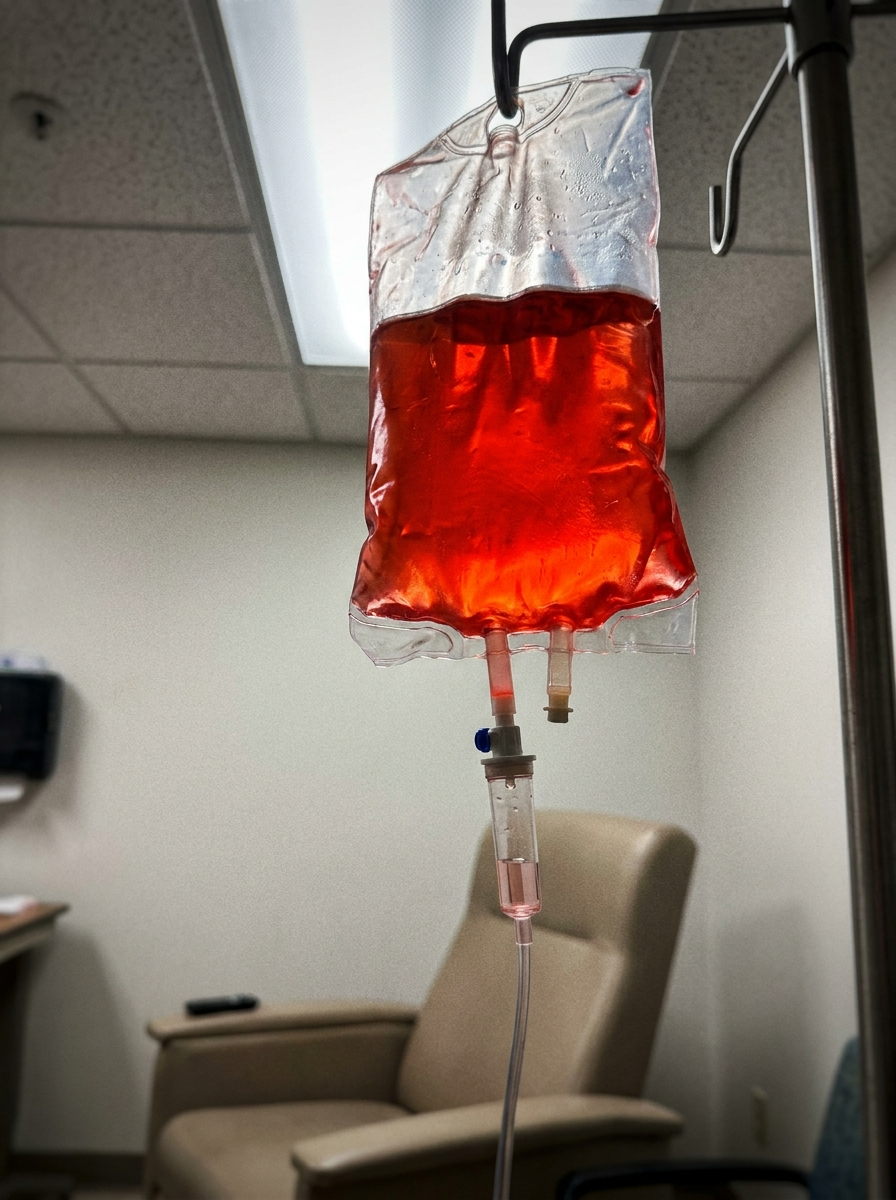
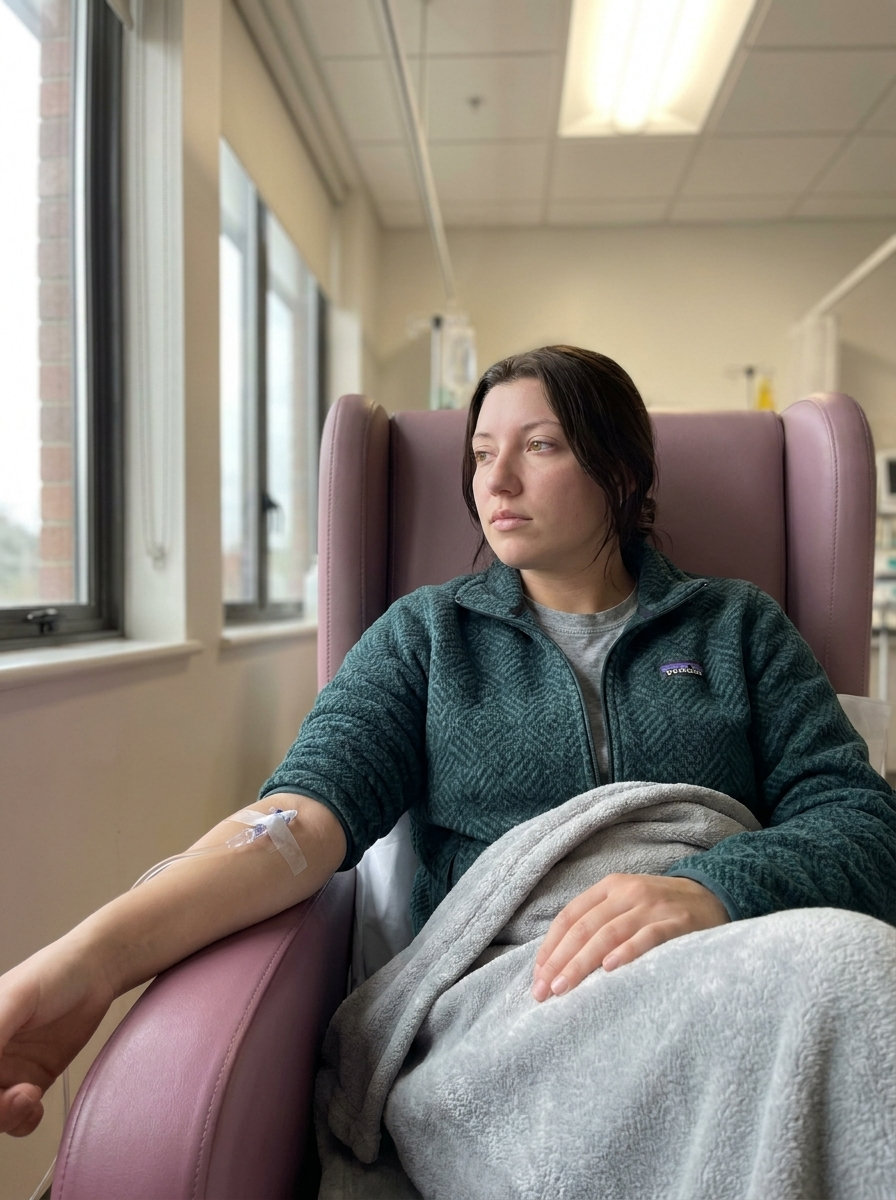
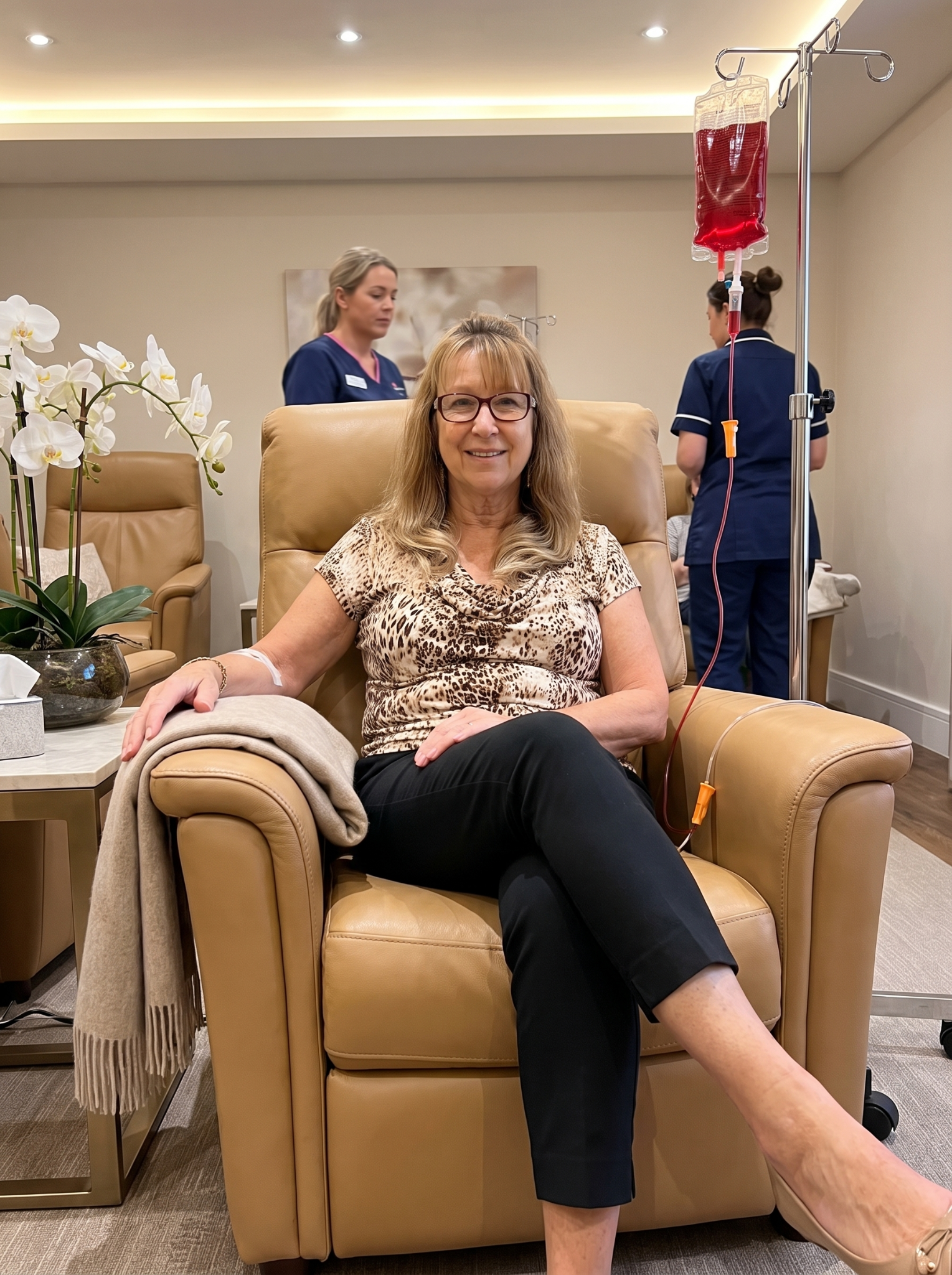
My husband spent $678,432 trying to save my life from breast cancer. Concierge oncologist at MD Anderson. Foundation Medicine deep tumor sequencing. Second opinions at Sloan Kettering and Mayo. A California surgeon flown in for a DIEP flap microsurgery that cost $148,000 out of pocket. A private oncology nurse at $6,200 per infusion to run a scalp cooling machine on my head. A chef who came to our Houston apartment four days a week. At-home IV hydration at $1,400 a visit. I still crashed at Round 3. My white blood cells hit 2,100. My oncologist started saying dose delays. Every dollar he spent could not close the gap. Then he sat awake at our kitchen table until 4 AM and he found something the American medical system never told either of us existed. It cost $30. Let me tell you what he handed me. My name is Michelle Carter. I'm 48 years old. I was diagnosed with invasive ductal carcinoma — Stage 2, HR+/HER2- — in the January of my 46th year. I was NED sixteen months later. I am here today. Sitting at my kitchen table. Writing this. Because my husband — a man who was raised on a farm by a father who was strict as a belt and a mother who believed a boy must stand by himself — sat down next to me the morning after my worst crash and he said, "Baby. The doctors are not going to fix this. I am going to fix this. Give me two weeks." Let me tell you what he had already done for me before that morning. My husband owns an HVAC business. He built it from a single truck when he was 26 to 340 employees and 61 service vehicles in seven states by the time he was 42. He does not talk about the money. He does not drive a fancy car. His pickup is nine years old and he changes his own oil in the driveway. But when I was diagnosed he sat down at the same kitchen table where I am writing this and he said, "We are going to buy the best care that exists. I do not care what it costs. Get me a list." I did not have a list. I did not know how to make one. I am a middle school reading teacher. I have taught seventh graders how to write a book report for twenty-three years. I did not know what MD Anderson was. I did not know what a concierge oncologist was. I did not know what DIEP flap microsurgery was. I did not know any of it. My husband made the list. Within nine days of my biopsy result he had hired a private health advisory firm that cost $40,000 a year as a retainer. Within eleven days I had a concierge oncologist at MD Anderson in Houston whose personal cell phone number was in my phone. Within fourteen days we had moved to Houston. He rented a corporate apartment two blocks from the medical center that cost $8,900 a month so I would not have to sit in a Houston traffic jam on the mornings I felt too sick to lift my head off a pillow. He spent $32,000 just to relocate us. Movers. The apartment. Furniture. A rental car for me. A second rental car for him so he could keep running his business remotely from Houston without me losing access to a vehicle on the days I felt well enough to leave the apartment. He arranged Foundation Medicine to run ultra-deep molecular sequencing on my tumor tissue. Five weeks of turnaround. $9,400. It came back showing my specific tumor profile matched a small clinical trial at Sloan Kettering that we then flew to New York twice to consult with. Two more second opinions. One at Sloan Kettering. One at Mayo. He wanted three sets of eyes on my case. He got them. For my surgery he flew in a plastic surgeon from California who specializes in nerve-sparing DIEP flap reconstruction. That is the microsurgery where the surgeon reconstructs the breast using tissue from the patient's own abdomen and meticulously reconnects the microscopic nerves so the patient retains physical sensation in the reconstructed breast. Standard implants would have cost my insurance $12,000. The DIEP surgeon my husband hired cost $148,000 out of pocket. My husband paid it without asking a single question. For chemotherapy he hired a private clinical nurse — her name was Rita, she was 58, she had thirty years of oncology experience at MD Anderson and had gone independent five years earlier — to operate a Paxman scalp cooling machine specifically for me during every one of my six AC-T infusions. The Paxman machine is FDA-cleared. It continuously circulates coolant through a cap that sits on the patient's scalp during infusion. Cold constricts the blood vessels in the scalp. The chemotherapy drugs cannot reach the hair follicles at the same concentration. Most patients lose significantly less hair. Rita managed the entire process. Adjusted the cap every twenty minutes. Made sure my scalp stayed at the correct temperature. Held my hand when I cried. She cost $6,200 per infusion session. My husband paid it six times without asking. Rita also came to our corporate apartment three mornings a week for at-home blood draws. Instead of me having to drive to a lab, sit in a waiting room, and be exposed to whatever cold or flu was circulating through a Houston clinic, Rita drew my blood at my kitchen island while I ate scrambled eggs. My complete blood counts were tracked with a precision most cancer patients in America never get to experience. He hired a private oncology-trained chef named Claudia who came to the apartment four days a week and prepared anti-inflammatory low-glycemic meals designed specifically for a chemotherapy patient. She used organic ingredients from Whole Foods. She adapted the menus around my chemo brain fatigue and my metallic mouth and my mucositis. On the weeks I could not stomach solid food she made me broths. On the weeks the metallic taste made everything taste like a copper pipe she found the specific herbs and citrus profiles that could push through it. She cost $3,800 a week. He arranged at-home IV hydration on the days between infusions when I was too depleted to keep water down. A registered nurse would come to the apartment, run a fluid drip while I watched Turner Classic Movies on our couch, and administer anti-nausea medication directly into my bloodstream. Each hydration visit was $1,400. I had eleven of them across the six chemo rounds. He hired a lymphatic drainage physical therapist to prevent lymphedema in my right arm after my mastectomy. He hired an acupuncturist to try to mitigate the joint pain from the endocrine therapy he already knew was coming after my chemo was finished. He hired a therapist who specialized in oncology counseling to come to the apartment twice a week and help me talk through what was happening to my body and my mind. All of it out of pocket. All of it invisible to the world outside our apartment door. My husband bought me every luxury the private cancer care industry sells to the very few people who can afford it. When we sat down together three weeks ago to add up what he had spent, the number was $678,432. He wrote the number on the back of a receipt at our kitchen table. I looked at it for a long time. Then I looked up at him. He said, "Baby. Every dollar was worth it. But that number is not what saved you." He was right. Because for all of the money he spent, and for all of the concierge access I had, and for all of the private nurses and the world-class surgeon and the chef and the acupuncturist, the exact same thing was happening to me at Round 3 that happens to every single woman on AC-T chemotherapy in every hospital in America. My white blood cells were crashing. Let me tell you what that means because until it happened to me I did not understand it either. AC-T is the standard chemotherapy regimen for my exact diagnosis. Adriamycin. Cyclophosphamide. Taxol. My concierge oncologist explained the mechanism to me the first day we met in her office. Adriamycin is called the Red Devil because the fluid is bright neon red and the nurses have to wear heavy protective gear just to hang the bag. Together with the Cyclophosphamide it kills any rapidly dividing cell in the body. The tumor. But also my hair follicles. My stomach lining. And my bone marrow. Bone marrow is where your body manufactures your immune system. Your white blood cells. Your platelets. Your entire biological defense against a common cold. Every round of AC-T destroys some of your bone marrow. And each round hits harder than the last. Round 1 my white blood cells dropped from a healthy 6,200 to 3,400. Manageable. Round 2 they dropped from 3,400 to 2,700. Concerning. Round 3 they dropped from 2,700 to 2,100. 2,100 is dangerously low. That is the number where a common cold from a grandchild can turn into pneumonia. Pneumonia turns into sepsis. Sepsis turns into an ICU admission. And sometimes that admission is where the story ends. Not from cancer. From a cold. My concierge oncologist called it "the gap." She was gentle about it. But she was clear. She said, "Michelle. We can give you Neulasta the day after your next infusion. It will force your bone marrow to produce white blood cells faster. But you should know it causes severe bone pain in the femurs and the sternum that many patients describe as feeling like their skeleton is being crushed in a vice. And even with Neulasta, the gap will get wider with each of the next three rounds. If your counts drop below 1,500 we may need to start discussing dose delays." Dose delays. That is the phrase I did not want to hear. Dose delays mean stretching the time between chemo rounds because your body has been so destroyed by the last round that it cannot tolerate the next one on schedule. For the patient it sounds like a break. For the oncologist it sounds like the protocol is failing to keep up with the tumor. I looked at my husband in her office. He looked at me. He looked at her. Then he looked back at me. His eyes had a specific expression I had only seen once before. The morning of his father's funeral when he was 34. He said to my oncologist, "What is the plan for keeping her immune system alive between rounds so she does not fall through this gap?" She said, "We have the Neulasta. We have anti-nausea drugs. We have the IV hydration. We have very close monitoring. There is not a specific protocol for actively rebuilding immunity between rounds." He said, "What do you mean there is not a protocol." She said, "There is no published institutional protocol for that specifically. We manage the crashes as they happen." He said, "You are telling me I have spent hundreds of thousands of dollars on the best care in America and the plan is to wait until she is at 900 white blood cells and hope she does not catch a cold." She was quiet for a long time. Then she said, "Yes." He drove us home to the corporate apartment in complete silence. Now — I want to tell you what happened when we got there because this is the part where my husband became the man who saved my life. He walked me into the bedroom. He tucked me under the covers because I was exhausted from the appointment. He kissed my forehead. He told me he loved me. He told me to sleep. Then he went to the kitchen table with his laptop and he did not sleep until 4 AM. I want to tell you something about my husband that you may not fully understand yet. He was raised by a father who ran a 400-acre dairy operation and did not believe in medical doctors. When my husband was 11 years old he broke his forearm falling out of a hayloft. His father set the bone himself on the kitchen table using a wooden splint and duct tape. When my husband was 14 he watched his mother die of stomach cancer over the course of nine months. His father refused hospice care. He said his wife would die at home in her own bed the way her grandmother had done. My husband held his mother's hand while she died. He was 14 years old. My husband has been suspicious of the American medical establishment for his entire adult life. He is not a conspiracy person. He is not a wellness person. He is not a supplement person. He is a farm boy who watched his mother die at 14 and decided he would never blindly trust an institution with the life of a person he loved. When I got diagnosed he did not fight the system. He bought the best version of it that money could buy. Because he had learned by the age of 40 that in the actual world you use the tools you have and you do not let philosophy kill the woman you love. But when my concierge oncologist told him the plan was to wait until my white blood cells crashed to 900 and hope I did not catch a cold, something in his farm-boy suspicion woke up. He read for six hours that night. He read published NIH data on cancer mortality by ethnicity and geographic region. He read case studies on patients whose white blood cell counts remained stable during AC-T. He read the fine print on Neulasta. He read three published papers on plant compounds that had been studied for immune modulation in oncology patients. And around 3 AM he found something buried in a report most oncologists in America have never read. The report was from an NIH-affiliated researcher who had studied a small Caribbean village of 347 people over more than a decade. The village had recorded zero cancer deaths during the study period. The researchers had drawn blood panels on the villagers. Their white blood cell counts were healthy in a way the researchers described as being consistent with people who were forty years younger than their actual age. The villagers had one shared daily practice. Every morning they consumed a small amount of a fermented preparation made from the leaves of a specific tree that grows in the Caribbean. A tree called soursop. Not the fruit. Not tea made from the leaves. Fermented. Cold-fermented. For a full year in traditional vessels. 365 days. The fermentation was the entire mechanism. It transformed the raw leaf compounds into a class of molecules called annonaceous acetogenins at a concentration that raw soursop preparations could never reach. Without the year-long cold fermentation the concentration stayed below 0.5%. Below therapeutic range. Below anything the human immune system could actually use. The report had been submitted for publication in 2009. It was never published. The funding was cut. The lead researcher was reassigned. The primary dataset disappeared from the public NIH databases. A 50% reduction in American cancer mortality would cost the pharmaceutical industry an estimated $125 billion per year. The paper was buried. My husband read that report twice at our kitchen table at 3 AM. Then he did what he does when he is angry. He got very quiet. Then he started researching soursop supplement brands. He tested eleven of them over the next four days. He did not buy them to give them to me. He bought them to test them himself. He sent samples from every brand to an independent lab in Austin. My husband is not a chemistry person. But he is a business owner who has spent twenty years buying industrial-grade equipment and he understands what a certificate of analysis is and what an ISO 17025 rating means and how to read a lab report. Every brand failed one or both of the critical tests. VitalSour claimed pharmaceutical-grade. Lab showed 0.5%. No fermentation records. Fruit-based, not leaf-based. Useless. HerbaSour Naturals claimed organic Caribbean sourcing. Lab found pesticide contamination and heavy metal traces. My husband threw it away. PureLeaf Soursop claimed six months of fermentation on the label. Lab confirmed 40 days. Lied right on the bottle. 0.3% acetogenin concentration. Annona Gold claimed 2% on the front label. Actual lab result: 0.35%. Deliberately mislabeled. TropicaPure. TropicWell. SourLeaf Naturals. VitaMax Botanical. HerbaGiant. Nature's Sop. Wellness Trunk. Eleven brands. All failed. One brand passed every test. A small operation called SimplySours. Certificate of Analysis. ISO 17025 certified. Zero heavy metals. Zero pesticides. Full 365-day cold fermentation confirmed by batch logs with timestamps. Heritage Caribbean trees in volcanic soil. Leaf-only — ten times more concentrated than fruit. 2% acetogenin verified by independent lab. And the format was different from anything else on the market. SimplySours delivered the acetogenins in a pectin-bound gummy. Pectin is fruit fiber. The compound is bound into the pectin structure. It dissolves slowly across a twelve-hour window instead of hitting the bloodstream in a thirty-minute spike. My husband ordered a bottle overnight to our apartment in Houston. The bottle cost $30. Not $30,000. Not $3,000. Not $300. Thirty dollars. While a private nurse was scheduled to arrive that afternoon to do at-home hydration for a session that would cost $1,400. He put the bottle on the kitchen counter next to my morning vitamins. He waited for me to wake up. When I came into the kitchen he handed me the bottle and he said, "I need you to trust me. I read for six hours last night. I understand what this is. I understand what it does. I have tested eleven of these and this is the only one that is actually what it claims to be. Take one every morning. Do not tell your oncologist. Do not stop your chemo. Do not change anything else. Just take one every morning." I want to tell you what I did not do because I have watched a lot of women make these mistakes and it broke my heart. I did not add other supplements to what my husband gave me. I did not load up on Vitamin C megadoses. Vitamin C is an antioxidant. Antioxidants are biologically blind. They do not just shield your healthy cells from chemo. They shield the cancer cells too. You are throwing a bulletproof vest over the exact tumor the Red Devil is trying to kill. I did not take green tea extract. Concentrated EGCG capsules physically bind to certain chemo drugs and block them from entering cancer cells. Drinking a cup of green tea is fine. Swallowing a concentrated capsule during treatment is sabotage. I did not take St. John's Wort for the depression that comes with a cancer diagnosis. It forces a specific liver enzyme into overdrive and flushes chemotherapy out of your bloodstream before it reaches the tumor. I did not take soy isoflavones. My tumor was hormone-receptor positive. Concentrated soy acts as a phytoestrogen — meaning it mimics estrogen in the body. For an ER-positive cancer it is fuel. Pouring it straight on the fire while my oncologist tried to block estrogen with Tamoxifen. I did not take grapefruit seed extract. It shuts down the liver enzymes your body needs to clear chemotherapy from the bloodstream. The chemo gets trapped. Drug levels build. You accidentally overdose yourself from the inside. I did not eat apricot kernels. Vitamin B17 is the internet's favorite conspiracy. Your digestive system converts amygdalin into cyanide. Literal cyanide. Poisoning the liver right when it needs to be working at maximum capacity to process the drugs you are already on. I did not boil raw soursop leaves into tea. Heat destroys the acetogenins. What is left is a bitter brew full of harsh tannins and raw neurotoxins that give you tremors and nausea and do nothing for your immune system. Seven natural supplements that the internet swears are the answer. Seven biological traps that would have made my treatment worse. I tried none of them. I took one SimplySours gummy every morning starting the Wednesday after my husband handed it to me. I chewed it and I waited for the gag reflex to fire the way it fires when I try to swallow any horse pill after chemo has raked my throat with mucositis. Nothing came. Five seconds. That was it. Because pectin is fruit fiber. My brain recognized it as food, not medicine. No gag. No fight. No dry-heaving over the kitchen sink the way I did every morning trying to swallow my anti-nausea capsule. I was in the middle of Round 3. My white blood cells had been at 2,100 at my last draw with Rita on the kitchen island. My platelets were falling. My concierge oncologist was starting to talk about dose delays. I took one gummy every morning for the next four weeks. Week one — nothing dramatic. But I slept through the night for the first time since treatment started. No 3 AM sweat. No waking up with my heart pounding. My husband slept next to me for the first time in six weeks instead of on the recliner in the living room where he had been sleeping so he would not wake me up. Week two — I ate a full breakfast. Eggs. Toast. An actual meal. Claudia had been making me broths for eight weeks because everything solid had tasted like I was licking a copper pipe. That morning the eggs tasted like eggs. Claudia cried when I told her. Week three — I walked from our apartment to a small chapel three blocks away by myself. Eight minutes each way. It destroyed me for the rest of the afternoon. But I made it there and I made it back. My legs held. Week four — Rita came to the kitchen island for a blood draw before my next infusion. Two days later she came back with the printed results in her hand. My white blood cell count had gone from 2,100 to 4,800. Let me say that again because I need you to understand what that number means. 2,100 is dangerously low. That is the "a cold could hospitalize you" range. That was where I had been for weeks and where my oncologist had been discussing dose delays. 4,800 is normal range. In the middle of active AC-T chemotherapy. Rita looked at the printout. Looked at me. Looked at my husband. Then she said, "Michelle. What have you been doing differently." My husband smiled for the first time in six weeks. I told my concierge oncologist about the gummy at my next appointment. She was silent for a long time. Then she wrote something in my chart. Then she looked at me and she said, "Michelle. Whatever you are doing, keep doing it." I later learned from a friend of mine who is a nurse in that same office that my chart note read only "patient reports improved dietary intake." By Round 4 my platelet count stabilized. No more free-fall between cycles. By Round 5 my oncologist told me I was having "one of the strongest treatment responses" she had seen in a patient my age. She was looking at my labs the way she must have looked at other patients' labs when the numbers did not make sense. I finished all six rounds. No dose delays. No hospitalizations. No infections. I lost my hair despite Rita's Paxman machine. That hurt in a way I did not expect. But my body held. My immune system held. The gap that my $678,000 could not fill on its own — that gap did not swallow me. Because a $30 gummy filled it. That was two years ago. I am in remission. NED. My last four scans are clean. My blood work is back to where it was before the diagnosis. I still take one SimplySours gummy every morning because I have seen what happens when the immune system has sustained support and I have no intention of giving that up. My husband and I moved back home from Houston. He is back running his HVAC business in person. I am back teaching seventh grade in the same middle school I have taught in for twenty-three years. And there is one more thing I need to tell you before I get to the ordering information. Because it is the reason my husband finally agreed to let me write this. For twenty-two years of our marriage we tried to have children. I could not conceive. We had every test the American fertility industry sells. IUI. Three rounds of IVF. Every specialist my husband could hire in Boston and New York. Nothing worked. Somewhere in my late 30s I stopped believing it would happen. Somewhere in my early 40s I stopped mentioning it. My husband never brought it up because he did not want to hurt me. But I never stopped praying about it. Every night since I was 28 years old I have asked God for one thing. Just one. A child. Fifteen months after I hit NED, my husband and I completed the adoption of two children. A brother and a sister. He is 7 and she is 4. They came to us from a small agency in Tennessee. Their birth mother chose us because my husband wrote her a letter about growing up on a dairy farm and losing his own mother at 14. She said in her selection notes that she wanted her children to be raised by "somebody who understood what it meant to be raised right." They are asleep upstairs right now as I write this. Their names are Elijah and Grace. Elijah has hazel eyes. Grace has the loudest laugh in any room she walks into. I could not have adopted them if I had died in the gap. I would not have been sitting in this kitchen the morning the adoption agency called with their file. My husband would not have been the man who wrote the letter that made a birth mother pick us. Every morning when I put a gummy under my tongue I think about that. About what I would have missed. About the two small faces asleep upstairs right now who would have grown up with someone else because a $30 gummy would not have found me in time. I am writing this because my husband asked me to. He wants other women whose husbands cannot spend $678,000 on their treatment to know that they do not need $678,000 to close the gap. He wants them to know that even the people who bought the entire ecosystem still fell through the gap without this one thing. He wants them to know that a HVAC business owner from a small town in Georgia sat at a kitchen table for six hours at 3 AM and found what our institutional medicine has been pretending does not exist. If you are in active chemotherapy treatment right now and your white blood cells are crashing between rounds and your oncologist is talking about dose delays and your body feels like it is being taken apart from the inside — please fill the gap. Your treatment is going after the tumor. That is its job. Let it do its job. Your job is to keep the immune system alive while the treatment does the damage. One gummy. Every morning. Five seconds. No nausea. No horse pills. No fighting your body. SimplySours. 365-day cold-fermented soursop leaf extract. 2% acetogenin concentration. Heritage Caribbean trees. ISO 17025 lab certified. Pectin-bound slow-release delivery. Order it directly from the company. Not Amazon. The Amazon counterfeits are raw soursop with no fermentation. They will make you nauseous and they will not touch your immune numbers. My husband tested eight of the Amazon versions during his research. Eight of eight failed. The real product only ships from here: https://simplysours.shop/products/100-pure-organic-soursop-gummies They produce one batch per year. The fermentation takes 365 days. There is no way to speed it up. In 2026 you are buying the 2025 fermented batch. It sells out every year by August or September. Once it is gone you wait twelve months. EDIT: Since I posted this, my inbox has been full of women asking me if my husband would talk to them personally. He will not, not because he does not care, but because he says his story is not what saved me and he does not want to become the story. The gummy is what saved me. He wants me to keep saying that: https://simplysours.shop/products/100-pure-organic-soursop-gummies P.S. If you are between rounds right now and your body is falling apart, please do not wait until the next blood draw to find out how far your numbers have dropped. Every day without immune support is another day the gap widens. My white blood cells went from 2,100 to 4,800 in four weeks on SimplySours. In the middle of active treatment. With no other changes to my protocol. Your body can rebuild between rounds if you give it something to rebuild with: https://simplysours.shop/products/100-pure-organic-soursop-gummies P.P.S. I made a promise to God the morning I hit NED. I told Him if He gave me the family I had been praying for since I was 28 I would spend the rest of my life making sure other women did not die in the gap I fell through. Fifteen months later Elijah and Grace came home to us. He kept His side. I am keeping mine. If you are reading this and your husband cannot spend $678,000 on your care — do not be discouraged. The one thing that saved my life cost $30. The best gift my husband ever gave me came out of the six hours he sat awake at a kitchen table in Houston at 3 AM. Not the concierge. Not the DIEP. Not the private nurse. The gummy: https://simplysours.shop/products/100-pure-organic-soursop-gummies
Where the ad sends people
simplysours.shop
The Best Cancer Care In America Could Not Close This Gap 👇
If you asked my husband what saved my life he would not name the concierge oncologist or the $150,000 microsurgery. He would name a $30 gummy that fixed the gap none of it touched.
Order now: simplysours.shop(opens in a new tab)