
Active· since Jun 5, 2026
- 103
- days running
- 0
- relaunches
Ad copy
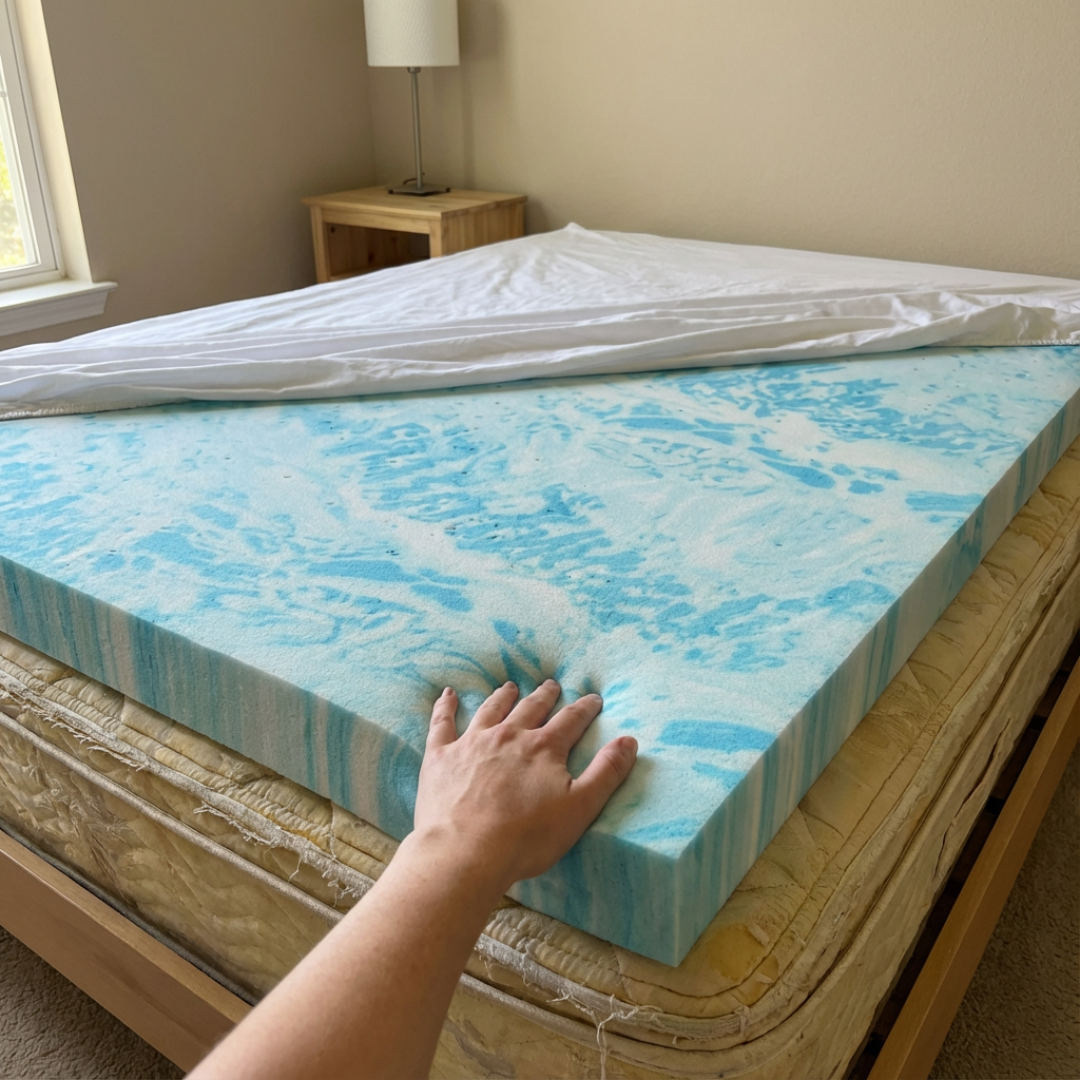
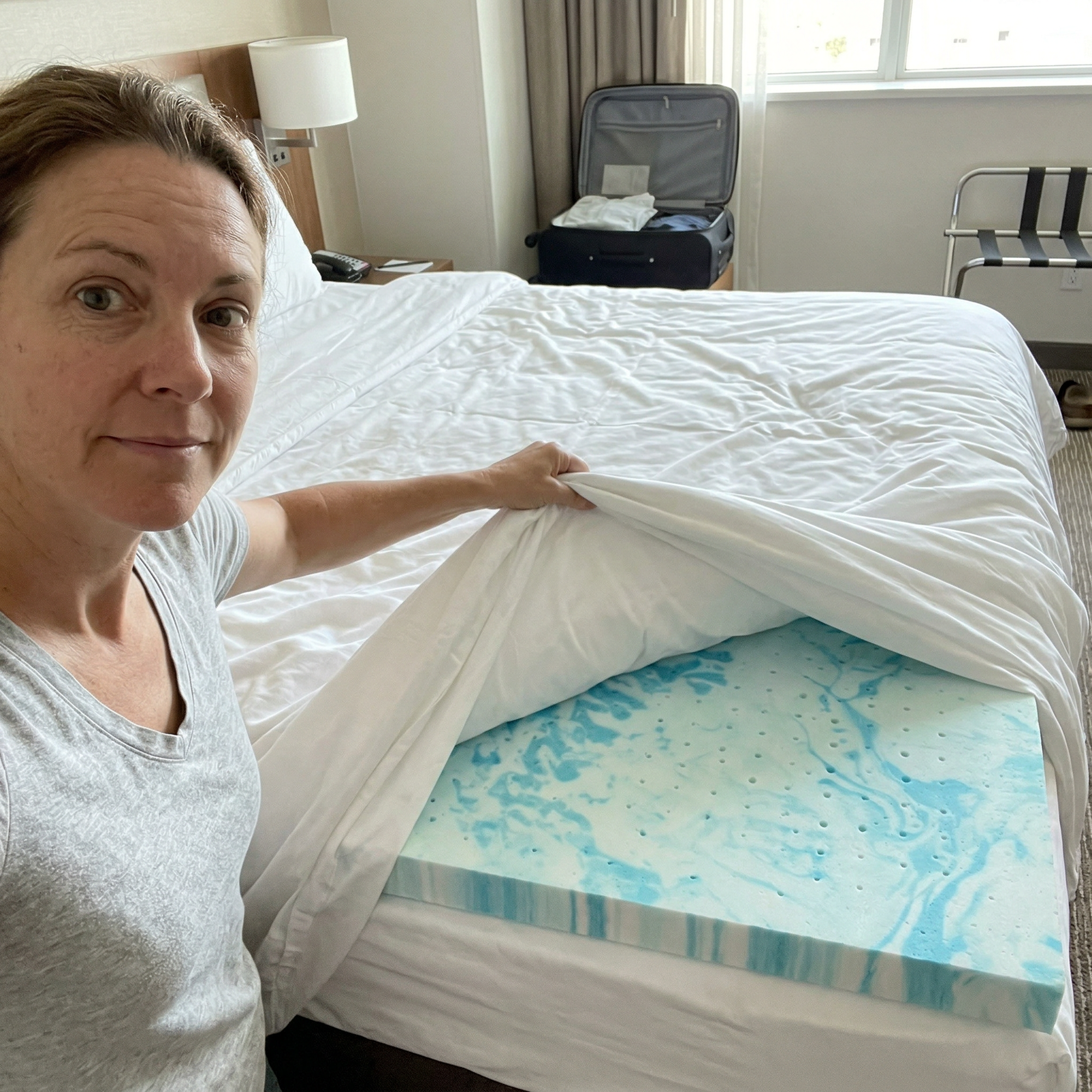
The hotel industry has known the sleep secret for decades. the mattress industry made $8 billion last year making sure you never found out. And I only discovered it after one night in a hotel room. You've had this experience. You arrive at a hotel after a long day. You drop your bag in the corner. You fall onto the bed. And you sleep better than you have in the last six months at home. You wake up without pain. Without stiffness. Without that feeling of having spent the night locked up. You look at the bed and think: "What does this bed have that mine doesn't?" You lift the mattress, look for the tag, write down the brand, go home, search Google. And you find out the hotel mattress costs $3,000. So you go back to your bed and keep waking up in pain. But here's what nobody told you: The hotel mattress isn't the secret. The secret is what they put on top of it. And why they never sold that to you. Let me show you what I found. I wasn't looking for a conspiracy. I was looking for an explanation. I slept well in hotels. I slept terribly at home. My mattress was less than two years old and cost $1,400. I'd switched pillows three times. I'd tried different sleeping positions. Nothing worked. So I stopped reading marketing blogs and started asking different questions. Not "what's the best mattress." But: what do hotels know that I don't? And when I found the answer, I was angry. Not the anger of being deceived. The anger of someone who realizes the answer was hidden in plain sight the whole time. Here's what hotels do that you don't know about: Chains like Marriott, Westin, and Hilton don't replace mattresses when they start to wear out. That would cost them tens of millions of dollars a year. They rehabilitate them. With high-density toppers. Not the $60 toppers you find on Amazon. Commercial-grade toppers, with density at 4 pounds per cubic foot or more — the equivalent of nearly 5,000 GSM of support material per square meter. Westin has the Heavenly Bed. Marriott has Suite Dreams. Hilton has the Serenity Bed. Every one of these brands has a registered bed program. But what they registered wasn't the mattress. It was the layer on top. Now you'll understand why you wake up great in a hotel and miserable at home. It's not the $3,000 mattress. It's what's between you and it. Here's the physics of the problem: When you lie on a low-density surface, your weight distributes pressure to the widest points of your body — hips and shoulders. The surface doesn't give enough. Pressure accumulates. Circulation restricts. Your muscles work all night trying to redistribute that pressure. You wake up stiff. Not because you have a "back problem." Because you spent eight hours in conflict with the surface you slept on. On a high-density surface, the opposite happens. The material has enough mass to adapt to your body's contours without collapsing. Pressure redistributed. Spine aligned. Muscles at rest. This isn't opinion. It's biomechanics. A 2015 study in the Journal of Chiropractic Medicine concluded that sleep surfaces that conform to body shape while maintaining spinal alignment show the best outcomes for back pain. Five-star hotels figured this out decades ago. They just never sold it to you. And there's a very specific reason for that. The reason is economic. And it's uncomfortable to hear. High-density toppers cost more to manufacture. More material per cubic centimeter. More complex process. Lower margin per unit compared to a full mattress. A $2,000 mattress has a 700% markup. A high-density topper has a 200% markup. Which one do you think the industry wants you to buy? Hotels don't have this problem. They buy in volume. They have commercial contracts. They get the right density at the right price. The end consumer never got that option. You were steered toward buying a full mattress when your problem was, and always was, the top three inches. But wait. Why didn't the memory foam topper you already bought work? I bought one too. $70. Great reviews. Felt incredible for the first few weeks. Then it flattened. Turned into a layer of nothing. And started trapping heat. When I researched why, I found the number the industry doesn't want you to know: 2.5 pounds per cubic foot. That's the average density of toppers sold in online retail. It's classified as low-density foam. Within four to six weeks, it loses structural integrity. You're not sleeping on a topper anymore. You're sleeping on a mattress that got slightly softer for a month. The toppers hotels use? 4 pounds or more. Sixty percent denser. More material per cubic centimeter. That's why they last years, not weeks. That's why you leave the hotel rested. It's not magic. It's density. "But memory foam traps heat. Everyone knows that." I believed that too. Because I'd felt it. But here's the layer the industry also hides: Not all foam is the same. Cheap memory foam has a closed-cell structure. The cells are sealed shut. Air can't move through it. Your body heat accumulates with nowhere to go. High-density open-cell foam has interconnected air channels. Heat dissipates. Air flows. The $70 topper I bought? Closed-cell. The toppers hotels use? Open-cell. Same material category. Completely different performance. When you search "memory foam sleeps hot," you don't find this distinction. You find generic articles saying "memory foam retains heat." Why? Because the industry wants you to believe you need a $3,000 hybrid mattress with active cooling. Not an open-cell topper that solves the same problem for a fraction of the price. After all of this, I had a theory. If hotels rehabilitate mattresses with high-density toppers, and if the problem is always the top layer — then a commercial-grade topper should replicate the hotel experience in my own bedroom. So I tested it. I found a commercial-grade topper. Nearly 5,000 GSM of support material per square meter. Open-cell structure with gel particles and precision ventilation channels. The same density range used in five-star hotel mattresses. I put it on top of my $1,400 mattress that wasn't working. First night: I woke up at 4:30AM. Not from pain. To use the bathroom. I went back to sleep. Woke up at 6:45AM with no stiffness. Within a week, I was sleeping through the night. Every night. No waking up locked up. No hip pain. No waking up sweating in the middle of the night. It felt like a hotel bed. Because that's exactly what it is. Let me be clear about what I'm saying: You don't have a mattress problem. You have an information problem. You were told: You need a better mattress (you need a better top layer) Memory foam traps heat (low-density foam traps heat) Toppers are temporary fixes (cheap toppers are — high-density ones are what hotels have used for decades) The hotel experience comes from the mattress (it comes from the commercial topper nobody ever sold you) None of this is based on science. It's based on what's profitable to sell you. Hotels know this. They just never told you. THE SCIENTIFIC SUPPORT: I'm not asking you to trust my experience alone. Here's what the research actually says: The Lancet, 2003: Medium-density surfaces significantly outperform firm mattresses for chronic lower back pain. Journal of Chiropractic Medicine, 2015: Surfaces that conform to body shape while maintaining spinal alignment show the best outcomes for back pain. Journal of Physical Therapy Science, 2016: Sleep surfaces that provide both pressure relief and spinal support simultaneously reduce pain intensity. Ergonomics, 2011: Foam density directly correlates with durability and long-term performance. Low-density foam loses 30 to 40% of its support properties within the first year. The science is clear. The marketing is deliberately unclear. I spent months sleeping poorly at home and well in hotels, without understanding why. I spent $1,400 on a mattress that solved nothing. I switched pillows. Changed sleeping position. Did stretches. Tried to adapt instead of questioning. And I'm not alone. Millions of people wake up in pain every morning believing they have a "back problem" when they have a "surface density problem." They spend fortunes on mattresses that don't fix anything. They stay in hotels, sleep better than ever, come home and can't understand why they can't replicate that feeling. Because the answer was never sold to them. The topper I found is called Marshmallow. It's commercial-grade. Nearly 5,000 GSM of MallowCore™ — our high-density support material — per square meter of surface. Open-cell structure with gel particles and precision airflow channels. The same density range used in the five-star hotel beds you've already slept on and never forgotten. One customer called it "like a Marriott or Hilton premium mattress" — without any prompting from us. It has a 90-day money-back guarantee. I tested it. It worked. But here's what I want you to understand: I'm not telling you to buy this topper. I'm telling you to ask a different question. Because if you sleep well in hotels and poorly at home — the difference isn't the hotel's budget. It isn't the mattress brand. It isn't something only commercial establishments can access. It's three inches of density. That nobody ever offered you. You can keep believing hotels sleep well because of the $3,000 mattress. You can spend another $2,000 on a swap that won't solve anything. You can keep waking up miserable and chalking it up to aging. Or you can ask the question I should have asked years ago: "What does that hotel bed have that mine doesn't?" I asked that question. And the answer changed how I sleep forever. 3
"When the customer asks about GSM, here's what you say." — straight out of the associate training binder.
A former mattress salesman quotes the training manual that taught him how to dodge the one question that determined whether you bought a mattress that worked.
SEE DETAILSLike this ad? Make it yours.
Crush rebuilds this exact creative around your product — your brand, your colors, your offer — in about a minute.