
Active· since Jun 30, 2026
- 78
- days running
- 0
- relaunches
Ad copy
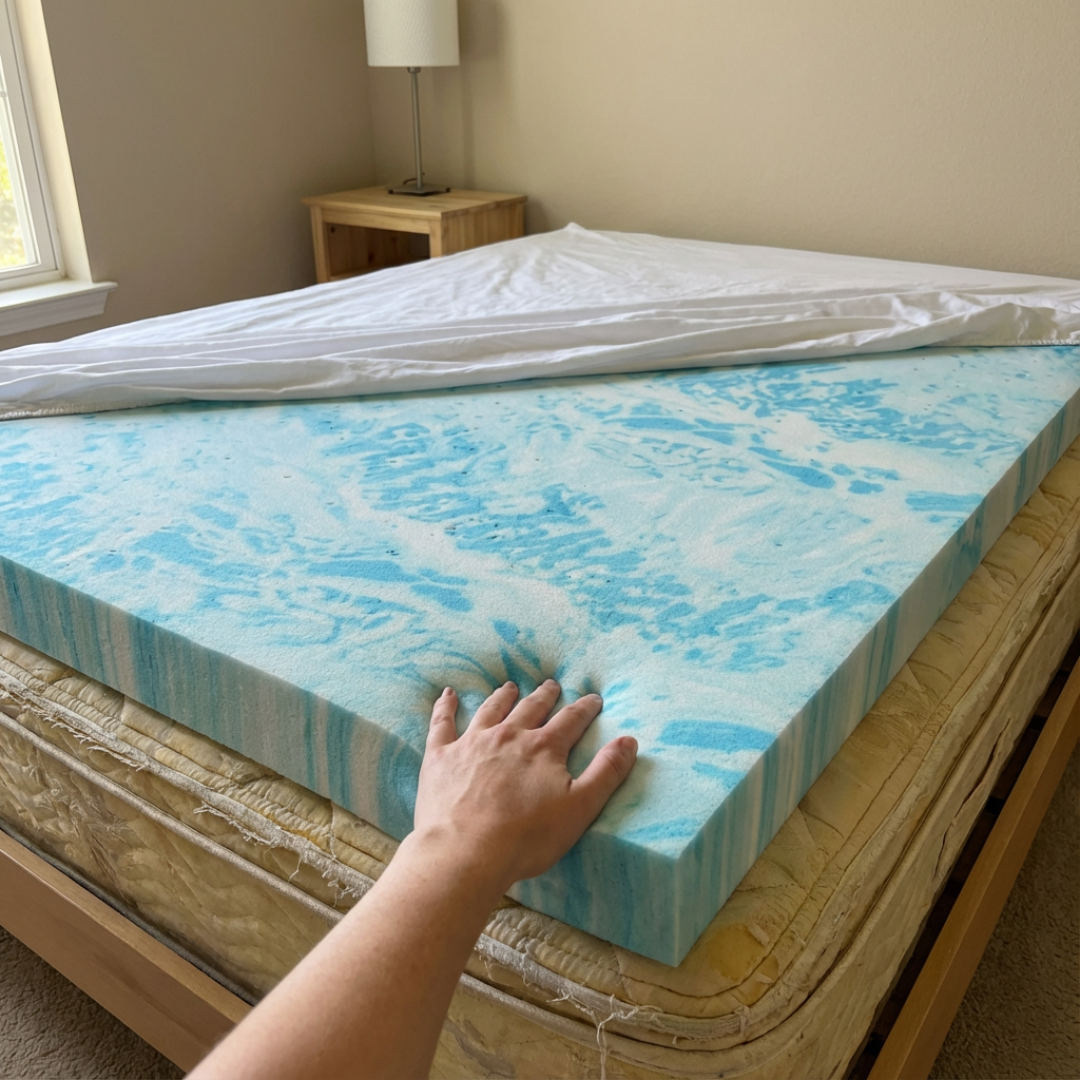
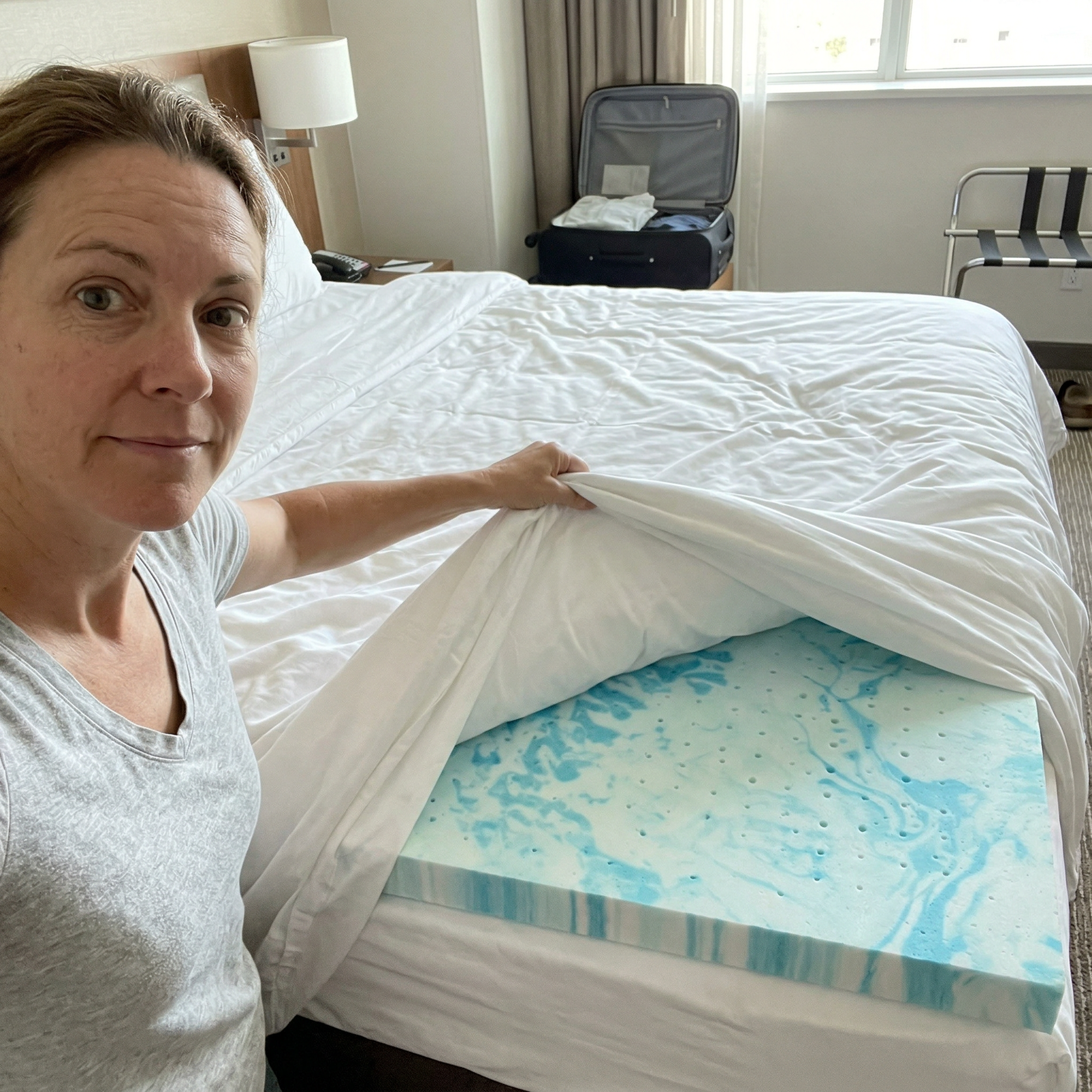
I just spent $9,800 on three different mattresses trying to fix my mornings. And the thing that actually fixed me had nothing to do with any of them. I need to back up because this is going to sound like something I should have figured out years ago. I've been dealing with morning stiffness for about six years. Not the kind where you can't fall asleep. I fall asleep fine. I'm out within twenty minutes most nights. But then the alarm goes off and the first thirty minutes of every morning is damage control. My hips ache. My lower back is tight in a way that takes until ten in the morning to fully loosen. My shoulders feel like I spent the night carrying something heavy. I hold the wall in the shower. I move carefully down the stairs. I don't stretch because I think it'll help. I stretch because if I don't I can barely turn to back out of the driveway. You get used to it. That's the terrible thing. You stop remembering what it felt like to wake up and just get out of bed. You think this is what aging is. You think everyone feels like this and some people just complain less. I'm 57. My doctor calls it normal age-related stiffness. She's not wrong, technically. Take ibuprofen if it's bad. Stretch more. Come back if it gets worse. It's been getting worse for six years. So I did what anyone does. I bought a better mattress. The first one was a $2,400 Casper. Good reviews. The kind of brand that made you feel smart for buying from the internet instead of a showroom. Two years. Still woke up stiff. My sister said maybe I needed something firmer. I got a Purple. $3,100. The grid system was supposed to distribute pressure differently. A year and a half. Still woke up stiff. The hip thing got worse. I saw a Saatva ad twelve times in one week and decided the universe was trying to tell me something. $1,800. "Hotel-quality sleep" was somewhere in the description. I thought maybe this is the one. You can guess what happened. Alongside the mattresses: six months of chiropractic. Weekly adjustments. Nice guy, very enthusiastic about my sacroiliac joint. I'd feel better for a day, then by morning three I was back to the same stiffness. About $2,000 before I accepted it wasn't fixing anything. Foam roller. A $300 ergonomic pillow. A morning yoga routine I kept up for eleven days. Anti-inflammatory diet for three weeks. My husband started asking "how's your back?" the same way you ask someone with a chronic illness how they're feeling. Gently. With low expectations. I'd started to believe this was just my life now. Then my company sent me to a three-day conference in Phoenix and everything changed in a way I did not see coming. The hotel was a Marriott off the highway. Business hotel. Parking lot view. Not a wellness resort. Not somewhere I expected to have any kind of revelation. I checked in, called my husband, went to bed. I woke up at 6:47 AM. I was on my back. I'm never on my back. I sleep on my side because it's the only position that doesn't make the hip thing worse. I moved my legs. Pushed myself up. Sat on the edge of the bed waiting for the tightness to announce itself. It didn't come. I stood up and walked to the window and looked at the parking lot. The stiffness wasn't there. Not the first thirty minutes of damage control. Not the hip ache. I just woke up and I was fine. I thought it was a fluke. First night in a new place, body tired from travel. Night two: same thing. Night three: woke up at 6:30, went to the hotel gym before breakfast. I haven't done that before a full day of meetings in four years because usually bending over in the morning isn't something I do. Three nights. Three mornings without stiffness. In a Marriott. In Phoenix. I should have gone home and been grateful. Instead I stopped at the front desk on my way to check out and asked to speak to whoever managed the hotel rooms. I said I had a question about the beds. They sent me to a woman named Patricia. Director of Guest Experience. Eleven years with Marriott. I told her what happened. Three nights. No stiffness. First time in six years. She nodded like this wasn't the first time someone had said this to her. She asked: "What kind of mattress do you sleep on at home?" I told her. Saatva. Good mattress. Hotel-quality, supposedly. She said: "Do you use a mattress topper?" I said I had tried one. Foam topper from Amazon. Good reviews. Didn't seem to make a difference. Stopped using it. She said: "What was the GSM?" I didn't know what that meant. She took me to a small conference room and pulled something up on her tablet. "GSM is grams per square meter," she said. "It's how much actual support material is packed into a mattress topper. The density. It's the only number that tells you whether the surface can hold your body through the night or whether it compresses under your weight and leaves you sleeping on the mattress underneath." "Most consumer mattress toppers don't list the GSM. They tell you it's plush. Hotel quality. Premium. They show you how soft it looks in the photo. They don't show you the GSM because if they did, you'd see how little material is actually in there." "The industry average for consumer toppers is between 800 and 1,200 grams per square meter. They feel soft when you first get into bed. But under your actual body weight for eight hours, they compress almost completely flat. Your hips and shoulders have nowhere to go. Your muscles spend the entire night bracing and holding positions to protect joints that are slowly sinking through a surface that stopped supporting you hours ago." She paused. "The standard we use in hotel beds at this level is nearly 5,000 GSM. More than double what most consumer toppers come close to." I stared at her. "When the density is high enough, your body doesn't have to do that compensating work. Your pressure points are actually held. Your muscles rest. That's why you went to the gym this morning." She said: "I have this conversation all the time. Guests sleep three nights here and think it's the pillows. They go home and buy a topper that says 'Premium Hotel Quality' on the front and sleep on 900 GSM and wonder why it feels nothing like the hotel." I went back to my room before checkout and pulled up the foam topper I'd bought on my phone. Front of the listing: "Premium Gel-Infused Memory Foam Mattress Topper. Hotel Quality." I looked for the GSM in the product details. Scrolled past the bullet points about cooling. Past the reviews. Past the materials section. Not listed. Not hidden. Not small print. Just absent. I pulled up the Casper topper. The Purple topper. Three others I'd considered at various points. Looked for the GSM on every single one. Four had nothing. One had it buried in a PDF spec sheet at the bottom of the page: 1,100 GSM. That's when I understood. These aren't small companies making accidental oversights. They have engineers and materials scientists and lawyers who write every word of those product listings deliberately. They know their GSM number. They chose not to show it to you. Because if they did, you'd see "900 GSM" right next to "Hotel Quality" and ask why those two things don't match. The entire category would have to compete on density instead of words like plush and premium and cloud-like comfort. They can't win that game. So they removed the number from the game entirely. They need you buying a new mattress every two years. Blaming your back. Blaming your age. Blaming your body. Never asking about the GSM. I almost laughed. Because I'd taken Patricia's advice seriously before I even met Patricia. I'd bought a topper. Multiple toppers at various points. Good reviews. Nice labels. "Hotel quality" on the front. And I'd used them and felt nothing and decided toppers didn't work for me and gone back to buying mattresses. I wasn't buying the wrong mattresses. I was sleeping on the wrong density. I got home that evening and threw away the foam topper. I found a brand that lists their GSM openly. Not hidden in a spec sheet. Not replaced by marketing language. Right there on the product. Nearly 5,000 GSM. The brand is Marshmallow. I ordered it the night I landed. That was eight weeks ago. I wake up and I get out of bed. That's it. That's the whole morning now. No thirty minutes of damage control. No holding the wall in the shower. No moving carefully down the stairs. No ibuprofen before coffee. My hips don't ache. My lower back is loose when I stand up. My husband said something in the second week that I keep thinking about. He said: "You walk differently in the morning." I asked what he meant. He said: "You used to move like everything hurt. Now you just walk." I'd been compensating for so long I'd stopped noticing I was doing it. He'd been watching it for six years and didn't know how to say it until it was gone. On the flight home from Phoenix I'd told a colleague named Renee about everything Patricia explained. She'd been dealing with the same morning stiffness for four years. She ordered a Marshmallow the week after we talked. She texted me ten days later: "I'm furious. I've spent thousands on two new mattresses and a chiropractor for four years. And this was it. A number. Just a number nobody put on the label." Yeah. Same. I found an article that explains the GSM gap better than I can. What it means, why consumer brands don't list it, what the density threshold actually needs to be to make a difference, and the brand Patricia sources for the hotel. I've sent it to basically everyone I know who has ever complained about waking up stiff. Which is most of my friends over 50. I'm still a little angry it took six years and three mattresses and a business trip to Phoenix to find out the answer was a number. Just a number. That nobody selling me beds had any reason to tell me. 👇 Here's the article. It's what I wish someone had sent me before I spent $9,800 and blamed my body for six years.
Like this ad? Make it yours.
Crush rebuilds this exact creative around your product — your brand, your colors, your offer — in about a minute.