
Inactive· since Dec 21, 2025
- 81
- days it ran
- 1
- relaunches
Ad copy
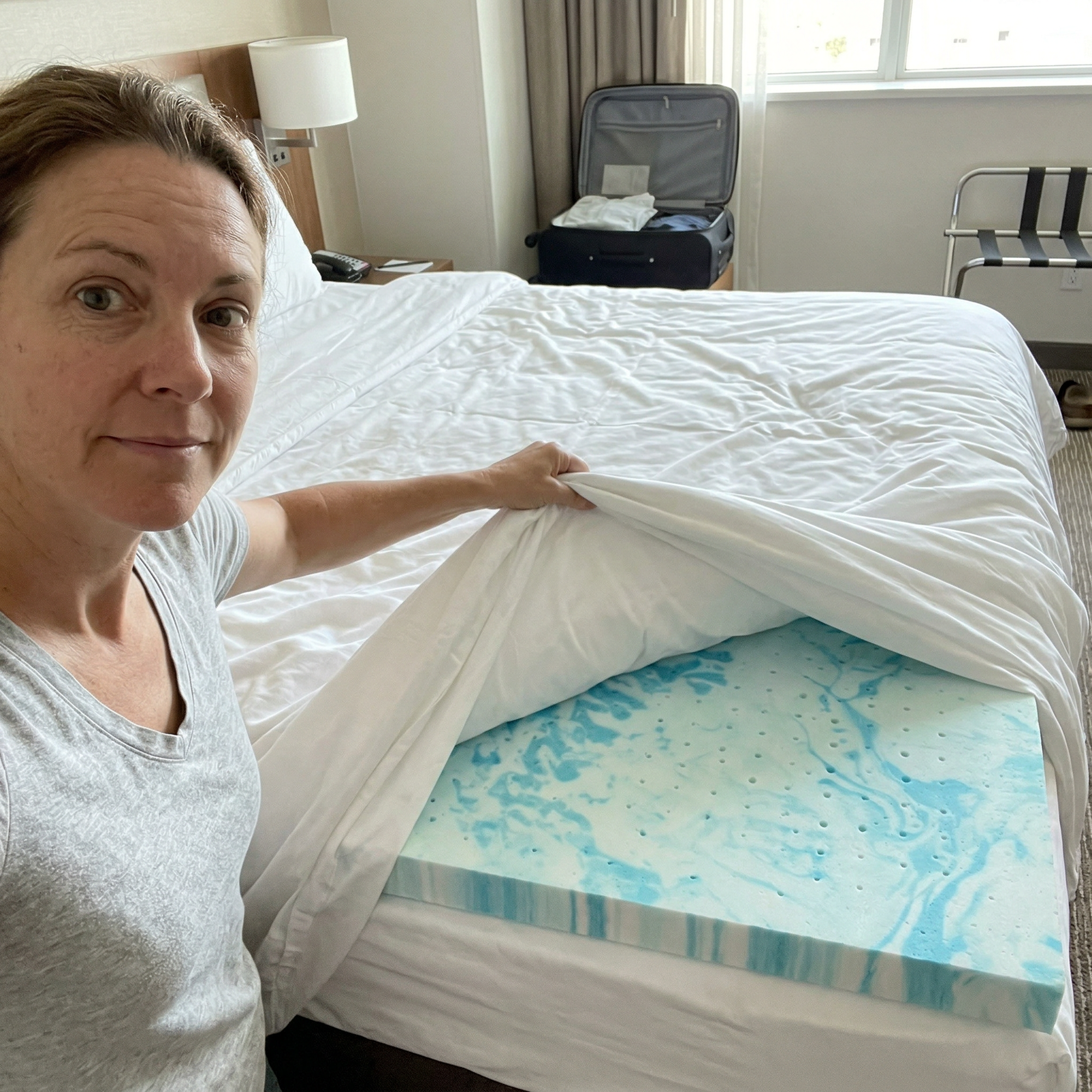
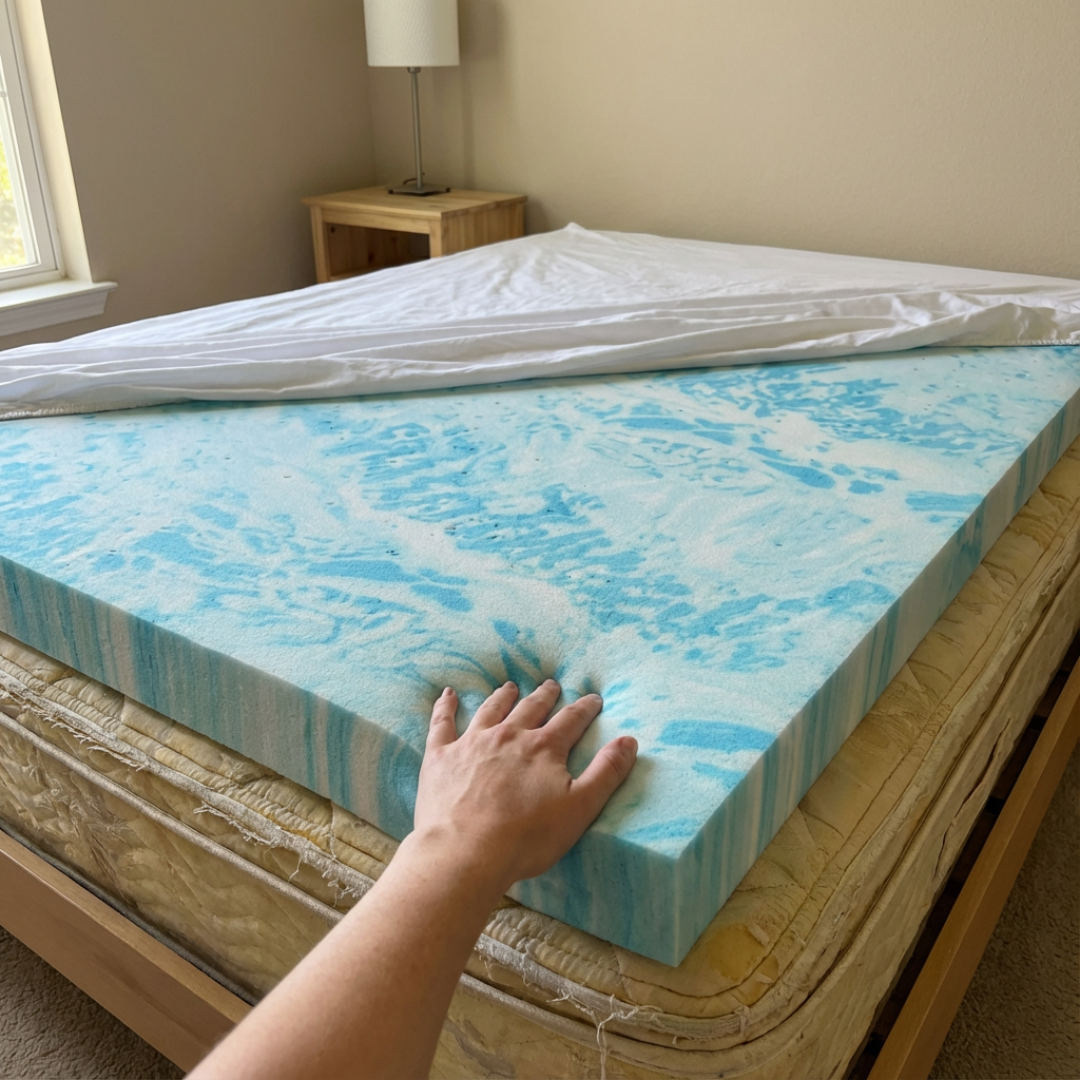
The mattress industry made $8 billion last year selling you a lie about back pain. And I bought it. Literally. For decades, we've been told the same thing: "If your back hurts, you need a firm mattress." It's repeated everywhere. Chiropractors say it. Physical therapists say it. Every mattress salesperson says it. Google "best mattress for back pain" and you'll find 10,000 articles saying the exact same thing. Firm = support. Soft = sagging. More support = less pain. It makes sense, right? It's logical. It's been repeated so many times it feels like scientific fact. There's just one problem: it's not true. And the reason it's not true has nothing to do with science. It has everything to do with what's profitable to sell you. Let me show you what I found. I wasn't looking for a conspiracy. I was looking for answers. I'd been waking up at 4AM every morning for eight months with my back locked up. I'd bought the firm mattress everyone recommended. It made things worse. So I did what you do when nothing makes sense: I stopped reading marketing blogs and started reading research papers. Here's what the actual science says: 1. A 2003 study published in The Lancet tested firm vs. medium-firm mattresses on 313 patients with chronic lower back pain. Result? Medium-firm mattresses reduced pain significantly more than firm mattresses. The researchers concluded: "The recommendation to use a firm mattress for patients with chronic nonspecific low-back pain is not based on solid evidence." Not based on solid evidence. So where did the advice come from? I kept digging. The "firm is better" myth traces back to the 1950s-1970s, when innerspring mattresses dominated the market. Back then, mattresses were either rock-hard or saggy-soft. There was no middle ground. Doctors saw patients complaining about pain after sleeping on old, sagging mattresses. Their advice? "Don't sleep on something soft that sags. Sleep on something firm." That advice made sense... for 1970s innerspring mattresses. But it got repeated. And repeated. And codified. Until it became gospel. And here's the key: mattress companies loved this advice. Why? Because "firm" mattresses are cheaper to manufacture. Less material. Simpler construction. Higher margins. You know what's expensive to engineer? A mattress that's soft where you need it and firm where you need it. That requires multiple layers, different foam densities, precision construction. It's easier and more profitable to sell you "firm" and tell you it's better for your back. Even if it's not. THE ANATOMY OF THE LIE: Let me show you exactly why firm mattresses hurt your back. Your spine isn't straight. It has natural curves. When you lie down, those curves need to be maintained. When you sleep on a firm mattress, here's what happens: Your shoulders and hips press against the surface - These are the widest parts of your body. The firm surface pushes back - It doesn't give. It resists. Pressure builds at those contact points - Your circulation gets restricted. You wake up with aching hips and shoulders. But here's the critical part: Your lower back has a natural curve. When your hips and shoulders are pushed up by the firm surface, there's a gap under your lower back. Your muscles have to work all night to bridge that gap and keep your spine stable. That's the 4AM wake-up. That's the locked back. That's the pain. A firm mattress doesn't support your spine. It stresses it. This isn't my opinion. This is biomechanics. A 2015 study in the Journal of Chiropractic Medicine found that mattresses that conform to body shape while maintaining spinal alignment showed the best outcomes for back pain. Not firm. Not soft. Conforming + supportive. "Okay," you're thinking. "So firm is bad. What about soft?" Soft has its own problem. When a mattress is too soft, you sink. Your hips—which are heavier—sink deeper than your shoulders. Your spine bows. You wake up with that deep, locked-up pain. I felt this on my old mattress. That's why I bought the firm one in the first place. So if firm creates pressure points and soft creates sagging, what's the answer? That's where the industry stops talking. Because the answer isn't "buy a $2,000 mattress." The answer is surface-layer engineering. Here's what they don't tell you: The top 3 inches of your sleep surface determine everything. That's where the pressure points happen. That's where the sagging happens. That's where the heat traps. You don't need to replace your entire mattress. You need to fix those top 3 inches. But there's a catch: most toppers don't work. I know because I tried. I bought a memory foam topper off Amazon. $60. Great reviews. It felt amazing for two weeks. Then it flattened. And it turned into a heat trap. I started researching why. Here's what I found: Most toppers sold online are 2.5 pounds per cubic foot (PCF) density or less. That's classified as "low-density" foam. It compresses quickly. Within 4-6 weeks, it loses structural integrity. You're left with a pancake that does nothing. High-quality toppers—the kind used in commercial/hospitality settings—are 4+ PCF. That's 60% denser. More material per cubic inch. That's why they don't flatten. That's why they maintain support over years, not weeks. But here's the part that made me angry: Hotels have known this for decades. Luxury hotels don't replace mattresses every time one starts to feel old. That would cost them millions annually. They rehabilitate them with high-density, dual-layer toppers. This isn't new technology. It's just not marketed to consumers. Why? Because it's cheaper for you than buying a $2,000 mattress. "But memory foam traps heat. Everyone knows this." I believed that too. Because I'd experienced it. But then I found another layer to the lie: Not all foam is the same. Cheap memory foam is closed-cell. The foam cells are sealed shut. Air can't move through it. Heat builds up against your body with nowhere to go. High-density, open-cell foam has interconnected air channels. Heat dissipates. Air flows. The cheap $60 topper I bought? Closed-cell. The toppers hotels use? Open-cell. Same material category (memory foam), completely different performance. But when you Google "memory foam heat," you don't find this distinction. You just find articles saying "memory foam sleeps hot." Why? Because mattress companies want you to think you need to buy their $3,000 "cooling hybrid" mattress. Not a $200 open-cell topper that solves the same problem. I had a theory. If the science was right—if surface-layer engineering mattered more than the entire mattress—then a high-density, dual-layer, open-cell topper should outperform my $1,800 "orthopedic" mattress. So I tested it. I found a commercial-grade topper. 4lb PCF density. Dual-layer construction: plush comfort layer on top, firm support layer underneath. Open-cell structure. I put it on top of my expensive firm mattress that was hurting me. First night: I woke up at 4:30AM. Not because of pain. To use the bathroom. I went back to sleep. Woke up at 6:45AM. Within a week, I was sleeping through the night. Every night. No 4AM wake-ups. No locked back. No hip pain. No waking up sweating. The topper cost $200. My mattress cost $1,800. The $200 topper fixed what the $1,800 mattress caused. Let me be clear about what I'm saying: You don't have a mattress problem. You have a misinformation problem. You've been told: Firm is better (it's not—it creates pressure points) You need an expensive mattress (you need to fix the surface layer) Memory foam traps heat (cheap, closed-cell foam traps heat) Toppers are temporary fixes (cheap toppers are; dense toppers are what hotels use) None of this is based on science. It's based on what's profitable to tell you. A $2,000 mattress has a 700% markup. A high-density topper has a 200% markup. Which one do you think the industry wants you to buy? THE SCIENTIFIC SUPPORT: I'm not asking you to take my word for it. Here's what the research actually says: The Lancet, 2003: Medium-firm mattresses outperform firm mattresses for chronic back pain. Journal of Chiropractic Medicine, 2015: Mattresses that conform to body shape while maintaining spinal alignment show best outcomes. Journal of Physical Therapy Science, 2016: Sleep surface that provides both pressure relief and spinal support reduces pain intensity. Ergonomics, 2011: Foam density correlates with durability and long-term performance. Low-density foam loses 30-40% of support properties within first year. The science is clear. The marketing is deliberately unclear. I spent eight months in pain because I believed what I was told. I spent $1,800 on a mattress that made things worse. I did physical therapy. Chiropractor. Stretches. Changed my sleeping position. I tried to fix myself instead of questioning the advice. And I'm not alone. Millions of people are waking up in pain every morning, believing they have a "back problem" when they have a "surface engineering problem." They're spending thousands on mattresses that don't work. They're trying to "adjust" to pain instead of questioning why the pain exists. Because they believe the lie. The topper I found is called Marshmallow. It's commercial-grade. 4lb density. Dual-layer construction. Open-cell. Same category hotels use to rehabilitate old mattresses without replacing them. It's not "memory foam" the way you think of memory foam. It's engineered to solve the paradox: soft enough for pressure relief, dense enough for spinal support, breathable enough to stay cool. They have a 30-night trial. I tested it. It worked. But here's what I want you to understand: I'm not telling you to buy this topper. I'm telling you to question the advice you've been given. Because if you're waking up in pain after sleeping on a "firm, orthopedic, doctor-recommended" mattress, maybe the mattress isn't the problem. Maybe the advice is. You can keep believing what the mattress industry tells you. You can spend another $2,000 on another mattress that might not work. You can keep "adjusting" to pain and calling it aging. Or you can ask yourself: "What if everything I've been told is designed to sell me something expensive instead of something that works?" I asked that question. And the answer changed everything.
Like this ad? Make it yours.
Crush rebuilds this exact creative around your product — your brand, your colors, your offer — in about a minute.