
Inactive· since Jul 2, 2026
- 12
- days it ran
- 0
- relaunches
Ad copy
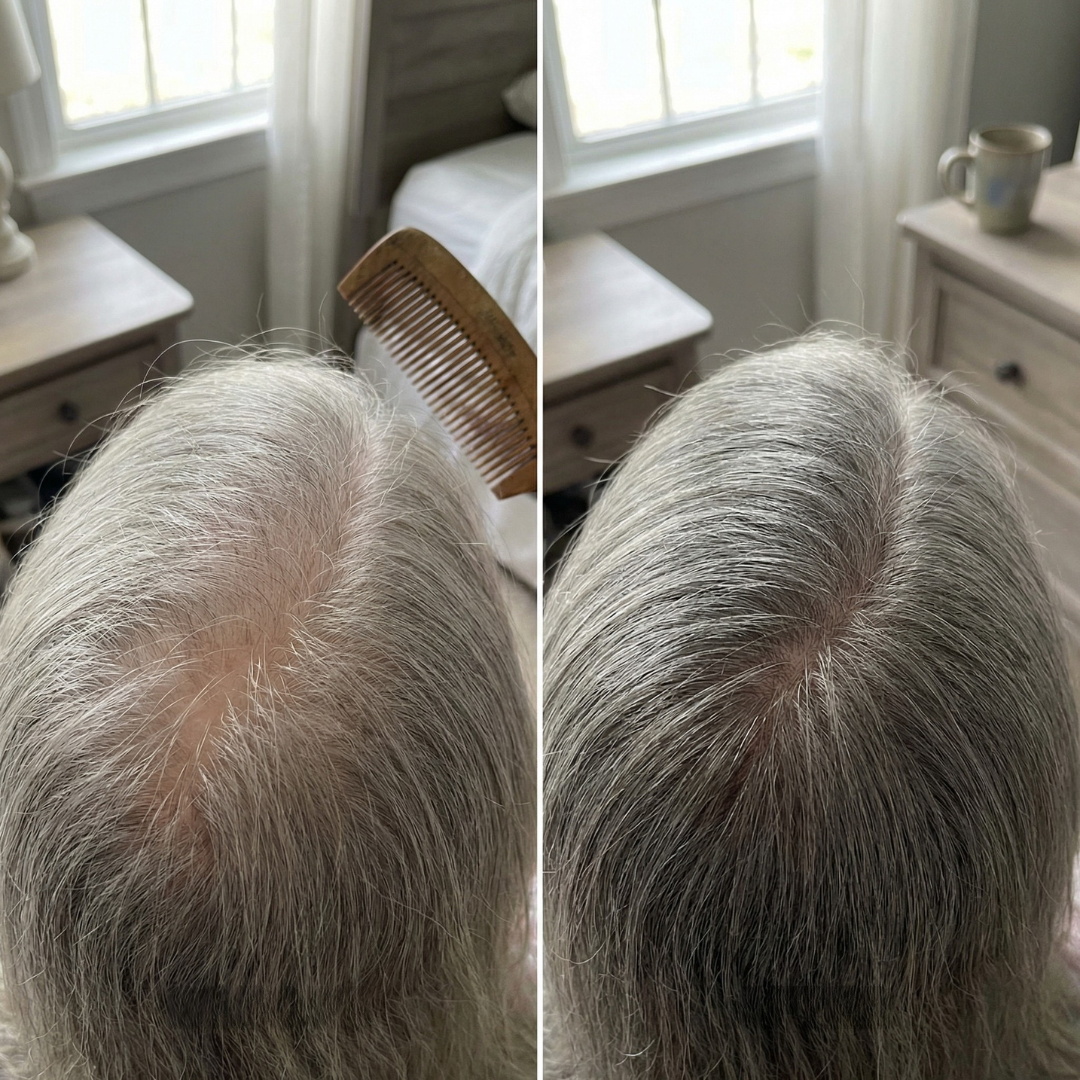
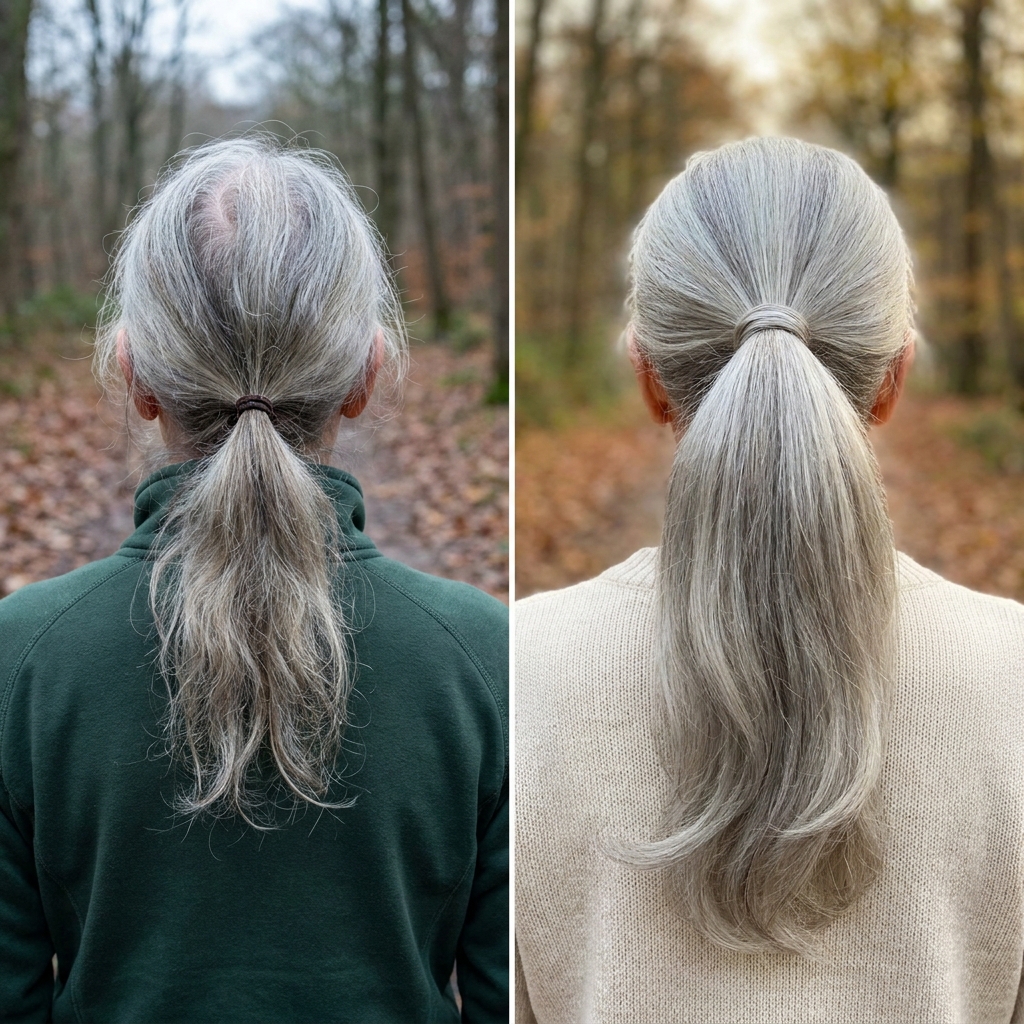
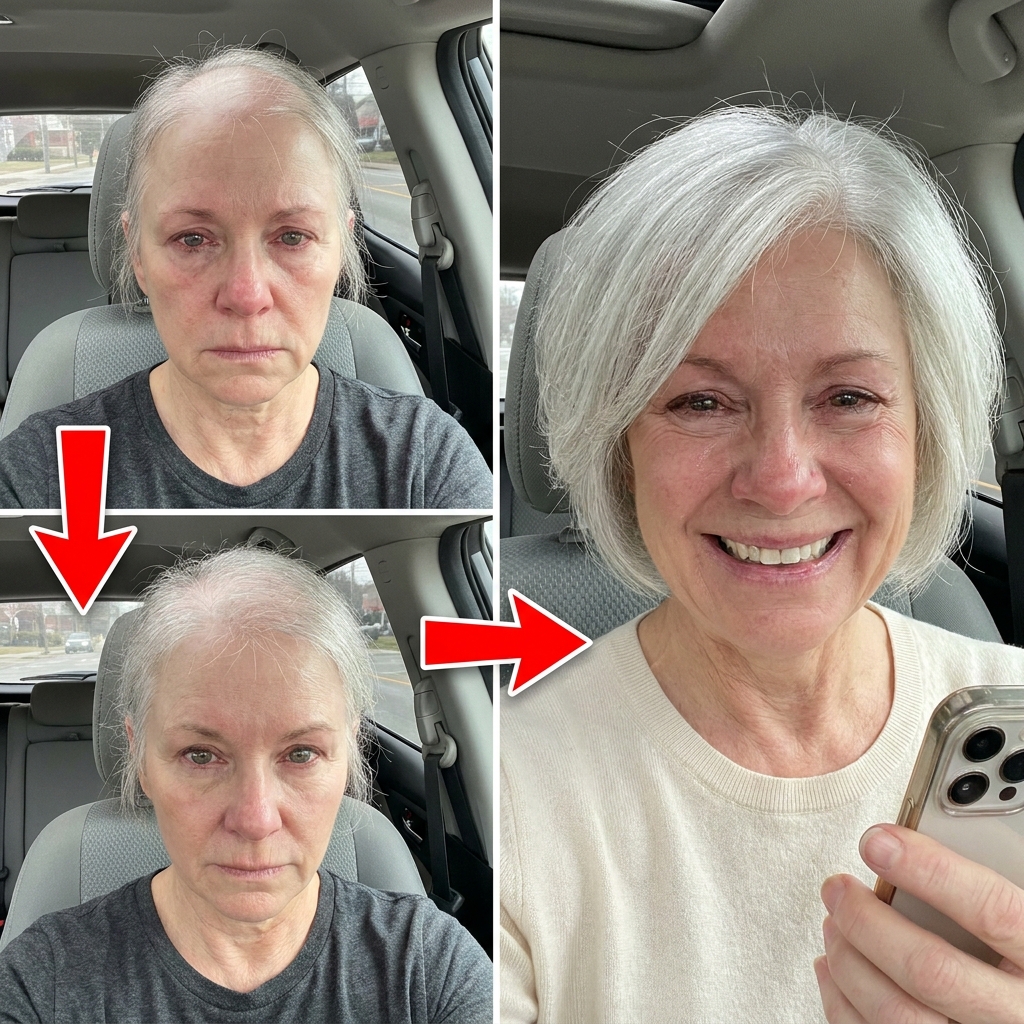
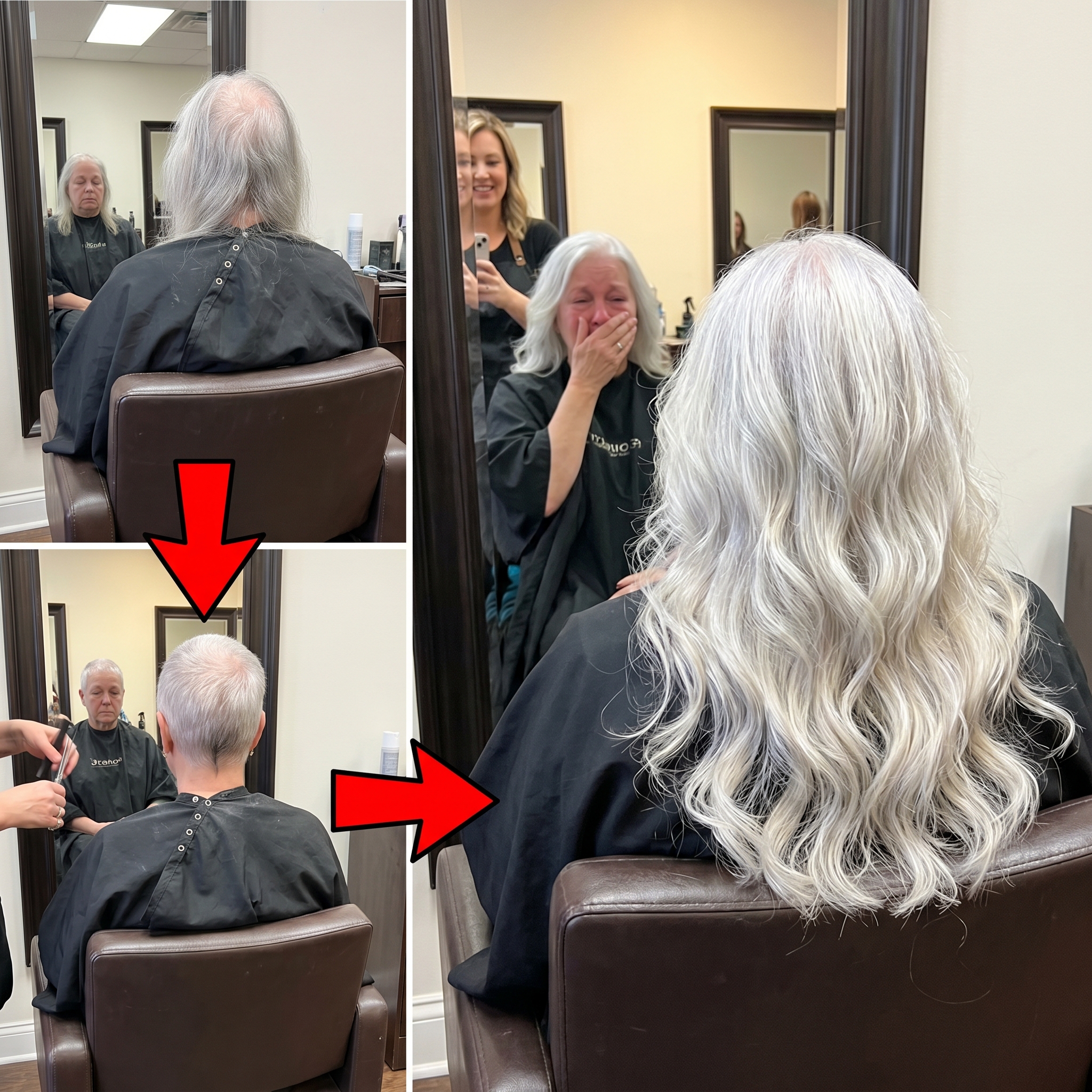
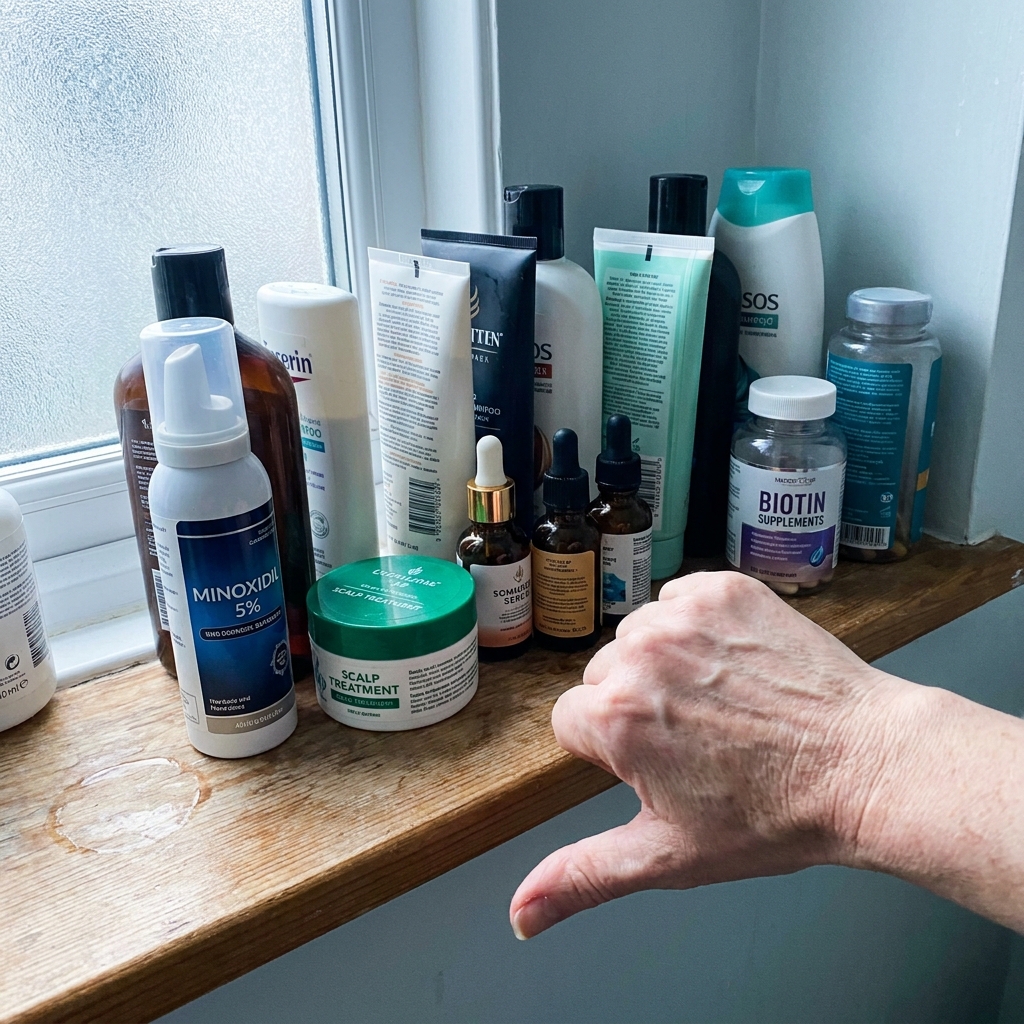
The NHS does not treat female-pattern hair thinning, because it is filed as cosmetic, not clinical. What that leaves you holding is a clear blood panel, a sympathetic shrug, and the quiet job of working the problem out alone. I am 49, a dental hygienist in Carlisle, and I want to start somewhere unexpected, because it is the thing that nearly stopped me before I began. The first time I read about a topical serum for thinning hair, my instinct was that it would arrive from a warehouse in China in a fortnight, in a jiffy bag with a customs sticker, dressed up to look British. I had been burned by that before. If I had genuinely believed this one shipped from China, I would not have touched it with a barge pole. I will come back to that, because it deserves an honest answer rather than a marketing one. But I have to lay the ground first, because the trust question is downstream of a bigger one, which is why a woman like me ends up buying hair products off the internet in the first place. It starts at the part. Mine began widening at about 47, which I now understand sits squarely in perimenopause, though nobody used that word with me at the time. At work I spend my day six inches from a strong overhead light, leaning over patients, and one afternoon I caught my own scalp in the little mirror on the bracket table. The light went straight through to skin where there used to be density. After that I started parting my hair further to the left, then pinning the crown, then booking myself a fringe I did not want. The avoidance was small and constant. I barely recognised myself in the staff photo that Christmas. So I did the sensible thing and went to my GP. She was kind, she was thorough, and she had about eight minutes. She ordered bloods to rule out the conditions the NHS is obliged to act on. Thyroid in range. Ferritin in range. B12 fine. The follow-up was a two-minute phone call. It is probably your menopause, she said. There is not much we can do about that on the NHS. Have you tried a gentler shampoo. I had. She wished me well, and she meant it, and that was the end of the road the health service had to offer. That is the gap nobody warns you about. The NHS runs the bloods, and if they are clear it stops, because female-pattern thinning is classed as a cosmetic concern outside the referral criteria. The decision is not cruel. It is rationing, and I understand rationing. But the practical effect is that a clear blood result becomes a door closing, and you are left standing on the wrong side of it holding a problem the system has just confirmed is yours alone to solve. So I solved it the way everyone does, badly and expensively, one product at a time. Minoxidil first, because it is the only thing with a name everyone recognises. I bought the 5% from the chemist, £29, and started dabbing it on at night. Three weeks in, my hair started falling out faster, not slower. I now know this is the dread shed, the bit no leaflet warns you about properly, where the medicine pushes old hairs out before any new ones come. I did not know that then. I just saw more in the plughole every morning and panicked, and I stopped at five weeks because my scalp had gone tight and itchy and I could not face watching it get worse. Forty-odd pounds, abandoned. Then a private dermatology consultation, which I booked in a fit of resolve. £160 for forty minutes. The diagnosis was useful, the prescription was more minoxidil, and I did not have the stomach to start that again. Then biotin from the health-food shop, three months, about £36. Then a Nutrafol subscription I ordered late one night when I felt particularly low, two months at £75, so £150, and the part kept widening. Then a salon scalp treatment a colleague swore by, £85 for the session and a bottle to bring home. Then a laser cap on a sale, £190, used three nights a week until I stopped believing in it and put it back in the box. I added it up once, properly, sitting at the kitchen table. Comfortably over £500, plus the consultation, plus two years of slowly editing myself out of rooms. And at the end of all of it I had begun to believe what the language quietly implies, which is that my follicles were simply finished, and that this was the new permanent shape of my head. That belief, it turns out, is wrong. And it is wrong in a way that was documented in a 2011 European dermatology study that should have changed how every menopausal woman is counselled, and somehow did not. The follicle does not die. It is silenced. Here is the mechanism, the way someone should have drawn it for me at the start. As estrogen drops through perimenopause, the local DHT activity at the scalp rises. DHT shortens the anagen phase, which is the growth phase of the hair cycle. The follicle spends less time producing and more time dormant. The hair it does make comes through finer and shorter, until it looks as though it has stopped altogether. But it has not stopped. It is silenced. The stem cells are still there. The blood supply is still intact. And because the silencing is happening locally, at the scalp, the interruption has to happen there too. This is the part that reframed everything for me. Topical caffeine has been studied since the early 2010s for exactly this. Applied directly to the scalp, it blocks 5-alpha-reductase at the follicle and extends the anagen phase. Not swallowed, where it would do nothing useful for a follicle. Sprayed where the problem actually is. Mellenza was the first thing I found that had been built around that mechanism rather than around a brand name. A topical scalp serum. Caffeine to block 5-alpha-reductase at the follicle. Polygonum multiflorum root extract, from Korean research on follicle proliferation. Arginine for microcirculation. Biotin to support the integrity of new growth, which I read as a small supporting note rather than the headline. Ginger extract for anti-inflammatory scalp support. You spray it on the crown, the part, and the temples at night. Not a shampoo. Not a volumiser. Not swallowed. A topical wake-up call for follicles that have been chemically quiet for too long. Which brings me back to China, because by now I trusted the science and still did not trust the parcel. So I checked before I bought. It ships from the UK. It arrived from the UK, in two days, with a UK return address I could actually write to. That was the thing that let me start. The mechanism convinced my head. The dispatch convinced the part of me that had been lied to before. I committed to twelve weeks, which I had never given anything, because everything before had been judged dead inside a month. Week 4. Less hair on the pillow and in the plughole. I had been counting, privately, for two years. The count dropped. Week 6. The lengths I still had stopped feeling like thread and started feeling like hair again, that bit of weight you forget you have lost. Week 9. I photographed my scalp in the same bathroom light, same angle, and held it next to one from January. The part was narrower. Along the edge, short, fine new hair coming through, the kind I had told myself the NHS had quietly written off. Month 4. A patient I have seen for years asked, mid-appointment, whether I had done something different, because my hair looked thicker. She was not being polite. She had no reason to be. Month 5. We booked a proper family portrait session, the kind I had been quietly dodging for three years. I sat in the front, under the photographer's lights, and I did not angle my crown away from the lens once. If your GP has told you the bloods are clear and there is nothing the NHS can do, that is the gap reporting in, and it is not the same thing as nothing being possible. The mechanism is real. The interruption is local and topical, not swallowed, and it does not run through the loop you have already exhausted. The link is below. Mellenza ships from the UK, with a 90-day money-back guarantee, a complimentary scalp massager, and an ebook on the menopausal hair cycle. Give it the full twelve weeks. That is the one thing nothing else asked of me, and it was the thing that mattered.
The NHS will not treat your thinning hair
Women's Health · Updated April 2026 Menopause · Hair Routine 7 Mistakes That Make Menopausal Hair Loss Worse, And the 30 Second Ritual 10,000 Women Used to See Regrowth in 8 Weeks Dr. Sarah Mitchell — Women's Health Writer. If you're standing in front of the mirror doing the 3-elastic ponytail t...
LEARN MORELike this ad? Make it yours.
Crush rebuilds this exact creative around your product — your brand, your colors, your offer — in about a minute.