The Neuropathy Companion
The Neuropathy Companion Facebook ad: “Support healthy nerves and circulation every day”
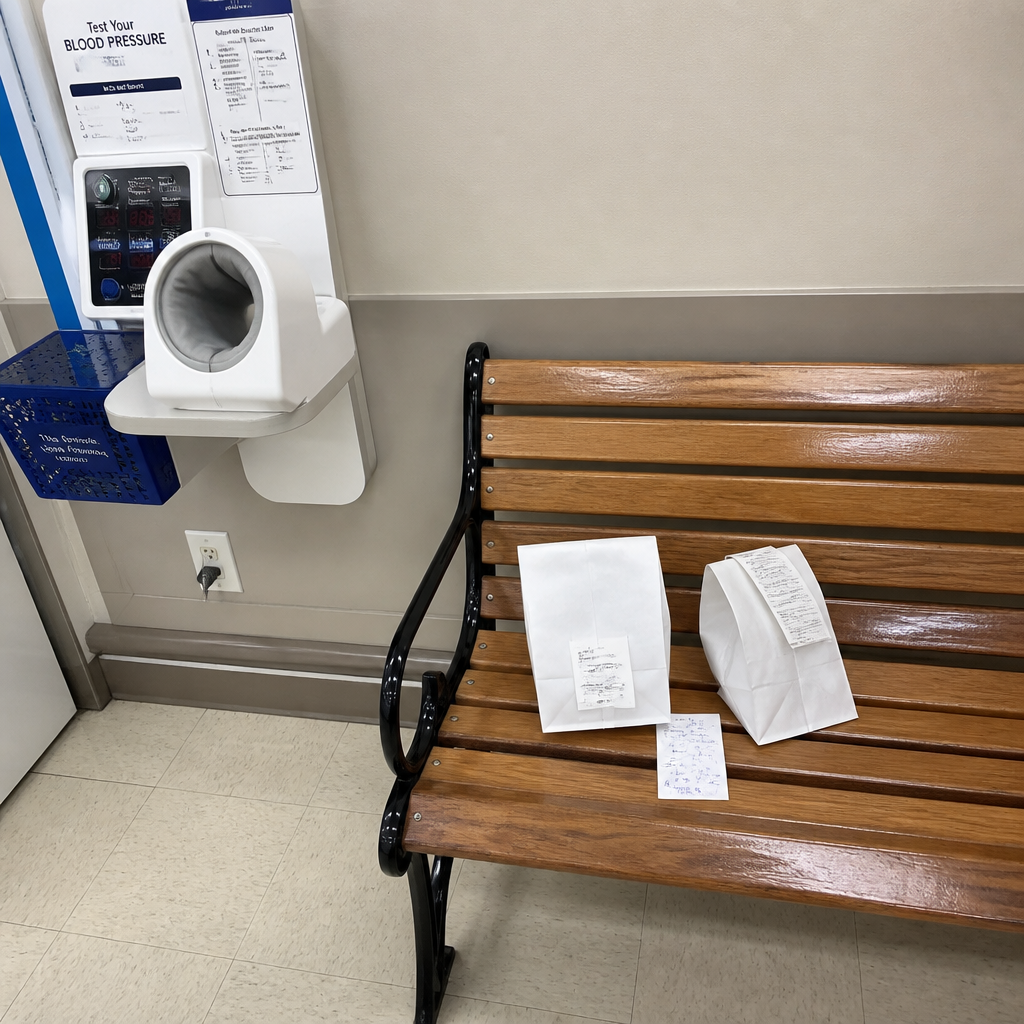
Ran for 5 days, from August 4 to August 9, 2026, the last day Crush saw it.
Run by The Neuropathy Companion on Facebook. Crush is not the advertiser and does not verify its claims. See this ad in Meta's Ad Library(opens in a new tab)
Want an ad like this for your product?
Crush makes new ad images for your product from this ad: your logo, your product photo, your offer.
Trials from $19.95 USD, then $79.95 USD a month. Cancel anytime.
About this ad
- Meta Ad Library ID
- 1379643117597766
- Platforms
- Facebook, Instagram, Audience Network, Messenger and Threads
- Relaunches
- 0
Ad text
She was standing in the supplement aisle of the Walgreens on College Avenue holding two bottles. She put them down. She picked them up. I had been doing the same thing in the same aisle two years ago. I almost didn't say anything. My name is Sharon. I am fifty-two. I am an accountant. I work for a regional CPA firm in the suburbs north of Indianapolis. I have been there twenty-three years. I am not diabetic. My father was. He passed in 2019, at seventy-one, of what my mother and I have come to call the long version of what they put on the death certificate. The death certificate said cardiovascular event. The honest version is that he had been a Type 2 diabetic since 1998, he had been on metformin for the last eighteen of those years, he had been on Gabapentin for the last seven, and the small things in his body that we now know go quietly wrong over a long stretch of years had been quietly going wrong, and one of them was the last one to go. My mother is seventy-four. She has been a Type 2 diabetic for twenty-two years. She started having tingling in her feet about three years ago. I sat in our family room about two and a half years ago with my mother's chart in my lap, and a Word document open on my laptop, and I made a list of every prescription she was on and every supplement she was on and every over-the-counter thing she was on, and I drove the list to her pharmacy and I sat at the consultation window and I asked her pharmacist to tell me what gaps he saw. He saw a few. He told me what he would do, if he were me, was call her doctor and have a longer conversation than the eleven minutes my mother had been getting at her appointments. I did. I had the longer conversation. My mother's doctor was good about it. She added a B12 panel to my mother's bloodwork. She talked to me about the metformin-B12 conversation she had not had with my mother in twenty-two years. That is its own letter. I will not write it here. What I want to tell you about is a Tuesday afternoon in October at the Walgreens on College Avenue. I was there to pick up a prescription for my mother. I had been to that pharmacy for my mother probably twenty times. I knew the layout. I knew the pharmacist by name. I knew which aisle was usually empty. I was walking past the supplement aisle to the back of the store when I saw a woman standing at the far end. She was holding two bottles. One in each hand. Reading the back of the left one. Then the back of the right one. Then the left again. She was, I would have guessed, about sixty-five. Silver hair. A reasonable-looking purse. Reading glasses on a beaded chain. She set both bottles back on the shelf. She stepped back. She looked at them side by side, the way you'd judge a lineup. She picked up the left one again. I was going to keep walking. It wasn't my business. But I recognized her exact body language. Two and a half years ago, in this exact aisle, standing about ten feet from where she was standing, I had done the same thing for forty-five minutes with two different bottles, trying to figure out which one to take to my mother. She turned and saw me looking. I am not the kind of woman who walks up to strangers. I told myself two things, very fast, in my head, before I said anything. The first thing was that she was clearly trying to do for somebody she loved what I had been trying to do for my mother two and a half years ago. The second thing was that nobody had said anything to me, two and a half years ago, and I had wasted three months on the wrong bottle. I said: I'm sorry — can I ask if you're shopping for somebody? She looked at me. She said: my husband. I said: my mother. May I ask what he's looking for? She told me. He was sixty-eight. Diabetic for fifteen years. Metformin the whole time. Gabapentin for the last three. His feet had been worse for the last year. His doctor had told him to keep doing what he was doing. She said: I'm not even sure what I'm looking at. I don't trust the supplement aisle. I said: I'm with you. I didn't trust it either. We ended up on the small bench near the blood pressure machine. Her name was Diane. I told her what I had learned, in the order I had learned it, over the last two and a half years on behalf of my mother. I told her about the conversation about metformin and B12 that I wished somebody had had with my mother twenty-two years ago. I told her about the difference between ordinary folic acid and pharmaceutical-grade L-methylfolate, and why that distinction matters for a lot of people her husband's age. I told her about the difference between methylcobalamin and the cheap form of B12 they sell in the drugstore. I told her that what I had eventually landed on, after three months of trial-and-error with two of the wrong bottles, was a small B-vitamin formula made by a small company called Pre-DX. I told her it is run by a man named Joe Hunter, out of Southeast Healthcare Consultants. I told her the doses are on the label and there are no proprietary blends. I told her my mother's doctor had cleared her to add it. I told her that two and a half years after that conversation at her pharmacy, my mother's feet were quieter at night than they had been in the three years before that, and that my mother had walked the entire driveway with her dog last week — a thing she had stopped doing for a year and a half. Then I told her the most important thing. I said: do not let me sell you on anything. Take down the name. Go home. Read for two weeks. Call your husband's pharmacist before you do anything. Mention it to his doctor. The two minutes that call takes are the most important two minutes of your engagement with any supplement. I am not the woman with your husband's chart. The pharmacist is. The doctor is. I am an accountant in Indianapolis who sat in this exact spot two and a half years ago doing what you have been doing. She wrote the name down on the back of her pharmacy receipt. She underlined it twice. She thanked me. We sat for another minute or so on the bench. Then her name was called. She picked up her husband's prescription. I picked up my mother's. We did not exchange numbers. We probably will not see each other again. I drove home that afternoon thinking about a Tuesday in May, two and a half years ago, when I had stood in that exact aisle holding two of the wrong bottles and nobody had said anything to me. I thought about it for the rest of that week. I sat down on a Sunday evening and started writing this letter. I want to tell you, plainly, why I am writing it. The number of women my age — daughters in our forties and fifties — who are quietly trying to do, for their parents, what I have been trying to do for my mother is large. We sit in our cars in pharmacy parking lots reading labels on bottles for our mothers. We make spreadsheets of our fathers' prescriptions. We have the eleven-minute appointments converted into one of our own afternoons. Most of us are doing it without anybody having said anything to us. I want to be the person who said something to you. Here is what I would have said to myself, in the supplement aisle in May, two and a half years ago. There is a quiet conversation about diabetic neuropathy that is not standard in most eleven-minute appointments. Part of it is about a particular form of folate the body can actually use, called L-methylfolate. Part of it is about a particular form of B12, called methylcobalamin. Part of it is about what metformin does over a long stretch of years to the body's stores of B12. None of this replaces a doctor. None of this replaces a prescription. All of it is in addition. There is a small company called Pre-DX, run by a man named Joe Hunter, out of Southeast Healthcare Consultants. The product is one capsule a day in the morning. The doses are on the label. The forms of the B vitamins are the ones the body can actually use. The company ships from its own pharmacy. If you are a daughter trying to do for your father or mother what I have been trying to do for my mother, please go to their pharmacist first. Call him. Tell him what your parent is on. Tell him what you are thinking about adding. Have the two-minute conversation that the pharmacist is in the best position in the entire health-care system to have with you. Then make your decision. I do not know your parent's chart. I am not the woman to ask. The pharmacist is. The company has a satisfaction guarantee. If you are not satisfied for any reason, they make it right. It is a small-company policy and it is the kind of small-company policy my father would have respected. That is all I have. If you go to the website and they are out of stock — which happens — please do not let that push you into a faster decision than you would have made. They are a small operation. They harvest and bottle on their own schedule. The next batch will come. Thank you for reading this far. I hope, somewhere in the country today, a daughter is sitting on a bench near a blood pressure machine in a pharmacy where her mother's prescription is being filled, and a stranger is leaning over to say a few words to her that nobody has said yet. — Sharon P.S. Diane, if you ever read this — my mother's pharmacist was John, at the small independent on East 56th. He is the one who told me, two and a half years ago, that he wished more of my mother's doctors had been talking to her about the metformin-B12 conversation since 1998. I hope your husband's pharmacist tells you something kind on a Tuesday afternoon the way John told me something kind on a Tuesday afternoon. P.P.S. One capsule. In the morning. With a glass of water. That is the whole protocol for Pre-DX. My mother keeps the bottle on the kitchen counter next to her morning pills. I check it when I visit on Sundays. P.P.P.S. Call your parent's pharmacist. Please. Before you add anything. I am asking. Two minutes on the phone. They have the whole chart. P.P.P.P.S. The thing I noticed in the supplement aisle was Diane's exact body language, because it was mine two and a half years ago. We do not see ourselves clearly when we are doing what she was doing. We see ourselves in other people, in a moment, when we are ready. I hope you see yourself in this letter. I hope you sit down on a bench somewhere with the woman in front of you, the way I sat down with Diane. I hope you have somebody to say two minutes' worth of careful words to. And I hope, in a year, you are at the kitchen counter of your own mother, watching her take a capsule with her coffee, and you notice — without making a thing of it — that the loudest thing in her body is not the bottoms of her feet. I hope that for you.
Where the ad sends people
pre-dx.com
Support healthy nerves and circulation every day
Reverse nerve damage caused by diabetic neuropathy by addressing the cause instead of masking the symptoms. Experience long term relief without the dangerous side effects of hydrocodone, lyrica, neurontin, and cymbalta. Fast results - just one capsule a day with noticeable relief in as little as 60....
Learn more: pre-dx.com(opens in a new tab)