Rosabella
 Facebook ad: “Support stamina and heart health every day”
Ran for 39 days, from September 21 to October 30, 2026, the last day Crush saw it.
Run by Rosabella on Facebook. Crush is not the advertiser and does not verify its claims. See this ad in Meta's Ad Library(opens in a new tab)
Make your own version of this ad
Crush makes it, launches it in your own Meta ad account, scales the winners and pauses the losers.
About this ad
- Meta Ad Library ID
- 1382649317233936
- Platforms
- Facebook, Instagram, Audience Network, WhatsApp and Threads
- Relaunches
- 3
- EU reach
- 687
Ad text
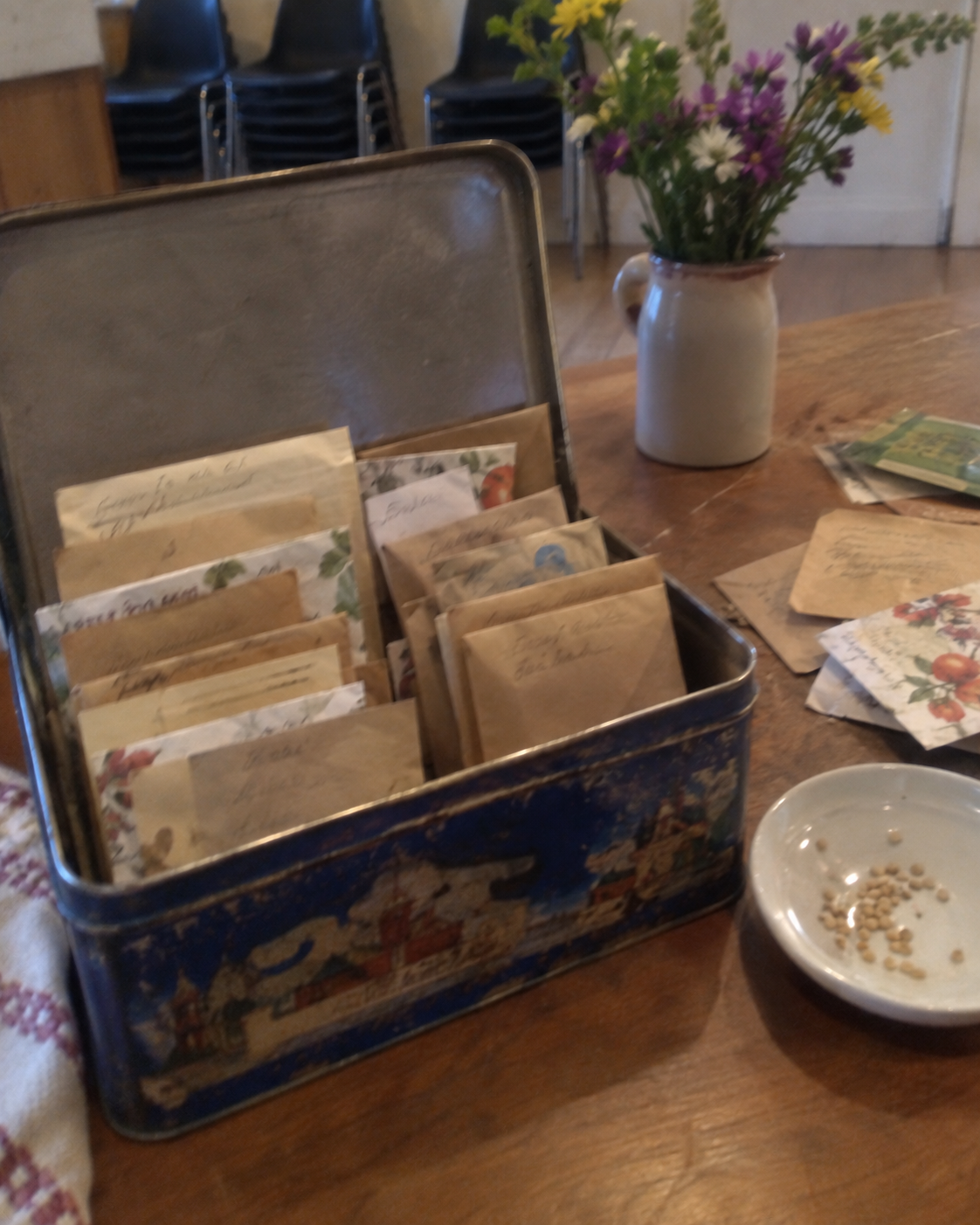
Every Family Has a Margaret — the One Who Likes Everything Put Away Properly, Even When Nobody Can Quite Tell What It Is Anymore. Picture a woman. Call her Margaret. She is not one woman; she is a type, and what follows is a sketch of the type, not a report on anyone. Picture her at seventy, retired three years, standing in the pantry with six matching glass jars lined up in front of her. Margaret likes things tidy, but not in the magazine sense. She is not arranging lemons in bowls or folding tea towels into decorative thirds. Her kind of order is practical. Batteries have a drawer. Receipts have a folder. Spare buttons live in an old biscuit tin. If something has a place, Margaret generally knows where that place is. Packaging has always bothered her. Flour goes into a jar. Rice goes into another. Coffee goes into the ceramic canister beside the kettle. Dishwasher tablets live in a plain white box because Margaret says the cardboard packet makes the cupboard look busier than it needs to. For years, the system worked beautifully, with a few exceptions. There was the afternoon Margaret made tea for six people with what turned out to be salt instead of granulated sugar. There was the Saturday she stood in the garage holding two nearly identical tins of leftover paint, trying to remember which beige belonged to the hallway and which belonged to the spare room. There is also a drawer containing four black charging cables that Margaret will confidently tell you belong to four different things, although identifying the four things has become a family sport. Margaret’s daughter once held up one of the cables and asked what it charged. Margaret studied it for a few seconds and said, “Something we still own.” Nobody was able to prove otherwise. None of this persuaded her to change. The jars stayed blank because blank jars looked cleaner, and the paint tins stayed neat because writing on lids felt untidy. Margaret believed she could remember what was what. Then she met Ruth at a spring seed swap in the village hall. Ruth was a few years older and had brought tomato seeds in ordinary brown envelopes. Every envelope was covered in handwriting: the variety, the year, where the plant had grown, whether it had needed staking, and occasionally a small verdict such as, “Good flavor. Skin a bit stubborn.” Margaret picked one up and smiled. “You write all that on every packet?” Ruth nodded and opened an old biscuit tin containing another two dozen envelopes, none of them matching. “Otherwise next spring I’ve just got seeds.” Margaret laughed, but Ruth had not really made a joke. She was already sorting another packet when she added, “I used to keep everything looking very neat. Then I realized I was spending half my time trying to remember what the neat containers contained.” Margaret looked at the biscuit tin again. Nothing about it was elegant. One envelope had an old electricity-company logo in the corner. Another had been folded from the back of a Christmas card. But Ruth could pick up any one of them and tell you exactly what was inside. That sentence stayed with Margaret. She did not return home and cover the pantry in labels, because that would not have been Margaret. But once somebody gives you a useful sentence, ordinary objects begin supplying their own evidence. There were the two tins of beige paint. There were the four charging cables. There was a freezer container Margaret had confidently described as soup until it thawed into stewed apples. There was also a jar beside the flour that might have contained cornstarch, although the only reliable way to settle the matter seemed to involve cooking with it and finding out. Margaret began to notice that she had been treating two different qualities as though they were the same. Something could look simple without being especially clear. A blank jar might look beautifully ordered and still leave you standing in the pantry wondering whether it contained flour, sugar, or something that merely resembled both. Ruth had not taught Margaret to distrust packaging or suspect that information was being hidden from her. The lesson was much quieter than that. Ruth simply did not see any virtue in having to guess about something that could easily be stated. The name mattered. The amount mattered. The small practical facts mattered because they answered the questions that eventually came up when somebody actually needed to use the thing. Margaret started changing a few things. The paint tins received small labels on the lids. The freezer containers got dates. One evening she sat at the kitchen table with six cream-colored labels and wrote the contents of the pantry jars in her neat schoolgirl handwriting. She did not make the labels large. That would have offended the jars. They were small enough to disappear unless you were actually looking for them, which Margaret considered a reasonable compromise between information and civilization. A month later, Margaret’s daughter opened the cupboard and stopped. “You labeled the jars.” Margaret continued making tea as though nothing unusual had happened. “I did.” “I thought labels ruined them.” Margaret looked at the row for a moment before answering. “I’ve revised my position.” That was the whole change. Margaret did not become a different person. The jars still matched. The pantry was still arranged with more care than anyone else in the family considered necessary. The four unidentified charging cables were still in the drawer because Margaret maintained that somebody would need one eventually. But the granulated sugar had a name now. Sometimes clarity does not need to become a philosophy. Sometimes it is simply useful. That same preference for knowing exactly what you are looking at can be useful when reading a supplement label. Beetroot naturally contains dietary nitrates, and the body converts those into nitric oxide, a molecule that helps support healthy blood flow.* With Rosabella Beetroot, the basic product facts are stated directly. Each serving contains 1,300mg of organic beetroot powder, and one serving is two capsules. That means the 1,300mg amount applies to the full two-capsule serving, not to each individual capsule. The formula has one active ingredient, and the amount of beetroot is stated directly on the label. The suggested use is two capsules once a day. Each bottle contains sixty capsules, providing a thirty-day supply. Rosabella Beetroot is Non-GMO, contains no caffeine, is third-party lab tested, produced under Good Manufacturing Practices, and made in the USA from globally sourced ingredients. The capsule format also means you do not have to wash, roast, juice, or scoop beet powder yourself. Those are product and format facts. They are not a promise about what you will feel or when, or whether Rosabella will become part of your routine. Margaret’s story is not evidence for a product result, and nobody here is going to use it that way. Bodies differ, and an advertisement should not decide your experience in advance. Before adding any supplement, talk to your doctor or pharmacist, especially if you take medication. Rosabella belongs alongside the rest of a routine, including meals, movement, sleep, and whatever guidance you already follow, not in place of any of it. On Amazon, Rosabella Beetroot is rated 4.4 out of 5 across 16,485 ratings as of September 21, 2026. If you are not satisfied for any reason, return the product within 90 days of delivery for a full refund. P.S. Ruth’s point was smaller than it first sounded. A label does not make the thing inside better. It simply means the person holding it does not have to guess what it is. Sometimes that is useful enough. P.P.S. Rosabella Beetroot is organic beetroot powder in capsules, with 1,300mg per two-capsule serving, one active ingredient, the amount stated directly on the label, no caffeine, Non-GMO status, and third-party lab testing. Each bottle contains sixty capsules, providing a thirty-day supply. P.P.P.S. If you are not satisfied for any reason, return the product within 90 days of delivery for a full refund. Individual experiences vary. These statements have not been evaluated by the Food and Drug Administration. This product is not intended to diagnose, treat, cure, or prevent any disease.
Where the ad sends people
get.tryrosabella.com
Support stamina and heart health every day
Learn more: track.tryrosabella.com(opens in a new tab)