
Active· since Jul 15, 2026
- 62
- days running
- 0
- relaunches
Ad copy
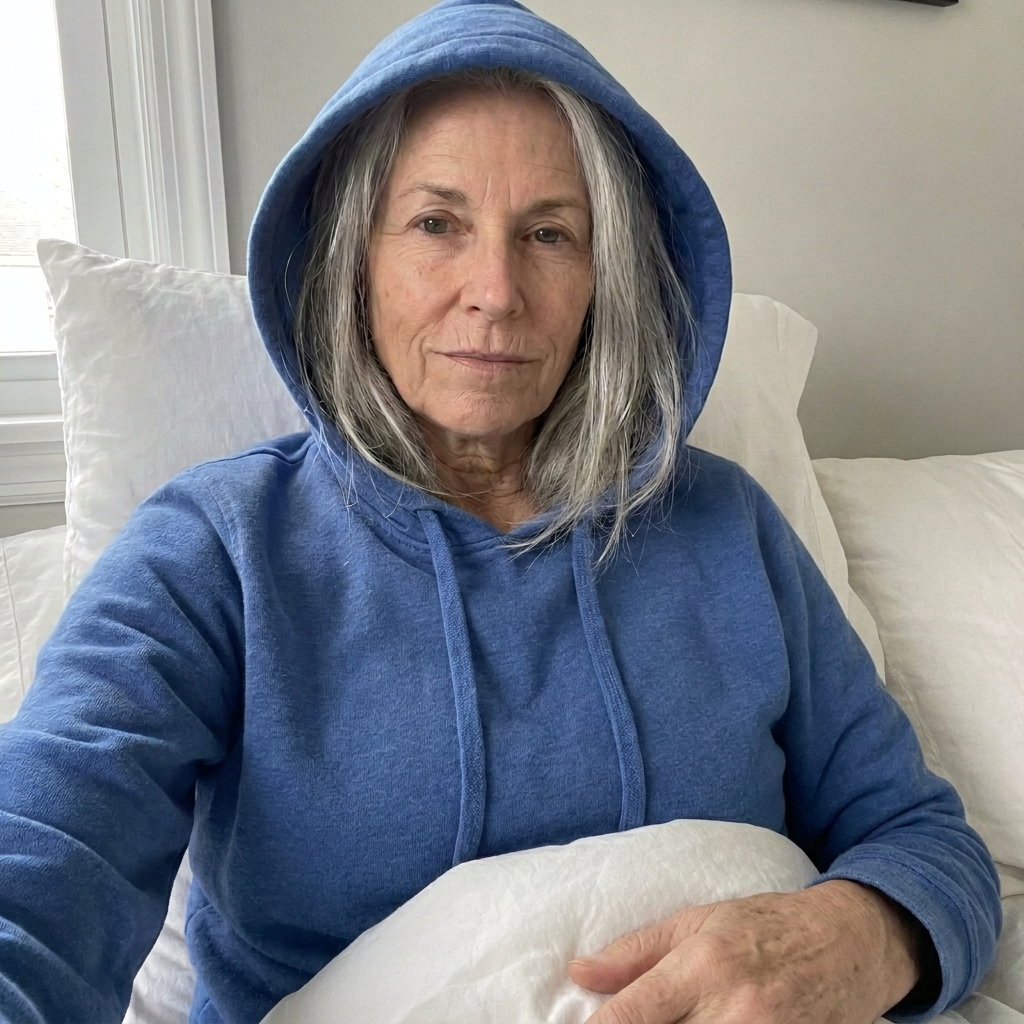
I was diagnosed with menopause and chronic inflammation at 54. I'm 62 now. Turns out my inflammation was never actually inflammation at all. Let me explain. For eight years, I "managed" a version of myself I didn't actually recognize. Eight years of anti-inflammatory diets that gave me a honeymoon and then nothing. Eight years of expensive supplement blends the internet swore by. Eight years of being handed a new label and told, "This is just your body now." I did everything they asked. I cut alcohol. Cut sugar. Cut gluten. Cut dairy. Cut nightshades. I took curcumin. Then fish oil. Then ashwagandha. Then boswellia. Then a cortisol-support blend from a $90-a-month subscription. I tried bioidenticals. Then compounded estrogen cream. Then a testosterone pellet my hormone doctor said would "bring me back." It helped a little. For a while. Then it didn't. When the hormones stopped helping, they sent me to specialists. Rheumatologist first, because my joints felt like I'd aged fifteen years overnight. Then an endocrinologist. Then a cardiologist, because my heart was racing at 3am like I was being chased. Six months. Vials and vials of blood. Thyroid — normal. Autoimmune panel — negative. Lyme — negative. Lupus — negative. Inflammatory markers — elevated, but "not high enough to treat." Cortisol from a single morning draw — normal. "Everything looks fine," my gynecologist said. "This is menopause with chronic inflammation on top. We've ruled out everything else." She handed me a pamphlet on managing hot flashes and told me to come back in six months. I felt like I was losing my mind. The tests were normal. The doctors weren't worried. But every single day, I didn't recognize the woman in the mirror. By the time my alarm went off, I was already done. Eight hours in bed. Four, maybe five, of actual sleep. I'd wake up like I'd been in a fight. By 10am I'd already be running on fumes. Second coffee down. Brain still in cotton wool. By 2pm the wall would hit. Like someone pulled a plug on me. I'd sit at my desk trying to pull up a word as simple as "Tuesday" and come up with nothing. By 4pm I was counting the hours until I could get back in bed. Then the real thing would start. At 3am I'd be wide awake. Heart racing. Drenched. Mind spinning on nothing — an email I'd already sent, a comment my sister made three weeks ago, the shape of the ceiling fan. And the math never stopped. If I had dinner after 7pm, I'd pay for it at 3am. If I had one glass of wine with friends, I wouldn't make it past 1am. If I stayed out past 9, tomorrow was gone before it started. My husband slept straight through it all. I watched him breathing beside me. Same breath. Same spot. Every single night. I resented him for it. Then felt awful about that. Then moved to the guest room so I wouldn't wake him when I finally cried. I stopped saying yes to anything. My daughter's school concert. A coffee with my best friend. A dinner with my sister's family. I missed my niece's graduation because I'd been up from 3am to 6am and there was nothing left in me by noon. I'd be mid-sentence at work and completely lose the word I was reaching for. Basic words. Like "printer." Or "refrigerator." I looked fine on the outside. Inside, I was drowning. And every doctor just nodded. "That's menopause. That's inflammation. Stress makes it worse. Have you tried therapy? Have you tried an antidepressant?" I said no. I'm not depressed. I just can't sleep past 3am. I tried yoga. A cooling pillow. Mouth taping, a sunrise alarm clock, CBT for insomnia, a $300 weighted blanket, and the kind of 10pm phone ban that made me feel like a child. Nothing worked. I started to believe this was just my life now. That I'd spend the next ten years of menopause — and the rest of my life after it — watching everyone else live fully while I just tried to survive the day. Then my neighbor said something no gynecologist ever had. She's a functional medicine nurse. We were talking over the fence one evening. I was telling her I'd given up on saying yes to anything after 7pm because I knew what the night ahead was going to look like. "Has anyone ever actually checked what your cortisol is doing throughout the day?" I almost laughed. "I've had my cortisol tested. It came back normal." She shook her head. "A single morning blood draw doesn't tell you what your cortisol is doing at 2pm when you crash. Or at 3am when your body is supposed to be recovering." "You're telling me my cortisol is behind all of this?" "I'm telling you this might not be menopause making you feel this way. And it might not be inflammation either." She leaned against the fence. "Your cortisol is supposed to peak in the morning. That's what gives you energy to actually function. Then it drops at night so your body can repair itself while you sleep." "But if your cortisol rhythm is broken, your body wakes you at 3am wired. And you never recover during the day." "What could possibly be doing that?" "There's one mineral your nervous system needs to regulate that entire cycle," she said. "And most women in menopause are severely depleted in it." "It's magnesium. Not any magnesium. The only form that actually gets into the nervous system where cortisol lives — magnesium bisglycinate." "It's bonded to two molecules of glycine that carry it across the blood-brain barrier." "That's the form your body can actually use." "When estrogen drops in perimenopause and menopause, your body burns through this mineral two to three times faster than before." "Standard bloodwork doesn't catch it because only 1% of it lives in your blood." "The rest lives in your bones and tissues, where regular labs can't see." "Once you're depleted, your nervous system loses the ability to regulate cortisol." "It stays stuck in a stress response — even when you're lying completely still, even after eight hours in bed, even when there's nothing medically wrong with you." "That's why you're waking at 3am." "That's why you crash at 2pm." "That's why you feel wired and exhausted at the same time." "And that's why your inflammatory markers keep coming back elevated." "The deficiency itself drives inflammation." "Once the mineral is replaced, the inflammation resolves on its own." She wasn't done. "Your gynecologist told you it was menopause." "Your rheumatologist told you it was chronic inflammation." "Nobody checked whether the mineral your nervous system runs on was there." "That's the piece missing from every one of your appointments for eight years." I stared at her. Eight years. Four specialists. Every test normal. HRT that didn't touch the nights. Anti-inflammatory diets that helped a little then stopped. And nobody had ever mentioned it. I went home and couldn't stop thinking about it. I Googled it late that night and fell into a rabbit hole I wasn't prepared for. Studies out of major research universities. Peer-reviewed papers showing that magnesium bisglycinate is the specific form that crosses into the nervous system. That when women in menopause replace it, cortisol rhythm resets. Inflammation markers drop. Sleep returns. Everything downstream starts to recover. Everything my neighbor said checked out. I texted her the next morning. "Okay. Let's say you're right. What do I actually do?" She called me on her lunch break. "Two gummies of magnesium bisglycinate before bed. That's it." "Give it three weeks. Your cortisol needs time to reset." "That's it?" "That's it. Your body has been running on empty for years. Once you replace what's missing, everything else follows." "Where do I get it?" "There's one brand our clinic uses," she said. "SPNutrition. Small company. Real bisglycinate. Third-party tested." "Honestly, it's the only one I've seen work in menopausal women." I looked it up immediately. 30-day money-back guarantee. After eight years of patches and pellets and anti-inflammatory diets and specialists that failed — what was one more try? I started taking two before bed that same week. Night one, I didn't notice much. Night two, I woke up at 3am… and went back to sleep. Not instantly. But enough that I was confused when my alarm went off at 6:30 and I hadn't been up since midnight. That hadn't happened in eight years. By day four, something I hadn't expected. I made it past 2pm without the wall hitting. Just — kept going. Sat at my desk, looked up, and it was 4:30. I'd forgotten to have my second coffee. I sat there staring at the clock, not trusting it. By the end of week two, I pulled up my sleep tracker. Deep sleep — nearly double what I'd averaged over the past year. I sat on the edge of my bed and cried. Then came week three. I woke up before my alarm, lay in the quiet, and waited for it. The 3am dread. The drenched pillow. The racing heart. The heaviness behind my eyes that had greeted me every single morning for eight years. It wasn't there. It just… wasn't there. For the first time in eight years, I felt rested. Not "functional." Not "I can get through the day if nothing goes wrong." Actually rested. For the first time in eight years, I said yes to a dinner after 7pm. I stayed for the whole thing. I drove home and wasn't counting the hours until bed. For the first time in eight years, I made dinner for my family and didn't sit down once. For the first time in eight years, I got through an entire day without a 2pm wall. For the first time in eight years, my husband looked at me and said, "You seem like you again." I still have menopause. I always will. But I didn't have the menopause they told me I had. And I never had "chronic inflammation" at all. I had eight years of a mineral deficiency silently preventing my body from recovering — driving inflammatory markers, breaking my cortisol rhythm, keeping my nervous system in fight-or-flight — while doctors slapped labels on the symptoms and left the cause untouched. And not one person in a white coat thought to look for it. I still take two gummies every night. My cortisol resets. My nervous system finally stops fighting. Ten seconds. Two gummies. A glass of water. That should be standard care for any woman going through what I went through. If you've been told "this is just menopause"… If you've been labeled with "chronic inflammation" and told to manage it… If you've tried the HRT and the anti-inflammatory diets and the supplements and nothing has worked… If your tests keep coming back normal but every day you don't recognize the woman looking back at you… If you wake up at 3am wired, drenched, and wide awake… If you've stopped saying yes to anything after 7pm because you know what the night ahead will look like… I'm not saying you definitely have this deficiency. But I spent eight years blaming menopause and inflammation for something they weren't fully doing, while the real cause was quietly starving my body every single night. The article Dr. Marsh wrote is what changed my life. Five minutes. Read it before you spend another dollar on the wrong label. 👇 Here's the article Dr. Marsh wrote.
Like this ad? Make it yours.
Crush rebuilds this exact creative around your product — your brand, your colors, your offer — in about a minute.