
Inactive· since Dec 4, 2025
- 77
- days it ran
- 2
- relaunches
Ad copy
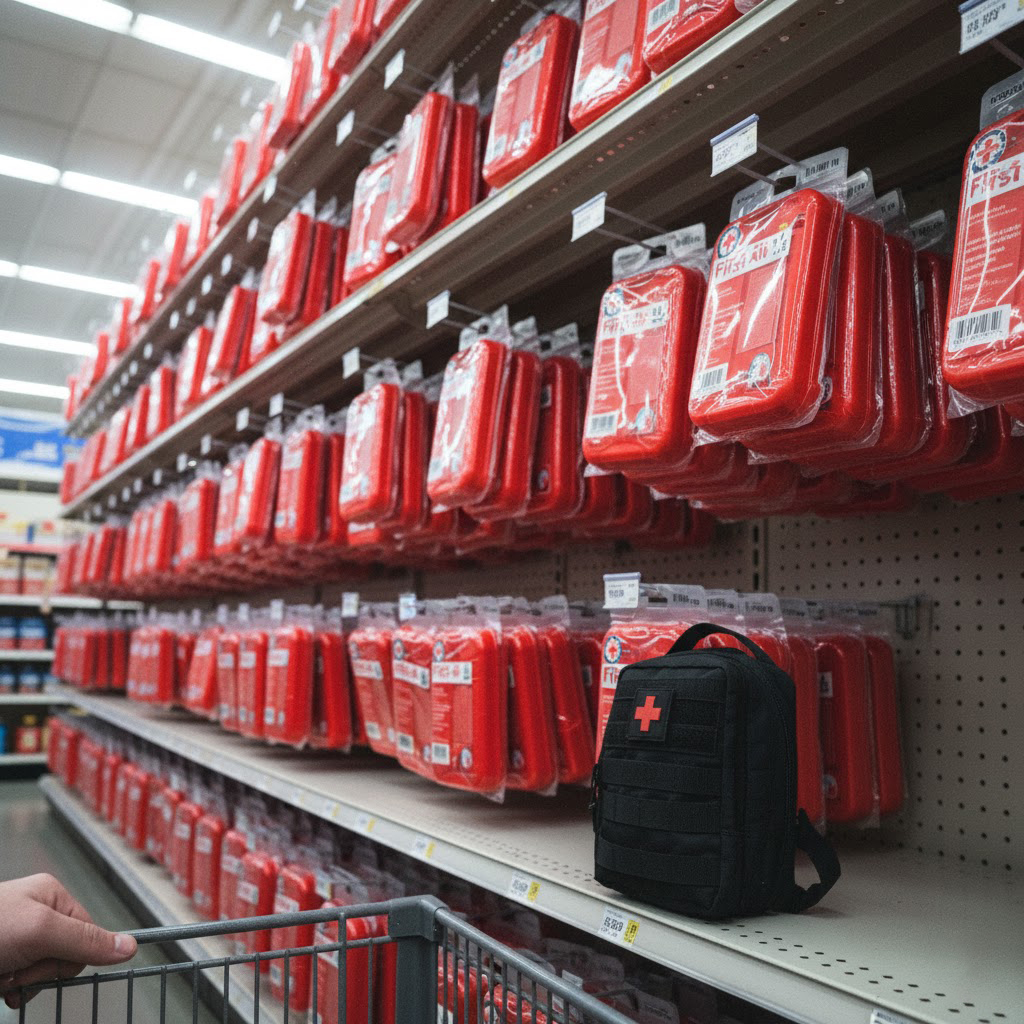
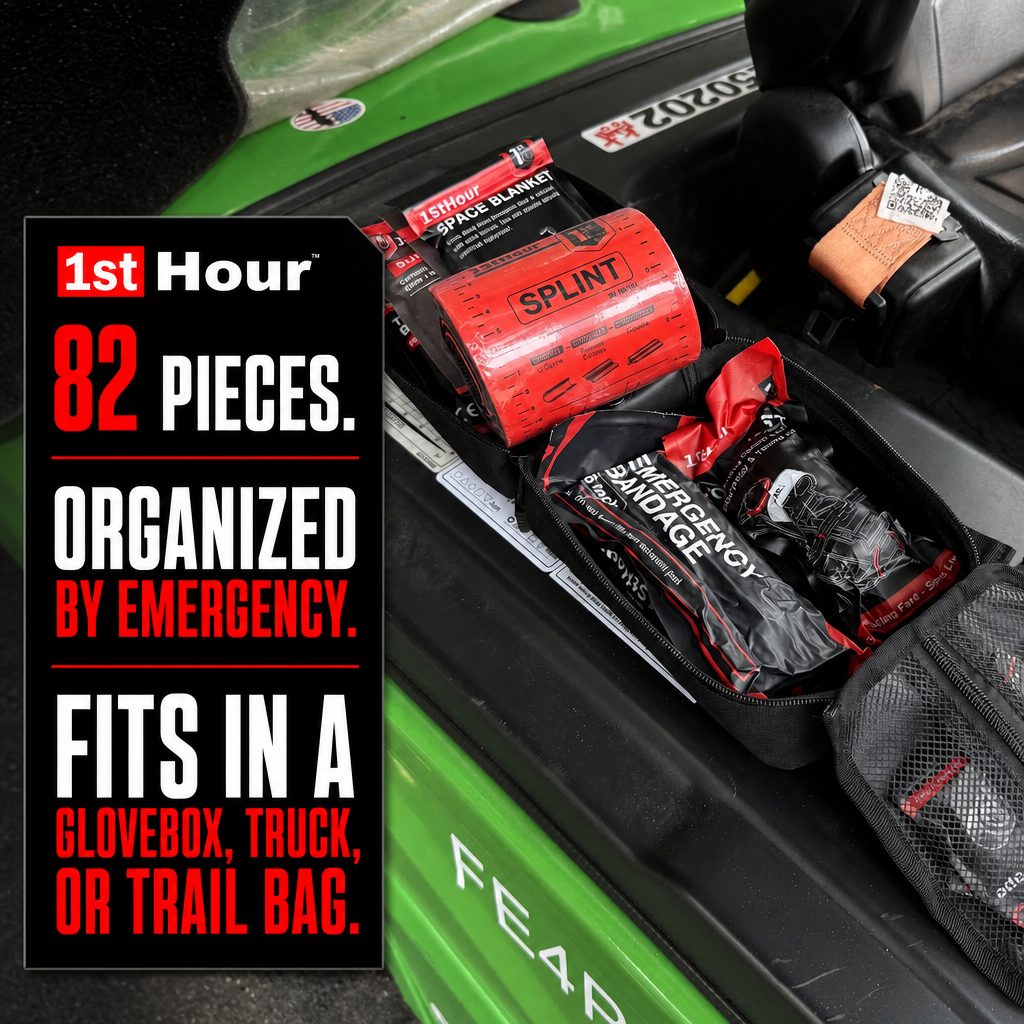
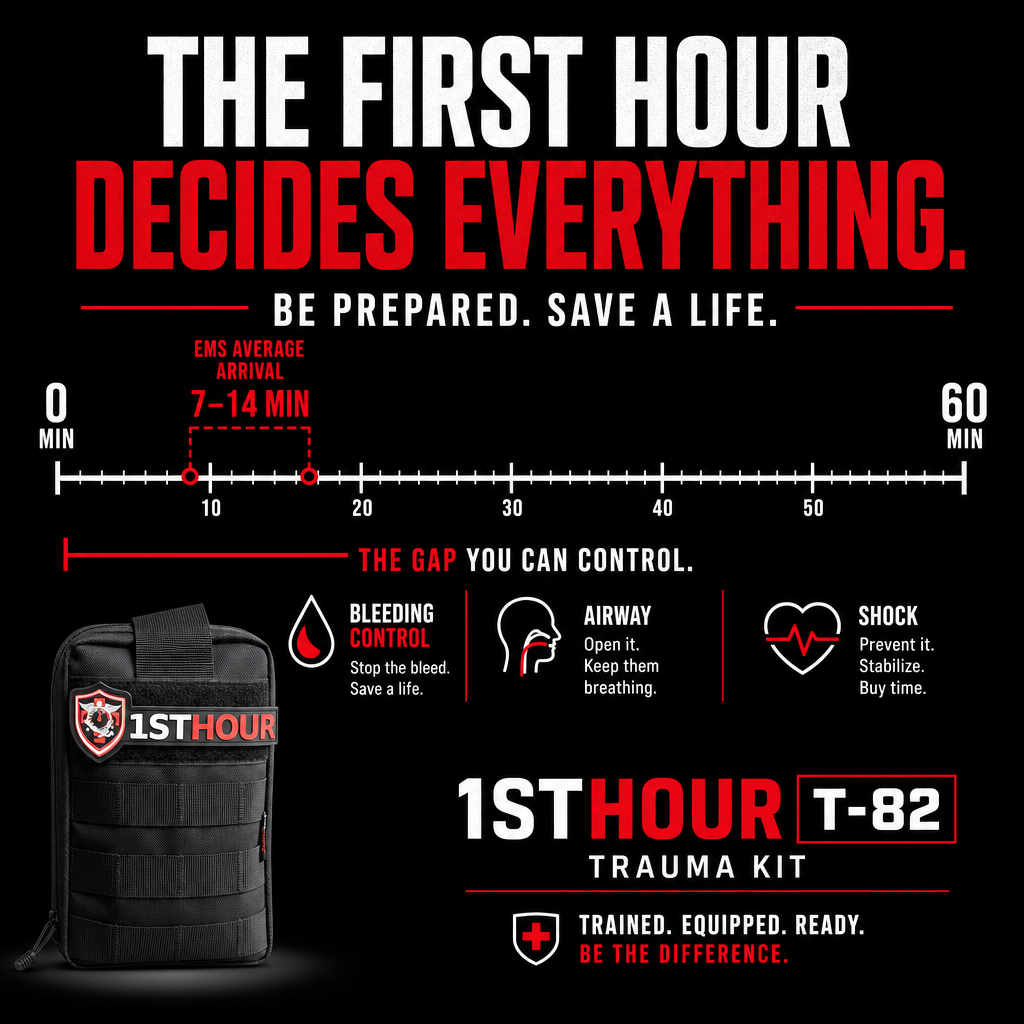
The EMT Training Manual I Found Says Something the Red Cross Won't Tell You. Page 47: "In cases of severe hemorrhage, the survival window closes at 180 seconds. Average urban response time: 12-18 minutes." Someone wrote in the margin: "Pray a civilian doesn't find this page." I found that manual in a box of my father-in-law's things after he died. He was a paramedic for 34 years. I read it cover to cover that week. Chapter 6 was titled: "What We Wish Civilians Knew (But Policy Won't Let Us Say)" The opening line: "The public has been systematically miseducated about their role in medical emergencies. This gap kills approximately 2,000 Americans annually who die from preventable hemorrhage before EMS arrival." I read that three times. Then I thought about what happened to my daughter four months earlier. It was a Tuesday afternoon in October. My daughter Sarah—22, just graduated, working her first real job—called me from her apartment complex parking lot. "Mom, something bad happened." Her voice was wrong. Too calm. Shock. "I was getting groceries out of my car and someone backed into me really fast. I got pinned between the cars. My leg—" "Where are you bleeding?" "My thigh. There's a lot." "I'm calling 911. Keep pressure on it." "I am. I used my jacket. Mom, I can see—I think I can see—" "Don't look at it. Just pressure. I'm five minutes away." I hung up and called 911 while running to my car. The dispatcher was calm, professional, helpful. "Ma'am, help is on the way. ETA is 14 minutes. Keep direct pressure on the wound. If she feels faint, have her lie down." Fourteen minutes. I got there in four. Sarah was sitting on the curb, her jacket pressed against her thigh, her jeans dark red from mid-thigh to knee. The woman who'd hit her was standing there crying, apologizing, not helping. I ran over. "Let me see." "Mom, don't—" I lifted the jacket. The bumper had caught her mid-thigh. Deep laceration, maybe four inches long. Pulsing blood. Arterial. I pressed the jacket back down. "First aid kit. Anyone have a first aid kit?" The crying woman ran to her car. Came back with a white plastic box with a green cross on it. Inside: A roll of medical tape. A single triangular bandage. Ten alcohol wipes. A thermometer. A CPR face shield still in the wrapper. A packet labeled "Gauze Pads (4)" containing four squares the size of drink coasters. Sarah was getting pale. I used all four. They were soaked through in 30 seconds. I grabbed the triangular bandage—thin cloth, meant for making a sling—and pressed that against the wound. Also useless. I pulled off my cardigan and wadded it up. Pressed down hard. Sarah's eyes were closing. "Hey. Sarah. Look at me. Stay awake." I checked my watch. 3:47 PM. The 911 dispatcher called me back. "Ma'am, help is approximately 8 minutes out." "She needs help now." "I understand. Continue applying firm pressure." I will never forget what the next eight minutes felt like. The helplessness. The rage. The bargaining with God. The knowledge that I was doing something but knowing it wasn't enough. At 3:58 PM—eleven minutes after my daughter was hit—the ambulance pulled up. The paramedic took one look at my blood-soaked cardigan and grabbed something from his bag. An orange strap. He wrapped it around Sarah's thigh, about four inches above the wound, pulled it viciously tight, then twisted a plastic rod attached to it. The bleeding stopped. Not slowed. Stopped. Five seconds. He pulled out another item—a thick white bandage with a weird plastic cup thing built into it—and wrapped her leg properly. Then he looked at me. "You did good. Keeping pressure probably kept her from going into shock." I looked down at my ruined cardigan, at the useless first aid kit on the ground, at my daughter who was alive but barely. "That orange thing. What is it?" "Combat Application Tourniquet. CAT-7. Standard issue." "Where do you buy one?" "Most people don't." Sarah was fine. Eighteen stitches. Nerve damage that eventually healed. A scar she'll have forever. But she was fine. Two weeks later, I still couldn't sleep. I'd lie awake replaying those eleven minutes. Seeing her face getting paler. Feeling the wet fabric under my hands. Knowing I'd been useless. One night I gave up trying to sleep, went downstairs, and opened my laptop. 2:30 AM. I started searching. "Why don't civilians have tourniquets" "Combat medic equipment for civilians" "Real trauma supplies vs first aid" I found forums I didn't know existed. Paramedics talking about arriving at scenes where people had bled out while family members stood around with boxes of Band-Aids. Military medics explaining that the single biggest lifesaving advancement in combat medicine was putting a tourniquet in every soldier's personal kit. Survival rate for severe limb hemorrhage went from 55% in Vietnam to 96% in Iraq. Because of one piece of equipment. That costs $34. I found YouTube videos from former combat medics teaching "Stop the Bleed" courses to civilians. One guy said something that broke me: "The trauma kits we carried in Afghanistan contained $70 worth of supplies. Those supplies are why I'm alive, and why the guys I pulled out of a burning Humvee are alive. Everything in that kit is available to civilians. But nobody tells them. Nobody teaches them. And people die in their driveways because of it." I found medical research papers. One from the Journal of Emergency Medicine: "Implementation of hemorrhage control education for the lay public could prevent an estimated 1,800-2,400 deaths annually in the United States." Another from a study at Johns Hopkins: "Survival from severe bleeding injuries is inversely correlated with time to intervention. Each minute of delay increases mortality risk by 12-15%. Civilian bystander intervention with appropriate supplies increases survival rates by 64%." The math was right there. Clear. Undeniable. Damning. People are dying in the gap between when they get hurt and when help arrives. And they don't have to. But here's what made me sick: I went to CVS the next morning and walked the first aid aisle. Twelve different first aid kits. Ranging from $15 to $65. "Family Size." "Outdoor Kit." "Deluxe 250-Piece." I opened every one. Not a single kit contained anything that would have helped Sarah. Not one tourniquet. Not one pressure bandage. Not one trauma dressing. Just gauze squares, Band-Aids, antibiotic ointment, and tape. Designed for paper cuts. I went home and looked at the first aid kit in my own bathroom cabinet. The one I'd owned for six years. The one I thought meant I was prepared. I dumped it out. 173 pieces. 94 adhesive bandages 28 alcohol wipes 18 antibiotic ointment packets 12 pain reliever tablets 8 gauze pads (2" × 2") 6 sting relief pads 4 safety pins 1 CPR barrier 1 emergency blanket 1 scissors I'd spent $42 on a box of nothing. I started looking for real trauma kits. The kind with equipment that actually stops bleeding. The kind that paramedic pulled out of his bag. First place I looked: Amazon. "Trauma kit" returned 1,400 results. Most of them were garbage. Kits advertising "military-grade" that contained tourniquets reviewers said snapped when you twisted them. Counterfeit C-A-T tourniquets that looked real but failed under pressure. One review stuck with me: "Used this during a hunting accident. The windlass rod broke when I tried to tighten it. My brother almost died. This is not a real CAT tourniquet. It's a $6 knockoff in a $45 kit. Reported to Amazon. They did nothing." Then there were the real tactical suppliers. Websites that looked like they were designed in 2003. Selling individual components at professional prices. I priced out what the paramedic had used: Combat Application Tourniquet Gen 7: $34 Israeli Emergency Bandage: $12 Trauma shears: $16 QuikClot Combat Gauze: $42 Pair of HyFin chest seals: $28 Gloves, tape, airways, needles: $35 Total: $167. Plus I'd need a bag to organize everything. And I'd need to figure out how to organize it so I could find things in a panic. And I'd need to make sure I was buying real components, not counterfeits. Then I found the lifestyle brands. Beautiful websites. Emotional marketing. Instagram-ready photos. One of the biggest ones sold a kit for $170. I read through the components list carefully. The tourniquet wasn't a CAT. It was something called a RATS tourniquet—a rubber strap you're supposed to tie and tuck. I looked it up. Not recommended by the Committee on Tactical Combat Casualty Care. Extremely difficult to apply correctly. Multiple failure reports. But it looked cool. And it was compact. They'd chosen form over function. Marketing over medicine. I almost gave up. Almost decided to just buy the individual pieces and figure it out myself. Then my sister-in-law sent me a link. "My coworker's husband is a flight paramedic. He told her about this. Said it's what he keeps in his personal car." The link was to something called the Trauma First Aid Kit Pro. I was skeptical. Another kit promising everything. But I clicked through. The first thing I saw was different. They didn't show me a closed bag with "75+ PIECES!" stamped on it. They showed me every single component. Laid out. Photographed individually. With the actual brand names visible. Not "includes tourniquet." "Includes North American Rescue C-A-T Tourniquet Gen 7 (NSN 6515-01-521-7976)"—the actual military stock number. Not "pressure bandages." "Israeli Emergency Bandage (IDF) 4-inch and 6-inch"—the actual product, from the actual Israeli manufacturer. Not "hemostatic gauze." "QuikClot Combat Gauze LE (Z-Fold, 12ft)"—the exact product code that military medics carry. This wasn't a kit with trauma supplies. This was a trauma kit. Built by people who understood what that meant. But here's what made me buy it: They'd solved the problem that almost killed my daughter. In an emergency, you don't have time to think. Your hands shake. Your brain doesn't work right. You need to see everything. You need to grab what you need in two seconds. The Trauma First Aid Kit Pro opens completely flat. Like a book. Everything is color-coded. Bright orange pouch for the tourniquet. Red for pressure dressings. Clear for airways. Large labels. Simple icons. Organized by injury type, not by item type. You can find what you need even when you're panicking. They'd designed it for the moment your daughter is bleeding out in a parking lot and you can't remember what a tourniquet looks like. I ordered two. One for my car. One for my house. They arrived in three days. I opened the car kit in my driveway and went through every single item. I found the tourniquet in four seconds—bright orange pouch, right on top. I practiced opening it. Practiced the hand positions. Practiced twisting the windlass. I found the Israeli bandage. Practiced threading it through the pressure applicator. Fifteen minutes. That's all it took to familiarize myself with everything. Fifteen minutes that could have saved eleven minutes of hell.
Read If You Have A First Aid Kit At Home
Prepare for emergencies with the Tacright Trauma First Aid Kit, designed for rapid response in critical situations. This compact and durable kit includes all the essential tools needed for trauma care, making it perfect for outdoor enthusiasts, tactical professionals, and anyone who values safety an...
LEARN MORELike this ad? Make it yours.
Crush rebuilds this exact creative around your product — your brand, your colors, your offer — in about a minute.