
Inactive· since Jun 9, 2026
- 35
- days it ran
- 0
- relaunches
Ad copy
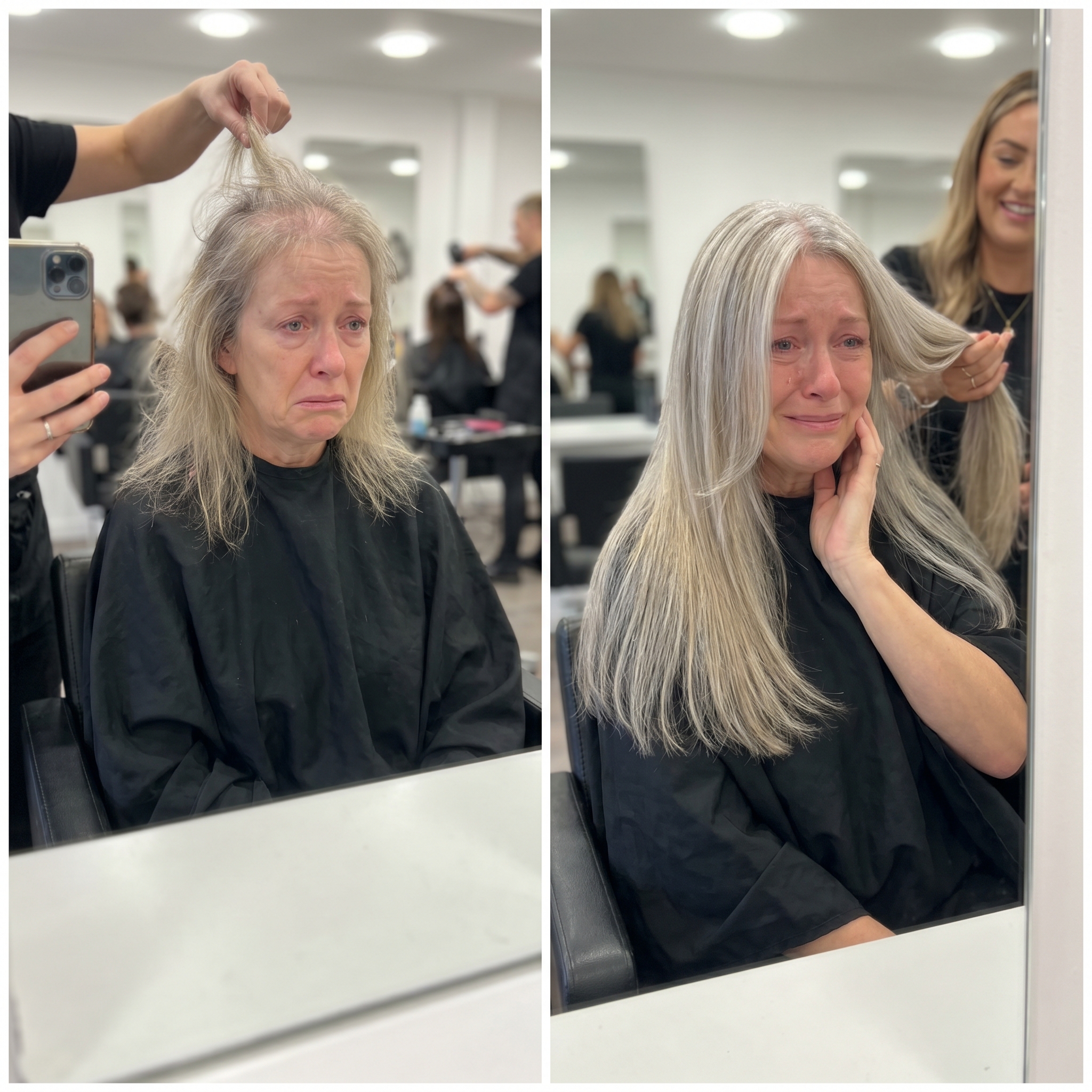
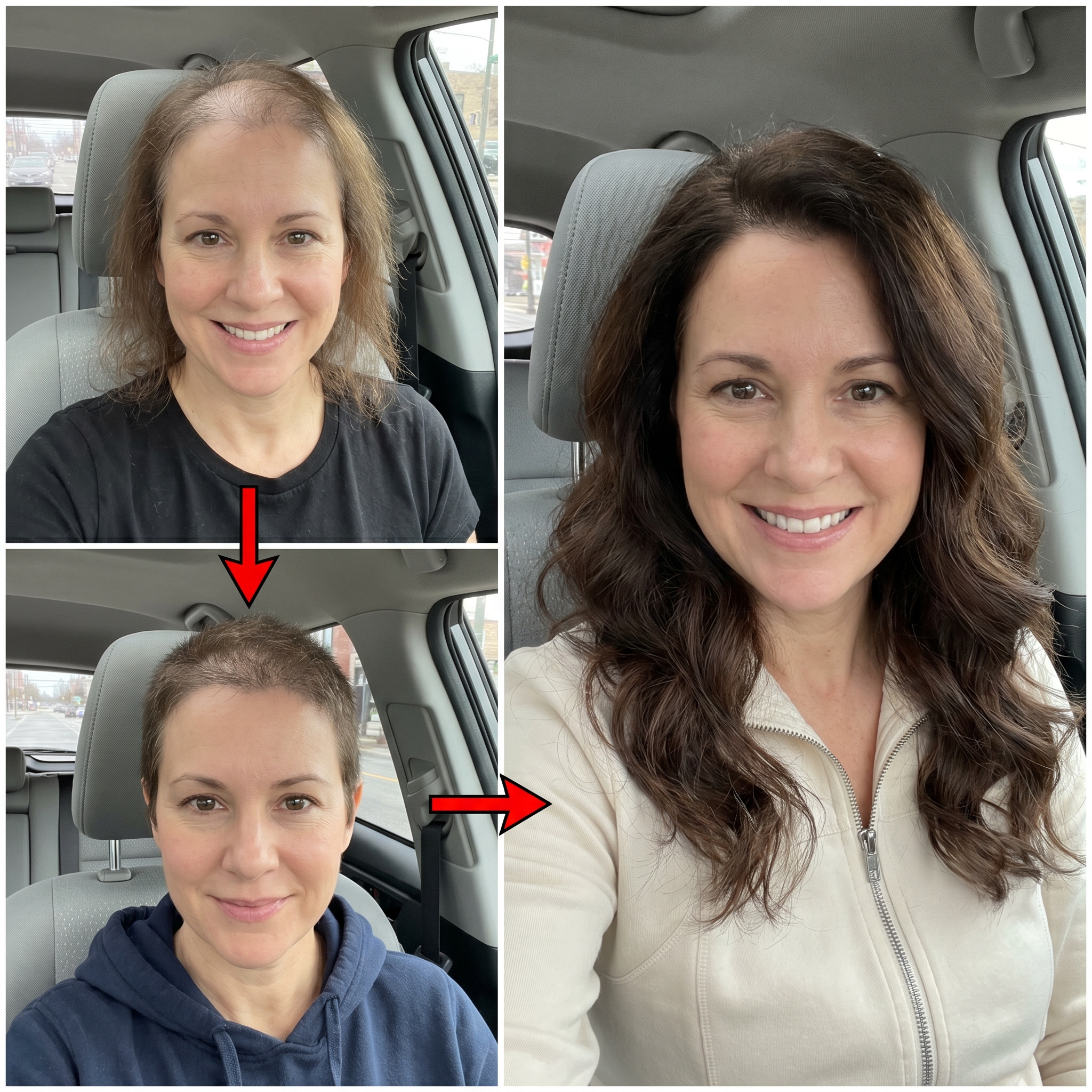
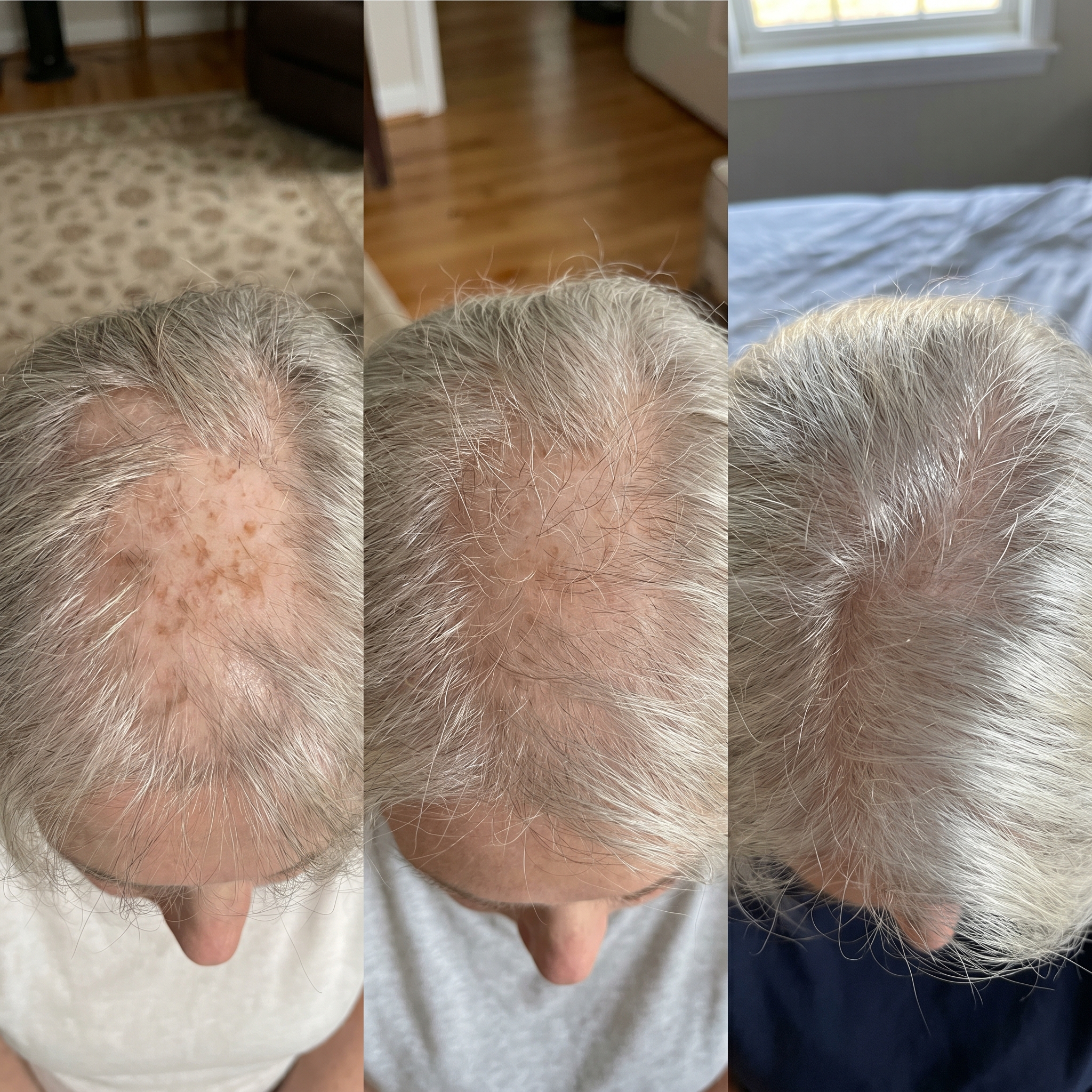
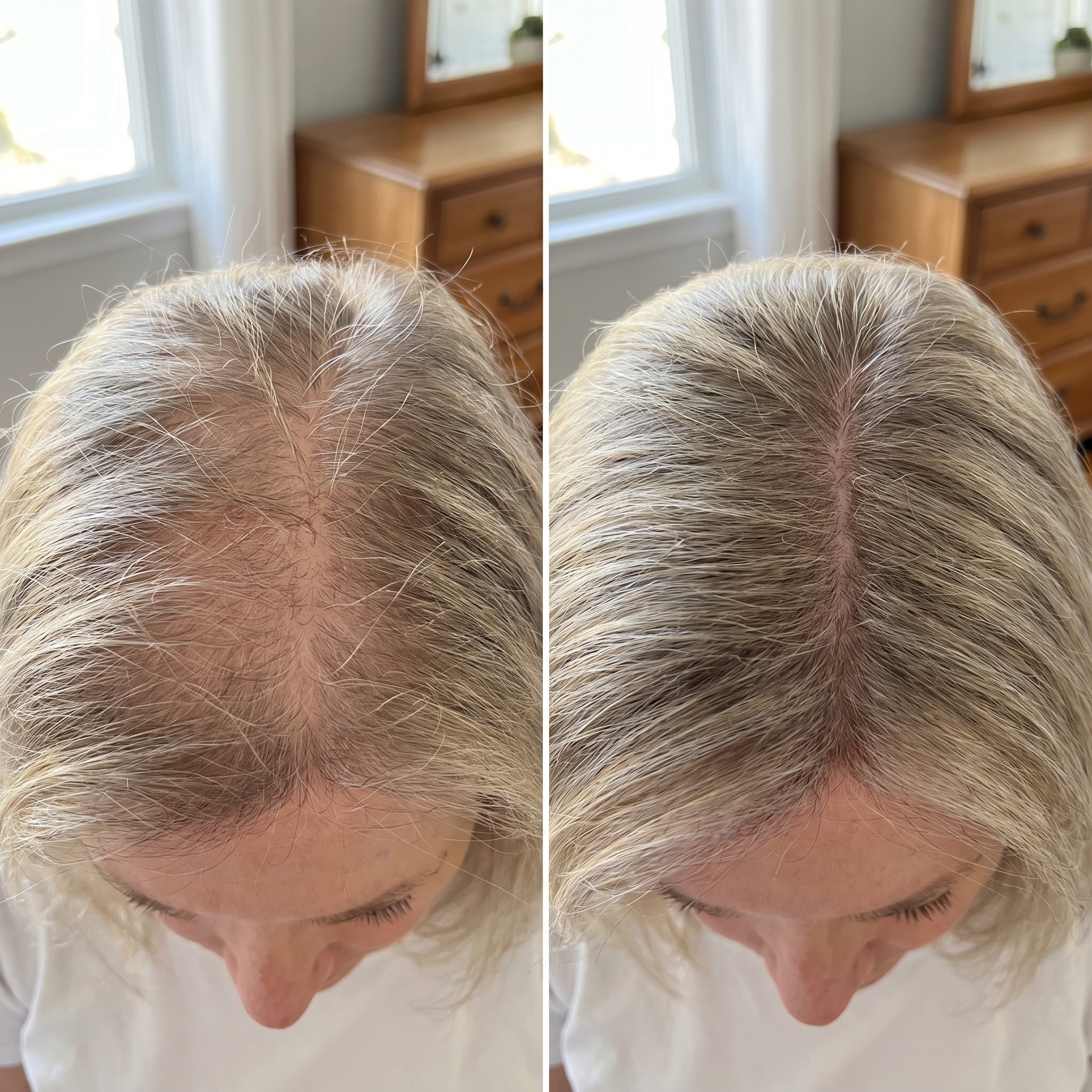
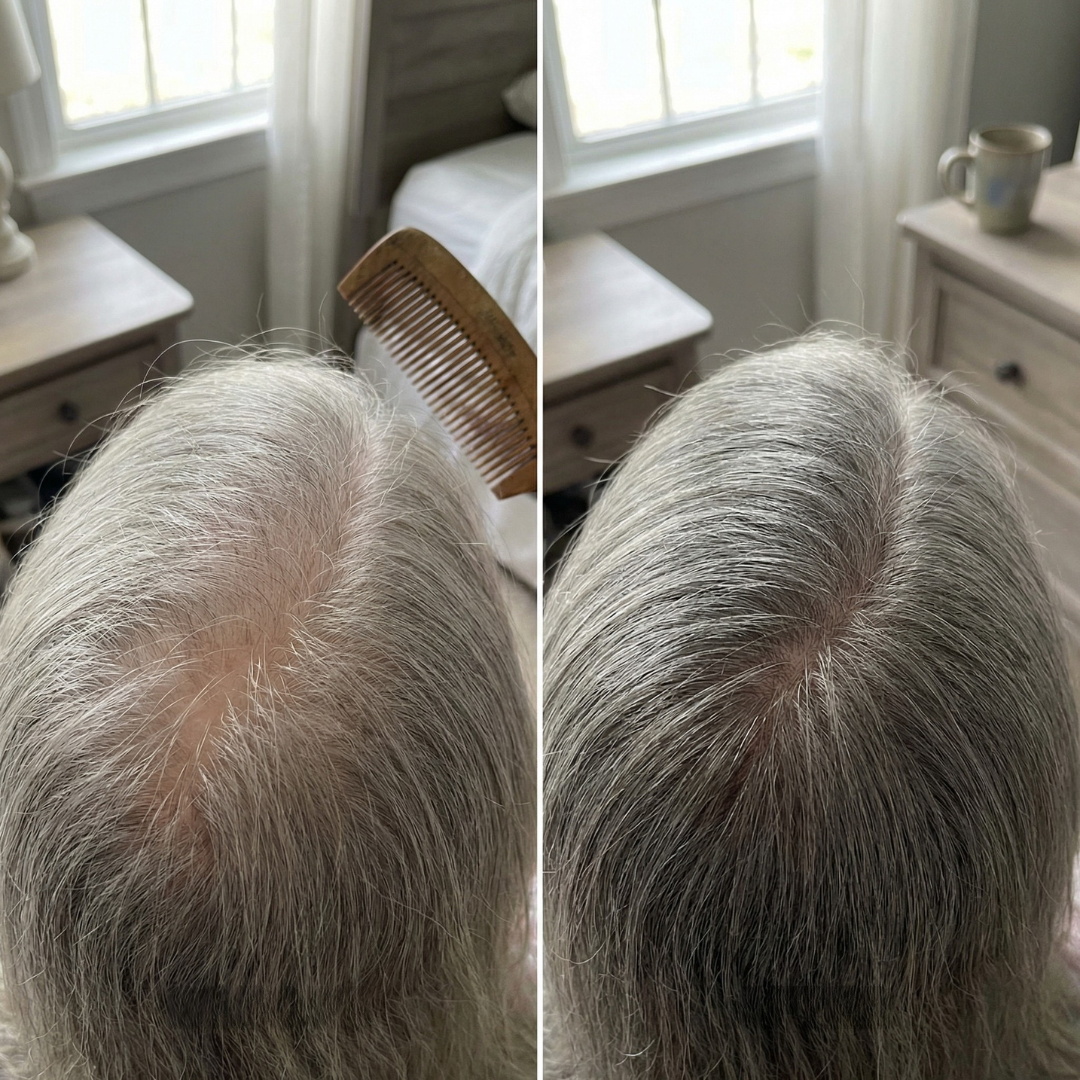
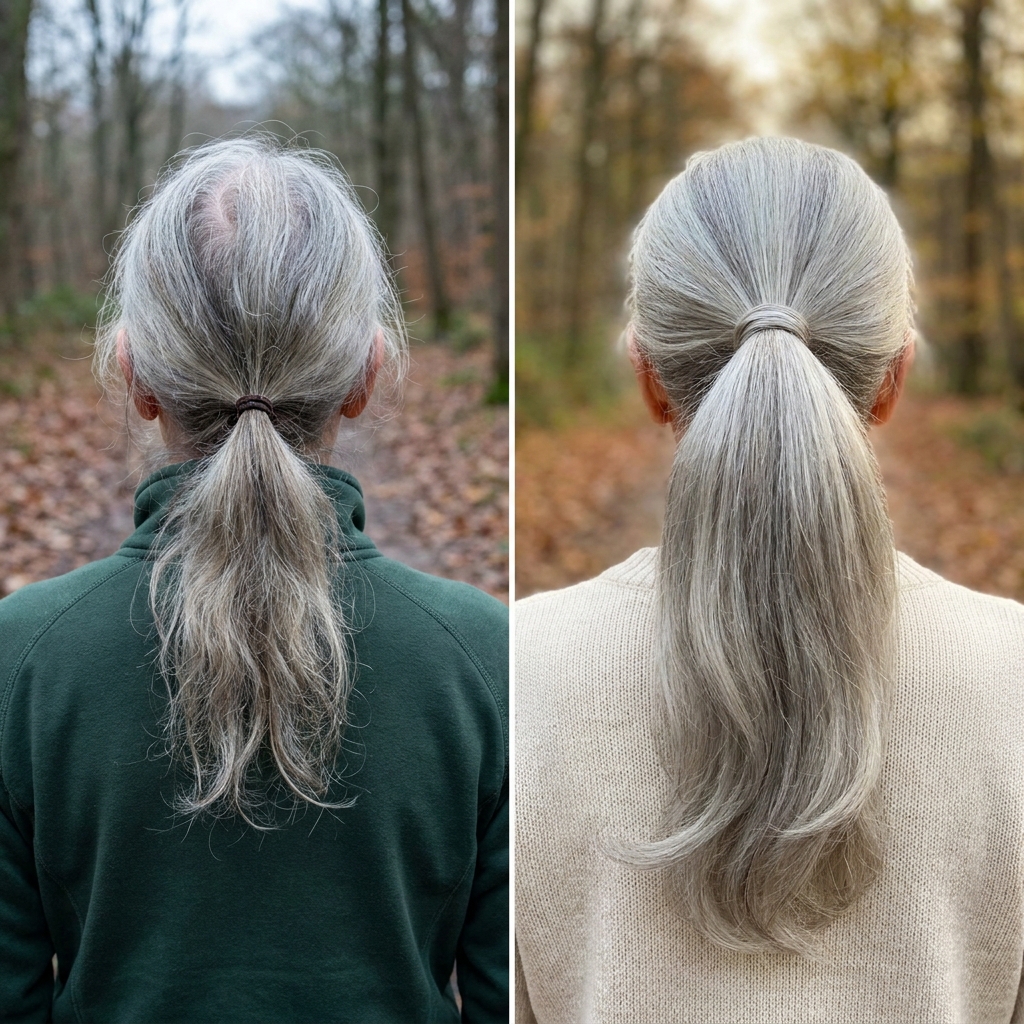
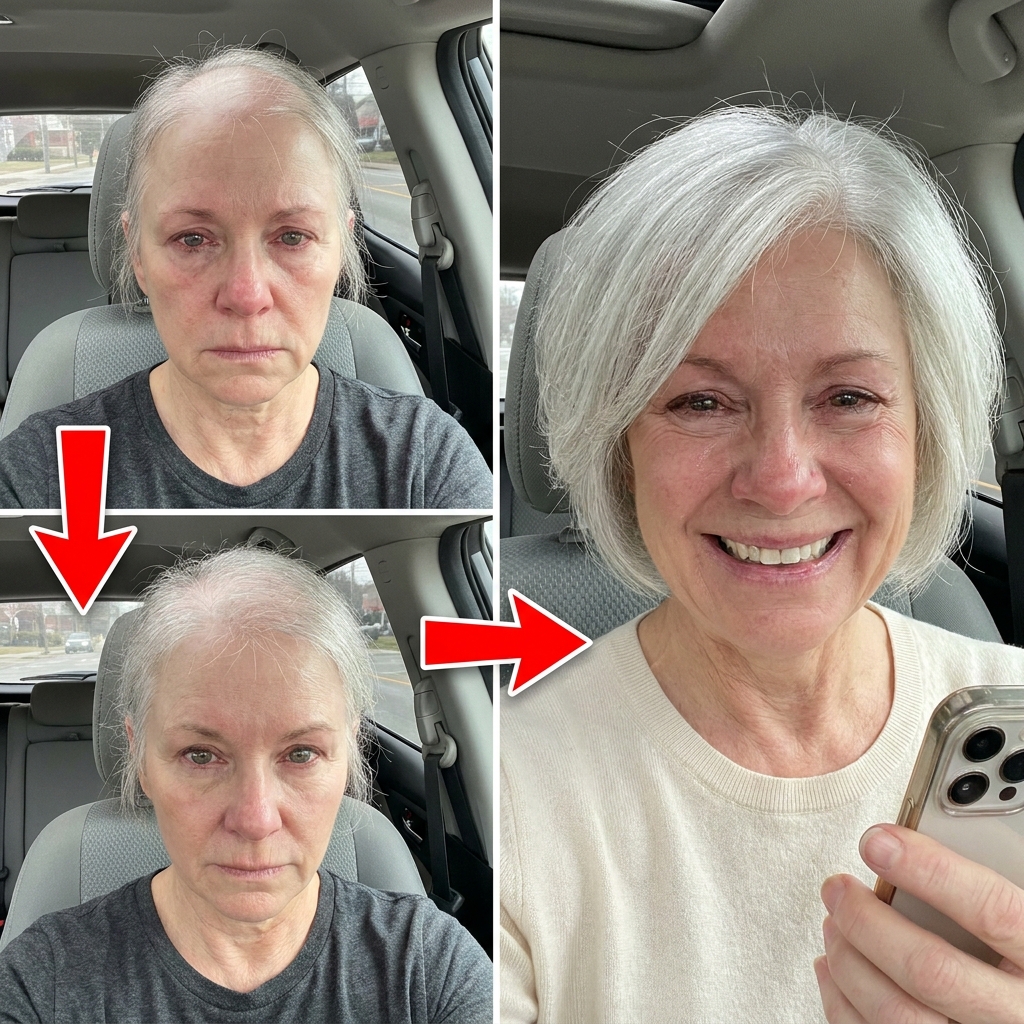
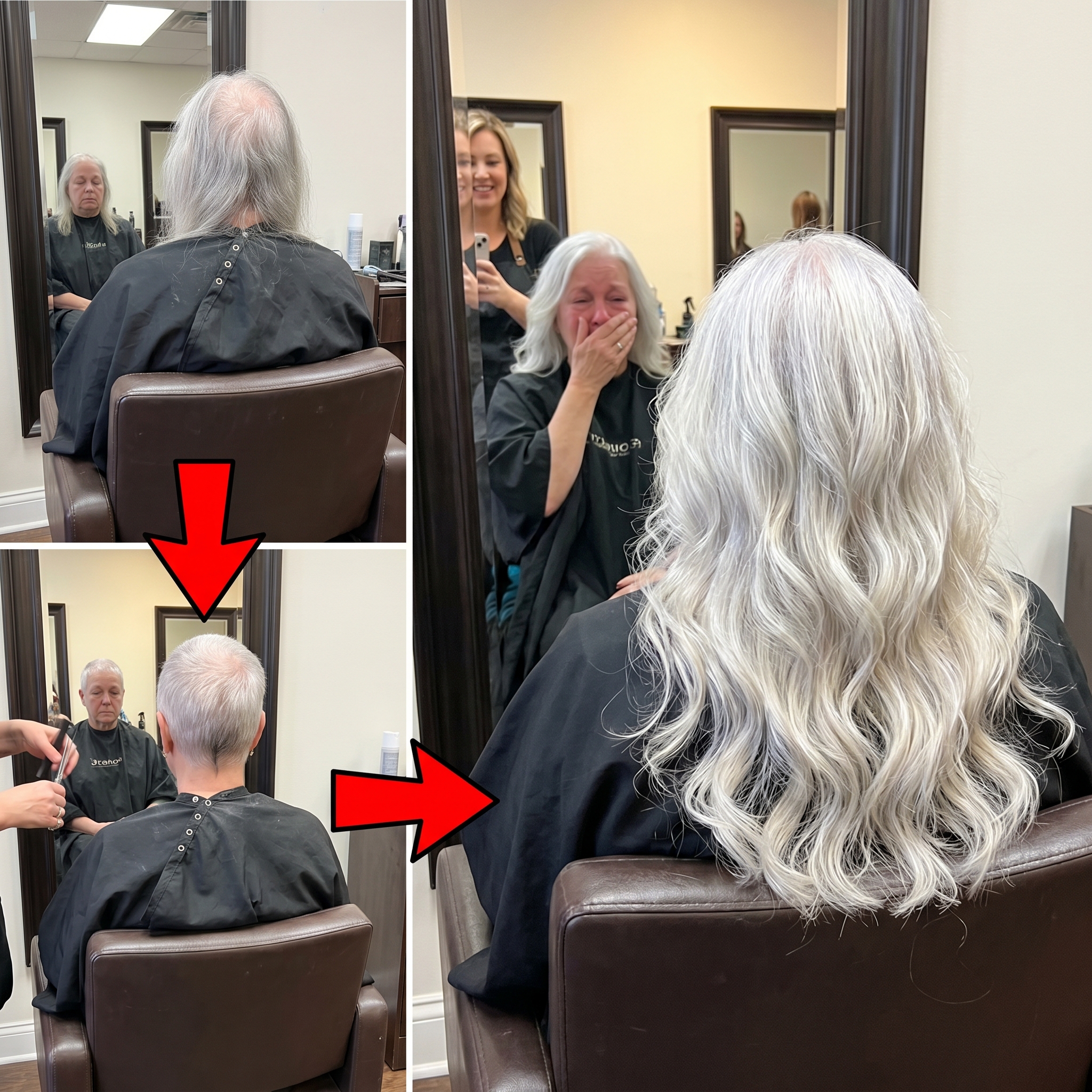
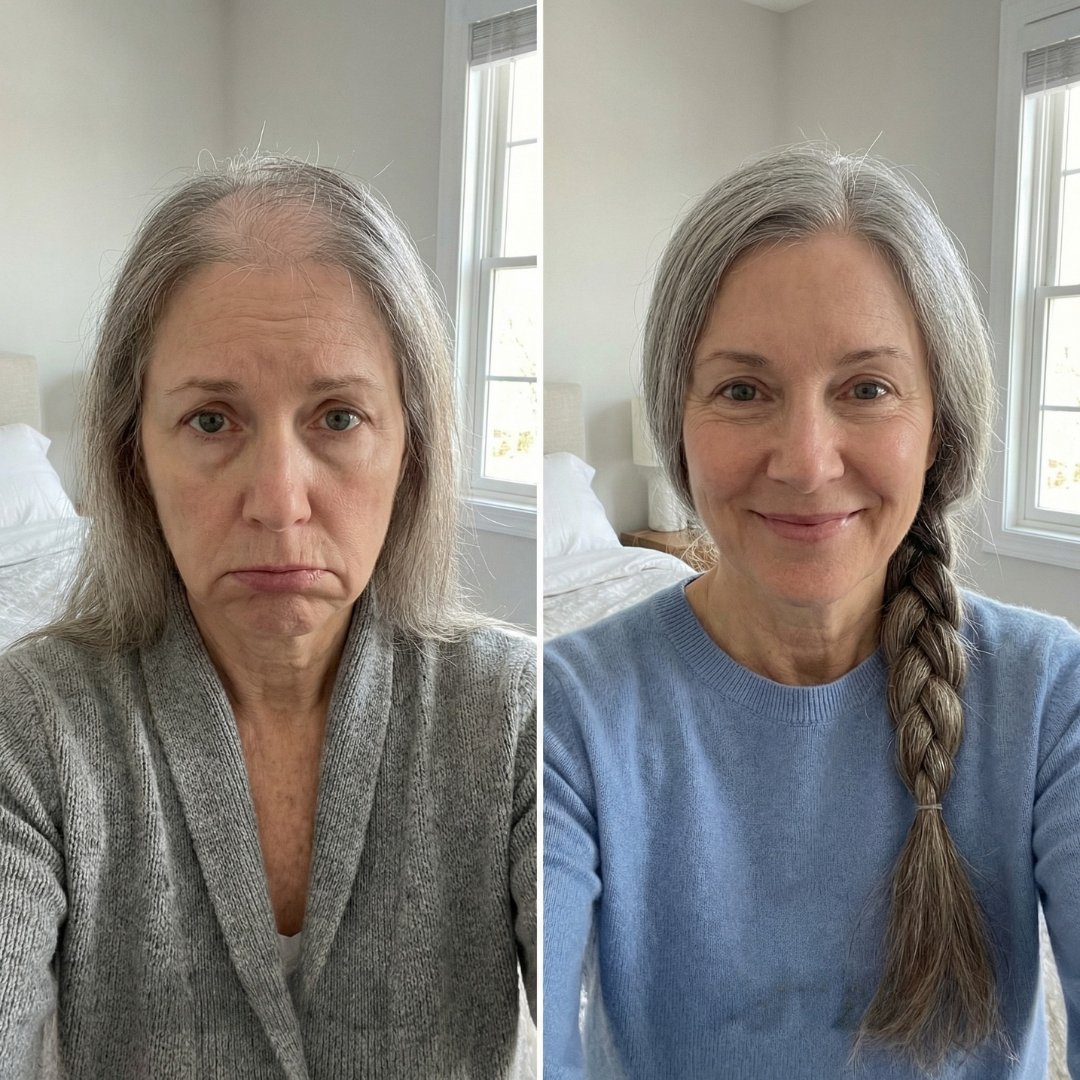
I want to tell you about the braid. Not because it's the most significant part of what changed. But because it was the thing that made me cry in a way I hadn't let myself cry about any of this for two years. It was a Tuesday morning in February. I'd woken up early, made coffee, and was sitting on the edge of my bed running my fingers through my hair the way I'd been doing every morning for two years — not to style it, just to feel it. To measure, the way you do when you've been losing something slowly and can't stop cataloguing the loss. And I noticed my fingers were moving differently. There was more to hold. More between my palms than there had been in a long time. I don't know what made me try. Some instinct. I gathered it to one side, the way I used to before all of this started — before the part widened, before the temples thinned, before I stopped being able to put my hair up without showing scalp in ways that made me feel sick. I started braiding. It held. Not perfectly. Not the thick rope braid I used to do at 40. But a real braid, with real density, that stayed together, that I could tie off and let fall over my shoulder and look at in the mirror without my stomach dropping. I sat there looking at it for a while. And then I cried. Not dramatically. Just quietly, on the edge of my bed, with my coffee going cold. The kind of crying that happens when something you'd stopped believing was possible turns out to be possible after all. I want to go back to the beginning, because the braid only means something if you understand what came before it. I was 51 when I understood that what was happening to my hair wasn't going to resolve itself. I'd been noticing it for a year or so — the way my part had widened, the way my temples had receded, the way my hair had lost the density it had always had. I told myself it was perimenopause and that it would settle. My GP told me my bloods were fine. I was referred to a dermatologist who confirmed androgenetic alopecia, recommended minoxidil, and mentioned HRT might help. I started HRT. It changed my life in many genuine ways — the brain fog lifted, the sleep improved, the joint aches eased. I am not ambivalent about HRT. But a year in, my hair was still thinning. The temples were still receding. The part was still widening. I'd stopped wearing my hair down because down meant visible, and visible meant the thinning showed, and the thinning showing meant the quiet daily grief of watching other people notice what I was trying to hide. I'd stopped braiding it about eighteen months before the Tuesday I'm telling you about. Not a conscious decision. Just a gradual realisation that there wasn't enough density to hold a braid properly, that it looked sparse and defeated rather than casual and easy, and that trying and failing at something I'd done effortlessly for thirty years felt worse than not trying at all. I stopped wearing it up. I stopped wearing it in any style that required volume or hold. I got very good at arranging it to cover the worst of it, to manage what people saw, to make myself look in the mirror only long enough to confirm the arrangement held before looking away. In the photo on the left — the one I'm not particularly proud of sharing — I'm in my grey bathrobe, first thing in the morning, before I'd done any of that arranging. That's what I looked like when I wasn't managing anything. When I was just a woman sitting in her bedroom wondering how it had gotten to this. That expression on my face is not performance. That's what two and a half years of losing something you didn't know how much you needed looks like on a person. I tried what everyone told me to try. Biotin — every dose. Nutrafol for six months at £70 a month. Two different salon treatment systems. A scalp serum from a specialist clinic. Minoxidil, which required a brutal three-month dread shed before modest improvement, and which I eventually understood I'd need to use indefinitely or lose the ground I'd gained. I spent money. I followed instructions. I was consistent. And my hair kept thinning. What nobody explained to me — not my GP, not my dermatologist, not the trichologist I eventually paid to see — was the mechanism. Why it was happening. What was actually driving the loss. Because until you understand that, every product you try is a guess. Here is the mechanism. When estrogen and progesterone decline at menopause, they stop suppressing DHT — a hormone derived from testosterone that has been present in your body your entire life. DHT binds to androgen receptors in your hair follicles and triggers miniaturisation: the follicle shrinks, the hair it produces gets finer, eventually the follicle stops producing hair at all. The receptors this happens to first, and most severely, are concentrated at the crown, vertex, temples, and along the part. Exactly the pattern you're watching. The shampoos don't address this. They sit on the surface. DHT is working underneath. Biotin doesn't address this. It supports keratin production. It has no mechanism for blocking DHT binding. None. HRT doesn't specifically address this. It does profound and important things for your systemic hormone balance. It does not specifically block DHT at the follicle. The miniaturisation continues even as your general health and wellbeing improve. I know this because I waited a year on HRT for my hair to follow, and it didn't. What addresses it is blocking 5-alpha-reductase — the enzyme that converts testosterone into DHT before it reaches the follicle. There are pharmaceutical versions of this. There are also plant-based compounds with genuine clinical evidence: saw palmetto, beta-sitosterol, pumpkin seed oil extract. Studied specifically for androgenetic alopecia in women. Peer-reviewed results. Available for years. Almost entirely absent from every product I'd spent money on. I found Mellenza after the kind of late-night research session that I think you've probably had. I wasn't hopeful. I'd learned not to be. I ordered it because the formulation was the first I'd found that was built around the mechanism rather than the symptom — DHT inhibition at the follicle, combined with the nutrient support that menopause depletes. I didn't tell my husband I'd ordered something new. I didn't want to explain it. I'd already explained too many things that hadn't worked. Week 3: Less shedding. I tracked it in the shower — I'd been doing this for months as a baseline. The number dropped. Not dramatically. Measurably. Week 5: The texture started to change. The fragile, snapping quality that had become my hair's new normal began to soften. It felt more like hair I recognised. Week 8: I compared an overhead photo to one I'd taken at the start as a baseline. The part was narrower. The crown less exposed. I looked at those two photos for a long time. Week 11: My hairdresser held up the back mirror and said she could see real regrowth. Density returning at the crown. She asked what I was doing differently. I told her. Month 4: The Tuesday morning I told you about. The braid. After that I took the photo on the right — the one where I'm smiling and dressed and my hair is in a braid over my shoulder. I sent it to my daughter. She sent back a string of heart emojis and then called me and said I looked like myself. I said: I feel like myself. I won't tell you it's the same as it was at 42, because I don't know if it will get there, and you've been sold enough things with impossible promises. What I can tell you is that my temples have filled in, my part is narrower than it's been in three years, and I braided my hair on a Tuesday morning in February and cried with relief on the edge of my bed. If you've stopped doing things with your hair that you used to do without thinking — because there isn't enough there to do them anymore — that's the loss nobody warns you about. And the mechanism behind it was never addressed by anything you tried. It's worth understanding why. The link is below.
The Morning I Was Able To Braid My Hair Again. I Didn't Expect To Cry.
Women's Health · Updated April 2026 Menopause · Hair Routine 7 Mistakes That Make Menopausal Hair Loss Worse, And the 30 Second Ritual 10,000 Women Used to See Regrowth in 8 Weeks Dr. Sarah Mitchell — Women's Health Writer. If you're standing in front of the mirror doing the 3-elastic ponytail t...
SEE DETAILSLike this ad? Make it yours.
Crush rebuilds this exact creative around your product — your brand, your colors, your offer — in about a minute.