Sarah Mitchell
 Facebook ad: “Every reactive dog I've had has ended up euthanized or…”
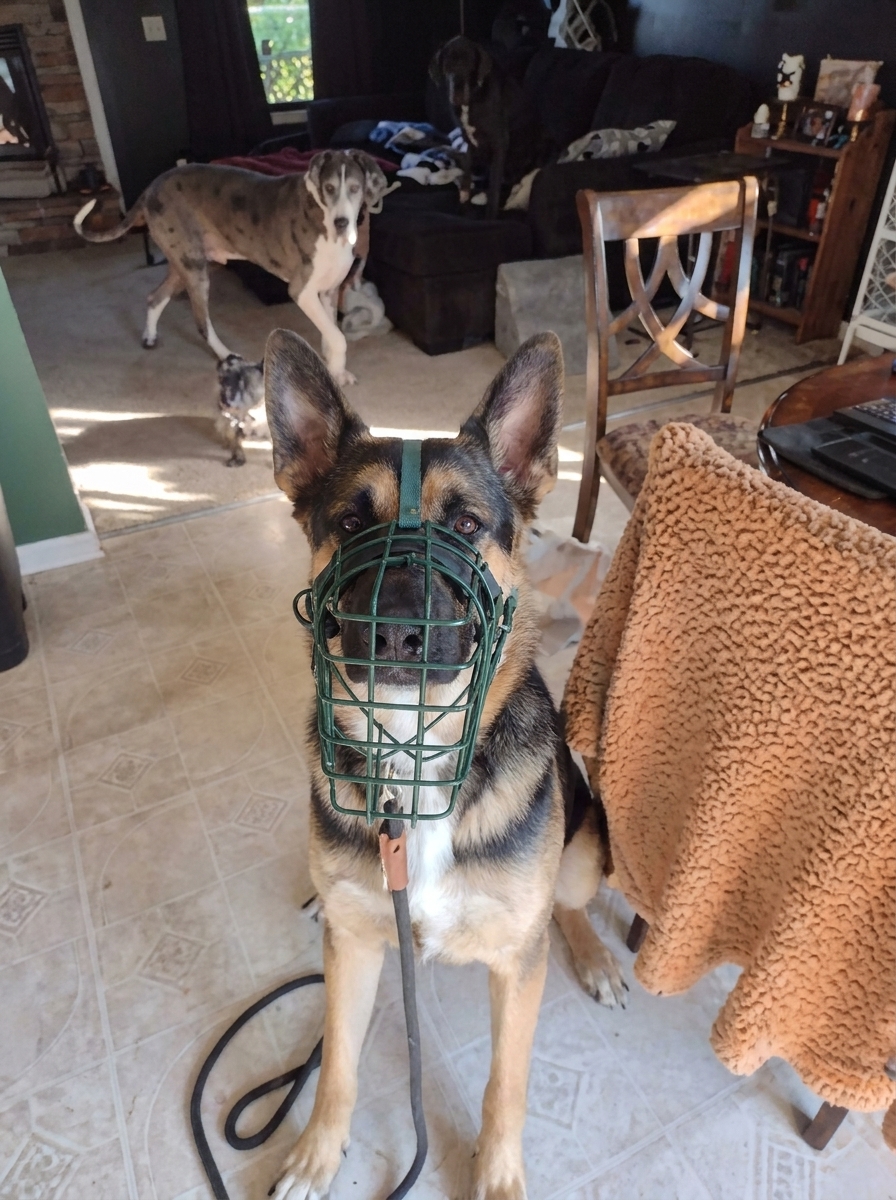
Ran for 146 days, from May 2 to September 25, 2026, the last day Crush saw it.
Run by Sarah Mitchell on Facebook. Crush is not the advertiser and does not verify its claims. See this ad in Meta's Ad Library(opens in a new tab)
Make your own version of this ad
Crush makes it, launches it in your own Meta ad account, scales the winners and pauses the losers.
About this ad
- Meta Ad Library ID
- 1447639813252167
- Platforms
- Facebook, Instagram, Audience Network, Messenger and Threads
- Relaunches
- 0
- EU reach
- 60
Ad text
Every reactive dog I've had has ended up euthanized or surrendered. I refused to let it happen a third time. The first was Beau. He was a 4-year-old rescue Shepherd mix. Reactive from the day I got him. I hired a trainer within the first month. We worked for a year. He improved, then plateaued, then started getting worse. He bit a neighbor's kid. Not badly — she needed a bandage, not stitches. But the law didn't distinguish. I signed the euthanasia form. Three years later, I adopted Sadie. A Labrador with a documented reactivity history that I thought I could fix with everything I'd learned from Beau. I tried even harder with Sadie. Two certified trainers. A board-and-train program. Prescription Prozac. For a while she was doing really well. Then she bit a jogger on the trail. I signed the surrender form. For almost five years I told myself it was bad luck. Wrong dogs. Wrong timing. "These things happen with rescues." Then I adopted Luna. Luna was a 3-year-old Pit Bull mix. The rescue told me upfront she had leash reactivity. I told them I had experience. From the first walk, I could see the same signs. The stiffening. The stare. The way her whole body would lock onto a trigger from 40 meters away. I couldn't sleep that night. What I found is the reason Beau and Sadie didn't have to end the way they did. And the reason no trainer, no vet, no behaviorist ever told me. Here's what happened. Luna's reactivity was worse than Beau's or Sadie's had ever been at this stage. Last month a dog appeared around a corner on our usual walk route and Luna exploded before I had time to react. She pulled so hard she broke the clip on her lead. She didn't make contact — thank God — but she got within a meter of the other dog before I caught her. I stood on that path shaking. I'd seen how this story ended. Twice. Every time a trainer mentioned that Luna was making progress, all I could see was Beau getting worse again after months of seeming better. Sadie's trainer saying the same things, right up until she bit. I couldn't go through that again. I tried everything the training world recommends. I worked with a certified reactivity specialist. Two sessions a week for four months. Counter-conditioning. BAT protocol. Threshold management on every single walk. Never putting Luna in situations she couldn't handle. She improved. Then she plateaued. I started a second trainer. Different approach. More progress. Then another plateau. I tried prescription Trazodone. The vet said it might take the edge off enough for the training to stick better. It helped slightly. Made her slightly slower, slightly less explosive. Her threshold was still breaking. Just a little less dramatically. I joined every reactive dog group I could find. Read every post. Tried every recommendation. Calming treats. CBD oil. Adaptil diffuser. Thunder shirt. L-theanine supplements. The trainers and the vets and the groups were all saying the same things. The same things they'd said about Beau. The same things they'd said about Sadie. I was watching the same cycle start again. And nobody could tell me why the training kept hitting a ceiling. Why some days Luna was almost normal, and other days — same route, same weather, same everything — she was worse than she'd ever been. No pattern I could see. Just inconsistency that made no sense. Three months into working with my second trainer, I asked her directly. "Why does the progress keep plateauing? Why does she regress on some days for no reason I can identify?" The trainer paused. "Honestly? Some dogs just have a higher baseline anxiety. You keep working. You manage it. It's a long process." That was the answer I'd heard before Beau was euthanized. The same answer I'd heard before Sadie bit the jogger. I drove home and sat in the car for twenty minutes. I needed to know if there was something everyone was missing. So I started looking. Hours on Reddit. Forum posts from owners who'd been through three, four, five years of training with reactive dogs who never fully resolved. Comments from people who'd lost dogs despite doing everything right. And the more I read, the more one question kept coming up over and over. Why does the progress always hit a wall? Owner after owner describing the same pattern. Dog improves. Plateaus. Regresses under pressure. Improves again. Plateaus. One incident. Then the form. I kept reading until I found an answer I hadn't seen before. A comment in a reactive dog forum from someone who'd had the same experience with three reactive dogs. She wrote: "Every training protocol assumes the dog's brain can regulate itself if you give it the right tools. The problem is, some dogs' brains literally can't regulate — not because of training or socialization or breed or history. Because 95% of serotonin is made in the gut, not the brain. And if the gut is compromised, the brain never has what it needs to hold the training when it counts." I read it four times. The calming treats. The CBD. The Trazodone. The counter-conditioning. The two years of work with Beau. The two years of work with Sadie. They were all trying to regulate a brain that didn't have the biological foundation for regulation. Nobody had ever touched the gut. I didn't fully understand it yet. But I understood enough to know that in five years of working with reactive dogs, no trainer, no vet, no behaviorist had ever mentioned this. I started looking for something that addressed the gut specifically. Not probiotics. Postbiotics. The comment explained the difference: probiotics are live bacteria that have to colonize the gut to work. In a dog that's been under chronic stress — and reactive dogs are always under chronic stress — the gut lining is damaged and can't support colonization. The bacteria pass through without taking hold. Postbiotics are the actual metabolites and compounds that healthy gut bacteria produce. Delivered directly. No colonization needed. That's why the supplements I'd tried had never worked. They were sending bacteria into a gut that couldn't use them. I found a product people in that forum kept mentioning. CalmAxis. I was skeptical. I'd been skeptical of everything for five years. I'd spent hundreds on supplements that did nothing. But I did one thing I hadn't done before. I called the company directly. I asked for their Certificate of Analysis — independent third-party lab results showing what's actually in the product. They emailed it within the hour. Every other supplement I'd tried? I couldn't get a straight answer from any of them. I also asked specifically: "Does this work in dogs who've been under chronic stress? Whose gut might already be compromised?" They walked me through it. Postbiotics bypass the colonization problem. The therapeutic compounds go directly to where they're needed. They explained the serotonin mechanism — the gut producing what the brain needs to regulate. They explained why chronically stressed dogs have the worst gut health, which is why they're the hardest to train: the stress damages the gut, the gut produces less serotonin, the brain becomes less able to regulate, which creates more stress, which damages the gut further. The cycle I'd been watching for five years finally had a name. I ordered it directly from their website. Not Amazon — the person in the forum had specifically warned about counterfeits. I kept everything else exactly the same. Same trainer, same sessions, same management on walks. Just added CalmAxis. Here's what happened over the next eight weeks. WEEK ONE Nothing noticeable. Luna still reacted on most walks. I told myself I was testing a hypothesis, not hoping for a miracle. WEEK TWO Something I hadn't expected. Luna was recovering from triggers faster. She'd react, and then come back to me quicker than she had before. Her trainer noticed it before I mentioned anything. WEEK THREE My husband came on our usual evening walk for the first time in months. A dog appeared across the road. Luna stiffened — and then didn't lunge. Stood stiff for a few seconds, then looked back at me. My husband didn't say anything. He'd never seen her do that before. Neither had I. WEEK FOUR I lifted her lip the way I used to when I'd check her gums. Luna tensed up. She was expecting a correction. But I was looking at her, not correcting. Something was different. Her whole body was less coiled. Less anticipatory. Her trainer pulled me aside after the session. "Whatever you changed — don't change it back. I don't know what it is, but something is different about her baseline. She's available in a way she wasn't before." WEEK FIVE Luna stopped scanning on walks. Not completely. But the constant hyper-vigilant scanning she'd had since day one — head swiveling, ears rotating, body never fully relaxed — was less constant. There were moments where she just walked. Head forward. Loose leash. I hadn't seen that once in months. WEEK SIX We walked the route where she'd broken her clip and charged a dog. Same corner. Same blind bend. A dog appeared. Luna stiffened. I held my breath. She looked at the dog. Looked at me. Took a treat. I stood on that path and didn't move for a long time. WEEK EIGHT I took Luna to a local park. The park I'd avoided for three months because it was too unpredictable. Three dogs passed us in forty-five minutes. She looked at each one. She didn't lunge at any of them. I sat on a bench and watched her sniff the grass and couldn't remember the last time a walk had felt like this. I posted her progress in the reactive dog forum where I'd first found the information. Got messages that week. Helen's 5-year-old Staffy. Two years of reactivity training with partial results. Six weeks on CalmAxis, her trainer extended their sessions and noted the first consistent above-threshold encounters she'd handled successfully. Robert's German Shepherd. Two bite incidents in eighteen months. Starting CalmAxis alongside his existing protocol. Three months later, reclassified by his behaviorist from high-risk to manageable. I'd been the person reading other people's stories. Now I was one of them. Luna is still reactive. She still needs management, still needs her training, still needs a handler who knows what they're doing. What changed is that the training is sticking. The ceiling I kept hitting with Beau, with Sadie — I'd been building on a biological foundation that couldn't hold the weight. The gut wasn't producing what the brain needed to implement what the training was teaching. Now it is. And two years of training that had been working against that deficit is finally holding when it counts. If your dog is where Luna was. Improving, then plateauing. Inconsistent in ways that don't make sense. Training hitting a ceiling it can't break through. The answer might not be more training. It might be the biological foundation the training is supposed to be built on. Every day you don't check it, the gut damage from chronic stress accumulates. The threshold gets lower. The ceiling stays where it is. And the next incident gets closer. Don't buy from Amazon — counterfeits have been reported. Only order directly: 👉 trycanislabs.com/products/calmaxis-chews P.S. I still give Luna her CalmAxis every morning. One scoop in her food. She doesn't even notice it. Eight seconds. After five years of wrestling dogs into muzzles and clinging to leashes and signing forms I never wanted to sign — eight seconds. P.P.S. Beau tried to tell me. The inconsistency. The days where nothing made sense and he was worse than ever for no reason. That was his gut. I just didn't know what it meant. Now you do. EDIT: Sorry, I keep getting DMs asking what the product is specifically. It's CalmAxis — order directly from trycanislabs.com, not Amazon. The third-party lab results are real and they'll send them if you ask.
Where the ad sends people
trycanislabs.com
Every reactive dog I've had has ended up euthanized or surrendered. I refused to let it happen again.
I signed the surrender form twice. My third reactive dog was showing the same signs. I wasn't going to give up until I found what I'd been missing.
Order now: trycanislabs.com(opens in a new tab)