
Inactive· since May 11, 2026
- 26
- days it ran
- 0
- relaunches
Ad copy
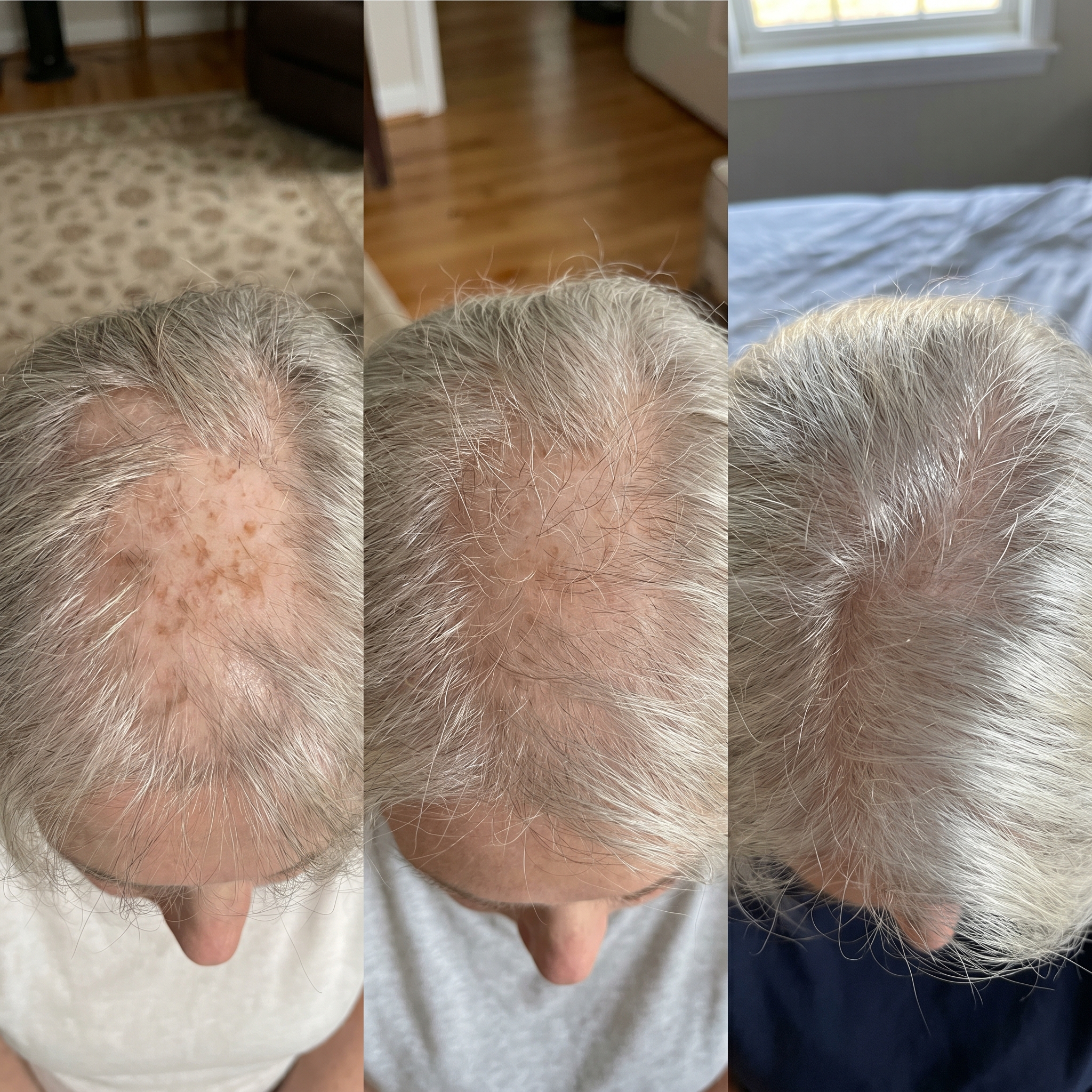
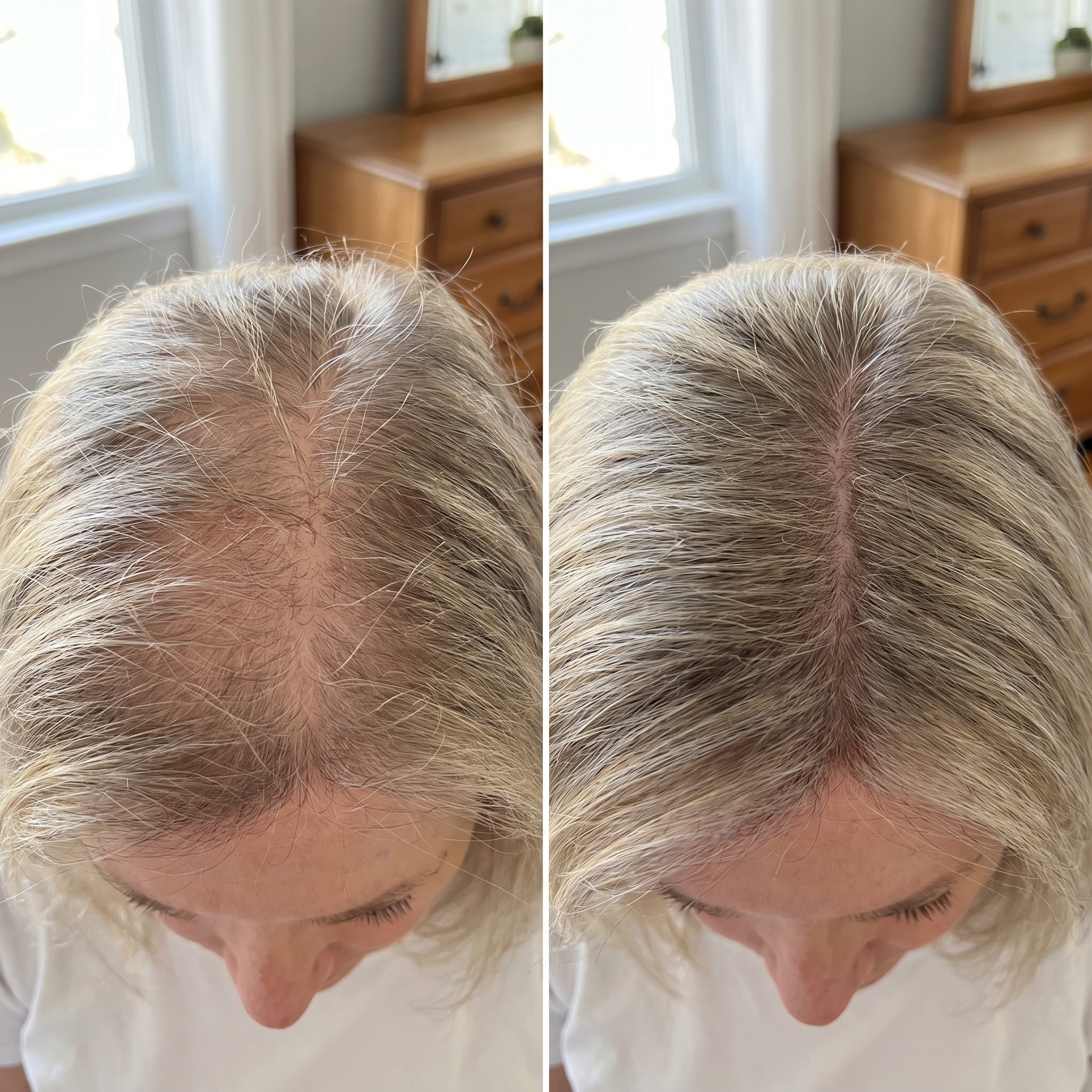
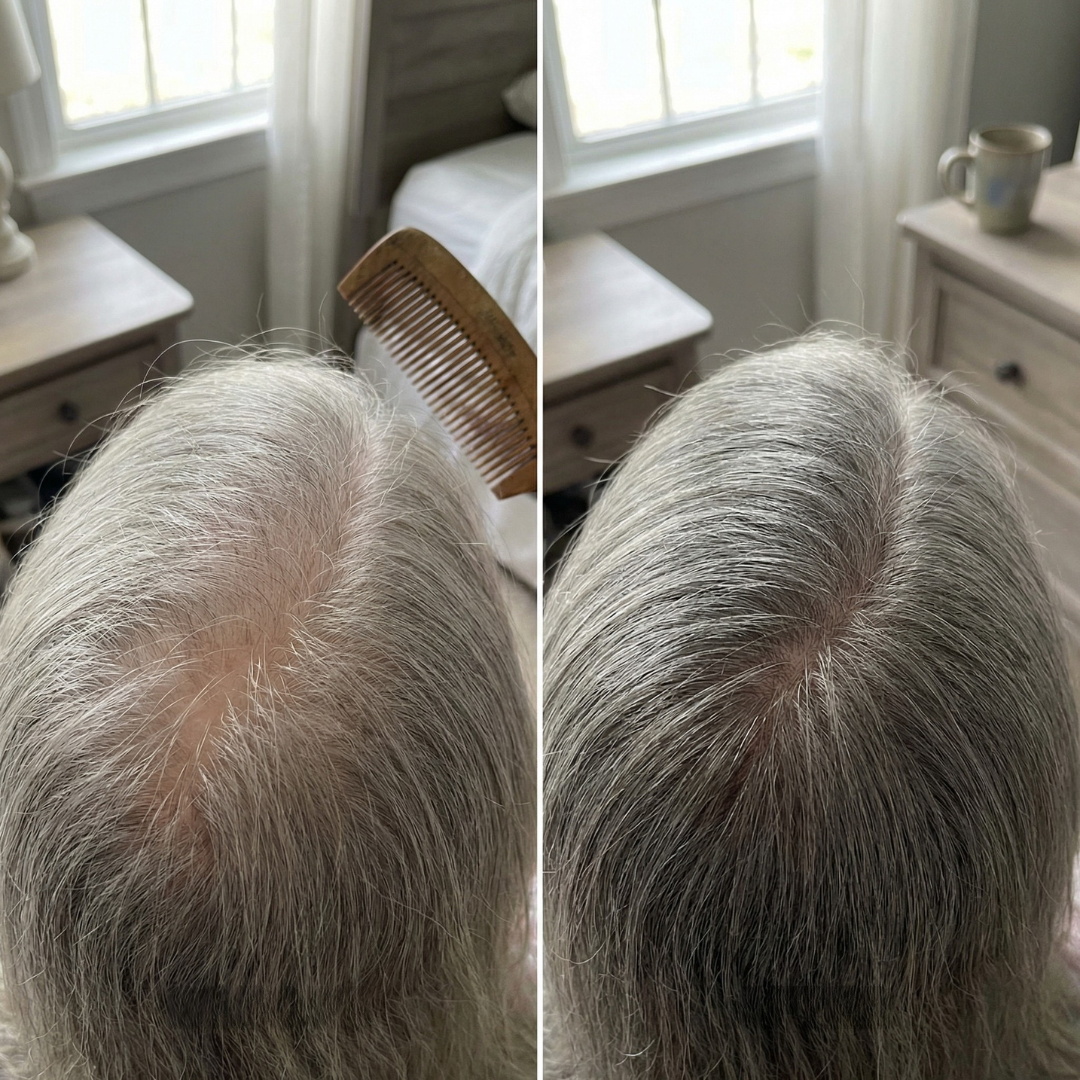
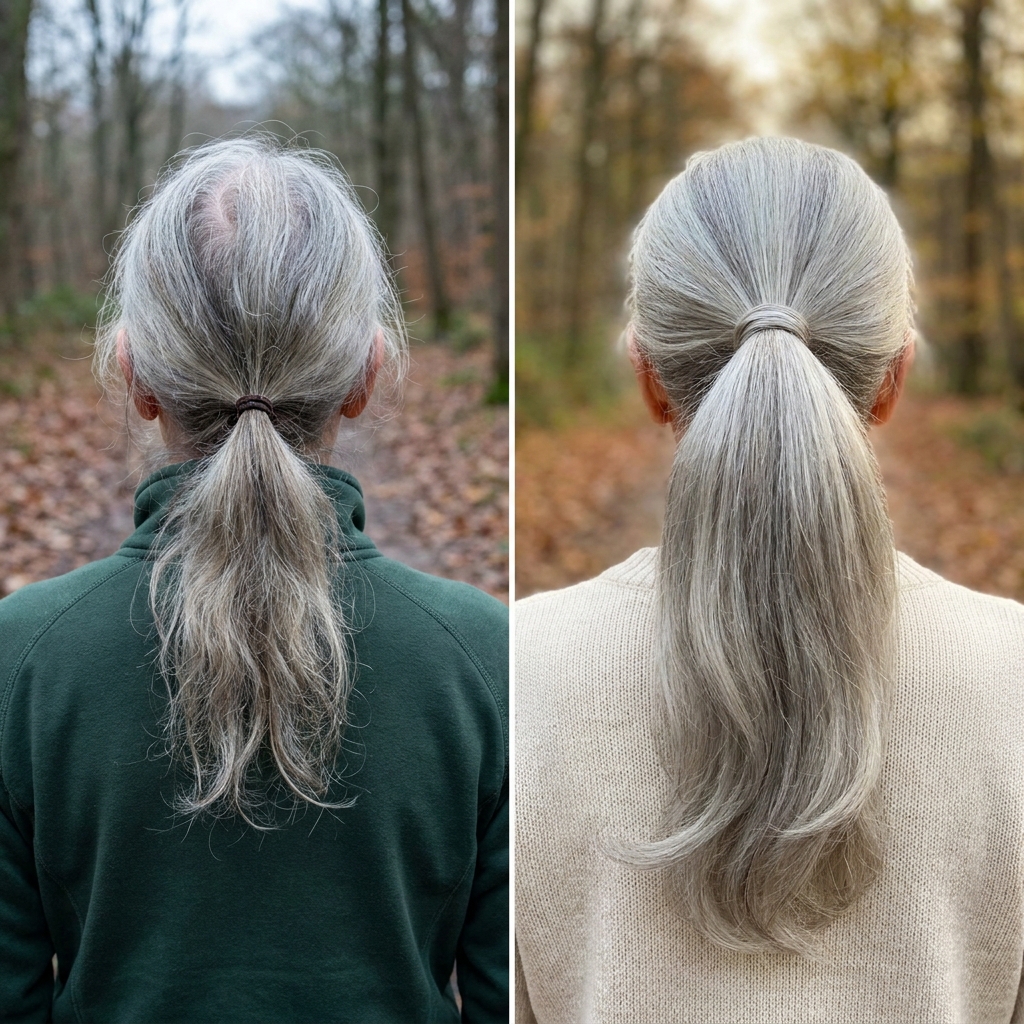
What gathers on the shower floor every morning has not been the cause of your thinning. It has been the receipt of three years spent buying products from an aisle that was never built to interrupt the mechanism by which the gathering is forming. The shower floor does not lie. The bathroom mirror has angles. The phone camera has a flattering side. The shower floor, in the half-minute after the water has stopped and before the towel comes down off the hook, is the cleanest single measurement of the night and the morning together. You have been looking at it, every weekday for the better part of three years, and the gathering in the corner near the drain has, week on week, said the same true thing. I am 49, a primary-school deputy head in Liverpool, and I started keeping a small notebook beside the shower in the autumn before last because the gathering near the drain had become a thing I could not stop counting. I am not a counter by nature. I had begun the count because, on a Tuesday morning in October, the gathering in the corner had been visibly heavier than the equivalent gathering of any morning the previous spring, and I had wanted, before I let the morning carry on, to know whether the heaviness was a one-off or a pattern. The notebook recorded, every working morning, a single number. The number was an estimate of how many strands the gathering held. I counted by tens. The count, across the first four weeks, ran between ninety and a hundred and forty strands per shower morning. Across the first three months, the count drifted upward. By the February of the following year, the working-week average sat somewhere above one hundred and sixty. The published range for a healthy daily shedding from an adult woman's scalp sits at fifty to one hundred. My shower floor, every morning, was holding more than the upper end of the healthy daily range, and that count did not include the strands that had stayed on the towel or on the brush after the shower. The notebook did one other thing. It recorded what was on the bathroom shelf at the time. A bottle of Plantur 39 caffeine shampoo, used out, replaced once. A bottle of Klorane oat-milk volumising shampoo from Boots. A scalp scrub from The Inkey List, used twice a week. A jar of Hairburst gummies, taken with my morning toast, half-finished, then abandoned. A salon-strength toning mask from a hairdresser in Crosby, £45, used on alternate Sundays. A laser cap from a Manchester company, used three times a week from the Christmas of the year before until the August. A bottle of Nutrafol, 120 capsules, taken every morning with a cup of tea, completed. Olaplex No.3, in the morning shower, used out. A second bottle of Plantur 39 shampoo. A bottle of Vichy Dercos Aminexil ampoules, the forty-two-day course, completed. A bottle of biotin from Holland & Barrett, 10,000 mcg, finished and replaced. A scalp serum from a small Wirral brand, used twice a week for three months and then stopped because the count in the notebook had not changed. The total, when I added the receipts up at the kitchen table on a quiet Saturday in February, was £534 across thirteen products in seventeen months. The shower-floor count, across those seventeen months, had risen from ninety-to-a-hundred-and-forty into the high one-sixties. What I had not done, in any of those seventeen months, was stop and ask whether any of the thirteen products had been built to interrupt the mechanism by which the count was rising. The answer, which became clear once I read three properly cited articles and one open-access journal paper across a long Sunday in March, was no. Hair grows in a cycle. The active growth phase, the anagen, lasts somewhere between two and six years in a healthy follicle. As estrogen drops in perimenopause, the local concentration of DHT at the scalp rises. DHT shortens the anagen. The follicle spends progressively less time producing hair and progressively more time in dormancy. The hairs it does produce are finer and shorter. They are released more easily by the mechanical pressure of warm water and a cotton towel against the scalp every morning. The count on the shower floor rises. Externally, it looks as if the follicles have begun to stop. Internally, the follicles have not stopped. They are silenced. The stem cells, the blood supply, the structural casing remain alive. If the local DHT at the scalp is interrupted, the follicles resume their cycle. The interruption has to occur at the scalp. Not in the gut, where the gummies and the biotin had been routed. Not on the strand, where the Plantur and the Klorane and the Olaplex had been working. Not in the dermis above the follicle, where the scalp scrub and the toning mask had been operating. At the follicle, where the silencing was occurring. None of the thirteen products had been built to do that. The aisle had not lied. The aisle did not have what I needed. Mellenza was the first product I came across whose formulation reflected the mechanism. A topical scalp serum. Caffeine to block 5-alpha-reductase at the follicle and extend the anagen phase. Polygonum multiflorum root extract, drawn from Korean dermatology research on follicle proliferation. Arginine for microcirculation around the follicle. Biotin applied to the scalp, where the integrity of new growth is built, rather than swallowed and routed through the gut. Ginger extract for anagen support. Sprayed nightly at the crown, the part, and the temples. Not a shampoo. Not a volumiser. Not a supplement. A topical wake-up call for follicles that had been silenced for three years. I committed to twelve weeks. £534 of failed receipts had earned that patience. Week 4. The shower-floor count, averaged across a working week, dropped into the low one-thirties. The first downward week in seventeen months. Week 6. The lengths I already had felt heavier between my fingers when I tied my hair back at the school gates at half-past three. Less brittle. More like the weight I remembered from before the count had started. Week 9. The shower-floor count, averaged across a working week, sat at ninety-eight. Within the upper end of the healthy daily range. The notebook recorded the figure twice, on consecutive Mondays, before I let myself believe it. Month 4. The deputy-head office at school has a strip light directly above the desk. I had been arranging myself, on parents-evening duty, away from the strip light for the better part of two years. I sat directly under it on a Tuesday in March and did not move. Month 5. I went to a primary-school inspection, which involved standing in a classroom under fluorescent ceiling panels for the better part of three hours, and I did not, at any point in the morning or the afternoon, arrange myself in relation to the panels. The deputy-head photograph in the school's annual report, taken under the same panels, was the first photograph in three years that I let through to the proof without asking the office manager for a re-shoot. The shower floor still has a small gathering near the drain every morning. The count, week on week, is what it should be at forty-nine. If the gathering on your shower floor has been the same heaviness for years, the gathering is not the failure. The gathering is the receipt of an aisle that did not stock the bottle you actually needed. The bottle exists. It is just not where you have been looking. The link is below.
What gathers on the shower floor is not the shedding. It is the receipt of three years of the wrong category.
Women's Health · Updated April 2026 Menopause · Hair Routine 7 Mistakes That Make Menopausal Hair Loss Worse, And the 30 Second Ritual 10,000 Women Used to See Regrowth in 8 Weeks Dr. Sarah Mitchell — Women's Health Writer. If you're standing in front of the mirror doing the 3-elastic ponytail t...
LEARN MORELike this ad? Make it yours.
Crush rebuilds this exact creative around your product — your brand, your colors, your offer — in about a minute.