Laura Schmidt
 Facebook ad: “The half-built blanket fort broke my heart”
Ran for 85 days, from August 18 to November 11, 2026, the last day Crush saw it.
Run by Laura Schmidt on Facebook. Crush is not the advertiser and does not verify its claims. See this ad in Meta's Ad Library(opens in a new tab)
Make your own version of this ad
Crush makes it, launches it in your own Meta ad account, scales the winners and pauses the losers.
About this ad
- Meta Ad Library ID
- 1469479171873523
- Platforms
- Facebook, Instagram, Audience Network and Messenger
- Relaunches
- 0
- Niche
- Parenting & Kids
Ad text
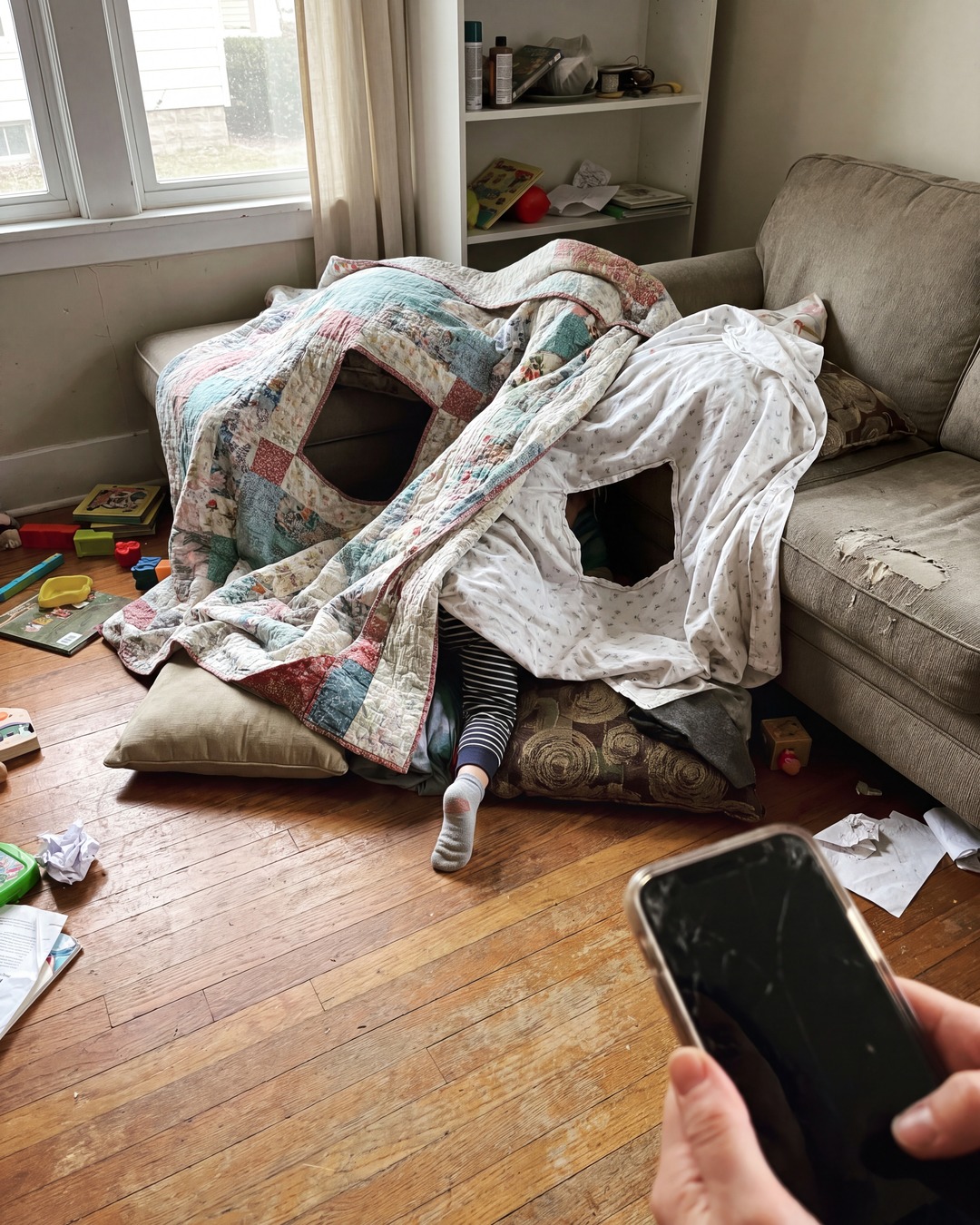
I found the blanket fort half-built in the living room, two chairs pulled together, a sheet draped over one side, and a pile of pillows waiting on the floor. But the room was completely silent. My older daughter was sitting on the couch, reading a book, pretending she didn't care. My younger son was in his room, the door shut. "What happened to the fort?" I asked gently. My daughter didn't look up from her book. "He got mad because I wanted the blue pillow inside. He yelled and threw it, so I just left. It's not worth it." It’s not worth it. Those four words hit me harder than any tantrum, any slammed door, any public meltdown we had ever experienced. The real loss wasn't the mess in the living room. It wasn't the unfinished fort. It was the quiet, devastating realization that my daughter was learning that playing with her brother was a risk she no longer wanted to take. She was learning to protect her own peace by walking away. And he was learning that his big feelings made him impossible to be around. The collateral damage of raising a child who struggles with emotional regulation isn't just the exhaustion you feel as a parent. It's the slow, quiet erosion of sibling relationships. It's the way the house shrinks, the way everyone retreats to their own corners because the shared spaces are too volatile. It’s the constant, low-level anxiety that hums beneath the surface of every family dinner, every car ride, every weekend morning. You start to measure the success of a day not by the joy you shared, but by the number of explosions you managed to avoid. I had tried everything the parenting books suggested. We had turn-taking timers that just became another thing to fight over. We had separate toy bins so there was no confusion over what belonged to whom, which only made them more territorial. We had forced apologies that sounded hollow and supervised playdates where I hovered like a referee, ready to blow the whistle at the first sign of conflict. I even tried taking away screen time, hoping that a consequence would somehow teach him to control his impulses. But none of it worked. Because all of those strategies treat the dispute after the nervous system has already tipped into fight-or-flight. By the time the blue pillow was thrown, it was too late for a timer or a deep breath. His brain was already on fire, and her trust was already broken. I felt like I was failing both of them. I was failing him by not knowing how to help him stay grounded, and I was failing her by asking her to constantly accommodate a brother who felt unpredictable and unsafe. I was the adult, the mother, the one who was supposed to know how to fix this, and I was completely out of ideas. I spent nights lying awake, replaying that half-built fort in my mind. I felt a deep, heavy guilt. Was this going to be their relationship forever? Would they grow up and never speak because the childhood memories were too fraught? Would she always remember her childhood as a time when she had to make herself small to avoid setting him off? I started reading everything I could find about emotional regulation, not just behavior management. I needed to understand what was happening inside his body before the explosion happened. I needed to know why a simple disagreement over a pillow felt like a life-or-death threat to his nervous system. That’s when I learned about the gut-brain axis and how crucial certain nutrients are for supporting a calm, regulated nervous system. It wasn't that he was being difficult on purpose. It wasn't that he wanted to ruin the fort. His body was lacking the foundational support it needed to process frustration without tipping into a full-blown stress response. I realized that all my behavioral strategies were like trying to put out a fire while someone was still pouring gasoline on it. I was asking him to use coping skills he didn't have access to because his brain was constantly in survival mode. I needed to address the underlying physiological needs first. I needed to give his body the tools it needed to stay calm before I could expect him to use his words. That’s when I found VitaMood Munchies. I was skeptical, of course. I had a cabinet full of failed supplements, half-empty bottles of things that promised the world and delivered nothing but a fight at breakfast. I had tried the calming teas, the essential oils, the expensive powders that tasted like dirt. But VitaMood was different. It wasn't a magic pill, and it didn't promise an overnight personality transplant. It was a targeted blend of saffron, magnesium, and GABA, designed to support the nervous system from the inside out. The mechanism made sense to me. Saffron has been clinically studied for its ability to support emotional balance and reduce irritability. It helps regulate the neurotransmitters that keep our mood stable. Magnesium is essential for calming the nervous system, acting like a brake pedal for a brain that’s constantly revving. And GABA helps promote relaxation as part of a daily routine, taking the edge off the anxiety that often fuels those big explosions. It was a comprehensive approach to regulation, not just a band-aid for bad behavior. We started giving him the Munchies every morning. They were easy to take, which was a relief in itself. No more battles over swallowing pills or hiding powders in smoothies. He actually liked the taste, which felt like a small victory before the day had even begun. The changes weren't immediate. There was no sudden, miraculous transformation where he woke up the next day and never threw a pillow again. But over the next few weeks, I started noticing small, subtle shifts. The first thing I noticed was the recovery time. When he did get frustrated, the explosion wasn't as big, and he was able to calm down faster. He wasn't getting stuck in that loop of anger and shame for hours. He could actually hear me when I tried to talk him through it. Then, I noticed the mornings were smoother. The transition from breakfast to getting dressed wasn't a battleground anymore. He seemed more grounded, more present. He wasn't waking up already on edge, ready to fight the world. By week three, the tension in the house had started to lift. I wasn't holding my breath every time they were in the same room. I wasn't constantly scanning the environment for potential triggers. But the real proof, the moment that made me cry in the kitchen, happened about a month later. I was making dinner when I heard them in the living room. They were building another fort. I held my breath, waiting for the inevitable crash, the yell, the sound of someone storming off. I remembered the half-built fort, the silent room, the devastating realization that my daughter had given up. I heard a disagreement. "No, the blanket needs to go over the chair, not the couch," my daughter said. I braced myself. I waited for the explosion. I waited for the blue pillow to fly across the room. "Okay," he said. "But can we put the pillows inside?" "Yeah, that works," she replied. I peeked around the corner. They were working together, adjusting the blanket, arranging the pillows. They had survived a disagreement, and neither of them had fled. The fort was built, and they were inside, laughing. They were just two kids, playing together, figuring it out. It was a small moment, an ordinary Tuesday evening, but it felt like a mountain had been moved. The quiet in the house wasn't the heavy, tense silence of a battle avoided. It was the comfortable, easy silence of peace. VitaMood Munchies didn't change who my son is. He is still passionate, energetic, and full of big feelings. But it gave his nervous system the support it needed so those big feelings didn't have to turn into explosions. It gave him the space to pause, to process, and to respond instead of react. It gave him the ability to be the kid he wanted to be, instead of the kid his dysregulated nervous system was forcing him to be. And most importantly, it gave my daughter her brother back. It gave them the chance to build a relationship, to play together without fear, to share a space without someone having to walk away. It gave us our family back. If you are a parent watching your children drift apart because the shared spaces are too volatile, if you are exhausted from refereeing every interaction, I want you to know that you are not failing. You are doing the best you can with the tools you have. But you just might be missing a piece of the puzzle. You might be trying to fix a physiological problem with behavioral strategies. Since so many of you have asked what actually worked for us, here is the link to the exact ones we use: 👇 https://tryvitamood.com/pages/natural-ways-to-calm-a-hyper-child
Where the ad sends people
tryvitamood.com
The half-built blanket fort broke my heart
Why sibling play doesn't have to end in tears, and how we finally found peace
Learn more: tryvitamood.com(opens in a new tab)