Laura Schmidt
 Facebook ad: “The whisper that changed everything”
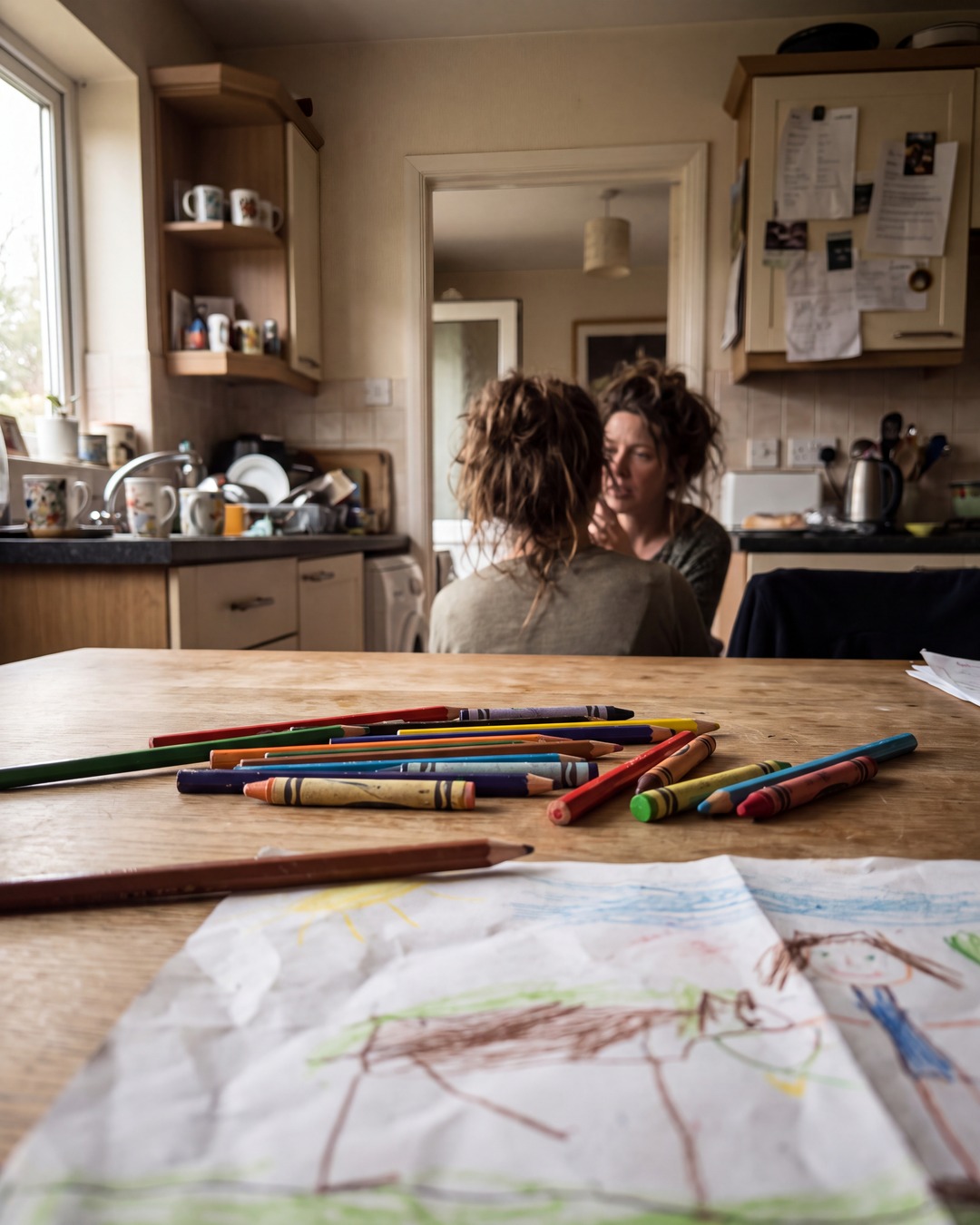
Ran for 23 days, from August 18 to September 10, 2026, the last day Crush saw it.
Run by Laura Schmidt on Facebook. Crush is not the advertiser and does not verify its claims. See this ad in Meta's Ad Library(opens in a new tab)
Make your own version of this ad
Crush makes it, launches it in your own Meta ad account, scales the winners and pauses the losers.
About this ad
- Meta Ad Library ID
- 2081396309413238
- Platforms
- Facebook, Instagram, Audience Network and Messenger
- Relaunches
- 1
- Niche
- Parenting & Kids
Ad text
She said it like it was a diagnosis. "He's only like this because Laura is too soft on him." I'm Laura Schmidt. I was standing in the hallway with a basket of clean laundry when I heard my mom and my sister in the kitchen. Their voices were low but sharp enough to cut through the normal noise of our house. The basket felt suddenly like a boulder. I did not walk into the kitchen. I turned, closed my bedroom door, and cried until my eyes blurred the floral wallpaper. That moment felt small and private, but its damage spread. My son slept badly for a year. My work emails sat unanswered because I'd been up three times a night soothing him. Friends stopped inviting us to playdates. My sister's kids rode bikes on Sunday mornings while we stayed home. Invitations dwindled. I canceled a birthday party because I couldn't face the whispers. The house felt smaller, like we were shrinking to make room for everyone else’s patience. For months, my seven-year-old had been unravelling in ways that made every ordinary minute feel fragile. A tag on his shirt could trigger a 45-minute scream session. A change of plans would become a hurricane of throwing toys, hitting, and a voice that roared like thunder before he dissolved into winded sobs. After the meltdown he would collapse into me and whisper a word he used all the time—"buzzy"—and ask why his head felt like it had too many bees. I tried so many things. The first attempt was the one my mom wanted: strictness. I set up sticker charts with tiny stars, removed screen time, took away toys, and enforced bedtimes like a drill sergeant. I stood firm. It was worse. The explosions were louder, longer, angrier. Removing privileges felt to him like punishment for a storm he couldn't stop. Then I tried the exact opposite. I became the soft parent. I validated feelings until I felt raw. I read every gentle-parenting blog, set up a calm-down corner with cushions, taught breathing exercises with a glitter jar. We cuddled through three separate crises a week. It felt kinder. But the meltdowns didn’t stop — the form changed, but the chaos stayed. He would still dissociate or flail; the "buzzy" feeling stayed. I tried copying my sister. She had a tidy house, obedient kids, and a recipe for calm that involved strict routines I couldn't replicate. I tried the sensory tools the school suggested — a weighted blanket, chewable necklaces, a schedule with pictograms. We added more exercise, more quiet time, earlier bedtimes. For a few days, things would smooth out. Then another meltdown would hit like a pothole on a new road, and we were back to square one. I even tried medication conversations — scary, medical, and not something I wanted to rush into. We met with a pediatrician who recommended an occupational therapist. That appointment was the hinge for me. The therapist didn't start with charts or punishment. She listened. Then she said something that felt like permission and like a map at the same time: "You can't discipline a child out of a dysregulated nervous system. The body has to calm first." That line landed in me like a hand on my shoulder. She explained in practical, unpolished terms: some kids' nervous systems are on high alert. Their bodies are scanning for danger that the rest of us don't see. When that alarm goes off, the brain flips into fight, flight, or freeze. No amount of logical reasoning or consequence will stop a muscle that believes it's saving the body. For those kids, behavior looks like choice but is actually biology. She said routine and connection are crucial, but sometimes the body also needs nutritional support to help those stress responses settle. She mentioned specific nutrients—Saffron, Magnesium, GABA, Vitamin D—that support neurotransmitters involved in calm and sleep without knocking a child out. That felt like a bridge between the "be stricter" advice and the "be softer" advice. It made me stop blaming myself. Why had everything else failed? Because I was addressing the symptom—behaviors—without addressing the physiology. The sticker charts punished a system that was already panicking. The cuddles soothed feelings without giving the brain the raw materials it needed to downshift. Sensory tools helped some moments but couldn’t do the biochemical work of calming a system wired to react. I started reading studies late at night and found small edges of hope in clinical work and parent forums. The science is not magic, but it pointed to ways to support the nervous system without medication: specific nutrients that help GABA receptors, stabilize mood neurotransmitters, and support sleep cycles. Sounds technical, but boiled down—think of it as giving a frazzled system the nutrients it needs to find its off switch more easily. The problem then was practical: my son is the pickiest eater alive. Getting him to take three different pills felt like signing up for more battles. That’s when I found VitaMood Munchies. They had the nutrients the therapist recommended—Saffron, Magnesium, GABA, and Vitamin D—packaged in a gummy that actually tasted good. I remember holding the jar and feeling foolish, like I was buying candy to fix the sky. But I was also exhausted enough to try. I was not expecting a miracle. I wanted a little breathing room. I gave them to him like a tiny ritual: before breakfast, one gummy with juice, then a hug. Here’s what happened, week by week. Week 1: I felt nothing dramatic. He ate the gummy, hiccuped at the taste at first, and asked for cereal. We both watched the clock for a sign. Nothing big changed. I told myself to be patient. Week 2: It was a Wednesday grocery run. His favorite crackers were gone. Normally that would be a meltdown on aisle four—loud, immediate, catastrophic. This time he looked at the empty shelf, blinked, and said, "Okay, Mom. Let's get the other ones." He was disappointed, but he didn't spiral. I held my breath the whole trip home and cried once we were back in the car. It felt like a small, golden miracle. Week 3–4: Mornings started to change. He used to take 45 minutes to transition from pajamas to socks; now it was more like 20. We still had rough mornings, but they were punctuated by stretches of ordinary cooperation. A teacher emailed to say he’d sat more quietly during circle time and completed a short task without escalation. I saved that email like a postcard from a calm world. Week 5–6: The meltdowns reduced in frequency and intensity. When they did come, they were shorter. He corrected himself faster. The "buzzy" moments were still there, but not as searing. We did more things outside the house again. A neighbor commented that he seemed more present at the park. Week 8: The family barbecue. My mom brought a store-bought layered dessert he loves. She was proud and made a ceremony of it. When it fell, face-first on the lawn, the whole yard sucked in a breath. I braced. He stood there with his chin trembling and tears filling his eyes. He looked at the ruined dessert, looked at me, and said, "I'm really sad about the cake, Mom." He cried for a minute, then wiped his face and ran to join his cousins. No screaming, no hitting, no hour-long storm. My mom pulled me aside and said, "He handled that so well. What changed?" I didn't air my late-night reading or the therapist’s lecture. I smiled and said, "He just needed a little support." That answer felt like a relief and a release. I no longer believed the story that I was too soft. I couldn’t control the wiring of his nervous system, but I could learn how to help it. The blame lifted off my shoulders the way you loosen a too-tight braid. It didn't remove responsibility—it changed its shape into something less crushing. I could still set boundaries and teach skills, but I did so with the knowledge that I had to calm his body first if learning was going to stick. Why this worked when other things didn't: previous approaches targeted behavior or environment alone. Discipline tried to change action without calming the alarm; gentle parenting soothed feelings without changing the biochemical readiness to panic; sensory tools helped mini-moments but weren't a daily systemic support. The combination that finally helped us was consistent routines + connection + a simple, daily nutritional support that my kid would actually take. The gummies were not a replacement for bedtime, for breathing exercises, or for empathy. They were a practical part of a toolbox that allowed those other things to work better. I still have hard days. We still cancel plans sometimes. We still have evenings where the world feels loud and impossible. But those nights are fewer. My son’s energy is still big and bright. He's not muted; his enthusiasm is just less edged with chaos. If you are hiding in a bedroom because of words you overheard, or because you are convinced you're the cause of your child's storms, please know this: You are not the problem. Your child isn't broken. Sometimes the answer is helping the body calm so the rest of the work can do its job. For us, VitaMood Munchies became part of that gentle, practical support. People ask what we use. If you want to read more about the exact product I bought and the ingredients that worked for us, this is the page I used: Since so many of you have asked what actually worked for us, here is the link to the exact ones we use: 👇 https://tryvitamood.com/pages/natural-ways-to-calm-a-hyper-child
Where the ad sends people
tryvitamood.com
The whisper that changed everything
See how we finally found calm after trying everything else
Learn more: tryvitamood.com(opens in a new tab)