
Inactive· since Jun 1, 2026
- 80
- days it ran
- 0
- relaunches
- 8,804
- EU reach
Ad copy
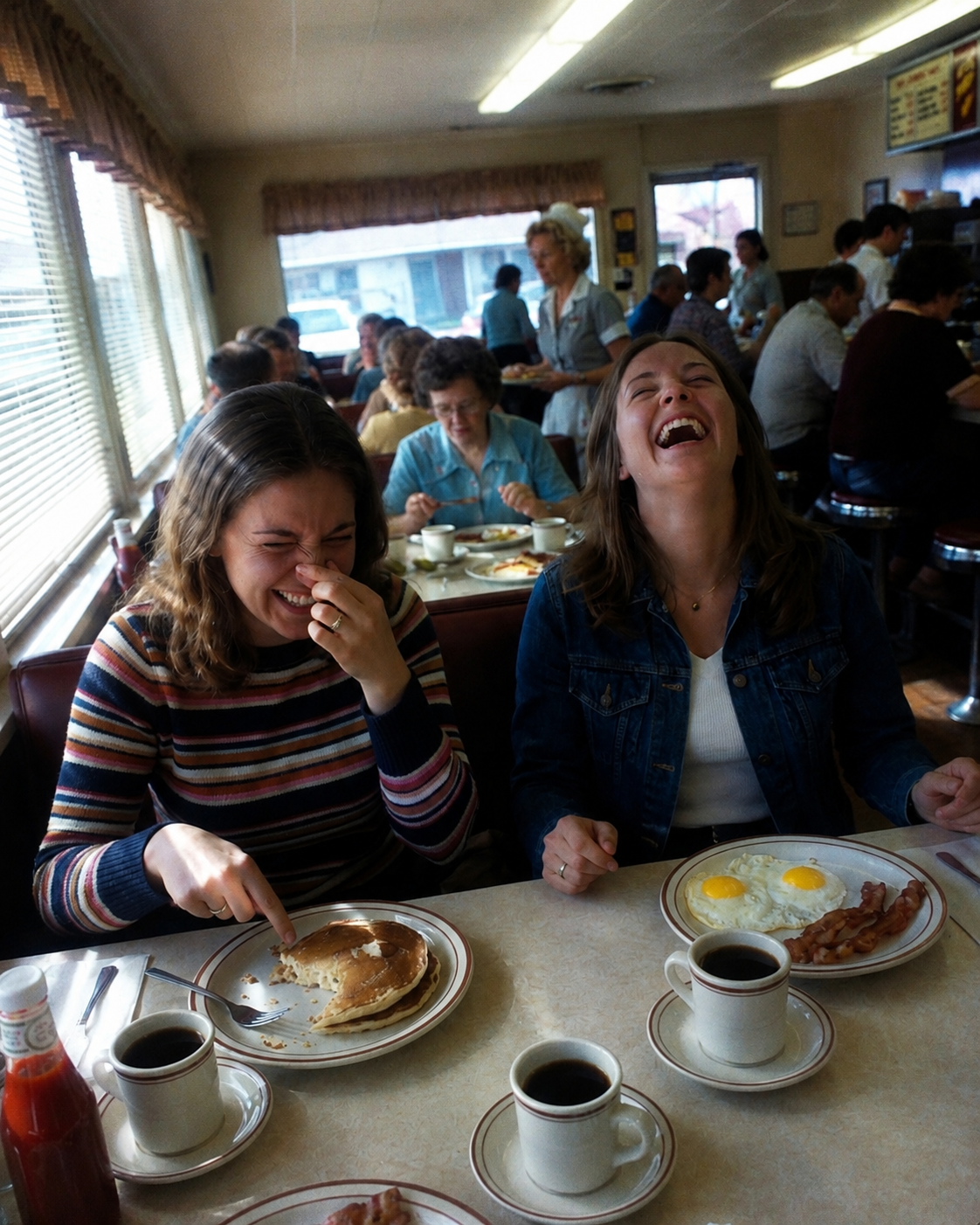
My Mother Stopped Going Down to the Dock. She Was 58. Here's What Got Her Back to the Water. I want to tell you about my mother. Her name is Helen. She's 58. She lives in a small lake town in upstate New York, in a cedar-shingled house that her parents built in 1962. She inherited the house when my grandmother passed eleven years ago. She moved out of her place in the city about a year after that. She's been a lake person her whole life. She swam in that lake as a kid every summer. She taught me to swim in that lake when I was four. She and my father got married on the dock behind that house. They divorced sixteen years later, but the dock stayed hers. She has paddled around that lake in a kayak more times than anyone could count. She used to swim across it twice a week from May to September. The lake is about a mile across. She'd swim it in around forty minutes, towel off on the other side, drink a thermos of coffee, and swim back. She did that for thirty years. About two years ago, she stopped. I'm 34. I teach high school English in a city about three hours from the lake. I drive up to see my mom one weekend a month. I've been doing that since she moved into the house. For the first eight years of those visits, my mother and I would do the same things every time I came up. We'd take a long walk along the lakeshore on Saturday morning. We'd go down to the dock together with our coffee in the afternoon. In the warm months we'd both swim — me a short distance from the dock, her on her two-mile round trip across. In the cold months we'd sit in the Adirondack chairs at the end of the dock with blankets and watch the geese. That was the rhythm. About two years ago, the rhythm started to break. The first thing I noticed was that she stopped doing the long swims. It was June. The water was warm enough. I'd come up for a Saturday visit. I was already in my suit, ready to walk down to the dock with her. She said: "I'm just going to sit on the porch this morning, sweetheart. You go ahead." I asked her if she was okay. She said she was fine. She said she was just feeling a little tired and didn't want to push it. I went down to the dock by myself. I sat at the end and waited. I figured she'd come down once she'd had her coffee. She didn't come down. She didn't swim that day. She didn't swim the next time I visited either. I didn't push it. I figured she'd get back to it when the weather got warmer or when she felt like it. By the end of that summer she hadn't been in the lake once. The second thing I noticed was that she stopped going down to the dock at all. We'd still do the afternoon coffee together. But we started doing it on the porch instead of at the end of the dock. The dock is about a hundred yards from the back door. There's a gentle slope down to it. A little path through the grass. It's not a hike. It's a walk. But over the course of that summer she stopped suggesting it. If I suggested it, she'd come. She'd walk down with me. She'd sit in the chair. She'd be quiet for a while before she got into a conversation. After about an hour she'd say she wanted to go back up to the house. She'd walk back up slowly. She'd be a little out of breath at the top of the slope. She'd pretend she wasn't. I noticed. I didn't say anything. The third thing I noticed was the napping. My mother had never been a napper. She'd been a 5 AM person her entire life. She'd be up before the sun, on her second cup of coffee by the time most people were getting out of bed. She'd go all day and be asleep by 9:30. About a year and a half ago, I started showing up at her house in the afternoon and finding her asleep in the porch chair. Not always. But often enough that I noticed. She'd wake up when I came onto the porch and she'd brush it off. She'd say she'd been up since 4:30 working on the crossword. She'd say she was just resting her eyes. She'd get up and go inside and make us tea. But she'd been asleep. I noticed. I didn't say anything. Last summer she did something she had never done before. She canceled our annual ride. We'd been doing it for nine years. The first Saturday in August. We'd ride our bikes around the perimeter of the lake. It's a 14-mile loop on a paved road with not much traffic. We'd start at her house, ride to the diner on the other side, eat enormous breakfasts, and ride home. She called me the Wednesday before. She said: "Sweetheart. Let's not do the ride this year." I said: "Mom. We've done it for nine years." She said: "I know. I just don't have it in me this summer. Let's do it next year." She said it the way she said everything that summer. Quiet. Final. With a kind of decided-not-to-argue-about-it tone that I recognized but couldn't quite name. I said: "Okay, Mom. Next year." She said: "Come up anyway. We'll do something easier." I went up that weekend. We went out to a restaurant on Saturday night. We sat on the porch on Sunday morning. She didn't go down to the dock. She didn't suggest the bike ride at all, not even an easier version of it. I left on Sunday afternoon and I drove the three hours home and I cried for the last forty-five minutes of the drive. Not because anything was wrong on paper. Just because my mother — my mother, who swam across the lake twice a week for thirty years, who got me on a bicycle when I was five years old, who pulled my brother and me on a sled up the hill behind the house every snow day of our childhoods — had asked me not to bike around the lake with her. And she had asked it the way you ask something when you've decided not to push your body anymore. That night I sat at my kitchen table with my laptop. I started reading. I'm not a researcher. I'm a high school English teacher. I read for a living, but I read novels, not medical journals. But I read for about three hours that first night. I read about women in their late 50s. I read about cardiovascular wellness after 50. I read about the things that change in a woman's body in the years around 55 — the stamina, the breath, the circulation, the way the things that used to come for free start asking to be earned. I read about how a lot of women in their 50s describe exactly what my mother was describing. Not a diagnosis. Not a flag on a panel. Just a quieter, more tired version of themselves that they didn't know how to talk about. That made me feel a little less alone. It also made me feel like there might be something to do about it. I read for several more evenings that week. I read about a lot of different things people add for cardiovascular wellness support. CoQ10. Omega-3s. Magnesium. Hawthorn. Beetroot. The beetroot one surprised me. I'd thought of beets as a side dish my grandmother used to pickle. Not as something worth taking seriously. I kept reading. What I came away understanding — and I'm not a doctor, I'm not in healthcare, take this for what it's worth — was that beetroot contains compounds called betalains. They support the body's natural antioxidant balance. They're the same compounds that give beets their deep red color. Beetroot has been studied for cardiovascular wellness, circulation, and stamina for a long time. The other thing I came away understanding was that betalains are sensitive to processing. Heat-processing is faster and cheaper. Slower methods preserve more of the active compound. One brand name kept coming up in the threads I was reading. Rosabella. Small company. 1,300 milligrams per serving. Cold-pressed at low temperatures. Grown in Lancaster County, in a small farming community there. The thing that made me consider it seriously for my mother was that it wasn't positioned as a replacement for anything. She wasn't on any cardiovascular medication. She was on a low-dose thyroid medication she'd been on for fifteen years. That was the whole list. This wasn't about going off anything. It was about whether there was anything she could add to what she was already doing. It supports the body's natural antioxidant balance and overall cardiovascular wellness. Structure-function. Not a treatment for anything. You add it to what you're already doing. You don't replace your doctor's care. It just adds. A few weekends later I drove up to see her. I waited until Sunday morning. We were sitting on the porch with coffee. I told her what I'd been reading. I told her I wasn't trying to make her feel like something was wrong. I told her I wasn't trying to be a know-it-all daughter who thinks she's figured out her mother's body better than her mother has. I told her I'd just been worried. I told her I'd noticed her not going down to the dock. I told her I'd noticed her canceling the bike ride. I told her I'd noticed the afternoon naps. She didn't argue. She didn't pretend she didn't know what I was talking about. She just listened. When I was done she looked at me for a long time. Then she said: "Sweetheart. I've been wondering if you noticed." She told me she'd been to her doctor about eight months earlier. She'd told her doctor roughly what she was now telling me she'd been feeling. The doctor had run her bloodwork. Done an EKG. Listened to her heart and lungs. Everything came back without any flags requiring action. The doctor had told her that her cardiovascular wellness markers had shifted a little from the year before. Nothing requiring medication. Nothing requiring an intervention. Just shifts that lined up with what she was describing — and shifts that were within the range of what a lot of women her age experience. The doctor had told her the most important things she could do were stay active, manage stress, sleep well, eat well. She'd told her to come back in six months. The six months had passed. My mother had not gone back. I asked her why. She said: "Because I didn't want him to tell me again that I was fine." She said: "I knew I wasn't fine. I just didn't have anything to do with that information." I sat with that. Then I said: "Mom. I want you to call him. Make an appointment. And while you're there, ask him about adding a beetroot supplement to your routine." I told her about the one I'd been reading about. I told her I wasn't asking her to change anything she was already doing. I wasn't asking her to think about her medical care any differently. I just wanted her to ask him if it was a sensible thing to add. She said: "I'll call the office tomorrow." She did. The doctor saw her ten days later. He ran new bloodwork. He repeated the EKG. He listened to her again. He told her some of the markers had shifted a little more. Still nothing requiring medication. Still nothing requiring an intervention. But he agreed with her that what she was experiencing was real, and that he didn't want her to just write it off as aging. She asked him about the supplement. He said it was a sensible thing to add. He said he'd had a number of women her age add it to their routines and report back that they felt steadier. He said there were no interactions with the thyroid medication. He said to let him know how she felt at her three-month follow-up. She ordered the bottle that afternoon. She called me from the porch. She said: "I called. I went. I told him everything. I ordered the bottle." I said: "Mom." She said: "Don't make me cry over the phone." I said: "Okay." She said: "I'll call you Sunday." The bottle arrived about a week later. I called her the day it came. She'd opened it. She said she'd noticed the color — deep, dark red, almost purple. I told her I'd read about that. That the color was the visible marker of the active compound being intact. She said: "Well. We'll see, won't we." That was the whole conversation. I called her every Sunday. The first two Sundays she didn't mention it. The third Sunday she said something offhand. She said she'd walked down to the dock that morning. She said it like it was nothing. I said: "Mom. You walked down to the dock?" She said: "I had my coffee down there. I sat at the end for a while. Then I walked back up." I asked her how the walk back up had been. She said: "A little easier than I remembered it being." She said: "I don't want to make a big deal of it. But I wanted you to know." I told her I was glad. I didn't make a big deal of it. But I sat at my own kitchen table for a long time after we hung up. The next Sunday she said she'd been down to the dock four mornings in a row. The Sunday after that she said she'd been doing the long walk along the lakeshore again. Not as long as she used to. Maybe half a mile each direction. But she was doing it. She said she'd been doing it with her neighbor — a woman a few years younger than her named Phyllis — who'd been trying to get her out walking for months. She said: "I told Phyllis I was ready. She showed up Tuesday morning at 7." She said: "I think Phyllis was surprised." She said: "I think I was too." In May — about three months after she'd started the supplement — she did something I hadn't expected. She called me on a Wednesday. She didn't usually call me on Wednesdays. She said: "Sweetheart. I went in the water this morning." I sat down in my classroom chair. I'd just finished teaching second period. I said: "Mom." She said: "Just to my waist. I didn't swim. I'm not going to push it. But I walked out to where I used to go in and I went in to my waist. The water's still cold but I wanted to feel it." She said: "I stood there for about ten minutes." She said: "I'm telling you. I felt like myself." I had to put the phone down on my desk for a second. When I picked it back up I said: "Mom. I'm so glad." She said: "I am too." She said: "Don't tell your brother yet. He'll make it into a thing." I laughed. She laughed. We didn't say anything for a second. Then she said: "I love you." She said it the way she used to say it, when I was eight and she'd be tucking me in. I said: "I love you too, Mom." That was the end of the conversation. I sat in my classroom chair for the rest of my prep period and I didn't grade a single paper. By July she was swimming again. Not the full mile across. Just short distances out from the dock and back. A few hundred yards. Maybe a quarter mile by the end of the summer. She wasn't trying to get back to where she used to be. She was just back in the water. That was enough for her. It was enough for me too. Last August we did the ride. She'd been training for it for a couple of months. Short rides at first. Three miles. Then five. Then eight. By August she said she was ready. We started at her house at 7 AM. The light over the lake was pink. We rode together. She set the pace. It was slower than the pace she used to set. About four miles an hour slower. I didn't care. I was riding around the lake with my mother. We stopped at the diner. We ate enormous breakfasts. We rode back. We got back to her house around noon. She was tired. So was I. We sat on the porch and we drank water and we didn't talk much. After a while she said: "I didn't know if I'd ever do that again." She said: "I'm glad I did." I said: "Me too, Mom." She reached over and held my hand for a minute. Then she got up and went inside to make us lunch. She went back to her doctor a few weeks ago for her six-month follow-up. She told him roughly what she'd been telling me on Sundays. He listened. He checked her vitals. Looked at the bloodwork. He told her her cardiovascular wellness markers had moved back into a better range than they'd been in two years. He told her whatever she was doing, to keep doing it. He didn't change any of her care. She walked out of that appointment and called me from the parking lot. She said: "He said it. He actually said it." I said: "Said what, Mom?" She said: "He said I was doing well. Not 'you're fine.' He said I was doing well. There's a difference." I knew exactly what she meant. I'm not going to tell you the supplement did all of this. She also started walking with Phyllis. She also started swimming again, even just short distances, which is its own kind of exercise. She also stopped napping in the porch chair, which probably meant she was sleeping better at night. She also went back to her doctor instead of disappearing on him. She changed a lot of things at the same time. I can't separate one variable from another. What I can tell you is that something shifted, and the shift held. The bottle is still by her coffee maker. She takes two capsules every morning. She has for over a year now. She's not going to stop. I started taking it too. I called my own doctor's office first. She said it was a sensible thing to add. I'm 34. I'm a long way from my mother's situation. But I want to be the kind of 58-year-old my mother is now. Not the kind of 58-year-old my mother was a year and a half ago. I'm not going to tell you anything dramatic about my own experience. My mornings feel a little steadier. My afternoons feel a little easier. I changed a few other things at the same time — I started walking on my lunch break, I started getting to bed earlier, I started taking the supplement. I can't separate one variable from another. What I can say is that I'm doing it on purpose. I'm not waiting until I'm 58 to start paying attention to my cardiovascular wellness. I watched my mother almost give up on a lake she'd lived on her whole life. I'd rather not put my daughter in that position someday. If I have a daughter someday. That part is still up in the air. Here's what I'd say to anyone watching a mother — or any woman over 50 — go through what I watched my mother go through. If she's been quietly slowing down. If she's been stepping back from things she used to love. If she's been getting winded on walks that used to be easy. If she's been napping in the afternoon when she's never been a napper. If she's been telling you she's fine in a tone that means she's decided not to talk about it — You're not imagining it. The things you're noticing are real. And "bloodwork in range" doesn't always mean she's fine. Cardiovascular wellness for women over 50 is more layered than a single panel can tell you. Have a conversation. Be gentle. Don't push. Ask her when her last appointment was. Ask her when her next one is. Ask her to make a new one if she's been avoiding it. If you want to talk to her about adding a beetroot supplement to her routine, the most important step is the phone call to her doctor's office. I cannot stress that enough. Especially if she's already on medication — for blood pressure, for thyroid, for cholesterol, for anything — talk to the doctor before adding anything new. The brand I used for my mother and for myself is Rosabella. 1,300 milligrams per serving. Cold-pressed at low temperatures. Grown in Lancaster County. Two capsules with water in the morning. That's the whole protocol. I'm not a doctor. I'm not in healthcare. I'm one daughter who watched her mother stop going down to her own dock and then watched her wade back into her own lake. Take it for what it's worth. P.S. A few practical notes for anyone thinking about this. Rosabella has a 90-day money-back guarantee. If you're not satisfied for any reason, every penny back. No questions asked. That's a sensible policy for a supplement. It gives you time to actually see whether it does anything for the person you're giving it to. I'd give it a few weeks at minimum before deciding anything. Bodies are different. Some people notice something within the first week or two. Others take longer. My mother was somewhere around the third week. Be patient with the person you're giving it to. Be patient with the bottle. P.P.S. My mother keeps an extra bottle in the cabinet now. So do I. They're a small operation and the harvest is seasonal. I learned to stock up after the shipping took longer than expected one month and I started worrying about the timing of the next batch. I don't want my mom to have a gap. P.P.P.S. A note about the doctor's office call. I'm going to come back to this because I think it's the part people are most tempted to skip. The temptation is to think: it's a supplement, it's not a drug, I don't need permission for a supplement. That's not why you call. You call because supplements can interact with medications she may be on. You call because her doctor knows things about her body that you don't. You call because if anything ever comes up later, you want her doctor in the loop on everything she's been taking. My mother almost didn't make that follow-up appointment. She thought it was a waste of his time. I'm glad I asked her to. I'd ask the same of you. P.P.P.P.S. Phyllis — my mother's walking neighbor — is on the supplement too. She started about six months after my mother did. They talk about it like they talk about their gardens. A practical thing. A part of the rhythm. Phyllis has another woman in the neighborhood she's been walking with twice a week now. That woman is 62. I don't know what her doctor will say. I hope she calls and finds out. P.P.P.P.P.S. One last thing. If you're a daughter watching this kind of slow stepping-back with your own mother — and you're wondering whether to bring it up, or whether you should leave her alone and let her come to it on her own — Bring it up. She's not going to bring it up on her own. She's going to keep canceling the rides and napping in the chair and pretending she's fine because mothers do that. They don't make their children worry about them. But she'll listen to you. If you bring it up the way you would bring up anything you love her about. Gently. Without pushing. With respect for the fact that she has been a person for fifty-something years before you came along and she will not appreciate being managed. But she'll listen. She raised you. You can raise her on this one thing. That's the whole thing. That's all I have. https://track.tryrosabella.com/cdc16426-3e48-40a7-9fad-21098084f6cf Individual experiences vary. These statements have not been evaluated by the FDA. This product is not intended to diagnose, treat, cure, or prevent any disease.
Support stamina and heart health every day
LEARN MORELike this ad? Make it yours.
Crush rebuilds this exact creative around your product — your brand, your colors, your offer — in about a minute.