
Inactive· since Apr 1, 2026
- 14
- days it ran
- 0
- relaunches
Ad copy
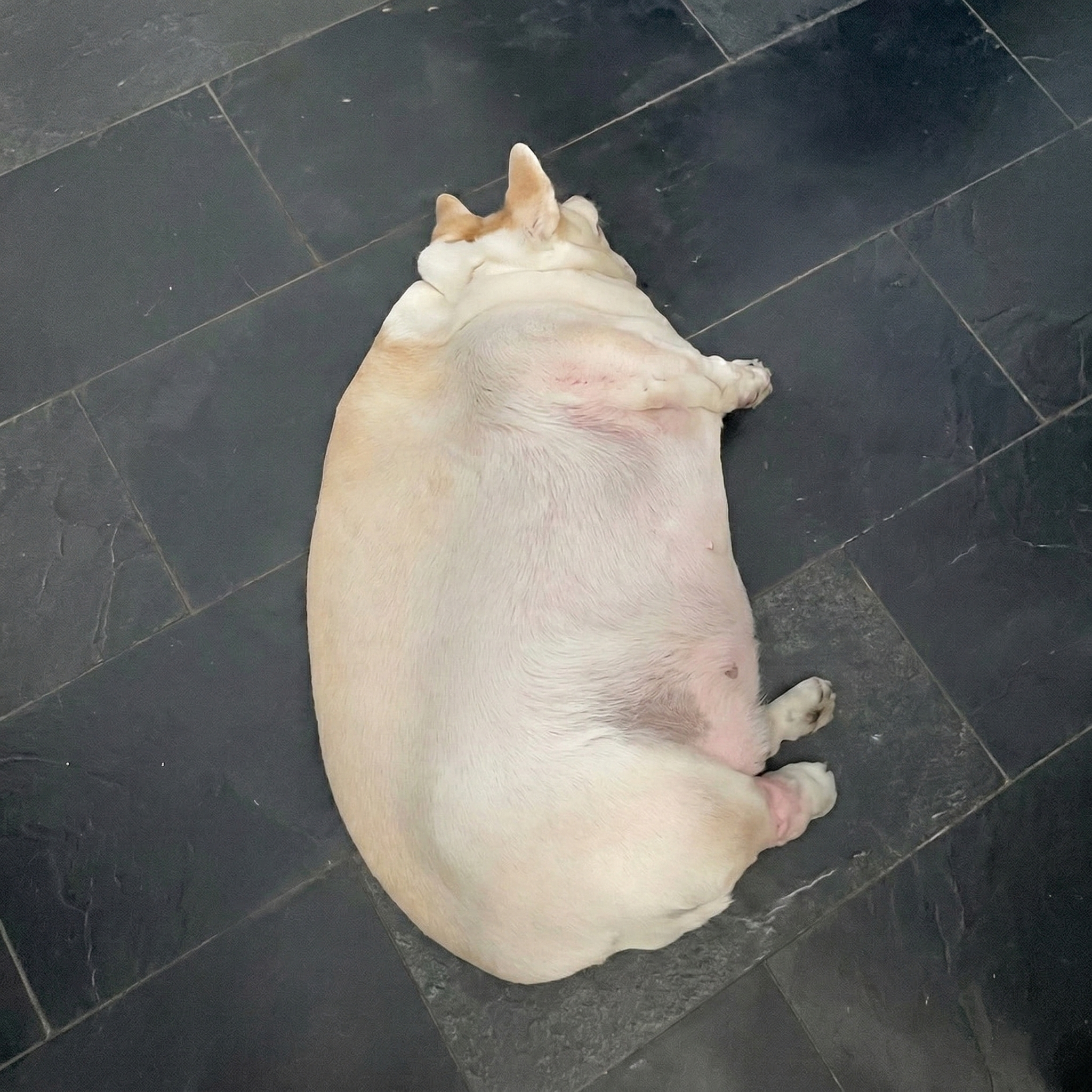
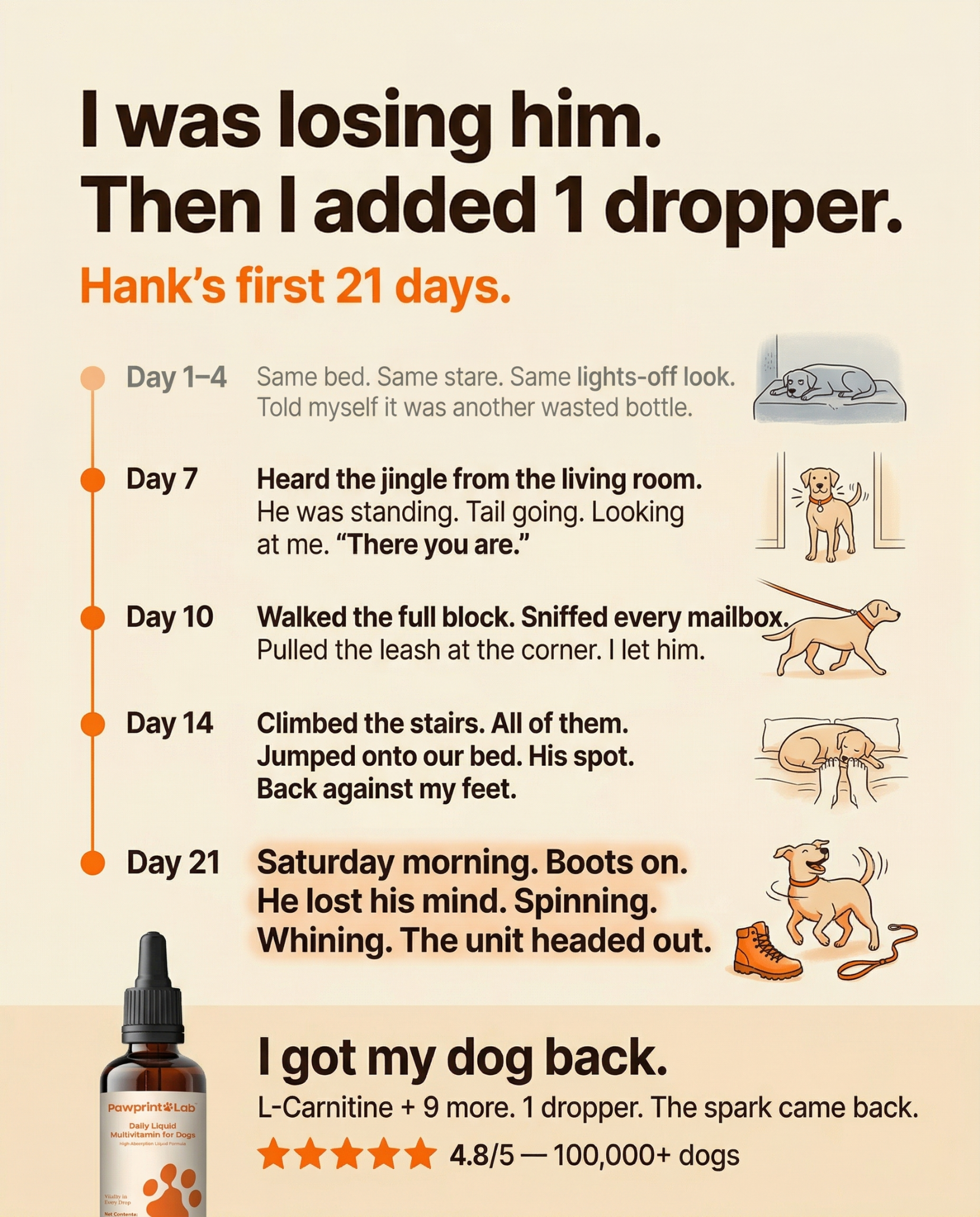
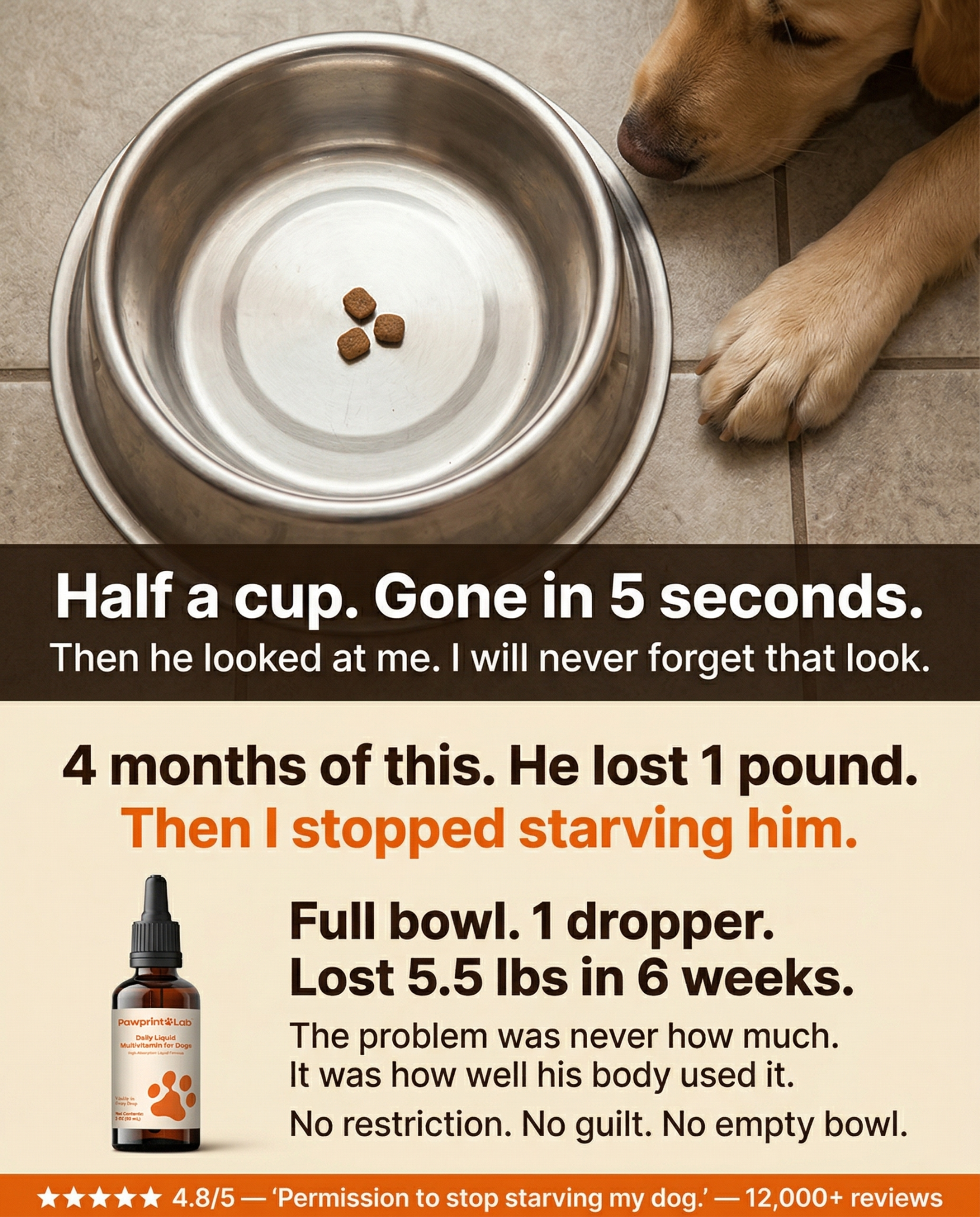
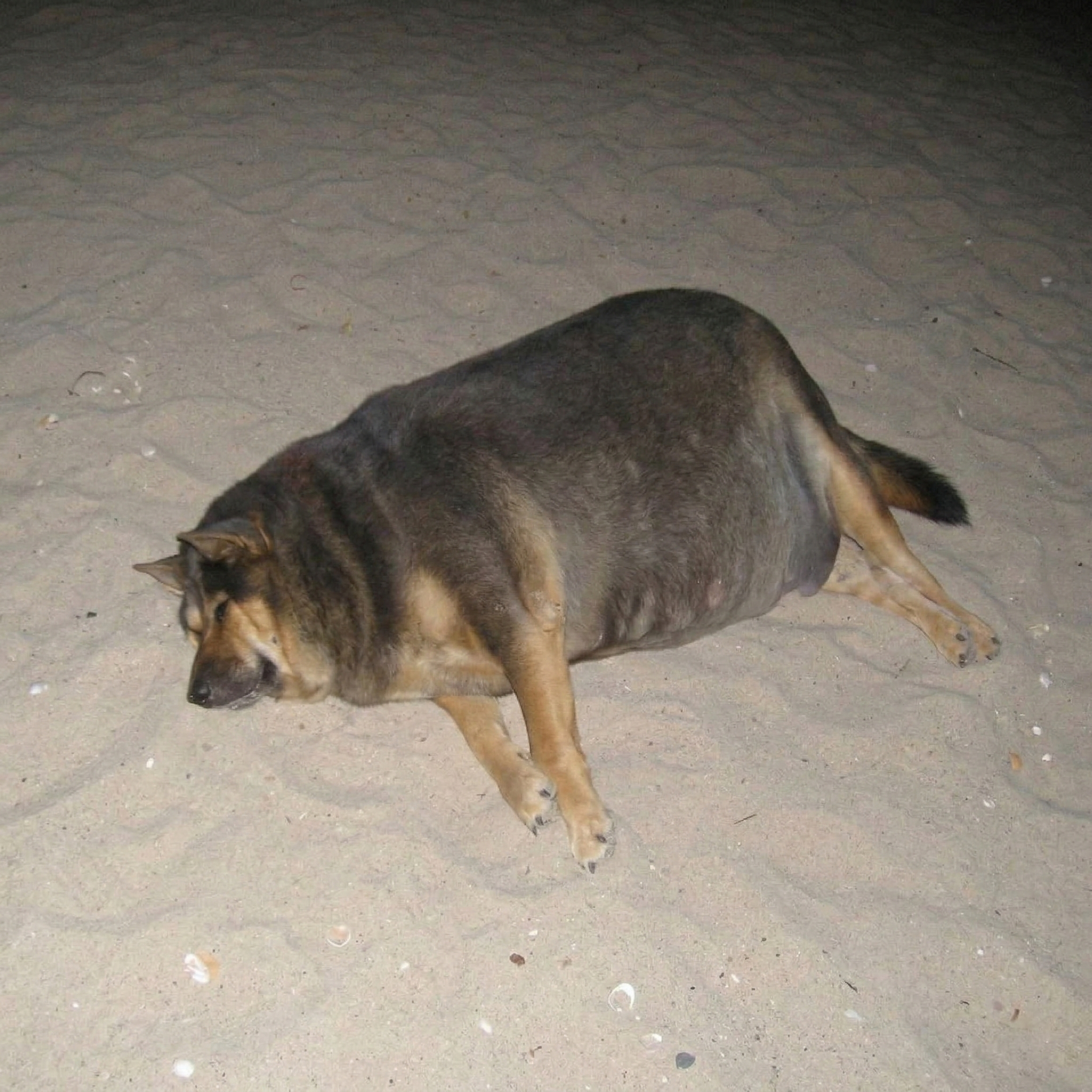
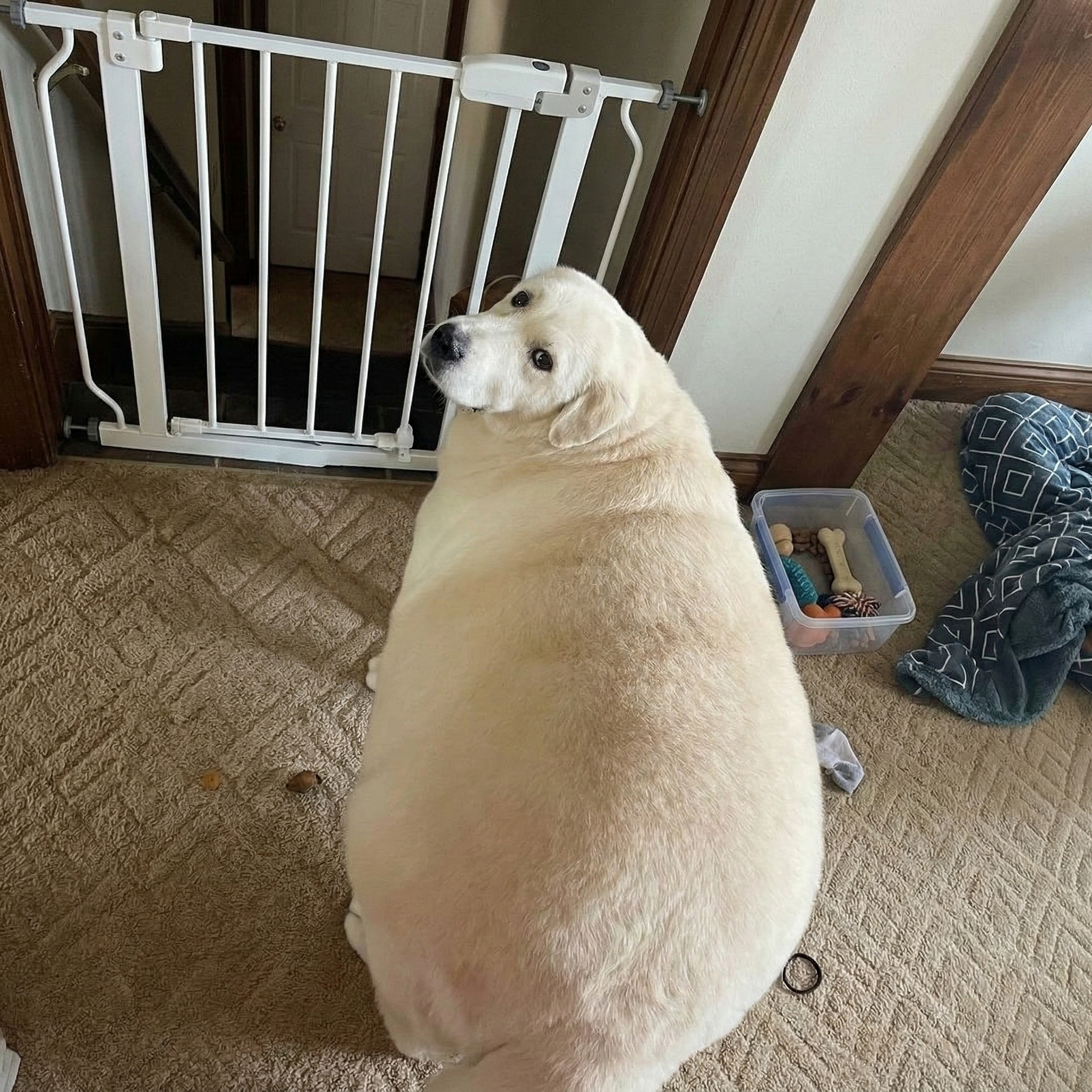
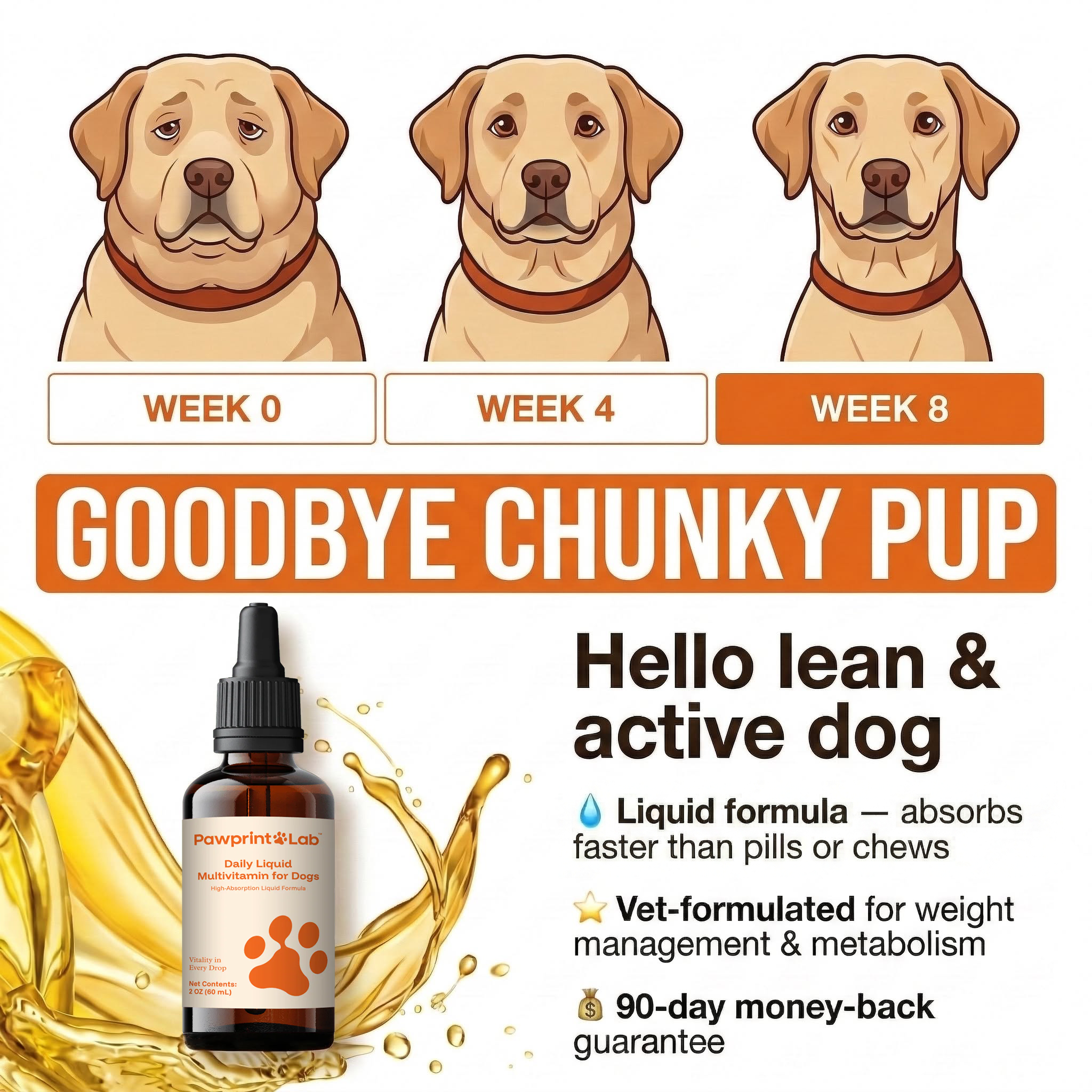
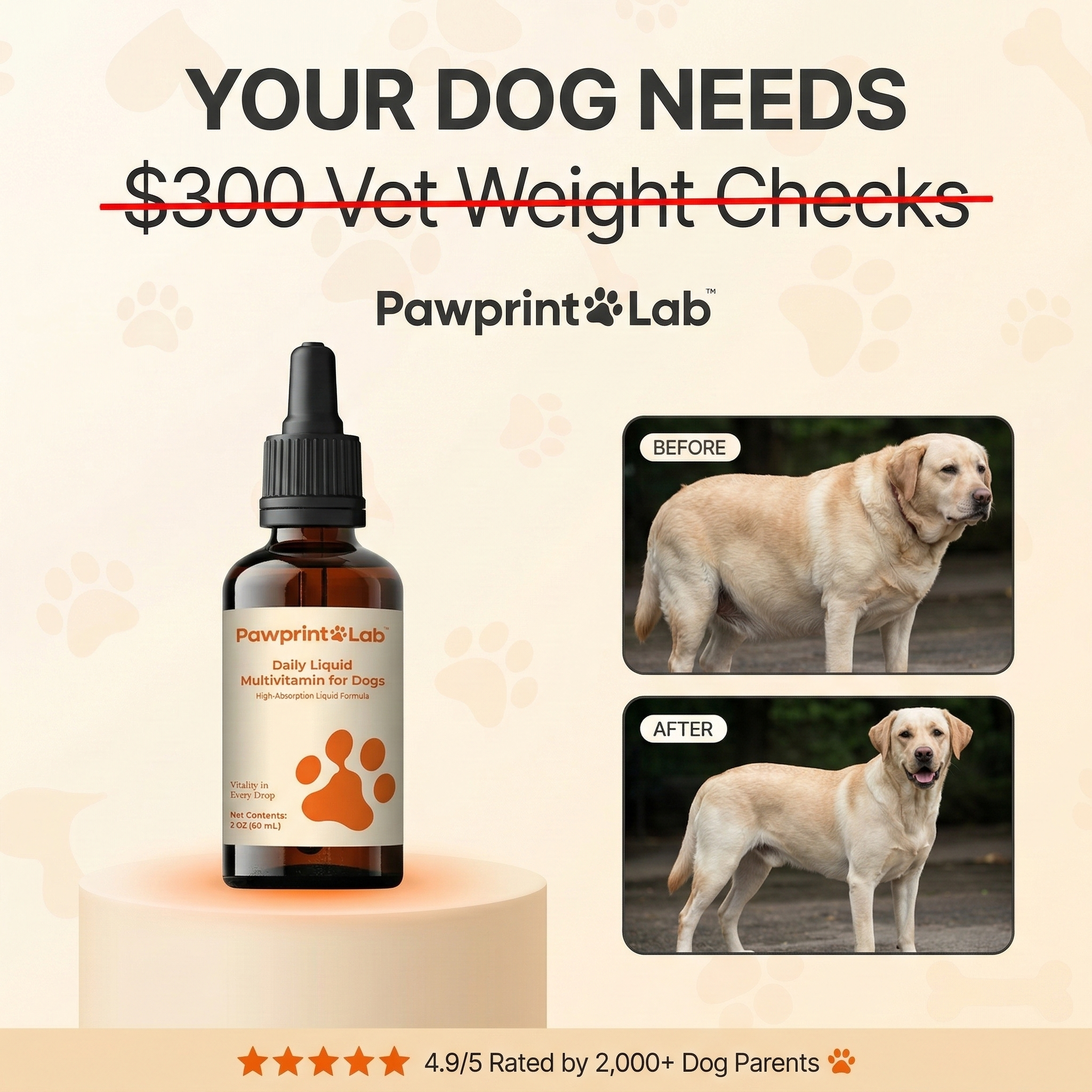
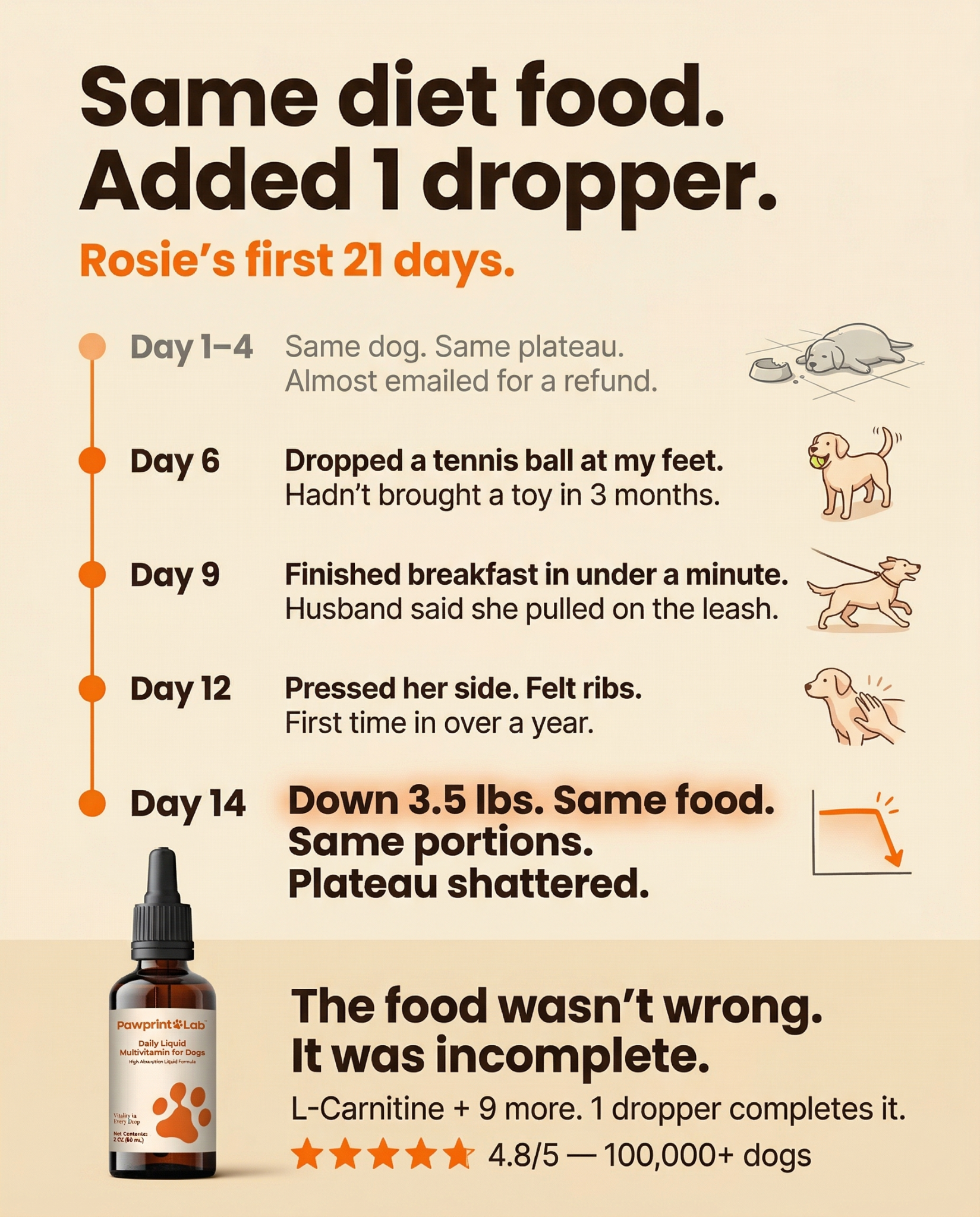
I spent hundreds on special weight management food and my dog was still chunky, but three weeks after I added one thing to his bowl he dropped four pounds without changing a single meal. It was a Monday morning around 6:30 AM. The kitchen was still dark. I was standing at the counter, scooping weight management kibble into Rosie's bowl with a measuring cup. I knew the exact amount. Three-quarters of a cup. Twice a day. No more. I had been doing this for six months. Same bowl. Same scoop. Same food. Same time. Every single day. I set the bowl down and watched her. She walked over. Sniffed. Took a few bites. Looked at me. Took a few more. Walked away. Half the bowl still sitting there. She wasn't full. She was bored. Bored of the food she'd been eating for one hundred and eighty days in a row. Bored of being hungry. Bored of the whole routine. I stood there staring at her lying on the kitchen tile, still round, still heavy, still the same shape she'd been six months ago when the vet told me to switch her food. This was the dog who used to vacuum her bowl in ten seconds flat and come sliding back across the floor, tail spinning, nose pressed to the ground looking for crumbs. The dog who once stole an entire birthday cake off the dining table and ate half of it before anyone noticed, and she had the audacity to look proud of herself. The dog who had so much fire in her that we called her "the missile" because when you opened the back door she launched herself into the yard like she'd been shot from a cannon. Now she was lying on the tile at 6:30 AM, half a bowl of diet kibble untouched, looking at me like I owed her an apology for what her life had become. And she was still fat. That was the morning I stopped believing diet food was going to fix anything. For six months, I had played the "trust the process" game. I told myself it takes time. I told my husband to stop giving her table scraps. I told my daughter the diet food was "helping, we just can't see it yet." I told my mother to stop sneaking her cheese. "The vet said this would work. We just have to be patient." But patience has a shelf life. And mine expired on a Monday morning staring at a half-eaten bowl of thirty-eight-dollar-a-bag kibble and a dog who looked exactly the same as the day I started. Six months. One hundred and eighty days. Roughly ninety dollars a bag, three bags a month. I had spent over five hundred dollars on weight management food. And she had lost two pounds. Two. Pounds. In six months. I did the math in my head and felt sick. That was two hundred and fifty dollars per pound. I could have hired a personal trainer for my dog and gotten better results. And those two pounds? They came off in the first month. Then nothing. A plateau so flat you could land a plane on it. Five straight months of the same weight, the same body shape, the same sad bowl routine. But the weight wasn't even the thing that was killing me. It was what was happening to the rest of her. Her coat. Six months ago, she had a shiny, deep golden coat that people commented on at the park. Now it was dry and flat. Dull. Like straw. She was shedding in clumps on the couch, on the bed, on every surface in the house. Her skin. She had started scratching. Not just normal scratching. Obsessive, grinding-her-teeth scratching at her belly and behind her ears. Red patches started appearing. Then hot spots. Two of them, raw and angry, on her flank. Her energy. She went from "the missile" to a dog who got winded walking to the mailbox. She used to sprint across the park. Now she'd trot for maybe thirty seconds, stop, pant, and look at me like she needed a nap. I mentioned this to the vet at the six-month checkup. "That's not unusual," she said. "Weight management food is lower in fat. Lower in protein. Higher in fiber. Some dogs' coats change. The energy thing — she's probably just adjusting." Adjusting. My dog's coat is falling out, her skin is on fire, and she can barely walk around the block, and we're calling it "adjusting." I bit my tongue so hard I tasted iron. "So what else can we try?" I asked. "You could add a joint supplement," she said. "Maybe a fish oil. Some glucosamine chews." So I tried them. God, I tried everything. Our kitchen counter became a graveyard of half-used bags and bottles stacked next to the half-used bag of diet kibble. Joint chews from the pet store shelf. Twelve dollars for a bag. She ate one, chewed it for approximately four seconds, and spit a wet brown lump onto the floor. She looked at me like I'd tried to poison her. Fish oil softgels I hid inside a piece of deli turkey. She performed surgery on the turkey, extracted the capsule with the precision of a watchmaker, ate the turkey, and left the capsule glistening on the floor. A "metabolism booster" powder from an Instagram ad. Thirty-two dollars. I sprinkled it on her food. She ate around it in a perfect circle, leaving a ring of green dust surrounding an empty center. An artist couldn't have been more deliberate. A "weight loss" soft chew that cost forty-five dollars for a thirty-day supply. She ate them happily. They tasted like bacon, which is because they were mostly bacon flavoring, maltodextrin, and glycerin with a decorative amount of green tea extract. Nothing worked. Not the diet food alone. Not the diet food plus supplements. Not any combination of anything. They all failed the same way. The diet food cut calories but also stripped out the nutrients her body needed to actually burn fat and maintain itself. Her metabolism got slower, not faster. Her coat got worse because the food was nutritionally hollow. Her joints stiffened because there was nothing supporting them. The food was a calorie cage — it kept her hungry but gave her body nothing to work with. And the supplements? The ones she would actually eat were eighty percent filler. The ones with real ingredients she refused to swallow. And even the decent ones were fighting an uphill battle because the diet food was undercutting them from the other direction. It was like bailing water out of a boat with a hole in it. The bucket wasn't the problem. The hole was the problem. And the diet food was the hole. Every study I would later read confirmed the same thing: Calorie restriction alone triggers metabolic slowdown. The body thinks it's starving. It conserves energy. It hoards fat. It sacrifices non-essential functions — coat quality, immune response, joint maintenance — to protect the core. You're not helping the dog lose weight. You're teaching the dog's body to survive on less while holding onto every ounce of fat it can. That's why the plateau. That's why the dull coat. That's why the hot spots and the lethargy and the sad eyes at a half-empty bowl. The diet food wasn't failing because I wasn't strict enough. It was failing because diet food, by design, cannot fix the underlying problem. That Monday morning, staring at Rosie lying on the tile, still round after six months of suffering through food she hated, I realized we were losing. If I kept doing this — the diet kibble that plateaued in month one, the supplements she wouldn't eat, the slow decline of her coat and energy and spirit — she was going to spend the next five years as a tired, itchy, overweight dog who used to be a missile. I set her bowl in the sink, sat down at the kitchen table, and opened my laptop. I didn't go to the dog forums this time. I was sick of reading the same loop. "Tried diet food." → "Didn't work." → "Tried adding supplements." → "She won't eat them." → "Still chunky." → "Same. Following." Dead thread after dead thread. I started reading veterinary nutrition research. Metabolic studies. Papers on canine weight loss interventions. I wanted to understand why diet food fails — not anecdotally, but mechanistically. What is actually happening inside the body when you cut calories and strip nutrients at the same time? I read until my eyes blurred and my coffee turned cold. 10 AM. Noon. I forgot to eat lunch for the second time that week. And then I found a clinical paper from a veterinary metabolic researcher that stopped me cold. He wasn't talking about "diet food." He was talking about the difference between removing calories and fixing metabolism. He explained it like this: Imagine a car with a clogged fuel injector. The fuel goes in, but it can't reach the engine properly. So the car sputters, stalls, runs rough. Now imagine someone looks at the car and says, "The problem is too much fuel. Let's put less gas in the tank." You put less gas in. The car still sputters. It still stalls. Now it also runs out of gas faster. You didn't fix the injector. You just made the car hungrier. That's diet food. Your dog's body has a fuel injector called L-Carnitine. Its job is to grab fatty acids — stored body fat — and shuttle them into the mitochondria, the tiny engines inside every cell that convert fat into usable energy. Without enough L-Carnitine, fat can't reach the engine. It just circulates and gets re-stored. The body piles it on the belly, the ribs, the hips, because it has nowhere else to put it. Diet food puts less fuel in the tank. But the injector is still clogged. The dog eats less. The body can't burn what it has. Fat stays. Weight stays. The body panics and slows everything down to conserve — coat production, immune function, joint maintenance, energy. Everything non-essential gets sacrificed. That's the plateau. That's the dull coat. That's the hot spots and the lethargy and the five months of nothing changing. And clinical research confirmed it: Dogs supplemented with L-Carnitine lost significantly more body weight than dogs on calorie restriction alone, even when food intake was similar. The nutrient made the difference. Not the diet. But here's what stopped me in my tracks: The researcher wasn't saying "don't use diet food." He was saying diet food alone is incomplete. It addresses half the problem — the input — while ignoring the other half — the processing. The solution wasn't to abandon the diet food. It was to pair it with something that fixed the clogged injector. Something that restarted the fat-burning system the diet food had shut down. Something that replaced the nutrients the diet food had stripped away. Diet food handles the input. But you need something to handle the output. I looked at Rosie. Still lying on the tile. Still round. Still dull. For six months, I had been putting less gas in a car with a broken fuel injector and wondering why it wasn't running better. We had been cutting her food without giving her body the tools to burn what was left. We had been adding supplements that either she wouldn't eat or that couldn't survive her digestive system long enough to do anything. We had been doing half the job and expecting the full result. I felt a mix of frustration and clarity. Frustration because six months. Six months of watching her eat food she hated. Six months of plateau. Six months of coat damage and hot spots and energy loss that I now understood was the diet food itself causing collateral damage. Clarity because for the first time, I understood the equation. Diet food = fewer calories in. That's all it does. That's its one job. But without metabolic support — L-Carnitine to burn fat, anti-inflammatories to calm the systemic fire, joint support to protect the structure carrying the weight, immune support to repair the collateral damage — the diet food is just a starvation protocol with a premium price tag. The answer was never "diet food OR supplement." It was "diet food AND the right supplement." Together. At the same time. Covering both halves of the equation. I started searching for that second half. I didn't want another treat chew. I didn't want another powder she'd eat around. I didn't want another Instagram gimmick. I wanted something that actually got into her system, delivered real doses of real ingredients, and worked alongside the diet food instead of fighting upstream against it. I learned that most chewable supplements have a delivery problem so severe it borders on fraud. The active ingredient gets chewed up, dissolved by stomach acid, and degraded through the intestinal wall. By the time it reaches the bloodstream, the dose that was already small is now microscopic. You're paying for what dissolves in the gut, not for what arrives at the cells. I needed something that bypassed the chew-swallow-and-pray pipeline entirely. I found a small company called Pawprint Lab. I almost scrolled past them. A plain amber bottle with a dropper. No celebrity vet. No flashy Instagram tiles. No transformation photos with suspicious lighting. But then I read the reviews. They weren't just saying "good product." They were living the last six months of my life. "Diet food didn't work. Still chunky. Added this. Three weeks later? Plateau broke." "Spent hundreds on special food. Nothing changed. This is what was missing." "Weight management kibble for four months. Nothing. Added Pawprint. Dropped three pounds in a month." "I tried diet food for so long. The food wasn't the problem. The food was only half the answer." Every single one was my exact story. It wasn't a treat chew. It wasn't a powder. It wasn't another bag of food with a clinical label. It was a liquid formula. Ten active ingredients in one dropper. You squeeze it onto their food — even the diet food — or directly into their mouth. It absorbs straight into the system. No pill casing to dissolve. No stomach acid destroying it. No filler eating up space where real ingredients should be. L-Carnitine to unclog the fat-burning injector the diet food couldn't touch. Fish Oil EPA/DHA and Turmeric to calm the inflammation the excess weight had been silently building. Glucosamine HCl, Chondroitin Sulfate, MSM, and Hyaluronic Acid to protect and rebuild the joints that had been grinding under the weight. Beta-Glucans and Zinc to repair the immune function that the nutritionally stripped diet food had been undermining. Vitamin E to support the coat the diet food had been starving. It wasn't a replacement for the diet food. It was the other half. The diet food handled the input — fewer calories. This handled the output — burn the fat, calm the fire, rebuild the structure, repair the damage. Two halves of one equation. Together for the first time. I ordered a bottle. I didn't tell my husband. He had already made the "that's a lot of money for dog food that isn't working" speech twice. A third supplement would have started a fight. When it arrived three days later, I waited until dinner. Rosie was at her bowl, doing the routine. Sniff the diet kibble. Eat a few pieces. Walk away. Lie down. I squeezed one dropper over her kibble and stirred it in. She came back to the bowl. Sniffed again. Her ears went forward. She ate the whole thing. Every piece. Licked the bowl clean. Pushed it across the floor with her nose and looked at me like, "Where's the rest?" She hadn't finished a meal in weeks. Something about the liquid on the food made the diet kibble palatable again. She actually wanted it. "Okay," I thought. "She's eating. That's something. Let's see." I didn't get excited. Six months of diet food had trained the hope out of me. I was prepared for another plateau. Another nothing. Another "here we go again." Day one. Same dog. Same body. Same nap on the tile. Day two. Nothing visible. Day four. Nothing I could point to. But she finished her breakfast for the fourth day in a row. That hadn't happened since before the diet food. Day six. I was in the living room reading and I heard her nails on the hardwood. Fast. Not walking. Trotting. She came around the corner, dropped a tennis ball at my feet, and looked at me. She hadn't brought me a toy in three months. I threw it. She went and got it. Not running. But moving with a purpose I hadn't seen in half a year. Day nine. My husband took her for a walk. He came back and said, "She did the full loop. Pulled on the leash at the end. Hasn't done that since..." He trailed off. He couldn't remember when. Day twelve. I was petting her on the couch and my hand ran along her side. I stopped. I pressed gently. Ribs. Not buried under a thick layer of padding. Ribs. Right there. Under a thinner, tighter layer. I could count them with my fingertips. "Babe," I called to my husband. "Come feel this." He pressed his hand against her side. His eyes went wide. "Are those her ribs?" "Those are her ribs." Day fourteen. I put her on the bathroom scale and did the math. She had lost three and a half pounds. In two weeks. Same diet food. Same portions. Same everything. The only difference was one dropper of liquid on her food, twice a day. Three and a half pounds. After six months of plateau. After five months of absolutely nothing changing. The plateau didn't just break. It shattered. I sat on the bathroom floor and pressed my face into her neck and cried. Not sad crying. The kind of crying where six months of frustration and guilt and "here we go again" finally cracks open and drains out. Day twenty-one was when the other changes started showing up. Her coat. I noticed it in the sunlight coming through the living room window. The dry, straw-like fur was starting to soften. Not all the way back. But there was a sheen returning. A warmth. My daughter ran her hand along Rosie's back and said, "She's soft again, Mom." The hot spots. The two raw, angry patches on her flank were calming down. The redness had faded. She wasn't grinding her teeth scratching at them anymore. One of them had started growing fur back over the bald spot. The energy. My God, the energy. She wasn't "the missile" again. Not yet. But she was a dog who wanted to be awake. Who stood at the back door in the morning. Who followed me from room to room. Who picked up the squeaky toy and squeaked it, just because. That was five weeks ago. She's down almost six pounds total. Same diet food. Same portions. Same schedule. The only addition is one dropper, twice a day, stirred into the kibble she now finishes every single time. I took her to the vet last week. The vet ran her hands along Rosie's sides, looked at her from above, checked her waist and her tuck. "What changed?" she asked. "Her body condition has improved significantly since her last visit." I showed her the amber bottle. Explained the L-Carnitine. The liquid delivery. The idea that diet food alone is only half the equation. She turned the bottle over, read the label, and nodded. "This makes sense," she said. "The food handles the caloric side. This handles the metabolic side. Most owners only do one or the other." She looked at Rosie. "You did both. And that's why it worked." I almost laughed. Six months of "trust the process." Six months of "she's adjusting." Six months of plateau and dull coat and hot spots and sad eyes. And the answer was never to ditch the diet food. It was to complete it. Her coat is coming back. Shiny, thick, golden again. My sister visited last weekend and said, "She looks like a different dog." She's not a different dog. She's the same dog with a body that finally has what it needs to function. The hot spots are almost gone. One healed completely. The other is closing. She finishes every meal. She doesn't stare at me with hunger in her eyes anymore. The diet food plus the dropper gives her body what it needs, and her body finally knows what to do with it. She brought me the tennis ball yesterday. Then again an hour later. Then again. My husband watched her trot across the yard — trot, not waddle — and said, "I think the missile is coming back." I'm sharing this because I know there are thousands of dog owners right now staring at a bag of weight management food that cost thirty-eight dollars and a dog that looks exactly the same as the day they started. I know you've been patient. I know you've measured every scoop. I know you've said no to the begging, no to the treats, no to the table scraps. You've done everything the vet said. And the scale hasn't moved. But you have to understand: Diet food is not the whole answer. It was never the whole answer. It handles the calories. That's it. One half of the equation. Without the other half — the metabolic restart, the fat-burning shuttle, the anti-inflammatory support, the joint protection, the immune repair — the diet food just starves your dog into a plateau while their coat falls out and their energy crashes. Stop expecting diet food alone to fix a metabolic problem. Stop buying treat chews packed with filler that can't survive your dog's stomach. Stop blaming yourself for a plateau that was never your fault. Your dog's body needs both halves. The calorie control AND the cellular support. Together. This little amber bottle isn't a replacement for your dog's diet food. It's the missing half. It's the piece that turns "not working" into working. If you've been on diet food for months and nothing's changing... If you've hit a plateau you can't break no matter how strict you are... If your dog's coat is getting worse, energy is dropping, and you're starting to wonder if this is just how it's going to be... You need to try Pawprint Wellness Protocol. Rosie gets one dropper on her diet kibble, twice a day. My vet calls it "completing the equation." I call it the six months I wish I could get back. Don't spend another month doing half the job and wondering why nothing's working. Click below to see if it's the missing half your dog needs.
I Tried Diet Food for 6 Months. He Lost 2 Pounds. Then I Added One Thing and Everything Changed.
PawPrint Lab
LEARN MORELike this ad? Make it yours.
Crush rebuilds this exact creative around your product — your brand, your colors, your offer — in about a minute.