Chloe Hartwell
Chloe Hartwell Facebook ad: “Reclaim Your Emotional Stability”

Ran for 3 days, from March 19 to March 22, 2026, the last day Crush saw it.
Run by Chloe Hartwell on Facebook. Crush is not the advertiser and does not verify its claims. See this ad in Meta's Ad Library(opens in a new tab)
Want an ad like this for your product?
Crush makes new ad images for your product from this ad: your logo, your product photo, your offer.
Trials from $19.95 USD, then $79.95 USD a month. Cancel anytime.
About this ad
- Meta Ad Library ID
- 1475494724371522
- Platforms
- Facebook, Instagram, Audience Network, Messenger and Threads
- Relaunches
- 0
Ad text
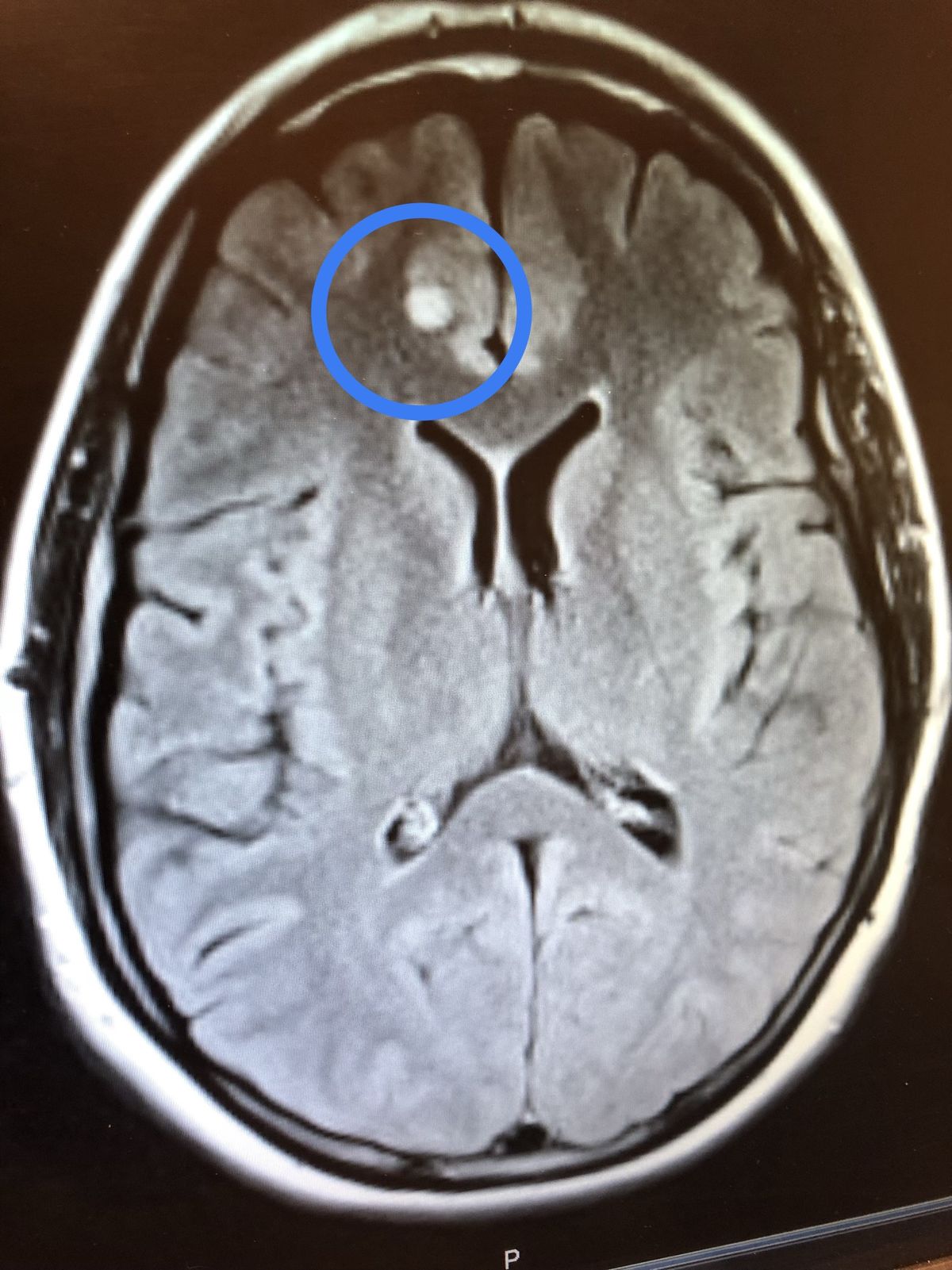
68% of women who develop treatment-resistant depression were on a GLP-1 first. Most of them had no idea the emotional blunting was a warning sign. I was almost one of them. I went in for my routine GLP-1 follow-up. My prescribing physician said everything looked great. Weight down 47 pounds. Blood pressure improved. Metabolic markers moving in the right direction. Nothing to worry about. But my husband had been watching me for six months and he insisted I see a neurologist for a full workup. "Just to be safe," he said. The neurologist ran cognitive assessments. Checked hippocampal function. Ordered tests I'd never heard of. When she came back with the results, she wasn't smiling. "How long have you been experiencing emotional numbness?" she asked. I was confused. "What does that have to do with anything serious?" "Everything," she said. "The same BDNF depletion that's shutting down your emotional response is happening in your hippocampus and reward circuits right now. Emotional blunting isn't a mood problem. It's an early warning sign of neurological degeneration." She pulled up an image on her screen. "See this? Your hippocampal activity is already measurably reduced. Your reward circuits are operating at a fraction of normal capacity. When BDNF levels start crashing, the emotional response system shows symptoms first. You've probably been feeling flat for what, four months? Maybe six?" "About six months," I admitted. "But I thought that was just an adjustment period." She shook her head. "Women with GLP-1-induced emotional blunting who don't address the underlying BDNF depletion have up to a 68% chance of progressing to clinical depression within two years. Your brain gave you a warning. Most women ignore it until they're sitting in a psychiatrist's office being handed an antidepressant that won't fix anything." I felt sick. "So what do I do? More medications?" "That's one option," she said. "SSRIs for the mood, Wellbutrin on top, maybe an augmentation strategy. Or..." She paused. "We fix your BDNF. Actually reverse the neurological depletion that's causing both the blunting and the degeneration underneath it." That conversation happened four months ago. And it completely changed how I think about what the GLP-1 did to my brain. Here's what I didn't understand: When you can't feel genuine joy, your brain isn't broken. It's trying to tell you something critical. Your hippocampus and reward circuits are the most BDNF-dependent structures in your entire brain. When neurotrophic support starts failing, those systems show symptoms months before the degeneration becomes irreversible. So when I was going through entire days feeling nothing, smiling at my kids because I knew I was supposed to, calling my sister at 11pm asking if this was as good as it was ever going to get — my brain was screaming that my neurological foundation was in trouble. And I was too confused to pay attention. My prescribing physician had suggested Lexapro about three months earlier. I'd been taking it every day. It helped slightly with the worst days. But it wasn't fixing anything. It was just manipulating serotonin temporarily while the real problem — BDNF depletion — kept getting worse. My neurologist explained it like this: "Antidepressants are like turning up the water pressure when your pipes are clogged. Sure, more serotonin comes through. But the underlying depletion is still there, getting worse every month." She told me that 68% of women who develop treatment-resistant depression were on a GLP-1 first. That emotional blunting typically shows up 3-6 months before any clinical depression diagnosis. That it's one of the most powerful predictors of future neurological deterioration — even more than family history of depression. "So what do I do?" I asked. She said I had two options. Option one: medications to manage the symptoms. Antidepressants, dose escalations, augmentation strategies. "You'll probably be on those indefinitely," she said. Option two: actually fix my BDNF production. Reduce neuroinflammation. Restore reward circuit function. "If we can rebuild proper neurotrophic support, both problems improve — your brain health AND your emotional capacity." "How do I do that?" I asked. She said most doctors prescribe antidepressants because that's what they're trained to do. But there's a natural source of something your brain desperately needs to restore emotional function — a trace mineral that directly triggers BDNF production. "The most studied source is lithium," she said. I thought she was joking. "Lithium? That's your medical advice?" She pulled up a research study on her computer. "Your brain converts lithium into neurological signals that trigger BDNF release — the growth factor that allows your hippocampus to form new connections, repair damaged reward circuits, and restore the emotional range that the GLP-1 suppressed. It's the same underlying mechanism your brain needs. But instead of forcing a temporary serotonin response, lithium actually restores your brain's ability to produce BDNF naturally. Studies show it reduces hippocampal atrophy, restores neuroplasticity, and improves emotional function everywhere — including where it matters most for actually feeling your life again." "But isn't lithium a psychiatric drug?" I asked. "The kind they give people with bipolar disorder?" She shook her head. "That's prescription lithium carbonate. High doses. 900 to 1200 milligrams. Requires blood monitoring, causes tremors, kidney strain, thyroid problems. That's not what I'm talking about." She turned the screen toward me. "There's a specific form of lithium called lithium orotate. It uses a completely different delivery mechanism. The orotate molecule carries lithium directly across the blood-brain barrier and into brain cells at micro-doses — 10 milligrams instead of 900. Same BDNF activation. None of the toxicity. It's the form that actually reaches the hippocampal neurons the GLP-1 damaged." She paused. "Lithium carbonate never gets to where it needs to go at safe doses. Lithium orotate does. That's the entire difference. And most doctors will never tell you that distinction exists because one requires a prescription and one doesn't." But here's the problem: You can't restore BDNF through diet alone. To get a therapeutic dose of the nutrients that support BDNF production, you'd need quantities of specific foods no one can realistically sustain. And most people can't maintain that level of dietary precision while already managing a GLP-1 protocol. So I started looking for concentrated lithium orotate supplements. Most were garbage. Wrong form, wrong dose, with barely any actual bioavailability. Weak formulations that couldn't move the needle. After trying two different brands that did nothing, I found one that actually worked: Oratonics Lithium Orotate. 10mg of pharmaceutical-grade lithium orotate per serving. No fillers. No additives. The exact clinically studied dose. I started taking it daily. One capsule every morning. First two weeks: Nothing noticeable. I was skeptical. Week three: I woke up and my first thought wasn't dread. Not just slightly less flat — genuinely lighter. Something I hadn't felt since before the first injection. Week four: My daughter did something funny at dinner and I laughed. Actually laughed. Not because I knew I was supposed to. It was just there. Week six: I went back to my neurologist for a follow-up. She ran the same assessments. "Whatever you're doing, keep doing it," she said. "Your hippocampal activity markers are up significantly. Emotional regulation scores have improved. This is exactly what we want to see." That was three months ago. I'm still taking the lithium orotate daily. My emotional capacity is better than it's been since before I started the GLP-1. But more importantly, my neurological markers keep improving. My cognitive fog is gone. My presence with my kids is back. I have genuine energy. I'm not performing reactions anymore. I'm not on a single antidepressant. My neurologist told me that if I'd kept ignoring the warning signs — kept masking the blunting with SSRIs without addressing the BDNF depletion — I'd probably be looking at clinical depression and measurable hippocampal atrophy within the next 12-18 months. "You got lucky," she said. "Most women don't figure this out until after they've been on antidepressants for two years and still feel nothing." Here's what I wish someone had told me six months ago when I first started feeling flat after my GLP-1: Your emotions are not the problem. Your BDNF is the problem. And if your BDNF is depleted enough that you can't feel genuine joy about weight you worked months to lose, it's depleted enough that your brain is at risk of irreversible degeneration. You can mask it with antidepressants and pretend everything is fine. Or you can actually fix it before your brain stops giving you warnings and starts giving you permanent damage. I spent six months taking Lexapro every day, thinking I was solving the problem. I was just ignoring a neurological warning sign that could have saved my brain if I'd paid attention sooner. The supplement I use is called Oratonics Lithium Orotate. It's 10mg of pharmaceutical-grade lithium orotate — no fillers, no garbage. And it has a 60-day money-back guarantee, which is how I justified trying it in the first place. It's not instant like an antidepressant. It takes 3-4 weeks because you're actually rebuilding your BDNF production, not just forcing a chemical reaction. But it works. My emotions are back. My neurological risk is down. And I'm not dependent on pills that mask the problem while my hippocampus keeps shrinking. I ignored the warning for six months. Don't make the same mistake I did. https://oratonics.com/products/balance-capsules-lithium-orotate-coc
Where the ad sends people
oratonics.com
Reclaim Your Emotional Stability
High potency formula for mood, motivation and energy. Lifts mood and motivation within the first 7-10 days. Helps to manage anxiety. Brings the calming feeling. Protects brain cells from damage. Join over 86 Thousand who say - it WORKS!
Learn more: oratonics.com(opens in a new tab)