
Inactive· since Apr 5, 2026
- 158
- days it ran
- 0
- relaunches
Ad copy
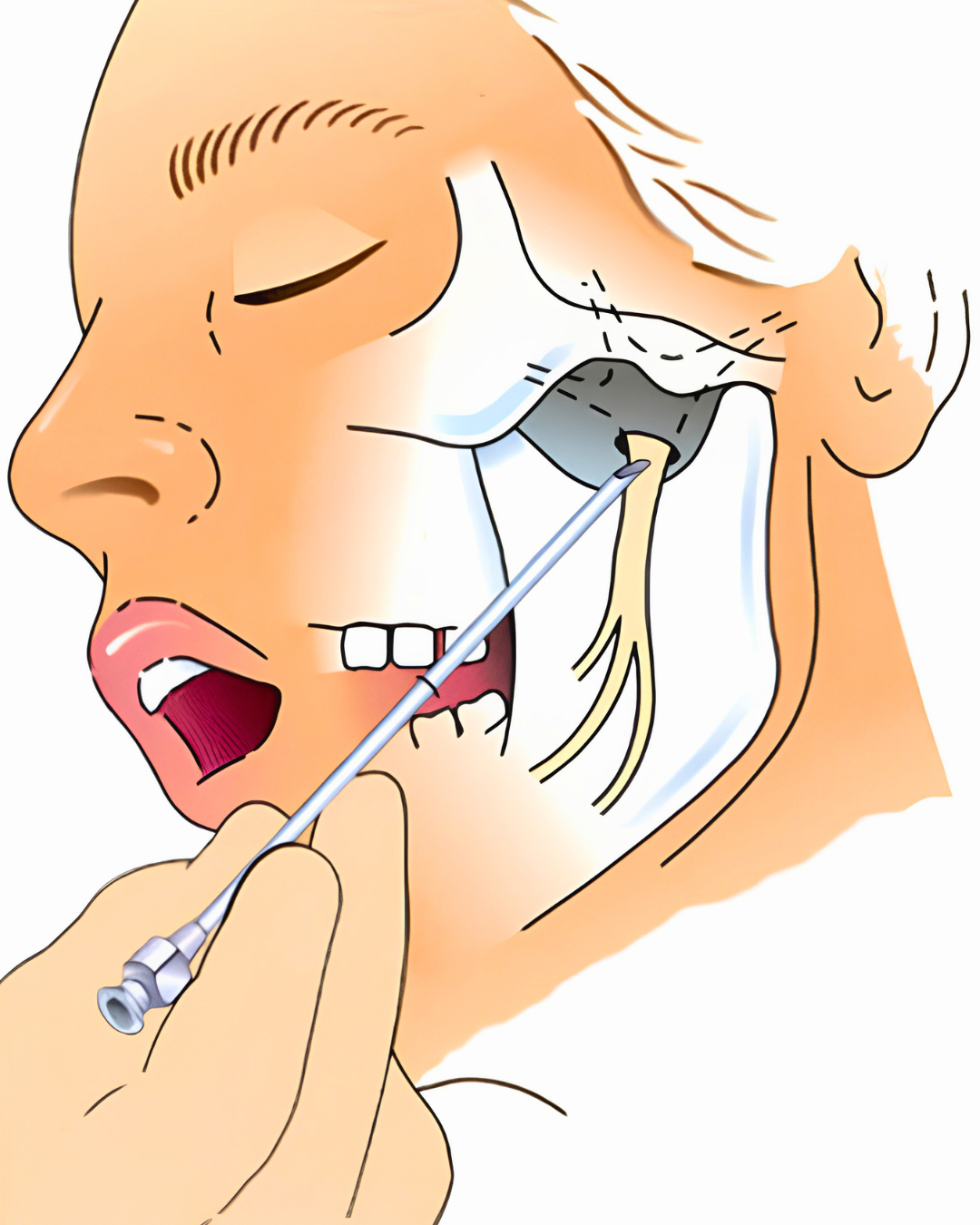
I'm a perimenopause health coach. I've worked with over 600 women in the last four years. I'm good at what I do. I help women understand what's happening to their bodies, navigate the hormonal chaos, advocate with their doctors, and stop Googling symptoms at 2am convinced they're dying. But for three years, I had a blind spot that cost my clients thousands of dollars and hundreds of lost days. Every intake form I've ever created asks the same questions. Sleep quality. Hot flashes. Night sweats. Mood changes. Weight changes. Libido. Brain fog. Anxiety. Joint pain. And there's a write-in section at the bottom: "Anything else you want me to know?" You know what shows up in that section more than anything else? "My migraines are getting worse and I don't know why." "I've had headaches my whole life but since 40 they're out of control." "My neurologist keeps adding medications and nothing helps anymore." "I used to get migraines around my period. Now I get them all the time." For three years, my answer was always the same: "That's hormonal. Estrogen fluctuation during perimenopause increases migraine frequency. We'll work on stabilizing your blood sugar, optimizing your sleep, reducing inflammation, and you should talk to your neurologist about your options." Then I'd move on to the hot flashes and the mood swings and the weight gain because those were "my lane." The migraines weren't my lane. I'm not a neurologist. I don't prescribe medication. So I sent them to their neurologist and focused on what I could control. Do you know what their neurologists did? Topamax. Propranolol. Amitriptyline. Triptans. Botox. The standard migraine playbook. Developed and studied primarily on populations with stable hormones. Prescribed to women whose hormones were doing backflips off a cliff. My clients would come back to our monthly check-ins and the conversation was always the same: "Hot flashes are better. Sleep is improving. Mood is more stable. But the migraines... my neurologist put me on Topamax and I can't think straight. I forgot my own phone number. I called my daughter the wrong name at dinner." Or: "The Botox brought my migraines from 14 days to 11 but I'm still spending a third of my life in a dark room and my husband is starting to feel like my roommate." Or: "I'm taking Sumatriptan three times a week and now my doctor says I have medication overuse headaches. So the drug I'm taking for migraines is causing more migraines? How is that medicine?" I listened. I empathized. I adjusted their nutrition and stress protocols. And I sent them back to their neurologist. Because the migraines weren't my lane. Until Diane. Diane was 48. Classic perimenopause — textbook presentation. Irregular periods, sleep disruption, hot flashes, brain fog, weight gain, the works. She'd been a client for four months. Everything was improving except the migraines. She came to our check-in one afternoon and she wasn't the usual Diane. Diane is tough. Diane has the dark humor that gets you through perimenopause — the kind where you joke about your chin hair having a stronger will to live than your motivation to exercise. The kind where you laugh about the night sweats because if you don't laugh you'll set something on fire. But this Diane was quiet. She'd been crying. "I missed my daughter's recital. Again. Third one this year. She's stopped telling me about them. My husband just takes her now. He doesn't even ask if I'm coming anymore because the answer is always the same — I'm in bed. Curtains closed. Ice pack on my face. While my kid performs for an audience that doesn't include her mother." She looked at me and said: "You keep telling me the migraines are hormonal. My neurologist keeps treating them like they're neurological. But nobody is actually fixing them. I'm worse than I was a year ago. I'm on three medications. I have needle marks on my forehead from Botox. And I'm still missing my daughter's life." I didn't have an answer. She was right. I knew the migraines were driven by hormonal fluctuation. Her neurologist knew how to treat migraines. And she was caught in the gap between us — the gap where understanding the cause and treating the symptom never actually connected. That night I did something I should've done three years earlier. I actually researched the mechanism. Not the general "estrogen affects migraines" overview I'd been repeating to clients. The actual, specific, nerve-level mechanism. And what I found made me ashamed of every time I'd said "talk to your neurologist" and moved on. Estrogen doesn't just vaguely "affect" migraines. It directly modulates the excitability of the trigeminal nerve — the specific nerve that generates migraine pain. This nerve runs from the base of the skull through the temples and behind the eyes. When estrogen is stable, the nerve stays calm. When estrogen fluctuates — perimenopause — the nerve becomes chronically sensitized. It fires easier, faster, and harder. That's not a migraine "trigger." That's a fundamental change in how the pain-generating system in your head operates. During perimenopause, the machinery itself is different. And here's what made me want to call every client I'd ever referred to a neurologist: Every medication those neurologists prescribed — the Topamax, the Triptans, the Excedrin — enters the bloodstream through the stomach and takes 30 to 45 minutes to reach the pain receptors. But the perimenopause-sensitized trigeminal nerve doesn't wait 45 minutes. It fires faster than it used to. The cascade from first signal to full migraine is compressed. By the time the pill arrives, the migraine is already established. The medications weren't designed for a hormonally destabilized nervous system. They were designed for a body with predictable, stable hormones. And every neurologist was prescribing them as if the perimenopause happening in the same body was irrelevant. Two weeks later, Diane came to our session and told me she'd found something on her own. "I joined a migraine group online," she said. "For women in perimenopause specifically. And they keep talking about this roll-on. A neurologist who gets migraines herself developed it. You put it on your temples and neck and it works directly on the nerve — the trigeminal nerve. In seconds. Not 45 minutes." I was immediately skeptical. I've seen every "natural remedy" come through my practice. Essential oil blends. Peppermint sticks. Cooling patches. Crystal healing. I love my clients but I have to protect them from the wellness industrial complex that sells them false hope at $39.99 a bottle. "Show me," I said. She pulled up the product. Florus Relief. Developed by Dr. Fiora Laurent, a neurologist and migraine sufferer. The formula: magnesium glycinate applied topically to stabilize nerve excitability, menthol crystals and wild peppermint for immediate cooling that interrupts the pain signal at the nerve surface, feverfew extract to reduce nerve reactivity over time, chamomile for the neck and jaw tension. Applied directly to where the trigeminal nerve surfaces closest to the skin. Temples. Behind the ears. Base of the skull. I looked at the ingredients. I looked at the mechanism. I looked at the delivery method. And I realized why this was different from every peppermint oil blend I'd dismissed. This wasn't aromatherapy. It was a topical neurological intervention. Applied at the exact locations where the nerve is accessible through the skin. Working at the speed the perimenopause-sensitized nerve fires — seconds, not 45 minutes. I told Diane I couldn't recommend it because I hadn't seen it work. But I told her the mechanism made sense and the 90-day guarantee meant there was no risk. She started using it the next week. At our next check-in, she was a different person. Not just better — different. The Diane with the dark humor was back. "I caught three migraines at the first sign. Rolled it on. None of them went past a 3. None of them put me in bed. I went to work. I made dinner. I watched TV with my husband like a normal human being." "And?" "I went to my daughter's choir concert on Thursday." She paused. "She saw me in the audience and her face... she just lit up. She didn't expect me to be there. She actually said after, 'Mom, you came!' Like it was a surprise." Diane started crying. I started crying. Two grown women on a video call crying because a child was surprised to see her mother show up. Over the next three months, I mentioned it to other clients who were struggling with the migraine-perimenopause overlap. Not as a recommendation — as information. "Here's what it is, here's the mechanism, here's the guarantee, I can't prescribe it but the science is sound." Out of roughly 40 clients who've tried it and reported back, the majority said it's the most effective acute migraine intervention they've used during perimenopause. Not all — some got modest relief, a few didn't notice much. But the women who catch it early, at the very first signal, consistently report that it interrupts the cascade before the migraine establishes. One client, Beth, 51, told me: "I've spent $14,000 on migraine treatments since perimenopause started. My neurologist's office knows me by first name. The thing that actually works at the speed my migraines hit now costs less than my copay." Another, Lisa, 44: "My doctor treats my perimenopause. My neurologist treats my migraines. You coach me on both. And the only thing that actually lives at the intersection where both of these things meet is a green roll-on that my neurologist has never heard of." She's right. And that's the blind spot I'm confessing to. For three years, I told women "the migraines are hormonal" and then sent them to neurologists who treated them as if they weren't. I understood the cause. They treated the symptom. And nobody — not me, not them — addressed the gap. The gap is the trigeminal nerve, destabilized by perimenopause, firing faster than any pill can arrive. And the intervention for that gap is something that reaches the nerve at the speed it fires. On the skin. In seconds. Where the nerve actually lives. I now include Florus in every conversation with clients whose migraines are escalating alongside their perimenopause symptoms. Not as a prescription. As a tool. The same way I include magnesium and sleep hygiene and blood sugar stabilization. Because pretending the migraines are someone else's department is how 600 women walked through my practice while I treated half their suffering and referred the other half. Florus Relief Roll-On. Developed by Dr. Fiora Laurent, a neurologist who gets migraines herself. Applied directly to the trigeminal nerve pathway. Cooling relief in seconds. 7,405+ five-star reviews. 90-day guarantee — feel relief or it's free. If your migraines have gotten worse since your late 30s or early 40s. If you're dealing with all the other perimenopause symptoms AND migraines that nobody seems to connect to the same hormonal shift. If your neurologist is treating your head without knowing what's happening with your hormones. The reason your migraines are worse is the same reason everything else is worse. And the reason your medications aren't keeping up is because your nerve fires faster than they can arrive. You need something that meets the nerve where it lives. At the speed it fires. Before the migraine takes another day. → Click the link below to learn more about Florus Relief.
If your migraines have gotten worse since your late 30s or early 40s, read this
If you're still getting migraines after trying everything, a Neurologist explains what's actually happening and why pills can't fix it.
LEARN MORELike this ad? Make it yours.
Crush rebuilds this exact creative around your product — your brand, your colors, your offer — in about a minute.