Women's Health Stories India
 Facebook ad: “My wife's knee healing miracle journey”
Running for 21 days since October 30, 2026. Crush last saw it on November 20, 2026.
Run by Women's Health Stories India on Facebook. Crush is not the advertiser and does not verify its claims. See this ad in Meta's Ad Library(opens in a new tab)
Make your own version of this ad
Crush makes it, launches it in your own Meta ad account, scales the winners and pauses the losers.
About this ad
- Meta Ad Library ID
- 1479233137484753
- Platforms
- Facebook, Instagram, Audience Network and Threads
- Relaunches
- 0
Ad text
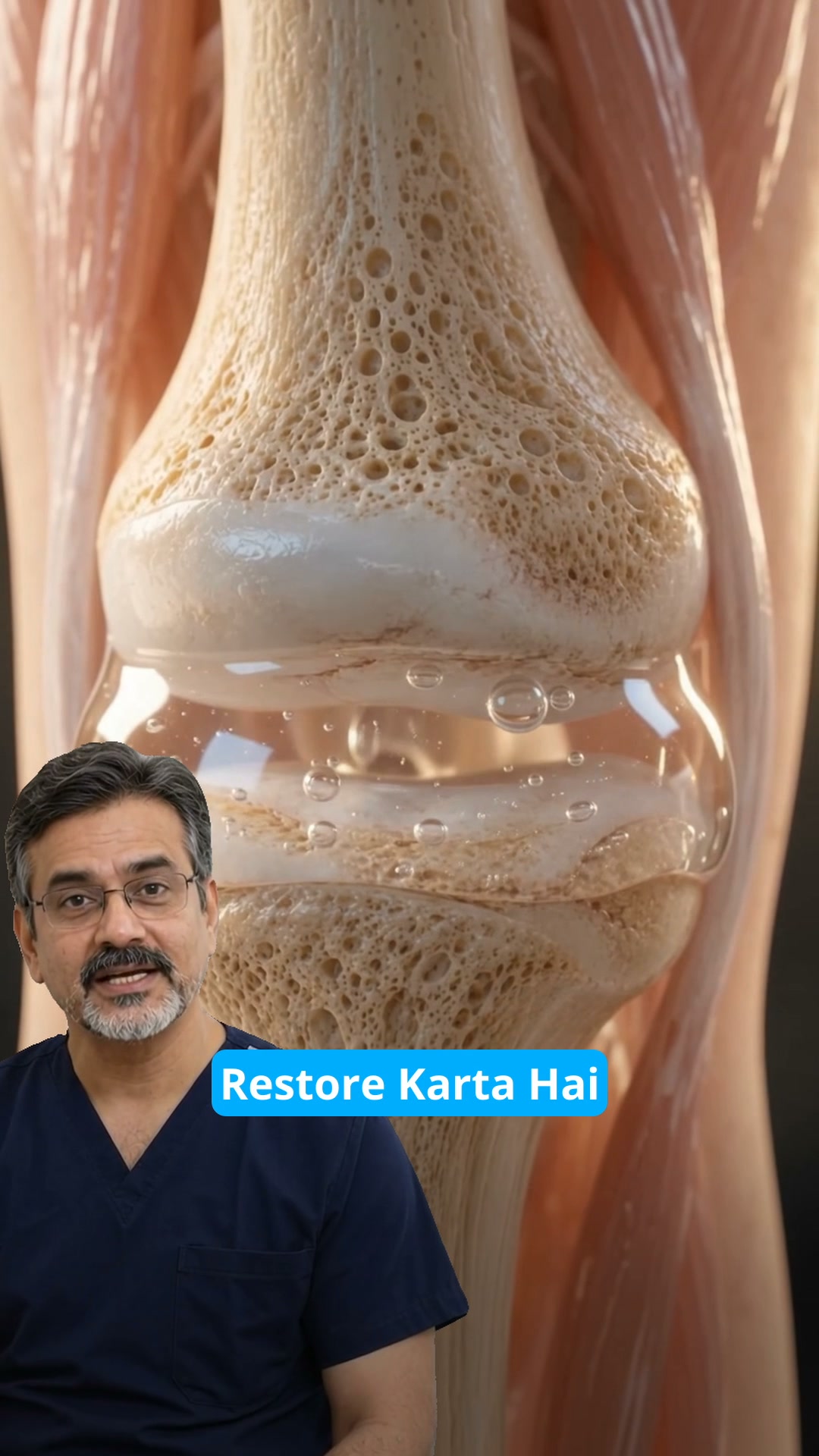
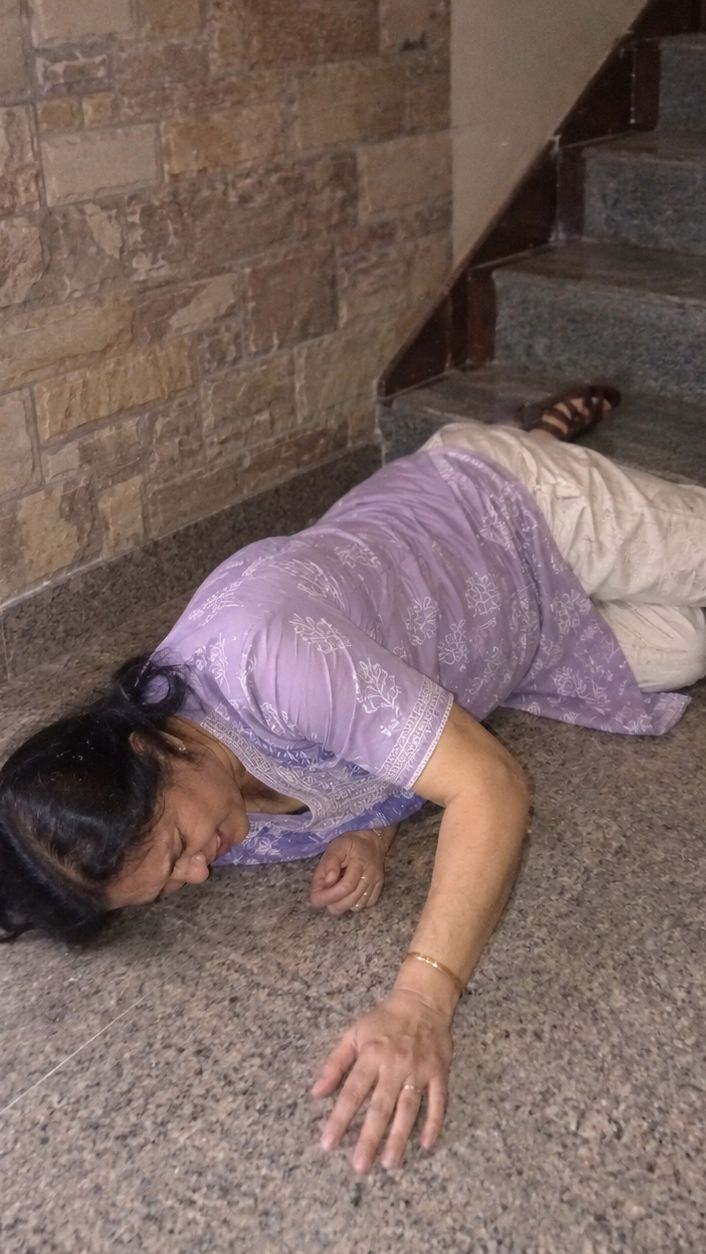
My wife is 48 and has started taking the stairs one at a time. She thinks I have not noticed. I have been counting since April. Her knees have started deciding how her day goes. There are eleven stairs from our parking level to the lift lobby. She used to take them two at a time with a bag of vegetables in each hand. Now it is one stair, then the other foot comes down beside it, then a pause just long enough to look like she is checking her phone. She is not checking her phone. There is nothing on her phone. I am 52. We have been married twenty-four years. She teaches mathematics at a school in Andheri and she has always been the one who does everything first and complains about it later. I am not a doctor. That matters, because for eight months I did what husbands do. I told her it would pass. It did not pass. It got quieter, which is worse. The mornings came first. She would get out of bed and stand by the cupboard with one hand on the door, like someone waiting for a lift, before she took a step. The first four steps to the bathroom took her twenty seconds. I timed it once and then felt ashamed of timing it. Then the evenings. She teaches standing up, and by dinner her right knee would be puffy and warm to the touch. She would sit with it up on the steel stool from the balcony, a cold tumbler pressed against the side of it, and tell me it was nothing. She stopped parking in the basement. She parks on the road now, where there are no stairs, and walks the extra forty metres in the sun. When I asked, she said the basement is dark. She started sitting down to put her sandals on. Not bending. Sitting on the edge of the bed with one foot up, the way her mother used to. I need to tell you about her mother, because it is the thing neither of us says out loud. Her mother had the same knees. She was told to wait, and she waited, and at 61 she had both of them replaced. The operation went well. Everybody said so. But she never again climbed the stairs to her own terrace, where she had dried mango pickle every summer for forty years. She sent the servant up instead and sat downstairs listening to the footsteps. Meera was there for all of it. So when a doctor tells her she is “too young for a replacement”, she does not hear comfort. She hears a countdown. She stopped doing the stairs at her sister’s house altogether. Their house has a proper staircase, fifteen steps, and she would find some reason to be needed in the kitchen downstairs. And she stopped holding my arm. That one took me two months to work out. When we got married she used to hold my arm everywhere, in queues, in the market, on stairs. Then she began to let go at the bottom and take the rail instead. Once I offered my arm on the way up to the doctor’s clinic and she said, without looking at me, “log kya sochenge.” What will people think. As if a woman of 48 holding her husband’s arm was a confession. I want to be careful here, because it is easy to make this sound like something it was not. She was not in agony. She was not crying in the bathroom. She was a woman who had begun to plan her day around eleven stairs, and who had decided not to tell me, because telling me would make it real. In June, her sister’s daughter got engaged. Big hall, two hundred people, the kind of evening where everybody is related to everybody by the end. Meera went up to the stage for the photographs. I was two steps behind her with her dupatta because she had left it in the car. And I watched her take those stairs. There were six of them, carpeted, with a flower arrangement on each side, and she took them one at a time while a waiter with a tray of cold drinks went past her on the left, and a cousin’s child went past her on the right, and she held the rail with both hands and smiled at nobody in particular. At the top she turned around and said, “don’t look at me like that.” I did not know what my face was doing. I do now. It was doing the thing she had been avoiding for four months. We came home and she took a Combiflam and sat in the kitchen with the light off. I want to list these properly, because we did them all, and because I know where every one of them ends. The Combiflam. One in the morning, sometimes one at night. It works. That is the honest part. It takes the pain down to something she can walk on. But it works on her, not on the knee. The pain is a signal and the tablet turns the signal off. Her GP told her in August to stop taking it every day and to see what happens. What happened was that she found out how much the tablet was doing. The Volini and the oil. Every night for a month. It feels good for twenty minutes. It never gets inside the joint. Nothing rubbed on the skin reaches the inside of a knee, and the inside of a knee is where this is. The physiotherapy. Twice a week for six weeks. The physio was good, and honest. He built up her thigh muscles and told her the muscle would take load off the joint. It did, a little. It did not touch the thing that was making it worse. The glucosamine. Three months, two tablets a day, from the medical shop near the station. She said it made no difference. I do not think she was wrong. The weight. The first orthopaedic we saw told her to lose four kilos and come back in six months. She did. She lost five. The knee did not care. And the sentence. At the end of that appointment the doctor said the thing I have now heard four times: “She’s too young for a replacement. Come back when it’s worse.” That is the whole system, in one line. Wait until it is bad enough to cut. Nobody in that room was being cruel. He was telling us what he had been trained to do. But at 48, “come back when it’s worse” is not a plan. It is a schedule. And I had already watched her mother keep that schedule to the end. I am not going to pretend I made a brave decision in a dramatic moment. I made it in the car park at 11pm, with the engine off, after she had gone up first because she did not want me to see her take the stairs. I sat there and did the arithmetic. Every year since our tenth anniversary she has said the same thing: when she retires, we are walking up to Kedarnath. Not the helicopter, not the pony. Walking. She has a folder of printouts. At the rate the last eight months had gone, she would not be climbing to a temple at 58. She would be sitting at the bottom of one, the way her mother sat at the bottom of her terrace stairs. Three things were available to me. I could keep doing what we were doing, and let the tablets and the oil and the six-month appointments carry it, and hope that by the time it was bad enough to operate she would still be a person who wanted to be operated on. I could get angry at the doctors. I did some of that. It changed nothing. Or I could find out what was actually happening inside her knee, and whether the “wait” was neutral or not, and stop asking a man who fits metal for advice about the years before the metal. I chose the third one. I am not clever. I just had a question nobody had answered. What is actually happening inside her knee? Her cousin Vikram is an orthopaedic surgeon in Chennai. He is the one who puts the metal in. He is also the reason I am writing this. He drew it on the back of a wedding invitation, which is the only way I have ever understood anything about medicine. Inside the knee there is a cushion. Cartilage. It has no blood supply, which surprised me. It lives on fluid, and the fluid moves when the joint moves, which is why sitting still makes it worse and moving makes it better. The cushion is built almost entirely from collagen. And in a woman’s body, after menopause, collagen production falls. Vikram says the drop can be up to 80 per cent. I asked him to say that again so I could write it down properly, and he did. So the cushion thins. It dries. It loses its spring. The surface wears down, the way the edge of an old mat splits. Then the part nobody told us. When the surface frays, tiny pieces of that cushion break loose and float inside the joint. The immune system’s job is to find things that do not belong and destroy them. It does not know the difference between a splinter and a piece of your own knee. It sees a fragment, decides it is foreign, and attacks it. And the attack does not stop at the fragment. The immune cells do not cut around the piece that is still attached. They go into the cartilage it came from. Every month. Whether or not she is in pain that week. Here is the part that kept me awake. What it takes, it keeps. Cartilage does not grow back. Vikram drew two thick lines for the bones and a band between them. Then he rubbed his thumb across the band, back and forth, until the ink was grey and thin. “This is the gap,” he said. “Every month it gets a little narrower. When it closes, it is bone on bone. That is when they send them to me.” So “come back when it’s worse” means come back when the gap is gone. Then he turned the card over and drew two more things, because he said the attack is never the only thing going on in a knee like hers. The first was a small fire. Wherever the immune system attacks, the joint becomes inflamed. That was the puffiness in the evenings, the warmth under the steel tumbler. Swelling is not just discomfort. It is pressure, inside a joint that has no room to spare. The second was a hinge. A knee is meant to glide on a thick, slippery fluid, the way a good door swings on oil. After 45 that fluid starts drying up and thinning out. That was the twenty seconds by the cupboard. A knee that has sat still all night on thin fluid is a hinge that has rusted shut, and the first few steps are spent prying it open. “Three things,” he said, tapping the card. “The attack, the fire, the dry hinge. Everything you have tried touches one of them at most, and only from the outside.” That is the answer to the question I kept asking. Why does it get worse when the tablet is working? Because the tablet is at one end of the problem and the attack is at the other. The tablet turns down the pain signal. The attack carries on, the fire keeps burning, the hinge keeps drying. That is also why the Volini and the oil did nothing, and why the physio helped her thigh and not her knee, and why glucosamine, which is a building block, does not tell anybody to stop knocking the wall down. And it is why “come back when it’s worse” is the worst advice in the room, because “worse” is the measurement of the thing that is happening the whole time. The knee does not wear out the way a shoe wears out. It gets eaten, from the inside, by a system that is trying to protect her. The study, and the sentence Vikram said in our kitchen Vikram came for two days in July. On the second night he sat in our kitchen and said the thing I have repeated to eleven people since. “I have put in a lot of knees. The operation is a good operation. But I have never once put one in and told the patient we stopped what caused it.” Then he opened his laptop. A group of Indian hospitals ran a trial on knee pain. Not one hospital. Eighteen. AIIMS Jodhpur led it. Two hundred and ninety-one Indian women, with knee pain, the ordinary kind, the kind that starts in the forties and gets called age. They used a specific intact form of type II collagen, forty milligrams, and they gave it for ninety days. The group on the real thing reported an 81.6 per cent reduction in pain. The placebo group reported 19.2 per cent. Four women out of a hundred had a small stomach upset. Nobody had to stop. Forty milligrams. Not one thousand. Not ten thousand. Forty. That is the part that took me longest to believe, because the shelf at the medical shop is full of gram-sized tubs that cost more. Taken properly, small intact collagen is read by the immune system as a signal to stop attacking. It is teaching the guard to stand down. The cartilage does not grow back. What stops is the eating. “That is the attack,” Vikram said. “You still have the fire and the hinge.” For the fire, he named boswellia. It is the resin Ayurveda calls shallaki, and it is the most researched natural anti-inflammatory there is. It does not work like the Combiflam. It does not switch off the signal. It calms the inflammation that is causing the signal, so the swelling comes down. For the hinge, hyaluronic acid. It thickens the fluid inside the joint, so the bones glide instead of grind. That is the job the oil on her skin was pretending to do from the outside. Vikram also said something about Charaka, the old Ayurvedic text, describing the same pattern in older women three thousand years ago. I did not follow all of it. I am telling you because it was the moment my wife stopped looking at me like I was trying to sell her something. What happened, week by week She started on a Sunday, on an empty stomach, one capsule, before tea. I want to be honest about the first two weeks, because they were nothing. Nothing happened. She said so, with some satisfaction, because she had decided it would not work. Week three. She got out of bed and walked straight to the bathroom. No stop at the cupboard. She came out and said the first four steps of the morning did not take twenty seconds any more. She said it in passing and moved on to the school bag, which is how I knew it was true. Week five. She parked in the basement again. She did not mention it. I noticed from the car. Week six. A parents’ evening, three hours on her feet. She came home, ate dinner, and did not go to the balcony for the steel stool. I went and looked at it afterwards. It was still out there, dry. Week seven. Her sister came over and they stood in the kitchen for two hours cooking, which is not something she had done standing since March. Week nine. We went to the market on a Sunday, the big one, and we walked the whole thing. Both bags. She carried one. Week eleven. She took the stairs at her sister’s house, all fifteen, and complained about something else entirely when she got to the top, which I have decided is the whole point. She still has a bad day. If she stands too long at a school function the knee still swells, less than it did, and she is quiet that evening. She is 48 and she has cartilage that is thinner than it was at 40, and it is not going to be thicker. That is not a cure and I am not going to write it as one. What changed is the direction. It stopped getting worse every month, and it started getting better in the small, boring ways that actually matter. Her sister, and the woman in 4B Her sister took one look at her taking those fifteen stairs and asked what she was doing. Meera told her. Her sister ordered the same week. She has their mother’s knees too. She knows exactly what the terrace stairs mean. Then the woman in 4B, whose husband plays badminton with me, asked me in the lift what had changed. I told her the short version. She said her mother had the same thing and had been told to wait. I have now had that conversation eleven times. I am not a salesman and I do not enjoy it. But I have noticed something: nobody in these conversations is surprised by the mechanism. They are surprised that nobody told them. The part where I turn this on you If you are the one taking the stairs one at a time, or the one watching someone take them, this is the part that is for you. What my wife takes is the three things on the back of that wedding card, in one capsule. Forty milligrams of that intact type II collagen for the attack. A hundred milligrams of boswellia for the fire. Hyaluronic acid for the hinge. It is called Jointura. One capsule a day, empty stomach, before tea. Two things I want to be straight about. It is not cheap and it is not a painkiller. It costs less per month than the injection one of her doctors suggested, and it does nothing in the first week, so if you are looking for tonight, this is not it. And they give you thirty days to decide. Empty the bottle, and if nothing has changed, they take it back. That is the reason we tried it. I am not brave with money. There is a link at the bottom. If your wife, or your mother, or you, has started planning the day around the stairs, read it before you accept the sentence about being too young. Every month you spend waiting for “worse”, the gap gets a little narrower, and it does not give any of it back. One more thing I count less now. That is the only measurement I trust. In April I could tell you how many stairs she had taken slowly that week, because I was watching, because I was frightened. Last Sunday I realised I had not counted in a month. On Tuesday I found the Kedarnath folder on the dining table. She had added a printout. Walking shoes. If you are the one who has been told to come back when it is worse, I want you to hear it from a man who fits the metal, and not from me: worse is not a date on a calendar. It is happening now, quietly, whether anybody is watching or not. Take the stairs. Take them slowly if you have to. But do not wait for permission. https://www.jointura.in/products/undenatured-collagen-type-ii P.S. If she says she is fine, she is not lying to you. She is protecting you from a conversation she does not want to have about getting older. Ask her about the stairs. Not the pain. The stairs.
Where the ad sends people
jointura.in
My wife's knee healing miracle journey
Your joints hurt because your immune system attacks them. Undenatured Collagen Type - II trains your body to stop. Most joint supplements try to rebuild damage with massive doses. Undenatured Collagen Type - II works differently. Just 40mg daily teaches your immune system to leave your cartilage alo...
Shop now: jointura.in(opens in a new tab)