Naomi Brooks
Naomi Brooks Facebook ad: “Ease GLP-1 Side Effects Naturally”
Ran for 8 days, from June 12 to June 19, 2026, the last day Crush saw it.
Run by Naomi Brooks on Facebook. Crush is not the advertiser and does not verify its claims. See this ad in Meta's Ad Library(opens in a new tab)
Want an ad like this for your product?
Crush makes new ad images for your product from this ad: your logo, your product photo, your offer.
Trials from $19.95 USD, then $79.95 USD a month. Cancel anytime.
About this ad
- Meta Ad Library ID
- 1482483736952472
- Platforms
- Facebook, Instagram, Messenger and Threads
- Relaunches
- 0
Ad text
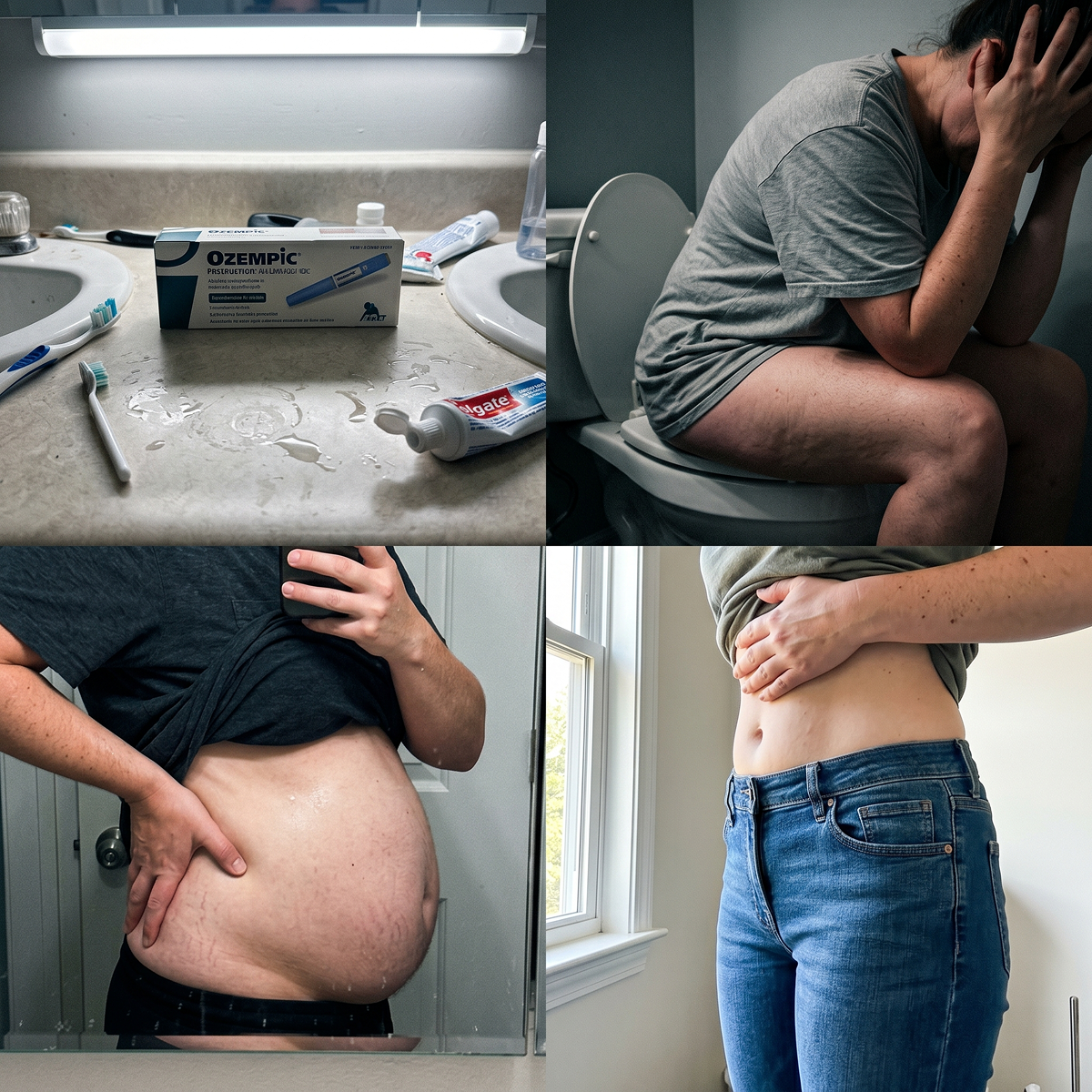
I've been a GI nurse for 14 years. And if you're on Ozempic or Mounjaro and you haven't been to the bathroom properly in weeks — and the advice you've been getting is drink more water, eat more fiber, take a laxative, try psyllium husk — I NEED YOU to read every single word of this. Because I'm going to tell you something that no one on weight loss meds wants to hear. And I'm not going to soften it. Trying another fiber supplement is not going to save you from quitting your shots. Not psyllium husk. Not fiber gummies. Not even laxatives. Not the "gut health" probiotic your doctor just recommended. NONE OF IT IS GOING TO WORK. My name is Sandra Holt. Registered nurse, GI specialty, 14 years. I've sat in rooms with gastroenterologists and bariatric physicians and watched them explain GLP-1 side effects in the most useless way imaginable. And I'm breaking ranks with my own profession to tell you this. Because there are three things happening right now: One — Your gut is screaming at you that something is wrong. Two — The medical system is gaslighting you into thinking fiber and water is the answer. Three — There's an industry that profits every single day you stay stuck, buying products that were never built for your situation. So let me tell you what happened with one of my patients. Because her story is going to show you exactly how broken the advice really is — and why you've been failed at every single step. Her name was Karen. 47 years old. And I want you to understand who Karen was before this started — because it matters. Karen was not someone who struggled with her health. She was active. Organized. The kind of person who actually followed medical advice to the letter. When her doctor said try this, she tried it. When her doctor said more of that, she did more of that. She had been overweight for years but she was doing everything right. And when she finally got on her weight loss medication — for the first time in a decade — she was losing. Really losing. She was thrilled. She'd tell anyone who'd listen that this medication had changed her relationship with food in a way nothing else ever had. For the first time in years she wasn't thinking about food every waking hour. Then the constipation hit. Not regular constipation. GLP-1 constipation. The kind where three days go by. Then a week. Then you're at nine days and you're in real pain — bloated, distended, barely eating, and starting to wonder if the medication is doing more harm than good. The heavy pressure in her lower belly didn't go away. She carried it through work meetings. Through dinner with her husband. Through every moment of every day that was supposed to feel better now that she was finally making progress. And every morning she'd stand on the scale and watch that number barely move despite eating almost nothing. She started to wonder whether those missing pounds weren't even fat at all — just backed-up weight that had nowhere to go. She was right. But nobody told her that. She tried everything she could find. Drank more water. Added psyllium husk to everything. Tried fiber gummies. Took laxatives that gave her cramps but nothing else. She even started eating prunes every morning like some kind of ritual. Nothing moved. She tried MiraLax after someone in her Facebook group swore by it. It helped once. Then stopped. She needed more and more for the same effect, and even then, it wasn't really solving anything. She'd go. Then she'd be locked up again by the following day. She spent money. A hundred dollars — maybe more — on things that promised relief and delivered a week of partial improvement before everything locked back up again. Her doctor told her the constipation was "expected" and to keep up with the fiber. She went home with a box of Benefiber and a knot in her stomach that had nothing to do with her medication. She did exactly what she was told. For six weeks. And you know what every single one of us told her? More water. More fiber. More patience. That was it. I watched this woman — who did everything we told her, spent real money, followed every instruction — get worse. Not better. Worse. And here's what made my stomach turn: I was one of the people giving her that advice. But something started bothering me. I kept seeing the same pattern on the ward. Patient after patient on GLP-1 medication. All of them constipated. All of them doing what we told them. None of them getting better. Some of them quitting their medication entirely because of it. I started digging into the research on my own time. Late nights. Weekends. Reading clinical papers on GLP-1 motility effects that nobody had ever handed me in training. And what I found made me realize I had been giving Karen — and everyone like her — completely wrong advice. Not because I was careless. Because I was trained with the wrong framework. I wasn't there when Karen made her decision. She didn't call me. She just stopped her shots. I found out three months later when she came back in for something unrelated. I almost didn't recognize her. The weight had come back. Fast. The way it always does when people stop — faster than it came off, like the body was making up for lost time. She'd gone back to the same place she'd been before she started. All of it. Every pound. But it wasn't just the weight. She'd been showing early signs before she started her medication that her blood sugar was heading in the wrong direction. Her doctor had put her on the shots partly because of that. Now those numbers were back. Worse than before. She looked exhausted. Not the tired-from-life kind of exhausted. The kind that comes from starting over and already knowing how the story might end. "I couldn't keep going," she told me. "I tried everything. Nothing worked. I couldn't keep living like that." I didn't say anything for a moment. Because the thing that stopped her wasn't the medication. The medication was working. It was the constipation. And the constipation was something we should have been able to fix. Something I should have been able to fix. I thought about Karen for a long time after that. But something started bothering me even more. I kept seeing the same pattern on the ward. Patient after patient on GLP-1 medication. All of them constipated. All of them doing what we told them. None of them getting better. Some of them ending up exactly where Karen ended up. I started digging into the research on my own time. Late nights. Weekends. Reading papers on GLP-1 motility effects that nobody had ever handed me in training. And what I found made me realize I had been giving Karen — and everyone like her — completely wrong advice. Not because I was careless. Because I was trained with the wrong framework. See, here's what you didn't get explained to you when they handed you that medication: Your shots don't just slow your appetite. They slow your entire digestive system. That's how they keep you full — your stomach empties at about half the normal speed. But that same slowdown creates a gut environment that no standard digestive product was ever built for. When I finally understood that — really understood it — I felt sick. Because I had been recommending fiber to people whose guts couldn't move it. Fiber adds bulk to trigger movement. But bulk needs movement to work. And GLP-1 medications have dramatically slowed that movement. Adding more bulk to a system that barely moves doesn't create more movement. It creates more bloating, more pressure, more blockage. Karen wasn't imagining that the fiber was making it worse. It was making it worse. And the laxatives? Stimulant laxatives trigger muscle contractions in the intestine. But GLP-1 medications are actively suppressing those same contractions. So Karen was fighting her own medication every single time she took one. The medication is stronger. It always wins. The result was cramping, urgency, or nothing at all. MiraLax and other options like it can partially help — they draw water into the colon — but they don't address the root cause. They don't help with slowed gastric emptying. They treat one symptom while the system-wide slowdown continues underneath. Which is why Karen kept needing more and more of it for less and less effect. These aren't bad products. They're the wrong products for a gut that is operating under active suppression from a medication that's doing exactly what it's supposed to do. A GLP-1 gut runs by different rules. It needs a completely different approach. And here's the part that made me genuinely angry: Nobody in the medical system is trained to look for this. It's not in the prescribing guidelines. It's not what we're taught to ask about in follow-up appointments. We get a script about fiber and water and we hand it to patients and send them home. Meanwhile, nearly half of all GLP-1 users quit within the first few months. And constipation is one of the biggest reasons. So I started looking for something that actually addressed what was happening. I tested products for months. Spent more than I want to admit. I tried general gut health supplements that were built for a normal gut and did nothing for a slowed one. I tried high-dose probiotics that were formulated for general digestive health — not for the specific microbiome disruption that GLP-1 motility changes cause. I tried digestive enzymes on their own. I tried magnesium on its own. I kept getting partial results — one piece of the puzzle — but never the full picture. Because here's what I eventually understood: A GLP-1 medication creates three specific problems in your gut simultaneously. First — stool hardens because there's not enough water being drawn into the intestine. Your gut moves so slowly that the normal process of hydrating stool as it travels through simply doesn't happen properly. The stool sits. It dries out. It compacts. Second — gut motility slows to a near stop. The forward-pushing contractions that move food through your digestive system are directly suppressed by the medication. This is not a side effect your doctor can argue with. It's how the drug works. Third — the gut bacteria that signal your colon to contract start to disappear. On dramatically reduced calories, those bacterial populations starve. And as they starve, the internal signaling that tells your colon when and how to move fades with them. The gut doesn't just slow. It starts to lose the biological instructions that tell it to move at all. Three separate problems. Happening at the same time. Every week you're on your shots. And I realized that every product I'd tested was only addressing one of them. What was needed was something that targeted all three — directly, simultaneously, in doses that actually worked. Step one: Draw water into the intestine through osmosis, softening stool without needing contractions, bulk, or anything that fights the slowdown. Magnesium citrate does this. Not a stimulant. Not a laxative. An osmotic agent that hydrates stool even when the gut barely moves. When the gut does produce movement, that softened stool can actually respond. Hard, compacted stool on the same signals goes nowhere. Step two: Help the gut find its own forward rhythm again — gently, without forcing a stopped system. Ginger root extract is a clinically studied prokinetic. It supports gastric emptying — the exact process GLP-1 medication slows down. It doesn't fight the medication. It works alongside it, giving the gut a nudge in the direction it's supposed to be going anyway. Step three: Restore the bacterial signals the colon has lost. A 19-strain probiotic blend formulated specifically for GLP-1-induced microbiome disruption gives those bacterial populations back. The signaling returns. The colon starts getting the instructions it needs again. Three steps. Targeting the actual root of what GLP-1 medication does to the gut. Not the symptoms. The cause. I found a formula that had put all three together at real doses — actually built for the GLP-1 gut specifically, not adapted from a general digestive health product. It was called ViraRoot Support Formula. When I dug into the formulation I knew immediately this was different. Not a token probiotic sprinkle — a 19-strain blend at a therapeutic dose formulated for the specific disruption that GLP-1 motility changes cause. Magnesium citrate at a real dose, not a trace mineral afterthought. Ginger root extract at 5% gingerols — the concentration clinical studies actually use. Plus a digestive enzyme blend, peppermint extract, and Black Pepper Extract at 5mg to make sure everything gets absorbed through a gut that's already compromised. This wasn't a general gut health supplement that someone had stuck a GLP-1 claim on. It was built for the exact gut your shots create. I started recommending it. And then I started hearing back. One of the first patients I gave it to — 52 years old, four months into her shots, hadn't had a proper bowel movement in weeks — texted me eleven days later. "Sandra. I went. Properly. TWICE this week. I actually cried in the bathroom." I read that three times. Week two: "I haven't touched the fiber powder. Haven't needed it. Things are just... moving on their own." Week three: She called me instead of texting. Her voice sounded different. Lighter. "I went up a dose this week. I was terrified it was going to start all over again. It didn't. Everything kept moving." Week four: "Down another six pounds. I think some of it was literally just what was backed up in there." She laughed when she said it. But she was probably right. Week six: "I tried stopping it for a few days. Just to see. By day three the heaviness was starting to build again. Not as bad as before — but I could feel it. I started again and within two days everything normalized." And that matters. That detail matters. This is not a temporary fix. It's ongoing support for an ongoing change the meds have made to how your digestive system works. Then she told me something I didn't expect. "It's not just the bathroom," she said. "The bloating I was carrying around all day — it's gone. I don't look six months pregnant by 3pm anymore. And I actually feel like I'm losing weight now, not just watching the scale sit there while I eat almost nothing." The same slowed gut that was causing the constipation had been causing everything else too. Once the gut started moving properly, everything downstream improved. She is still on her medication. Lost 31 pounds. Both times her doctor increased her strength, she'd braced herself for the constipation to come back the way it had before. Both times it didn't happen. She just kept going. She told me something last month that I keep coming back to. "The constipation was 48 hours away from making me quit. I know it was. I know exactly what happens to people who quit. I've read those posts so many times. I've watched it happen." She didn't have to find out. I think about Karen a lot. I think about the fact that she did everything right. Followed every instruction. Trusted the system. And the system sent her home with a box of fiber and let her get to the point where quitting felt like the only option. I can't go back and fix that. But if you're reading this — if you're still on the medication and you're in that place Karen was in — there's still time. You are not broken. You are not intolerant. You do not have to choose between the medication that is finally working and a gut that functions like a human being's. You just need something built for the gut your shots created. Not the gut you had before. The gut you have now. ViraRoot Support Formula comes with a 60-day money-back guarantee. If it doesn't work, you pay nothing. Not a restocking fee. Nothing. And honestly — even if you're skeptical, even if you've spent money on things that didn't work and you're not ready to trust again — read how it works first. Click below. Look at the three steps. See if the explanation matches everything you've been experiencing. Because the answer was never more fiber. It was never more water. It was a formula built for the exact gut your shots created — and nobody told you that formula existed. 👇 https://www.viraroot.com/products/viraroot-support-formula P.S. — Karen came off her medication because of constipation. The weight came back. Her health markers went with it. The thing that stopped her wasn't the medication. The medication was working. It was a side effect we should have been able to fix. P.P.S. — "The constipation was 48 hours from making me quit. I know where that road ends. I've read those posts. I'm so glad I never had to find out firsthand."
Where the ad sends people
viraroot.com
Ease GLP-1 Side Effects Naturally
Trusted by thousands, rated 9.8/10
Learn more: viraroot.com(opens in a new tab)