
Inactive· since May 21, 2026
- 74
- days it ran
- 0
- relaunches
Ad copy
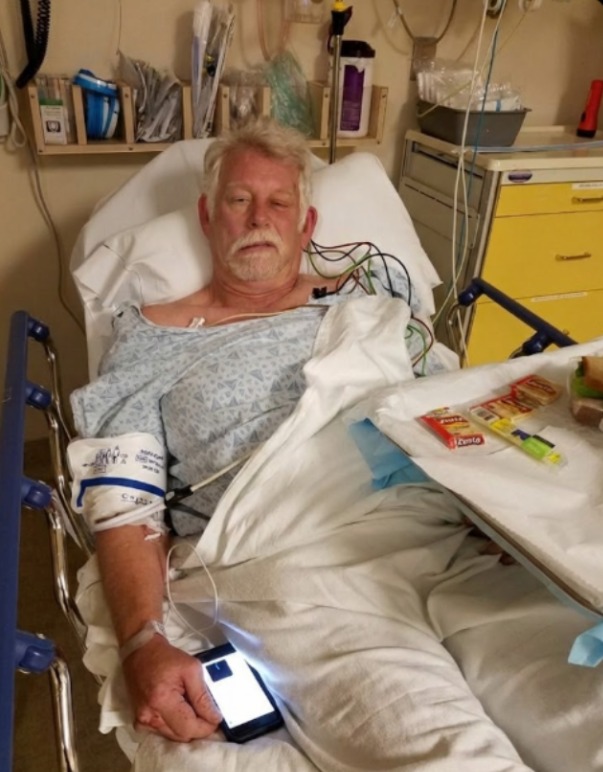
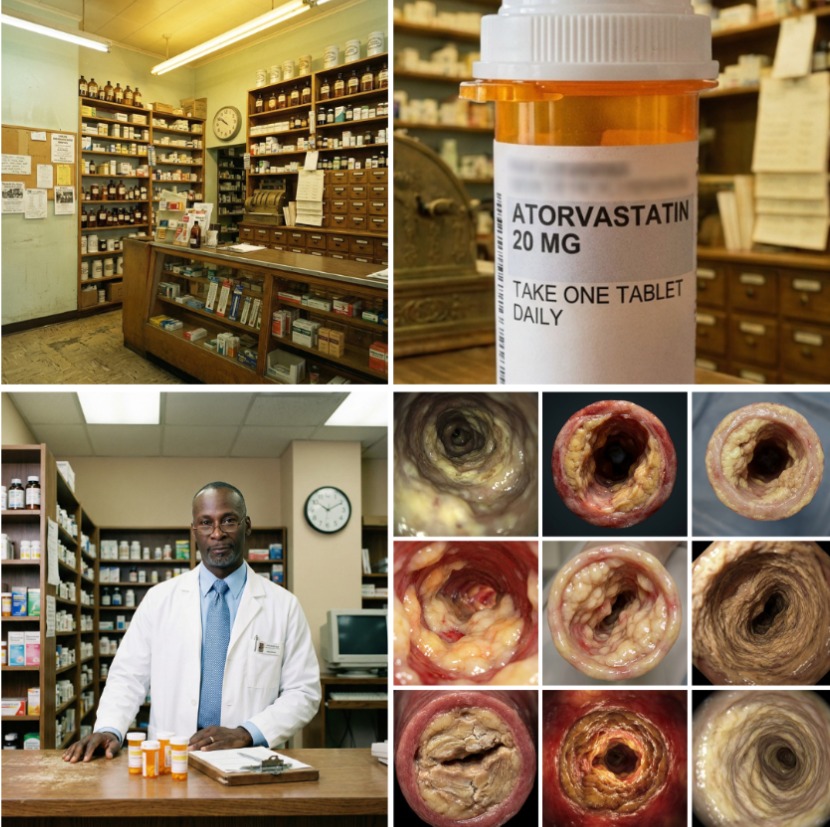
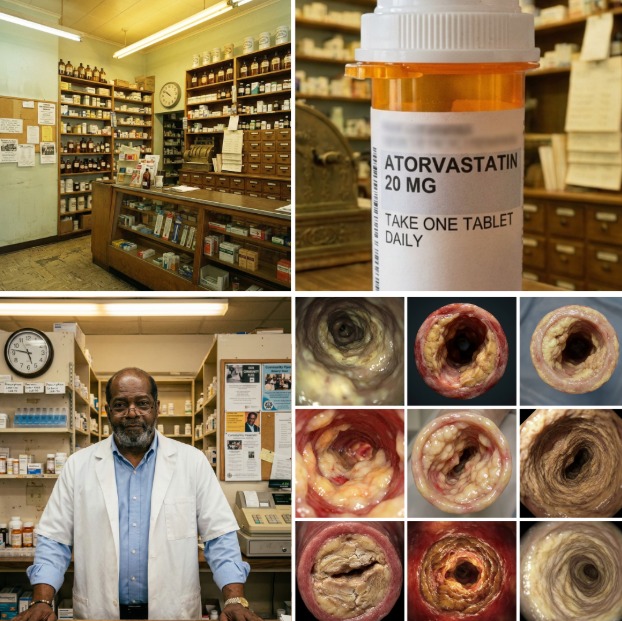
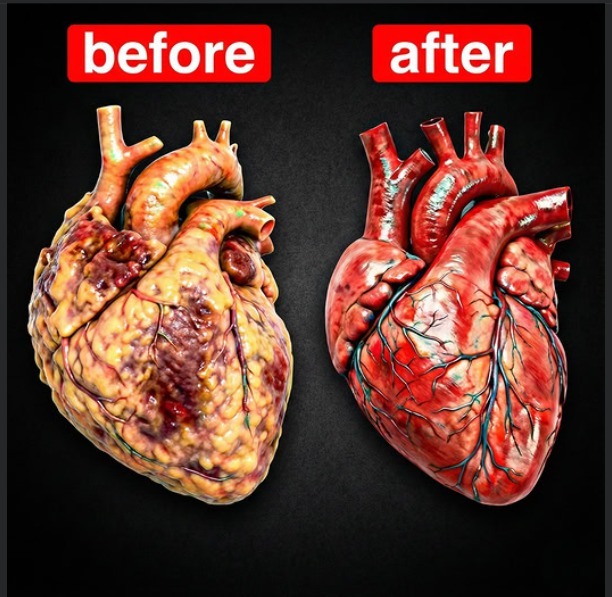
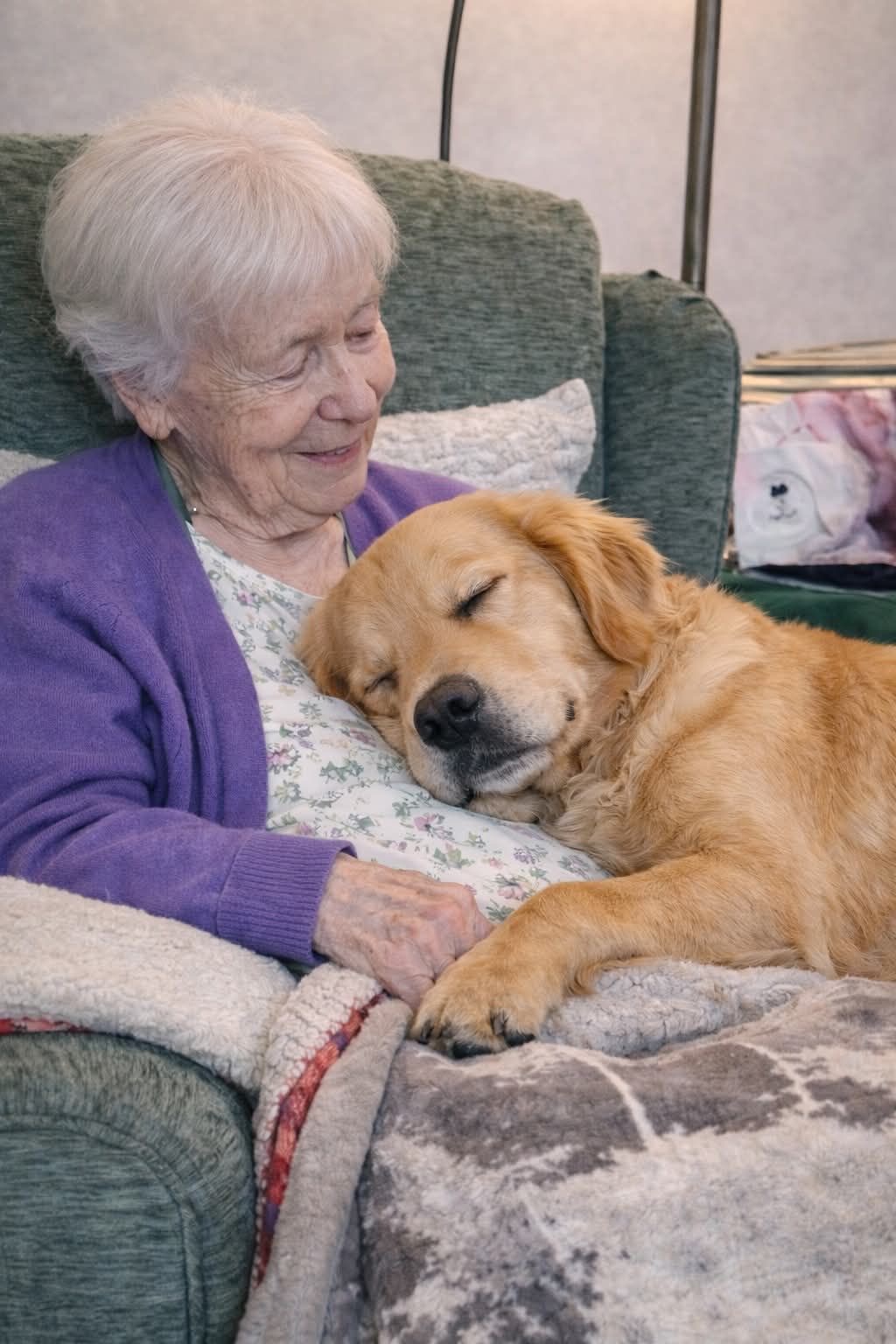
I found a dog in the Walmart parking lot last Tuesday. Small thing. Brown and white. Sitting by the cart return like it was waiting for someone who wasn't coming back. I almost walked past it. I was loading my bags into the trunk — laundry detergent and garbage bags, nothing exciting — and I saw it out of the corner of my eye. Just sitting there. Not barking. Not running around. Just... sitting. Looking at every car that drove by like it was checking to see if this one was the right one. My husband says I can't walk past anything that needs help. A stray cat. A kid who dropped their ice cream. A woman struggling with her grocery cart. He says it like it's a character flaw. I say somebody has to care. I walked over. The dog didn't run. It looked up at me with these big brown eyes — the kind of eyes that are too tired to be scared anymore. Just exhausted. Like it had been waiting a long time and was starting to give up. It had a collar. Faded red. Worn soft at the edges. There was a tag — not one of those fancy engraved ones, but a handwritten one. Someone had taken a blank metal tag and written on it in permanent marker. A name: Benny. And an address. No phone number. Just the address. The handwriting was shaky — the kind of handwriting that belongs to someone whose hands don't work as well as they used to. I pulled the address up on my phone. Thirty minutes away. I stood there in the Walmart parking lot looking at this dog and I had a conversation with myself that I'm not proud of. Thirty minutes is a long drive. I could take him to the shelter. They'd probably scan him. They'd probably call the owner. Probably. But this dog was old. You could see it in his face — the gray around his muzzle, the way he moved slow and careful when he stood up, the cloudy edges of his eyes. An old dog in a shelter is a terrified dog. The noise. The concrete. The cage. And if the owner came looking for him at Walmart and he wasn't there — if she drove to the shelter and they didn't have him yet, or she didn't know what shelter to call — she'd spend the whole night believing he was gone. I know what that feels like. Not the dog part — the part where you lose something you love and the not-knowing eats you alive. The hours between losing it and finding out if it's okay. I wouldn't want someone to put me through that if they could prevent it. Plus I had nothing else to do. It was Tuesday. My day off. Not exactly a packed schedule. I opened the back door of my car. Benny looked at me, looked at the seat, and climbed in like he'd been waiting for a ride. Curled up on the back seat and put his chin on his paws. Like he knew we were going home. I got in my car and drove. The GPS took me off the highway after twenty minutes onto a two-lane road that got narrower the farther I went. Past a dollar store. Past a church with a gravel parking lot. Past a farm stand that was closed for the season. The house was small. White. Set back from the road with a chain-link fence and a yard that was neat but tired — the kind of yard someone used to take care of and still tries to but can't quite keep up with anymore. There was a garden bed along the front with stakes in it but nothing growing. A birdbath that was dry. A truck in the driveway that hadn't moved in a while — you could tell because the leaves had settled around the tires and nobody had swept them. I noticed the fence right away. The gate on the side was broken — one hinge snapped, the gate hanging open at an angle. That's how Benny got out. It was obvious. A simple fix. Twenty minutes with a screwdriver and a new hinge. The kind of thing a husband would take care of on a Saturday morning. Nobody had fixed it. I sat in my car for a minute. Looked at the house. Looked at Benny in the back seat. He was sitting up now. Alert. His tail was moving — not a full wag, just a slow sweep back and forth. He recognized this place. If I'd known what was waiting on the other side of that door — not just a woman, but a story that would change my life — I'd have sat there a little longer. Gathered myself. But I didn't know. So I just opened the back door and walked up to the porch with Benny at my heels. I knocked. It took a while. I heard movement inside — slow, careful steps. A chain lock sliding. The door opened about four inches and a face appeared in the gap. Small. White hair. Eyes that were sharp but tired. "Can I help you?" "Ma'am, my name is Janet. I think this is your —" I didn't get to finish. Benny pushed past my legs and through the gap in the door. The woman stumbled back a step and then she saw him and her whole body changed. Her hands went to her mouth. She dropped to her knees right there in the doorway — slowly, carefully, the way someone kneels when their body doesn't move like it used to — and Benny was in her arms before she hit the floor. She was shaking. Holding this dog against her chest with both hands, her face buried in his fur, and she was saying his name over and over. "Benny. Oh God. Benny. Benny." The dog was crying too — that high-pitched whine dogs make when the person they love comes home. His whole back end was moving. His face was pushed into her neck. He was home. I stood on the porch and watched a woman hold a dog like he was the last thing in the world she couldn't afford to lose. She looked up at me. Her eyes were wet. "The fence," she said. "The gate's been broken for two months. I keep meaning to call someone to fix it but I —" She stopped. Pressed her face into Benny's fur again. "Gene would have fixed it in an hour. He would have fixed it the same day it broke." "Gene?" "My husband." She said it the way you say a word that means more than what it means. "He's been gone eight months. He got Benny for me the year before he died. Said he didn't want me alone in this house." She held Benny tighter. "He still goes and sits by Gene's chair every morning. Every morning. Eight months and he still waits for him. He's the only thing in this house that still knows Gene's name." Her voice broke. "I can't lose him too. He's all I have left." She looked at me. A stranger on her porch who'd driven thirty minutes to bring back a brown and white dog she could have dropped at a shelter. And she said: "Please. Come in. Let me make you coffee." Benny was already inside. And the look on her face — I couldn't leave. Not after that. So I said yes. Her name was Ruth. She was 78. The kitchen was small and clean the way a kitchen is clean when only one person uses it. One mug on the drying rack. One plate. One set of silverware. The table had two chairs but you could tell only one had been sat in recently — the other one had a stack of mail on it. Envelopes. Medical bills. A lot of them. Benny walked straight to the other chair and lay down beside it. Put his chin on the floor and looked up at it. Waiting. She made coffee in a percolator on the stove. Not a Keurig. Not a drip machine. A percolator. The kind that takes ten minutes and fills the whole house with the smell. While it brewed she talked. She didn't start with the sad part. She started with the good part. That's how you know someone really loved somebody — they don't begin with the loss. They begin with what was there before the loss. "Gene was a plumber. Forty-one years. The kind of plumber people called at 2 AM on Christmas morning because a pipe burst and they knew he'd come. And he always came. Didn't matter what time. Didn't matter what day. He'd put his boots on and go." She poured the coffee. Set the mug in front of me. Sat down across the table. "He was strong. That's what I always noticed about him — even when we were young. He had these hands..." She held up her own, small and thin. "His hands were twice the size of mine. He could hold a pipe wrench like it weighed nothing. He could carry a water heater up a flight of stairs by himself. That man could FIX anything." She said "fix" the way you say a word that means more than what it means. "We were married 52 years. Fifty-two. People say that like it's a number. It's not a number. It's every single Tuesday morning for 52 years where he made coffee before I woke up. Every one. It's a man who put snow tires on my car every November without being asked. It's someone who knew how I take my coffee and never once forgot. Two sugars. Splash of cream. Every time." She looked at the chair across from her. The one with the mail on it. The one Benny was lying beside. "That was his chair." I didn't say anything. You don't say anything in that moment. You just let someone sit with it. "His doctor put him on Lipitor when he was 61. Cholesterol was high — 258, I remember the number because Gene wrote it on the back of a business card and stuck it on the refrigerator. He did that with everything. Numbers. Appointments. Reminders. The fridge was covered in his handwriting." She smiled again, but this time it was the kind that hurts. "The doctor said take this pill every night, come back in three months. Gene took it every night. He was like that — if a doctor told him to do something, he did it. Didn't question it. Trusted the system. Trusted the man in the white coat." "Three months later his cholesterol was 201. LDL dropped to 121. The doctor was happy. Gene was happy. I was happy. We thought we'd solved it." She wrapped both hands around her mug. "He was on it for 14 years. Never missed a dose. Every time he went in for bloodwork, the doctor would smile and say the same thing: 'Numbers look great, Gene. Keep doing what you're doing.'" "And for 14 years, Gene kept doing what he was doing. Taking the pill. Going to the appointments. Getting the pat on the back." She set the mug down. "But he wasn't great. And I watched it happen so slowly I didn't realize what I was watching until it was too late." "The first thing was his energy. Gene was a 5 AM man. Up before the sun. Coffee on. Boots on. Out the door. Forty-one years he was like that. By year three on that medication, I was the one making coffee. He'd lie in bed until 6. Then 6:30. Then some mornings I'd be dressed and ready and he'd still be under the covers. Not sleeping. Just... not getting up." "I thought he was getting older. That's what I told myself. He's 64. He's 65. Men slow down." "Then his hands." She looked down at her own hands when she said it. "Gene could hold a pipe wrench for eight hours. Could solder a joint in a space so tight you couldn't fit your head in there. His hands were his whole career. His whole identity." "By year five, he was dropping tools. Wrenches slipping out of his grip. He'd be under a sink and you'd hear the clang of something hitting the floor and then a word my mother would have slapped him for." "He started coming home with his hands in fists. Not angry fists — stuck fists. His fingers would lock up and he couldn't open them. He'd hold them under hot water at the kitchen sink, right here, right where I'm sitting, and work them open one finger at a time. I'd watch him from the doorway and he'd say 'Don't worry about it, Ruthie. Just stiff.'" "'Just stiff.' He said that for three years." "By year eight he'd cut his crew down from four jobs a day to two. Told me business was slow. Business wasn't slow. His hands were slow. His legs were slow. Everything was slow. The man who carried water heaters up stairs couldn't climb our front porch steps without gripping the railing with both hands." "I told him to talk to the doctor. He did. You know what the doctor said?" I knew. But I let her say it. "'Your numbers look great, Gene. LDL is 94. Whatever you're doing, keep doing it.'" She said it like she'd replayed it in her head a thousand times. Like it was the sentence she couldn't forgive. "Gene's numbers were GREAT. Gene could barely get out of bed. Gene's hands — the hands that fixed everything, that held mine every night for 52 years, that could solder a copper joint in a space the size of a shoe box — those hands couldn't open a jar of peanut butter. But his NUMBERS were great." "The brain fog came around year nine or ten. He'd be telling me something and stop mid-sentence. Just... stop. Look at me like he was trying to remember not just the word but the whole thought. Like someone pulled the plug for a second and he had to reboot." "One night he looked at me at dinner and said 'Ruthie, what did I do today?' It was 6 PM. He'd worked a full day. He couldn't remember any of it." "I begged him to talk to the doctor again. He did. Doctor ran bloodwork. LDL was 91." "'Outstanding numbers, Gene. Some cognitive changes are normal at your age.'" "Normal at his age. He was 71. My sister is 74 and she does the New York Times crossword in pen every morning. Seventy-one is not the age you lose your mind. Not if something isn't taking it from you." She was quiet for a minute. Drank her coffee. Set it down carefully. "His last year was hard. He stopped taking plumbing jobs entirely. Told people he was retired. He wasn't retired — he was used up. He'd sit in that chair —" she nodded at the mail-covered chair, where Benny still lay waiting "— and stare out the window. Sometimes he'd talk about wanting to fix the fence in the back. Or replace the faucet in the bathroom. Things he could have done in an hour ten years earlier. He'd talk about them like they were expeditions. Like they required planning and courage just to attempt." I thought about the gate. The broken hinge. The fix Gene kept promising. "I'd say 'Gene, let me call someone to do it.' And he'd say 'I'll get to it, Ruthie. Just give me a day or two.'" "He never got to it. Not the fence. Not the faucet. Not any of it." "The plumber who could fix anything couldn't fix anything anymore. Including himself." She looked at the window. The one Gene used to stare out of. "February 12th. A Tuesday. I was at the grocery store. Gone maybe 45 minutes. Came home and the front door was open. Not wide open — cracked. Like he'd gone out to get the mail and didn't make it back inside." "He was in the hallway. On the floor. Face down. His hand was on the wall — like he'd reached out to steady himself and couldn't hold on." "I called 911. I already knew. You don't live with a man for 52 years and not know. But I called anyway because that's what you do. You call. You wait. You hope you're wrong." "I wasn't wrong." "Massive heart attack. The left anterior descending artery. They call it the widowmaker. I learned that word that day. I wish I didn't know it." She traced the rim of her coffee cup with her finger. Slowly. Around and around. "LDL of 91. Fourteen years on Lipitor. Every blood test perfect. Every appointment a gold star. And his heart stopped in the hallway on a Tuesday morning while I was buying eggs." "The cardiologist at the hospital said it was a plaque rupture. I asked him how that was possible when Gene's cholesterol had been controlled for 14 years. You know what he said?" "He said: 'Cholesterol management reduces risk. It doesn't eliminate it.'" "Reduces risk. Fourteen years. Thousands of dollars. A body that fell apart. A brain that faded. Hands that couldn't hold tools. And it REDUCED RISK." "It didn't ELIMINATE anything except my husband." Ruth looked at me across her kitchen table. A woman I'd known for twenty minutes. A stranger who'd driven thirty minutes to bring back a brown and white dog she could have dropped at a shelter. And she said something I carry with me every day: "They told us the numbers were the whole story. They weren't. The numbers were the cover of the book. Nobody ever read what was inside." Benny lifted his head from the floor beside Gene's chair and looked at Ruth. Then he put his chin back down. Still waiting. I drove home in silence. No radio. No phone calls. Just me and the road and Ruth's voice in my head. Gene's LDL was 91. Gene is dead. Gene took his Lipitor every night for 14 years. Gene is dead. Gene's doctor said "outstanding numbers" while Gene forgot what he did that morning and couldn't open a jar of peanut butter and stopped working and stopped moving and stopped being the man who put snow tires on his wife's car every November. And Gene is dead. I pulled into my driveway at 4:15 PM. The lights were on inside. Through the kitchen window I could see my husband, Ray, sitting at the table. He was watching something on his iPad. His reading glasses were on the tip of his nose. He had a glass of water next to him that he'd probably been nursing for an hour because that's what he does — he pours a glass and then forgets about it. He looked tired. He always looks tired lately. Ray is 61. He's been on Atorvastatin for seven years. His doctor put him on it when his total cholesterol hit 247 and his LDL was 166. The drug brought the numbers down. LDL sits around 112 now. Doctor's happy. Ray's... compliant. That's the word for it. Not happy. Not relieved. Compliant. I walked inside and he looked up. "Where've you been?" "Long story. I'll tell you over dinner." I kissed the top of his head the way I always do and went upstairs to change. And I stood in our bedroom and I saw what I hadn't let myself see for years. Ray's Atorvastatin on the nightstand. Same drug. Different name than Gene's — Gene's was Lipitor, Ray's is the generic — but the same drug. Same mechanism. Same pill taken every night by a man whose wife watches and hopes. Ray used to coach our son's baseball team. Used to be the dad who sprinted to first base during the parent-kid games. Used to build things in the garage — shelving, planters, a pergola over the back patio that the neighbors still compliment. He hasn't built anything in three years. The garage has sawdust on the workbench from the last project he finished and nothing's been touched since. I used to ask him when he was going to start the next one. I stopped asking two years ago because the answer was always the same: "One of these days, Jan. I'm just tired." He's always tired. That's the thing. Not sick-tired. Not flu-tired. Just... dimmed. Like someone turned his brightness down to 60% and left it there. He gets home from work and sits. He wakes up on Saturday and sits. The man who built a pergola with his own hands now sits in a chair under it and watches the yard get overgrown because pushing the mower for an hour leaves him sore for two days. His hands. I've noticed his hands. The grip he used to have — the grip that could tighten a bolt or squeeze my hand hard enough to say "I love you" without words — it's weaker. He uses both hands to open jars now. He thinks I don't notice. I notice everything. The morning stiffness. He thinks I'm asleep when he sits on the edge of the bed at 5:30 and flexes his fingers. I'm not asleep. I've been watching him do that for two years. Open. Close. Open. Close. Like he's negotiating with his own hands to work for one more day. The brain fog. He missed our nephew's birthday party last month. Not because he didn't want to go — because he forgot. It was on the calendar. We talked about it that morning. By 4 PM he was on the couch and when I said "we need to leave in an hour" he looked at me like I was speaking a language he didn't recognize. "Leave for what?" He's 61. He's not old. He's not sick. He's on a drug that his doctor says is keeping him safe. And he's becoming someone I don't fully recognize. I stood in our bedroom that Tuesday evening and I saw Gene. I saw the hands that couldn't hold tools. The brain that went blank. The energy that evaporated. The chair that became a life sentence. The doctor who watched a number while the man attached to it disappeared. And I saw the hallway. Gene on the floor. Hand on the wall. Reaching for something to hold onto. LDL of 91. I went downstairs, made dinner, told Ray about the dog and the drive and the woman at the door. I told him about Gene. About the Lipitor. About the 14 years. About the hallway. About how Ruth's husband had an LDL of 91 the day he died of a massive heart attack. About a brown and white dog that still waits by a dead man's chair every morning. Ray looked at me for a long time. Then he said: "Jan, I'm fine. My doctor says my numbers are good. That's a terrible story, but I'm fine." He said "I'm fine" the way he always says it. Not like a man who believes it. Like a man who needs it to be true. I didn't argue. You don't argue with a man who's already decided the doctor is right and his wife is worried over nothing. I just sat there looking at the pill bottle on the counter and thinking about Ruth sitting alone in that kitchen with one mug on the drying rack and a dog that waits for a man who's never coming home. That night, after Ray went to bed, I sat at the kitchen table with my laptop. I didn't plan to. I'd brushed my teeth. Put on my pajamas. Gotten into bed. Lay there for twenty minutes staring at the ceiling while Ray's breathing slowed and deepened beside me. Every time I closed my eyes I saw the hallway. Gene on the floor. Hand on the wall. And then the image would shift — same hallway, same floor, but it wasn't Gene anymore. It was Ray. Wearing the gray T-shirt he sleeps in. His reading glasses still on. His hand reaching for the wall the way Gene's had, reaching for something to hold onto and finding nothing. I got out of bed. Went downstairs. Opened the laptop. I typed: "Why do people on statins still have heart attacks." The first night was useless. I found a cardiology website that said statins are the gold standard of cardiovascular care and anyone questioning them is irresponsible. I found a wellness blog that said statins are poison designed to keep you sick. I found a supplement company selling capsules that claimed to reverse all statin damage for $79 a month. I found a medical journal that said those supplements showed no significant clinical benefit. I found a forum where a woman said her husband's muscle pain disappeared after he switched from Lipitor to Crestor. I found another forum where a woman said Crestor was the worst thing that ever happened to her family. Every website contradicted the last one. Every source had a different answer. And every single one of them — the medical sites, the wellness blogs, the supplement companies, the forums — was selling something. The doctors were selling confidence in the system. The supplement companies were selling pills. The wellness bloggers were selling fear. Everyone had a product or a position, and the truth was somewhere underneath all of it, buried under a thousand people who'd rather be right than helpful. I closed the laptop at 1 AM. I didn't know anything I hadn't known at 10 PM except that the internet is a terrible place to look for answers when you're scared. I went to bed feeling stupid for thinking I could figure out in one night what Ray's doctor supposedly hadn't figured out in seven years. But I couldn't sleep. Every time I started to drift off I'd hear Ruth's voice. "They told us the numbers were the whole story. They weren't." I'd see her kneeling in the doorway holding Benny against her chest. I'd see the broken gate that Gene would have fixed in an hour. The chair with the mail on it. The one mug on the drying rack. The kitchen where a woman sits alone because the system watched a number while her husband disappeared. And then I'd hear Ray. Five feet away from me in the dark. Breathing. Alive. Still here. Still fixable — maybe — if someone figured out what was happening to him before it was too late. Ruth didn't have someone to sit at a laptop for her. Ruth didn't know there was something to look for. Ruth trusted the doctor and the doctor trusted the number and Gene trusted both of them and now Gene is in the ground and his dog still waits by an empty chair. I wasn't going to be Ruth. If Ray wasn't going to fight for himself, and his doctor wasn't going to look past a number, then I was going to find the answer myself. Not from a wellness blog. Not from a supplement company. From the same research his doctor should have read seven years ago and didn't. I went back to the laptop the next night. But I searched differently. The first night I'd been looking for someone to tell me what to think. The second night I stopped looking for opinions and started looking for an explanation of what I'd already seen. Because I had seen it. I'd sat across from Ruth for three hours and listened to a woman describe — year by year, symptom by symptom, doctor visit by doctor visit — exactly what happened to a healthy man after 14 years on Lipitor. That wasn't a claim on a website. That wasn't someone selling something. That was a widow at her kitchen table counting the years her husband lost while his doctor smiled at a chart. So I stopped searching "are statins bad" and started searching "why do people with controlled cholesterol still have heart attacks." That's when the first piece clicked. Here's what seven years of Ray's doctor visits never explained to either of us — and what 14 years of Gene's Lipitor never addressed: Atorvastatin — and Lipitor, and Crestor, and every statin on the market — lowers cholesterol by blocking an enzyme in the liver called HMG-CoA reductase. It shuts down cholesterol production across the board. The harmful kind. The useful kind. The kind your brain needs to function — and your brain is 60% cholesterol. The number on the test drops. The doctor says "great." The chart looks clean. But the drug does nothing about OXIDIZED cholesterol. And oxidized cholesterol is what actually causes heart attacks. I read that sentence three times. Then I thought about Gene. Face down in the hallway. LDL of 91. Fourteen years of "outstanding numbers." Regular LDL cholesterol isn't inherently dangerous. Your body makes it on purpose. It builds cell membranes. Transports nutrients. Repairs tissue. It's a delivery truck doing essential work. The problem is what happens to that truck on the road. Free radicals — from stress, processed food, pollution, poor sleep, normal aging — attack LDL particles and OXIDIZE them. Oxidized LDL is a completely different substance. It doesn't float harmlessly through your blood. It embeds in arterial walls. Triggers inflammation. Recruits immune cells that form foam cells that become plaque that becomes the blockage that becomes the rupture that becomes the heart attack. Not cholesterol. OXIDIZED cholesterol. There's a difference. And that difference is the difference between Gene making coffee on a Tuesday morning and Gene on the floor in the hallway. His Lipitor lowered the number. For 14 years. It never once addressed the oxidation process that was quietly, steadily transforming whatever cholesterol he still had into the plaque that killed him. Ruth said it better than any research paper: "The numbers were the cover of the book. Nobody ever read what was inside." I sat at the kitchen table and stared at that on my screen. Then I looked across the room at Ray's pill bottle sitting next to the coffee maker. Seven years. Seven years of watching a number go down while the real problem kept spinning underneath. I went to bed at midnight. Not because I was done — because my eyes wouldn't focus anymore. But something had shifted. For the first time in seven years, the thing I'd been watching had a shape. It wasn't aging. It wasn't random. It wasn't "just getting older." There was a reason Gene's heart quit at an LDL of 91. And the reason was sitting in a pill bottle on my kitchen counter. The third night I went looking for the dimming. Because I'd seen it in both men. Gene and Ray. Same drug. Same slow erasure of energy and hands and brain. That couldn't be a coincidence. If the statin wasn't addressing the thing that actually kills people — oxidation — what WAS it doing to the people who took it every night for 14 years? Here's what I found. Statins block the same biochemical pathway that produces CoQ10. Coenzyme Q10. The energy molecule your mitochondria use to power every cell in your body. Your heart needs it to beat 100,000 times a day. Your brain needs it to think. Your muscles need it to grip, to lift, to climb, to push a lawnmower for an hour without being sore for two days. Statins can reduce CoQ10 production by up to 40%. Gene's hands that couldn't hold a wrench. Gene's brain that couldn't remember what he did that morning. Gene's energy that disappeared by year three. Gene's body that went from carrying water heaters up stairs to not being able to climb his own porch steps. Ray's fingers flexing at 5:30 AM. Ray's fog that made him forget his nephew's birthday. Ray's tiredness that turned him from a man who built a pergola to a man who sits under it. Same drug. Same mechanism. Same slow erasure of everything that makes a man functional. That's not aging. That's pharmacological CoQ10 depletion. And sixty percent of people who quit statins do it because of muscle symptoms. SIXTY PERCENT. The majority. Not a rare side effect. The defining experience of long-term statin use. And doctors keep writing "benefits outweigh the risks" in the chart while their patients can't open jars and can't remember appointments and can't mow their own lawns. The benefits outweighed the risks for Gene right up until the moment they didn't. And then Ruth was alone in a kitchen with one coffee mug on the drying rack and a dog who still waits by an empty chair. I kept reading. Here's what explained why the oxidation was never going to stop on its own — and why the statin couldn't save Gene even at an LDL of 91: When your cells are under oxidative stress, your body produces MORE cholesterol as a defense mechanism. It's trying to patch damaged cell membranes. More stress means more cholesterol. More cholesterol under those conditions means more gets oxidized. More oxidation means more damage. A vicious cycle. Lipitor was suppressing Gene's number while the root cause kept spinning underneath. Like turning down the volume on a smoke alarm while the house burns. For 14 years. I sat with that for a while. If the statin wasn't stopping the oxidation — what would? What actually neutralizes the free radicals before they can attack the cholesterol? That was the question I took into the fourth night. I found the thread at around eleven o'clock. A Reddit post with over 4,000 comments. The title: "Why do Japanese hospitals treat heart disease with something American cardiologists won't even acknowledge?" I almost scrolled past. Sounded like clickbait. But I'd been reading research papers for three nights straight and my eyes hurt and the part of me that was still hoping for a simple answer clicked it anyway. Japan. Lowest cardiovascular death rate of any developed nation. By a wide margin. Lower than the U.S. Lower than the UK. Lower than Germany. The Japanese eat plenty of cholesterol. They smoke at higher rates than Americans. They have one of the most rapidly aging populations on Earth. And their hearts don't quit on them at 73. Person after person in the comments confirming it. Linking studies. The Japanese aren't using statins at anywhere near the rate Americans are. They're not eating some magical diet. Their genetics don't explain it — Japanese-Americans who emigrated and adopted U.S. medical norms lose the protective effect within a generation. But something they DO is keeping their hearts alive. The thread led me to a 2007 paper out of Nippon Medical School. A team of Japanese researchers had been studying a single molecule — the smallest molecule in existence — and what it does to oxidative stress at the cellular level. The molecule was molecular hydrogen. H2. Just hydrogen gas. The same element on the periodic table you learned about in eighth grade. The paper was published in Nature Medicine. One of the most prestigious medical journals in the world. The finding was that molecular hydrogen selectively neutralizes the most damaging free radicals in the human body — hydroxyl radicals and peroxynitrite — without touching the beneficial ones your body actually needs. These are the exact free radicals that oxidize LDL cholesterol. The exact ones that built the plaque in Gene's arteries. The exact ones that broke his heart in the hallway on a Tuesday morning while Ruth was buying eggs. Most antioxidants — Vitamin C, Vitamin E, turmeric, the supplements I'd bought Ray over the years that did nothing — are carpet bombs. They neutralize ALL free radicals, including the ones your body uses for normal cellular function. Your body responds by producing MORE free radicals to compensate. The net effect is close to zero. Molecular hydrogen is different. It's the smallest molecule in the universe. It penetrates every cell. Crosses the blood-brain barrier. Reaches inside mitochondria — the places no statin, no fish oil, no supplement can reach. And it only targets the harmful free radicals. Smart missile. Not carpet bomb. The 2007 Nature Medicine paper triggered an avalanche. By 2024 there were over 2,000 peer-reviewed studies on molecular hydrogen. More than 80 clinical trials. Japanese hospitals — Tokyo Medical University, Keio University, Nippon Medical School — were administering it to cardiac patients as standard protocol while American cardiologists hadn't heard of it. A 24-week randomized controlled trial published in 2020 showed hydrogen therapy reduced total cholesterol by 18.5 mg/dL. Reduced oxidized LDL specifically by levels that statins have never demonstrated. Improved the cholesterol-to-HDL ratio by 7.2%. And the response rate was 47% — versus 17.6% for the placebo group. That's the kind of statistical separation that gets a drug approved by the FDA. Except molecular hydrogen isn't a drug. You can't patent an element on the periodic table. There's no exclusive license. No billion-dollar revenue stream. No reason for an American pharmaceutical company to fund the trials that would put it in front of American doctors. The Japanese funded the research. Japanese hospitals adopted it. Japanese mortality numbers reflect it. American patients are sitting in waiting rooms reading magazines while their doctors prescribe drugs that lower a number and ignore the mechanism. I sat at my kitchen table at midnight on the fourth night and I felt something that had been missing for four nights of research: I felt sure. This wasn't a wellness fad. This wasn't a supplement company hype cycle. This was 2,000 peer-reviewed studies and an entire country's hospitals using something American cardiology had decided to ignore because there was no money in it. I kept reading. Here's where the thread got specific. Molecular hydrogen has to be delivered at therapeutic concentration to work. The clinical studies — the ones in Japanese hospitals, the ones in Nature Medicine — used hydrogen concentrations of at least 7 parts per million. PPM. Below that, the effect was negligible. Above it, the effect was measurable, repeatable, dose-dependent. The problem: most hydrogen products on the American market test at 2 to 3 PPM. Some test at less than 1. They literally cannot reach the therapeutic threshold the clinical studies required. They're selling something that looks like medicine and works like sugar water. There was one product the thread kept coming back to. Made by a company called Amala Health. Their tablets dissolved in water and produced molecular hydrogen at 8 to 12 PPM — well above the clinical threshold. Third-party tested with the certificate of analysis published. Made in the USA. But there was a second piece. The Amala tablets reacted with elemental magnesium to release the hydrogen. Every dose delivered both molecular hydrogen AND 80mg of bioavailable magnesium. That mattered more than I'd realized. Because 75% of Americans are magnesium deficient. Three out of four. And magnesium is required for over 300 enzymatic processes in the body — including cholesterol metabolism AND muscle function AND nerve signaling AND cardiac rhythm. The things Gene's hands needed. The things Gene's heart needed. The things Ray is failing at right now. Nobody checked Gene's magnesium in 14 years. Nobody checked Ray's in 7. Statins make it worse. They deplete magnesium further by interfering with the same metabolic pathways the body uses to absorb it. A man on a statin for a decade isn't just dealing with oxidized cholesterol he can't address and CoQ10 depletion that's wrecking his energy. He's also magnesium-deficient. Three different problems. The doctor is treating one of them — the wrong one. The product was called PrimeCell. By Amala Health. One tablet. One glass of water. 90 seconds to dissolve. 8 to 12 PPM molecular hydrogen plus 80mg magnesium per dose. The people in the thread kept saying the same thing — a lift in the head felt within about 17 minutes. A clarity. Like someone wiped a windshield they didn't know was dirty. Seventeen minutes. Most supplements don't do anything you can feel in seventeen days, let alone seventeen minutes. But molecular hydrogen is the smallest molecule in existence. It crosses the blood-brain barrier immediately. It reaches mitochondria immediately. There's nothing for it to wait on. I sat at my kitchen table at 1 AM on the fourth night. The house was quiet. Ray was upstairs asleep with his Atorvastatin on the nightstand. Gene was eight months in a grave that had stopped being news to anyone but Ruth. I ordered PrimeCell that night. I didn't tell Ray. Not because I was hiding anything. Because Ray is the kind of man who says "I'm fine" to everything. If I showed him the research, he'd glance at it and say "sounds interesting" and go back to his iPad. If I told him about Gene, he'd say "that's terrible" and mean it and then take his Atorvastatin at bedtime because that's what the doctor said to do. I couldn't wait for Ray to save himself. Ruth waited for Gene to save himself. Gene took the pill. Gene trusted the system. Gene is in the ground and his dog still waits by an empty chair. So I did what Ruth couldn't do. What she didn't know to do. What nobody told her was possible. The bottle arrived Friday morning. Ray was in the kitchen. Coffee. iPad. Reading glasses on his nose. Normal morning. I dropped a tablet in a glass of water. Watched it fizz and dissolve for ninety seconds. Set the glass on the table next to his coffee. "What's this?" "Something new. Just drink it." "What is it?" "Ray. Just drink it. For me." He looked at me. Looked at the glass. Picked it up and drank it down. Then went back to his iPad. Saturday morning I did the same thing. Didn't explain. Just dropped the tablet in the glass and set it on the table. Sunday he was looking for it before I set it down. Day five — a Wednesday — Ray got out of bed without sitting on the edge first. I know because I was watching. I'm always watching. For seven years I've been watching the way you watch someone when you're afraid of what you'll see. He swung his legs over, stood up, and walked to the bathroom. No pause. No finger-flexing. No negotiation. I stared at the empty bed for a long time. By week two the tiredness was different. Not gone — shifted. He was staying up until 9:30. Then 10. The iPad was being replaced by actual conversation. One night he looked up at me during dinner and said — out of nowhere — "We should have the Johnsons over this weekend." We haven't had anyone over in two years. I said yes so fast I almost knocked over my water glass. Week three. A Saturday morning. I was drinking coffee in the kitchen and I heard a sound I hadn't heard in three years. The garage door opening. I walked to the window. Ray was standing at his workbench. Moving things around. Picking up tools. Setting them down. Not building anything — just... reacquainting. The way you visit a room you used to live in. He came back inside an hour later. "The miter saw needs a new blade," he said. "I'll pick one up." He didn't say he was going to build something. He didn't make a plan. But he went to the workbench. He picked up tools. He held them. His hands held them. Week four. Ray mowed the lawn. The whole thing. Didn't stop. Didn't come inside for a break. Didn't spend two days recovering on the couch. Just mowed the lawn the way he used to mow the lawn — like it was a chore, not an expedition. His son called that weekend. I heard Ray on the phone laughing about something — a real laugh, the kind that comes from deep in the chest, the kind I hadn't heard in so long I'd forgotten what it sounded like. I went to the bedroom and closed the door. Not because I was sad. Because I was feeling something so big it needed a room to itself. My husband was coming back. We ran bloodwork at ten weeks. I'd talked to Ray about tapering the Atorvastatin by then — told him everything. Gene. Ruth. Benny. The oxidized cholesterol research. The CoQ10 depletion. The Japanese hospitals. The 2,000 peer-reviewed studies. All of it. He listened. Really listened. For the first time in seven years, he didn't say "I'm fine." He said "I don't feel fine. I haven't felt fine in a long time." That was the first time he admitted it. To me or to himself. The man who told me he was fine — the man who echoed his doctor and dismissed my concern like it was an overreaction — sat at our kitchen table and said what Ruth never got to hear Gene say. He tapered the Atorvastatin over six weeks with his doctor's reluctant agreement. Fully off for the last four weeks before the blood draw. The results: Total cholesterol: 204. On Atorvastatin it had been 211. OFF the drug, his number was lower. LDL: 118. On Atorvastatin it had been 112. Six points higher — but still well within range. And without the drug that was draining his CoQ10, destroying his energy, fogging his brain, and weakening the hands that used to build things. HDL: 56. On Atorvastatin it had been 39. A 17-point increase in the PROTECTIVE cholesterol — the one that actually guards your arteries, the one that seven years of Atorvastatin never moved a single point. Seventeen points. In ten weeks. Triglycerides: 124. Down from 198. Ray's doctor studied the results for a long time. "You stopped the Atorvastatin." "Six weeks ago." "What are you taking instead?" Ray told her. The molecular hydrogen. The magnesium. The 12 PPM concentration. The Japanese research. The oxidized LDL story. He told her about Gene — about a man on Lipitor for 14 years with an LDL of 91 who died of a widowmaker in his own hallway. The doctor was quiet for a while. Then she said: "I want to run one more test before you go. It's not routine. It's called oxidized LDL. It measures how much of your cholesterol has been damaged by free radicals — the kind that actually causes plaque buildup." A week later the results came back. Oxidized LDL: 41 U/L. "Do you have a baseline from before?" she asked Ray on the phone. He didn't. But she had the population averages. "For someone with your starting numbers, oxidized LDL would typically run in the 65-75 range. You're at 41. I've never seen a number that low in someone your age coming off a statin." She paused. "Whatever this hydrogen tablet is doing, it's not just lowering your cholesterol. It's protecting it from oxidizing. That's the cholesterol that actually damages arteries." She didn't tell Ray to go back on Atorvastatin. First time in seven years. I went back to see Ruth three weeks later. Brought flowers for Gene's grave and banana bread because I didn't know what else to bring and my mother always said banana bread was the right thing to bring when you didn't know what to bring. The headstone was there. Gray granite. Simple. EUGENE THOMAS HARTWELL 1946 – 2025 Beloved husband. Beloved plumber. He fixed everything. I stood there for a while. Read it twice. Thought about a man I never met whose wife's dog I found in a Walmart parking lot on a Tuesday. Then I went inside. Ruth had coffee ready. The percolator. Benny met me at the door — tail going, whole body wiggling. Like he remembered. We sat at the same table. Same chairs. But something was different — she'd moved the mail off Gene's chair. It was empty now. Clean. Like she was making room for company. Benny lay at her feet instead of by the chair. Something in him had shifted too. I told her everything. What I'd found in the research. Oxidized cholesterol. CoQ10 depletion. The vicious cycle. What it meant about Gene — about what the Lipitor was doing and what it WASN'T doing. About the Japanese hospitals. About molecular hydrogen. About Ray's bloodwork. About the mornings without stiff fingers. About the garage door opening for the first time in three years. Ruth listened. She didn't interrupt. She didn't ask questions. She just held her coffee and listened. When I finished she was quiet for a long time. Then she said: "Gene would still be sitting in that chair if someone had told us this three years ago." She looked at the empty chair. "He might still be sitting in that chair." I reached across the table and held her hand. The small, thin hand that used to be held by a plumber's hand twice its size every night for 52 years. "I can't change what happened to Gene," I said. "But I can tell you it doesn't have to happen to anyone else." She squeezed my hand. Harder than you'd expect from a 78-year-old woman. "Then tell them." I'm telling you. If your husband is on a statin — Atorvastatin, Lipitor, Crestor, any of them — and his energy is fading, his hands are stiff, his brain is foggy, and his doctor keeps saying "your numbers look great" — the numbers might not be the whole story. They weren't Gene's whole story. They weren't Ray's. If you've been watching someone you love slow down, sit more, do less, and accept it as "just getting older" — maybe it's not aging. Maybe it's the drug. Maybe it's CoQ10 being drained from every muscle and organ while a number on a chart stays excellent. If you're on a statin yourself and something in you knows this isn't right — that the aches shouldn't be this bad, the tiredness shouldn't be this deep, the fog shouldn't be this thick — trust that feeling. I sat across from a woman who watched her husband trust the system for 14 years. The system watched his number and missed his heart. PrimeCell. One tablet. One glass of water. Ninety seconds to dissolve. The molecular hydrogen targets the oxidative stress that the statin ignores and the supplements can't reach. The smallest molecule in existence, the same one Japanese hospitals have been using for over a decade while American cardiologists ignored 2,000 peer-reviewed studies. 12 PPM clinical concentration. 80mg of bioavailable magnesium per dose to fill the mineral gap the statin created. Third-party tested. Certificate of analysis published. No CoQ10 depletion. No muscle wasting. No brain fog. No man on the floor of a hallway with perfect numbers and a heart that couldn't hold on. Ruth's husband didn't have this option. Nobody told them. Nobody told them about oxidized LDL. Nobody explained what the drug was doing — and what it wasn't doing. Nobody gave them an alternative. I can't go back and put a tablet on Gene's kitchen table. But I can put one on yours. 👉 shop.getamalahealth.com/pch/sp P.S. — Ray has been off Atorvastatin for three months now. He's in the garage most weekends. He built a new shelf for the mudroom last Saturday — nothing fancy, but he was out there for four hours with sawdust on his shirt and a look on his face I haven't seen in years. The kind of look a man has when his hands are doing what they were made to do. His grip is back. His mornings are different — he's up at 5:45 without an alarm, no stiff fingers, no sitting on the edge of the bed negotiating with his own body. Last week he asked our son if he wanted to go fishing. Our son called me afterward and said "What happened to Dad?" I said "I'll tell you about it this weekend." I brought him a bottle of PrimeCell instead. He started Tuesday. P.P.S. — You'll know it's working before the bloodwork confirms it. Ray felt it inside the first week — a lift in the head, like someone wiped a windshield he didn't know was dirty. That's the smallest molecule in existence crossing your blood-brain barrier for the first time. Something your statin has never done and never will. The mornings get easier first. Then the energy. Then the fog clears — not all at once, but the way light comes back into a room when you open the blinds an inch at a time. If you've been watching your husband or your father or yourself decline on a statin for years, you've gotten used to it. You've adjusted your life around it. When it starts reversing — even slightly — you'll notice. Because you'll remember who they were before. And you'll realize they're still in there. The statin didn't kill them. It buried them. This digs them out. P.P.P.S. — PrimeCell has a 90-day money-back guarantee. If the numbers don't improve, every penny back. No questions asked. In all the years Gene was on Lipitor, nobody ever offered Ruth her money back when the drug failed. Nobody offered to refund the 14 years it took from him. The system doesn't do refunds. PrimeCell does. Think about what that tells you about who's confident in their product and who's just confident in their subscription model. P.P.P.P.S. — PrimeCell is a small company. They sell out. I learned this the hard way when I tried to reorder Ray's second bottle and had to wait eight days. I keep two bottles in the house now — one for Ray, one for me. Because after what I learned about oxidative stress, I started taking it too. I'm not waiting to be Ruth. They have a buy 3 get 2 free deal I used to stock up. If your husband's next bloodwork is in 30 to 60 days and you want him to walk into that appointment with real numbers instead of the same "everything looks fine" he's been hearing while his body tells a different story — check if they have stock now. Not next week. Now. Every day on the statin is another day of CoQ10 depletion. Every day without addressing the oxidation is another day the vicious cycle spins. Gene waited 14 years. Don't let your husband wait another month. P.P.P.P.P.S. — Do not forget about the 90-day money-back guarantee. 👉 shop.getamalahealth.com/pch/sp
Fix Yourself at the Cellular Level
PrimeCell H2 is a next-generation molecular hydrogen tablet designed to selectively neutralize the most damaging free radicals in your body - at the cellular level, right where aging actually happens.
SEE DETAILSLike this ad? Make it yours.
Crush rebuilds this exact creative around your product — your brand, your colors, your offer — in about a minute.