James Hudson
James Hudson Facebook ad: “The Most Potent Formula Ever Created”
Ran for 19 days, from May 27 to June 15, 2026, the last day Crush saw it.
Run by James Hudson on Facebook. Crush is not the advertiser and does not verify its claims. See this ad in Meta's Ad Library(opens in a new tab)
Want an ad like this for your product?
Crush makes new ad images for your product from this ad: your logo, your product photo, your offer.
Trials from $19.95 USD, then $79.95 USD a month. Cancel anytime.
About this ad
- Meta Ad Library ID
- 1495098585637201
- Platforms
- Facebook, Instagram, Audience Network, Messenger and Threads
- Relaunches
- 3
- EU reach
- 31
Ad text
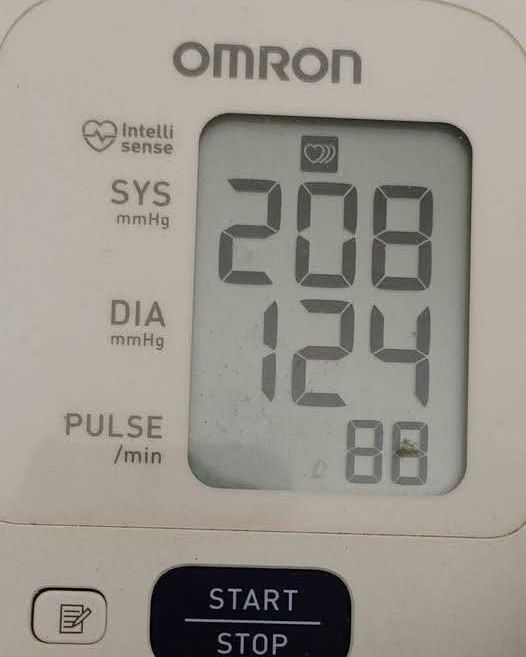
My son's been bugging me to post this. I said it was nobody's business. He said, "It could save someone's life, Mom." So I finally gave in. They told my husband he'd need to be on blood pressure medication for the rest of his life last March. Stage 1 hypertension progressing toward Stage 2. Systolic consistently above 155. His internist had been watching it climb for three years — adjusting lifestyle recommendations, suggesting dietary changes, monitoring quarterly readings — until he collapsed in our driveway bringing in groceries, dizzy and disoriented, and I called 911. The doctors ran every test. EKG. Echocardiogram. Blood panels. Arterial stiffness assessment. Stress test. And when they explained what was happening underneath the blood pressure reading, I couldn't believe it. It wasn't just sodium. It wasn't just weight. It wasn't just stress. It was cellular energy failure. The cells lining his arteries had been silently losing the energy they needed to keep his blood vessels flexible — for over a decade. His body's production of NAD+, the molecule that powers mitochondria inside every cell, had been declining since his early 40s. By the time his blood pressure climbed high enough to alarm anyone, the vessel wall cells responsible for producing nitric oxide and maintaining arterial flexibility were running on less than half the energy they needed. Pretty standard for any man over 50 with even mild metabolic changes — happens to tens of millions of men. Most never know it until something breaks. And as a former nurse, I genuinely thought we were doing everything right. But about two years before his ER visit, I started noticing things weren't right with Richard. He'd wake up exhausted — like he hadn't slept at all. Eight hours in bed and he'd come downstairs looking like he'd been awake the whole time. His thinking had slowed. He'd been a project manager for thirty-one years — the kind of man who kept fourteen moving pieces organized in his head without writing anything down. By year two of the decline, he was making lists for three-item grocery runs. The afternoon fog was the worst. By 2pm every day, he was done. Not sleepy. Empty. Like someone had pulled the plug. He'd sit in his recliner and just stare. The man who used to rebuild lawnmower engines on Saturday afternoons couldn't focus long enough to read the newspaper. I went with him to his doctor. She took his blood pressure. 148/88. Checked it again. 150/90. "His pressure is elevated. Consistently. We should start lisinopril. 10mg. Very well-tolerated. We'll monitor and adjust." Standard protocol. I'd heard it a thousand times in 35 years of nursing. Richard looked at me. I nodded. We filled the prescription. Six months later, his readings were 142/86 on medication. "Controlled," his doctor said. But Richard didn't look controlled. Richard looked like he was disappearing. The fatigue got worse, not better. The brain fog thickened. He gained eleven pounds in the first year on medication despite eating less than he had in decades. His ankles started swelling by evening — his doctor added a note about "mild peripheral edema, likely medication-related" and adjusted nothing. I kept saying to his doctor: "He's on the medication. His numbers are better. But he feels worse than before he started." She'd look at his chart. "His pressure is where we want it. Give the medication more time." I heard that sentence at every appointment for two years. Give the medication more time. More time for what? He was getting worse. Every quarter. Measurably. Not by the blood pressure reading — by every other metric that actually describes a human being living his life. Then one morning last March, he was carrying grocery bags from the car. He stopped halfway up the driveway. Put the bags down. Leaned against the car. I was watching from the kitchen window. He tried to take a step and stumbled. Caught himself on the side mirror. Stood there swaying — confused, disoriented, trying to form words. I ran outside. His face was grey. His eyes were unfocused. His speech was slurred. I checked his pulse — racing. Irregular. I called 911. His blood pressure in the ambulance: 198/112. Despite the medication. Despite the "controlled" readings at every appointment. Despite two years of compliance. At the hospital, the cardiologist went through everything. Richard didn't smoke. He wasn't significantly overweight. No family history of early cardiovascular events. His cholesterol was managed on a statin. He didn't fit the crisis profile. "Then what happened?" I asked. The cardiologist pulled up his imaging on the monitor. "His arterial stiffness is severe for his age. His pulse wave velocity — a measure of how rigid his arteries have become — is significantly elevated. And his endothelial function testing shows his vessel walls have lost most of their ability to produce nitric oxide and self-regulate." My stomach dropped. "How? He's been on medication for two years. His readings were controlled." She looked at me — nurse to physician, both knowing what the other understood. "The medication was managing the pressure reading. Widening the vessels chemically. Lowering the number on the cuff. But the cellular mechanism driving the arterial stiffness was never addressed. His vessel wall cells have been losing the energy they need to maintain flexibility and produce nitric oxide for years. The medication managed the symptom. The mechanism kept progressing underneath." I felt like I'd been punched in the chest. She increased his medication. Added amlodipine. Scheduled quarterly monitoring. Told us this was now a "managed chronic condition" and we should expect to adjust medications as needed going forward. Managed chronic condition. I've been a nurse for 35 years. I know what that phrase means. It means: we can't fix it, so we'll monitor it while it gets worse. I went home terrified. Not of the blood pressure reading. Of the trajectory. Because I'd watched this trajectory in patients for three and a half decades. The medications stack up. The side effects compound. The fatigue deepens. The cognition declines. The man you married becomes someone who sits in a chair and gets managed. I kept thinking about Richard before all of this. The man who drove three hours to surprise me for our anniversary. Who organized block parties for our street every Fourth of July. Who could hold a room with a story and make everyone feel like they mattered. That man was disappearing. And everything the medical system was doing was managing numbers while it happened. I started setting alarms to check his blood pressure at night. Watching him sleep. Listening for irregular breathing. He'd find me sitting on the edge of the bed at 3am. "Linda. Come back to sleep." "I'm just checking." He begged me to stop worrying. But I couldn't. Because I'd been a nurse. I'd watched this play out hundreds of times. And I knew how the managed version ends. My son lives three hours away. He came to visit two weeks after the ER incident. When he walked in, I could see it in his face: he was looking at his father the way you look at someone you're afraid you're going to lose. We sat at the kitchen table. Richard had gone to lie down — exhausted by 4pm. Third day in a row. My son looked at Richard's chair. Then at me. "Mom. What's actually happening?" I started crying. I hadn't cried in front of him since his grandmother died. I told him everything. The ER visit. The arterial stiffness results. The medication stacking. The cardiologist calling it a "managed chronic condition." The fog that was taking Richard's sharpness. The fatigue that was taking his days. The swelling in his ankles. The weight gain. The afternoons where he sat in his chair and stared at nothing. He didn't say anything for a long time. Then he said: "I'm going to figure this out." Four days later, he called. His voice sounded different. Urgent. "Mom. I think I found something. And I need you to hear me out before you say it's nonsense." When he showed up that weekend, he was carrying a bottle. "Before you say anything," he said, "I know you're skeptical. You're a nurse. You've seen every scam. But just... read the research first. Please." He pulled out Boostiva. "It's not a blood pressure supplement the way you're thinking. It's not magnesium and garlic. This targets the cellular energy deficit in the vessel walls — the thing the cardiologist said was driving Dad's arterial stiffness. NAD+ restoration. Liposomal delivery so it actually reaches the endothelial cells. Plus compounds that restore nitric oxide production and reduce the cortisol constriction the medications don't touch." He looked at me. And I saw something in his face I hadn't seen since he was a little boy: Fear. Not fear of the supplement — fear of losing his father. "Mom, I can't watch Dad disappear like this. The medications aren't fixing it. They're managing numbers while he gets worse. Please." I'm a retired nurse. I know every "miracle cure" scam in existence. But I realized: He's not trying to sell me something. He's trying to save his father. So I said yes. That night I read the research he'd sent. Study after study on NAD+ depletion and endothelial dysfunction. NMN restoring cellular energy to vessel wall cells. Clinical trials showing 43% increases in blood NAD+ and significant improvements in arterial stiffness and blood pressure. Research on L-Citrulline and L-Arginine combinations restoring nitric oxide recycling — 7.54 mmHg systolic reduction through a mechanism that standalone arginine couldn't replicate. KSM-66 ashwagandha reducing cortisol by 32% — addressing a vasoconstriction pathway that operates completely outside what ACE inhibitors and calcium channel blockers target. And I kept thinking: Why didn't I know this? I worked in hospitals for 35 years. I saw thousands of cardiovascular patients. Why did no one ever talk about restoring cellular energy in the vessel walls? Because we're still treating blood pressure like it's 1985. Check the cuff reading. Prescribe medication. Adjust the dose. Add another drug. Monitor quarterly. Hope for the best. Manage the decline. But hypertension isn't just a pressure problem. It's a cellular energy problem. Your endothelial cells need energy — NAD+-powered mitochondrial energy — to produce nitric oxide and maintain arterial flexibility. When that energy collapses after 40, your arteries stiffen. Your blood pressure rises. And no amount of medication restores the cellular energy driving the stiffness. If we treated a car engine the way we treat blood pressure — just adjusting the dashboard gauge without ever checking the fuel supply — the engine would seize. You can't restore arterial flexibility by chemically forcing the pressure reading down from outside the cell. The endothelial cells need fuel. They need NAD+. And they need the cofactors that allow them to produce nitric oxide and repair oxidative damage on their own. I gave Richard two capsules with dinner that night. He looked at me skeptically. "What is this?" "Something our son found. Just take it. For him." He took them. Neither of us expected anything. But that night, Richard slept through until 6am. First time in months without waking up at 3am drenched in sweat. No racing heart. No restlessness. Just sleep. I thought I was imagining it. But I wasn't. Week one: The brain fog lifted. Not completely. But I watched Richard read the newspaper for forty minutes without putting it down. He hadn't done that in over a year. He looked up and said, "I actually followed that whole article." Like he was surprised by his own mind working. Week two: The exhaustion shifted. He was still tired by evening. But the 2pm collapse — the daily erasure where his eyes would go vacant and he'd sit in his chair unable to engage — that stopped. He made it to 5pm. Then 6pm. Then he was helping me with dinner and talking while we cooked. Talking the way he used to. Week three: I started tracking his blood pressure. Twice a day. Morning and evening. Same monitor. Same arm. Same time. His readings had been averaging 148/88 on two medications. Week three average: 140/84. I didn't say anything. Kept tracking. Week six: 132/80. Week eight: 126/78. I showed Richard the log. Three pages of readings. Clear downward trend. Stable in the mid-120s for the past two weeks. He stared at the numbers. "Linda. Those can't be right." I tested him again. Right there. 124/76. "They're right." He sat down at the kitchen table. Put both hands flat. The way he does when he's processing something. "I feel different," he said quietly. "I thought I was just adjusting to the medications finally. But this isn't that. This is... I feel like I did five years ago." Within two months, Richard was a different man. Not a different man. The man he'd been before all of this started. The energy was back. Not stimulant energy — the deep, sustained kind where you realize how depleted you'd been only after the depletion lifts. He was up at 6:30. Working in the garden by 8. Fixing the fence he'd been ignoring for a year. Helping our neighbor carry lumber for a deck project. The brain fog cleared entirely by month two. He was doing the Sunday crossword in pen again. Managing our finances without the lists. Telling stories at dinner with all the details in the right places. The ankle swelling went down. His weight started moving for the first time in two years — seven pounds in six weeks with no dietary change. I went with him to his cardiologist for the 3-month follow-up. She took his blood pressure. Took it again. Checked the home log I'd brought — three months of twice-daily readings, all documented. Current reading: 122/74. On the same medication doses. She pulled up his chart. Scrolled through two years of readings that had been stubbornly hovering in the 140s despite medication. Then she looked at the log. Then at Richard. Then at me. "What happened?" I told her about Boostiva. She wrote it down. She looked at Richard's readings for a long time. "These are excellent numbers. Significantly better than anything we've achieved with medication alone. I'd like to try reducing his amlodipine and see if these readings hold." She reduced the amlodipine. His readings held. Three months later, she reduced the lisinopril. His readings held. She looked at me at that appointment and said something I will never forget: "I wish I'd known to address the cellular mechanism before we stacked medications. His arterial stiffness markers have improved more in six months than I typically see in two years of optimized pharmaceutical management." Me too. If we had found this two years ago — when the blood pressure first started climbing, when his doctor said "mild elevation, let's monitor" — we might have avoided medication entirely. The ER visit. The medication stacking. The side effects. The fog that stole two years of his sharpness. The fatigue that stole two years of his life. My son's face when he thought he was going to lose his father. That's why I'm sharing this. Because if you recognize ANY of the symptoms I described — the fatigue that doesn't improve with sleep, the brain fog that steals your sharpness, the afternoon energy collapse, the blood pressure that won't respond to lifestyle changes, the weight that won't move despite doing everything right — please don't wait. Before you go looking for a blood pressure supplement, I need to warn you: Most of the ones on Amazon or at the health store do NOT work. I know because after Richard's results, I researched every product I could find. Cheap ones. Expensive ones. "Premium" ones. Most were garbage. Here's why: Real cellular energy restoration in vessel wall cells requires NAD+ precursors delivered via liposomal technology — the form that survives stomach acid and reaches endothelial cells at 13.6 times the concentration of standard capsules. Combined with L-Citrulline and L-Arginine together — not standalone arginine that breaks down before reaching the arteries. Plus KSM-66 ashwagandha for cortisol reduction through a pathway blood pressure medications don't touch. Most supplements on Amazon use standard NAD+ capsules that lose 80% of their content in your stomach. They add magnesium and garlic and call it "heart health." That's fine for cutting costs. It does NOTHING for the cellular energy deficit in your vessel walls. The active compounds never reach the endothelial cells. The mitochondria never get the fuel. The nitric oxide production doesn't restart. And the "natural blood pressure support" claims? Most are based on research using specific delivery methods and compound combinations that the cheap versions don't contain. Real endothelial energy restoration requires liposomal NMN at clinical dose, L-Citrulline + L-Arginine for nitric oxide recycling, KSM-66 ashwagandha for cortisol reduction, CoQ10 via liposomal delivery for mitochondrial stability, plus resveratrol and turmeric at 95% curcuminoids for the inflammatory cascade that accelerates arterial stiffening. I've been in hospitals where cardiovascular function is life or death. I know what real vascular support looks like. Boostiva is the only formulation I've found that delivers liposomal NMN, the full nitric oxide recycling combination, clinical doses of every compound, third-party tested, with every ingredient and dose listed on the label. That's why it works. And that's why the cheap alternatives don't. I bought three bottles. One for Richard. One for me — my blood pressure had been creeping up too. One for my sister. Within three weeks, my sister called me. "Linda, I didn't realize how tired I was until I stopped being tired. My blood pressure reading at the pharmacy was 126. It hasn't been that low in four years." That's what progressive cellular energy depletion does. It creeps up so slowly you forget what normal feels like. You forget what it's like to think clearly all day. To have energy past 2pm. To wake up feeling like you actually slept. To have blood pressure readings that make your doctor smile instead of frown. You normalize the decline because everyone around you is declining too. Boostiva is in high demand. Every time a health publication runs a story about NAD+ or endothelial function research, inventory disappears for weeks. Last month, one of my former nursing colleagues tried to order it. It was sold out. Three weeks later it came back in stock. But by then, her doctor had added a third medication to her husband's blood pressure protocol. She called me and said: "I wish I'd ordered it the first time I saw it." I don't want that to be you. If you're reading this and it's in stock — get it. Don't think "I'll do it later." Because here's the thing about blood pressure: The cellular energy decline doesn't pause while you decide. Every day those endothelial cells run depleted is another day of reduced nitric oxide production. Another day of arterial stiffening. Another day closer to the dose increase your doctor is already planning. Another day closer to the medication stack. Another day closer to the complications that stack is designed to delay but never prevent. Richard got a second chance. My colleague's husband got a late start. Not everyone catches it in time. Boostiva comes with a 60-day money-back guarantee. If you don't feel a difference, you get every penny back. But I'm confident you will. Because Richard felt it. I felt it. My sister felt it. Don't wait until your doctor adds a third medication. Don't wait until the side effects steal your energy, your clarity, your afternoons. Don't wait until your family is terrified. Get it now. While it's in stock. While you still have a window. 👉 https://tryboostiva.shop/products/liposomal-nad-for-men-advanced-welness-formula — Linda Harrison, RN (Retired) 35 years in nursing Wife of a man who got his life back And someone who wishes we'd found this sooner
Where the ad sends people
tryboostiva.shop
The Most Potent Formula Ever Created
🔥 Boostiva Liposomal NAD+ for Men — Revive Your Energy, Focus & Vitality Unlock your peak performance with Boostiva Liposomal NAD+ for Men — the advanced men’s wellness formula engineered to support real energy, strong circulation, hormonal balance, stamina, and overall vitality as you ...
See details: tryboostiva.shop(opens in a new tab)