Sarah Mitchell
Sarah Mitchell Facebook ad: “Read this if you run a home daycare and you have pets”
Ran for 28 days, from March 14 to April 11, 2026, the last day Crush saw it.
Run by Sarah Mitchell on Facebook. Crush is not the advertiser and does not verify its claims. See this ad in Meta's Ad Library(opens in a new tab)
Want an ad like this for your product?
Crush makes new ad images for your product from this ad: your logo, your product photo, your offer.
Trials from $19.95 USD, then $79.95 USD a month. Cancel anytime.
About this ad
- Meta Ad Library ID
- 1496850761999219
- Platforms
- Facebook, Instagram, Audience Network, Messenger and Threads
- Relaunches
- 0
- Niche
- Pets
Ad text
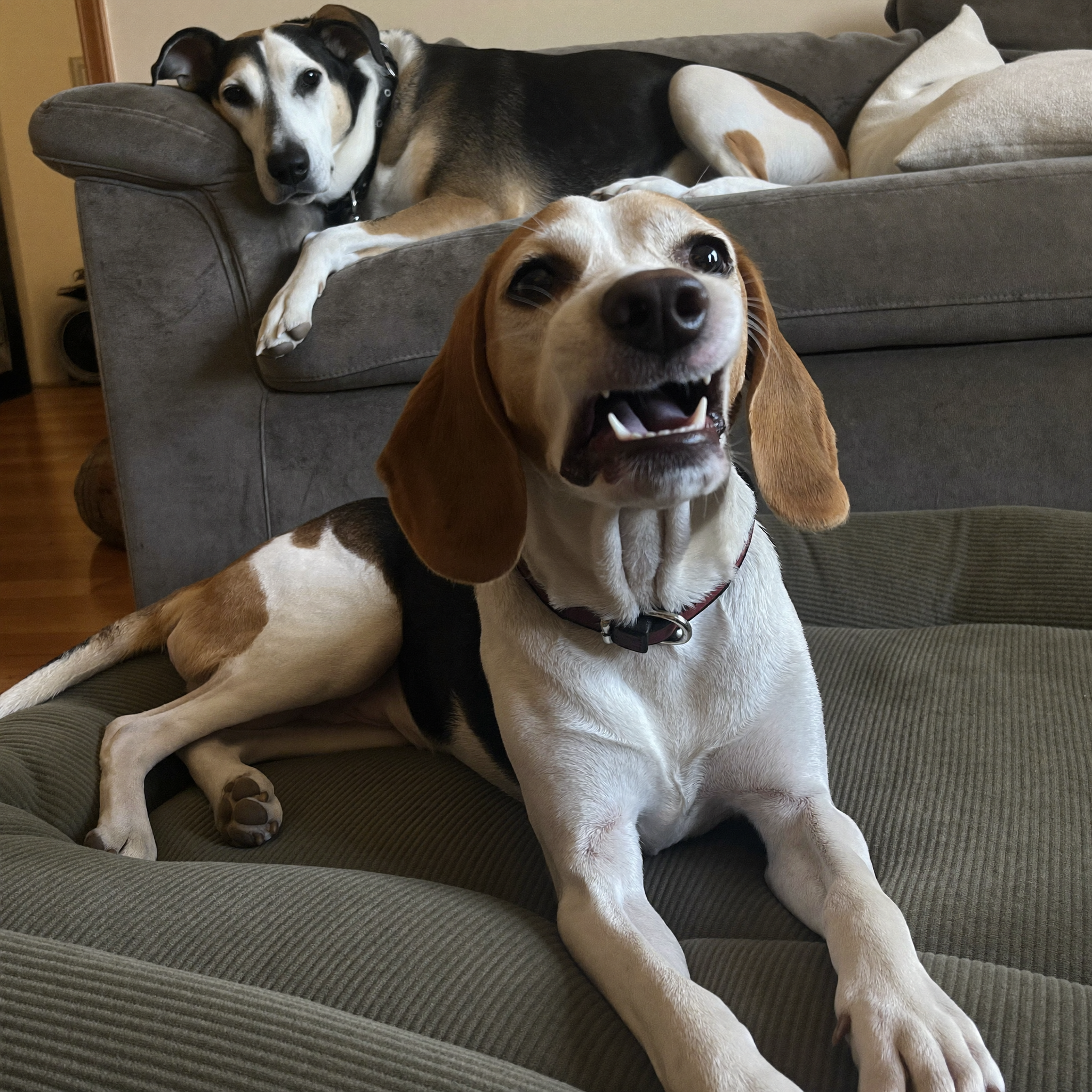
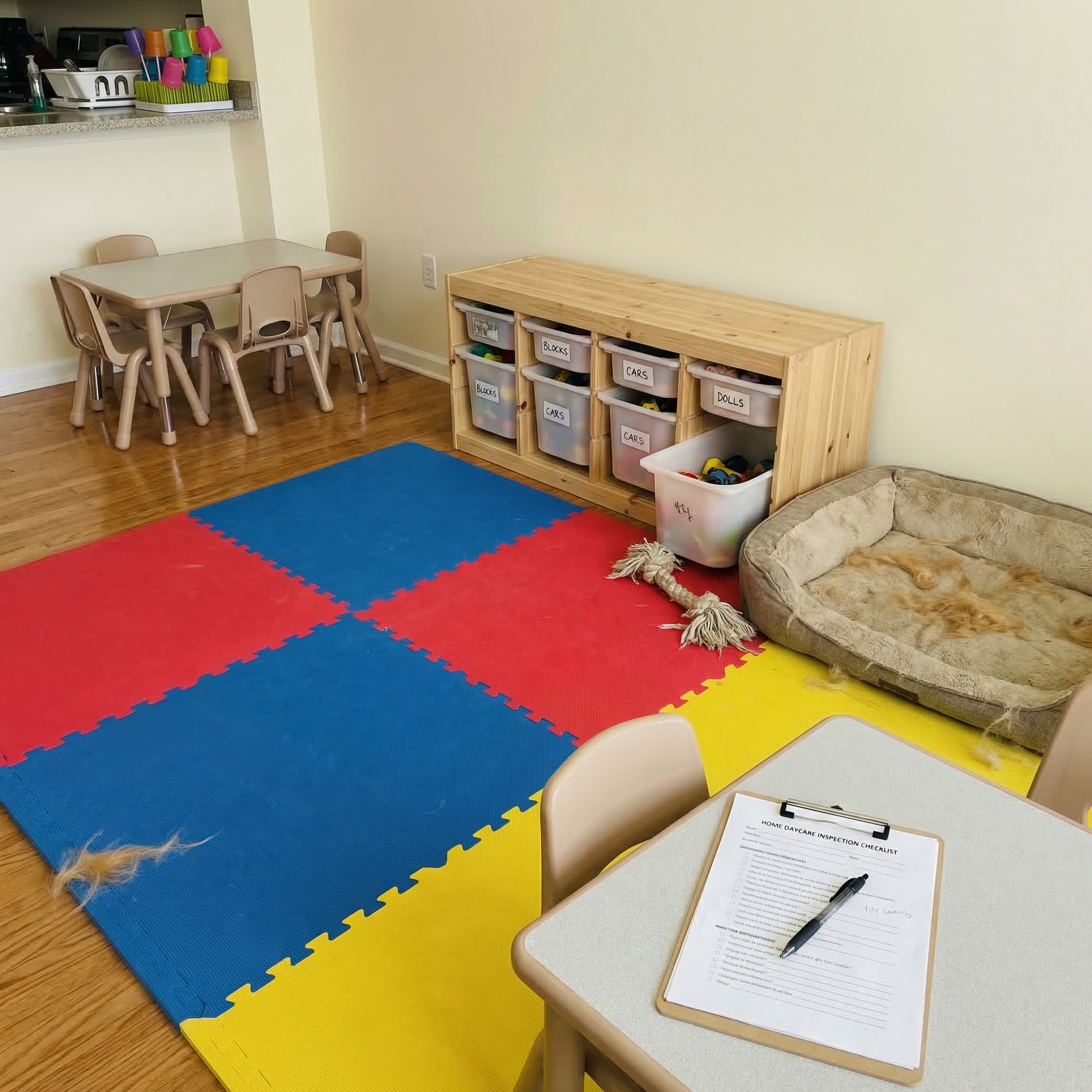
My licensing inspector asked about my air quality for the first time in 6 years. I have 3 dogs. I did not have a good answer. I need to tell you how long it took me to build this daycare before any of what happened next makes sense. Because when you understand what I built you will understand what I almost lost. My name is Denise. I am 44. I have run a licensed home daycare out of my house in suburban Columbus for six years. I care for up to eight children ages six months to four years. I have a waitlist. I have parents who drive 25 minutes past three other daycares to bring their kids to me because they trust me and their children are happy here and that reputation took six years to build from nothing. I also have three dogs. Benny is a nine year old beagle. Tucker is a six year old lab mix. Rosie is a three year old golden who I fostered and could not give back. They are in the house during operating hours. They are part of the program. The kids love them. The parents know about them. Every enrollment contract I sign includes a pet disclosure form. For six years my annual licensing inspection was the same. The inspector walked through the house, checked the smoke detectors, checked the outlet covers, checked the medication storage, checked the outdoor play area fencing, checked my CPR certification, checked my food handling certificate. She asked the same questions she always asked. She checked the same boxes she always checked. In February she asked a new question. She was standing in the main playroom where the kids spend most of their day. Benny was asleep on his bed in the corner. Tucker was in the backyard. She looked at her clipboard and said we have updated guidance on indoor air quality standards for home-based childcare facilities. She said the state is beginning to incorporate air quality metrics into licensing evaluations. She asked what measures I had in place to manage indoor air quality, particularly given the presence of multiple pets in the operating environment. I said I vacuum every day. I said I mop the hard floors twice a week. I said I wash the dog beds weekly. I said I keep the windows open when weather permits. She wrote something on her clipboard and said those are surface-level cleaning measures. She said air quality refers to airborne particulate matter including pet dander allergens which are not addressed by vacuuming or mopping. She said the updated guidance recommends mechanical air filtration in home-based care settings where pets are present. She did not fail me. She did not cite me. She checked a box that said "recommended improvement" and told me I had until my next annual inspection to demonstrate compliance with the updated guidance. I smiled and thanked her and closed the door behind her and then I sat at my kitchen table and felt something I had not felt since the first year of my business. I felt scared. Because I understood exactly what she was telling me. She was telling me that the rules are changing. She was telling me that what passed for six years might not pass next February. And she was telling me that three dogs producing allergens continuously in a 1,400 square foot house where eight children under four years old breathe for nine hours a day is a liability I had been operating under without ever fully calculating. I started researching that night after the kids went home. Pet dander allergen is not pet hair. I knew there was a difference but I did not understand the mechanics until I read the clinical literature. Can f 1 from dogs is a protein produced in saliva and skin secretions. It becomes airborne at 0.3 to 2.5 microns. Particles that size do not settle onto surfaces where vacuuming removes them. They remain suspended in the air for hours. They travel through HVAC ducts. They pass under doors. They embed in carpet backing and are re-released into the air with foot traffic. In a home with three dogs producing dander continuously, the airborne concentration builds throughout the day. Every hour the children are in my home the particulate load in the air increases. Opening windows helps when the weather allows it but in Ohio that is maybe five months of the year. The other seven months the house is sealed and the HVAC recirculates the same air containing the same dander particles through every room. Then I found the part that scared me more than the licensing issue. Studies show that 10 to 20 percent of children have pet allergies. In a group of eight children that means statistically one or two of them are sensitized to pet allergens. Most parents of young children do not know their child has a pet allergy because the symptoms, chronic congestion, frequent upper respiratory issues, unexplained coughing, are attributed to daycare germs. The child is reacting to allergens in my home and nobody connects it because everyone assumes kids in daycare just get sick a lot. I thought about Maya. Three years old. She had a runny nose almost every day she was at my house. Her parents thought she was catching colds from the other kids. She was fine on weekends. She was fine on vacation weeks. She was symptomatic Monday through Friday from 7 AM to 4 PM. The exact hours she spent in my home with three dogs. I do not know if Maya had a pet allergy. I never asked. Nobody ever tested. But the pattern matched and the thought of it made my stomach hurt. I searched for air purifiers that could run in a childcare environment. I needed several things. HEPA filtration at 0.3 microns for the dander. Quiet operation because loud appliances scare toddlers and disrupt nap time. A design that would not tip over if a child bumped into it. And some kind of verification that the air was actually clean because the inspector was going to come back in twelve months and I needed documentation, not hope. I found a unit with a curved air inlet that prevents dog hair from clogging the filter, which mattered because three dogs produce enough hair to kill a standard purifier in two weeks. Six stages of filtration. H13 HEPA at 0.3 microns. Activated carbon for odors because parents notice pet smell the second they walk in. A Pet Lock feature that prevents children from pressing buttons and changing settings. And a real-time PM2.5 display that shows the actual particulate count in the room. That display is why I chose this unit over every other option. Because when the inspector comes back I can point to a number. I can show her a green reading. I can show her dated photos of the display taken every morning before the first child arrives. I can show her a log. That is not a cleaning schedule on paper. That is real-time measurable proof that the air in my facility meets a standard I can quantify. I set it up in the main playroom on a Sunday. No kids. Three dogs in the house. The display showed 43. Red. 43. In the room where eight children sit on the floor and play and eat snacks and breathe for nine hours a day. In the room I had vacuumed that morning. In the room I thought was clean. It dropped. 43 to 29 to 16 to 7 to 3. Green. About forty minutes. I set up a second unit in the nap room. Display showed 31. Six cribs and mats in a room where children sleep for two hours every afternoon. Dropped to 2. Monday morning I turned both units on at 6 AM, an hour before the first child arrived. By 7 AM both rooms read green. I took a photo of each display with the date visible on my phone. I have done this every single morning since. The first week I noticed something I did not expect. Maya's nose was dry. Not runny. For the first time in the eight months she had been enrolled, she did not need a tissue between 7 AM and 4 PM. By the second week her parents mentioned that she seemed healthier. They said whatever you are doing keep doing it. I did not tell them about the air purifiers because I was not ready to have a conversation about the fact that my dogs may have been causing their daughter's chronic congestion for eight months. That is a conversation I am still not sure how to have. Three months later two other children who had been chronically congested at my facility improved noticeably. Their parents attributed it to the season changing. It was not the season. The unit is called the Rexqa FurGuard. I now take a timestamped photo of the green display every morning at 6:45 AM before the first child arrives. I have 87 photos in a folder on my phone labeled Air Quality Log. When my inspector comes back in February I will show her that folder. I will show her the H13 HEPA spec sheet. I will show her the PM2.5 readings. I will have an answer this time. If you run a home daycare or any business out of your home and you have pets, your inspector may not have asked about air quality yet. But the guidance is changing. The question is coming. And the time to have your answer ready is before they ask, not after.
Where the ad sends people
rexqa.com
Read this if you run a home daycare and you have pets👆
Pet Air Purifier
Learn more: rexqa.com(opens in a new tab)