Sarah Mitchell
Sarah Mitchell Facebook ad: “Read this if you foster pets”
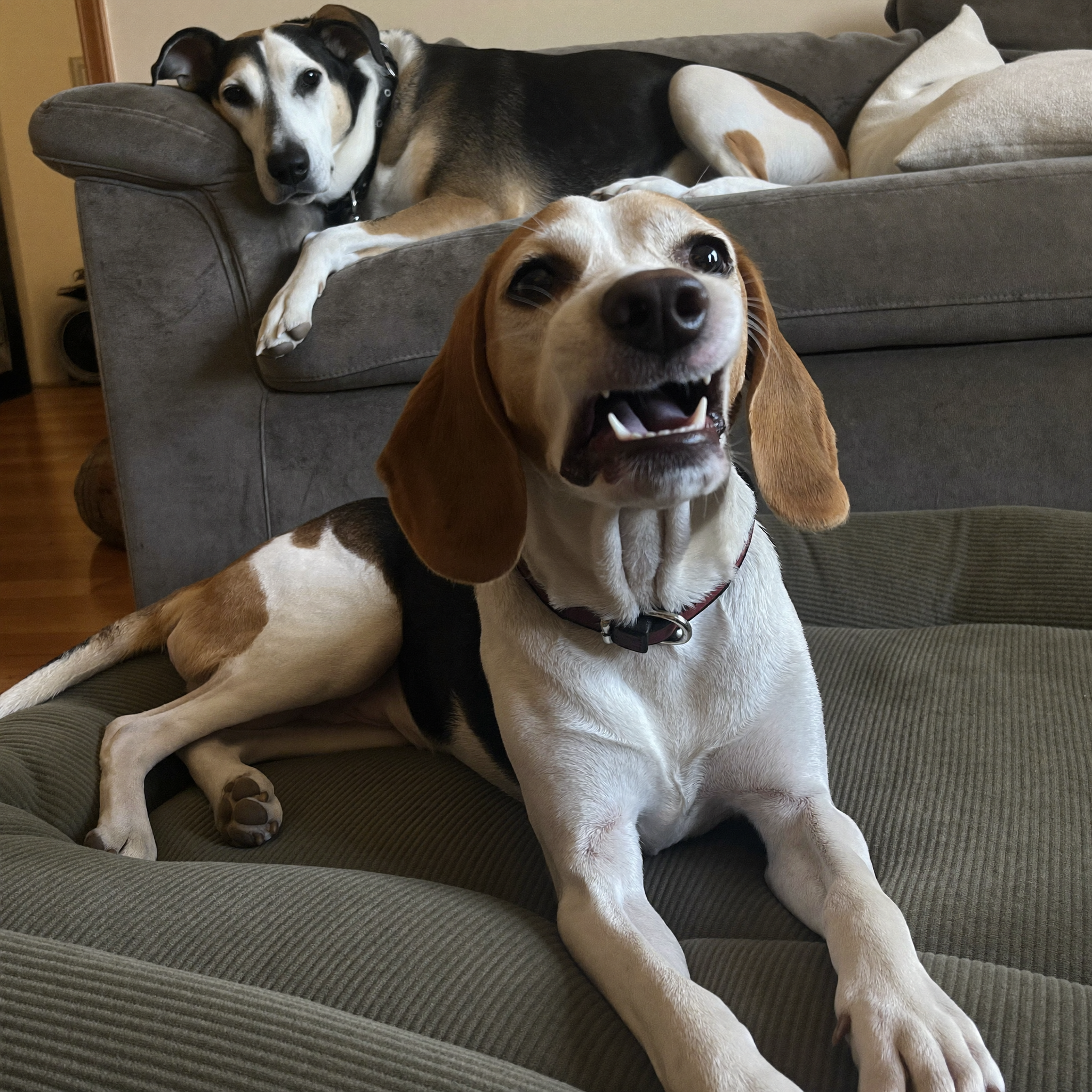
Ran for 21 days, from March 27 to April 17, 2026, the last day Crush saw it.
Run by Sarah Mitchell on Facebook. Crush is not the advertiser and does not verify its claims. See this ad in Meta's Ad Library(opens in a new tab)
Want an ad like this for your product?
Crush makes new ad images for your product from this ad: your logo, your product photo, your offer.
Trials from $19.95 USD, then $79.95 USD a month. Cancel anytime.
About this ad
- Meta Ad Library ID
- 822277814239359
- Platforms
- Facebook, Instagram, Audience Network, Messenger and Threads
- Relaunches
- 0
- Niche
- Pets
Ad text
My 47th foster dog developed kennel cough in my home. My vet said it was not a virus. It was the air from the 46 dogs before her. Her name was Birdie. She was a four year old beagle mix surrendered to the rescue after her owner went into long-term care. She was underweight, anxious, and had been in the shelter for three weeks. But her intake exam was clean. Lungs clear. No respiratory symptoms. No kennel cough. She was healthy enough to be placed in foster care. That is how she ended up in my house. My name is Tara. I am 37. I have been fostering dogs through a rescue organization in Richmond, Virginia for four years. I have fostered 47 dogs in my home. Some stayed for two weeks. Some stayed for three months. One stayed for six months before he was adopted by a family in Northern Virginia who drove down to meet him three times before they committed. I love fostering. It is the thing I am most proud of in my life. I keep a photo wall in my hallway of every dog that has passed through my house on their way to a permanent home. Forty seven faces. Forty seven stories. Forty seven second chances. I also have two dogs of my own. Scout is an eight year old lab mix. Pepper is a five year old shepherd mix. They are both calm with fosters. They know the routine. A new dog shows up scared and confused and Scout lies on the floor near them without approaching and Pepper ignores them entirely until they are ready. My dogs are the reason the rescue keeps sending me the hard cases. Birdie arrived on a Tuesday in October. By Friday she was eating normally. By the following Tuesday she was comfortable enough to sleep on the couch instead of under it. She was adjusting perfectly. On day twelve Birdie started coughing. A dry, hacking cough that came in bursts. Three or four coughs in a row then nothing for an hour then another burst. It sounded exactly like kennel cough. I isolated her from Scout and Pepper immediately. I called the rescue coordinator and reported the symptoms. I called my vet and brought Birdie in that afternoon. Dr. Lowe examined her. He listened to her chest. He checked her throat. He ran a respiratory panel for Bordetella, parainfluenza, and canine influenza. All negative. Birdie did not have kennel cough. He said the cough was caused by airway irritation from environmental allergens. He said her bronchial passages were inflamed the same way a human's would be during a bad allergy season. He said the irritant was not an infection. It was something in the air in my home. I said I keep a clean house. I vacuum every day. I wash the dog beds weekly. I mop the floors twice a week. I have been doing this for 47 dogs and none of them have ever developed respiratory symptoms. He said something I had never considered. He said when a dog lives in your home for two weeks and leaves, it deposits dander into your carpet, your furniture, your air ducts, and your walls. That dander contains Can f 1, a protein that becomes airborne at 0.3 to 2.5 microns. It persists in a home for up to six months after the animal leaves. He said I have had 47 dogs rotate through my home in four years. That is a new allergen profile every three to four weeks. Each dog brings a different coat type, a different dander composition, and a different bacterial and fungal load on their skin. The residual dander from dog number one is still in my carpet when dog number five arrives. By dog number 47 the accumulated allergen concentration in my home is unlike anything a normal household would experience. He said my own dogs are acclimated because they have been breathing it for years. Their immune systems adapted gradually as each new allergen layer was added. But a new foster arriving from a shelter, already stressed, already immunologically vulnerable, is suddenly immersed in the concentrated residue of 46 animals she has never encountered. Her airway reacted the only way it knew how. He said I was not making Birdie sick. My air was. I sat in the parking lot of the vet clinic and thought about every foster dog that had ever coughed in my home. There were at least six or seven over the years that developed mild coughs during their first two weeks. I always assumed it was kennel cough from the shelter. I reported it to the rescue. We isolated. We waited. It always resolved on its own after a week or two. But maybe it was never kennel cough. Maybe it was always my air. Maybe every one of those dogs was reacting to the invisible residue of every dog that came before them and I never connected it because the cough always went away once their immune systems adjusted. That thought made me feel something I had not felt in four years of fostering. I felt like I was part of the problem. I went home and started researching. Everything Dr. Lowe said was backed by published data. Allergen persistence. Cumulative dander accumulation. Cross-reactivity between different breeds' allergen profiles. The EPA data on indoor air quality being two to five times worse than outdoor air. In a home with two resident dogs and a rotating foster every three to four weeks, the particulate load in the air would be orders of magnitude higher than a typical pet-owning household. I had been vacuuming the floor. The allergens were in the air. I needed HEPA filtration at 0.3 microns for the dander. An activated carbon layer for the odor that builds up between fosters. A design that would not clog with the volume of hair my house produces. And verification that the air was actually clean because I needed to know my home was safe for the next foster before they walked through the door. I found a unit with a curved air inlet that prevents dog hair from blocking the filter. Six stages of filtration. H13 HEPA. Activated carbon. And a PM2.5 display that shows a score from 1 to 99 where 99 is cleanest. I set it up in the main living area where the fosters spend most of their time. Scout was on the couch. Pepper was on the floor. The display showed 11. Red. 11. In a room I had vacuumed that morning. In a house I thought was clean because I cleaned it every single day. 11 out of 99. It climbed. 11 to 28 to 47 to 68 to 84 to 95. Green. About forty minutes. I set up a second unit in the foster room. The spare bedroom where new dogs sleep for the first week while they decompress. Display showed 8. That room had been empty for five days since the last foster was adopted. 8 out of 99 in a room with no dog in it. Five days after the dog left and the air was still loaded. That confirmed everything Dr. Lowe said. The dander does not leave when the dog leaves. It stays in the air, in the carpet, in the ducts. It is waiting for the next foster. Birdie's cough resolved within four days of the purifier running. She was adopted three weeks later by a couple in Glen Allen who said she was the calmest beagle they had ever met. The next foster after Birdie was a ten month old pit mix named Gus who had been in the shelter for six weeks. I ran the purifier for 48 hours before he arrived. Display read 97 when he walked through the door. Gus did not develop a cough. He did not sneeze. He did not have a single respiratory symptom in the three weeks he stayed with me. That had never happened before. In four years of fostering I had never had a shelter dog come in during fall or winter and not develop at least mild congestion in the first week. I always assumed it was the transition from shelter to home. It was the air. I now run the display check before every new foster arrives. I take a photo of the score and text it to the rescue coordinator. She has started recommending the same unit to other foster homes in the network. The unit is called the Rexqa FurGuard. If you foster animals and your fosters develop coughs or congestion in the first two weeks, it might not be kennel cough. It might not be the shelter. It might be the accumulated residue of every animal you have saved sitting invisibly in the air of the home where you are trying to save the next one. You save their lives. The least you can do is clean the air they breathe while they are in your care.
Where the ad sends people
rexqa.com
Read this if you foster pets ☝️
Pet Air Purifier
Learn more: rexqa.com(opens in a new tab)