Sarah Mitchell
Sarah Mitchell Facebook ad: “Read this if you're doing IVF and you have a pet”
Ran for 39 days, from March 9 to April 17, 2026, the last day Crush saw it.
Run by Sarah Mitchell on Facebook. Crush is not the advertiser and does not verify its claims. See this ad in Meta's Ad Library(opens in a new tab)
Want an ad like this for your product?
Crush makes new ad images for your product from this ad: your logo, your product photo, your offer.
Trials from $19.95 USD, then $79.95 USD a month. Cancel anytime.
About this ad
- Meta Ad Library ID
- 1635974410874427
- Platforms
- Facebook, Instagram, Audience Network, Messenger and Threads
- Relaunches
- 0
- Niche
- Pets
Ad text
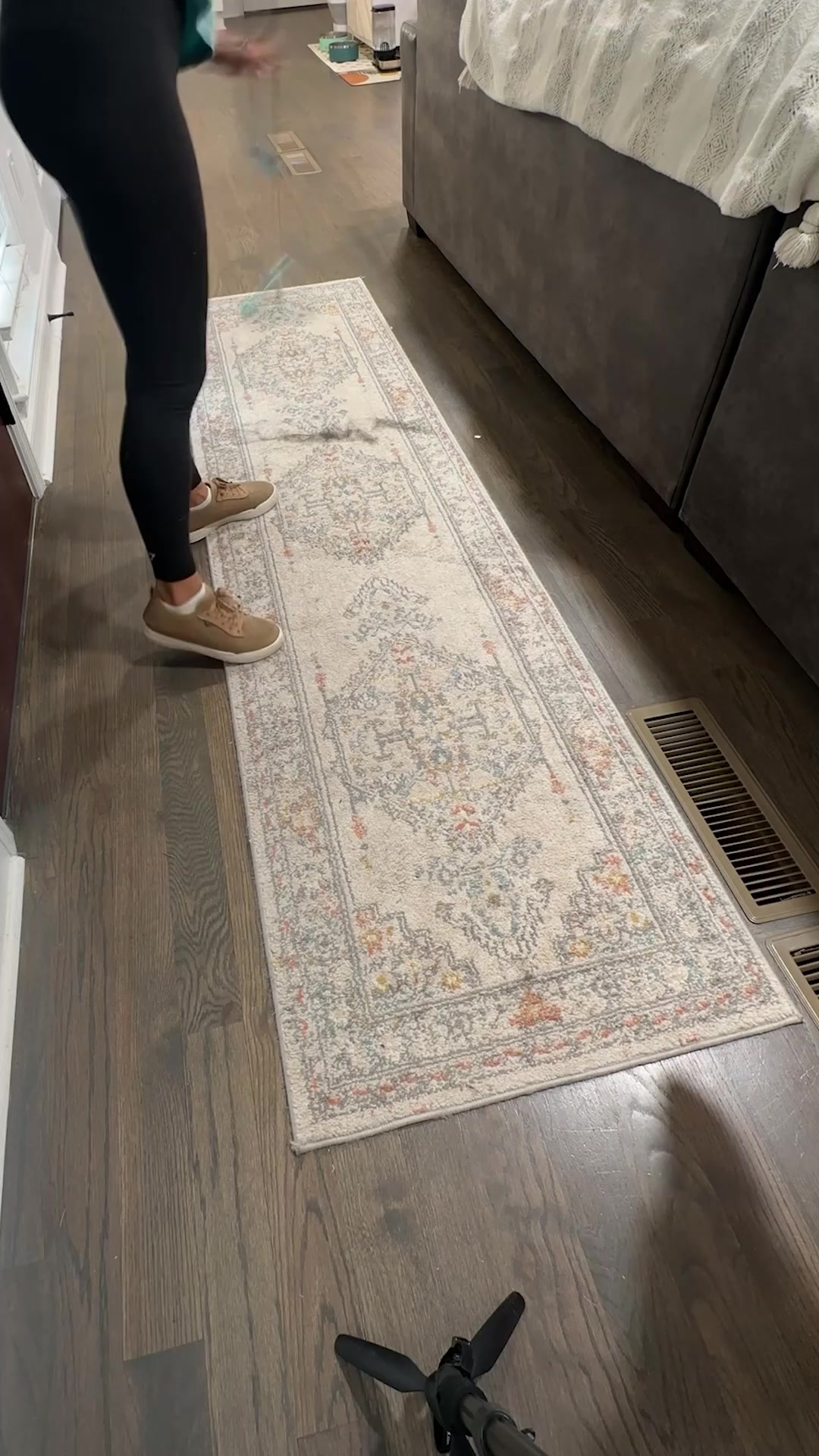
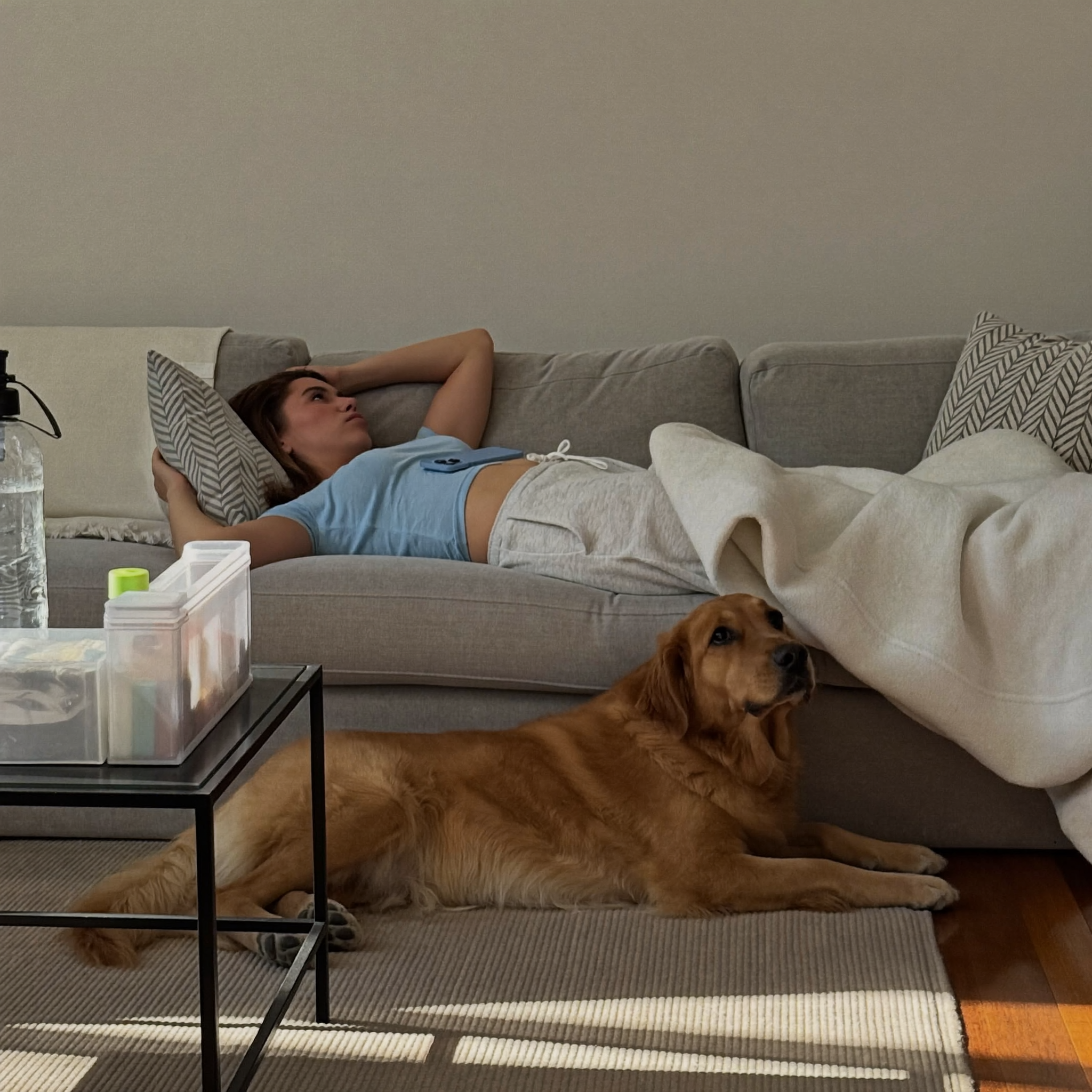
Our third IVF cycle failed. A 2024 study showed me what my dog was putting into the air during my implantation window. I need to tell you what those three cycles cost before any of this makes sense. Not just the money. The everything. My name is Sarah. I am 34. My husband Ryan is 36. We have been trying to have a baby for three years. We have a four year old golden retriever named Hank who we adopted the year we got married because we wanted a family and he was the beginning of one. Our first IVF cycle was in January 2024. $18,400. They retrieved eleven eggs. Seven fertilized. Three made it to blastocyst. We transferred one. I spent the two week wait lying on the couch with Hank's head on my stomach whispering to both of them that this was going to work. It did not work. The second cycle was in May. $14,200 because we had frozen embryos from the first retrieval. We transferred two this time. I took progesterone injections every night. Ryan gave me the shots in the kitchen while Hank sat at our feet watching with his head tilted like he was trying to understand why I was crying. Neither implanted. The third cycle was September. Another retrieval because our remaining frozen embryos did not survive the thaw. $16,800. Nine eggs retrieved. Five fertilized. Two blastocysts. We transferred one and I spent another two weeks on the couch with Hank doing the only thing I knew how to do which was wait and hope and try not to Google anything. Beta was negative. $47,000 across three cycles. Zero pregnancies. I sat in my car in the clinic parking lot after that call and I did not cry. I was past crying. I was in the numb place where your body has used up every emotion it has and all that is left is a flat gray nothing. Ryan said we should take a break. My RE said we should consider a different protocol. My therapist said I needed to grieve. My mother said maybe it was not meant to be and I hung up the phone. Nobody said anything about Hank. Nobody said anything about the air. I want to explain what I was doing during those two week waits because it matters for what I found later. After each transfer I followed every instruction to the letter. No heavy exercise. No alcohol. No caffeine. Progesterone and estrogen exactly on schedule. I ate anti-inflammatory foods. I took CoQ10 and vitamin D and folate and fish oil. I drank 80 ounces of water a day. I wore warm socks because someone in my IVF support group said cold feet reduce blood flow to the uterus and I was desperate enough to believe anything. I also spent those two weeks lying on the couch in our living room with a 70 pound golden retriever pressed against me for eight to ten hours a day. Hank was my comfort. He was the thing that made the waiting bearable. He slept next to me on the couch. He slept in our bed at night. He was in whatever room I was in, shedding, breathing, existing the way golden retrievers do. I did not think about what that meant for the air I was breathing. In November, two months after the third failure, I was scrolling through an IVF research group on Facebook at 2 AM because that is what you do when you cannot sleep and your body feels like a crime scene. Someone had posted a link to a study presented at ESHRE, which is the European Society of Human Reproduction and Embryology. The study was from 2024. A doctor in Australia had analyzed over 3,600 frozen embryo transfers across eight years. The finding was this. Women in the highest exposure group for particulate matter, specifically PM2.5, during the two weeks before egg retrieval saw their live birth rates drop by 34 to 38 percent compared to women in the lowest exposure group. I read that sentence three times. PM2.5. Particulate matter at 2.5 microns or smaller. The exact particle category that includes pet dander proteins. Fel d 1 from cats. Can f 1 from dogs. Airborne at 0.3 to 2.5 microns. The size that stays suspended in indoor air for hours. The size that your lungs absorb with every breath. I had spent three IVF cycles optimizing every single variable my doctors told me to optimize. Diet, supplements, medication timing, activity level, sleep, stress management. Not one of them, not my RE, not my nurse coordinator, not the acupuncturist, not the naturopath, ever mentioned the air quality in my home. Not once. And I had been lying on a couch for two weeks at a time with a golden retriever producing dander continuously six inches from my face. I kept reading. A study from Emory University published in 2024 found that organic carbon, a component of PM2.5, had the most consistent negative association with egg survival and embryo quality. A 2025 study in BMC Public Health analyzed over 13,000 IVF patients and confirmed PM2.5 exposure affected oocyte number and embryo quality. Then I found the one that made me stop breathing for a second. IVF clinics that upgraded their lab air filtration to HEPA plus activated carbon systems saw live birth rates climb from approximately 32 percent to over 39 percent. The clinics understood that the air touching the embryos mattered. They built clean rooms. They installed hospital grade filtration. They controlled every particle in the lab environment because they knew that microscopic airborne contaminants could prevent implantation. And then they sent the patients home to breathe whatever was in their house for the next two weeks during the most critical window of the entire process. Nobody connected those two things. The clinic controlled the air around the embryo. Nobody controlled the air around the patient. I showed Ryan everything. The studies. The particle size data. The fact that Can f 1, the protein Hank produces in his saliva and skin, becomes airborne at 0.3 to 2.5 microns and stays suspended in an enclosed room for hours. He said what do we do. I said I need to see what the air in our house actually looks like. I searched for air purifiers with real time PM2.5 monitoring. Not the generic ones sold at Target. I needed something designed for a home with a large shedding dog. Something with HEPA filtration rated to capture particles at 0.3 microns. Something with an activated carbon layer because the Emory study specifically implicated organic carbon compounds. And something that would show me a number so I could verify the air was actually clean instead of trusting a machine with a blue light that might be clogged with dog hair and doing nothing. I found one unit that matched. Curved air inlet designed to prevent pet hair from blocking airflow. Washable pre-filter. Six stages of filtration. H13 HEPA at 0.3 microns. Activated carbon. And a PM2.5 display on the front that shows a real time number and changes color. It arrived on a Monday. I set it up in the living room where I spend most of my time during a cycle. Hank was on the couch. The display showed 41. Red. 41. In a room where I had spent three two week waits breathing with my face six inches from a golden retriever. Where I had lain still for hours trying not to disturb whatever fragile process might be happening inside me while inhaling a concentration of airborne dander particles that the world's leading reproductive researchers had directly linked to reduced implantation and live birth rates. I watched the number drop. 41 to 28 to 16 to 9 to 4. Green. About thirty five minutes. I moved it to the bedroom that night. Display showed 33. Hank sleeps at the foot of our bed. Dropped to 3 before I fell asleep. We started our fourth cycle in February. Different protocol. But also a different home environment. The unit ran continuously in whatever room I was in. Living room during the day. Bedroom at night. I checked the number before my progesterone shot every evening. Green. I checked it when I woke up at 3 AM because I always wake up at 3 AM during a transfer cycle. Green. Hank stayed on the couch with me. He stayed in the bedroom at night. I did not change anything about our life except the air we were breathing while living it. Beta day was March 14th. I sat in the parking lot of the clinic after the blood draw and waited for the call. When my phone rang I could not pick it up for two rings because my hand was shaking. My beta was 312. I am not going to tell you that an air purifier got me pregnant. That is not how science works and I would never make that claim. What I am going to tell you is that three cycles failed at $47,000 and the fourth one succeeded and the only environmental variable that changed between the third and fourth cycle was the air quality in the rooms where I spent my implantation windows. I am 14 weeks now. Hank does not know yet. He knows something is different because I cry more and I sleep more and I hold him tighter than I used to. The display in the living room reads 003 every morning when I come downstairs. The display in the bedroom reads 002 when I wake up. I do not know if filtering the air made the difference. I know that the research says PM2.5 exposure during critical reproductive windows reduces outcomes by up to 38 percent. I know that my dog produces PM2.5 continuously. I know that three cycles in unfiltered air failed and one cycle in filtered air succeeded. I know correlation is not causation. And I know that if I had read that ESHRE study before my first cycle I would have spent $249 on an air purifier before I spent $18,400 on a retrieval. If you are going through IVF and you have a pet and you are optimizing everything your doctor told you to optimize, look at the air. It is the one variable nobody is talking about. It is the one variable that costs almost nothing to control. And it is the one variable that a growing body of peer reviewed research says matters more than most of the supplements in your medicine cabinet. The unit is called the Rexqa FurGuard. I am not going to tell you it will change your outcome. I am going to tell you it changed mine.
Where the ad sends people
rexqa.com
Read this if you're doing IVF and you have a pet 👆
Pet Air Purifier
Learn more: rexqa.com(opens in a new tab)