
Inactive· since Jun 13, 2026
- 31
- days it ran
- 0
- relaunches
Ad copy
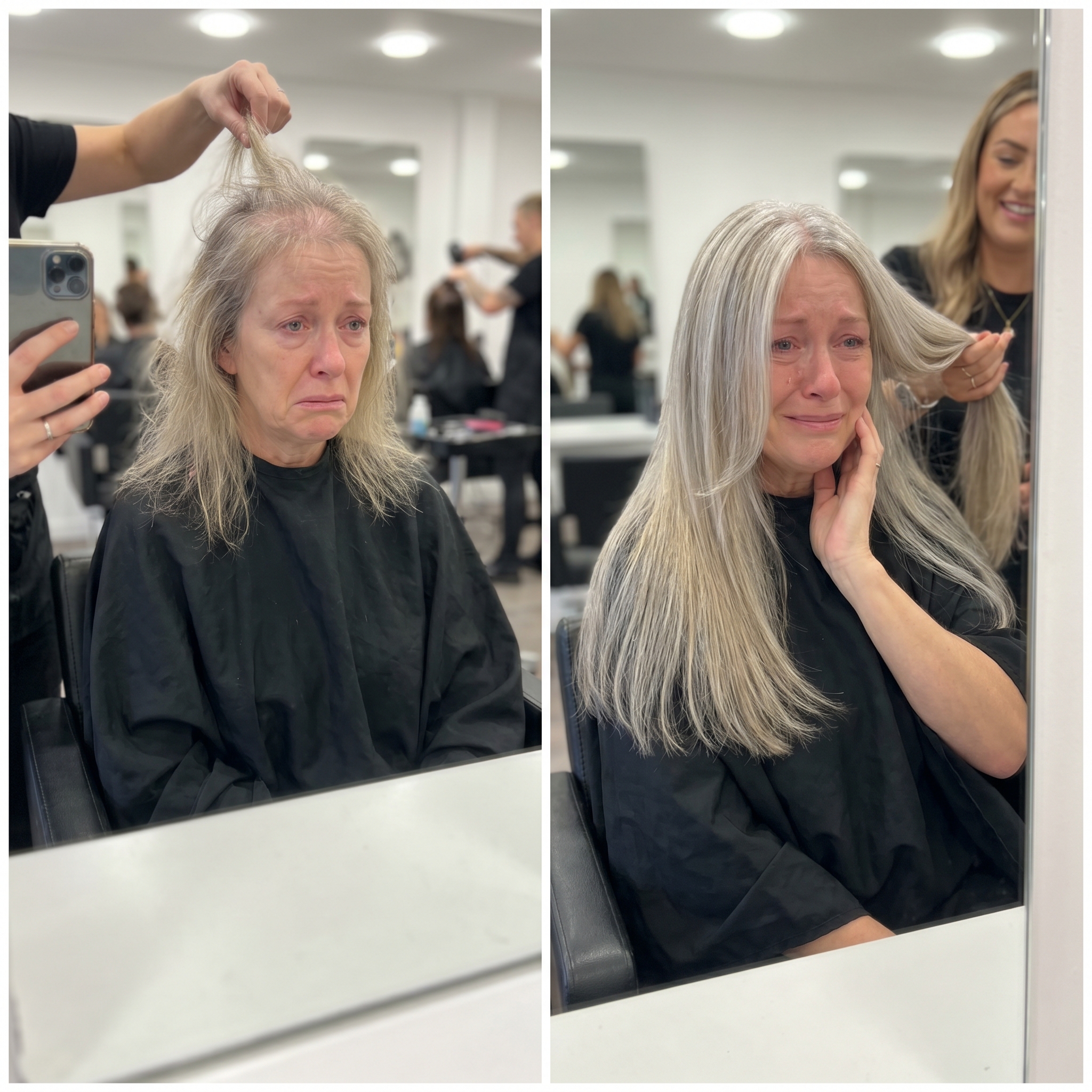
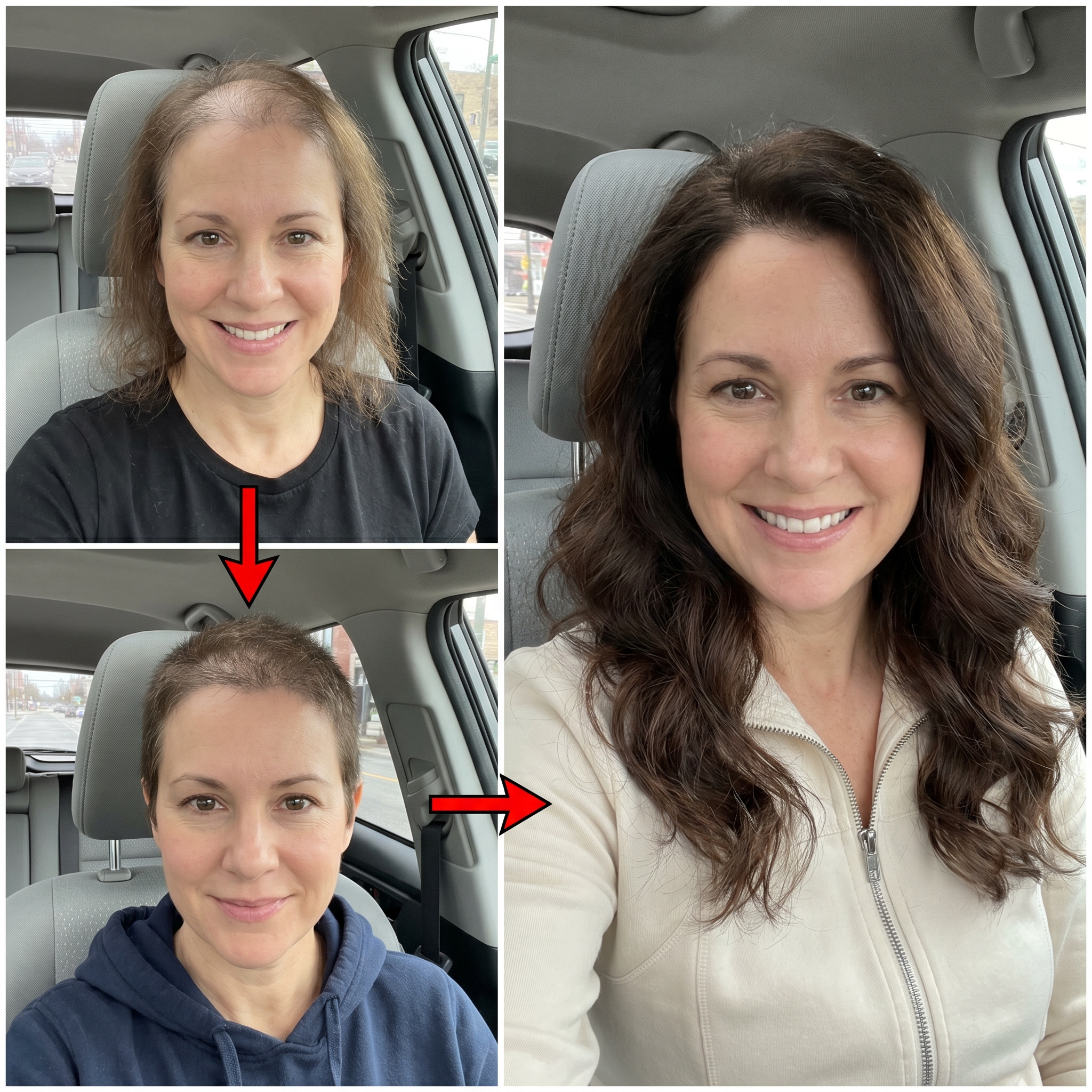
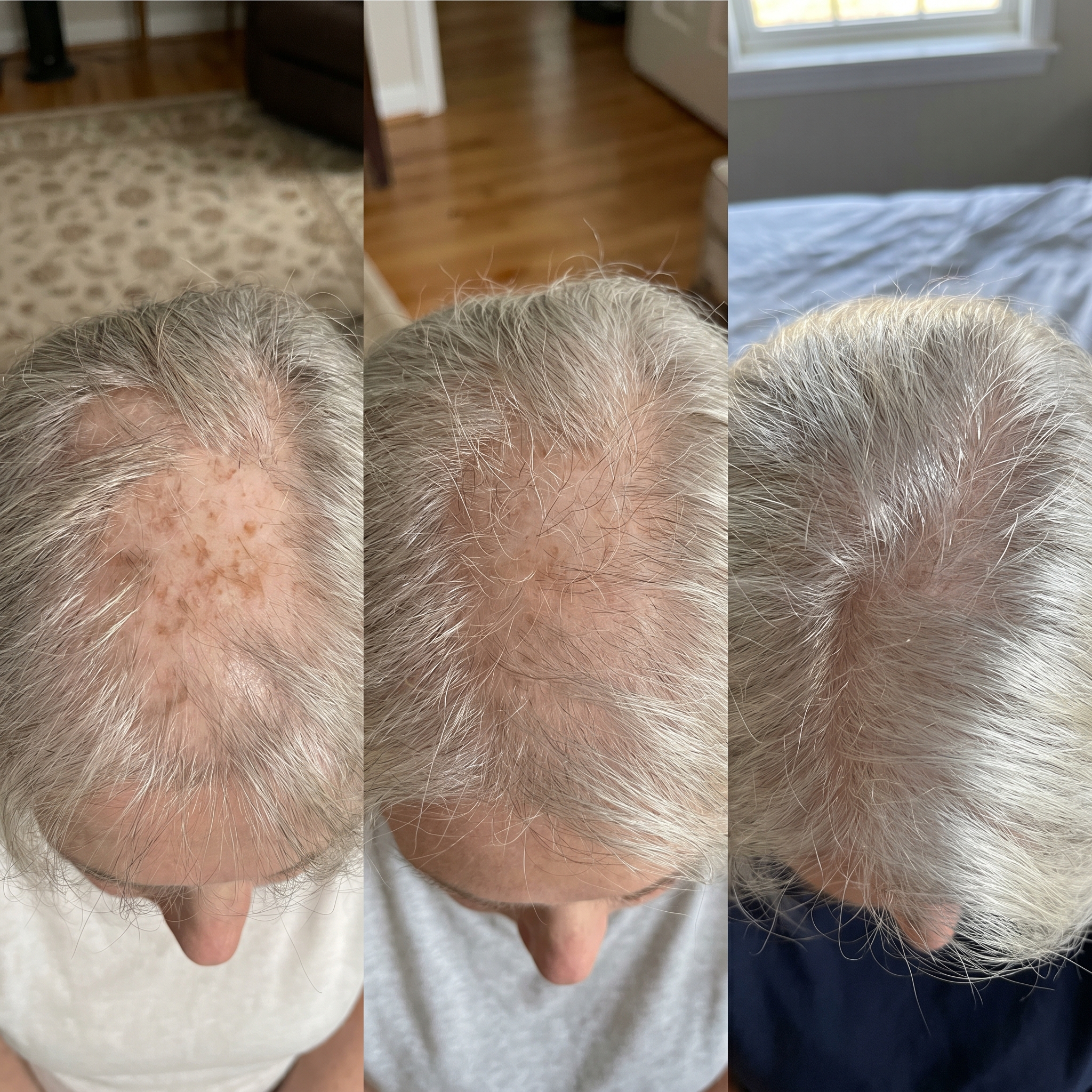
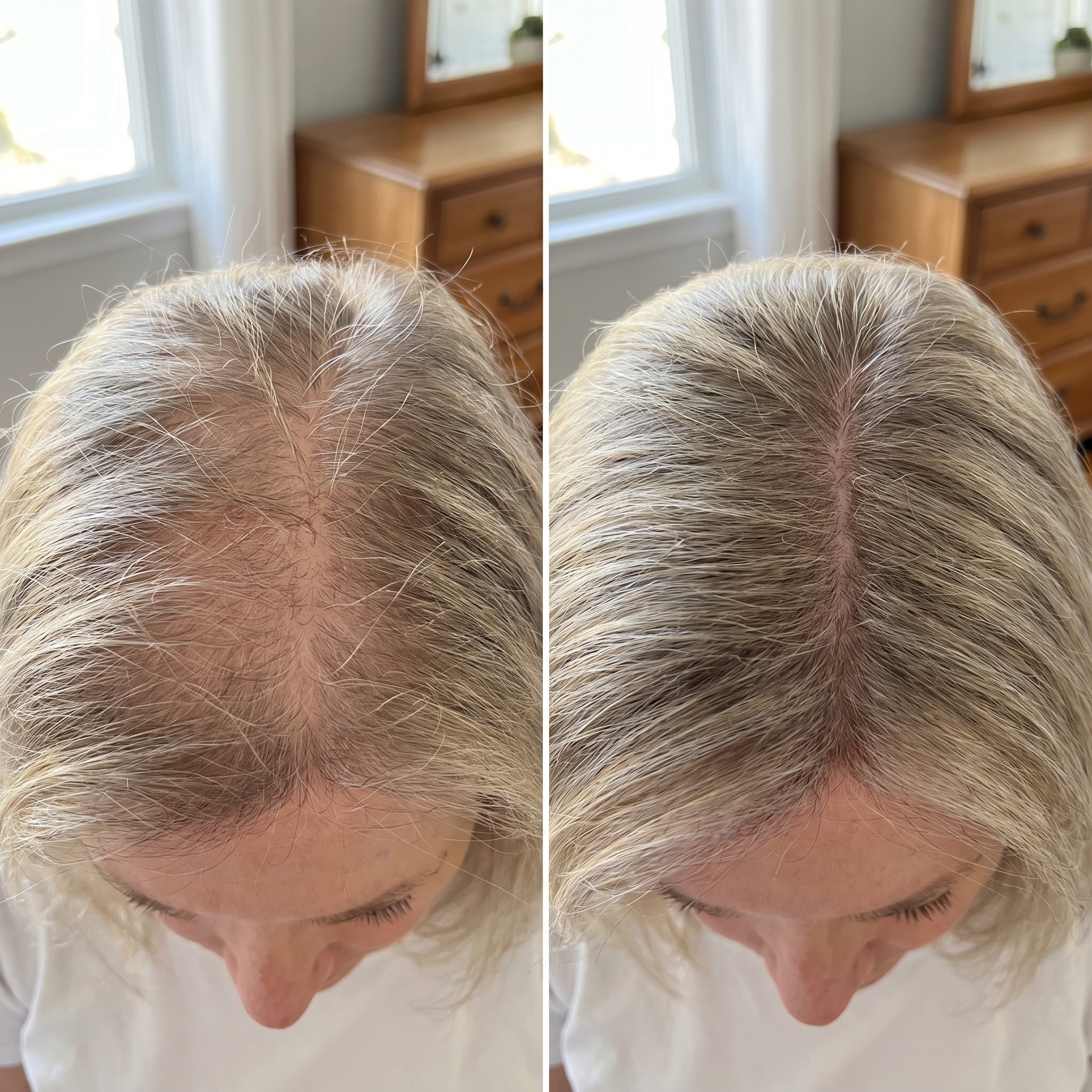
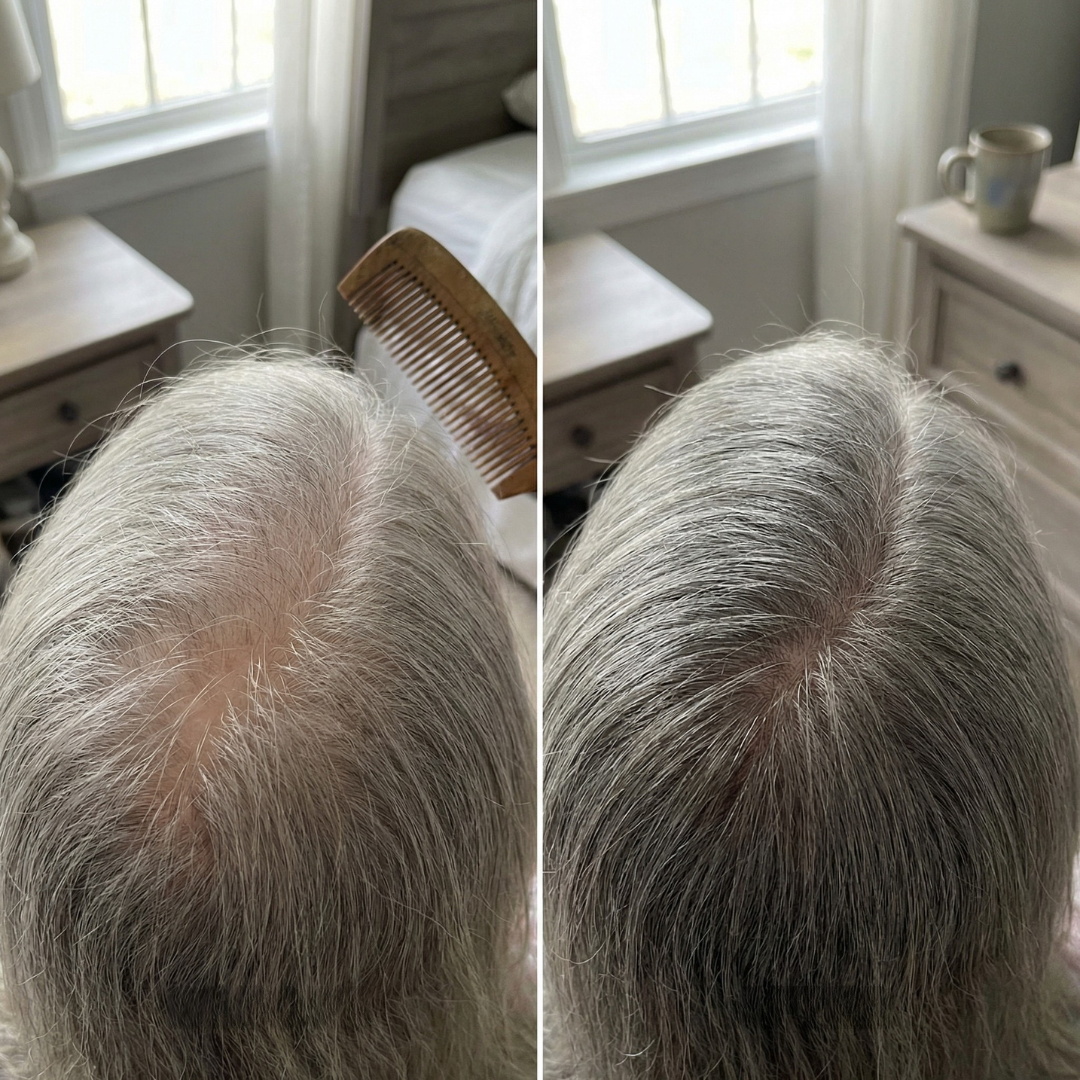
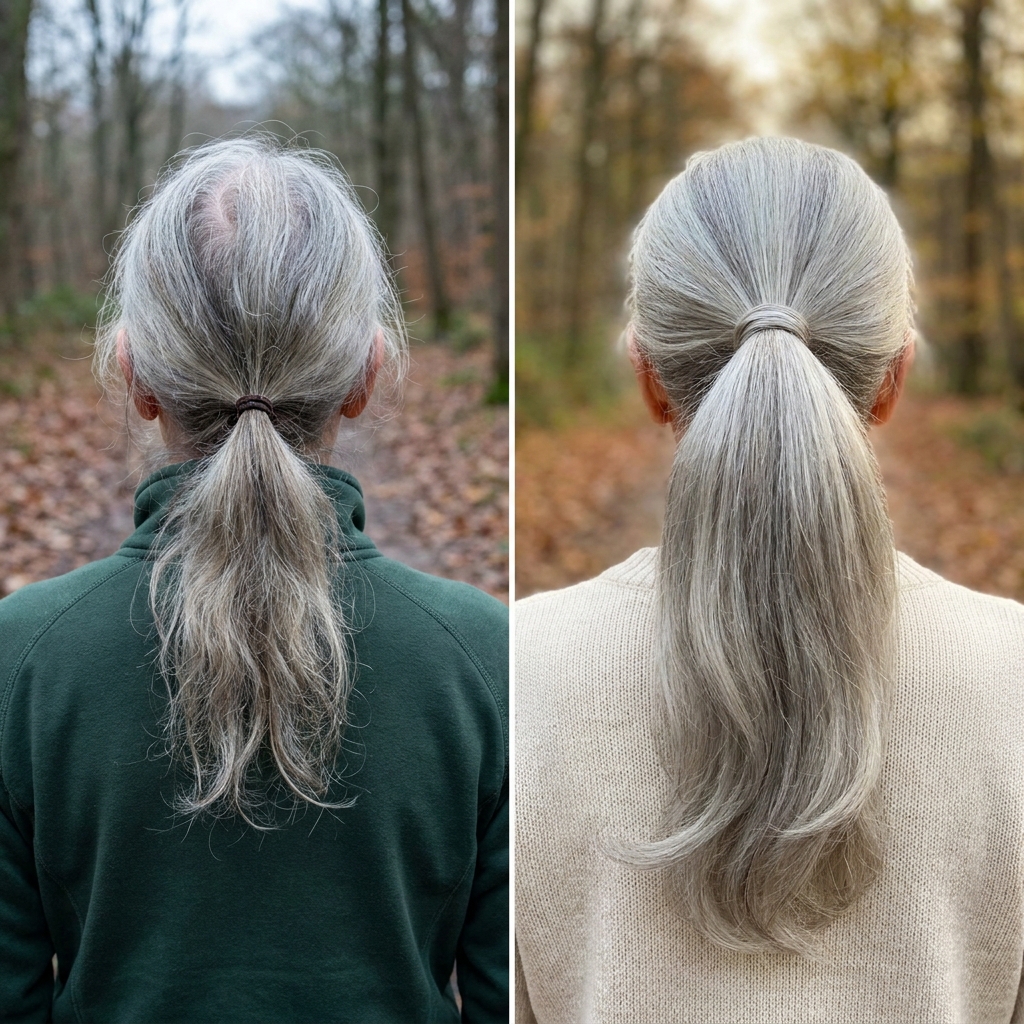
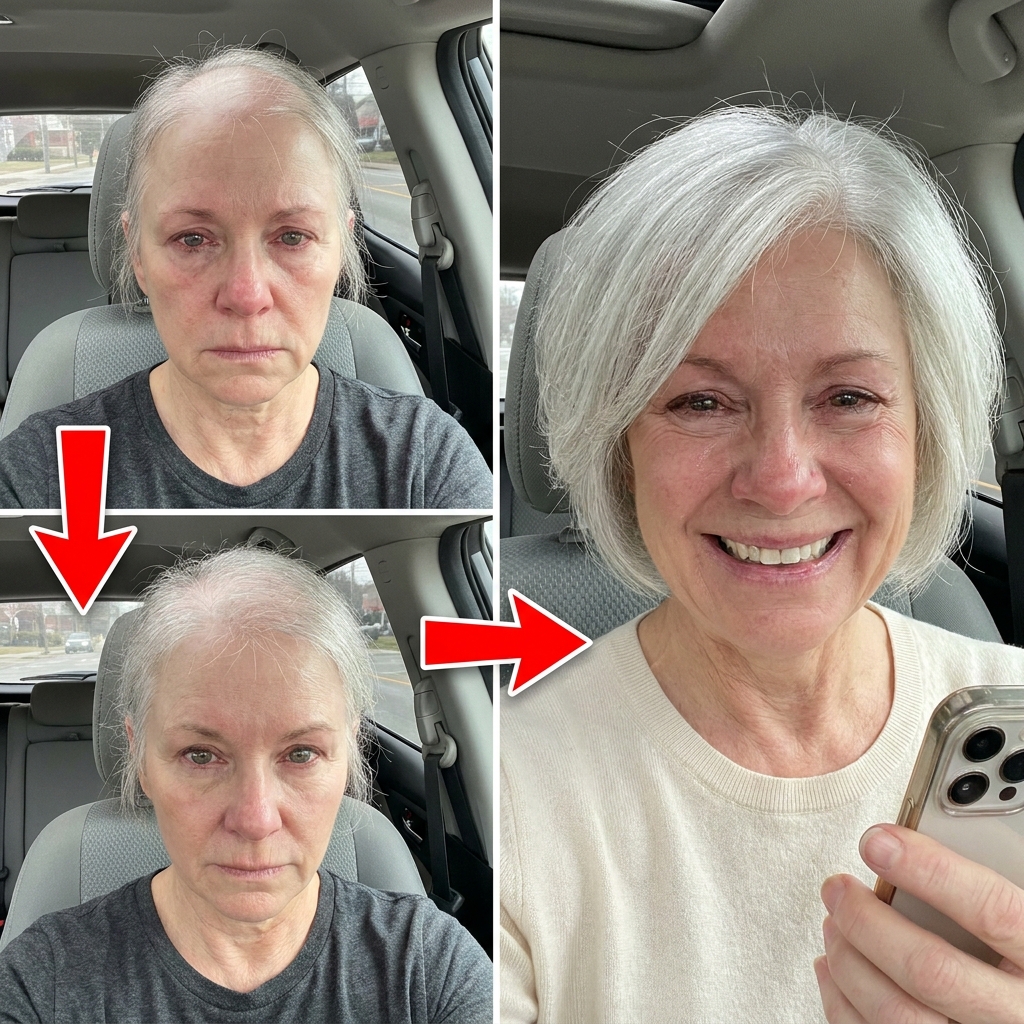
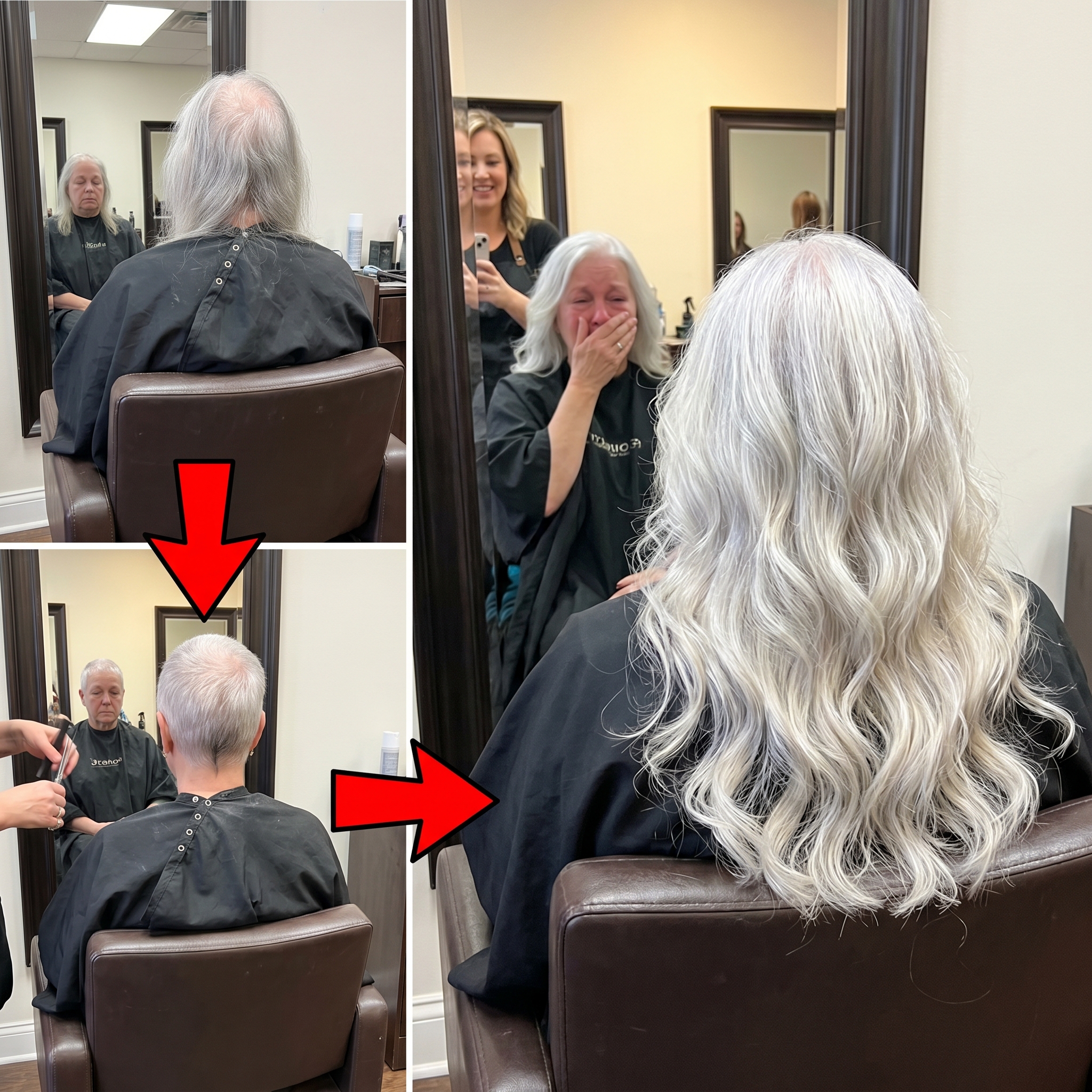
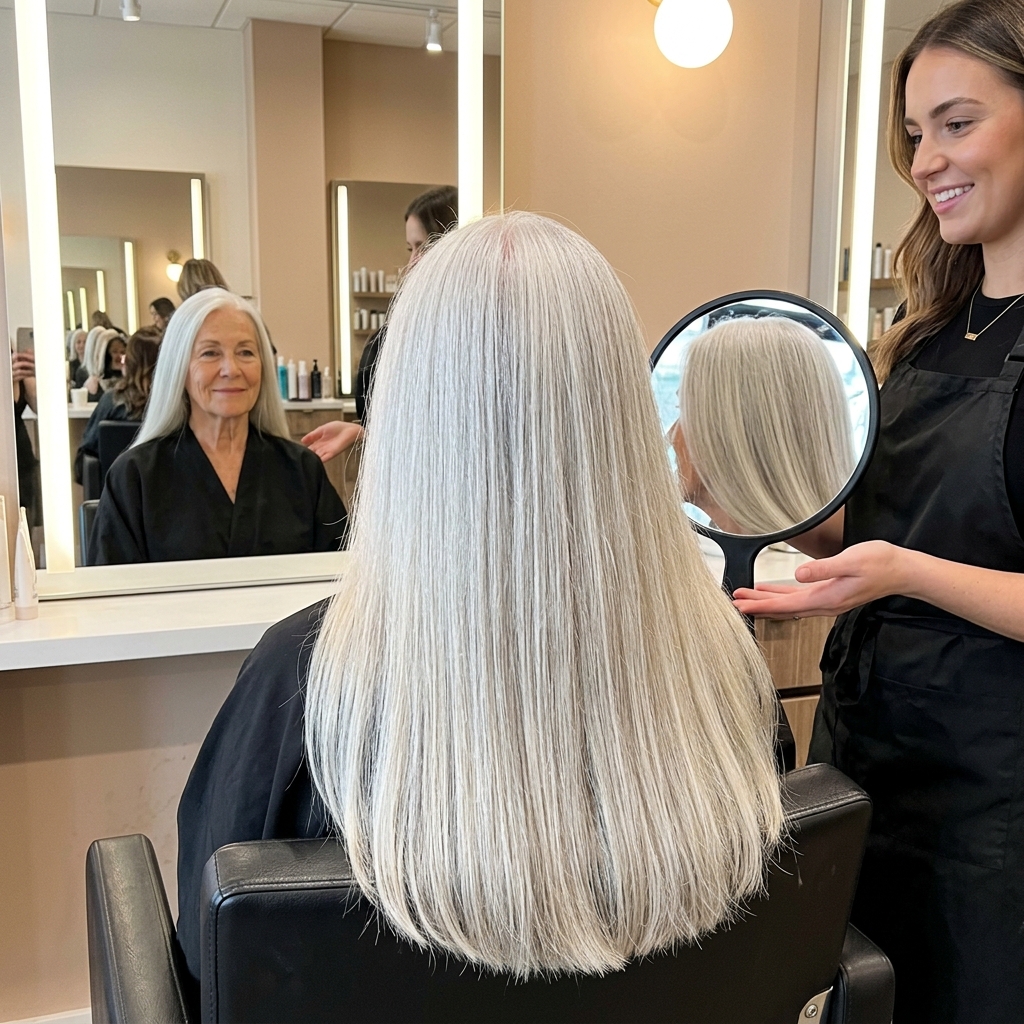
If you have been told your follicles are dying — androgenetic alopecia, progressive miniaturisation, perhaps a topper one day — I need you to read this before you believe it. My colourist said nothing about my thinning hair for two and a half years. Then one afternoon she stopped mid-section, tilted my head under the light, and asked me what on earth I had been doing to my crown. Her name is Joanne. She has coloured my hair since I was forty-eight, which means she has had a closer, more honest view of the top of my head than anyone alive, including me. A good colourist sees the part you cannot see in a mirror. She sees the crown from above, under a bright salon spotlight, with her fingers in the hair, six weeks at a time, for years. And Joanne, being kind and being professional, had said nothing. You do not tell a woman in her fifties that her hair is disappearing. You section it, you paint it, you talk about her holiday, and you let her keep what dignity she has left. So when she stopped that afternoon — comb still in her hand, my head tipped forward under the light — and asked me, genuinely puzzled, what I had been doing, I understood the weight of it. She was not making conversation. She had been looking at the same thinning crown for two and a half years, watching the scalp get easier to see, and she had decided, the way you decide not to mention a friend's weight, to never bring it up. And now she was bringing it up. Because something had changed, and she could see it, and she wanted to know what it was. I am fifty-four. I manage an office in Cardiff — I have done for eleven years, and the job involves a great deal of standing under fluorescent strip lighting in meeting rooms and reception areas, which is a detail that will matter later, because overhead light is the enemy of a thinning woman and I had come to know exactly which rooms in our building I could no longer bear to stand in. My hair was the one thing I had never had to think about. It was thick. It was the thing people commented on. My mother called it my crowning glory, with no irony, because in our family it genuinely was. And then menopause finished with me somewhere around fifty-one, and over the following two years the crowning glory quietly came apart in my hands. A little more in the plughole. A little more on the pillow. A parting that widened by a width I could measure if I was brave enough to look, and I usually was not. I want to be honest about what I had already tried before any of this, because if you are anything like me you are tired and you are sceptical and you have heard all of it before. I am not a woman who believes things easily. I had already spent the money. I tried minoxidil first, the foam, for almost five months — it made the front of my hairline itch and I was frightened of the shedding everyone warns you about, and I stopped. I went on HRT, and HRT was genuinely wonderful for almost everything; my sleep came back, my moods levelled out, I felt human again. It transformed everything except my hair. I took biotin for the better part of a year, the way everyone tells you to, with no visible difference except more expensive nails. I bought Viviscal and stayed on it for three months at around thirty pounds a month. I tried Nutrafol after a woman on a forum swore by it, at roughly seventy-nine pounds a month, and I lasted two months before the cost embarrassed me. I bought a laser comb in a sale for a hundred and ten pounds and used it religiously for six weeks and then kept it in a drawer. And the worst money of all: a private dermatologist, a hundred and seventy-five pounds, who was perfectly pleasant, spent perhaps ten minutes with me, looked at my scalp, said the word "androgenetic" twice, and sent me away with a leaflet and the strong impression that this was simply what happened now and I should make my peace with it. That is the part I want to come back to, because I do not think that dermatologist was a bad man. I have thought about it a great deal since. I think he had ten minutes. I think the system he works inside gives him eight or ten minutes per patient, and you cannot explain what is actually happening to a menopausal woman's hair in ten minutes, not properly, not in a way that would change what she does that evening. So he gave me the short version. The short version is "androgenetic alopecia, progressive, manage your expectations." And the short version, I have since learned, is not wrong exactly — but it is so incomplete that it functions as a kind of sentence. It tells you the door is locked. It does not tell you the door is only stuck. I found the longer version at about two in the morning, which is when most things like this get found. I could not sleep. I had had a bad evening — there had been a birthday lunch at work in a function room with that particular flat overhead light, and I had spent the whole hour with my chin slightly raised and my hand drifting up to the back of my head, and I had come home and I had cried, quietly, in the bathroom, the way you do when you are too tired for the dramatic kind of crying. And then I lay in the dark and did the thing I had been avoiding for two years. I opened my phone and I actually searched properly. Not "best shampoo for thinning hair." I searched for why menopausal hair loss happens, the mechanism, what is physically going on in the follicle. And I went down, page after page, past the supplement adverts, past the wig shops, until I found a thread where a woman had quoted a piece of European dermatology research from 2011. I read it twice. Then I sat up and read it a third time with the lamp on. The research was about the hair-growth cycle, and the thing it made plain — the thing nobody in any appointment had ever had the time to tell me — is that a hair follicle does not simply die when a woman goes through menopause. That is the bit I had got wrong, the bit I think most of us have got wrong, because it is what we are quietly told. The follicle is not dead. It is silenced. Here is what I finally understood, and I am going to explain it the way it was explained to me, because understanding it is the whole thing. Your hair grows in a cycle. There is a long growth phase, called anagen, which normally runs for years — two, four, six years — and that long phase is what gives you length and density and weight. Then a brief transition, then a resting phase, and then the hair sheds and the cycle begins again. That is normal. That is how it is meant to work. What menopause does is shift your hormones, and a by-product of that shift is a hormone called DHT, which binds to receptors right at the follicle. And DHT does one specific, mechanical thing: it shortens the growth phase. It cuts anagen short. So instead of a follicle spending years in growth, it spends months. The hair it produces is finer, and shorter, and it spends more and more of its time dormant between cycles. Do that for two or three years and the follicle is still there — the stem cells are there, the blood supply is there, the whole structure is intact — but it has been producing such fine, brief, short hairs that to your eyes, and to a mirror, it looks like nothing is growing at all. It looks dead. It is not dead. It has been turned down, like a dimmer switch, by a chemical signal happening locally, right there at the root. And that word — locally — is the hinge of the entire thing. Because if the silencing is happening locally, at the follicle, by a chemical signal right at the scalp, then anything you swallow has to travel through your entire body to maybe, diluted, reach the one place that matters. But something applied directly to the scalp can work where the problem actually is. That single sentence reorganised everything I thought I knew. I had been trying to fix a local problem with systemic things — pills, foams I gave up on, a hundred and seventy-nine pounds a month of capsules. The 2011 work was telling me the silencing was a local event, and a local event wants a local answer. That is when I went looking for something that was built around the mechanism, rather than around a marketing promise. And I found Mellenza. I want to be careful here, because I am suspicious of the moment in any of these stories where the product appears, and you can feel the writer's hand on your back, steering you. So let me just tell you plainly what it is and what it is not. Mellenza is a topical serum. You spray it onto your scalp at night — at the crown, along the parting, into the thinning bits at the temples — and you leave it. That is all. It is not a shampoo. Not a volumiser. Not a supplement. It is sprayed on the scalp at night. Not swallowed. There is no pill. There is nothing to take. It was, as far as I could find, the first thing formulated specifically around the silenced-follicle idea — built to interrupt the local signal at the place the signal is happening. The active that does the central work is caffeine, applied topically, which blocks the enzyme that produces that follicle-level DHT and helps extend the growth phase right where it had been cut short. There is polygonum multiflorum — he shou wu root extract — which has been studied in Korean dermatology research for the follicle. There is arginine, which supports the small-vessel circulation around the root. There is a little biotin, for the keratin integrity of new growth, though I would never have bought it for the biotin and the brand does not pretend you should. And there is ginger root extract, in there purely for anti-inflammatory scalp support — to keep the ground calm — and nothing more than that. None of it is exotic. What was different was that it had been put together around a mechanism, to be applied where the mechanism lives, instead of being sold to me as a quick fix. I had three real objections and I am going to give them to you, because you will have the same ones. The first was: why a spray and not a pill, when I have already done pills. Because the problem is local. I have just spent four paragraphs on this, but it took me two years to actually believe it. A pill goes everywhere and reaches the follicle last, weak and diluted. A serum goes onto the exact square of scalp that has been silenced. That is the whole argument, and once it lands it is hard to un-see. The second was about my HRT. I was not going to add some unknown thing on top of hormone therapy that had taken me a year to get right. But this is topical. It sits on the scalp and works at the follicle. It is not a systemic hormone, it is not something you ingest, and it is not doing anything to the hormonal balance HRT manages. If you have any doubt at all, ask your GP — but understand that, mechanically, a serum on the skin is a different category of thing entirely. The third was time. The brand is honest that this takes about twelve weeks before you see much, and twelve weeks felt like a long time to me too, after everything. What changed that calculation was the guarantee, and I will come to the guarantee at the end, because it is the part that actually let me try. So I tried it. And because I am that kind of person, I had been counting hairs — I genuinely had, I had been keeping a rough count of what came out in the morning, the way you do when you are quietly frightened — so I was an unusually good witness to my own results. At Week 4, there was noticeably less hair in the plughole, and on the pillow. That was the first thing. I almost did not trust it. I thought I was looking for it. At Week 6, the texture changed before the look did. The fragility softened. The hair at my crown had felt like something that would snap; now it felt like it had a little weight to it. Nothing you could photograph. Something I could feel with my own hand at the back of my head, where two years earlier I had felt a thinness I did not recognise. At Week 9, I did the thing properly. Same bedroom, same lamp, same angle, a photo I had taken at the start held up against a new one. The parting was narrower. The crown was less visible under the light. And along the edge of the part there were short, fine, soft new hairs — baby hairs — that had not been there before. I sat on the edge of my bed and I cried for about fifteen minutes. Quietly. Not dramatically. I just had not let myself hope, and the photograph would not let me keep not hoping. And then came Joanne. Month four. She stopped mid-section, tipped my head under that bright unforgiving salon light that misses nothing, and asked me what I had been doing — because she could see real new growth at the crown, the new hair coming through where for two and a half years there had been only scalp. She had never once mentioned the thinning. She mentioned the new growth. "Whatever you're doing," she said, "keep doing it." A woman who looks at the top of my head for a living, who had been carefully saying nothing for two and a half years, broke her own silence to point at growth. I trust that more than I trust any leaflet. By Month five there was a wedding. My niece's. There was a photographer, and a moment when he gathered the family and started arranging us, and I realised, standing there, that for the first time in years I was not quietly steering myself to the back, not angling for the shadow, not lifting my chin against the overhead light. I stood where he asked me to stand. That is the whole thing, really. Not a quick fix. Just a woman standing where she is told for a photograph, like everyone else. If you are where I was — if your crown has gone quiet, if you have already spent the money and heard the short version in a ten-minute appointment and made your tired peace with it — I would only ask you to consider that the short version might be incomplete. Not wrong, exactly. Incomplete. There is more time needed to explain what is actually happening than your GP or your dermatologist has been given, and that is not their failing, it is the appointment's. The follicle is not dead. It has been silenced, locally, and a local thing can be answered locally. You can read more about all of it on their site. The link is below. I would start with the explanation of the cycle, the same thing I read at two in the morning, because once you understand it you stop feeling foolish for all the things that did not work — they were never aimed at the right place. One last, practical thing, because it is what let me try at all. Every bottle comes from the UK with a ninety-day money-back guarantee. I think about that a lot. A company willing to refund you on an empty bottle, after ninety days, is a company that has watched enough women see a result to take that bet. None of the people who sold me minoxidil, or the seventy-nine-pound capsules, or the hundred-and-ten-pound laser comb, ever offered me my money back if it did nothing. This one does. That is not marketing. That is confidence you can hold in your hand. P.S. — If you take one idea from all of this, take this one: your follicles are most likely not dead. They have been chemically silenced — the growth phase cut short by a signal happening right at the root — and that silencing is a local event, which is exactly why the answer is a serum you spray on the scalp at night and not one more thing to swallow. Not a shampoo. Not a volumiser. Not a supplement. P.P.S. — On the twelve weeks. I know it sounds long; it sounded long to me. But hair grows on a cycle and a cycle takes the time it takes — you are looking for a real, observable difference at around six weeks and the proper comparison photo by Week 9, not thicker hair in a few days, because nothing honest works in a few days. This is the reason the ninety-day money-back guarantee matters so much: it is long enough to actually see whether it works for you, on your scalp, before you have to decide. And it arrives with a couple of things I genuinely use — a soft silicone scalp-massage brush, which helps you work the serum in along the parting, and an ebook on the menopausal hair cycle that explains, properly and at length, the thing your appointment never had the minutes to. P.P.P.S. — They make it in small UK batches, so it does go out of stock now and then; if it is available when you look, that is the moment. The link is below. Read the cycle explanation first — even if you decide against the serum, you deserve to understand what is actually happening at your own crown, instead of the short version.
My colourist noticed before my doctor.
Women's Health · Updated April 2026 Menopause · Hair Routine 7 Mistakes That Make Menopausal Hair Loss Worse, And the 30 Second Ritual 10,000 Women Used to See Regrowth in 8 Weeks Dr. Sarah Mitchell — Women's Health Writer. If you're standing in front of the mirror doing the 3-elastic ponytail t...
LEARN MORELike this ad? Make it yours.
Crush rebuilds this exact creative around your product — your brand, your colors, your offer — in about a minute.