
Inactive· since Jul 23, 2026
- 30
- days it ran
- 1
- relaunches
- 109,104
- EU reach
Ad copy
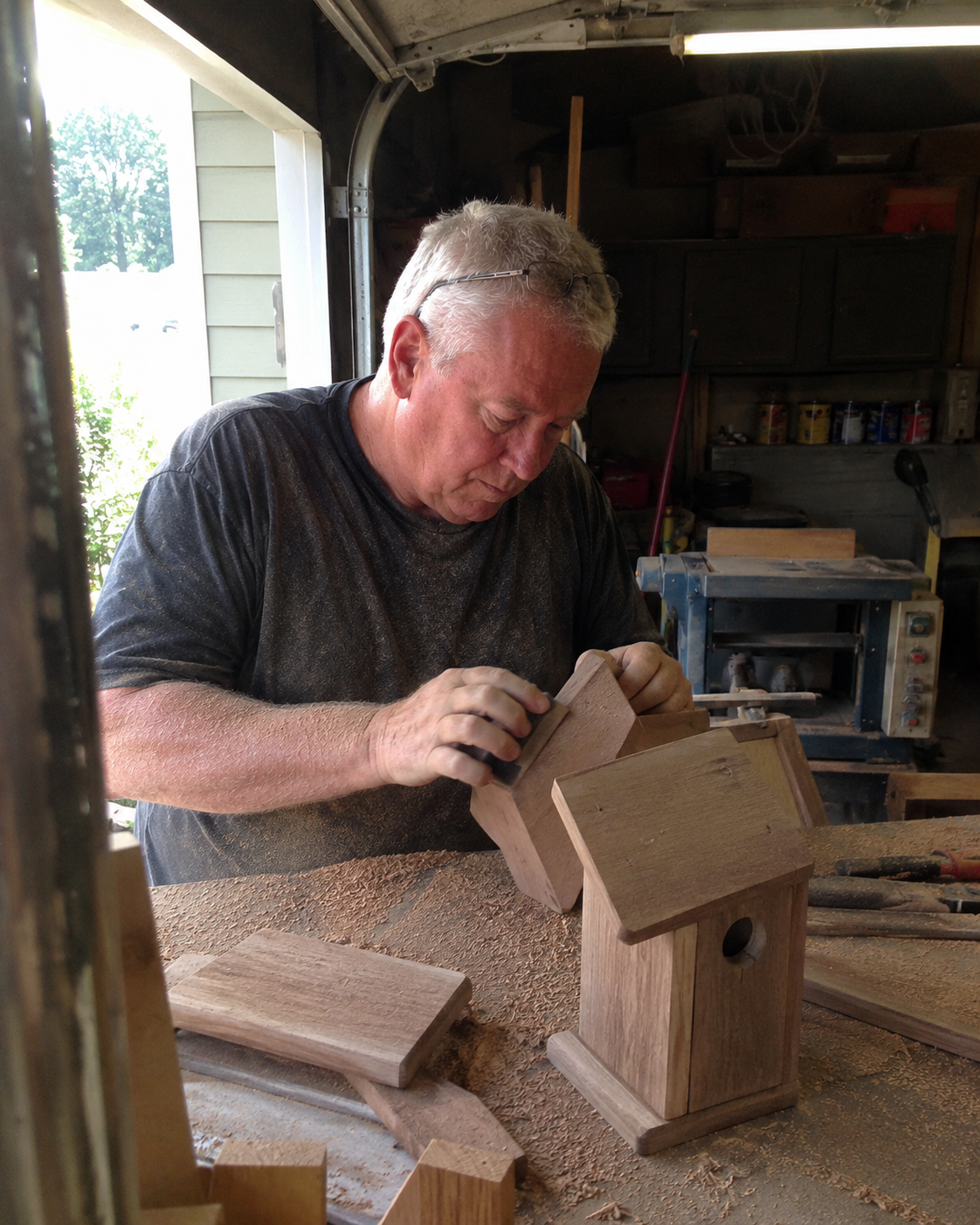
I Used to Stand Up From My Recliner Without Thinking About It. Two Years Ago I Started Bracing on the Armrests Without Realizing It. Then One Sunday Afternoon My Six-Year-Old Grandson Said Something That Made Me Stop Pretending. I am writing this because three people I see regularly have asked me in the last two months what I had been doing differently. The pharmacist at the drugstore I have been going to for twenty years. A neighbor across the street. The young woman who cuts my hair. I have been giving them the short answer at their counters. I am writing the long answer down now so I can hand it to the next person who notices. I am Vincent. I am sixty-eight years old. I retired four years ago after thirty-six years as a high school chemistry teacher. I am married to my wife Patricia. She is sixty-six. She retired three years ago from a long career as a hospital administrator. We have one daughter. She is married. One grandson, who is six. We live in the same house we have lived in for thirty-one years. A small two-story colonial on a tree-lined street about twenty minutes from where we both grew up. I am writing this in the first person because the story is mine and because the man I had become for the two years before I am about to tell you about is the man I had been pretending I was not becoming. For most of my adult life, I had been a man who stood up. I do not mean anything dramatic by that. I mean that when I was sitting in my recliner reading the paper and Patricia called me from the kitchen to come look at something, I stood up. I did not think about standing up. I just did it. When the doorbell rang and I was sitting on the couch, I stood up. When my grandson came running into the house on a Saturday and the front door slammed behind him, I stood up to meet him. For sixty-some years of being a man, I stood up. Then about two years ago, I started bracing on the armrests. I did not notice it at first. The first time I noticed it consciously was on a Tuesday afternoon. I had been in my recliner with the news on. Patricia had asked me from the kitchen to come help her open a jar. I had put my hands on the armrests. I had pushed myself up. I had paused for a second at the top. I had walked into the kitchen. I had opened the jar. I had walked back to my recliner. I had sat back down. It had taken me a couple of seconds longer than it would have taken me five years ago, and I had used my arms in a way I had not previously been using them. I did not say anything to Patricia. I did not say anything to myself. I went back to my newspaper. Over the next two years, the bracing got more automatic. The pause at the top got slightly longer. I started doing it from the couch too. I started doing it from the kitchen chairs. I started doing it from the bench in the front entryway where I put on my shoes. By the spring of last year, I was bracing on the arms of every chair I sat in, and I had been pretending I was not. It was not the only thing that had been quietly changing. The walk around the block we had taken every evening for fifteen years had gotten shorter. Patricia and I had been doing the full loop in twenty minutes for fifteen years. We had cut to half the loop about a year and a half ago. I had told her my left knee had been bothering me. The knee had been bothering me, but the knee had been bothering me for ten years. The knee was not the reason the walk had been getting shorter. The Saturday morning chess game with my friend Marcus at the diner had gone quiet. We had been playing at the same diner on the same Saturday mornings for twenty-three years. About a year ago I had started begging off. I told him I had things to do at the house. I did not have things to do at the house. I had been at home in my recliner. The Sunday dinner my daughter cooked for us every other week — we had been driving over to her house for sixteen years. About eight months ago I had started telling Patricia I did not want to go. I had been telling her I was tired. She had been driving over by herself with a small tin of cookies and coming home alone. My grandson, who is six, had been quietly noticing that Grandpa was not doing the things Grandpa had been doing. I did not know he had been noticing. I want to tell you the afternoon I found out. It was a Sunday in late September. My daughter and her husband had brought my grandson over to our house for the afternoon. They had a thing at his school they had to attend. Patricia and I were going to watch him from one to four. I was in my recliner. My grandson was on the rug in the living room playing with a small set of wooden blocks Patricia had pulled out of the closet for him. He had been building something for about twenty minutes. He had not asked me to help him. I had not offered. He looked over at me a few times while he was building. He finished his block tower. He stood up. He came over to my recliner. He said: "Grandpa. Will you come look?" I said: "Of course, buddy." I put my hands on the armrests of the recliner. I pushed myself up. I paused at the top. I walked over to the rug. I bent down. I looked at his tower. I told him it was a great tower. I told him he was a good builder. I walked back to the recliner. I put my hands on the armrests of the recliner. I lowered myself down. I picked up my newspaper. My grandson stood in the middle of the rug for a moment. Then he came back over to the recliner. He stood next to me. He put his small hand on my arm. He said, quietly: "Grandpa. Why do you do that with the chair?" I said: "Do what, buddy?" He said: "Why do you push when you stand up. And why do you push when you sit down. You did not used to." I did not say anything for a second. I looked at my six-year-old grandson standing next to my recliner. He was looking at me with the careful face of a child who has been watching something for a while and has finally decided he is brave enough to ask. I said: "Buddy. I do not know why." He thought about that for a moment. He said: "Grandpa. Are you okay?" I said: "I think so, buddy. I am going to find out." He nodded. He patted my arm. He went back to the rug. He started building another tower. I sat in my recliner and looked at the back of my grandson's head and tried to remember when I had become a man whose grandson was asking him quietly if he was okay. I could not remember. I had been bracing on the armrests for two years. A six-year-old had named it in two sentences on a Sunday afternoon in September. I did not tell Patricia about it that day. I went to bed that night and I lay in the dark and I tried to be honest with myself for the first time in two years about what I had been pretending not to notice. The bracing on the armrests was one thing. There were other things. The walk that had gotten shorter. The Saturday chess game I had been begging off from. The Sunday dinners at my daughter's house I had been letting Patricia drive to alone. The afternoon naps that had been getting longer. The way I had been falling asleep in front of the news at 7:30 most evenings. The way I had stopped reading books and started just reading the newspaper because I could not focus through a chapter anymore. The way I had stopped going out to the garage to work on the small woodworking projects I had loved for thirty years. The way I had stopped doing almost everything I had been doing for thirty years. I had been telling myself for two years that this was sixty-six and sixty-seven and sixty-eight. I had been telling myself I had earned the recliner. I had been telling myself the body slows down. What I had not been telling myself was that the body was slowing down faster than my father's body had slowed down at my age, and my father had been a man who pruned roses at seventy and who had not stopped going out to his shop until he was seventy-eight. I am sixty-eight. I had been getting comfortable with a version of myself my father had not been at seventy-five. I had been making peace with it. A six-year-old had not been making peace with it. A six-year-old had been watching his grandfather brace on the armrests and had wanted to know what was wrong. I did not sleep much that night. I told Patricia the next morning at breakfast. I told her about the question on the rug. I told her about everything I had been pretending not to notice for two years. She did not look surprised. She listened. She did not interrupt me. When I was done, she reached across the breakfast table and put her hand on my hand. She said: "Vincent. I have been waiting for you to be ready to say it." I said: "Patricia. I am sorry. I should have said it sooner." She said: "Vincent. I am glad you are saying it now." I made an appointment with my doctor that morning. I had been seeing Dr. Eshetu for about eleven years. She is a thoughtful woman. The kind of doctor who looks at you and listens before she opens her chart. I went in that Thursday. I told her what I had been telling myself for two years and what I had finally told Patricia. She ran the full panel. Bloodwork. EKG. Blood pressure. A stress test on a second visit two weeks later. Everything came back fine. She sat down with me in her office at the follow-up. She said: "Vincent. Your bloodwork is unremarkable. Your heart is structurally healthy. Your blood pressure is good. The stress test was unremarkable for your age." She paused. She said: "What you are describing is real. It does not show up on the standard panel." She said: "What I see in a lot of men in their late sixties is a layer of cardiovascular and cellular wellness that the standard panel is not built to capture. The body's natural antioxidant balance. The body's natural circulation. The body's natural cellular function. The layer underneath the lifestyle layer. It quietly diminishes with age. It is not a disease. It is not something I would put you on a medication for today. It is real, and it is what you are feeling." She gave me the standard advice. Keep walking, even short walks. Keep eating well. Keep sleeping. If anything sharply changes, come back in. I thanked her. I drove home. I sat in my driveway for a long time before I went inside. I am going to skip the part where I read for the next four weeks. Most evenings at my kitchen table after Patricia went to bed, with my laptop and a notepad and the legal pad I had taken to keeping next to it. I am a retired chemistry teacher. I read carefully. I do not believe things easily. Here is the short version of what I concluded. There was a layer of cardiovascular and cellular wellness that the standard tests did not have a tool for. The body's natural antioxidant balance. The body's natural circulation. The body's natural cellular function. The layer the conventional lifestyle advice supports but does not directly target. That layer quietly thins for men in their sixties. Not because anything is broken. Because the body that supported itself effortlessly at thirty does not support itself the same way at sixty-eight. The most researched ingredient I kept finding in the wellness-layer category was beetroot. Beetroot had been studied for decades for cardiovascular wellness. The active compound — the betalains, the deep red pigment in the root — supported the body's natural antioxidant balance, supported healthy circulation, and supported the body's natural cellular energy. It was not a treatment for anything. It was support for a layer. I read about the different forms beetroot was sold in. The active compound is delicate. Sensitive to heat. Most standard processing methods are fast and warm because that is cheaper and easier. Cold-pressing at low temperatures preserves the active compound in a way that faster, hotter methods do not. I read about a small company called Rosabella. They cold-press their beetroot at low temperatures. I looked at the photographs of their capsules. The capsules were a deep, dark crimson. That color is the betalains. That color is what tells you what made it through the processing intact. As a former chemistry teacher, I knew what an intact plant pigment looked like and what a faded processed one looked like. The Rosabella capsules looked right. Before I ordered anything, I called Dr. Eshetu's office. I told the nurse I had been reading about a beetroot supplement called Rosabella, and I wanted to make sure Dr. Eshetu was comfortable with me adding it before I started. The nurse called back the next afternoon. She said: "Dr. Eshetu says it is a sensible thing to add. There is good research on antioxidant support for cardiovascular wellness. Add it to what you are already doing. Don't change anything else. Come back at your next visit." I ordered my first bottle that evening. I started taking it the following Monday. Two capsules with a glass of water in the morning. I did not change anything else. I want to tell you what I noticed over the next eight weeks. I am not going to make a claim about what caused what. I am going to tell you what happened in the order it happened. The first thing was small. About three weeks in, on a Wednesday afternoon, I stood up from my recliner to go answer the door for the FedEx man. I did not brace on the armrests. I noticed I had not braced on the armrests about three seconds after I had stood up. I stood at the front door waiting for the FedEx man to come up the walk, and I tried to think about whether the not-bracing had been the first time, or whether it had been gradual, or whether I had stopped bracing the day before and not noticed. I did not know. I just knew that on that Wednesday afternoon, I had stood up out of my recliner the way I had stood up for most of my adult life. I signed for the package. I went back inside. I sat down in my recliner. I did not say anything to Patricia. I did not want to draw attention to it in case drawing attention to it broke something. I just noticed. A week after that, on a Saturday morning, I drove down to the diner. I had not told Marcus I was coming. I had not played chess with him in nearly a year. He was at our usual table when I walked in. He looked up. He did not look surprised. He said: "Vincent. You're back." I sat down across from him. I said: "Marcus. I am back." He set up the board. We played three games. He beat me in two of them. We have been playing every Saturday morning since. A couple of weeks after that, on a Sunday, I told Patricia I wanted to drive over to our daughter's house for the every-other-week dinner. It was the first time I had wanted to go in eight months. I drove. Patricia rode in the passenger seat. We brought a small tin of cookies that she had made and a bottle of wine that I had picked out at the store the day before. We pulled into our daughter's driveway. I got out of the car. My grandson was on the front porch. He saw me get out of the car. He came running down the porch steps and across the front yard. He hit me at the bottom of the porch and wrapped his arms around my waist. He said: "Grandpa! You came!" I picked him up. I had not picked him up in over a year. He weighed thirty-eight pounds. He was getting big. I held him on my hip and I carried him up the porch steps and into the house. My daughter was in the kitchen doorway. She had a dish towel in her hand. She saw me carrying her son. She set the dish towel down on the counter. She did not say anything. She just came over and hugged me with my grandson still on my hip and she cried a little into my shoulder. She said: "Dad. I am so glad you came." I said: "Honey. I am so glad I came." We had Sunday dinner at her table that night. I sat for two and a half hours. I did not brace on the armrests of her dining room chair when I got up to clear plates. She watched me get up. She watched me clear my own plate. She did not say anything. But she watched me. About six weeks in, I went out to the garage on a Saturday afternoon. I had not been in the garage in over a year. There was a half-finished walnut birdhouse on the workbench. I had abandoned it the winter before last. I picked up the sanding block. I worked on the birdhouse for three hours. I came inside at five. Patricia was at the kitchen counter making us tea. She saw me come in. She saw the sawdust on my forearms. She said: "Vincent. You're working again." I said: "Patricia. I am." She kissed me on the side of my face. She did not say anything else. She made me tea. We sat at the kitchen table for forty-five minutes. She told me about a book she had been reading. I told her about the birdhouse. I had not had a forty-five-minute conversation with my wife at our kitchen table on a Saturday afternoon in over a year. About eight weeks in, my grandson asked me to take him to the playground. I had not taken him to the playground by myself in two years. Patricia and I had taken him together a few times a year, and I had sat on the bench while Patricia pushed him on the swings. That Saturday, my daughter had asked if I would take him for the afternoon. She had a thing. I drove over to her house. I picked him up. I drove him to the playground. He ran ahead of me to the swings. I pushed him on the swings for an hour. He asked me to chase him on the climbing structure. I climbed on the climbing structure with him. I caught him at the top of the slide. He laughed. He said: "Grandpa! You can run again!" I said: "Buddy. I can." He hugged my legs at the bottom of the slide. He said, quietly: "Grandpa. I asked you on the rug if you were okay. You said you were going to find out. Did you find out?" I sat down on the bottom of the slide. He climbed into my lap. I said: "Buddy. I did find out. I had been needing some help. I got some help. Grandpa is doing better." He put his head against my chest. He said: "Grandpa. I am glad." I sat on the bottom of the slide with my six-year-old grandson in my lap for a few minutes, in the middle of an empty playground on a Saturday afternoon in late November, and I tried to keep my face still. I did not entirely succeed. He did not seem to mind. He patted my cheek. He said: "Grandpa. Push me again." I pushed him for another hour. I went back to Dr. Eshetu at the three-month mark. She ran the bloodwork. Took my blood pressure. Listened to me describe the last few months. She sat back in her chair. She said: "Vincent. Your numbers are in the best place they have been in years. Whatever you have been doing, keep doing it." I told her about the recliner. About Marcus at the diner. About the birdhouse. About the playground. She smiled. She said: "Vincent. I am so glad." She did not say anything else. She did not need to. I want to be careful here. I am not a doctor. I am not in healthcare. I am a retired chemistry teacher. I am one sixty-eight-year-old man who had been bracing on the armrests of his recliner for two years and had been pretending he was not, and who finally heard the truth said out loud by a six-year-old standing next to his chair on a Sunday afternoon. I do not know for certain that the Rosabella was responsible for what changed. I know what I was doing before. I know what I added. I know what has happened over the last few months. I know the timing. I also know I am sixty-eight, and there will come a day when no supplement will hold back the slow turning of the years. I am not pretending otherwise. What I am telling you is what I tried. What I noticed. What my doctor said about it. That is all. Sometimes the things we miss in ourselves are the small ones. The hands on the armrests. The walk that has gotten shorter. The chess game we have been begging off from. The dinner we have been letting our spouse drive to alone. If you are a man or a woman somewhere in your late fifties or sixties or seventies, and you have been quietly bracing on the armrests of your own life for a year or two, and you have been telling yourself it is just age, here is what I would say. Talk to your doctor. Tell them what you have been pretending not to notice. Get a workup. Rule things out. If everything comes back fine and the standard answer is keep walking and keep sleeping, ask the doctor about adding one more thing in the additive layer. If the doctor agrees it is a sensible thing to add, add it to what you are already doing. Do not subtract anything. Do not change anything else. Give it a few weeks before you decide anything. Bodies are different. Some people notice something within the first week or two. For me, the first thing I noticed was standing up from the recliner without bracing on the armrests around the start of week three. That is the whole story. P.S. I told my grandson on the drive home from the playground that I wanted him to keep telling me when he noticed things. He was buckled into his car seat in the back. He thought about it for a minute. He said: "Grandpa. Like what?" I said: "Buddy. Like the chair. Like if you ever see me pushing on the chair again. You can tell me." He said: "Grandpa. Okay." I said: "I am going to keep telling Grandma the truth about how I am feeling too. I had been keeping things to myself. I am going to try to keep telling her." He thought about that. He said: "Grandpa. Good." We drove home in companionable silence for the rest of the way. That is how this works. A six-year-old asks his grandfather why he is pushing on the chair. The grandfather goes to his doctor. The grandfather reads for a month. He starts. Eight weeks later he picks his grandson up off the ground and carries him onto a porch. Three months later he tells the boy on the drive home from the playground to please keep noticing things. P.P.S. Here is what I would tell you to do if you are thinking about trying it. Check with your doctor or pharmacist first. That is the most important step. Then take two capsules with a glass of water in the morning. Do not change anything else. Just add this. Give it a few weeks before you decide anything. Some people notice something within the first week or two — a little less of that wall when you stand up, a little more steadiness through the day, a little more of yourself in the small moments of an ordinary Saturday afternoon. Others take longer. Be patient with your body. P.P.P.S. Rosabella has a 90-day money-back guarantee. If you are not satisfied for any reason, every penny back. No questions asked. That is a sensible policy for a supplement. It gives you time to actually see whether it helps. P.P.P.P.S. Rosabella is a small operation. They harvest and bottle on their own schedule. I keep an extra bottle in the house just in case. Marcus, my Saturday morning chess friend, started taking it three months after I did. He called his own doctor first. His doctor said the same thing Dr. Eshetu said. Sensible thing to add. He told me at the diner last Saturday that he had played eighteen holes of golf with his son the weekend before for the first time in over a year. He said: "Vincent. The cart was there if I needed it. I did not need it." I said: "Marcus. I know." That is how this works. One armrest at a time. One Saturday chess game at a time. One playground at a time. https://track.tryrosabella.com/8ae97cac-2146-42d6-af75-de0e59d15644 Individual experiences vary. These statements have not been evaluated by the FDA. This product is not intended to diagnose, treat, cure, or prevent any disease.
Support stamina and heart health every day
LEARN MORELike this ad? Make it yours.
Crush rebuilds this exact creative around your product — your brand, your colors, your offer — in about a minute.