The Pet Ear Health Foundation
The Pet Ear Health Foundation Facebook ad: “14 Years a Vet. I Failed My Own Dog”
Ran for 8 days, from May 20 to May 28, 2026, the last day Crush saw it.
Run by The Pet Ear Health Foundation on Facebook. Crush is not the advertiser and does not verify its claims. See this ad in Meta's Ad Library(opens in a new tab)
Want an ad like this for your product?
Crush makes new ad images for your product from this ad: your logo, your product photo, your offer.
Trials from $19.95 USD, then $79.95 USD a month. Cancel anytime.
About this ad
- Meta Ad Library ID
- 1527753005619637
- Platforms
- Facebook, Instagram, Messenger and Threads
- Relaunches
- 0
Ad text
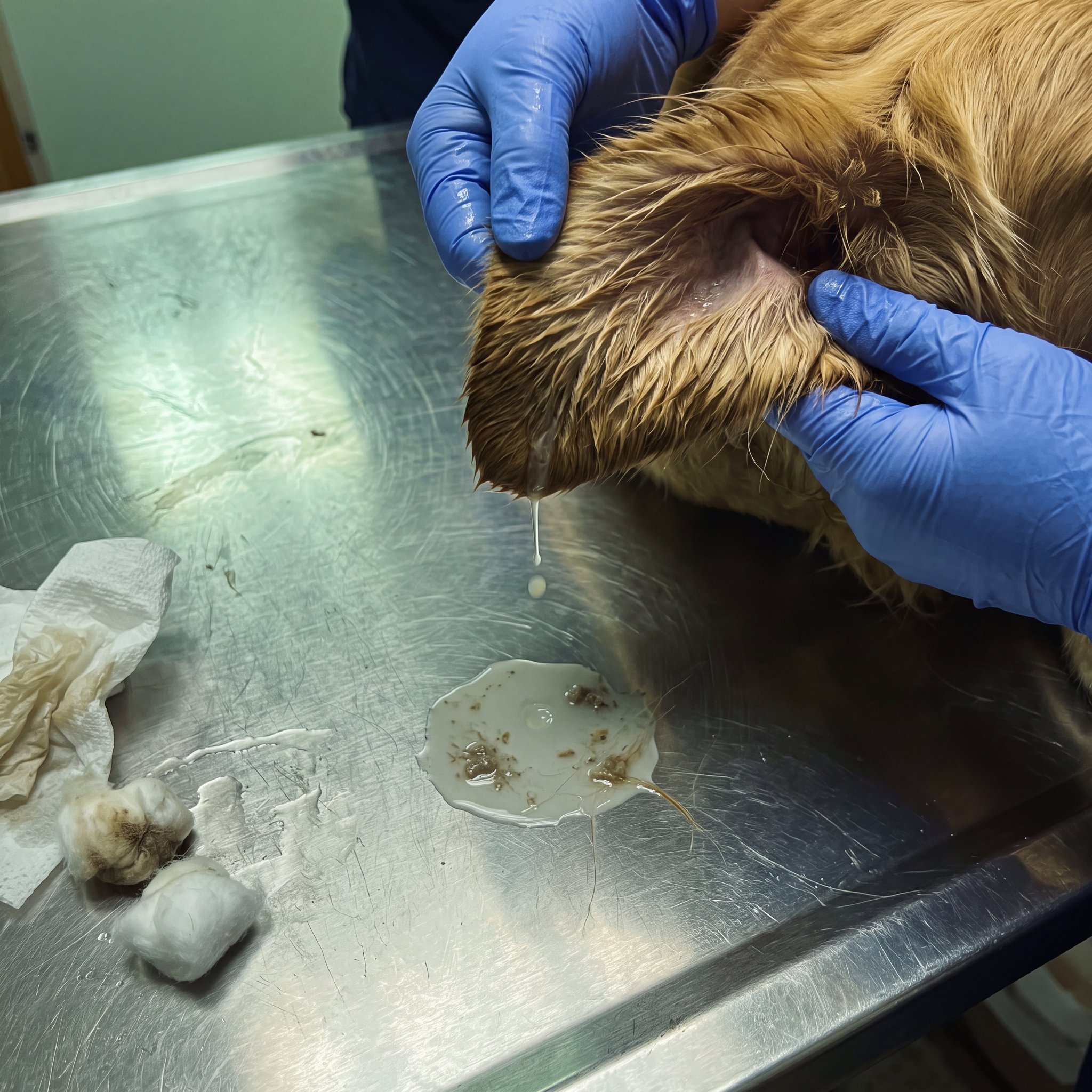
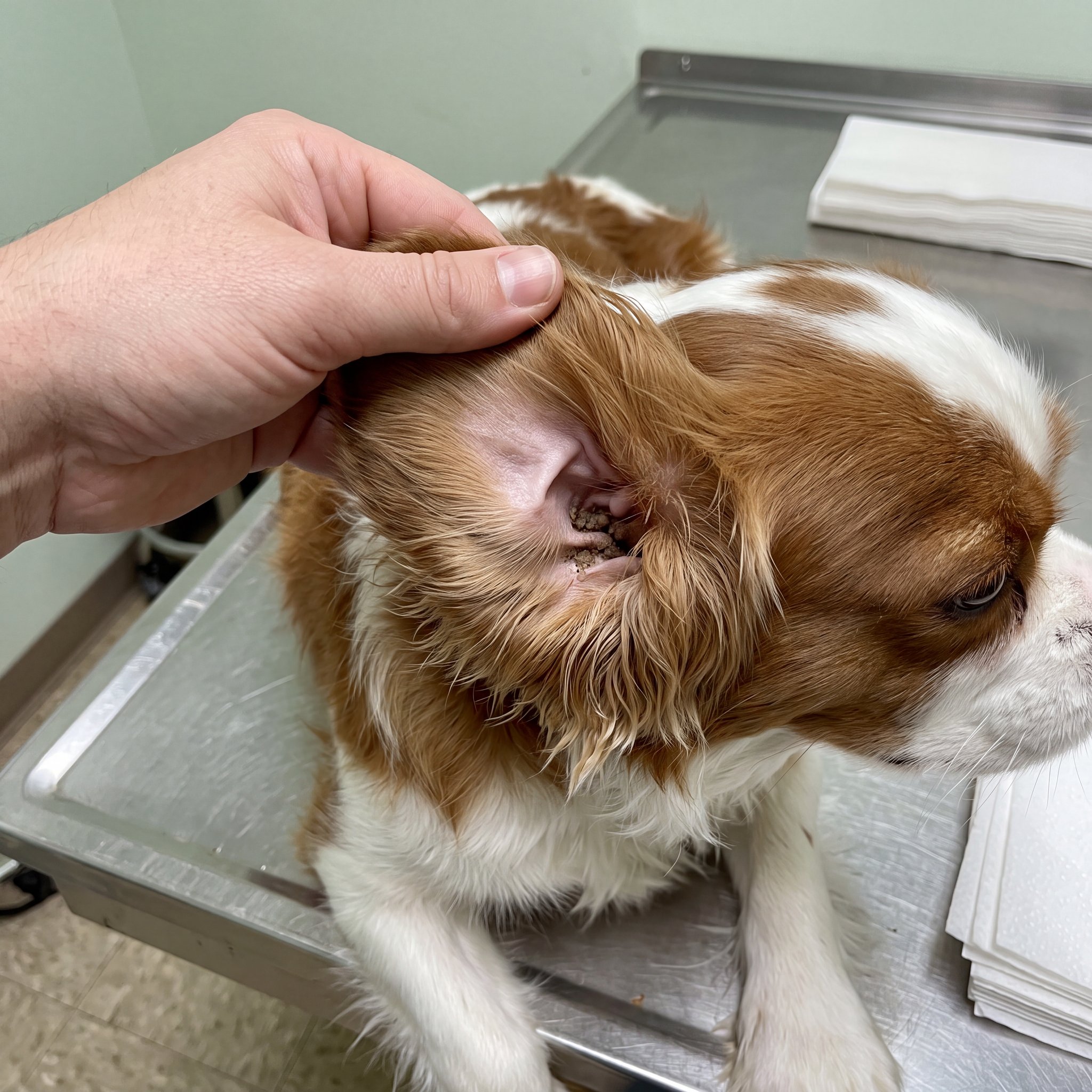
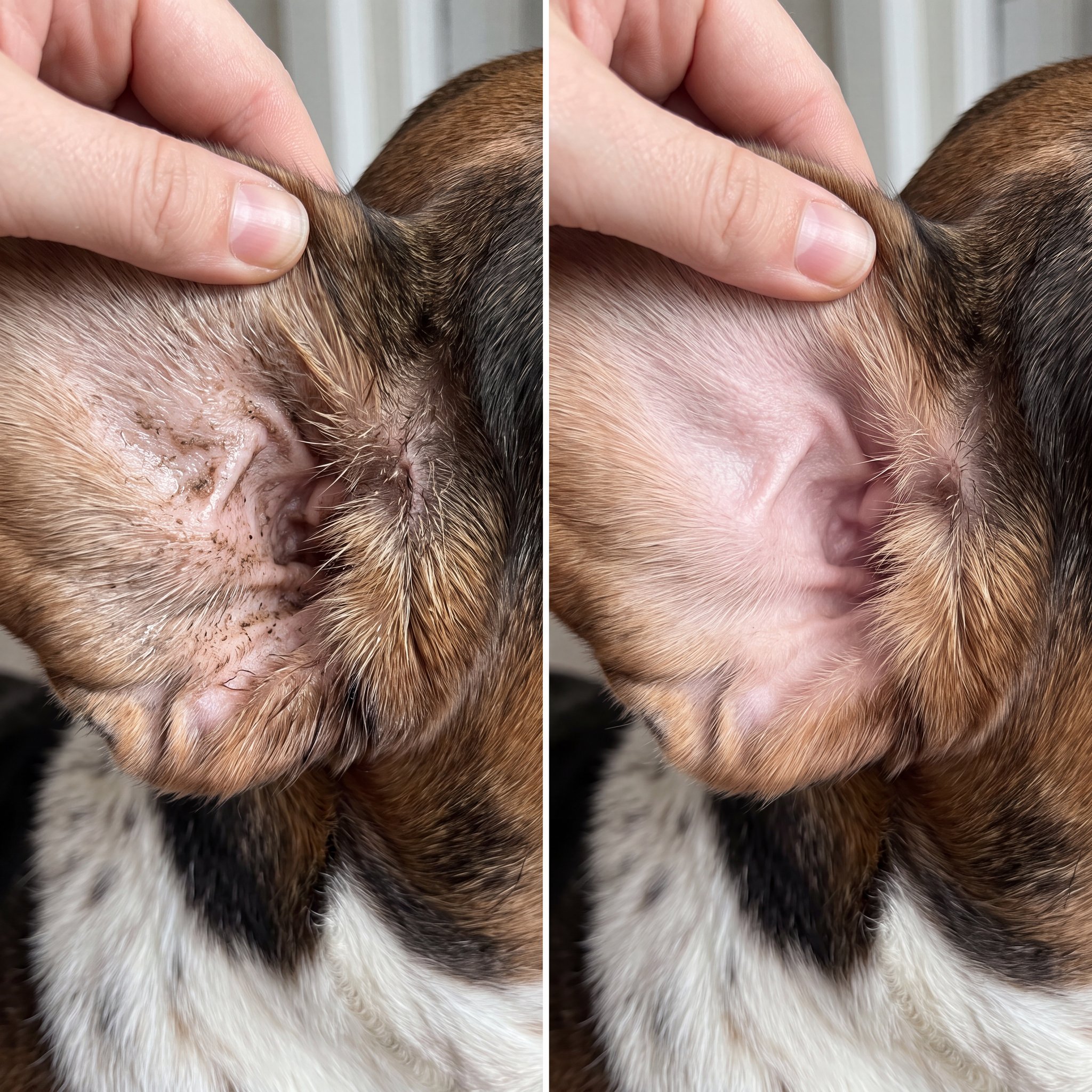
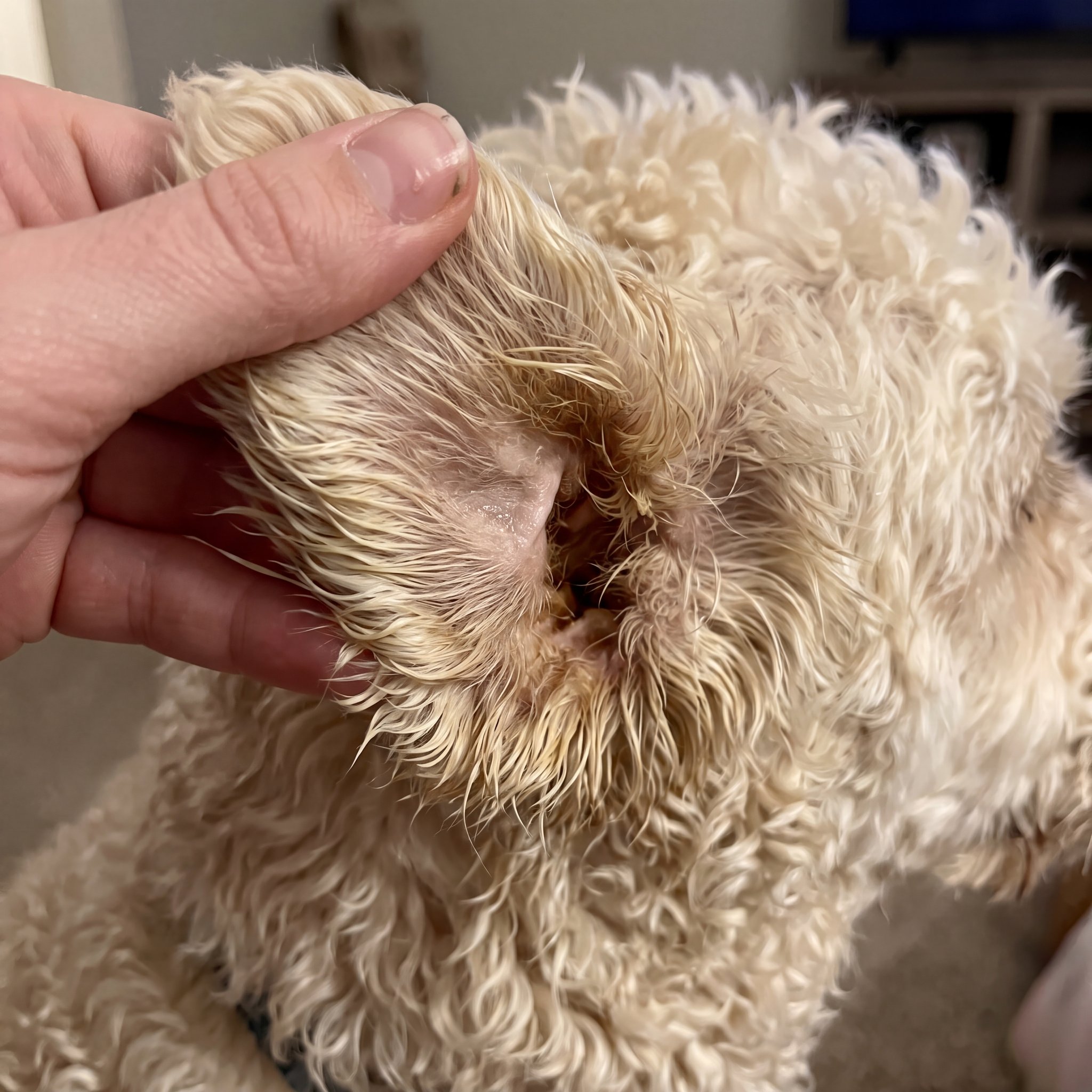
3 years ago, I stood in front of 200 vets at a continuing ed conference and recommended the same chronic ear cleaning protocol I'd recommended for a decade. Today, I've stopped using almost all of it. And I'm going to tell you exactly why. I run a small dermatology-focused veterinary practice in Saratoga Springs, New York. About 60% of what walks through my door is chronic skin and ear cases - the dogs that have been to two or three other vets, that have run through every prescription on the shelf, that the owner is exhausted with, and the dog is miserable from. For 14 years, I told those dog parents the same thing every other vet does. "Let's try another round of Mometamax." "Switch to Epi-Otic Advanced. Twice a week." "Keep flushing. Stay consistent." And then I'd watch them come back six weeks later with the exact same complaint. I want to tell you what changed. It started at a continuing education conference in Denver in 2022. I was sitting in a packed lecture hall watching a sponsored presentation by a major veterinary pharmaceutical rep on "managing chronic otitis externa." She cycled through a slide deck of their product line. Mometamax. Otomax. Posatex. All the heavy hitters. Halfway through, I leaned over to the vet sitting next to me - a colleague from Albany I've known for 11 years - and whispered, "None of this addresses why these cases recur." He whispered back: "Helena, nobody in this room is paid to address that." That sentence stayed with me on the flight home. Because he was right. The veterinary pharmaceutical industry sells products that treat active infections. They sell exceptionally well. The recurrence is, from a revenue standpoint, a feature - not a bug. Now I'm not going to sit here and tell you my entire industry is corrupt. It isn't. The vets I work with are some of the most ethical people I know. But the protocols we follow are built around what we have to prescribe. And what we have to prescribe was developed, tested, and marketed by companies whose financial model depends on chronic cases staying chronic. That's not a conspiracy. It's just structure. And when I got home from Denver, I decided to do something I'd never done in 14 years of practice. I pulled my own case files. I went back through three years of chronic otitis patients in my practice. 274 cases. Here's what I found. 71% were floppy-eared or stenotic-canal breeds. Cockers, Bassets, Cavaliers, Spaniels, Bulldogs, Doodles. 84% recurred within 90 days of completing standard treatment. Same dog, same ear, same complaint, average 78 days to recurrence. The average chronic-ear patient in my practice cost their parent $1,847 over 24 months. That's vet visits, cleaners, prescriptions, cultures, and the occasional anesthetized deep clean. And the worst number: of the 274 cases, only 9 had been permanently resolved. 3.3%. I'd been running a practice with a 96.7% failure rate on chronic ear cases and calling it "management." That's the part I want you to understand. Your vet isn't lying to you. Your vet probably isn't even aware of the recurrence rate in their own practice - because nobody audits it. But the cycle you're stuck in - clean, treat, clear up, recur, repeat - that's not a you problem. That's not a your-dog problem. That's the protocol. Here's what I had to figure out next. Why does the protocol fail? Because for years I'd told myself the failure was compliance. Owners not cleaning often enough. Owners not finishing the prescription. Owners letting their dog swim. When I actually looked at the data, compliance wasn't the variable. The variable was the format of the cleaner. Let me explain what I mean. Liquid ear cleaners - Zymox, Epi-Otic, TrizUltra, Mometamax, every squeeze bottle on the shelf - work by chemically loosening the cerumen and biofilm coating the ear canal wall. That part works fine. The chemistry is solid. But chemical loosening isn't the same as physical removal. For the debris to actually leave the canal, the dog has to shake his head and physically eject it. And here is the part the pharmaceutical reps don't put on their slides. Floppy-eared and stenotic-canal breeds - the exact breeds making up 71% of chronic cases - cannot shake debris out effectively. Their conformation doesn't allow it. The ear flap covers the canal opening. The curve of the canal traps it. The narrow channel holds it. So the liquid softens the debris. The dog shakes. 40-60% of the debris stays right where it was. That residual debris becomes substrate for bacterial and yeast regrowth. Six to eight weeks later, you're back at the vet. This is why anesthetized deep cleans work for months while at-home liquid cleaners fail in weeks. It's not the product strength. It's the mechanism. Under anesthesia, the vet physically removes the debris with curettes and suction. Mechanical debridement. That's the actual phrase in the dermatology literature. At home, the owner squeezes liquid into the canal and hopes for the best. When I figured this out, I felt something I hadn't felt in years of practice. Embarrassed. Because the answer had been in the dermatology research the whole time. I'd just never connected mechanical debridement to home protocol. I called my colleague in Albany - the one from the Denver conference. I told him what I'd found. He was quiet for a long time. Then he said, "So, how does an owner replicate mechanical debridement at home? They can't." I didn't have an answer. For about four months, I didn't have an answer. And then a researcher I'd cited in a CE paper - a veterinary dermatologist out of UC Davis named Dr. Yuki Tanaka - was presenting at a symposium in Boston. I went specifically to hear her talk. Her data showed the same thing my audit showed. Mechanical removal beats chemical loosening for remission length. The format of the cleaner matters more than the formulation. I cornered her after the talk. Asked her the same question my colleague had asked me. "How do owners replicate this at home?" She said: "They can't with liquid. They'd need a textured medium with antimicrobial action. A few formats are coming to market - one out of a small US brand, I think they originally made pet hair tools. The texture is the variable." That's the entire conversation. Maybe 90 seconds. But it reframed my whole practice. I started looking into the wipe she mentioned. I'm going to be honest with you. I expected to dismiss it. I've seen every ear wipe on the veterinary supply market, and most of them are wet wipes with a cleaner soaked into them. They wipe the outer flap. They do nothing for the canal wall. But this one was structurally different. The texture is engineered to physically lift biofilm off the canal wall - mechanically. The same action we do under anesthesia, just at a scale an owner can replicate at home in 30 seconds. The pH is matched to canine ear physiology, so it doesn't disrupt the natural barrier. The antimicrobial action continues working on the residual layer for hours after application. No liquid in the canal. No vestibular trigger. No wrestling match. No 60-second shake-it-out gamble. Just the physical removal of the substrate that feeds recurrence. I tried it on my own dog first. Her name is Olin. She's a 7-year-old Cocker Spaniel I've owned since vet school. I've managed her ears for four years - she's been my professional baseline for what "as good as we can manage" looks like in this breed. After ten days on the wipe protocol, I did an otoscope exam on her at home. I want to describe what I saw because the words matter. The canal wall looked the way it looks on a healthy upright-eared dog. Pink. Smooth. No film. No coating. No residual biofilm clinging to the curve where I'd been watching it accumulate for four years. I sat in my kitchen with the otoscope still in my hand and stared at the wall for a while. Because I'd just spent 16 years of my professional life telling Cocker owners that this view wasn't achievable at home. And it had taken me ten days to be wrong about that. I started recommending it to my chronic ear patients three months later, after I'd run it on Olin long enough to be confident the result was real. The first patient I switched was a Cavalier King Charles named Pippin. Six infections in 18 months. His parents had spent $3,100. She was the client who, two years earlier, had looked at me in an exam room and asked, "Is there something I'm doing wrong?" and I'd told her to keep using Epi-Otic. I called her in. Apologized and told her what I'd learned. I started her on the wipe protocol. Eight weeks later, she called the clinic in tears. Pippin hadn't scratched his ear in five weeks. No smell. No discharge. No head-shaking. That was the first one. Over the next 14 months, I switched 89 chronic ear patients to the wipe protocol. I tracked every one of them - because after the Denver conference, I don't trust impressions, I trust audits. Here are the numbers. 73% reduction in recurrence rate compared to the historical baseline of those same patients on liquid cleaners. Average remission length extended from 41 days to 187 days. Parent-reported compliance went from 38% (liquid protocol) to 91% (wipe protocol). Because dogs tolerate it, and their parents don’t hate it. 14 of the 89 patients fully resolved. No recurrence at 12-month follow-up. Off the chronic case list entirely. That number - 14 fully resolved - that's higher in 14 months than my entire previous decade combined. Two of my colleagues at the practice started using it after they saw my patient outcomes. One of them, Dr. Henrik Bjornstad, has been practicing for 22 years and has never recommended an off-label over-the-counter product in his career. He pulled me aside in the break room last spring and said, "Helena, I think this is the first real innovation in OE management in a decade. And it's coming from outside our industry. That should tell us something." And it should tell you something too. Look, I'm not naive about why this works, and the products my colleagues prescribe don't. A small consumer brand had no incentive to keep dogs on a chronic case treadmill. So they read the dermatology research - the same research my industry has had access to for 20 years - and they built around the actual mechanism. Mechanical removal. Daily use. Dog-parent compliance. The product is called the Uproot Ear Wipes. It's made by a small company out of Florida. They originally manufactured pet hair removal tools, and somewhere along the way, they realized the same mechanical-lift principle applied to biofilm in ear canals. So they followed the research and built something specifically for it. I have no financial relationship with them. I don't get a commission. I don't have a discount code. I'm telling you about them because of what showed up in my 14-month audit. Every time I check, the price is lower than a single round of Mometamax at most clinics. Significantly lower than the $1,847 average my patients used to spend over 24 months on the chronic case treadmill. If your dog is one of the 71% - Cocker, Basset, Cavalier, Spaniel, Bulldog, Doodle, any floppy-eared or stenotic-canal breed - and you've already cycled through what your vet has already tried, this is the one OTC product I'd hand my own clients before I hand them another script. The link is below. Order one box. Run it daily for 21 days. If your dog is in the 71%, you'll have your answer inside three weeks. I'd rather have you mad at me in three weeks for being wrong than watch you spend another $1,847 on the same treadmill I spent 14 years pushing my own patients onto. https://uprootclean.com/products/uproot-ear-wipes
Where the ad sends people
uprootclean.com
14 Years a Vet. I Failed My Own Dog
Ingredients and Their Benefits Aqua/Water/Eau: Base for a smooth, gentle formula. Propylene Glycol: Hydrates and prevents dryness. Caprylyl Glycol: Moisturizes with antimicrobial benefits. Glycerin: Softens and conditions sensitive ear skin. Citric Acid: Balances pH for gentle, non-irritating cleani...
Shop now: uprootclean.com(opens in a new tab)