
Inactive· since Jun 2, 2026
- 79
- days it ran
- 1
- relaunches
- 10,896
- EU reach
Ad copy
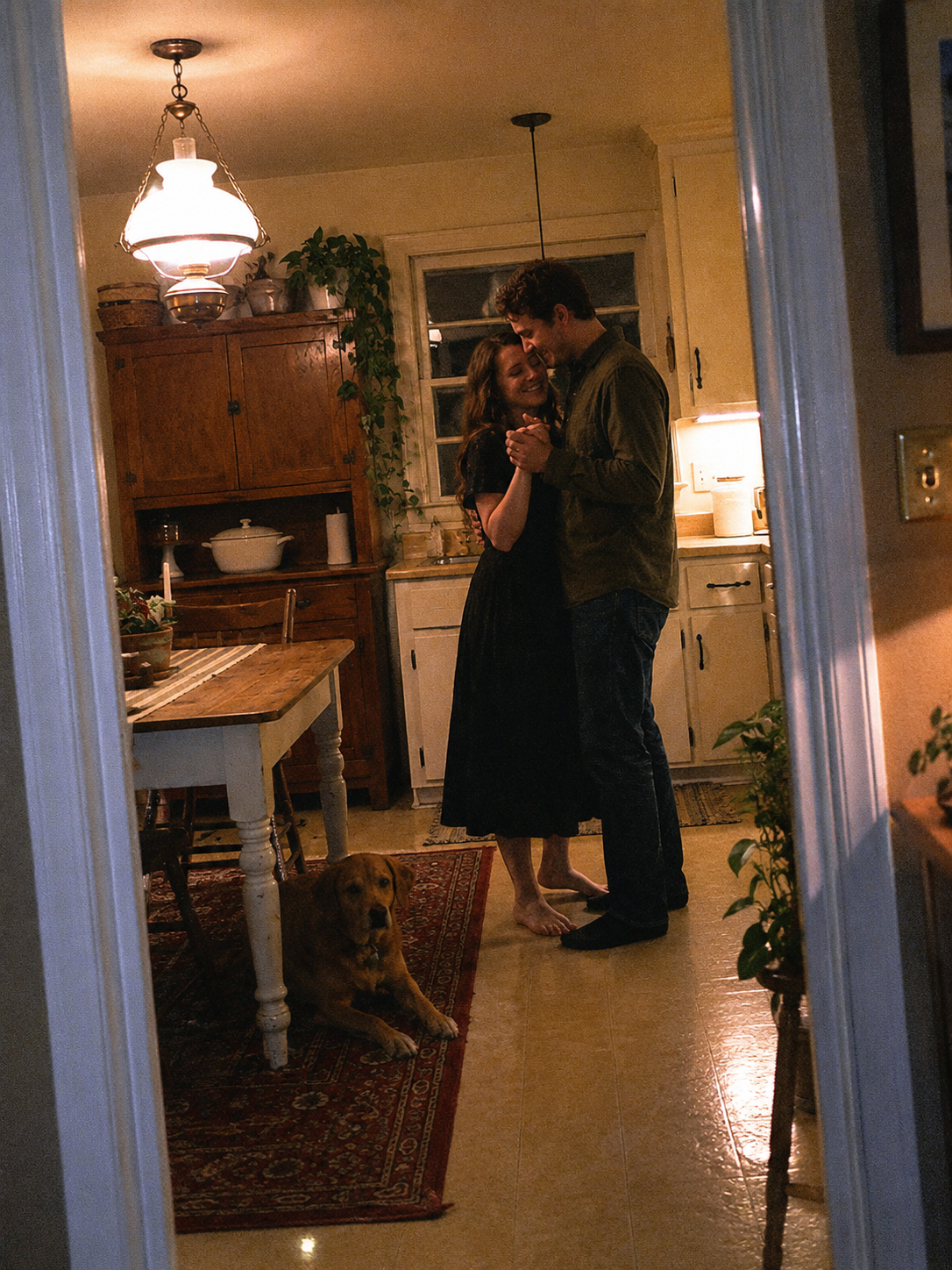
I Hadn't Bought My Wife Flowers in Two Years. The Day I Did It Again, Something Else Came Back Too. I want to share what I did, because a friend asked me about it last month and I realized I'd never said it out loud. Not even to my wife. Especially not to my wife. She knew most of what I'm going to tell you. But she'd never made me say it. She let me carry it the way I needed to carry it. Which is the kind of woman she is. I'm 64. I worked for thirty-six years as a regional sales manager for a company that sold industrial cleaning supplies. I retired three years ago. I'm not famous. I'm not interesting in the ways people are interesting on the internet. I'm a man with a wife, two grown sons, three grandchildren, a small house in the suburbs of a midsize city in Indiana, a dog named Rosie, and a wife who has been waiting on me for two years without ever once making me feel like she was waiting. This is the story of how I started showing up for her again. I'm telling it because I think there are a lot of men my age sitting in their chairs right now who would recognize the version of me I'm about to describe. And because some of them might be willing to do what I did. And because if they do, they might get back some of what I got back. I'm going to start with a Tuesday in March of last year. I was at the grocery store. The bigger one on the east side of town, not the smaller one closer to my house. The smaller one was closed for renovations that week. I was buying chicken and a bag of frozen broccoli and a loaf of sourdough my wife liked. The store was mostly empty. Tuesday morning at 10 AM. There was an older man in line in front of me at the checkout. He was probably my age, maybe a little older. Late sixties. He had on a brown canvas jacket. Tan work pants. Boots that had been worn so long that the leather had gone the color of weak tea. He was buying two cans of soup, a small package of crackers, and a quart of milk. While the cashier was ringing him up, he looked over at the floral display next to the registers. It wasn't much of a display. A handful of mixed bouquets in plastic sleeves. A bucket of yellow daisies. A bucket of pink carnations. He stood there for a second. He said to the cashier: "Hold on. I forgot something." He walked over to the daisies. He picked one bouquet up. He looked at it. He put it back. He picked up a different one. He turned it around in his hand. He held it up to the light. He put it back. He stood in front of those daisies for what was probably forty-five seconds. It felt longer. Finally he picked one and brought it back to the counter. The cashier rang it up. He paid in cash. Counted the bills out. Asked for a moment to find a penny in his coin purse. Got the penny. The cashier put his groceries in one paper bag and his daisies in another. He picked up both bags. He looked at them. He said: "It's been a while since I brought her flowers. Don't know why I haven't been doing it. Going to start again." He said it to himself more than to the cashier. But I heard it. The cashier smiled and said: "She'll love them." He nodded. He left. I watched him walk out across the parking lot. He moved slowly. He put the bags in the back seat of an old Buick. He sat in the driver's seat for a minute before he started the car. Then he pulled out and drove away. I paid for my chicken and my broccoli and my sourdough. I walked out to my car. I sat in the driver's seat. I did not start the car. I sat there for a long time. I want to tell you what I was thinking about. I was thinking about the fact that I had not bought my wife flowers in two years. I hadn't realized it until that moment. Two whole years. Carol — that's my wife — has been my wife for forty-one years. For thirty-five of those years, I brought her flowers about once a month. Not on any schedule. Not for any occasion. Just whenever I was at the store and they had something that looked nice. Daisies. Tulips. Pink roses, which she always pretended were too fancy but kept by the kitchen sink and looked at when she did the dishes. I had stopped, sometime two years ago, without deciding to. I hadn't decided not to bring her flowers. I'd just stopped. The same way I had stopped a lot of things. I sat in the parking lot of that grocery store and I started thinking about what else I had stopped. I had stopped reaching for Carol in the small ways. The hand on her lower back when we were standing in line. The kiss on the top of her head when I came up behind her at the kitchen counter. The way I used to put my arm around her shoulder when we were on the couch watching TV. I hadn't decided not to do any of those things. I'd just stopped doing them. I had stopped suggesting we go out to dinner on Fridays. We used to do that almost every Friday. A small place near our house. We knew the owners. They knew our drinks. I hadn't been there in about two years. We hadn't been to a restaurant together — just the two of us — in about as long. She'd suggested it a few times. I'd said next weekend. I'd said I was tired. I'd said the weather wasn't great. I'd come up with reasons that weren't real reasons, the way men do when they don't want to talk about the actual thing. I had stopped going to bed at the same time she did. For thirty-five years of our marriage, we went up to bed together. Brushed our teeth standing next to each other. Got in bed and read for a while and turned the lights off within a few minutes of each other. About two years ago, I started going up alone. I'd say I was tired. I'd be in bed by 9 PM. I'd be asleep before she came up at 11. Or — and this is the harder one to admit — I'd be lying in bed pretending to be asleep when she came up. I didn't want her to be there. Not because I didn't love her. I loved her as much as I'd ever loved her. I just didn't have anything to give her by the end of the day. And I didn't know how to say that. So I pretended to be asleep. I had stopped, in a thousand other small ways that were too embarrassing to enumerate to myself in detail, being the man I had been for thirty-five years of our marriage. The man who reached. The man who initiated. The man who picked up the phone and called from the road to say I was thinking of her. The man who bought daisies. I sat in the parking lot of that grocery store and I did something that I'm not proud of and also not ashamed of. I cried for about ten minutes. I wasn't sobbing. I wasn't carrying on. I was crying the way men of my generation cry when something we've been holding off finally pushes through. Quietly. With the radio off. With the keys still in my hand. The thing that pushed through wasn't a feeling, exactly. It was a recognition. I had been disappearing from my marriage for two years. Slowly. Without deciding to. Without saying anything about it. And the old man in the brown canvas jacket had walked over to the daisies and stood in front of them for forty-five seconds and picked one and said I don't know why I haven't been doing this. Going to start again. And I realized I had not been doing it either. And I didn't know why either. But I wanted to start again. I started the car. I drove back into the parking lot of the grocery store. I went back inside. I went over to the floral display. I stood in front of the daisies for probably a minute. I picked a yellow bouquet. I paid for it. I drove home. When I came in the back door, Carol was at the kitchen table working on something on her laptop. Bills, maybe. Something. She looked up. She saw the daisies. She didn't say anything for a second. Then her eyes filled up. She didn't look away. I didn't say anything either. I walked over. I put the daisies on the table. I bent down. I kissed the top of her head the way I used to kiss the top of her head. She put her hand on my arm. She said: "Thank you, honey." She said it the way you say "thank you" when somebody hands you something you didn't realize you'd been missing. I went to the cabinet and got a vase down. I filled it with water. I put the daisies in it. I put the vase next to the kitchen sink, where she would see it when she did the dishes. She watched me do all of it without saying a word. When I was done, I sat down at the table across from her. I said: "Carol." I said: "I'm sorry." She said: "What are you sorry for?" I said: "For being gone for two years." She didn't say anything for a long time. Then she said: "I've been waiting." I want to tell you what I did after that. I want to tell you because the daisies were the start of something, but the daisies weren't the thing. The thing was that I finally let myself ask a question I had been avoiding for two years. The question was: why? Not why had I stopped buying flowers. Why had I stopped being the man I had been? I'm a salesperson by trade. I'm not a thinker by trade. I had spent thirty-six years working with my hands and my mouth, not with my head. But that night, after Carol went to bed, I sat in my chair in the den with the small lamp on and I thought about it for the first time. I wasn't depressed. I'd been depressed once in my forties and I knew what it felt like. This wasn't that. I wasn't sick. I'd had my last physical six months earlier. Bloodwork all fine. Cardiologist had been monitoring my blood pressure for fifteen years on a medication that he said was doing exactly what it was supposed to do. I wasn't unhappy with Carol. I loved her the same way I'd loved her in 1984 when I asked her to marry me on the steps of a courthouse in a town I don't live in anymore. I was just — tired. Tired in a way that twelve hours of sleep didn't fix. Tired in a way that didn't lift in the morning. Tired in a way that made even the things I used to love feel like something I had to climb a hill to get to. And the tiredness had been quietly making me less. Less of a husband. Less of a father. Less of a man, in some specific ways I won't go into in detail. Not because I'm ashamed of them. Because I respect Carol. But it was a lot of things, all going at the same time. The energy. The stamina. The reach for her. The little fires in the engine that had always been on without me having to think about them. They weren't off. They were just lower than they had been. And I had decided, somewhere, without thinking about it, that this was what 64 was. That this was what the rest of my life was going to feel like. That I was just going to keep dimming. I sat in my chair in the den that night and I decided I wasn't going to accept that. Not yet. I'm a stubborn man. I am a man who likes to figure things out. I had been letting myself be told that 64 was 64 for two years. I was going to stop letting myself be told that. I went to bed that night. I went up at the same time Carol did. I got into bed next to her. I kissed her shoulder. She didn't say anything but she put her hand on mine and held it there for a few minutes. I went to sleep. In the morning, I got my laptop out. I started reading. I want to be honest about the next part. I'm not a researcher. I'm not in healthcare. I'm a retired sales guy with a Costco card and a Wikipedia habit. But I read for about six weeks. I read about energy in men in their 60s. I read about cardiovascular wellness — circulation, stamina, the way the system gets less efficient as the years pile up. I read about how a lot of men my age describe exactly what I'd been describing to myself. Not a disease. Not a deficiency that shows up on a standard panel. Just a quieter, lower-watt version of themselves. And what was helpful — what was the unlock for me — was a sentence I read on a forum that I can't find again. A guy had written: I stopped asking what was wrong with me and started asking what my body needed help doing. That was the reframe. I'd been asking the wrong question for two years. I'd been asking what was wrong. The doctor had been saying nothing was wrong. He was right. But that didn't mean nothing was off. What was off was that my body, after sixty-four years of doing a lot of its housekeeping for free, was getting less efficient at the small antioxidant balance work that keeps the engine running smoothly. That isn't a disease. That isn't a deficiency. It's just — a body that needs a little more help with what it used to do for free. I read about a lot of things people add to their routines for this kind of support. CoQ10. Magnesium. Adaptogens. L-arginine. Hawthorn. Beetroot. The beetroot one surprised me. I'd thought of beets as something on the salad bar that nobody ever picked. Not as something worth taking seriously. I kept reading. What I came away understanding — and I'm not a doctor, take this for what it's worth — was that beetroot contains compounds called betalains. They support the body's natural antioxidant balance. They're the same compounds that give beets their deep red color. Beetroot has been studied for cardiovascular wellness and circulation for a long time. The other thing I came away understanding was that not all beetroot supplements are the same. Betalains are sensitive to processing. Heat-processing is faster and cheaper. Slower methods preserve more of the active compound. I spent a couple of weeks reading specifically about brands. One name kept coming up. Rosabella. Small company. 1,300 milligrams per serving. Cold-pressed at low temperatures. Grown in Lancaster County, in a small farming community there. The thing that made me want to try it was that it wasn't positioned as a replacement for anything. I was on a blood pressure medication. I wasn't going off it. I wasn't trying to. This was about whether there was anything I could add to what I was already doing. It supports the body's natural antioxidant balance and overall cardiovascular wellness. Structure-function. Not a treatment for anything. You add it to what you're already doing. You don't replace your doctor's care. It just adds. Before I ordered, I called my doctor's office. This part was important to me. I'd been on blood pressure medication for fifteen years. I wasn't going to start adding things to my routine without my doctor knowing. I'm not a guy who messes around with that. I told the nurse what I wanted to add. I told her I wasn't going off my medication. I wasn't trying to replace anything. I just wanted to know if there was any reason not to add it. She talked to the doctor. She called me back the next afternoon. The doctor said it was a sensible thing to add. He said there were no interactions with the blood pressure medication. He said to let him know how things were going at my next regular appointment in a few months. He also said — and this was something I appreciated — that he was glad I had called. He said a lot of his patients don't call about supplements. He said it was the right thing to do. I ordered the bottle that night. The bottle arrived about a week later. I opened it at the kitchen counter. I noticed the color. Deep, dark red. Almost purple. I'd read about that. The color was the visible marker of the active compound being intact. I set the bottle next to the coffee maker. The next morning I took two capsules with a glass of water. I drank my coffee. I took my blood pressure medication. I went on with my day. I'm not going to tell you I felt anything different that morning. I didn't. These things don't work like a switch. The body needs more than one morning to respond to anything, and I wasn't expecting it to. I just kept going. Two capsules. Water. Coffee. Medication. Day after day. I'm going to be careful about how I describe what happened next. I know how it sounds when people tell stories about supplements. I'm not telling you any of this to convince you of anything. I'm telling you what I noticed. About three weeks in, I was at the grocery store again. I bought daisies on the way out, without thinking about it. I'd already bought Carol three more bouquets in the weeks since the first one. It had become a thing. That day I bought a fourth. What I noticed wasn't the daisies. What I noticed was that I'd walked into the store from the back of the parking lot and hadn't been winded. I'd parked all the way at the back because the front lot was full. I'd walked the whole way without thinking about it. A few weeks earlier I'd have parked closer and felt the walk on the way in. I stood in the produce section with a bunch of daisies in my hand and I thought: huh. I went home. I didn't say anything to Carol about it. I noticed other things over the next couple of months. I noticed that I'd been going up to bed at the same time as Carol most nights. I hadn't decided to do that. It had just been happening. I noticed that I'd been reaching for her again. The hand on her lower back when we were standing in line. The kiss on the top of her head when I came up behind her at the kitchen counter. The way I'd hold her hand at the dinner table for no reason. I hadn't decided to do those things either. They'd just come back. I noticed I was waking up earlier in the morning. Not in a bad way. In an awake way. I noticed I was suggesting things on the weekend. A drive to the lake. A walk. A trip to the farmers market on Saturday morning. I noticed I was suggesting we go out to dinner. We went to our small place near the house in April. First time in two years. The owners didn't say anything about how long it had been. They just hugged Carol and shook my hand and put us at our old table. I had a glass of wine. I hadn't had a glass of wine in over a year. I was tired the next day, but not unreasonably tired. The way you're tired after a nice night out. Then I was fine. I'll tell you about one specific evening that I think about a lot. It was a Saturday in May. We were in the kitchen. I'd just finished doing the dishes. Carol was wiping the counter. A song came on the radio — one of those soft-rock stations she likes to have on in the background. It was a song we'd danced to a long time ago. I dried my hands. I held out my hand to her. I said: "Carol." She looked at me. She looked at my hand. She put down her dishtowel. We danced in the kitchen for about two minutes. I hadn't danced with my wife in I don't know how long. When the song ended I held her there for a second. She put her face against my shoulder. She said: "I missed you." I said: "I missed me too." That was the whole conversation. I want to be very careful here. I'm not telling you the supplement did all of this. I changed a lot of things at the same time. I told Carol the truth. I started reaching for her again on purpose. I started buying flowers again on purpose. I started going to bed when she went to bed on purpose. I started saying yes to things on purpose. I started reading at night again — fifteen minutes before turning the light off — instead of letting myself fall asleep with the TV on. I started walking with her in the evenings. I started drinking more water. I started, frankly, paying attention to my own life again. The supplement was one thing I added. Was it the supplement? Was it the walks? Was it Carol's patience? Was it that I'd finally stopped pretending nothing was happening? I don't know. I'd be lying to you if I told you I could separate one variable from another. What I can tell you is that something shifted, and the shift held. The bottle is by the coffee maker. I take two capsules every morning with my coffee, before my blood pressure medication. I've been doing it for over a year now. I'm not going to stop. I went back to my doctor for my next regular appointment about four months after I started. Carol came with me. I asked her to. I wasn't going to keep things from her anymore. The doctor looked at my bloodwork. Looked at my home blood pressure log. He looked at me. He said: "You look like yourself." I said: "I feel like myself." He said: "Whatever you've been doing, keep doing it. Come back in six months." We didn't change anything. Carol and I walked out of that appointment holding hands. We hadn't held hands walking out of a doctor's appointment in years. A few words about what I'd say to other men my age. If you've been doing the things you're supposed to do — taking your medications, going to your appointments, eating decently, walking enough — and you're still feeling quieter than you used to feel, you're not crazy. You're not weak. You're not making it up. The standard bloodwork doesn't catch everything. A lot of men in their 60s feel exactly what I was feeling, and the doctor tells them their numbers are fine, and they go home and sit in the chair. The doctor isn't wrong. The numbers are fine. But that doesn't mean nothing is off. The reframe that helped me was: not "what's wrong with me?" but "what does my body need help doing that it used to do for free?" If you want to try adding a beetroot supplement to what you're already doing, the most important step is calling your doctor's office. I cannot stress this enough. If you're on any medication — for blood pressure, for cholesterol, for cardiovascular concerns, for anything — talk to your doctor before adding anything new. The brand I used is Rosabella. 1,300 milligrams per serving. Cold-pressed at low temperatures. Grown in Lancaster County. Two capsules with water in the morning. That's the whole protocol. I'm not a doctor. I'm not in healthcare. I'm one guy in Indiana who watched another guy buy his wife daisies and went home and tried to figure out how to be that guy again. Take it for what it's worth. P.S. A few practical notes for anyone thinking about this. Rosabella has a 90-day money-back guarantee. If you're not satisfied for any reason, every penny back. No questions asked. That's a sensible policy for a supplement. It gives you time to actually see whether it does anything for you. I'd give it a few weeks at minimum before deciding anything. Bodies are different. Some people notice something within the first week or two. Others take longer. Mine was somewhere around the third week. Be patient with yours. P.P.S. I keep an extra bottle in the cabinet now. They're a small operation and the harvest is seasonal. I learned to stock up after the shipping took a little longer one month than I'd expected. I don't want to have a gap. P.P.P.S. A note about the doctor's office call. I'm going to come back to this because I think it's the part guys are most tempted to skip. The temptation is to think: it's a supplement, it's not a drug, I don't need permission for a supplement. That's not why you call. You call because supplements can interact with medications. You call because your doctor knows things about your body that you don't. You call because if anything ever comes up later, you want your doctor in the loop on what you've been taking. I almost didn't call. I'm glad I did. I'd ask the same of you. P.P.P.P.S. Carol planted a small herb garden in a window box this summer. Basil, rosemary, thyme, mint. She'd been talking about doing it for about three years. I'd been telling her every spring that I'd help her build the box. I never built it. This summer I built it on a Saturday afternoon in June. It took me two hours. I hadn't been in the garage in a while. The smell of fresh-cut pine and the feel of the tape measure in my hand reminded me of a man I used to be. She came out to the garage when I was finishing. She put her arms around me from behind. She didn't say anything. I leaned back against her. We stood there for a minute. Then I said: "I'm sorry I waited so long." She said: "You built it. That's what matters." The herbs are still growing in the box. The mint has taken over but Carol says she likes it. P.P.P.P.P.S. One last thing. If you're a man my age and you've been disappearing slowly from your marriage — not in a fighting way, not in an angry way, just in a quiet, drifting, going-to-bed-before-her way — and you've been telling yourself that this is just what getting older looks like — I want you to consider that it might not be. I'm not telling you to expect what I experienced. I don't know what's going on with you. I don't know your health, your medications, your situation. Everyone's body is its own situation. But I can tell you that for me, the slow disappearance wasn't the end of the road. It was a place I sat for a while. I got up from it. I would tell you that the day I bought my wife daisies again was the most important day of my marriage in twenty years. Not because of the daisies. Because of what they meant. They meant I was back. If you're sitting in a parking lot somewhere with two bags of groceries and a feeling pushing through your chest that you can't quite name — Go buy the daisies. Then call your doctor's office. Then keep going. That's the whole thing. That's all I have. https://track.tryrosabella.com/4a8944d3-6841-4daa-bcd5-c063901eeae6 Individual experiences vary. These statements have not been evaluated by the FDA. This product is not intended to diagnose, treat, cure, or prevent any disease.
Support stamina and heart health every day
LEARN MORELike this ad? Make it yours.
Crush rebuilds this exact creative around your product — your brand, your colors, your offer — in about a minute.