
Inactive· since May 30, 2026
- 30
- days it ran
- 1
- relaunches
Ad copy
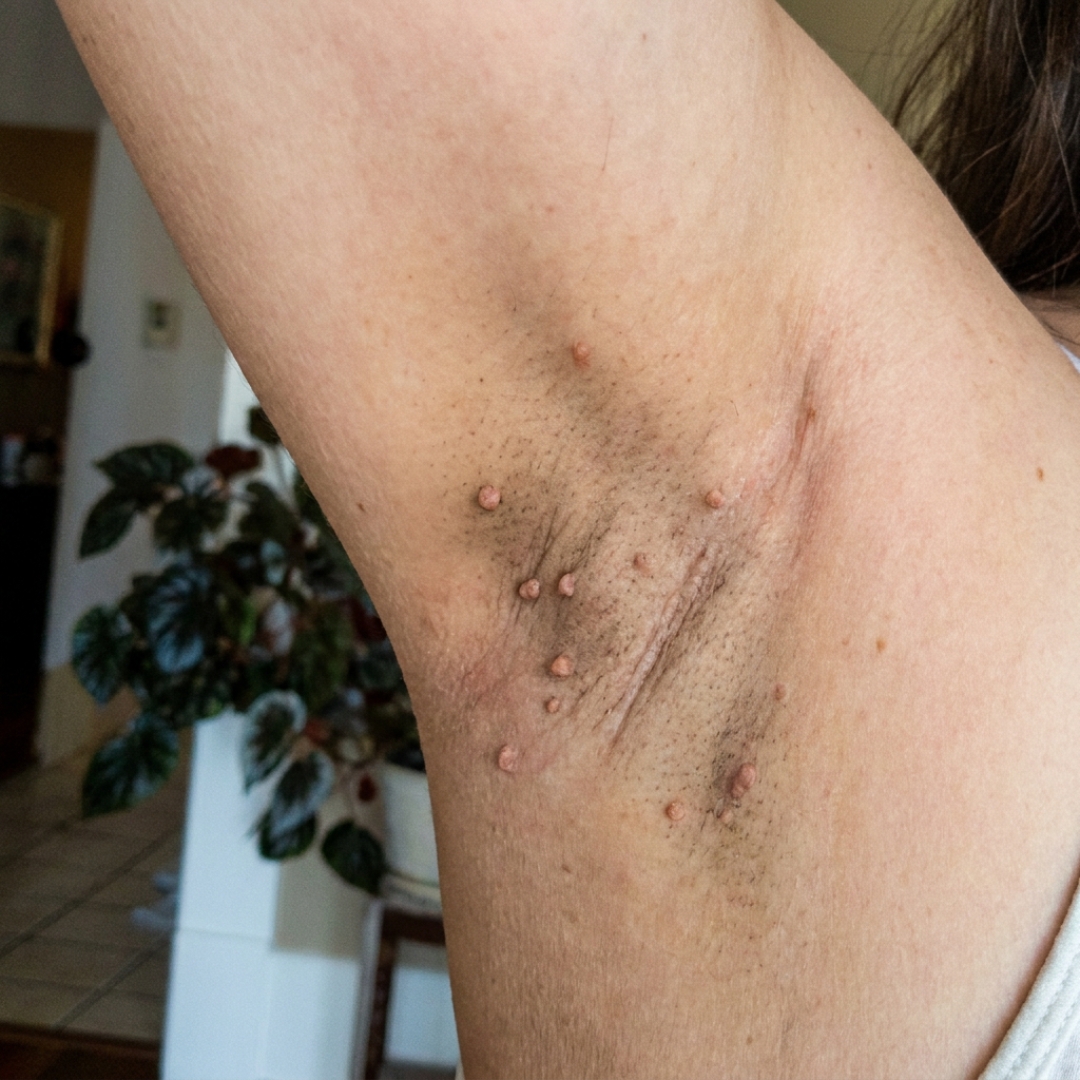
These skin tags aren't a skin problem. They're a hormone problem. And cutting them off makes it worse. I thought mine were from the bra strap rubbing against my skin. That's what the dermatologist told me. "Friction," she said. "Common in that area. We can snip them right off." So she did. Froze three of them, snipped two more. Charged me $340 and sent me home with a bandage and a tube of antibiotic ointment. Six weeks later they were back. Same spots. Plus new ones — under my arms, along the side of my neck, in the folds where my thighs meet my torso. More of them than before. I'm Sandra Keller. I've been a dialysis nurse for 31 years. I've spent three decades watching what happens to people's bodies when blood sugar runs out of control — the nerve damage, the vision problems, the slow collapse of organs that were never designed to swim in glucose all day long. And in thirty-one years, I have never once seen a dermatologist connect skin tags to the thing that's actually causing them. Not once. I didn't connect them either — not on my patients, not on my own body — until I'd already spent that $340, watched every tag grow back worse than before, and stood in my bathroom at midnight with nail scissors and blood on the counter. Let me tell you what happened. Because it might sound familiar. I first noticed the tags around age 49. A couple on my neck. One under my left arm. My doctor barely glanced at them. "Totally benign. We can remove them if they bother you cosmetically." They bothered me. So I had them removed. They came back within two months. I had them removed again. They came back faster, with friends. Under both arms. Along my bra line. A cluster on the side of my neck I started covering with scarves. That's when I went to the dermatologist. She froze them, snipped them, told me some people are just prone to them. Genetics, friction, hormones. She used the word "hormones" casually, the way you'd mention the weather. Didn't explain what she meant. Within eight weeks, every tag had grown back. Plus about a dozen new ones. And here's the part that should have screamed at me — but didn't. My fasting glucose had been creeping up. 118. Then 124. Then 131. Then 142. Each annual physical, a little higher. My A1C had drifted from 5.6 to 6.4 over three years. "Prediabetic range," my doctor said. "Let's keep an eye on it." The blood sugar was getting worse. The skin tags were getting worse. I didn't connect the two. Neither did she. I need to tell you about my mother. My mother had skin tags everywhere. Neck, armpits, chest, stomach, back. She used to joke about them — called them her "little friends." Tried everything. Tea tree oil, apple cider vinegar, freeze-off kits, thread tied around the base. They'd fall off, and new ones would grow in the same spots within weeks. Nobody ever told her why. She was diagnosed with type 2 diabetes at 61. By 65, insulin. By 68, neuropathy so severe she couldn't feel her toes. By 71, she was in my unit — my own mother, connected to a machine three times a week — with an A1C of 9.8 and kidney function that had already failed. I watched the disease take her apart. And the whole time I kept thinking about those skin tags she'd joked about for twenty years. The earliest warning sign her body ever gave, and everyone — including me — treated it as a cosmetic nuisance. Those tags were her body screaming that something was broken inside. Nobody listened. That's what I carried when my own tags started multiplying. Not vanity. Terror. For two years I tried to manage my blood sugar on my own. Low-carb. 8,000 steps a day. Berberine. Apple cider vinegar. Cut sugar so aggressively my food lost all joy. Fasting glucose came down from 142 to 128. A1C shifted from 6.4 to 6.1. Better. Not enough. And the skin tags kept coming. Every new one felt like a countdown. My husband found me in the bathroom one night, standing in front of the mirror with nail scissors, trying to cut a tag off my neck. Blood on the counter. "What are you doing?" he said. "I can't keep looking at them. They keep coming back. No matter what I do, they keep coming back." He didn't say anything. He just looked at me with the expression of a man watching his wife lose a fight he doesn't know how to help with. Then something happened that changed everything. I was in the unit during a patient's session when a woman named Dolores — 57, a type 2 diabetic who had been coming in for months — pulled me aside. She was looking at the tags on my neck. "My sister had those," she said quietly. "Everywhere. For years. She found some kind of Ceylon cinnamon — concentrated, in oil capsules. Started taking it for her blood sugar, but the skin tags were the first thing that changed. They started shrinking. After six weeks, most were gone. Her doctor thought she'd had them removed. She hadn't touched them." "You're telling me cinnamon made skin tags disappear?" "I'm telling you her blood sugar came down, her dark patches faded, and the tags shrank on their own. Her doctor told her to keep doing whatever she was doing. She's been stable for over a year." I couldn't sleep that night. Not because of the tags. Because of what Dolores said about the order things happened in. Blood sugar came down first. Then the tags shrank. Not the other way around. The tags weren't the disease. They were the signal. Thirty-one years as a nurse. I don't believe in miracle cures. I trust mechanisms and evidence. So at 2:14 AM, still wide awake, I started researching. And what I found over the next several hours didn't just explain the skin tags. It explained my mother. It explained my patients. It explained the pattern I'd been watching for three decades without understanding what I was seeing. Here's what I came to understand. Insulin is not just a blood sugar hormone. It's a growth hormone. One of the most powerful growth signals your body produces. In a healthy body, insulin does its job — signals cells to absorb glucose — and then levels come back down. The growth signal turns off. In insulin resistance, your cells stop responding. Your pancreas compensates by pumping out more and more insulin, trying to force the cells to listen. Blood insulin levels stay chronically elevated. Not for minutes. For years. And elevated insulin makes things grow. That's biology. Insulin activates growth factor receptors in your skin cells. When insulin stays high all the time, those receptors get overstimulated. Skin cells proliferate in areas where skin folds — neck, armpits, groin, under the chest. The result is skin tags. It also drives excess melanin production in those folds — the dark, velvety patches many diabetics develop. Same root cause. Same hormone. Now here's where everything starts to make sense. The tags that keep growing back after removal — the growth signal is still running. The fatigue every afternoon — your cells can't pull glucose in, so they're starving while your blood is flooded. The brain fog — your brain runs on glucose that can't get delivered properly. The crashes after meals — blood sugar spikes with nowhere to go, then crashes when insulin forces some out. The fasting glucose creeping up year after year — resistance deepening, insulin climbing, the growth signal getting louder. The dark patches — the same elevated insulin driving melanin overproduction. One problem. One hormonal signal running out of control. Showing up as skin tags, dark patches, fatigue, brain fog, crashes, and creeping blood sugar. And everything we were being offered was aimed at the signal, not the source. Think of it this way. Your blood is a river. Glucose is the water. Your cells are buildings along the riverbank, each with doors that are supposed to open and let the water in. In insulin resistance, the doors jammed shut years ago. Chronic inflammation and oxidative stress damaged the receptors. They stopped responding. So the water keeps rising. Your body pumps more insulin trying to force the doors open, and that excess insulin becomes the growth signal driving the tags. Metformin turns down the faucet — less glucose from the liver. The river drops a bit. But the doors are still jammed. The insulin is still elevated. The growth signal is still firing. That's why you can take metformin, eat carefully, and still watch new tags appear. Dermatology treats the tags. Medication turns down the faucet. Nobody opens the doors. When I understood that, I felt something unexpected. Relief. Because it meant I wasn't failing. My mother wasn't failing. We were addressing the surface layer while the real issue — the jammed doors — went untouched. The research on Ceylon cinnamon went straight at the doors. Ceylon cinnamon — Cinnamomum verum, grown in Sri Lanka. Not the cheap Cassia that fills grocery shelves. A completely different plant with a completely different body of clinical research. Cinnamaldehyde — the primary compound — activates the AMPK pathway, the same metabolic switch exercise turns on. It helps cells absorb glucose without needing as much insulin. When cells take glucose in more efficiently, the body produces less insulin. Insulin drops. The growth signal stops. One paper examined the NLRP3 inflammasome — the master switch behind the chronic inflammation that's been damaging your receptors for years. Cinnamaldehyde appeared to quiet that switch. Reduce the inflammation at the source. Give the receptors room to function again. When insulin normalizes, skin cells stop overproliferating. Existing tags — starved of the signal that created them — begin to shrink. The dark patches fade. Not because you treated the skin. Because you fixed what was driving it. I ordered generic cinnamon capsules from Amazon. $12.99. Took two with breakfast on a Tuesday. By day three, my afternoon crash didn't show up. By day five, sleeping through the night. By day seven, fasting glucose dropped from 128 to 116 — better than two years of strict dieting had accomplished. But the skin tags hadn't changed. Two weeks in, numbers had stalled at 119. I texted Dolores: "What brand did your sister use?" "Metabolae." Most cinnamon supplements fail because they're not real Ceylon — they're Cassia, with up to 250 times more liver-stressing coumarin. They're underdosed — clinical research used 6,000 to 7,200mg equivalent; most products have 500 to 1,500mg of powder. They use dry capsules — cinnamon's active compounds are fat-soluble and need fat to absorb; without a carrier, they pass through unused. And they're not independently tested. Metabolae is different. True Cinnamomum verum from Sri Lanka, DNA-verified. 7,200mg equivalent per softgel through a 12:1 concentrated extract. Suspended in MCT oil — the fat bridge that carries the compounds through your cell walls to where the receptors are waiting. Third-party tested. GMP-certified. Every batch verified. The difference was immediate. Day three on Metabolae: fasting glucose dropped from 119 to 108. Day seven: 101. Week two: 96. I checked it three more times. And then — week three — the cluster of skin tags on the left side of my neck looked different. Smaller. Thinner. Like they were deflating. Two of the smallest ones had flattened completely. I didn't touch them. Didn't apply anything. They were fading on their own. By week six, the largest tags had shrunk to less than half their size. The ones under my arms had shriveled to almost nothing. Two fell off in the shower. The dark patch on the back of my neck was noticeably lighter. Fasting glucose sitting between 94 and 102. A1C dropped from 6.4 to 5.7. No longer prediabetic. Three months later, I walked into my doctor's office with my neck uncovered for the first time in over a year. She stared at me. "Your fasting glucose is consistently in the mid-90s. A1C is 5.7. It was 6.4 a year ago." She looked at my neck. Then my chart. Then my neck again. "You had at least eight skin tags along that neckline last visit. I can see two, maybe three small ones. Did you have them removed?" "I didn't touch them. They shrank on their own." I pulled the bag of Metabolae from my purse. She read the label. Typed something into her computer. Read for several minutes. "If your insulin resistance reversed, the growth signal driving those tags would have dropped. That's consistent with what I'm seeing." She looked at me. "Keep doing whatever you're doing." That was eight months ago. Fasting glucose consistently between 92 and 104. A1C holding at 5.7. Tags on my neck almost completely gone. Under my arms, gone. Along my bra line, gone. Dark patches faded. My dermatologist saw me at the hospital last month. Looked at my neck. "What happened to your skin tags?" "They were never a skin problem. They were an insulin problem. I fixed the insulin, and the tags went away on their own." She said: "I see a dozen patients a week with skin tags. Nobody connects them to insulin resistance until they're already diabetic." I've recommended Metabolae to seven patients. Every one came back with the same pattern — better sleep within the first week, blood sugar dropping within the first month, tags shrinking between weeks three and eight. One patient's A1C dropped from 7.1 to 6.0 in three months; her doctor ordered repeat labs because he didn't believe the first ones. Another cried — not about the numbers, about the tags. She'd been cutting them off with nail clippers for six years. For the first time, no new ones appeared. The old ones were shrinking. She said she looked in the mirror and felt like herself again. I'm not anti-dermatologist. If you want tags removed for comfort, remove them. But if you don't address the growth signal driving them, they will come back. They always come back. If you're like me — if the tags keep multiplying, if your blood sugar keeps creeping up, if you're watching your mother's pattern unfold in your own body — this is worth trying. A patient told me about her sister. I tried it. It worked. I told seven patients. It worked for all seven. That's not a miracle. That's a mechanism. I'm sharing this because I wish someone had told me sooner. I wish someone had told my mother. Here's what I use: Metabolae Ceylon Cinnamon. 7,200mg equivalent. True Ceylon from Sri Lanka. MCT oil suspension. One softgel daily. I just ordered three more bags because I'm not going back to standing in front of the mirror with scissors and a sinking feeling in my stomach. P.S. A few things I wish I'd known before ordering: 1. 90-day money-back guarantee. No questions asked. If your numbers don't improve and the tags don't shrink, you pay nothing. 2. One softgel daily with breakfast. 7,200mg equivalent of concentrated Ceylon extract in MCT oil. Don't substitute with generic capsules — the dose and absorption aren't comparable. 3. Timeline: Better sleep within 3 to 7 days. Blood sugar starts dropping weeks 2 to 4. Skin tags begin shrinking weeks 3 to 8 — smaller ones first. Full benefits — A1C improvement, energy, complete fading of tags and dark patches — take 8 to 12 weeks. 4. They sell out. If it's in stock, I'd order now. 5. There's a promotion running right now. If you're dealing with skin tags that keep coming back, dark patches forming on your neck or armpits, blood sugar creeping up year after year, brain fog every afternoon, exhaustion that sleep doesn't fix, and the quiet fear that you're watching your mother's story play out in your own body — give this 90 days. If it doesn't work, you get your money back. If it works like it did for me, for Dolores's sister, for the seven patients I've recommended it to — you'll wonder why nobody told you the truth about those skin tags sooner. Fasting glucose from 142 to 96. A1C from 6.4 to 5.7. From scissors and scarves to forgetting I ever had a reason for either. Your skin tags aren't the problem. They're the alarm. Fix what's setting it off, and the tags take care of themselves. ~ Sandra Keller, RN, Dialysis Unit, 31 years P.P.S. Dolores's sister went through three brands before finding Metabolae. Most weren't real Ceylon — they were Cassia, with 250 times more coumarin and real risk of liver damage. Even the real Ceylon ones came as dry powder that never reached the cells. Wrong species, wrong format, wrong results. If you're going to try Ceylon cinnamon, get the version that actually works: true Ceylon, 7,200mg clinical dose, MCT oil, third-party tested. That's Metabolae.
Like this ad? Make it yours.
Crush rebuilds this exact creative around your product — your brand, your colors, your offer — in about a minute.