Dr. Vanessa Veracruz
Dr. Vanessa Veracruz Facebook ad: “The Truth About Receding Gums”
Ran for 31 days, from June 12 to July 13, 2026, the last day Crush saw it.
Run by Dr. Vanessa Veracruz on Facebook. Crush is not the advertiser and does not verify its claims. See this ad in Meta's Ad Library(opens in a new tab)
Want an ad like this for your product?
Crush makes new ad images for your product from this ad: your logo, your product photo, your offer.
Trials from $19.95 USD, then $79.95 USD a month. Cancel anytime.
About this ad
- Meta Ad Library ID
- 1537969797925996
- Platforms
- Facebook, Instagram, Audience Network, Messenger and Threads
- Relaunches
- 0
Ad text
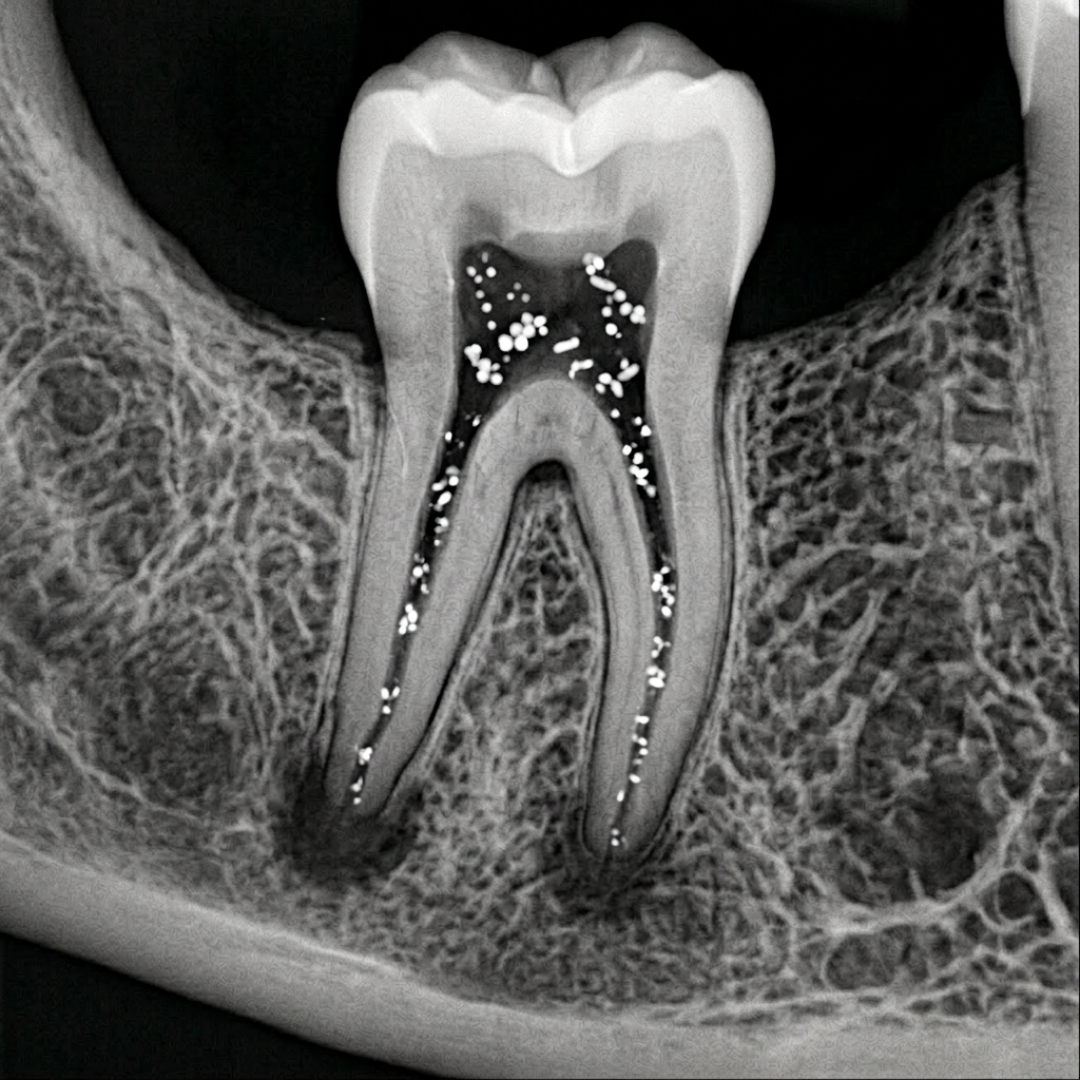
The best way to stop gum recession is NOT collagen powder, NOT prescription rinses, and definitely NOT a $2,800 graft. If your periodontist has mentioned pockets, tissue loss, or recession that keeps getting worse — you need to read this. What they don't tell you is what comes next. I used to ask every patient the same thing before referring them for graft surgery: "What did your dentist tell you when the bleeding first started?" After 23 years and hundreds of referrals, I stopped asking. The answer was always the same. "He said to brush gentler." "She said to try a prescription rinse." "They said we'd monitor the pockets." The periodontist's chairs aren't full of people who neglected their gums. They're full of people who trusted the wrong advice for too long. I'm telling you this now because eight months ago I stood in front of my own bathroom mirror, pulled my lip back, and saw something that made my stomach drop — visible root exposure on my lower front teeth. Recession I hadn't noticed until it was obvious. I'm a board-certified dentist. Twenty-three years of practice. I've referred more women for gum grafts than I can count. Let me tell you what the trajectory actually looks like once recession starts and nobody addresses why it's happening. It starts with bleeding. You notice pink in the sink after brushing. Your dentist says you're brushing too hard. You buy a softer toothbrush. The bleeding slows for a week, then comes back. Then the sensitivity at the gumline. Not the tops of your teeth — the bases. Where the gum meets the tooth. Cold water hits that spot and you wince. Your dentist prescribes Sensodyne. Then you notice the teeth look longer. You can see more of the tooth than you used to. The gumline is pulling back. Your dentist says it's "normal recession" and schedules a deep cleaning — $400. Then another one three months later. Then another. Then the pockets deepen. 3 millimeters becomes 4. Then 5. Your dentist refers you to a periodontist. The periodontist quotes you $3,000 to $8,000 for gum graft surgery. You schedule it. You endure weeks of pain, swelling, stitches, a soft-food diet. You pray it holds. In 40% of cases — it doesn't hold. The graft fails. Because nobody addressed why the gums receded in the first place. The enamel barrier is still porous. Bacteria get right back through. The recession continues underneath the graft until the tissue pulls away again. And you're back in the chair with less tissue, less money, and fewer options than before. I've watched patients spend $15,000 on grafts that failed twice. I've watched women stop smiling because the recession made their teeth look long and skeletal — exposed roots they couldn't hide. I've watched them give up on everything and accept dentures at 62 because there was no tissue left to graft. One of my patients — Rita, 66, two failed grafts, $12,400 in gum procedures over four years — told me something I think about every day. She said — "Nobody ever told me WHY my gums were pulling back. They just kept cutting and stitching." Every single one of them was told to "monitor the pockets." So here's the trap. Path one — follow the standard protocol. Brush gentler. Prescription chlorhexidine rinse. Deep cleanings every three months. Watch the pockets deepen anyway. When the recession crosses the line — graft surgery. $3,000 to $8,000. Hope it holds. Repeat when it doesn't. Path two — try the supplements you've seen advertised. Collagen powder. Collagen brushing powder. A product called CollaGum that claims recession is caused by collagen loss. Spend $40 a month on something that doesn't seal your enamel, doesn't stop bacteria, and doesn't address the mechanism causing the recession in the first place. Both paths miss the cause. Both paths lead to the same chair. Eight months ago I stood in my bathroom looking at my own gumline and felt something I hadn't felt in 23 years of practice — terror. Because I know what recession looks like at the beginning. I've referred hundreds of women whose gums looked exactly like mine did in that mirror. I wasn't going to monitor the pockets. I was going to find out what was actually happening underneath. Here's what nobody explains — and what I was never taught in four years of dental school. Your gums aren't receding because they're getting old. They're not receding because you're brushing too hard. They're not receding because of collagen loss. They're receding because bacteria are breaching through your enamel and attacking the tissue from underneath. Here's the mechanism. Your enamel at the gumline is a barrier. When it's solid and fully mineralized, bacteria sit on the surface. They get brushed away. Your gums stay healthy. But your enamel is 97% one mineral — hydroxyapatite — and after your mid-30s, your body stops replacing it at the rate you lose it. Acids from decades of food and coffee dissolve it. Grinding wears it away at night. Medications dry out your mouth and shut down saliva — the body's natural mineral delivery system. And after menopause, estrogen decline accelerates the loss two to three times. When that mineral depletes — especially at the gumline — the enamel becomes porous. Bacteria don't just sit on the surface anymore. They penetrate through. They sink into the porous enamel. They colonize below the gumline. Once bacteria are below the gumline, they produce acids and toxins directly against your gum tissue. The tissue becomes inflamed. It bleeds when you brush. It bleeds when you floss. It swells. And then it does the only thing it can — it retreats. It pulls back from the assault. That's recession. It's not aging. It's not brushing too hard. It's not collagen loss. It's bacterial penetration through a weakened mineral barrier — and it doesn't stop until the barrier is sealed. And here's why nothing your dentist prescribes stops it. Deep cleanings remove bacteria from below the gumline — temporarily. But the enamel is still porous. The barrier is still breached. Bacteria get right back through within weeks. You're bailing water out of a boat without plugging the hole. That's why deep cleanings never end — they can't. Sensodyne numbs the nerve at the gumline. Doesn't rebuild the barrier. Doesn't stop a single bacterium from getting through. The recession continues underneath the numbness. Chlorhexidine rinse kills bacteria on contact — for hours. Then they return. And the alcohol in most rinses dries your mouth, which accelerates mineral loss. Collagen powder feeds the tissue. But the tissue isn't the problem. The problem is bacteria getting through porous enamel and attacking the tissue from underneath. Collagen doesn't seal enamel. Collagen doesn't stop bacterial penetration. It addresses a symptom while the cause continues. And grafts — grafts surgically move tissue to cover the exposed area. But they don't seal the enamel barrier that let bacteria through in the first place. That's why 40% fail. The recession continues underneath because the breach was never closed. Every treatment targets what happens AFTER bacteria get through. Nothing on the market seals the barrier to stop them from getting through in the first place. Nobody is fixing the enamel. And the recession continues underneath everything you're doing on top. When I started pulling research — PubMed, Japanese dental journals, studies I should have been shown 23 years ago — I found the answer. Hydroxyapatite — the exact mineral enamel is made of — has been standard care in Japanese dentistry for over 40 years. NASA developed the technology in the 1970s. Japanese pediatric dentists use it as standard preventive care. Thousands of peer-reviewed studies showing it fills porosity in weakened enamel and rebuilds density from the inside out. In Japan, they seal the barrier before bacteria ever get through. In America, we wait until the gums recede and then schedule surgery. That's a $3,000 to $8,000 difference in approach — and a lifetime of difference in outcome. The reason existing hydroxyapatite toothpastes haven't worked — delivery. A toothpaste rinses away in 30 seconds. The mineral needs hours of sustained contact to absorb into porous enamel and rebuild from the inside. Using hydroxyapatite toothpaste is like applying sunscreen and jumping into the shower. Correct ingredient. Useless delivery. That's when I found a formulation that solved the delivery problem. A chewable tablet designed by a retired dentist named Dr. Ophelia Blue — 26 years of practice in Denver. Three ingredients working as a system — remove one and it breaks. Nano-hydroxyapatite — fills the porosity in enamel at the gumline, rebuilds density, seals the barrier bacteria were entering through. Xylitol — starves acid-producing bacteria so they can't weaken the enamel further, creates the optimal pH for the mineral to absorb. An oral probiotic blend — restores healthy saliva production and protects the rebuilt barrier overnight. One seals the barrier. One starves the bacteria. One protects what's been rebuilt. The product is called SmileGuard Oral Defense Chews. You chew for 30 seconds before bed. The mineral coats every tooth surface including the gumline — and stays for hours. Made in an FDA-registered facility in Denver. 3,123 verified reviews — 4.9 average. 90-day guarantee. Here's what happened to me. Week 2 — the bleeding during flossing stopped. Not reduced — stopped. For the first time in over a year. Week 4 — the sensitivity at my gumline started fading. The wince when cold water hit the base of my lower front teeth — gone. The tissue looked different. Less red. Less inflamed. Pinker. Healthier. Week 8 — I went back to Dr. Rosen. He measured my pockets. Looked at his chart from the previous visit. Looked back at my gums. Measured again. "The recession hasn't progressed," he said. "Actually — some of these measurements are better than six months ago. That's unusual." He looked at me. "Keep doing whatever you're doing." I've said those exact words to hundreds of patients. I never thought I'd hear them about my own gums. I told Rita at her next appointment. She looked at me with tears and said — "Tell everyone. Don't let them end up like me." That's why I'm writing this. You're in a window right now. The early recession phase — the bleeding, the sensitivity at the gumline, the pockets slowly deepening — is the only phase where the trajectory can change. Once the tissue is gone, it doesn't grow back on its own. Once the pockets reach 6 or 7 millimeters, the options narrow to surgery or extraction. Every woman sitting in a periodontist's chair being quoted $8,000 for a graft was in this window once. Every one of them would give anything to go back to it. The window closes slowly. Then all at once. Everything I've explained — the bacterial penetration mechanism, why grafts fail, why collagen is irrelevant, and the three-ingredient system that seals the barrier — is in the article below. 👉 dentaltruthjournal.com/pages/gums Your gums aren't failing because you're aging. They're failing because bacteria are breaching through porous enamel and attacking the tissue from underneath. Seal the enamel. The gums follow. Don't let someone else tell your story with the words "I wish somebody had told me." I just did. — Dr. Vanessa Veracruz, DMD P.S. — Rita spent $12,400 on two grafts that both failed. SmileGuard costs $25 a month. I've been using it for five months — about $125. The recession that had me panicking in my bathroom mirror has stabilized. My husband noticed the bleeding stopped before I did. $125 versus $12,400 for grafts that didn't hold. That math doesn't need a dental degree. P.P.S. — I'm a board-certified dentist with 23 years of experience. I don't work for SmileGuard. I have no financial relationship with the company. I'm writing this because in 23 years of practice, I referred hundreds of women for graft surgery without ever being taught that the enamel barrier could be rebuilt — and I found the research myself when it was my own gums on the line. If someone you love is watching her gums pull back — your mother, your sister, your friend who's been quoted thousands for a graft — please share this. You already know exactly who.
Where the ad sends people
smileguard.store
👆 The Truth About Receding Gums
"I'm shocked. I never knew about any of this." — Geraldine D.
Learn more: smileguard.store(opens in a new tab)