Allison Arnold - Migraine Coach
 Facebook ad: “I Was Diagnosed With Cervicogenic Headache At 34. I'm 46…”
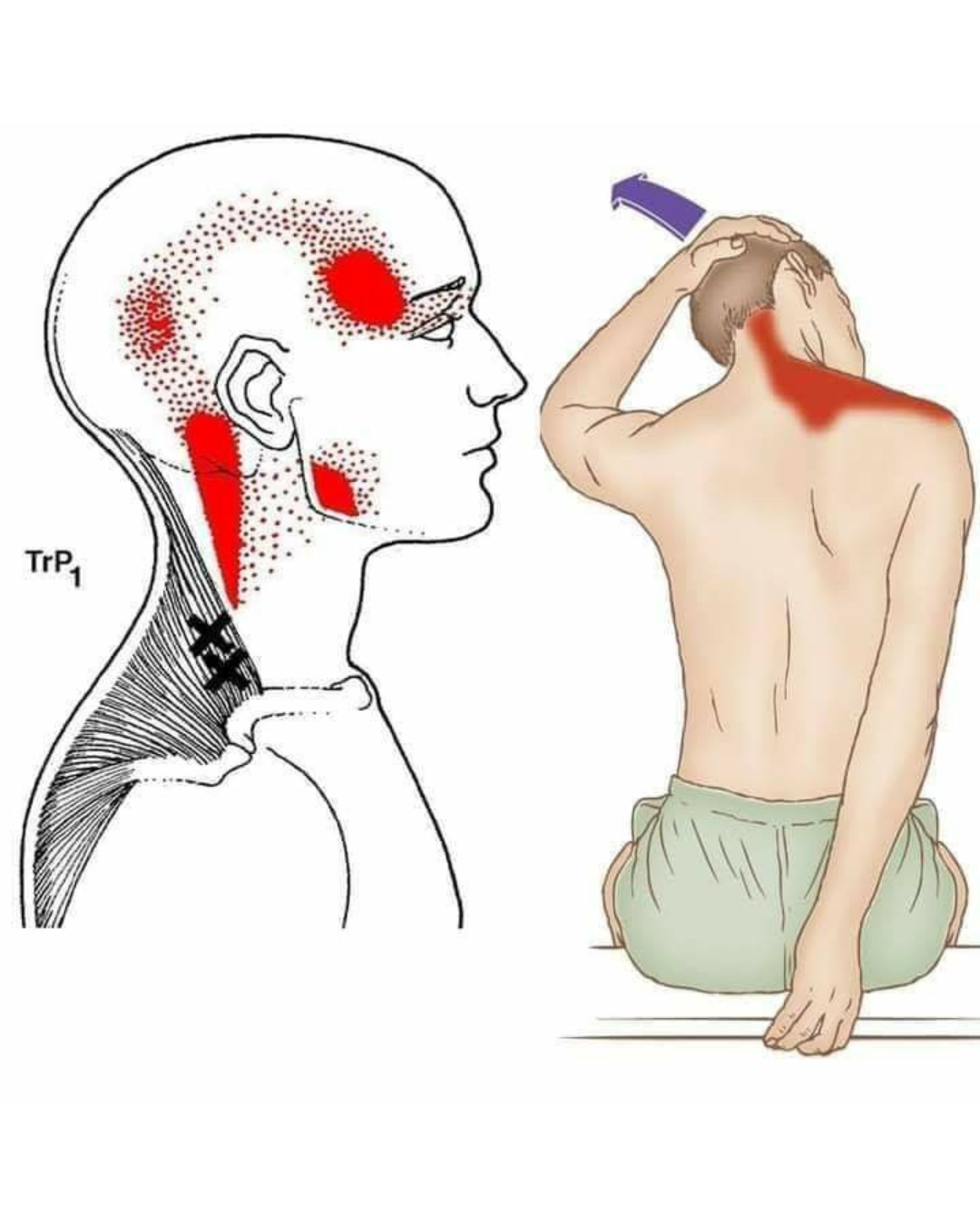
Ran for 61 days, from August 28 to October 28, 2026, the last day Crush saw it.
Run by Allison Arnold - Migraine Coach on Facebook. Crush is not the advertiser and does not verify its claims. See this ad in Meta's Ad Library(opens in a new tab)
Make your own version of this ad
Crush makes it, launches it in your own Meta ad account, scales the winners and pauses the losers.
About this ad
- Meta Ad Library ID
- 1548856936991502
- Platforms
- Facebook, Instagram, Audience Network, Messenger and Threads
- Relaunches
- 0
Ad text
I was diagnosed with cervicogenic headache at 34. I'm 46 now. Turns out I never had a neck-origin headache at all. I had something nobody screened me for, hiding in plain sight in the light sensitivity and nausea I had every time my "neck flared up." For twelve years, I "managed" a condition I didn't actually have. Twelve years of chiropractic adjustments. Weekly. Sometimes twice a week when I was in a bad round. I have had my neck manipulated approximately four hundred and eighty times. Twelve years of physical therapy for cervical instability. Chin tucks. Prone Y-T-W exercises. Isometric neck strengthening. Deep-neck-flexor activation. Twelve years of ergonomic setups. A standing desk. A monitor arm. A split keyboard. An expensive office chair. A car seat lumbar cushion. A driving neck pillow. A memory-foam pillow that cost $180 and was supposed to be "cervical-support optimized." Twelve years of being handed a new modality — cervical traction, dry needling, cupping along the trapezius, radiofrequency ablation of the C2 medial branch, cervical facet injections, cervical epidural steroid injections — and told to "just give it time." I did everything they asked. I got a new mattress. Then a new pillow. Then another new pillow. Then a pillow that was specifically made for side sleepers. Then one specifically for people with cervical instability. My husband and I have five pillows in a closet from years of me trying to find the right one. I gave up sleeping on my stomach in 2015. I gave up sleeping on my left side in 2018 because the pain radiated up to my temple when I did. I got fitted for a soft cervical collar that I wore for six weeks in year seven when a particularly bad flare had me unable to turn my head. I paid $1,400 out of pocket for a full cervical MRI in Boston, plus another $600 for a functional MRI that was supposed to show "dynamic instability." The scans showed mild degenerative changes at C5-C6 that my neurologist called "normal for your age" and could not explain my pain. I saw a pain management doctor in Manhattan who charged $2,400 for a full cervical workup and put me through three rounds of cervical facet injections at $800 each. The first round gave me two weeks of relief. The second round gave me one week. The third round did nothing. He recommended radiofrequency ablation next — burning the small nerves in the cervical joints to interrupt pain signaling. He warned me the effect would wear off in nine to twelve months and I would need to repeat it. He warned me the joints would eventually degenerate faster because of the repeated procedures. He said it was still my best option. I said I would think about it. I thought about it for two years. I felt like I was crazy. The MRI showed nothing serious. The pain management doctor could not fix it. My chiropractor kept saying, "You're right on the edge, let me get in there." But every single day, my neck ached and my head throbbed and no amount of adjusting was making it stop. By the time my alarm went off, my neck was already stiff. I could not turn my head to look at the clock without rotating my whole torso. I would spend the first ten minutes of every day doing the gentle stretches my PT had prescribed, then walk to the bathroom holding the base of my skull with one hand. Getting through breakfast was a production. Chewing set off pain that traveled from the base of my skull up the back of my head to my right temple. Chewing hard bread made it worse. Chewing gum was out of the question. By 10 a.m., if I had a morning of meetings, I would be doing what my husband called "the head-cradle." Sitting with my elbow on the desk and my hand supporting the base of my skull to take the pressure off. By 2 p.m. the ache would migrate from the back of my neck up over the top of my scalp and settle behind my right eye. I would take an over-the-counter anti-inflammatory. I would put a warm compress on the back of my neck. I would try to push through. By 4 p.m. I would be looking at the clock and calculating how much longer until I could go home and lie down flat. And the math never stopped. If I drive more than an hour, my neck will spasm halfway there and I will have to pull over. If I sit in a movie theater, the seat angle will hurt my neck within twenty minutes and I will not remember what I watched. If I look up at anything — a bookshelf, a menu board, my nephew's Little League game from the bleachers — I will pay for it for the next twenty-four hours. I stopped saying yes to anything that involved sitting in an angled seat, driving distance, or looking up. My sister's beach house on Cape Cod, because the drive was three hours. My friend's wedding in Vermont, because it was four. My nephew's Little League tournament, because it was outdoors in the sun and involved looking up at the field. I would be at a work dinner and my neck would spasm and I would have to reach up and press my hand against the base of my skull and pretend I was thinking. I got good at hiding it. My colleagues thought I was thoughtful. I was actually trying not to cry. I also had what I called my "neck-flare headaches" about three or four times a month. Pressure behind my right eye. Sensitivity to light. Sometimes nausea. Usually within a day or two of a bad neck day. I would take another anti-inflammatory. Lie down in a dark room. Push through. Nobody ever asked me about the light sensitivity in twelve years. I never thought to mention it. I had been told I had cervicogenic headache — pain from the cervical spine referring up into the head. The light sensitivity felt like a separate thing. Probably from the pain. Probably from being tense. I looked fine on the outside. Inside my whole cervical spine was on fire and my head throbbed. And every specialist just nodded. "That's cervicogenic. Keep the adjustments. Keep the exercises. Consider the ablation." I tried acupuncture in year eight. I tried a $2,200 posture-correcting brace I wore under my clothes. I tried a cervical decompression device that lifted my head off my shoulders for twenty minutes a day. I tried a special water-pressure device you put in your bathtub that was supposed to give you a "clinical-grade cervical traction session." Nothing worked. I started to believe this was just my life now. That I would spend the rest of my life on the head-cradle at my desk and turning my whole body to look at things and skipping any event that involved a drive. Then a woman I met in the waiting room of my chiropractor's office said something no cervicogenic-headache specialist ever had. Her name is Yasmin. She is 51. She had been a Pilates studio owner for twenty years and had recently trained as a Migraine coach after her sister was diagnosed with chronic Migraine at 43. She was in the waiting room for her own neck adjustment. We started talking because we were both there for the third time that month. She asked me a question I had never been asked. "Rebecca. When your neck flares — do you notice anything with the light? Anything with your stomach?" I said, without thinking about it, "Well, yes. Light bothers me on those days. And sometimes I get a bit nauseous. But that's just from the pain." She nodded slowly. "Do you also get pressure behind your right eye when it's really bad?" "Yes. Behind the right eye. That's from where the neck refers up." She looked at me for a long moment. "Rebecca. Light sensitivity, nausea, and unilateral eye pressure is not a cervicogenic pattern. That is a Migraine pattern. Cervicogenic headache does not typically produce light sensitivity or nausea. Migraine does." I stared at her. We went to a coffee shop next door after our appointments and she walked me through it for an hour. The trigeminal nerve is the largest cranial nerve in your face. It converges at the brainstem with the upper cervical nerves — C1, C2, and C3 — through a structure called the trigeminocervical complex. The two systems talk to each other. Constantly. In chronic Migraine, the trigeminal cascade activates the cervical nerves and produces neck stiffness, neck pain, and referred pain along the back of the head that looks and feels exactly like cervicogenic headache. Which is why chiropractors get to feel like they are helping. When they adjust the neck, they are working downstream of a nerve that is firing upstream. The temporary relief is real. The problem is the cascade keeps re-firing at the trigeminal level, which keeps activating the cervical nerves, which keeps producing the neck pain. The cascade happens in three phases. Phase 1: the prodrome. 20 to 40 minutes before any head pain. Neck stiffness intensifies here. Base-of-skull tension. What I had been calling "a bad neck day." Phase 2: the head pain phase. Behind the eye. Across the forehead. Light sensitivity. Nausea. What I had been calling "my neck flare-up headaches." Phase 3: the postdrome. 24 to 72 hours after. Continued cervical activation. Sore trapezius. Reduced neck range of motion. Which sent me back to my chiropractor. I sat there with my hands wrapped around my coffee cup. She kept going. "If you have three or four Migraines a month, Rebecca, you have roughly twelve to twenty days in some phase of the cascade. Your cervical nerves are getting activated every single one of those days. Your chiropractor is treating the muscle spasm and the joint restriction downstream. He is not touching the trigeminal nerve that is causing the cervical activation upstream." "You don't have cervicogenic headache. You have chronic Migraine that has been driving cervical nerve activation for twelve years and looking exactly like a neck-origin problem to any chiropractor who was not screening for Migraine." She told me the "normal-ish" MRI I paid $1,400 for was probably showing age-related changes that appear in most people over thirty-five and mean almost nothing. The changes were not causing my pain. My trigeminal nerve was. I drove home slowly. My neck felt like it always did. My head throbbed the way it always did. But something in my head had shifted. Twelve years. Chiropractors. PTs. A pain management doctor. Cervical facet injections. Almost a $38,000 radiofrequency ablation. And nobody had ever asked me whether the light sensitivity and nausea I had during my "neck flares" might mean I was having Migraines and not neck-origin headaches. I texted Yasmin the next morning. "Okay. If you're right. What do I actually do?" She called me back that afternoon. "You need to interrupt the trigeminal cascade at the source. The trigeminocervical complex. If you calm the trigeminal, the cervical nerves stop being fed the sensitization signal, and the neck-pattern pain starts to fade." She told me about a topical roll-on developed by a neurologist named Dr. Fiora Laurent, who suffers from Migraines herself. Five ingredients chosen for trigeminal calming. Magnesium glycinate for nerve relaxation. Wild peppermint and menthol crystals for TRPM8 activation. Chamomile and feverfew extract for chronic reactivity reduction. Applied to the three points where the trigeminal nerve surfaces closest to the skin — including the base of the skull, which is exactly the anatomical junction where the trigeminal and cervical nerves converge. The nerve sits 2 millimeters under the skin at those points. A topical reaches it in 90 seconds. No 45-minute oral absorption gap. No injection into the cervical joints. No radiofrequency burn. It was called Florus. "You have been trying to relax the muscles and adjust the joints for twelve years. The muscles and the joints are downstream. The nerve is upstream. If you can calm the nerve, the trigeminocervical complex quiets, and the cervical activation walks back on its own." She had been working with cervicogenic headache patients for three years. She estimated that in her practice, about half of the "cervicogenic" cases she had seen were actually chronic Migraine driving cervical nerve activation, and had been misdiagnosed for years because the referring physicians did not screen for Migraine when the presenting complaint was neck pain. I sat with that for two days. Then I ordered the bottle. First time I used it was a Wednesday morning. My neck had been stiff since I woke up. Twelve years of muscle memory said reach for the warm compress and schedule the chiropractor. I rolled Florus across my temples, behind both ears, and — most importantly — right along the base of my skull where the cervical and trigeminal nerves converge. Ten seconds total. Within 90 seconds I felt the cooling reach somewhere deeper than skin. I sat at my kitchen table and waited for the ache to spread up over my scalp the way it always did. It did not spread. By 10 a.m. the base-of-skull tension had faded. By noon I turned my head to look at my husband without rotating my torso. My range of motion had come back for the first time in weeks. I stood in the kitchen and I started crying because I had not turned my head without pain in three years. Week 1: I caught two prodromes with Florus. Both stopped. Neither developed into the head pain I had been calling a "neck flare." Neither was followed by the 48-hour cervical soreness that had structured my life. Week 2: I drove to my sister's house. Two hours each way. I did not pull over. I did not have to lie flat when I got there. Week 3: I sat through a full movie in a movie theater. I could not remember the last time I had done that. Week 5: I stopped my weekly chiropractor visits. My chiropractor asked what changed. I told him. He was polite about it. Week 8: I drove to Vermont for a weekend. Four hours each way. I slept on my left side in the hotel bed. My left side had not touched a pillow in six years. Week 12: I went back to my pain management doctor. I told him I was not going to do the ablation. I showed him my new symptom log. I told him about Yasmin. The trigeminocervical complex. The prodrome window. The three application points. The topical that reaches the nerve in 90 seconds. He listened. He was quiet for a long time. Then he said, "I am going to start asking my cervicogenic-headache patients about light sensitivity and nausea. I should have been asking all along." Six months in: I hiked Camel's Hump in Vermont with my sister and her husband. Six miles round trip. Elevation gain of two thousand feet. I looked up at the summit for a photograph. I did not pay for it for three days after. My sister took a picture of me at the top. I sent it to my husband. He wrote back: "You looked up. You actually looked up." I do not have cervicogenic headache. I never had cervicogenic headache. I had twelve years of an unrecognized trigeminal cascade firing low-grade three to four times a month, activating my cervical nerves through the trigeminocervical complex, producing a neck-pattern pain that everyone, including me, had been calling cervicogenic. And not one person in a white coat had thought to ask me about the light sensitivity. If you have been diagnosed with cervicogenic headache. If you have been to a chiropractor weekly for years. If you have done PT, cervical injections, or been offered radiofrequency ablation. If your MRI shows "normal-ish" degenerative changes and does not explain your pain. If you have stopped driving long distances, sitting through movies, sleeping on one side. If you also have what you call "flare headaches" that come with light sensitivity, nausea, or pressure behind one eye and you have never connected them to Migraine. I am not saying you definitely have Migraine and not cervicogenic headache. I am not your doctor. I am saying I spent twelve years being adjusted for a diagnosis that never explained the light sensitivity, while the real cause was firing in my trigeminal nerve every third week and nobody, not a single chiropractor or pain doctor, ever asked me about my eyes. Florus is built for the cascade itself. Skin to nerve in 90 seconds. Three application points — including the base of the skull, exactly where the trigeminocervical complex sits. Five ingredients. The full breakdown is in the article below. 7,405 five-star reviews. 90-day money-back guarantee. Three full months. If it does not change how you feel, you send it back. After twelve years of chiropractic visits and cervical injections, what is three more months? 👉 Every Migraine tool you have works downstream of the source. Here is what works at it: https://florusrelief.com/blogs/news/every-migraine-tool-you-have-works-downstream-of-the-source-here-is-what-works-at-it You don't have to keep managing a condition you might not actually have. P.S. I sent Yasmin a note-card and a plant last month. She refused a bigger gift. She said the only payment she wanted was for me to tell people. So I am telling you. If you have been diagnosed with cervicogenic headache and it has been years and nothing has held, please consider the possibility that your neck-pattern pain is being driven by a trigeminal cascade upstream. P.P.S. There are cheap peppermint roll-ons on Amazon that look almost identical to Florus. They are synthetic peppermint fragrance oil in a tube. They contain no therapeutic-grade magnesium glycinate or real feverfew extract. A man in my cervicogenic support group tried one and it did nothing. The real Florus is only on the official site. P.P.P.S. My chiropractor sent me a card at the six-month mark. He said, "I miss you but I'm happy for you." I framed it. It is on my desk. I keep it there because it reminds me what happens when a professional cares more about a patient than about a weekly appointment.
Where the ad sends people
florus.com
I Was Diagnosed With Cervicogenic Headache At 34. I'm 46 Now. My Chiropractor Adjusted My Neck 480 Times For The Wrong Diagnosis.
Twelve years of chiropractors, PT, and cervical epidurals. The neck was never the source.
Learn more: florusrelief.com(opens in a new tab)